
Jean-Paul Sartre’s play Huis Clos (No Exit) starts with just one character on the stage, puzzled as to where he is. Another arrives, then four more, all equally bewildered. It becomes clear that in each case, one of the people there is the embodiment of everything one of the others loathes. At last one of the characters realizes what has happened: they have died and gone to hell. ‘Hell is other people,’ he observes.
This is not so for the emotionally healthy; for them, other people are among their greatest blessings. Because they are able to listen as well as assert their views, because they can present a front to the world which largely reflects their true feelings, because they are usually neither paranoid nor depressed, other people enrich their lives, and vice versa, personally and professionally. Alas, for the rest of us, other people are a challenge to emotional health. Friends let us down or become a drag on our resources, with their endless stories of woe or tendency to repeat themselves. Colleagues frustrate, betray or outwit us, thwarting our designs. Lovers and spouses interfere, torment, deprive or deplete. Children are worrying and upsetting. Siblings and parents put us back in our boxes, or make huge demands.
Attachment patterns
Of particular importance in determining whether other people are heaven or hell for us is the period when we are toddlers, between six months and three years of age. Those of us whose carers were unresponsive, or who were cared for by a different person from one day to the next, often have what is called an insecure pattern of attachment. This is true of about 30 per cent of children and at least 40 per cent of adults. If we felt rejected by our early care, we become avoidant. We are often angry people and prone to reject others, getting our rejection in first because we expect to be rebuffed by friends, teachers, employers and lovers. Alternatively, if we felt abandoned by carers, then we bring the assumption that this will always be the case to those relationships, expressed in clingy neediness, and sometimes mixed with a perplexing reluctance to engage if the other person does respond. Finally, if the care was chaotic and downright disturbing (actual maltreatment, like abuse) we bring a muddling mixture of rejection, neediness and disconnection to our relationships.
This is well illustrated by the contrasting tales of two men.
The first is Dave, in his early sixties, a vibrant, delightful example of emotional health. Dave is of Asian origin, born and raised in Kenya. His father managed to build up a small fruit-growing business outside Nairobi. It was touch-and-go, with the crop wiped out by droughts and diseases on several occasions. But the imaginativeness of his father and his constant ability to find solutions made a deep impression on Dave, inspiring him when he hit trouble himself at various points later in his life. He felt loved by his father, an endearingly warm and humorous man. His mother cared for him as a young child with a passionate affection that was evident in the warm, considerate way Dave related to me, six decades later: the sort of mother you would want as a friend.
Dave’s father was successful enough to pay for him to go to university in London, where he subsequently trained as an accountant. A Muslim, his parents arranged a marriage with a woman from a good family. Dave had always wanted to set up his own business and managed to get backing. Now came the toughest time of his life. Nearly strangled at birth by a recession, Dave’s business barely survived, even with him working seven days a week. Alas, his wife’s family were unimpressed. They put pressure on her to leave such a ‘loser’ and Dave could not persuade her otherwise. Given that he has since become enormously successful, he might be forgiven for adopting a triumphant tone when reporting these events to me. Instead, he looked down into his coffee, a sad frown of misery on his face as he remembered that time. He pleaded with her to persevere, and for a few days after he had failed, felt desperate. He found solace at his local mosque.
His marriage over, his business survived and flourished. It teaches workplace skills, often to relatively low-income people hoping to better themselves, and Dave is passionate about its social value. With other entrepreneurs you might be forgiven for suspecting that this is a front, but not Dave. He is genuinely excited by the idea of education and loves making educational presentations himself. He also speaks with passion of trying to create a working environment in which his employees have a good time. He is not a managerial control freak, having trained others to take on many of the key executive roles, and truly delegating power to them. But what is most indicative that money is not Dave’s lodestar is the enjoyment he has taken in helping the Muslim community in the northern British city where he lives. After his divorce, he realized he knew hardly anyone well, so he made a point of doing community work, which brought him into dependent and substantial relationships with flesh-and-blood human beings.
He founded an organization that supports the Muslim community, buying a local amateur soccer club and building it up. He sees it as vital to commit his own time and energy to the project, as well as his money. Although he has set himself the goal of creating a £1-billion company, he does not seem obsessed by it. He works only forty to fifty hours a week and intends to start cutting down, passing the management over to younger people, and spending more time on his community work. If he raises his own wages it is only ever in proportion to a corresponding raise received by his employees.
A few years after his marriage ended, Dave remarried and he and his wife adopted children. He speaks of them with real affection, and is able to describe their lives in such detail that it is clear that he is not dissembling when he claims to be involved in their nurture. He does not seem motivated by conspicuous consumption – his clothing looks like that of any middle-class football supporter, his car is a bog-standard saloon.
At the heart of Dave is his secure pattern of attachment, derived from his parents’ loving responsiveness. It explains why he thinks the best of people until they give him reason to suppose otherwise. He does not expect others to let him down or to reject him. If it happens, he properly mourns the loss and then can move on. If he becomes isolated, he is able to engage with others to form enduring and mutually valuable relationships. Hell is not other people; they are the foundation of the meaning in his life and of his emotional health. After our meeting, I felt optimistic and cheerful, uplifted.
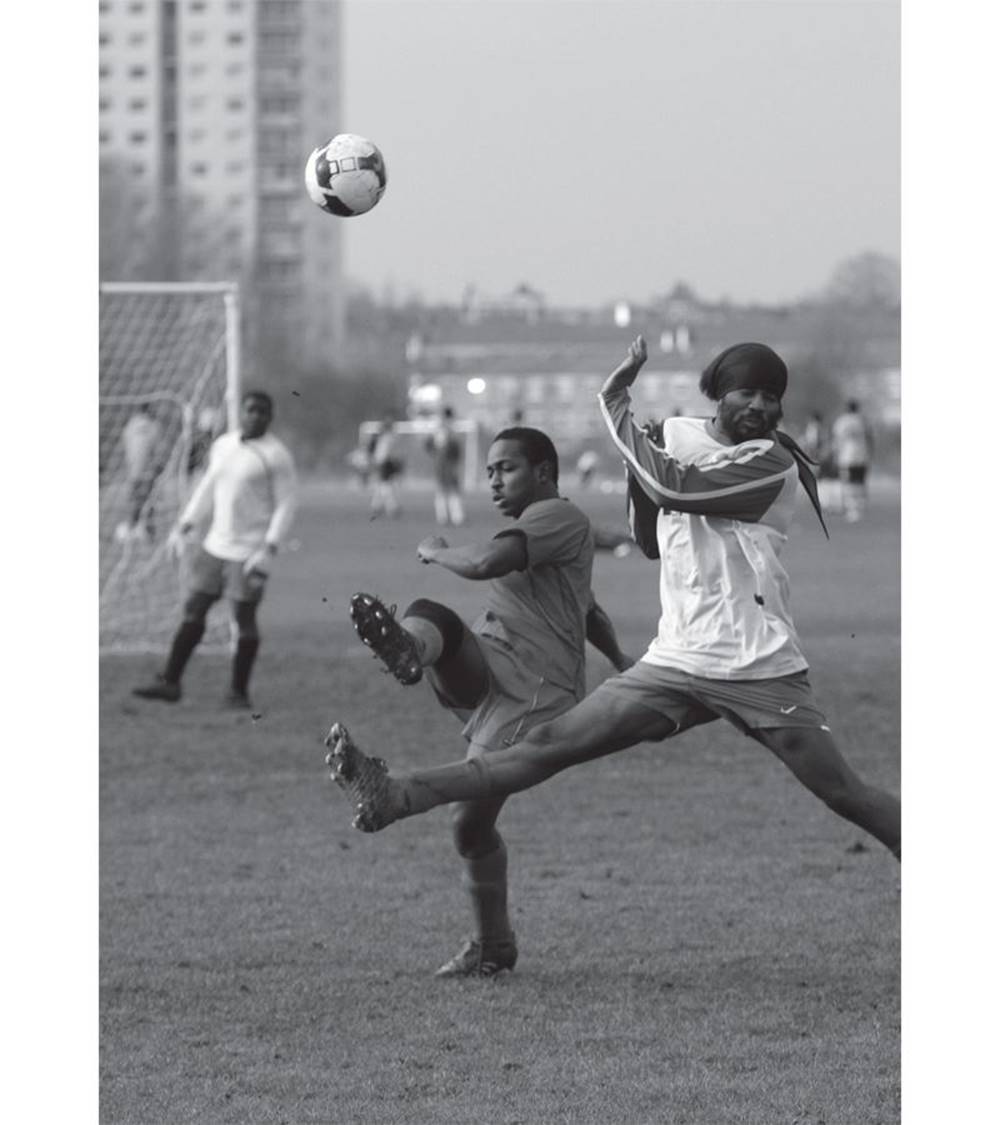
Money is not Dave’s lodestar; he founded an organization that supports the Muslim community, buying a local amateur soccer club.
Contrast Dave with Archie, a convicted football hooligan whom I interviewed in prison. He was capable of shocking violence, thinking nothing of throwing darts into a crowded bar just for amusement. From early childhood his father frequently hit him, rarely with good reason or adequate explanation. His mother’s attitude to him was cold and neutral. This childhood left him with severe difficulties when it came to being emotionally dependent on others. He was especially impoverished in his capacity to form satisfying relationships with women. Because his choice of words is so revealing, I shall present some of the transcript from our interview.
Q: Did you form any lasting relationships with women at all?
A: No, no. I never. Couldn’t. I had girlfriends, like, well not girlfriends really, they were just what do you call them? ‘Dodgy birds,’ like. Definite leg-over, whenever you wanted one that you liked, you could get one. I didn’t want to get emotionally attached to anyone.
Q: How did it go with your wife?
A: I was just fed up with it . . . it will sound crazy, but I got more kicks out of fighting than I did out of, you know, being with her. In a way, she was getting up my nose because she was interfering with what I wanted to do. Instead of wasting my energy on sex with her, I was reserving it for fighting.
Archie was a man who dared not give or receive love, who felt empty and desperately lonely. He actually preferred violence to sex as a means for achieving emotional contact or excitement in this psychic desert. Anthony Storr, an English psychoanalyst, has given a vivid description of the dilemma faced by individuals for whom emotional contact is both a threat and a desperate necessity:
Although, like all of us, they passionately long for love, they have so deep a mistrust of other human beings that any really intimate relation with another appears to them to be dangerous. . . [The schizoid] is thus faced with a perpetual dilemma. To deny the need for love is to enclose himself in a prison of isolation in which he is likely to be overtaken by a sense of sterile futility. To accept love is to place himself in a position of dependence so humiliating that he feels himself to be despicably weak in relation to the person who is offering it.
The schizoid reacts with malevolent hatred to those who help and like him, for these are the very people who most threaten to burst the bubble of unreality and detachment with which he keeps others at a distance. The hostility that the threat of emotional contact evokes is often projected onto the very person most offering sympathy and warmth, who is then attacked. If, as a result, the other person becomes hostile, the schizoid can withdraw behind the safe glaze of an icy coldness. It is preferable because he fears he will annihilate or be annihilated, that his very existence is at stake.
Archie had many Schizoid features.
Archie: Bodily contact: I didn’t like it, I didn’t want her [his wife] near me . . . I felt trapped . . . I said to myself a long time ago that I wouldn’t get emotionally involved, and I happened to get emotionally involved with her and I didn’t like the feelings.
Q: What were they?
A: Really they were everything sort of alien to me, you know, the whole chemistry workings had gone haywire, I wasn’t used to things like that, like being cuddled and I’d never been cuddled before, you know, things like that.
Q: Didn’t your mum cuddle you?
A: No, not really . . . the only contact I had has been physical and violent. Anything sort of smoochy, even dancing with a bird, I didn’t like. I used to go to the discos, didn’t used to dance, I used to stand at the bar and drink and wait for a fight to erupt. I didn’t want to dance, only ‘dance’ in a different manner! My wife annoyed me a lot at certain times – but instead of hitting her like I felt like doing, I would go out and pick a fight.
Q: You’d go out and hit someone else instead?
A: Just pick anyone.
Q: Do you think that’s what was happening earlier on as well, instead of hitting your father, and I think your mother – more than you realise – you hit other people, often strangers?
A: I think, yeah . . . you’ve hit (sic) a good point there! I used to take out my anger on her . . . no, I laugh about it, I joke about it, but it is serious, yeah. I’ve got to look at the funny side of things, because if I look on the sad side of things, I’d probably sit down and cry.
Q: Do you think you’d even attack yourself?
A: No, I’d just go and cry, and I don’t intend to either.
Anthony Storr has also proposed that middle-class schizoids often channel their feelings of powerlessness and destructiveness into becoming unassailably successful. Their success draws people close to them who would normally be put off by their lack of personal warmth and humanity, easing the burden of their solitude. However, professional peers or employees cannot provide true intimacy.
Of course, middle-class schizoids very rarely use physical fighting in a public place as a way of achieving ‘contact’. Archie expressed his schizoid mentality through his choice of profession but, being an uneducated working-class man, he could not use power, status or wealth to manipulate ideas or people to act as he wished; at least, not living people.
Archie: I had a good job. I was an embalmer. A great job, that was.
Q: You enjoyed being an embalmer?
A: Yeah, I worked on my own.
Q: What does an embalmer do?
A: His main objective is to preserve the body for the family to come and view it. You pump the blood out and put embalming fluid in and put a bit of make-up on. Great, you know what I mean? You’ve got no one to back-chat you and give you any hassle, you know. I found that really great. I lost the poxy job through drinking and driving. I was gutted.
Q: Is that your ideal relationship with another person, that the other person is dead?
A: Yeah, there was no one to give me any lip, know what I mean? And no one to boss me about and I done my own thing.
Q: Did you feel close to these bodies?
A: No, not really. In a way I’ve been dead inside for a great number of years, and seeing them bodies was nothing really, nothing to me. I’ve got a good nickname – the lads at Millwall [the football club Archie supported, notorious in the 1980s for its violent fans, Archie among them] call me Dr Death – sort of suited me well.
Despite everything, it is notable that Archie did have some emotionally healthy features. There was a verve in his use of language and a playfulness, such as when he punned that I had ‘hit’ on a good point. However, it is plain to see how his early years sent him on a completely different trajectory along the tree of emotional health from Dave. At the heart of his life was a void, one created by the lack of love in his infancy and as a toddler, subsequently exacerbated by his father’s cruelty. He was so insecure in his pattern of attachment that he could not risk depending on anyone, and his rage towards his parents for how they let him down dominated his waking life. It is impossible for us to sustain much emotional health when we are so distanced from, scared of and aggressive towards others. Yet even someone as fragile as Archie can become more secure. A stable relationship with a therapist has been proven to increase security. And then there is always the potential provided by intimate friendships . . . and by lovers.
Romantic relationships
Insecurity is but one of many distortions from the past that we bring to relationships, and which challenge emotional health. At its simplest, we may learn bad habits from parents, like a tendency to interrupt others or to be shy and secretive. A more complex scenario emerges if parents repeatedly placed you in situations where whatever you did was wrong, a ‘double bind’. You approach your mother to kiss her hello, she backs off. So you pull away, but then she asks ‘Aren’t you going to kiss your mother hello?’. If you kiss her, it’s wrong, if you do not kiss her it’s wrong. Such behaviour from intimates can drive you crazy, and there is a whole range of such behaviours which we may have been taught. The most obvious expressions of the mare in our romantic lives. As soon as we embark on sexual relationships, we demonstrate an uncanny knack for creating trouble for ourselves.
For example, parental separation can send girls down troubled relationship branches at a young age. On average, a girl whose father left the parental home before her tenth birthday comes into puberty six months earlier than one from an intact family. Early pubescence strongly predicts starting sex young. This in turn not only significantly predicts an increased risk of various medical problems, like uterine cancer and sexual diseases, it also predicts lower academic performance and a higher likelihood of emotional problems. It also risks teenage pregnancy and subsequently unstable relationships with men. The past in this sort of girl’s present sends her along a low branch on the tree of emotional health, unless, that is, she is able to spot that it is her father’s departure that is leading her to use her precocious nubility in ways that create trouble for her.
Because our relationship with our opposite-sexed parent is so influential in determining what we find attractive in others, we have a lamentable tendency to repeat the past, picking partners who duplicate the behaviours of our parents. Disentangling this mess is a major challenge for marital therapists, who all too often focus on the pattern of communication between the partners, rather than their individual histories. If divorce or separation follows, we are liable to go out and find someone just like our first partner. That is one reason why divorcees who remarry are much more likely to get divorced again.
To top it all, there is a strong tendency for emotionally unhealthy folk to seek each other out. If at age sixteen a person is prone to depression and anxiety, then they are much more likely to get divorced in later life. As the depressed and anxious tend to marry each other, the problem is multiplied by two.
How to improve your relationships
That the emotionally healthy tend to marry one another as well is little consolation for the vast majority of us who find ourselves more or less in the fixes described. But that is a good place to start, for those who have not yet had children: try, as much as possible, to become emotionally healthy before you start reproducing. What is more, if you can also persuade someone more emotionally healthy than you to share your life, so much the better, their health will rub off on you.
For those who are already in a relationship and have children, and who feel that their emotional health is ailing, there are three vital steps towards more fluid relationships and, consequently, emotional health:
1. Look at your own childhood
The first is to reflect long and hard about how your own childhood has coloured your choice of partner and to understand that this does not mean that your partner shares every trait of your own mother or father. That your husband, for instance, shares your father’s tendency to lose his temper if the washing-up is not done should not prevent you from noticing that, unlike your father, he is an enthusiastic cook and approaches the task of food shopping with equal ardour. Between you, you have to start a dialogue about how your pasts are colouring your present, to prune the psychic shrubbery and build relationships which break the past patterns.
2. Accept that separation is the last resort
The second step – painful though it may be – is to accept that now you have children, there must be very persuasive reasons if you are to separate or divorce. In the darkest moments, of course you will consider leaving your partner; at moments of greatest anger you may even threaten one another with just this. But before you go any further down that road, you need to grasp the scale of the wreckage that will be caused by the resulting car crash. Remember, bad experiences in adulthood are twice as likely if a person’s parents separated or divorced when he or she was a child: on the whole, separation or divorce will be damaging to your children. Looked at more selfishly, divorcees themselves often suffer grievously. They not only have much higher rates of cancer, alcoholism and heart disease, with lower life expectancy, but are also much more prone to misery. This was proven most dramatically by a study of over 8,000 mothers of small children living with a partner. The quality of the woman’s relationship with her partner and whether she was depressed were measured. Depression levels were reassessed again twelve months later, and the startlingly bad news was that over half of mothers who had broken up with their partners were liable to be more depressed afterwards than when first interviewed. This proves that a significant number of mothers in a lousy relationship feel even lousier when it ends. It is reminiscent of the joke at the end of Woody Allen’s film Annie Hall. A man goes to his therapist and says ‘My wife thinks she’s a chicken.’ The shrink asks ‘So why do you stay with her?’ and he replies ‘I need the eggs.’ We seem to need each other’s foibles, including the bad bits.
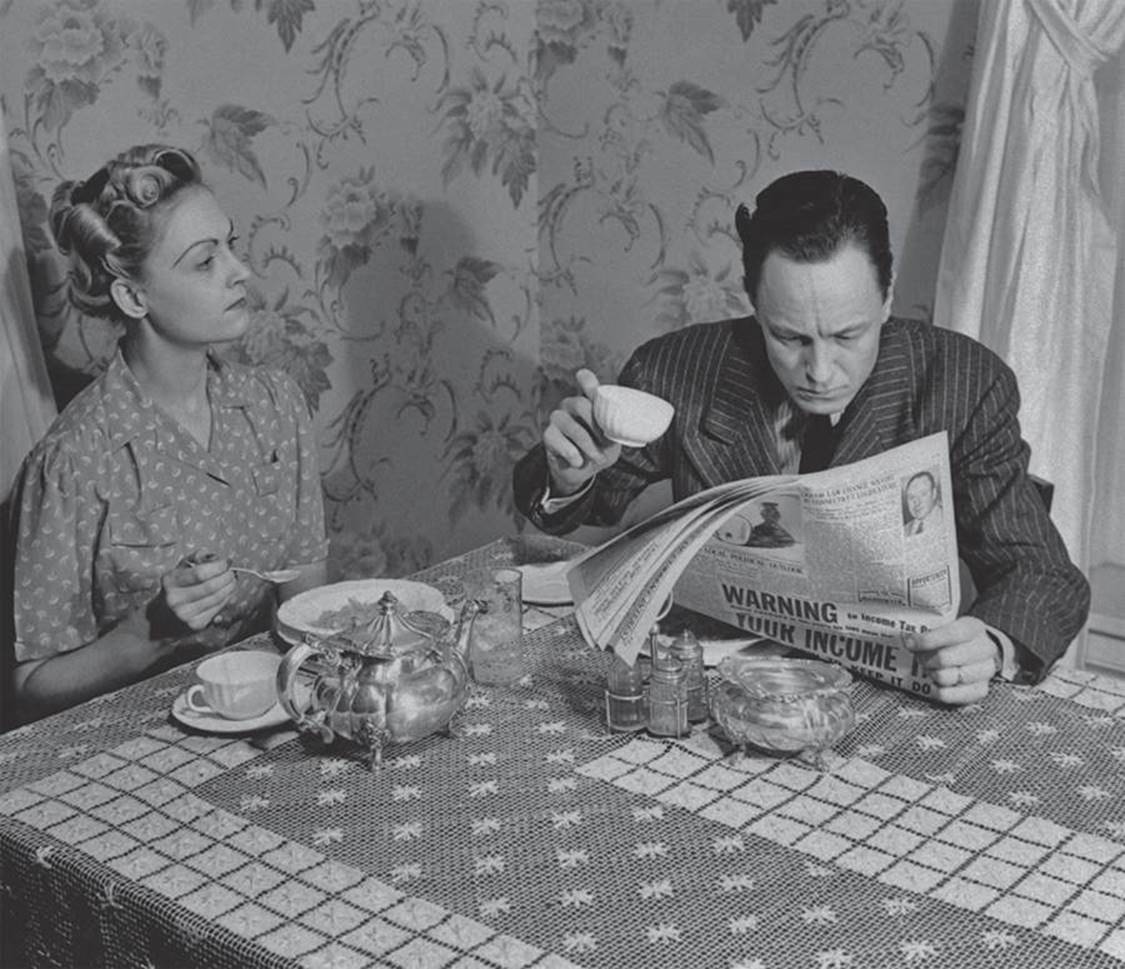
A significant number of mothers in a lousy relationship feel even lousier without it.
3. Seek more intimacy
The third and most vital step towards emotional health is to seek more intimacy in your life – and by that I do not mean ‘have an affair’. Whilst an affair may be the solution for some people, for most it only makes matters worse. It is important to understand that modern life severely depletes our relationships. Studies comparing people in the 1950s and 1960s with the present day prove that we tend to have many, many more friends (accelerated by the likes of Facebook, email and the internet) but far fewer intimates. Yes, a therapist may be part of that answer, and a marital therapist may be needed too (make sure it is one who is willing to focus primarily on your childhood histories, rather than tinkering with the way you argue). But even more important may be to recapture the network of intimates which you may have belonged to at school or university, but which your subsequent life has dispersed.
Relationships, particularly playful and intimate ones, are crucial for emotional health, and vice versa. It’s a two-way street. To find your way back down the branch of isolation to the main tree trunk, and onwards and upwards towards something more lively and satisfying may entail retracing your steps to old friends, as well as seeing the potential of everyone around you, including strangers. This often entails disentangling sex from friendship. Modern life gives us the illusion that sex is a commodity, a fix that can salve loneliness. But as sex addicts can testify, the equation is false.
In 2004 I interviewed a married woman in her mid-twenties. She had a splendid husband, to whom she was fanatically unfaithful. She had a delightful son, who was cared for by a nanny. During our interviews, she made several attempts to persuade me to sleep with her. It was abundantly clear that she was conflating the uniting of our bodies with a feeling of emotional closeness. Compulsively promiscuous, the more men she had sex with, the more desperate she felt, since physical closeness only left her more emotionally isolated. Her story is ultimately uplifting, however, because she has subsequently come to see how her early years left her feeling unloved, and that sex will never deal with that problem. Now she is able to appreciate that she is extremely fortunate to have her husband and child, and that what she needed was emotionally healthy relationships which provided real sustenance – playfulness rather than flirtation, and sustained intimacy rather than physical proximity.
Whether at work or at home, if relationships are a source of pain and frustration you should look within yourself. You probably cannot change the kind of person your partner is, but once you identify your own relationship patterns, you can change yourself. Hell does not have to be other people, if you can sort yourself out. For the emotionally healthy, other people are heaven.