
Historically, pregnancy was often thought of as a time requiring rest and limited physical activity, but today the majority of pregnant women in the United States choose to engage in at least some exercise (13). If you are currently pregnant or thinking about becoming pregnant soon, the good news is that exercise can improve your health outcomes during pregnancy and postpartum (i.e., the first year after birth) (22). Even better, research also indicates that exercising during pregnancy may improve child health outcomes too.
This chapter touches on some nutritional areas to consider as well as highlighting the benefits of different types of exercise during pregnancy, goes over common concerns about exercise during pregnancy and some precautions, and gives tips about how to incorporate exercise and healthy nutrition into your life during pregnancy and the postpartum period.
Maintaining Health During Pregnancy
What makes a healthy pregnancy? Certainly most pregnant women are primarily concerned with the appropriate growth and development of their baby. To ensure appropriate fetal development, it’s important to optimize mom’s health during pregnancy. Important factors during pregnancy include the mom’s weight, fasting glucose levels, and blood pressure.
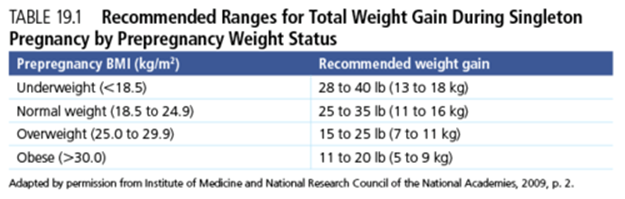
Starting pregnancy with a healthy weight (i.e., body mass index [BMI] between 18.5 and 25 kg/m2) and gaining an appropriate amount of weight helps to ensure a pregnancy with fewer complications (31). Even if you start pregnancy underweight or overweight or obese, gaining an amount that is within the recommended weight ranges will improve your chances of experiencing a normal pregnancy with a healthy baby (see table 19.1 for recommended weight gain during pregnancy) (31).
The two most common pregnancy complications are gestational diabetes and hypertension (i.e., gestational hypertension or preeclampsia). Gestational diabetes affects 5 to 9 percent of U.S. pregnancies and is diagnosed as abnormally high blood glucose (sugar) occurring for the first time during pregnancy (17). Women who have a family history of diabetes, who are overweight or obese, or who previously delivered a large infant (i.e., greater than 4.5 kilograms [10 lb]) are at higher risk for developing gestational diabetes. Gestational diabetes increases the risk of delivering a large infant, who then has a higher risk of being obese during childhood (36). Women diagnosed with gestational diabetes should work closely with a Registered Dietician or other health care provider to control their blood glucose level while ensuring that optimal nutrients are available for the developing baby.
Gestational hypertension or preeclampsia affects 2 to 7 percent of U.S. pregnancies. Gestational hypertension is diagnosed as high blood pressure occurring for the first time during pregnancy, while preeclampsia is a more severe condition characterized by hypertension combined with excess protein in the urine (3). Both conditions increase the risk of delivering an infant who is small or premature. Women with a family history of hypertension who are African American, are overweight or obese, have gestational diabetes, or are carrying multiples (e.g., twins, triplets) are at higher risk for gestational hypertension or preeclampsia.
Healthy Approaches to Pregnancy
Physical activity and eating a healthy diet are two important lifestyle behaviors for pregnant women that can help them avoid or treat the pregnancy complications highlighted next.
Focusing on Nutrition
Nutrition during pregnancy takes on special importance since it affects both maternal and fetal health. The Academy of Nutrition and Dietetics (AND) states that the key components of a healthy pregnancy include appropriate weight gain, healthy nutrition, and safe food handling (30).
Appropriate Weight Gain
Recommended amounts of weight gain during pregnancy are based on prepregnancy weight status to optimize infant birth weight, avoid excessive postpartum weight retention for mom, and reduce the risk of later chronic disease development for mom and baby. Gaining either not enough or too much is associated with poorer birth outcomes. To find out how much weight you should gain during a singleton pregnancy (i.e., resulting in the birth of one infant), first calculate your BMI from your weight and height before pregnancy (see chapter 18 for details on determining your BMI) and then check table 19.1 (31). For multiple births (e.g., twins, triplets), higher weight gains are needed to improve infant birth weight and length of pregnancy: Weight gain should be 40 to 54 pounds (18 to 25 kg) for women who are normal weight, more for those who are underweight (50 to 62 pounds or 23 to 28 kg), and less for those who are overweight or obese (as little as 29 to 38 pounds or 13 to 17 kg) (31).
Consumption of a Variety of Foods
The Dietary Guidelines, as discussed in chapter 3, are appropriate during pregnancy. The daily energy needs of pregnant women increase in the second and third trimester by about 340 calories and 450 calories, respectively, but calories add up quickly so it’s important to eat nutrient-packed foods like fruits, vegetables, and whole grains. Multiple births require additional calorie intake, but researchers have not precisely determined these energy requirements (30).
Appropriate Vitamin and Mineral Supplementation
Many women of childbearing age do not maintain healthy enough eating habits to meet their nutrient needs, and this continues to be a concern during pregnancy. For this reason, and because of the role folic acid plays in preventing specific birth defects when taken very early in pregnancy, all women who are capable of becoming pregnant (including adolescents) should supplement with folic acid. This includes consuming 400 micrograms of synthetic folic acid from dietary supplements or fortified foods (e.g., bread, pasta, and some breakfast cereals) in addition to eating foods like green leafy vegetables that are a good source of natural folate; pregnant women are encouraged to consume a total of 600 micrograms from all sources (35). Iron requirements are also higher during pregnancy. Iron supplementation is recommended to meet the increased demands during pregnancy and is particularly important for anemic women (18). Pregnant and breastfeeding women should ask their health care provider about taking these and other prenatal supplements, including omega-3 fatty acids, vitamins B12 and D, choline, calcium, iodine, and zinc, which may be warranted for women with poor diets or those who exclude entire food groups like meat or dairy from their usual diets (30).
Avoidance of Alcohol, Tobacco, and Other Harmful Substances
Pregnant women should not consume alcohol; drinking during pregnancy is associated with developmental and neurological birth defects (30). Smoking should also be avoided because it limits the oxygen available for the baby and increases the risk of spontaneous abortion, preterm birth, and sudden infant death syndrome, among other concerns (30).
Safe Food Handling
Pregnant women and their babies have a higher risk of developing food-borne illnesses. Therefore, it is recommended that pregnant women avoid soft cheeses not made with pasteurized milk, cold smoked fish, and cold deli salads. For any deli meats, luncheon meats, bologna, or frankfurters, the items should be reheated to steaming hot. Pregnant women should avoid any unpasteurized products or raw or undercooked eggs or meat. Due to mercury levels in fish, do not eat shark, swordfish, king mackerel, or tilefish if you’re pregnant. Lower mercury content seafood (e.g., shrimp, canned light tuna, salmon, pollock, catfish) is considered safe and encouraged because of its beneficial fatty acid content at 8 to 12 ounces (225-340 g; about three servings) per week.
Q&A
Where can I get healthy meal plans for pregnancy and postpartum?
You can use www.choosemyplate.gov/moms-pregnancy-breastfeeding to help you devise a healthy meal plan during your pregnancy and postpartum. All women of childbearing age should be sure to eat foods high in folic acid (green leafy vegetables and fortified grains). During pregnancy and postpartum, talk to your health care provider about other dietary supplements.
Thus, although good nutrition is always important for your health, dietary choices are especially important during pregnancy when your body needs extra energy and nutrients to ensure that both you and your baby stay healthy. In addition to the recommendations regarding iron and folate supplements to ensure healthy birth outcomes, you should consume at least 8 to 10 cups (64-80 fl oz) of fluid per day to stay hydrated (30). You can use the Daily Food Plan for Moms (see www.choosemyplate.gov/moms-pregnancy-breastfeeding) to create food plans that meet energy needs (i.e., ~2200 to 2900 calories per day for most pregnant women) while ensuring that all food groups are covered.
Women who exercise during pregnancy should take additional care to make sure to balance energy expenditure with energy intake. In other words, make sure to eat extra calories to make up for the ones you burn while exercising—pregnancy is not the time to lose weight! More details on calculating calories burned for an activity based on your body weight are found in chapter 5. Recall that once you know the MET value (metabolic equivalent; a unit of measure reflecting the amount of oxygen used) you can also determine the calories burned per minute during the activity using the equations in chapter 5. Your total number of calories burned depends on how long you exercise at a given intensity. If you choose to exercise vigorously during pregnancy or pursue athletic training for competition, you may wish to meet with a Registered Dietitian to make sure you and your developing baby’s energy and nutrient needs are being met. For more information on general nutrition recommendations see chapter 3, which includes details on the Dietary Guidelines recommendations.
Focusing on Physical Activity
The original 1985 guidelines for physical activity during pregnancy published by the American College of Obstetricians and Gynecologists (ACOG) were cautious, advising pregnant women that heart rate “should not exceed 140 bpm” (1); however, there was actually no scientific basis for that recommendation. Heart rate limitations have never been mentioned in pregnancy exercise guidelines since that time, and a broad range of health benefits associated with exercise during pregnancy have been documented (22). The ACOG guidelines now state that “women with uncomplicated pregnancies should be encouraged to engage in aerobic and strength-conditioning exercises before, during, and after pregnancy” (2). The Physical Activity Guidelines for Americans recommends the following (34):
· Healthy women who are not already highly active or doing vigorous-intensity activity should get at least 150 minutes (2 hours and 30 minutes) of moderate-intensity aerobic activity per week during pregnancy and the postpartum period. Preferably, this activity should be spread throughout the week.
· Pregnant women who habitually engage in vigorous-intensity aerobic activity or are highly active can continue physical activity during pregnancy and the postpartum period, provided that they remain healthy and discuss with their health care provider how and when activity should be adjusted over time.
Q&A
What are examples of “moderate” and “vigorous” activities?
It is recommended that pregnant and postpartum women engage in 150 minutes per week (30 minutes, five days per week) of moderate aerobic physical activity. Moderate activities you might like include walking, swimming, bicycling (10 to 13 miles per hour [16 to 21 km]), dancing, and aerobics. Women who are already vigorously active can most often maintain those activities. Vigorous activities include jogging, fast bicycling (14 miles per hour [22.5 km] or faster), hiking, and singles tennis. You can use the talk test to help determine your intensity: During moderate activities, you are able to talk in complete sentences, while during vigorous activities you may be able to say only a few words at a time (2). Talk to your health care provider and listen to your body to adjust the intensity of your physical activity.
Benefits of Exercise
Exercise before as well as during pregnancy is associated with lower risk for excessive gestational weight gain, gestational diabetes, preeclampsia, and preterm delivery (22). Exercise during pregnancy also appears to be a safe and effective way to maintain blood glucose within normal limits among women who are already diabetic or who become so during pregnancy (32). Importantly, women reporting the recommended amount of physical activity during pregnancy (i.e., at least 150 minutes per week) also seem to deliver babies with healthier birth weights (23). Exercising women have a lower risk of delivering a large infant (i.e., over 4.5 kilograms [10 lb]) without changing their risk of delivering a small infant (i.e., less than 2.5 kilograms [5.5 lb]). This is important since both low and high birth weight have been linked to increased risk of heart disease and obesity later in life. A few small studies have shown that children of women who exercised during pregnancy had less body fat or reduced risk of obesity compared to children of women who did not exercise (9, 19, 24). Thus, participation in aerobic exercise during pregnancy not only improves maternal health; it may also contribute to better child health outcomes.
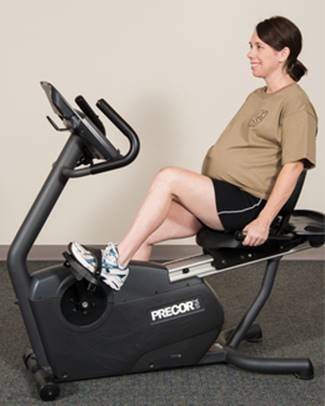
Exercise, such as cycling, during pregnancy provides many benefits.
These results were based on self-reported physical activity and likely largely reflect values for women who were active before pregnancy and continued their routines, since most women do not choose to start exercise when they become pregnant. Unfortunately, research studies that have previously inactive women either start exercising (most often walking) or participate in a control group (like a health education class) have largely failed to show significant effects of exercise on risk of pregnancy complications or excessive weight gain (20, 25, 27). Importantly, most of these studies also failed to actually get women in the exercise groups to exercise regularly (20). Thus, the lack of effects on health outcomes most likely reflects the difficulty of getting people to change their health behaviors. More studies are needed to determine whether women who start exercising once they become pregnant will enjoy the same health benefits as women who were active beforehand and continue their activity levels during their pregnancy.
The benefits of exercise continue during the postpartum period. The 2015 ACOG guidelines recommend that women resume prepregnancy exercise routines gradually after birth as soon as it is physically and medically safe (2). The exact amount of time needed to recover after birth varies from woman to woman depending on the difficulty of labor, type of delivery (cesarean versus vaginal), preexisting fitness level, and other medical complications. Typically women can resume exercise within days of delivery if no complications are present, although women who experience cesarean deliveries should not start exercising before four to six weeks postpartum. Consulting with your health care provider will allow you to determine what is best for you and your situation.
Exercising during the postpartum period helps with weight loss and appears to have psychological benefits. Women reporting greater amounts of exercise have less weight retention at six weeks and one year postpartum compared to less active women (26, 34). While being active during pregnancy or the postpartum period (or both) does not seem to reduce the occurrence of postpartum depression, exercise prescriptions have been effective at alleviating depressive symptoms among women with postpartum depression (33, 34).
Q&A
How to stay active after baby’s birth?
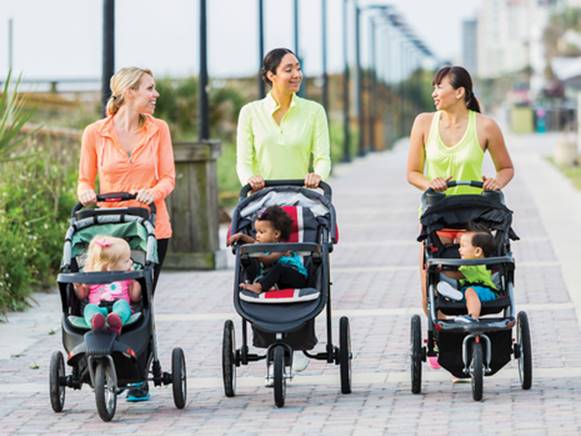
Home-based activities might include walking around the neighborhood or on a treadmill to promote aerobic fitness or using resistance bands for muscular fitness. In addition, community-based activity programs can provide social aspects in addition to opportunities to be active. For example, some communities have exercise programs specifically for mothers and their babies at shopping malls. With babies happily riding in their strollers, the moms power walk, resistance train with tubing or bands, and stretch. Not only are these exercise sessions invigorating, they also provide a chance to chat with other new mothers.
Therefore, current recommendations endorse regular exercise as part of a healthy pregnancy and postpartum period. Research shows that exercise is both safe and beneficial during pregnancy. While it is recommended that women get at least 150 minutes per week of moderate activity during pregnancy, more specific recommendations for aerobic fitness, muscular fitness, and flexibility training are not available (34). Some women choose to continue running 50+ miles (80+ km) per week during pregnancy with no ill effect, while others choose to start walking or swimming during pregnancy. Women who already have an exercise program before pregnancy are advised to continue the same program until they feel the need to modify it by decreasing intensity, frequency, or duration of exercise. Women who are not already active are advised to begin moderate exercise during pregnancy to improve their own health as well as their child’s health. As outlined throughout this book, a balanced exercise program includes aerobic and muscular fitness, along with flexibility. This section outlines some special considerations for pregnant women regarding exercise.
Precautions for Pregnancy Conditions Before Exercise
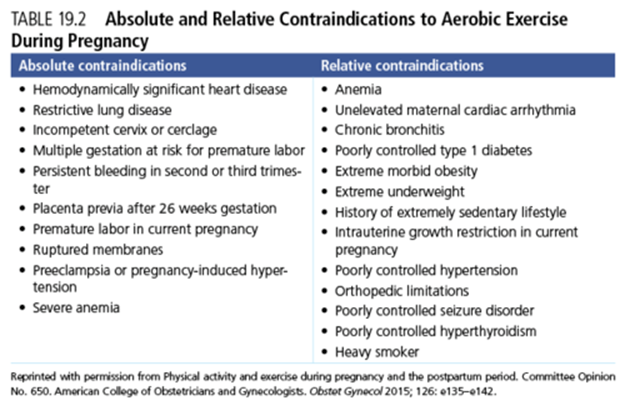
During pregnancy, women are encouraged to discuss physical activity with their health care provider since some women may have contraindications to exercise. Table 19.2 includes a list of relative and absolute contraindications to exercise during pregnancy (2). Women with absolute contraindications should not exercise until those health conditions are resolved. A woman with relative contraindications may participate in physical activities as long as she checks with her health care provider first. More intensive monitoring of maternal and fetal health may be warranted for women with relative contraindications.
Pregnant women face unique barriers to exercise, including fatigue, lack of time, morning sickness, increasing physical and joint discomfort, and lack of child care for other children (12, 22). In order to overcome these barriers, you should seek to incorporate exercise into your daily life. Exercise sessions can be broken up into smaller bouts to ease fatigue and time constraints. If you experience low back or joint pain, you may wish to pursue non–weight-bearing activities like swimming, cycling, or water aerobics. An abdominal support band can also help to support the pregnant belly during weight-bearing exercise and ease discomfort. In the postpartum, you may choose to include your baby in your workout by using a jogging stroller. It is also a good idea to try exercising with a friend or a group, especially during postpartum when many women encounter feelings of depression or feel shut off from the outside world.
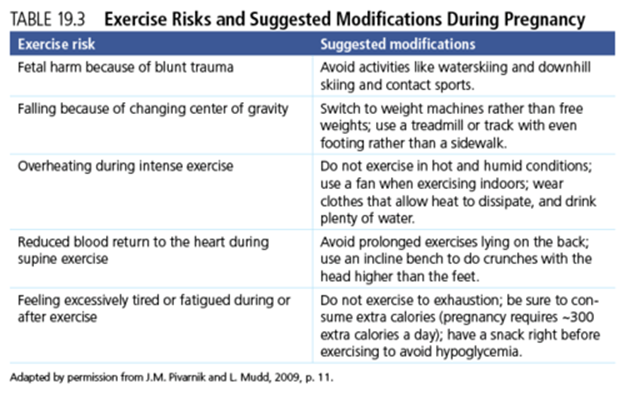
Exercise prescription during pregnancy and postpartum does not differ from exercise prescription at any other time, except for the need to avoid or modify certain activities and monitor the baby’s well-being (see table 19.3). You should maintain open communication about your exercise program with your health care provider. Additionally, you can check on your baby’s health by monitoring weight gain during pregnancy to ensure that you are gaining recommended amounts and by recording your baby’s activity patterns, such as kicking or rolling, during the day. Knowing normal activity patterns can help you determine whether a change occurs with exercise. In general, the baby should move several times within the first half hour after exercise in the second and third trimesters (10). If the baby stops moving or decreases the amount of usual activity throughout the day, you should contact your health care provider.
If you were already doing vigorous activities before becoming pregnant, you can feel good about continuing those activities throughout pregnancy, although you may choose to make some practical changes to your exercise routine later in pregnancy. If you are not already an exerciser when you become pregnant, research supports that starting a moderate aerobic exercise program like walking or swimming is both safe and beneficial.
Women often ask “How much do I need to exercise?” or “How much is too much?” during pregnancy. While the guidelines provide direction for a minimum amount of exercise (i.e., 150 minutes per week of at least moderate activity), they do not address an upper limit for exercise during pregnancy (34). Instead, women who were already active before pregnancy are advised to continue normal exercise routines until symptoms tell them to stop. Basically, if it feels good, it’s probably OK to keep doing it during pregnancy. The ACOG also gives a list of warning signs that call for terminating exercise during pregnancy (2):
· Vaginal bleeding
· Regular painful contractions
· Amniotic fluid leakage
· Dizziness or headache
· Chest pain
· Muscle weakness affecting balance
· Calf pain or swelling
· Shortness of breath (before exercise)
Symptoms don’t always need to be dramatic. Warning signs are relative to each woman and should be interpreted in light of your exercise and medical history. Many women simply report the need to decrease exercise intensity, duration, or frequency later in pregnancy. Now, more than ever, it is important to listen to your body!
Some women fear that exercise might hurt their baby and perceive vigorous or high-impact activities as unsafe (21). While such fears are unwarranted based on current research results, precautions should still be followed. Specifically, you should not engage in contact sports (e.g., ice hockey, boxing, soccer, basketball), activities with a high risk of falling (e.g., downhill skiing, waterskiing, surfing, off-road cycling, gymnastics, horseback riding), scuba diving, or sky diving (2). You should also be cautious about trying new activities that require balance and coordination, like lifting free weights, since the risk of falling increases due to a changing center of gravity and increases in joint laxity. Maintaining a normal body temperature during activity can also be harder during pregnancy, so avoid exercising in hot and humid conditions (including “Hot yoga” or “Hot Pilates”), and use a fan when exercising indoors on a treadmill or other exercise machine. Table 19.3 summarizes common exercise concerns during pregnancy and suggests modifications to lessen any risk (28).
In the postpartum period, many women are concerned about how exercise might affect breastfeeding. From a comfort perspective, enlarged breasts from lactation pose a problem for exercise; thus it takes some effort and planning to coordinate breastfeeding and exercise. Breastfeeding also requires a lot of water, so drinking plenty of water before, during, and after exercise is important. Feeding or pumping immediately before working out can ease discomfort associated with enlarged breasts. Also, many women choose to wear two sport bras or use an elastic bandage wrap to give more support while exercising. Importantly, research shows that milk volume and nutrient content are not negatively affected by exercise (4). So you can choose to be active during the postpartum period and reap the many benefits associated with exercise while knowing you are not depriving your infant in any way.
Physical Activity Recommendations
Physical activity can provide benefits for you and your baby, with consideration given to the previously described precautions. This section highlights recommendations for aerobic exercise, resistance training, and flexibility.
Aerobic Exercise
Most of the research on physical activity during pregnancy has focused on aerobic exercise. Among active women, the most commonly reported activity during pregnancy is walking for exercise (~50 percent), followed by swimming (~12 percent) and aerobics (~12 percent). Fewer women choose to participate in more vigorous activities like running (~6 percent) or team sports (~1 percent), and participation in vigorous exercise tends to decrease from the first to the third trimester (13).
Although most women do not choose to do vigorous activity, those who do so experience healthy pregnancies (14). Some active females may worry that their aerobic fitness levels will decrease during pregnancy. Actually, research shows that aerobic fitness declines very little during pregnancy when women continue to exercise, and their fitness rebounds quickly in the postpartum to prepregnancy levels or better (29).
Aerobic exercise is discussed in detail in chapter 5. During pregnancy you can follow general adult population guidelines for exercise, with the caveat that you should monitor your symptoms, discomforts, and abilities and make any necessary adjustments. Regular aerobic activity is the target so shoot for at least three days per week rather than sporadic exercise. For women just starting to exercise, work up gradually to 30 minutes per day of accumulated activity with a weekly goal of 150 minutes. Examples of these activities are found in chapter 5. If you are already doing more, that’s great. Just continue to monitor your body’s individual response to exercise and be willing to fine-tune the workout.
A moderate level of intensity is appropriate for most women. It is important to realize that resting heart rate tends to increase during pregnancy, so heart rate is not a good measure of exercise intensity at this time. Rather, you should monitor intensity using your perception of effort (5). During exercise, an intensity corresponding to a level 5 or 6 on a 10-point scale is recommended for moderate-intensity activity (see chapter 5 for details on exercise intensity). The talk test also helps to ensure that you are staying at appropriate exercise intensities, as long as you can continue talking while exercising.
Walking is a popular form of exercise during pregnancy because it is low stress (physiologically), and easy to do at home or with friends. You may want to wear a pedometer or activity tracker to track the distance you walk each day and set goals for yourself. Pedometer-based programs (like walking 10,000 steps/day) have been effective at helping overweight women stay within recommended weight gain ranges during pregnancy (32).
Q&A
What is a good way to encourage physical activity?
Realizing the benefits of physical activity for mom and baby provides a strong incentive to make exercise a priority. One simple way to help track activity is to purchase a simple pedometer or activity tracker to count daily steps. Wear the pedometer for several typical days to determine your baseline level of activity and then develop a plan to increase activity toward 10,000 steps per day. Many smartphones now have step counting capabilities and mobile apps that can track your activity too. It can be fun to use these to see your activity level over time, work toward goals, and even compete against friends and family members.
Exercise during the postpartum period is highly encouraged.
Resistance Training
Very little research has considered resistance training and muscular fitness during pregnancy, which is reflected by the lack of recommendations for resistance training. In theory, heavy lifting could reduce blood flow to the developing baby and result in poorer growth; however, this has not been documented. Rather, the few research studies examining resistance training compared to no exercise during pregnancy found no differences in length of gestation or birth weight (6, 7). One small study found that pregnant women with gestational diabetes assigned to resistance exercise training with elastic bands had better glucose control than women assigned to the control group, but these findings need to be replicated in a larger study (11). Thus, although it likely isn’t harmful, the possible benefits of resistance training during pregnancy have yet to be determined.
Past studies on resistance training during pregnancy involved light to moderate weightlifting programs that used machines, resistance bands, or body weight activities rather than free weights. For details on the various methods of resistance training, see chapter 6. Typically, lifting free weights during pregnancy is not advised due to increasing instability associated with changes in the center of gravity and increased joint laxity as pregnancy progresses. To avoid balance issues, you may want to modify programs to use weight machines or resistance bands in place of free weights. Given the lack of research studies about possible benefits or adverse effects of resistance training during pregnancy, you should work with a health care provider or fitness professional to develop an appropriate resistance training program.
In general, resistance training programs should include low-resistance, high-repetition exercises for the major muscle groups rather than powerlifting activities, which are contraindicated during pregnancy. As outlined in chapter 6, resistance training on two to three days per week is recommended, including exercises for the major muscle groups and completing 12 to 15 repetitions to the point of moderate fatigue (5). Extra care should be taken to avoid breath holding (called the Valsalva maneuver) while lifting. Instead, exhale during the exertion or muscle-shortening phase of each exercise. You should also modify exercises to avoid lying on your back (supine position), especially late in pregnancy when the weight and location of the baby may decrease the normal return of blood to the heart (2). This can ultimately cause an unwanted drop in blood pressure. Although not traditionally thought of as strength training, Kegel exercises (voluntarily squeezing muscles of the pelvic floor) are recommended during pregnancy and postpartum to reduce pregnancy-related urinary incontinence (4).
Recently, prenatal yoga and Pilates classes have grown in popularity. While systematic research on the efficacy of yoga or Pilates to improve pregnancy outcomes is still scarce, no adverse effects have been reported. Yoga and Pilates may improve pregnancy outcomes by helping to strengthen core muscles that help with labor and delivery and by improving maternal stress and mood. There is growing evidence that participation in yoga during pregnancy is associated with decreased symptoms of maternal stress, anxiety, and depression (15). A smaller body of literature supports decreases in low back and pelvic pain associated with yoga during pregnancy; however, effects on birth weight and preterm delivery have been mixed (16). More research is needed to determine what types of yoga have the best effects and whether effects are driven by mindfulness or breathing techniques, physical stances, or a combination of factors. It should be noted that Bikram yoga (aka “Hot yoga”) and “Hot Pilates” are not recommended during pregnancy due to concerns about increased maternal core temperature possibly leading to neural tube defects in the fetus and increased risk of muscle damage, dizziness, and fainting in the mother (2, 8). In addition, some yoga positions, such as those lying on the floor, may need to be modified in order to avoid loss of blood flow return to the heart (2).
Flexibility
Joint laxity (i.e., the feeling of joint “looseness” and flexibility) increases throughout pregnancy in preparation for labor and delivery. As a result, the risk for injury to joints and surrounding tissues (ligaments) is higher in pregnancy, and you should be cautious about rapidly changing direction during exercise to avoid ankle or knee sprains and other injuries. As with any exercise program, it is important to include proper warm-up and cool-down periods when exercising during pregnancy. All major muscle groups should be stretched during the cool-down when the muscles are warm.
As with any healthy adult, pregnant women should target at least 10 minutes of stretching including four or more repetitions of individual stretches on at least two to three days per week. Chapter 7 provides information on stretching programs.
Although these general recommendations on stretching are appropriate, some special considerations should be noted. Due to greater joint laxity, pregnant women should be especially careful not to “overstretch” past the point of discomfort. Some stretching exercises, especially those for the lower body, might also need to be modified later in pregnancy to account for the “baby bump” and to avoid lying on the back for too long (see “Lower Body Stretches for Pregnancy” for several suggested stretches). In addition to being an important part of an exercise routine, regular stretching may also help lessen low back pain during pregnancy.
Pregnancy is an exciting time of life for a woman, and it’s the perfect time to make changes to nutrition and activity patterns not only to improve your own health, but also to ensure a healthy start for your infant. For women who already exercise, there is no reason to make drastic changes to your routine as long as you talk with your health care provider. Common sense should be used, however, and you should listen to your body and modify activities as needed. Women who don’t already exercise can begin at any time, but it’s important to start slow and progress as appropriate. Just as at any other time in life, consultation with your personal health care provider before starting an exercise program can help ensure that you are proceeding in the best manner possible.
Lower Body Stretches for Pregnancy
Lower Back Stretch 1
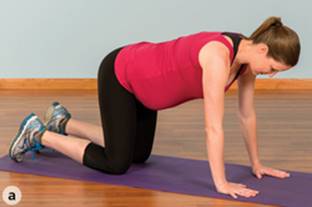
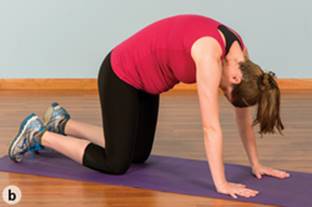
Begin on your hands and knees, with hands directly below shoulders and knees directly below hips (a). Your back should be flat. Inhale, drawing your chin into your chest, pulling your stomach into your spine, and rounding your back to make a hump (b). Exhale and return your back to a flat line. Slowly repeat several times.
Lower Back Stretch 2
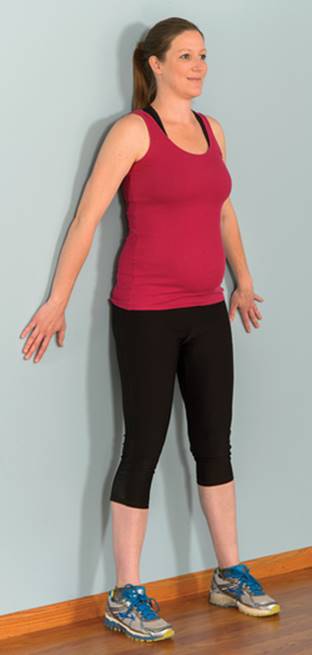
Stand up tall with your back against a wall. Exhale while pushing the small of your back against the wall. Inhale and relax. Repeat several times.
Lower Back Stretch 3
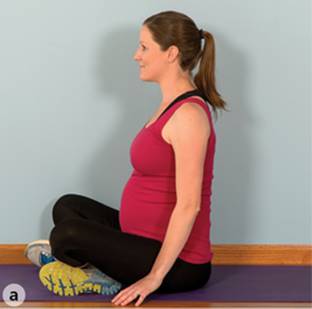
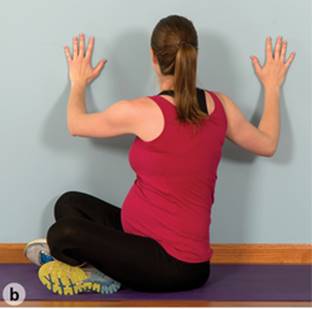
Sit up with your legs folded underneath you or cross-legged with your right side next to a wall (a). Maintaining good posture, slowly twist your upper body to face the wall (b). Press your palms or upper arms into the wall to support your body twist while keeping your legs on the floor. You should feel a stretch in your lower back. Sit facing the opposite direction and repeat on the left side.
Hamstring and Buttock Stretch
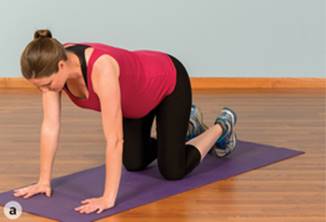
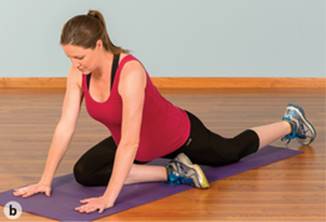
Begin on your hands and knees (a). Slide your right knee up so that it is on the floor under your right shoulder and twist your lower leg so that your right foot is on the floor under your left hip. Exhale while slowly lowering your hips toward the floor and sliding your left knee back so that your left leg is extended and lying on the floor (b). Feel the stretch in the back of your right leg and buttock. For a deeper stretch once your back leg is extended, slowly lower your upper body to lie on top of your bent leg and place your arms on the floor. Repeat with your left leg bent under.
Inner Thigh Stretch
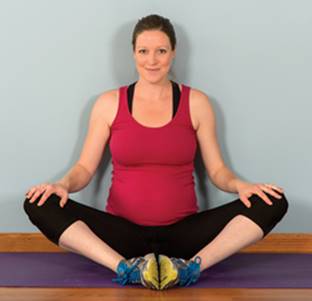
Sit on the floor with your back straight against a wall and your legs out in front. Slowly bend knees out to the side while sliding feet in toward your body until the soles of your feet touch. Keep sitting up tall and exhale while gently pushing down on knees until you feel the stretch in your inner thighs.
Calf Stretch
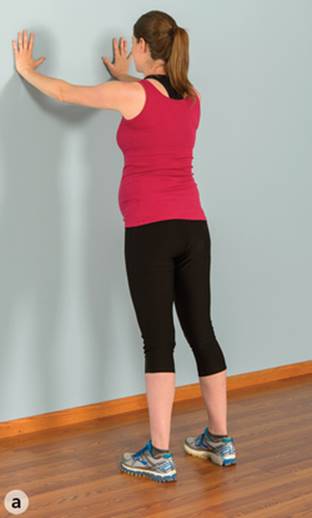
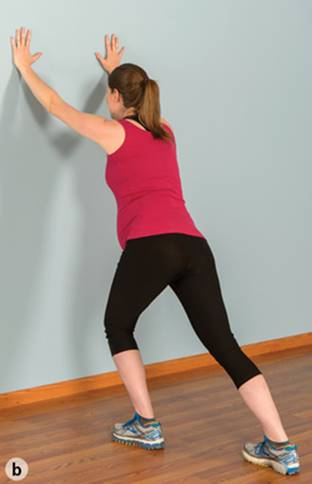
Stand an arm’s length away from a wall and extend arms until the palms are flat on the wall, slightly above shoulder height (a). Step back with the right foot, straighten the right leg, and bend the left leg toward the wall (b). Both feet should be flat and pointed toward the wall. Weight should be balanced between feet and hands. You should feel the stretch in your right calf. Switch leg positions and repeat on the left side.
Hip Flexor Stretch
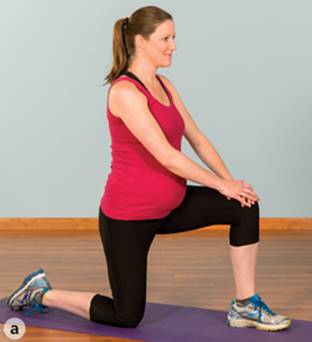
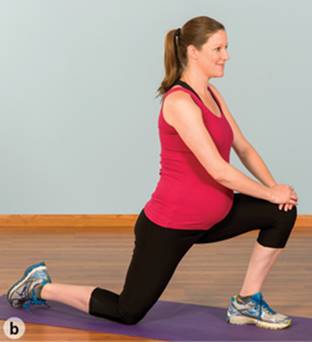
Begin by kneeling on the floor with your body upright. Place your left foot in front of you, flat on the floor with the knee bent directly over the ankle (a). Place hands on top of the left knee and slowly shift forward, keeping your back straight, so that your left knee moves over your left toe, and lean your hips forward (b). You should feel a stretch on the top of your right thigh (the hip flexor). Switch leg positions and repeat.