
Imagine you’re in a boat, and the boat is leaking. You can bail water from the boat to make it sink more slowly, but if the leaks are still there, you’ll have limited success. Conventional medicine is mostly about trying to bail water out of the boat without fixing the leaks. Wouldn’t it make more sense to prevent the leaks from happening in the first place, and then fix them completely if they do occur? We might still need to bail some water initially, but if the leaks get fixed, the boat is steadied. Eventually, there’s no more bailing required, and the sailing—or living—can resume. That’s what Functional Medicine is all about.
Root Cause
Functional Medicine seeks to get to the bottom of things. It looks for the underlying cause of disease. Conventional medicine, on the other hand, is organized primarily around suppressing symptoms with drugs and surgery. What does this split look like to a patient?
Say Dorothy goes to a conventional medical doctor with high cholesterol and is prescribed a medication to lower it. It’s unlikely anyone investigates further to find out why her numbers are high in the first place, or to help Dorothy make sense of these complex factors. The doctor may mention diet and lifestyle changes, but the system is simply not set up to support these changes.
The Functional Medicine Systems Model
How do Functional Medicine practitioners identify the root cause? I visualize the determinants of health as a series of concentric rings, which I call the Functional Medicine Systems Model.
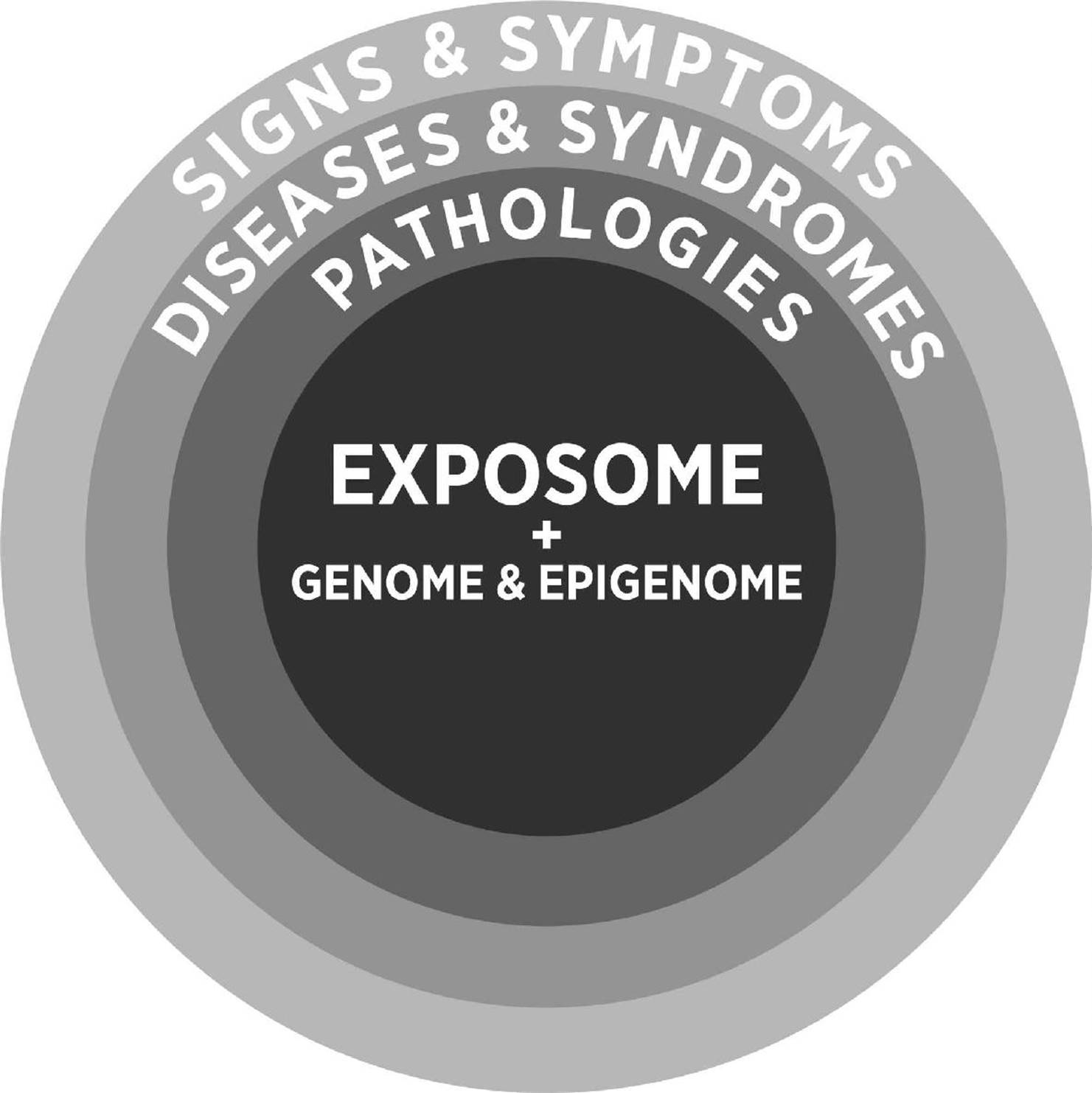
The Functional Medicine Systems Model
The Exposome, Genome & Epigenome
At the core of the model is the relationship between the Exposome, our genes themselves, and the way our genes express themselves over time. The Exposome is the sum of all non-genetic exposures an individual encounters from the moment of their conception to the moment of their death. It’s a new word that encompasses all aspects of our behavior and environment, including our diet, lifestyle, air and water quality, toxins, social environment, family system, and so on. We know that most diseases are driven by factors related to the Exposome, but the way that disease manifests in an individual is determined by the relationship between those factors, their genes, and their genes’ expression. The Functional Medicine Systems Model holds that any progress in a patient’s health must start here at the core.
Pathologies
The next ring out from that central core is pathologies. When our modern diet, lifestyle, and environment changes the expressions of our genes, it can lead to deviations from normal physiology that characterize and constitute diseases and syndromes. In other words, pathologies are the underlying mechanisms that give rise to diseases and syndromes.
Let’s consider a syndrome like IBS. Genetic predisposition combines with environmental influences (such as poor diet, stress, sleep deprivation, exposure to toxins, etc.), which in turn affect gene expression. These interactions lead to pathological mechanisms—such as gut infections, parasites or bacterial infections, low stomach acid, bacterial overgrowth in the small intestine, or a disrupted gut microbiome—that can cause the syndrome that we call IBS. Pathologies also are found in the formulation of many diseases. Insulin resistance and inflammation are two of the pathologies that give rise to type 2 diabetes. Nutrient deficiency and autoimmunity are often at the root ofhypothyroidism.
At the core of the Functional Medicine Systems Model lies the relationship between the Exposome, genes, and genetic expression; the next ring out concerns the pathologies that rise out of that core relationship. The ring beyond that depicts the syndromes and diseases that stem from pathologies.
Diseases and Syndromes
What, exactly, is a disease? What’s a syndrome?
A disease is defined as a disorder of structure and function that produces specific signs and symptoms. Some examples of diseases are type 2 diabetes, gastroesophageal reflux disease (GERD), Alzheimer’s disease, celiac disease, and rheumatoid arthritis.
A syndrome is a group of signs and symptoms that consistently occur together, or a condition characterized by a set of associated symptoms. Some common examples of syndromes are IBS, restless leg syndrome, chronic fatigue syndrome, fibromyalgia syndrome, or premenstrual syndrome (PMS).
A disease is more clearly defined and characterized than a syndrome because it has specific signs and symptoms and the causes are more clearly defined and understood.
Signs and Symptoms
From syndromes and diseases, the circle stretches out to “signs and symptoms.” A sign is an objective indication of a disease or syndrome that can be observed during a physical examination or through laboratory testing. Examples of signs include the high blood pressure, high blood sugar, and lower leg edema that a physician might observe in a patient with type 2 diabetes. Symptoms, on the other hand, are the subjective experiences that the patient might report to the clinician. For the type 2 diabetes patient, symptoms might include increased hunger and thirst, blurred vision, and fatigue.
The signs and symptoms ring describes the outward manifestation of everything that comes before it within the circle. It tends to be the most visible, since the symptoms are generally the way that patients experience what’s happening deeper within their body, and the signs are what the clinician observes by examining and testing the patient.
Returning to Dorothy, our earlier example, if a doctor measures Dorothy’s cholesterol and tells her, “You have high cholesterol,” the doctor is describing a sign. In conventional medicine, they more often see this as a disease itself. In the functional model, we view it as a manifestation of a pathology that results from the interaction between the patient’s genome, epigenome, and Exposome. If Dorothy is eating a diet that interacts badly with her genes, that will lead to a pathology—in this case, that might be the improper clearance of cholesterol-carrying lipoproteins from the blood. Eventually, this leads to high cholesterol, the manifesting sign of the other factors at work.
An even simpler example is migraines. If a patient reports having migraine headaches, he’s clearly describing a symptom. Headaches are not a disease; they’re not even a pathology. Headaches are a symptom, but the conventional model might address them simply with a prescription for painkillers. This approach might alleviate the current headache but does nothing to help us discover the pathologies that lead to the headaches in the first place.
The conventional model typically seeks to manage disease, slow its progression, and help the patient live with symptoms. In some instances, when diseases aren’t curable or reversible, those are the only options a healthcare provider may have available. But most of the time, this is an incomplete approach to patient health. It misses the opportunity to prevent and reverse disease, because it works from the outside in, focusing mainly on symptoms.
Inside, Out vs. Outside, In
In Functional Medicine, we approach treatment from the inside of the circles and move outward.

Inside, out (Functional Medicine) vs. outside, in (conventional medicine)
We start with the relationship between the Exposome, the genome, and the epigenome. If we go back to Dorothy’s high cholesterol example, the Functional Medicine practitioner might do some testing not only of Dorothy’s cholesterol and lipids but also her genetic profile. For instance, the clinician might determine Dorothy’s APOE phenotype. If she is APOE 3/4 or 4/4, or if she has other genetic variants that affect cholesterol and lipoprotein trafficking, the clinician knows Dorothy may be hyper-responsive to the dietary effects of cholesterol and saturated fat. If Dorothy has been trying to lose weight on the Atkins diet, eating few carbs but lots of fat, she may not be doing herself any favors. She might be better off reducing her overall fat intake, and switching out saturated fats for monounsaturated fats. Without the genetic tests, Dorothy may never have realized it.
Consider another patient, Sujata, who comes in with a history of frequent miscarriages. After genetic testing, we might find that Sujata has two copies of a polymorphism in the MTHFR gene. This would predispose her to having low folate levels, and a higher risk of miscarriage. We would recommend that Sujata boost her dietary folate intake—eat more dark, leafy greens, organ meat, lentils, etc. We may also suggest folate supplementation. Once again, we begin with the “inside” and work out, starting with a patient’s Exposome.
It’s not always necessary (or even possible) to do genetic testing. In many cases, we can use the assumptions of the ancestral model, which recognize that our genes and our biology are hard-wired for the diet and lifestyle that we evolved with for thousands of generations. We can make diet, behavior, and lifestyle choices based on that assumption, when genetic testing isn’t available.
After analyzing the Exposome layer, we examine pathology. For Dorothy, several possibilities come to mind. Poor thyroid function, or hypothyroidism, can lead to high levels of LDL particles in the blood. Insulin and leptin resistance also have this effect. If Dorothy is overweight and has diabetes, addressing her insulin and leptin resistance may lead to lower levels of lipoproteins in her blood. We can also consider testing for exposure to toxins—heavy metals like mercury and lead can cause high levels of LDL. In Functional Medicine, we look at all of the potential underlying pathologies, and address them one by one. It’s likely that Dorothy would see a reduction in her LDL particle number as she went above and beyond the dietary and lifestyle changes we first suggested.
How Functional and Conventional Medicine Differ
To get a more complete picture of how Functional Medicine works, let’s consider it on a broader scale, especially as it compares to conventional medicine. (Note that the comparisons below are generalizations. Just as no two Functional Medicine practices operate the same way, no conventional practices are identical; many clinics and clinicians will fall outside these generalizations.)

Comparison of Functional Medicine and conventional medicine
Healthcare vs. Disease Management
As we’ve discussed, conventional medicine is well-suited for dealing with acute, infectious disease, trauma, and injuries. However, it falters in addressing chronic disease, which is the biggest health problem we face today. This is revealed in the following concerning statistics (Goldhill 2013):
· Within conventional medicine, pharmaceuticals are the primary treatment for almost 90 percent of all chronic conditions.
· At any given moment, roughly 50 percent of American adults, including nine of ten adults older than sixty, are taking at least one prescription drug.
· Almost a third of adults take two or more drugs.
· Almost 30 percent of all teens are now on a prescription drug, as are 20 percent of young children in the United States.
· America spent just under $310 billion on pharmaceutical drugs during 2015 (IMS Health 2016).
As patients struggle to alleviate their symptoms, they’re often given little more than a prescription to solve their problems. The focus of most interactions in conventional medicine is not optimizing health; it’s managing disease once it has already occurred. Conventional medicine is not truly healthcare—it’s disease management.
Functional Medicine, on the other hand, is designed to promote health. We try to prevent disease from occurring in the first place, and when it does, we seek to reverse it completely by investigating its underlying cause. You can think of Functional Medicine clinicians as “health detectives.”
If a clinician can identify and address the root of problematic symptoms, patients don’t just receive a Band-Aid for their problem; they can experience profound and long-lasting results. Conventional medicine, with its emphasis on drugs that are often taken indefinitely, creates “patients for life.” Functional Medicine, on the other hand, supports patients to recover their function so they can “graduate” from care and get back to living their life.
Patient-Centered vs. Doctor-Centered
In Functional Medicine, patients are encouraged to play an active and engaged role in their treatment because we recognize that the patient’s behavior is one of the biggest, if not the biggest, contributor to chronic disease. We believe that if patients want to overcome a chronic ailment, they must shift their behavior.
Our model is patient-centered. In contrast, conventional medicine tends to be doctor-centered, functioning in the “expert” model of care. The doctor provides the answers, and the patient passively receives that expertise.
Of course, not all conventional doctors work this way. Many would never presume to talk down to their patients. Still, the model itself presumes that the doctor is the gatekeeper of information and advice.
Biochemical Individuality vs. En Masse Treatment
We’re often asked this question at our clinic: “Do you treat [insert name of disease]?” That’s a fair question. But in Functional Medicine, we don’t treat diseases. We treat patients, and the underlying patterns that give rise to disease. We recognize that each patient is unique, and that a one-size-fits-all approach isn’t effective. Even patients with the same condition may get different treatments.
Let’s say you have two patients—Steve and Miranda—who are each struggling with a skin problem like psoriasis. In Steve’s case, we may do some testing and find that he has a gut infection and that’s what’s driving his condition. We might treat Steve using either antimicrobial herbs or a combination of antibiotics and probiotics. These treatments might resolve Steve’s skin condition. But what if we find that Miranda’s symptoms stem from an autoimmune disorder? Her treatment will focus more on her diet and supplements to help regulate her immune system, eventually resolving her problem. Both patients came to you with psoriasis, but the cause of their symptom—and thus the optimal treatment—is different.
In conventional medicine, two patients with the same condition are likely to receive identical treatment. If Steve and Miranda go to the doctor’s office with psoriasis, both patients get the steroid cream, regardless of the underlying cause. The cream may help in both cases, but their skin problems are unlikely to go away completely because the cause hasn’t been addressed.
This is one of the reasons why most Functional Medicine practitioners are generalists, rather than specialists. We’re less concerned with the specific manifestations (i.e., signs and symptoms) of each disease than we are with the underlying pathologies that give rise to all diseases, signs, and symptoms. The Functional Medicine Systems Model that I introduced earlier in the chapter is the best way I’ve found of illustrating this distinction, and I often find myself sharing it with both patients and clinicians who I’m training, to clarify the point.
Holistic vs. Specialized
Functional Medicine treats the body as an interconnected whole. It’s holistic. We recognize that to treat one part, the other parts must be considered because they’re connected.
Conventional medicine, on the other hand, is dualistic, viewing the body as a collection of separate parts. That’s why we see specialists for each part of the body, e.g., a cardiologist for heart problems, an endocrinologist for thyroid issues, a rheumatologist for autoimmune conditions. Unfortunately, those specialists infrequently consult with each other or acknowledge the important connections between the body’s various parts. It probably wouldn’t even occur to Steve’s dermatologist to refer him to a gastroenterologist to check for gut dysfunction because, like most conventional medicine specialists, dermatologists don’t tend to look at the roots of disease in a systemicfashion.
Cost vs. Savings
One shortcoming of Functional Medicine, at least at the time of this writing, is that it’s not well-covered by insurance. This has led to criticism that Functional Medicine is more expensive than conventional medicine. It’s true that the accessibility of Functional Medicine is limited because of the lack of insurance coverage, and this is a real problem. But this is largely because conventional medicine is heavily subsidized by the insurance model, whereas Functional Medicine is not. If we examine the actual cost of care—without the insurance subsidies—we’ll see that Functional Medicine is often much more affordable than conventional medicine, largely because it seeks to prevent and reverse disease, rather than just manage it.
Let’s take type 2 diabetes as an example. The American Diabetes Association estimates that it costs approximately $14,000 a year to care for each patient with type 2 diabetes. If a patient develops diabetes at age forty, and lives for another forty years, that’s a cost of more than half a million dollars to treat a single patient through his lifetime.
If we used a Functional Medicine approach, however, we’d do preventative testing with patients that would catch an early problem with blood sugar long before it progressed to diabetes. We might spend more up front on testing, preventative care, diet and lifestyle intervention, and other treatments than in the conventional model—let’s say $5,000, for the sake of argument. But although the upfront cost may be higher, Functional Medicine would save an enormous amount of money over this patient’s lifetime, because it would prevent diabetes before it occurred in the first place.
The reactive nature of conventional medicine, which often doesn’t intervene until a patient’s disease has already progressed, results in massive costs. Patients with advanced disease need more appointments, specialists, tests, check-ups, medication, and so on. These costs may not be visible to the patient, since his insurance company is footing the bill, but that doesn’t mean they’re not real—and it doesn’t mean the patient isn’t paying for them in some form via insurance premiums, taxes, and out-of-pocket expenses.
High Touch
Functional Medicine takes a “high touch” approach. That means we strive to offer a high level of service to patients. We talk with patients, listen to them, learn about their backgrounds, and provide a level of connection and support that we know is therapeutic itself. This used to be the norm. Just fifty years ago, medical doctors still did house calls and spent ample time with each patient. Modern conventional medicine, with its ten- to twelve-minutevisits, instead creates a factory-like, impersonal atmosphere. Functional Medicine is trying to reclaim that higher level of service with the patient.
We also embrace the most recent technology, which helps us provide patient services like telemedicine and to function smoothly as a collaborative team. We use “high-tech” to be “high touch.” Conventional medicine embraces modern technology as well, but it often creates a barrier between doctor and patient, rather than a connection.
Integrative Approach
Functional Medicine is integrative, combining the best of allopathic and holistic treatments. We typically start our work with diet, lifestyle, and behavior modifications, nutritional supplements, and botanicals. We don’t rule out medications or even surgery when necessary, but they’re rarely the first methods that we turn to—mainly because in most cases, drugs don’t address the underlying problems. Conventional medicine tends to be more allopathic in its approach, and relies almost exclusively on drugs and surgery. Although most doctors acknowledge the importance of diet and lifestyle, the model isn’t structured to support patient change in those areas.
Our integrative approach and treatment protocols also tend to be safer. Functional Medicine treatments typically have fewer side effects, risks, and complications than the drugs prescribed in conventional settings. In fact, Functional Medicine sometimes leads to positive side effects. For example, our psoriasis patient Steve not only cured his skin problem by healing his gut and changing his diet, but his digestion and energy improved as well.
Treatments in conventional medicine tend to be more dangerous. Drugs and surgery can cause serious side effects and complications, including death. Some drugs have side effects that are worse than the patient’s original symptoms. As a result, many people end up on multiple drugs—some for the original problem, and others for the side effects caused by the first drugs. Consider a patient, Sarah, who takes a medication for anxiety. The medication may help Sarah with her anxiety, but it might also cause constipation. Sarah must then take a medication for constipation, but this medication has side effects as well—and so on. Before you know it, people are on five, six, seven, or eight drugs—or even more.
According to a commentary by Dr. Barbara Starfield published in the Journal of American Medical Association, medical care is the third leading cause of death in this country (Starfield 2000). But since only 5 to 20 percent of iatrogenic events (i.e., events caused by medical intervention) are reported, Dr. Starfield speculated that medical care may in fact be the leading cause of death. That frightening statistic stems from prescription drug errors, hospital-related errors, and other iatrogenic events. The functional model holds that often most of a patient’s healing can be accomplished through much gentler treatment approaches.
THE HISTORY OF FUNCTIONAL MEDICINE
Although recent history has worked against it, holistic medical care is not a modern invention. In fact, it’s ancient. Practitioners of traditional Chinese medicine and Ayurveda, for example, have considered patient ailments comprehensively for centuries. These approaches view human beings as whole beings, rather than a collection of separate parts. Functional Medicine, however, offers key updates. We use state-of-the-art diagnostic tools to effectively identify root causes. Today, we have access to tools like blood, stool, urine, and saliva testing—many of the same tools conventional doctors use. Functional Medicine considers the results of those tests within the ancient paradigm, to establish a meaningful context.
Functional Medicine as a modern pursuit was organized, defined, and clarified by Dr. Jeffrey Bland. Jeff Bland is the founder and president of Personalized Lifestyle Medicine Institute. He’s a biochemist, with dual degrees in biology and chemistry. He also has a PhD in organic chemistry. He’s a fellow of the American College of Nutrition where he’s a certified nutrition specialist.
Dr. Bland didn’t originate the concepts of Functional Medicine; they’re found in many of the systems of traditional medicine. However, he is largely responsible for organizing and articulating the modern Functional Medicine approach, beginning with his founding of Institute for Functional Medicine (IFM) in 1991. IFM started off small, but over time, it became the largest international organization dedicated to the advancement of Functional Medicine as a treatment approach.
If Jeff Bland is the grandfather of Functional Medicine, Dr. Mark Hyman is the father. Dr. Hyman has been arguably more responsible for advancing Functional Medicine than anybody other than Bland. His work has reached a wider audience than anyone else’s—Hyman’s books have been number one best-sellers on the New York Times’ list ten times. He could be considered Functional Medicine’s most prolific ambassador.
Cleveland Clinic was the first major organization to recognize the power of Functional Medicine. They tapped Mark Hyman to create a Center for Functional Medicine within Cleveland Clinic. Their practice is booming. They’ve hired a fistful of new doctors, yet still have an eight-month waiting list. Clearly, a lot of people have been waiting for something like Functional Medicine for a long time.
The Functional Approach to Chronic Disease
Let’s examine how these two paradigms—one, looking at a body as a collection of parts, and the other, looking at the body holistically—look different in practice.
Physician’s Perspective
Alzheimer’s Disease
Dr. Dale Bredesen is a well-established and highly respected Alzheimer’s doctor, a scientist who spent decades focused on Alzheimer’s research, looking through a microscope in a lab, seeing the trees but not the forest. After many years, he realized how limited this approach was. He hadn’t answered some of his most persistent questions: Why is Alzheimer’s so much more prevalent today than it was before? Why do contemporary hunter-gatherersseem to escape Alzheimer’s? What could explain that? We share many of the same genes with hunter-gatherers, so there must be environmental causes—if that’s true, what are they? These questions led Dr. Bredesen to switch to a Functional Medicine approach on his own before he had even heard the phrase.
Dr. Bredesen now addresses dementia and Alzheimer’s disease from a holistic—functional—perspective. When a patient comes to see him, he doesn’t simply administer memory tests. He investigates the patient’s gut function. He measures their blood sugar. He examines their diet and their nutrient status. He considers heavy metal toxicity, mold, and biotoxins. He analyzes methylation. He looks at detoxification.
Dr. Bredesen is so thorough because he understands that the brain is not removed from all other bodily systems. Inflammation in the gut can affect the brain, and high blood sugar can cause insulin resistance. Insulin resistance in turn affects the availability of glucose in the brain, which is why some people call Alzheimer’s “type 3 diabetes.”
Dr. Bredesen understands that heavy metals and other toxins cause inflammation and affect the brain and cognitive function. He realizes that vitamin B12, choline, and other nutrients are crucial for brain function. He has restructured his Alzheimer’s investigations using this functional perspective, and he summarizes this revolutionary approach in his book, The End of Alzheimer’s: The First Program to Prevent and Reverse Cognitive Decline (Bredesen 2017).
The results of Dr. Bredesen’s “root cause” approach to dementia and Alzheimer’s disease have been extremely encouraging. In some cases, patients have seen an almost complete reversal of their symptoms and have been able to resume their work and normal activity. This is unheard of in conventional treatment. In fact, despite more than twenty-five years of trials, not a single drug has been developed that has been shown to slow—much less reverse—the progression of Alzheimer’s. In other cases, patients may not see a full reversal of their condition, but at least a slowing or stopping of the progression, which is again more than conventional treatment can offer.
Autoimmune Disease
Another example of how the functional and conventional paradigms differ is Dr. Terry Wahls’ approach to autoimmune disease. Dr. Wahls is a clinical professor of medicine at the University of Iowa Carver College of Medicine in Iowa City, where she teaches internal medicine residents in their primary care clinics. She also does clinical research and has published over sixty peer-reviewed scientific abstracts, posters, and papers.
In 2000, Dr. Wahls was diagnosed with multiple sclerosis (MS), and by 2003, she had transitioned to progressive secondary MS. She underwent chemotherapy to slow the disease and began using a tilt-recline wheelchair because of weakness in her back muscles. By 2007, she was in a wheelchair, and the prognosis was that she’d eventually become bedridden by the disease and likely have a shorter lifespan.
Fortunately for Dr. Wahls, she wasn’t willing to accept this prognosis. She knew from her academic medical training that the latest discoveries in the research world take at least twenty to thirty years to filter down into conventional clinical practice. So, she started doing her own research, and began making a list of nutrients that had been shown to be beneficial for brain health, and thus might help her condition. She also discovered Functional Medicine and began to think about her condition in completely different terms. What if there was a way not only to slow the progression of her disease but reverse it?
In December of 2007, Dr. Wahls began a dietary and supplement protocol based on her exhaustive research. The results stunned her physician, her family, and Dr. Wahls herself: within a year, she could walk through the hospital without a cane and even completed an eighteen-mile bicycle tour. She went from being in a wheelchair to walking and bicycling without support in less than twelve months.
Over the next several years, Dr. Wahls refined and expanded her protocol, and then introduced it to the public in her book The Wahls Protocol: A Radical New Way to Treat All Chronic Autoimmune Conditions Using Paleo Principles (Wahls 2014). Since then, thousands of people around the world have successfully treated their autoimmune conditions—not just MS, but other autoimmune problems like inflammatory bowel disease, Hashimoto’s, and rheumatoid arthritis—with the Wahls protocol.
This is remarkable given that the conventional approach to treating autoimmune disease is almost exclusively focused on suppressing and managing symptoms. For example, if Farah has rheumatoid arthritis, she might be prescribed steroids to reduce inflammation, and analgesics to relieve pain. These drugs often have side effects, such as weight gain and constipation, so Farah may also end up taking additional drugs to deal with these side effects. Before long, Farah is taking five to six medications—which she’ll need to take for the rest of her life—without any true change in her condition.
With a Functional Medicine approach to autoimmune disease, such as the Wahls protocol, Farah has the potential to not only stop the progression of her disease, but in some cases to reverse it completely. What’s more, she can do this with diet, supplements, and lifestyle changes, avoiding the adverse effects and long-term risks that come with immunosuppressive drugs and pain relievers. Functional Medicine offers hope and real transformation to patients like Farah, who would otherwise be consigned to a lifetime of medications, doctor’s visits, and suffering.
Patient’s Perspective
GERD
Let’s see how Functional Medicine works differently from the conventional approach. We’ll start with Ashley, who suffers from GERD, or reflux. GERD affects a shockingly high number of people—statistics suggest that 20 to 30 percent of Americans suffer GERD symptoms weekly (Zhao and Encinosa 2008). For as long as she has dealt with this problem, Ashley has been told to treat her reflux with proton pump inhibitors, or PPIs. PPIs were only approved by the FDA for short-term use of two weeks or less, but that recommendation has been widely disregarded; some people have been on them for decades. Unfortunately, PPIs can lead to all sorts of problems. PPIs work by completely suppressing stomach acid production. These drugs are remarkably effective at achieving that goal, and can significantly reduce reflux and other symptoms of GERD. The problem is that they don’t do anything to address the cause of the acid refluxing into the esophagus in the first place. What’s more, they have numerous adverse effects. First, stomach acid plays many important roles in the body—it’s not just there to give us heartburn. It protects us against infectious organisms that might be present in things we eat and drink, and it helps with the absorption and assimilation of protein, vitamins, and minerals. Second, proton pumps aren’t limited to the stomach; they’re present in just about every cell in the body, and they’re involved in the process of cellular energy production. This explains why PPIs are associated with numerous adverse effects, from altering the gut microbiota, to impairing nutrient absorption, to increasing the risk of cardiovascular events, to damaging the kidneys, to decreasing cognitive function (Kresser 2016).
As serious as these side effects can be, the worst problem with PPIs is that they may contribute to the very problem that they’re meant to solve. Ashley’s test results revealed that she had SIBO. Research has shown that SIBO may be an underlying cause of GERD, and PPIs may increase the risk of SIBO (Tziatzios et al. 2017). I treated Ashley with botanicals, probiotics, and other nutrients to address her SIBO, and I also suggested she follow a diet low in certain types of carbohydrates that serve as a food source for the bacteria in the small intestine.
Within three weeks, Ashley completely stopped taking her PPI—after years of using it daily—and she reported an 80 percent reduction in her symptoms. For the first time in recent memory, she was having full days where she didn’t experience any GERD symptoms at all, and even when she did experience them, they were much less severe and shorter-lived. If you or someone close to you has suffered from GERD, you know how debilitating and life-altering it can be and how welcome an improvement like this would be. Ashley was truly ecstatic and felt as if her life had been given back to her.
PROBLEMS WITH PPIS
Over the last two decades, studies have shown that PPIs can increase the risk of infection and significantly increase nutrient deficiency (Kresser 2016). One nutrient particularly stamped out by PPIs is B12, which is crucial for cognitive health—and indeed, several studies have found an association between PPIs and cognitive health. There’s also a strong association between PPI use and bone fractures in the elderly. PPIs have been shown to increase the risk of cardiovascular events because they reduce the production of nitric oxide, a substance that promotes the dilation of blood vessels and improves blood flow. Elderly people who have been on PPIs for many years often suffer from osteoporosis, cardiovascular disease, and cognitive problems. The general assumption is that these issues are simply a result of getting older—but PPIs (and other medications) are likely to play a significant role in the conditions that we associate with older age.
Migraines and neuropathy
Eric, a patient with severe neurological conditions, came to the clinic after seeing a primary care doctor, several neurologists, and other specialists. He suffered from tics and tremors, neuropathy, migraines, and visual disturbances. The doctors Eric saw had run several tests specific for neurological function but were unable to offer him a diagnosis that went beyond a description of his symptoms. They prescribed several different medications with the aim of providing relief, but unfortunately, none were effective (and most had intolerable side effects).
In our initial appointment, I explained to Eric that his symptoms may be related to problems in his gut, which his previous doctors hadn’t tested for. Eric was understandably skeptical, since he didn’t have any digestive symptoms. But he was desperate to find an answer, so he agreed to do some additional testing.
The results indicated that Eric had undiagnosed celiac disease (CD). Most people—including doctors—think that celiac disease is exclusively a digestive disorder. Research tells a different story. One in two patients diagnosed with CD does not have gut symptoms, and for every diagnosed case of CD, there are 6.4 cases that remain undiagnosed (Fasano and Catassi 2001)—most of which are atypical or silent forms with no gut symptoms (Catassi et al. 1995). Celiac disease has been linked with a wide variety of diseases outside of the intestine, such as type 1 diabetes, multiple sclerosis, heart failure, depression, arthritis, and dermatitis. This explains why CD can manifest with symptoms outside of the digestive tract, ranging from chronic headaches to dermatitis to joint pain to insomnia (Kresser 2013a).
When Eric removed gluten from his diet, his migraines, tics, tremors, and other symptoms stopped. He recovered about 95 percent of his previous function. How is this possible? How could a condition characterized by intolerance to a single food substance cause migraines, neuropathy, and tremors? Celiac disease damages the intestinal barrier and causes it to become permeable. When this happens, large proteins and toxins produced by gut microbes escape the gut and enter the bloodstream where they provoke a chronic, low-grade inflammatory response. This inflammation then affects organs and tissues throughout the body, including—in Eric’s case—the brain and the nervoussystem.
Fortunately, in Eric’s case, the solution was remarkably simple. We found a single underlying cause: gluten. A single dietary element had triggered a cascade of symptoms in different parts of his body. Eric had seen different doctors for different symptoms, and they all offered different drugs to treat those symptoms. Nobody was thinking systematically about a single cause that could produce all these symptoms. That’s the difference between the dualistic approach of conventional medicine and the more holistic approach of Functional Medicine.
Infertility
Camila is another example. She came to see me because she and her husband had been unable to conceive for the past three years, despite using in vitro fertilization (IVF) and other assisted reproductive technologies. This is unfortunately a common problem; recent statistics suggest that about one in eight couples have trouble getting pregnant (CDC 2016).
In the conventional paradigm, little attention is given to investigating the underlying causes of infertility. Treatments typically involve drugs to stimulate ovulation, hormone injections, or IVF, in which fertilized eggs are placed in the woman’s uterus. Although these interventions may be effective, they do not address the reason why the couple is unable to conceive in the first place.
In Functional Medicine, we start by asking why the couple is having trouble getting pregnant. The possibilities include nutrient deficiency, thyroid problems, sex hormone imbalance, inflammation, insulin resistance and blood sugar abnormalities, chronic stress, and environmental toxins—to name a few. Since infertility may be related to either partner, it is often necessary to test both to determine what the underlying issues are.
In Camila’s case, we found that both her and her husband were suffering from chronic mercury toxicity that resulted from an extended overseas stay in China, where they were both working. Studies have found that higher blood mercury levels are correlated with infertility in both men and women (Choy et al. 2002). We started a mercury detox protocol with both Camila and her husband, and three months after their mercury levels had normalized, they successfully conceived. What’s more, they did this without any assisted reproductive technology. Nine months later, Camila delivered a healthy baby girl. She was in tears when we spoke on the phone; she felt that she might have missed her chance to have a biological child had she not discovered Functional Medicine and learned that hidden mercury toxicity was preventing her from conceiving. Unfortunately, issues like these are all too common—and most often go undiscovered.
As a practitioner, there’s nothing that gives me more joy than helping a couple to conceive and bring a healthy child into the world, especially when either partner has been told that they’re “infertile.” I’ve learned over time not to believe this diagnosis, since in many cases the couple is able to conceive once the underlying causes of “infertility” have been addressed.
Where to Start?
Although the “inside, out” paradigm is our most consistent approach, there are times when it’s necessary to begin care by immediately addressing the outermost ring. Let’s consider Dylan, a patient with a truly confounding set of symptoms, stemming from what is often a confounding disease: Lyme. Perhaps Dylan had come in for his first appointment at our clinic and said, “I was bitten by a tick two days ago. I removed it and now I’ve got this bullseye rash, and I’m having neuropathy and night sweats and fever.” If that were the case, we obviously would not start with diet and lifestyle. We would immediately begin treating Dylan’s infection.
But what if Dylan’s case wasn’t so easy to address? What if Dylan never remembers getting bitten by a tick, but has tested positive for Lyme and been treated with antibiotics by another practitioner? What if, even after taking all those antibiotics, Dylan continues to have symptoms? In his first consultation with us, Dylan might describe the frustrating journey it’s been: “First, they said I had Lyme, then after I didn’t get better with treatment, they told me I don’t have Lyme, and that it’s some other syndrome. I think they called it ‘post-treatment Lyme disease syndrome,’ whatever that’s supposed to mean. One doctor said it was chronic Lyme, but then another doctor said chronic Lyme isn’t even real. I don’t know what’s going on.”
Lyme disease is still a mystery. Initially, the CDC stressed that chronic Lyme didn’t exist. If a person got a tick bite and had Lyme, he was supposed to take antibiotics for Lyme and that would be the end of the story. There have been some chinks in the armor of that hypothesis recently. Researchers such as Professor Ying Zhang at Johns Hopkins University have shown that Borrelia, the bacterium that causes Lyme disease, can persist in forms that are resistant to commonly used antibiotics. This suggests that chronic Lyme may exist after all, and there are many instances where people who have been treated for chronic Lyme have improved.
In a situation like Dylan’s—where there’s much still to be discovered and new research that questions earlier assumptions—where do we begin in the functional model?
The Functional Medicine Pyramid
Discerning the most effective way to structure and layer a patient’s treatment is part of the practice of Functional Medicine. Even as we consider all possible points of intervention in a complex patient’s case like Dylan’s, we must identify a starting place. The Functional Medicine pyramid below illustrates what I’ve found to be the optimal progression of treatment for most patients. There are exceptions, such as with a patient with an acute infection that needs to be addressed immediately, but the pyramid can help us walk through the most common, and often most useful, progression.

The Functional Medicine Pyramid
We almost always start with the foundational layer—diet, lifestyle, and environment. That’s especially true for chronic illnesses. If Dylan were a patient at our clinic, we would likely start with the bottom two levels of the pyramid. If the foundation is shaky, whatever we do to address the Lyme—if that is indeed the issue—is going to be less effective. In Dylan’s case, we would start with gut health, nutrients, HPA axis (hypothalamic pituitary adrenal axis, the system of the body that governs our response to and is most affected by stress), diet, and lifestyle. Patients often experience significant improvement by addressing these areas alone. Only after the foundation is established do we go on to address infections and other issues higher in the pyramid.
We use this pyramid approach with most patients’ conditions. If a patient comes in with an autoimmune disease or gives us a long list of symptoms with no clear cause, then we make our way up the pyramid. In most cases, we begin at the bottom of the pyramid because we know from clinical experience and from research that those areas are likely to have the biggest impact on the broadest range of conditions.
Why does an inside, out, bottom-up approach work so well on modern, chronic disease? It’s because of what drives those diseases—the mismatch between modern diet, lifestyle, and environment and our basic human biology. This mismatch is the primary driver of chronic disease. What our bodies need, ancestrally speaking, is not what our bodies get in the modern world. In the next chapter, we’ll look at this in more detail.