
Paeonia spp.
Peony
Although now regarded in the West as no more than a decorative garden flower, the peony has a long tradition as a medicinal herb, and was used in the past to treat nervous conditions including epilepsy. Today, the root is highly valued in Chinese medicine, where two species are used: both the red- and white-flowered P. lactiflora and P. suffruticosa, the tree peony. The name reputedly derives from Paeos, a physician during the Trojan Wars.
Character: P. lactiflora – sour, bitter and slightly cold; P. suffruticosa – more pungent.
Constituents: Alkaloids, volatile oil, benzoic acid, asparagine.
Actions: P. lactiflora: Antibacterial, antispasmodic, anti-inflammatory, analgesic, tranquillising, hypotensive. P. suffruticosa: Antibacterial, circulatory stimulant, hypotensive, anti-inflammatory, analgesic, sedative.
PARTS USED
ROOT
P. lactiflora (red)
Known as chi shao yao, the root of the red peony is used to cool the blood, move stagnating blood and relieve pain. It was successfully used in combination with other Chinese herbs in a project at Great Ormond Street Hospital in London to treat childhood eczema.
P. lactiflora (white)
White peony has a much more specific action on the liver than red peony, soothing liver energy and improving function. Called bao shao yao in Chinese medicine, it is seen as nourishing the blood rather than cooling and is regarded as more yin in character that chi shao yao. It is considered one of the great women’s tonics of Chinese medicine and is often used for menstrual disorders.
P. suffruticosa
ROOT BARK
In China, the root bark of the tree peony is known as mu dan pi. Like chi shao yao this is considered to cool the blood and is also used in the eczema project at Great Ormond Street Hospital. It is also a good antibacterial used for boils and abscesses.

APPLICATIONS
Root
P. lactiflora (red)
Decoction: Used, mainly in combination with other herbs, for any condition involving over-heated blood including certain types of eczema, skin inflammations, nose bleeds, and inflammations and pain associated with injuries. The usual dose is around 10–15 g of chi shao yao per dose (i.e. a decoction containing up to 45 g of herb in 600 ml water)
P. lactiflora (white)
Decoction: Used for liver-associated problems including menstrual disorders. One of the classic Chinese formulas is the “Four Things Decoction,” which includes shu di huang (10 g), dang gui (10 g), chuan xiong (5 g), and bai shao yao (10 g) in 600 ml water and is used for anemia and irregular periods. As a regular tonic, ideal for women and reputed to beautify the skin, decoct 20 g of bai shao yao and 5 g of licorice root for 15 minutes with 500 ml of water and drink two wineglass doses daily.
Root bark
P. suffruticosa
Decoction: Used in combination with other herbs for feverish conditions involving nosebleeds and is also added to remedies for some types of eczema. It is often combined with shu di huang, shan zhu yu, fu ling, ze xie, and shan yao for liver disharmonies. The usual amount used is around 10 g of mu dan pi per dose (i.e. 30 g to 600 ml of water).
CAUTIONS:
• Avoid during pregnancy.
Panax spp.
Ginseng
Used in China for more than 5,000 years, ginseng (P. ginseng) was known to Arab physicians of the ninth century. Marco Polo wrote of this highly prized wonder drug, and when a delegation from the King of Siam visited Louis XIV at Versailles, they presented him with a root of “gintz-aen.” From then on ginseng was widely used by wealthy Europeans for exhaustion and debility. By the eighteenth century it was also popular in America, especially when a very similar plant (P. quinquifolius) was found to be indigenous.
Character: Sweet and slightly bitter. P. ginseng and P. notoginseng are warm, P. quinquifolius is cool.
Constituents: Steroidal glycosides, saponins, volatile oil, vitamin D, acetyleneic compounds, sterols.
Actions: Tonic, stimulant, reduces blood sugar and cholesterol levels, immunostimulant.
PARTS USED
ROOT
P. ginseng
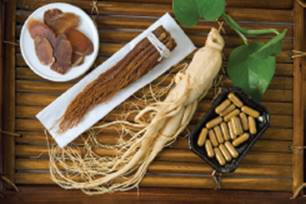
Root: Korean or Chinese ginseng, ren shen, is one of the most highly prized and expensive herbs. It is a yang tonic replenishing qi especially of spleen and lung. It also strengthens the immune system and reduces fatigue. Modern research has identified steroidal components similar to the human sex hormones in the root.
P. quinquifolius
American ginseng, xi yang shen, is a yin tonic, taken in China for fevers or where exhaustion is due to chronic, wasting disease such as tuberculosis. It can be helpful for coughs related to lung weakness.
P. notoginseng
Known as san qi or tienchi in China, this is used as an analgesic and to stop both internal and external bleeding. It is also added to treatments for coronary heart disease and angina. San qi was used extensively by the Vietcong during the Vietnam war to increase recovery rates from gun wounds.
APPLICATIONS
Root
P. ginseng
Powder: Use in capsules or tablets in 1–4 g doses as a general tonic. It is often best to take ginseng for one month as the seasons change in the autumn to strengthen the body for winter. If taking ginseng regularly have a break of at least 2–3 weeks every two months.
Tincture: Use standard doses for diarrhea related to weak digestive function: combine with specific digestive remedies. Combine with walnut and a little ginger for asthma and chronic coughs. Can be used as a general tonic for fatigue and extreme weakness as with the powder.
Decoction: Use 3–10 g in 500 ml water. Featured in many traditional formulas, for example in a Taoist “longevity” mixture using ginseng with he shou wu, wu wei zi, and gou qi zi.
P. quinquifolius
Powder: Use in capsules or tablets in 1–2 g doses for yin deficiency (e.g. may be suitable for women at the menopause) or for chronic lung weakness.
Tincture: Use standard doses as a tonic or combine with herbs like elecampane and mulberry bark for chronic cough and weak lungs or TB.
Decoction: Use 3–6 g in 500 ml of water as a yin tonic or for lung weakness.
P. notoginseng
Powder: Use in capsules or tablets in 1–2 g doses for wounds, internal bleeding, traumatic injuries or pain. Combine with slippery elm for the pain of gastric ulceration or with hawthorn berry for blood stagnation.
Tincture: Use standard doses for painful injuries. Combine with shepherd’s purse or mugwort for uterine bleeding. Combine with cornsilk, couchgrass or buchu for severe urinary tract inflammations with blood in the urine. Can be combined with herbs such as hawthorn or linden flowers in coronary heart disease.
Decoction: Use 2–6 g in 600 ml water for wounds, bleeding or coronary heart disease
CAUTIONS:
• P. notoginseng should be avoided in pregnancy.
• Although P. ginseng is generally safe side effects have been reported, high doses or prolonged use should be avoided in pregnancy and hypertension.
• It is best to avoid other stimulants, such as tea, coffee, or Coca Cola, when taking P. ginseng.
Passiflora incarnata
Passion flower
Passion flower takes its name from the religious symbolism of its flowers: the three stigmas to represent the nails of the Crucifixion, the five anthers for Christ’s five wounds, a finely cut corona for the Crown of Thorns, and the ten sepals representing the Apostles present at the Cross. The herb originates in North America, where it is known as maypop. It was first sent to Europe as a gift for Pope Paul V in 1605. By the nineteenth century it was established as a remedy for epilepsy and later as a cure for insomnia.
Character: Cooling, bitter.
Constituents: Flavonoids (including rutin), cyanogenic glycosides, alkaloids, sapanarin.
Actions: Analgesic, antispasmodic, bitter, cooling, hypotensive, sedative, heart tonic, relaxes blood vessels.
PARTS USED
AERIAL PARTS (Dried leaves and flowers)
The Houmas in Louisiana traditionally used passion flower as a blood tonic while the Maya Indians used the crushed plant as a poultice for swellings and as a decoction for ringworm. Today, it is mostly used as a sedative, painkiller, to reduce blood pressure, and in homeopathy as a remedy for nervous insomnia. Although a potent remedy, it is gentle enough for children and can be used for hyperactivity and restlessness. It can ease tremors in the elderly, including those associated with Parkinson’s disease, and it can also be helpful in relieving the vertigo and dizziness of Ménière’s disease, which affects the inner ear. Tablets are readily available over the counter for insomnia and nervous tension.

APPLICATIONS
Aerial parts
Tablets: Take 1–2 tablets at night (or as directed on the pack) for insomnia; the tablets can be used for nervous tension during the day although excess can cause drowsiness.
Tincture: Combine with equal amounts of valerian and hops for insomnia and nervous tension; take 50 drops three times daily in a little water. The same can be used for high blood pressure associated with nervous stress. Use up to 4 ml three times daily for tremors and vertigo or to ease the pain associated with shingles and toothache.
Powder/capsules: Take 1–2 x 200 mg capsules or half a teaspoon of powder night and morning for anxiety, tension, and nervous headaches.
Infusion: Take a cup for menstrual pain, tension headaches, and to help calm underlying tension in conditions like irritable bowel syndrome and irregular heartbeats. Dilute a standard infusion with an equal amount of water and give half a cup for hyperactivity in children. Combine with an equal amount of raspberry leaf for menstrual pain.
CAUTIONS:
• Use only low doses in pregnancy.
• May cause drowsiness.
Phyllostachys nigra
Bamboo
Bamboo is an important Asian cash crop used for just about everything from musical instruments to drainpipes and scaffolding. Extracts of bamboo are used in both Chinese and Ayurvedic medicine mainly as a cooling lung remedy for coughs and congestion and as a rejuvenating tonic after chronic illness. Bamboo extracts can be rich in silica leading some Western suppliers to promote the herb as helpful for bone and joint disorders and to prevent bone loss after the menopause.
Character: Sweet, cold.
Constituents: Cellulose, sugars, triterpenes.
Actions: Antispasmodic, antimicrobial, demulcent, expectorant, tonic, stops bleeding.
PARTS USED
SAP
Like the shavings, the sap (zhu li) is used in Chinese medicine to clear heat and phlegm. It is ideal for coughs with thick yellow sputum and is often combined with ginger to reduce its very cold nature.
SHAVINGS
Bamboo shavings (zhu ru) are usually supplied by Chinese herbalists in balls looking rather like raffia. They are used as a cooling remedy for the blood and to clear dampness and phlegm and to clear heat from the stomach, which in Chinese terms may include such symptoms as bad breath, nausea, and vomiting. In Ayurveda both shavings and sap are combined as vamsha rochana or bamboo manna and are regarded as strongly anti-pitta to stop bleeding and clear fevers. Vamsha rochana is also nourishing and a rejuvenative tonic for the lungs to speed recovery from chronic illnesses and debility.
LEAF
The leaves (zhu ye) are mainly used in Chinese medicine as a cooling remedy for fevers, nausea and nosebleeds. They are also used in combination with other cooling herbs in the classic decoction Zhu Ye Shi Gao Tang taken for heat in the stomach associated with nausea, poor appetite, sunstroke, and thirst.

APPLICATIONS
Sap
Juice: The sap is generally used singly as a juice for congestive coughs; it can be combined with an equal amount of ginger juice to warm the mixture. Take in teaspoon doses.
Shavings
Decoction: Combine with an equal amount of elecampane as a tonic following flu or use with a pinch of ginger for congestive coughs. The decoction is often made with milk in Ayurvedic medicine.
Tincture: Take 20–40 drops to soothe the nervous systems.
Powder: Use 250 mg to 1 g (up to a teaspoon) per dose as a lung tonic after flu or other debilitating disorders.
Leaf
Infusion: Take a cup for feverish colds and nausea. Soak a swab in the infusion and use to plug nosebleeds; the infusion taken internally will also help.
CAUTIONS:
• Avoid in diarrhea and coughs associated with cold.
Phytolacca americana
Pokeroot
Called pocon by Native Americans, pokeroot was mainly used either as an emetic or externally for skin diseases. The Delaware Indians took it as a heart stimulant while in Virginia it was regarded as a strong purgative. Even today in the Appalachians, backwoodsmen chew the seeds for arthritis, all the more remarkable because the fresh plant is extremely toxic. It arrived in Europe in the nineteenth century and is used as an important lymphatic cleanser.
Character: Pungent, drying, and slightly cold.
Constituents: Saponins, tannin, alkaloids, bitter principle, sugars.
Actions: Antirheumatic, stimulant, anti-catarrhal, purgative, emetic, antiparasitic, anti-inflammatory, immune stimulant, lymphatic stimulant, mild analgesic.
PARTS USED
DRIED ROOT
Used today as a lymphatic cleanser, particularly suitable for glandular fever and tonsillitis, the dried root can also be helpful for mastitis and is added to rheumatic remedies. Externally the herb is used occasionally for skin infections such as scabies and ringworm and can be applied in poultices for ulcers and piles.
BERRIES
Generally described as “milder” in action to the root, the fresh and dried berries are toxic, so the Appalachian practice of chewing them is not recommended. In the past they were used externally for skin complaints and in poultices for rheumatism. The juice was once used externally for ulcers and tumors but is not particularly effective.

APPLICATIONS
Root
Powder: Can be taken in small doses of 50–250 mg for lymphatic disorders including mastitis, tonsillitis, etc. or for rheumatism. Use a little of the powder as a dust for skin fungal infections, dry eczema, psoriasis or scabies.
Tincture: Use a maximum dose of 1 ml or 20 drops for acute lymphatic congestion and infection including conditions like mastitis, tonsillitis, scrofula, and in glandular fever. Combine with wild indigo, purple coneflower, or cleavers. Can also be added to herbal remedies for rheumatism and rheumatoid arthritis.
Poultice: Use poultices of the dried root or berries on inflamed joints.
Lotion: Use the diluted tincture or powder dispersed in water as a lotion for lymphatic swellings.
CAUTIONS:
• All parts of the fresh plant are toxic and can cause vomiting. Fatalities have been reported in small children who have eaten the berries and care should be taken if growing it in domestic gardens.
• In large doses the dried root is an extremely violent emetic and purgative. Do not exceed stated doses.
• Both fresh and dried berries are toxic.
• Avoid in pregnancy as it can cause fetal abnormalities.
Piper spp.
Pepper
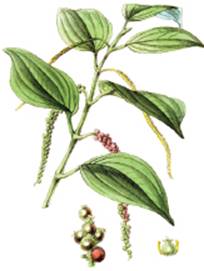
Many forms of pepper are used medicinally, notably black pepper (P. nigrum), a common seasoning, and long pepper (P. longum), which is known in India as pippali and in China as bi ba. These peppers originate in the East Indies, but have been imported into Europe since ancient times. Pliny cites numerous uses for pepper, with dill and cabbage, for example, as a cough remedy, while Hildegard of Bingen recommends it with hart’s tongue fern (Scolopendrium vulgare) and cinnamon as a remedy for strengthening the liver and cleansing the lungs.
Character: Pungent, hot.
Constituents: Alkaloids (including piperine), camphene, beta-bisabolene and other terpenes, proteins, minerals.
Actions: Antiseptic, antibacterial, carminative, digestive and circulatory stimulant; topically rubefacient.
PARTS USED
FRUIT
P. nigrum
Black pepper is an effective warming stimulant for the digestive tract. It was traditionally used in cooking to counter cold, damp vegetables, such as beans, with their tendency to cause flatulence and stomach chills. In China, the herb is known as hu jiao and is used as a warming remedy for stomach chills.
ESSENTIAL OIL
P. nigrum
Black pepper oil, made by steam distillation, is used in aromatherapy massage for coughs, chills, digestive upsets aches and pains. It can be irritant in large quantities so needs to be used in moderation.
FRUIT
P. longum
Pippali is used in Ayurveda for strengthening pitta and controlling the vata and kapha humors. It is used in cold conditions affecting the digestive and respiratory systems. It is also regarded as aphrodisiac, strengthening reproductive organs, and is a rejuvenating tonic for the lungs and kapha. In China, bi ba is also used for abdominal chills and discomfort. It is believed to reverse the upward flow of qi to combat nausea and acid regurgitation and is also used as a painkiller for headache, toothache, and sinus pains. A combination of long and black pepper with dry ginger is known in Ayurveda as trikatu, or the three spices, and is the main remedy for stimulating agni, the digestive fire, to clear ama (toxic wastes).
APPLICATIONS
Fruit
P. nigrum
Decoction: Simmer 10 peppercorns and a slice of galangal per cup for nausea, vomiting, diarrhea and abdominal bloating associated with cold and chills.
P. longum
Infusion: Use as a tonic in chronic respiratory problems; in Ayurveda a milk decoction rather than infusion is often used – simmer three pods in a cup of milk and take each morning.
Decoction: Simmer three pods with a slice of galangal and take a cup for stomach chills and diarrhea. Use with a slice of ginger, a small piece of dang shen, and a pinch of cinnamon powder for chronic diarrhea associated with cold.
Powder: Combine crushed black pepper, long pepper and powdered ginger to create trikatu and use a pinch in cooking to stimulate the digestion. Use a pinch of long pepper powder topically for toothache.
Essential oil
P. nigrum
Massage rub: Use 10 drops of oil in 20 ml of infused cayenne oil (see p. 39) for rheumatic aches and pains associated with cold. Use 1 drop in 5 ml of infused St. John’s wort oil for neuralgia and sprains.
Cream: Add 10 drops of oil to 20 g of arnica cream for chilblains (on unbroken skin only).
Piper methysticum
Kava kava
Great ritual significance is attributed to kava kava in the South Sea Islands; it is offered in ceremonies to honor guests, used in religious rites, and recommended for an impressive list of ailments. Traditional ritual drinks were made from the macerated root as a calming potion to increase mental awareness, while the leaves, juice, and stumps are all used medicinally. The plant smells slightly of lilac with a pungent taste. It has become heavily commercialized and is regarded rather as a cure-all in North America.
Character: Pungent, bitter, warm.
Constituents: Resin containing kava lactones, glycosides, piperidine alkaloids (including pipermethysticine).
Actions: Analgesic, antispasmodic, antiseptic, sedative, diuretic, tonic, urinary antiseptic, encourages sleep.
PARTS USED
ROOT
The root is most commonly used. It was traditionally chewed to a pulp, mainly by young girls, which fermented the root with saliva before it was infused in cold water, strained, and served in half coconut shells. Nowadays mechanical grinding is more common and regarded as more hygienic. The root extract is given for urogenital infections, menstrual syndromes, headaches, general debility, colds and chills, chest pains, or as a tonic. Kava is traditionally taken before the evening meal, as a full stomach can reduce the appreciation of its psychoactive properties. The root is usually harvested after three or four years, although some may be grown for up to twenty years before cropping.
STUMP
In many parts of Polynesia the underground stump of the plant is prepared by chewing and soaking. It is preferred for rheumatic pains, digestive upsets, obesity, asthma, chest infections, and as a poultice for skin diseases. The stump can be up to 60 cm long, while the creeping roots attached to it can reach 3 metres.
LEAVES
The leaves are burned in parts of the South Seas as a general fumigant for infectious diseases, and they were also inserted into the vagina to cause abortion.

APPLICATIONS
Root
Tincture: Use drops doses on the tongue to relieve pain.
Infusion: Drink a cup as a calming sedative, to relieve tension and insomnia. It will also relieve the pain of rheumatic complaints and urinary tract infections. Regular cups will also help in debility and convalescence. High doses of the infusion can induce euphoria although excess will lead to stupor and drowsiness.
Capsules and tablets: Available commercially, use for pains, stress and tension headaches, or to increase resistance to infections.
Mouthwash: Use the infusion as a mouthwash and gargle for toothache and gum disorders.
Wash: Use the infusion as an antiseptic to bathe cuts and grazes.
Stump
Poultice: Use the crushed and soaked root or stump as a poultice for skin infections and suppurating sore.
Juice: Take 5–10 ml per dose for chronic respiratory disorders.
CAUTIONS:
• Kava kava should not be taken in pregnancy or for longer than one month without a break.
• Kava acts as an appetite suppressant and is always followed by a small meal, as overeating after taking the herb can lead to nausea.
Plantago spp.
Plantain
Called waybread by the Anglo-Saxons, common plantain (P. major) and was one of the nine sacred herbs given to mankind by Woden. t was considered an important healing herb; Pliny even suggests that if several pieces of flesh are put in a pot with plantain then the herb will join them back together again. Common plantain is still used as a healing astringent to stop both external and internal bleeding while ribwort plantain (P. lanceolata) is more often used for catarrhal conditions. The seeds of related species, P. ovata and P. psyllium, are used as laxatives.
Character: Slightly sweet, salty and bitter, cool and mainly drying.
Constituents
Leaves: Mucilage, glycosides, tannins, minerals;
Seeds: Mucilage, oils, protein, starch.
Actions
Leaves: relaxing expectorant, tonifying to mucous membranes, anti-catarrhal, antispasmodic, topically healing;
Seeds: demulcent, laxative.
PARTS USED
LEAVES
P. major & P. lanceolata
These can both be used to soothe urinary tract infections and irritations and to ease dry coughs. Ribwort leaves are anti-catarrhal and useful in allergic rhinitis, while common plantain leaves tend to be more suitable for gastric inflammations. Both are topically healing for sores and wounds. Harvest throughout the year.
SEEDS
P. psyllium & P. ovata
Both black P. psyllium seeds are known as flea seeds while the pink P. ovata seeds are ispaghula are used as bulking laxatives for sluggish or irritable bowels. Rich in mucilage their demulcent action is useful for topical wound healing, infections or boils. Harvest when ripe.
P. asiatica
Chinese plantain seed are called che qian zi while the aerial parts of the plant are known as che qian cao. Both are used much as our ribwort and common plantain herbs as soothing anti-inflammatories, expectorants and for urinary irritations. Like common plantain, che qian cao is also diuretic and used for urinary tract infections.

P. major
APPLICATIONS
Leaves
P. major & P. lanceolata
Juice: Pressed from fresh leaves for inflamed mucous membranes in, for example, cystitis, diarrhea, lung infections (e.g. whooping cough). Use 10 ml three times daily.
Infusion: Second best to the juice but suitable for similar conditions.
Tincture (P. lanceolata): Make from fresh leaves if possible. Good for catarrhal conditions or where a more astringent effect is needed.
Syrup: Combine honey with the juice or infusion to make a cough syrup useful if the throat is sore or inflamed.
Poultice: Use fresh leaves for slow-healing wounds or chronic ulcers. Apply fresh leaves (P. major) to insect stings.
Wash: Use the juice or infusion for inflammations, sores, or wounds.
Ointment (P. major): For wounds, burns, and hemorrhoids.
Gargle: Use the infusion or diluted juice for sore throats, mouth or gum inflammations.
P. asiatica
Juice: Pressed from the fresh leaves and used as a diuretic.
Decoction: Unusually in Chinese medicine, che qian cao is often used as a simple for lung and urinary infections rather than in complex formulas with other herbs.
Seeds
P. psyllium & P. ovata
Infusion: Pour a cup of boiling water onto a teaspoon of seeds. Allow to cool and then drink the mucilage and seeds as a bulking laxative for constipation. Best taken at night.
Primula spp.
Cowslip and primrose
Cowslips (P. vera) take their name from the Anglo-Saxon cu-sloppe, a reminder or the days when they bloomed in meadows among the dairy herds. Given their current rarity, primroses (P. vulgaris) are now regarded as a good second-best, and the two herbs are used almost interchangeably. The roots, and to a lesser extent the leaves, are rich in saponins, irritant chemicals that have expectorant properties, making them a favorite for chesty coughs. They also contain salicylates so can be helpful for arthritic conditions.
Character: Sweet, dry, and slightly warm.
Constituents: Saponins, glycosides, salicylates, volatile oil, flavonoids.
Actions
Root: Stimulating expectorant, antispasmodic, anti-inflammatory, astringent.
Flowers: Sedative nervine.
PARTS USED
ROOT
Once a popular European standby for arthritis, today, the root is mainly used as an expectorant for stubborn coughs, as in chronic bronchitis. It helps to stimulate and warm the lungs and can be very effective where there is a lot of sticky, white sputum suggesting a “cold” condition. Harvest the roots of established plants in autumn.
FLOWERS
These contain neither saponins nor salicylates so have markedly different properties from the roots. The petals are very sedating and calming – ideal for over-excited states or what Gerard described as the “frenzies.” They also have a diaphoretic and astringent action and can be used for feverish colds with headache and nasal congestion. Harvest in spring.

APPLICATIONS
Root
Decoction: Use a standard dose for stubborn coughs to clear phlegm – especially suitable for chronic bronchitis. The decoction can also be used for arthritic and rheumatism.
Tincture: Use as the decoction – up to 5 ml three times a day.
Compress: A compress soaked in the decoction can be applied to painful arthritic joints.
Flowers
Tincture: Take 5–10 drops for insomnia, anxiety or over-excitement.
Infusion: A standard infusion can be sipped for headaches and feverish chills.
Compress: For facial or trigeminal neuralgia.
Ointment: Traditionally used for sunburn and skin blemishes.
Essential oil: Can be used in ointments and massage oils or 5–10 drops in bath-water at night for insomnia.
CAUTIONS
• High in salicylates so should be avoided by those with sensitivity to aspirin.
• Uterine stimulant so high doses should be avoided in pregnancy.
• Should be avoided by patients on warfarin therapy.
Prunella vulgaris
Self-heal
A highly regarded European wound herb, self-heal is widely used to stop bleeding from “inward and outward wounds.” In the past, the flower spikes were considered to resemble to throat and under the doctrine of signatures theory whereby plants cured those parts of the body that they most resembled, so it was used for inflammations of the mouth and throat. In Chinese medicine the flower spikes are known as xia ku cao, which translates as “summer dry herb.”
Character: Slightly bitter and pungent, cold and drying.
Constituents: Flavonoids (inc. rutin), vitamins A, B, C, K, fatty acids, volatile oil, bitter principle.
Actions
Leaves/aerial parts: Antibacterial, hypotensive, diuretic, astringent, wound herb.
Flower spikes: Liver stimulant. hypotensive, antibacterial, antipyretic.
PARTS USED
AERIAL PARTS
Western herbalists use the leaves and young shoots gathered before flowering to stop bleeding and are applied fresh in poultices as emergency first aid on clean cuts. Culpeper recommended them for “green” (i.e. fresh) wounds, suggesting that they would be ideal to “close the lips of them” in the days before stitches. Harvest before flowering.
FLOWER SPIKES
In China, xia ku cao is regarded as being very specific for the liver and gallbladder: cooling in over-heated conditions and soothing the eyes, which the Chinese traditionally associate with the liver. The Western expression, “gung-ho” is derived from the Chinese for “liver fire” (gan hao) and self-heal is ideal for cooling this over-exuberance.

APPLICATIONS
Aerial parts
Tincture: Best made from the fresh plant. Can be used for all sorts of bleeding – including heavy periods, blood in the urine, etc.
Infusion: Use as the tincture, allowing the brew to cool. Can also be helpful as an astringent and bitter herb in diarrhea. the infusion also makes a useful Spring tonic.
Mouthwash: Use a weak infusion or dilute tincture for bleeding gums and mouth inflammations.
Gargle: Use a weak infusion or dilute tincture for sore throats.
Eye bath: Use a very weak, well strained infusion in an eye bath for hot, tired eyes or conjunctivitis.
Poultice: Use the fresh leaves on clean wounds.
Ointment: Can be used for bleeding piles.
Flower spikes
Decoction: Used to clear heat from the liver which may be associated with irritability and anger, over-excitability, high blood pressure, headaches, hyperactivity in children or eye problems. Often combined with ju hua(Chinese chrysanthemum flowers).
Prunus spp.
Plum Family
Many members of the plum family are used in herbal medicine, including wild apricot (P. armeniaca), Chinese plums and bush cherries (P. mume and P. japonica), peaches (P. persica), and wild cherry (P. serotina). Seeds, stalks, fruits, bark, and flowers have all been used medicinally, although most of the therapeutic activity is due to cyanogenic glycosides. These chemicals break down in the body to form tiny amounts of cyanide-like compounds, which act as a stimulant for the digestive, respiratory, and nervous systems.
Character: P. armeniaca, bitter, slightly warm, toxic; P. japonica, pungent, sweet, bitter, neutral; P. mume, sour, warm; P. persica, sweet, bitter, neutral; P. serotine, pungent, astringent, warm, toxic.
Constituents: Amygdalin (cyanogenic glycosides), amygdalase, prunase, salicylates, plant sterols, vitamin C, fruit acids, sugars.
Actions: Most species show antitussive, astringent, antibacterial, analgesic, diuretic, and anti-inflammatory activity.
PARTS USED
SEEDS
P. japonica, P. persica, and P. armeniaca
Seeds of Chinese bush cherries (yu li ren) are a mild laxative and diuretic used for constipation and fluid retention and will help to reduce blood pressure. Peach seeds (taoren) are used to invigorate the blood and circulation, as a mild laxative, and a cough remedy. They are included in many formulas for menstrual problems and constipation due to old age or debility. Wild apricot seeds (xingren) are mainly used for respiratory problems such as asthma and bronchitis.
FRUIT
P. armeniaca
Wild apricots are rich in iron and are used in the West in tonic mixtures for anemia and debility.
UNRIPE FRUIT
P. mume
The unripe fruits are used as an expectorant for chronic coughs, for diarrhea and to relieve the symptoms of diabetes. It is also an effective anthelmintic for hookworms.
BARK
P. serotina
The bark of the North American wild cherry is one of the most widely used cough remedies in Anglo-American herbalism. The tree was popular with many Native American peoples who used the bark to relieve labor pains, diarrhea, eye inflammations, skin sores, and as a pain-killing poultice after amputations. The fruit, leaves, and root bark were also important for treating diarrhea, colds, and stomach upsets, although these parts are rarely used today.

P. armeniaca
APPLICATIONS
Seeds
P. armeniaca
Tincture: Use 10 drops in 1 teaspoon of mulberry leaf tincture for dry coughs associated with feverish colds.
Decoction: Combine with dang gui for constipation associated with debility and dryness.
P. persica
Tincture: Use with dang gui to stimulate blood and circulation.
Decoction: Use with rhubarb root, liquorice, cinnamon twigs (guizhi) and dang gui for menstrual problems associated with blood stagnation.
P. japonica
Decoction: Use as a gentle laxative for mild constipation.
Fruit
P. armeniaca
Tonic: Simmer 250 g of apricots in 500 ml of water for 8-12 hours or leave in a slow cooker overnight. Remove the stones and blend the mixture in a food processor. Add 500 ml of red wine and 100 ml of dang guitincture and mix well. Take 10 ml twice a day for iron-deficient anaemia.
Unripe Fruit
P. mume
Syrup: Simmer the fruits with water and add sugar to make a syrup for coughs and lung weakness.
Decoction: Use for chronic diarrhea and colitis.
Bark
P. serotina
Tincture: Use 40-80 drops per dose to ease irritant hacking coughs and whooping cough. Combine with mullein or hyssop. Avoid for productive coughs as wild cherry bark acts as a cough suppressant rather than expectorant.
Decoction: Use ½ teaspoon of dried bark per cup and take in ½ cup doses, up to three times daily. Combine with elecampane or liquorice.
Syrup: Use the decoction as a base for syrups.
CAUTIONS
• All Prunus spp., especially the seeds, are potentially toxic in high doses because of the cyanogenic glycosides. Use in moderation.
• High doses may also cause drowsiness.
• Do not take wild cherry bark for productive coughs as it acts as a cough suppressant and not an expectorant.
Pueraria lobata
Kudzu
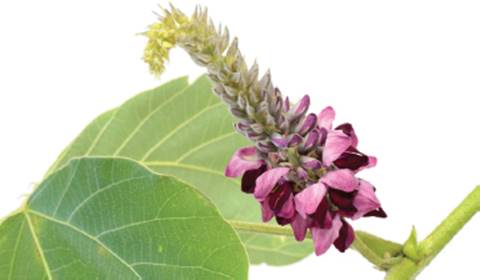
Introduced into the U.S. from Japan in the 1870s as a food, fodder, and fiber crop, by 1945 some 500,000 acres in the Southeast were infested with the vine. Today the plant is described as a “vegetative plague” throughout many of the Southern states and is the subject of a strenuous eradication program. Despite its bad press, kudzu is an important Chinese remedy for fevers, headaches, and heart disease, and it is also effective at combating alcohol addiction.
Character: Sweet, pungent, cool.
Constituents: Isoflavonoids, beta-sitosterol, arachidinic acid, daidzein (estrogenic), genistein, starch.
Actions: Circulatory stimulant, diaphoretic, mild hypotensive, febrifuge, reduces blood sugar.
PARTS USED
ROOT
The root is known as ge gen in China and is mainly used for treating “superficial syndromes” associated with colds and chills. It is believed to combat both “wind-cold” and “wind-heat” problems, which are typified by aches and pains, fever, and headaches, as in a severe cold or flu. It is also used for measles and to reduce high blood pressure. In folk tradition, ge gen is taken to reduce the effects of alcohol and sober up drunkards. Studies have demonstrated that it will also help to discourage alcohol addiction. It has also been used to treat angina pectoris and sudden deafness.
FLOWERS
The flowers (ge hua) are used in folk tradition to combat alcoholic poisoning and alcoholism. They are taken for hangovers, and symptoms of nausea and vomiting associated with excess alcohol consumption.
STEMS OR LEAVES
The stems (ge man) are used for treating boils and sore throats while a poultice of the leaves (ge ye) is a folk remedy used to stop bleeding from knife wounds.
APPLICATIONS
Root
Tincture: Use with half as much each of huang qin, licorice and goldenseal for diarrhea associated with food poisoning. Take 5 ml of the mix per dose.
Decoction: Use with cinnamon twigs, ginger and licorice for “wind-cold’ syndromes associated with common colds, feverish chills, stiffness in the neck and headaches.
Tincture: Use 10–20 drops in hot water to combat the symptoms of alcohol poisoning.
Juice: Used to reduce severe drunkenness – traditionally enough juice to fill 12 liqueur glasses is needed for the drunkard to regain consciousness.
Tablets/capsules: Used to stimulate and normalize blood flow through the coronary artery in angina pectoris (30–120 mg daily divided into two doses). Tablets containing the equivalent of 5 g of crude root (take two, three times daily) have been successfully used in trials for headaches and sudden deafness associated with spasms of the internal auditory artery.
Powder: Take ½ teaspoon of powder in water for high blood pressure associated with stiff neck and pain.
Flower
Infusion: Drink a cup for nausea and vomiting associated with hangovers.