
Tanacetum parthenium
Feverfew
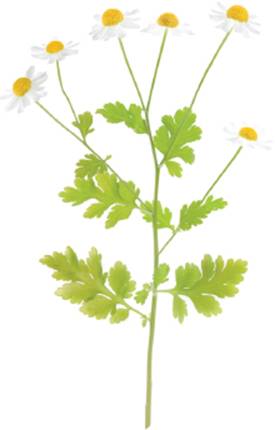
In the 1980s, feverfew was hailed as a “cure” and prophylactic for migraine thanks to the parthenolides it contains, but although there is a tradition of using the plant for headaches this was largely in external applications as the herb’s bitterness was regarded as potentially damaging if taken internally. Frying the herb first was said to make it more palatable for internal medicinal use. The name feverfew is a corruption of featherfew, a description of its fine petals.
Character: Bitter, warm, and drying.
Constituents: Sesquiterpene lactones, parthenolides, volatile oil, pyrethrin, tannins.
Actions: Anti-inflammatory, vasodilator, relaxant, digestive stimulant, emmenagogue, anthelmintic.
PARTS USED
AERIAL PARTS
In the past, feverfew was primarily known as a woman’s herb for womb disorders or delayed menstruation. It was mainly used externally in poultices or “squatting inhalations” (where the woman crouches over a bowl of the steaming decoction, absorbing the herb into the vagina). Today it is mainly used for migraines and, as an anti-inflammatory, is also recommended by some for rheumatoid arthritis. Harvest in summer before flowering.
APPLICATIONS
Aerial parts
Fresh herb: Eat one leaf daily as a prophylactic against migraines.
Tincture: Use 5–10 drops at 30 minute intervals at the onset of migraines. It is best for “cold” type migraines involving vasoconstriction and eased by applying a hot towel to the head. For the acute stages of rheumatoid arthritis add up to 2 ml of tincture, three times a day to other herbal remedies.
Poultice: Use the hot herb fried in a little oil as an abdominal poultice for colicky pains.
Infusion: Drink a weak infusion (15 g to 500 ml of water) after childbirth to encourage cleansing and tonifying of the womb; also for menstrual pain associated with sluggish flow and congestion.
CAUTIONS:
• Mouth ulcers are a common side-effect of eating fresh leaves.
• The herb has a salicylate-like anti-prostaglandin action and it should be avoided by patients on warfarin, heparin and other blood-thinning drugs as it can affect blood clotting rates.
Taraxacum officinale
Dandelion
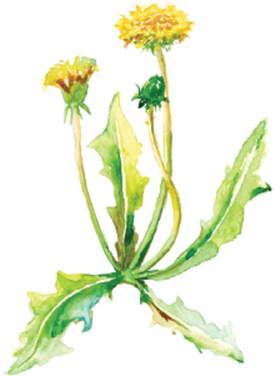
A comparative newcomer to the medicinal repertoire, dandelion was not mentioned in Chinese herbals until the seventh century, while in Europe, it first appears in the Ortus Sanitatis of 1485. The name dandelion was apparently invented by a fifteenth century surgeon who compared the shape of the leaves to a lion’s tooth or dens leonis. In the West, we use the leaves and root separately, but the Chinese prefer just the aerial parts of various Asiatic species of dandelion, including T. mongolicum.
Character: Cold with a bitter and sweet taste.
Constituents: Leaves: bitter glycosides, carotenoids, terpenoids, choline, potassium salts, iron and other minerals, vitamins A, B, C, D.
Root: bitter glycosides, tannins, triterpenes, sterols, volatile oil, choline, asparagine, inulin.
Actions: Leaves: diuretic, hepatic and digestive tonic.
Root: liver tonic, cholagogue, diuretic, laxative, antirheumatic.
PARTS USED
LEAVES
T. officinale
An effective diuretic, the leaves are rich in potassium, which is lost from the body by frequent urination, so using them both encourages urination and maintains potassium levels. Like the root, the leaves are also an effective liver and digestive tonic. Harvest throughout the growing season.
ROOT
T. officinale
A favorite liver stimulant with many modern herbalists, the root is used as a gentle cleansing tonic for a wide range of problems including gallstones and jaundice. Harvest the long tap root in spring.
SAP
T. officinale
The white sap from dandelion stems and root can be used as a topical remedy for warts.
WHOLE PLANT
T. mongolicum
Called pu gong ying, the Chinese use this Asian species much as in the West, as a diuretic and liver stimulant. It is also considered to clear heat and toxins from the blood so is used for boils and abscesses. Harvest in summer before the flowers are fully open.
APPLICATIONS
Leaves
T. officinale
Juice: Either the juice or fluid extract should be used when a diuretic action is needed. Up to 20 ml three times daily can be used.
Infusion: This is less effective than the juice but can be used as a cleansing herb in toxic conditions. The freshly dried leaves should be used.
Fresh herb: The leaves can be added to spring salads as a cleansing remedy.
Tincture: This is often added to remedies for failing heart and ensures adequate potassium intake.
Root
T. officinale
Tincture: Fresh root should be used as a liver stimulant in hepatic disorders and for toxic conditions such as gout, eczema, or acne.
Decoction: Used as the tincture, but is less effective as a diuretic than the leaf.
Aerial parts
T. mongolicum
Decoction: Use 10–30 g to 300 ml of water per dose for urinary tract infections, boils, and similar “hot” infections.
Terminalia spp.
Myrobalan
Several species of the Terminalia genus of trees are used in Ayurvedic medicine among them T. belerica (bibhitaki or beleric myrobalan), T. arjuna (indradrum or arjuna) and T. chebula (haritaki or chebulic myrobalan). They are all important rejuvenating and tonic herbs that are now starting to be investigated by modern researchers. Haritaki is also used in Chinese medicine, where it is known as he tiand is used for persistent coughs and dysentery; in Tibet it is regarded as “the king of medicines.”
Character: Astringent, sour/sweet/bitter, warm.
Constituents: Tannins, triterpenoid saponins, flavonoids, phytosterols.
Actions
T. belerica/T. chebula: Astringent, rejuventative tonic, expectorant, laxative, anthelmintic, antiseptic.
T. arjuna: Cardioprotective, liver protective, mild diuretic.
PARTS USED
FRUIT
T. belerica
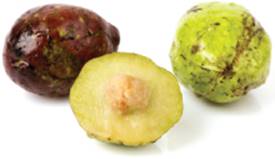
Bibhitaki is mainly used in Ayurveda as a kapha tonic, helping to strengthen the lungs, voice and vision. The unripe fruit is an effective laxative for cleansing the system and is used as an anthelmintic to expel intestinal parasites. The ripe fruit is preferred for indigestion and diarrhea. Bibhitaki is often combined with haritaki in the classic “three fruits” or triphala remedy.
BARK
T. arjuna
Arjuna has been used for treating heart problems for at least 3,000 years. Modern studies have had mixed results but most have confirmed a degree of efficacy and the plant is known to reduce cholesterol levels, improve the supply of nutrients to the heart muscles, and reduce the risk of attacks among patients suffering from angina pectoris.
FRUIT
T. chebula
Haritaki is one of the most important Ayurvedic tonic herbs. It is the main ingredient in triphala – with amalaki (Emblica officinalis) and bibhitaki – a widely used laxative and antiseptic tonic for the digestive system. Haritaki is believed to strengthen the brain and nerves and increase spiritual awareness. Like bibhitaki it is used for both diarrhea and constipation and is said to promote vision, voice, and longevity. As an astringent, it is also used for vaginal discharges and excessive menstrual bleeding.
APPLICATIONS
Fruit
T. belerica
Poultice: Use crushed fruits spread on gauze as a poultice for sore eyes: put the gauze onto closed eyelids and relax for 10–15 minutes.
Powder: Mix 1 teaspoon of powder with 1 teaspoon of honey for sore throats and vocal problems.
Gargle: Use an infusion of the dried fruits or a juice extract of fresh fruit as a gargle for sore throats.
Bark
T. arjuna
Tincture: Take 40 drops to 5 ml daily, in three doses to help protect against heart disorders or to combat angina pectoris and irregular heartbeat.
Decoction: Take half a cup three times daily to help improve heart energies and performance.
Fruit
T. chebula
Decoction: Use 1 teaspoon of dried fruit per cup of decoction as a strengthening tonic for respiratory and digestive systems.
Wash: Use the infusion or decoction as a wash for ulcerated skin sores and infections. The same wash can also be used as a douche for vaginal discharges and infections.
Eye bath: Use a well-strained weak decoction as an eye bath for inflammations like conjunctivitis.
Syrup: Use the decoction and honey to make a syrup for persistent, rasping coughs or hoarseness.
Mouthwash: Use the strained decoction or ½ teaspoon of powder in water as a mouthwash for mouth ulcers and bleeding gums; the powder was traditionally used to whiten teeth and prevent decay and gum diseases.
CAUTIONS:
• Avoid all Terminalia spp. in pregnancy and severe exhaustion or excess heat syndromes.
Thymus spp.
Thyme
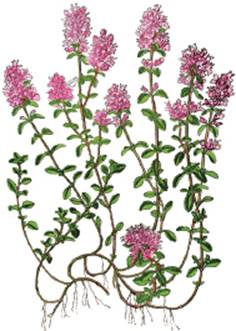
Common or garden thyme (T. vulgaris) is the cultivated form of wild thyme, T. serpyllum, which is known as “mother of thyme,” possibly because of its traditional use for menstrual disorders. Wild thyme derives its botanical name from its creeping or serpent-like growth pattern and Pliny recommends it as an antidote for serpent bites and “the poison of marine creatures” as well as for headaches. The Romans also burned the plant in the belief that the fumes would also repel scorpions and “all such creatures.”
Character: Pungent, slightly bitter, warm, and drying.
Constituents: Volatile oil (inc. thymol), bitter, tannins, saponins, triterpenes, flavonoids.
Actions: Antiseptic expectorant, antispasmodic, astringent, antimicrobial, diuretic, antitussive, antibiotic, wound herb, topically rubifacient.
PARTS USED
AERIAL PARTS
T. vulgaris
Mainly used as an expectorant and antiseptic, thyme is ideal for deep seated chest infections characterized by thick yellow sputum, as in chronic bronchitis, asthma, or whooping cough. Like many culinary herbs, thyme is also a digestive remedy and has been shown to inhibit Heliobactor pylorii, associated with gastric ulcers. Harvest before and during flowering discarding any woody stems.
T. serpyllum
Similar in action to common thyme, but slightly more stimulating and antispasmodic; the aerial parts are also used for menstrual pain. Harvest before and during flowering.
ESSENTIAL OIL
T. vulgaris
Extremely antibacterial, antifungal, and stimulating for the immune system, thyme oil is good for respiratory and digestive problems. Recent studies suggest that when used with evening primrose and fish oils it can help improve concentration skills in hyperactive and dyslexic children.
APPLICATIONS
Aerial parts
T. vulgaris & T. serpyllum
Infusion: Combine with chamomile as a general purpose everyday tonic tea (1 teaspoon of the mixed dried herbs per cup of boiling water). In therapeutic doses use for chest infections, stomach chills or irritable bowel syndrome.
Tincture: Use for diarrhea associated with stomach chills or combine with other expectorant herbs for chest infections.
Gargle: Use the infusion or diluted tincture for sore throats.
Compress: Use a hot pad soaked in tincture for both lung complaints and muscle pain.
Mouthwash: For gum disease.
Syrup: Use the infusion preserved with honey or sugar for coughs and lung infections. Combines well with licorice and white horehound.
Essential oil
Oil: Diluted thyme oil (10 drops in 20 ml of water) can be used for insect bites and infected wounds.
Bath: Add 5 drops to baths for debility and arthritic conditions. Combines well with rosemary.
Chest rub: Use 10 drops in 20 ml of almond or vegetable oil for bronchitis and chest infections. Can be combined with anise, hyssop, or eucalyptus oils.
Massage oil: Use 10 drops each of thyme and lavender oils in 25 ml of almond or vegetable oil for rheumatic pains or strained muscles.
CAUTIONS:
• Often repeated recommendations to avoid thyme and thyme oil in pregnancy are not based on secure clinical evidence and some argue that the herb is actually quite safe to use then.
• The essential oil should not be used internally without professional guidance.
• Thyme oil can irritate the mucous membranes and must always be used well-diluted.
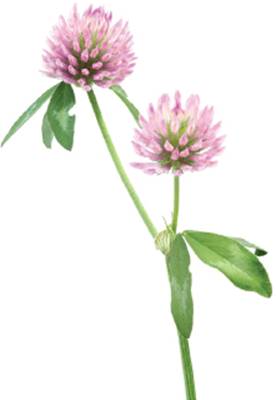
Trifolium pratense
Red clover
Although red clover has been grown as a fodder crop for cattle for at least 500 years, it also has a long history as a medicinal herb. Gerard called it, meadow trefoil and “three-leaved grasse,” and its familiar three-lobed leaves were associated with the Trinity by medieval Christians who carried a bunch to help identify witches and sorcerers. The Romans used strawberry-leaved clover (T. fragiferum), a Mediterranean plant, which Pliny recommended taking in wine for urinary stones, while the root was used for dropsy.
Character: Slightly sweet and cool.
Constituents: Phenolic glycosides, flavonoids, salicylates, coumarins, cyanogenic glycosides, mineral acids.
Actions: Alterative, antispasmodic, diuretic, possible estrogenic activity.
PARTS USED
FLOWERS
Mainly used as a cleansing herb for skin complaints, especially in childhood. The flowers are also useful for coughs, possibly because of the cyanogenic glycosides, and have been widely used for bronchitis and whooping coughs. In the 1930s they because popular as an anti-cancer remedy and may still be used for breast, ovarian, and lymphatic cancers. As a gentle, anti-inflammatory, and cleansing wound herb it can be useful for persistent sores, eye inflammations, and insect bites. Harvest during flowering.
APPLICATIONS
Flowers
Tincture: Use a standard dose internally eczema and psoriasis. Combines well with heartsease for childhood eczema.
Syrup: Use a standard syrup for stubborn, dry coughs and especially for whooping cough: combine with marshmallow, hyssop, or mullein.
Fresh: Use the crushed flowers directly on insect bites and stings.
Eye bath: Use diluted tincture or a well-strained infusion for conjunctivitis.
Compress: Use a hot pad soaked in diluted tincture for arthritic pains and gout.
Ointment: Use fresh flowers and simmer with water in a slow cooker for 48 hours. Strain, evaporate the residue to semi-dryness and combine with a standard ointment base for lymphatic swellings.
Douche: Use a standard infusion for vaginal itching.
Trigonella foenum-graecum
Fenugreek
Highly regarded by Hippocrates, fenugreek is one of our oldest medicinal herbs: seeds were found in the tomb of Tutankhamun and it was used in Ancient Egypt to ease childbirth and to increase milk flow. Today, it is still taken by Egyptian women for menstrual pain and as hilba tea is a popular standby to ease abdominal cramps for tourists afflicted by gastric upsets. In China, the herb, called hu lu ba, is also used for abdominal pain. Western research has highlighted its hypoglycemic properties.
Character: Very warming with a pungent, bitter taste.
Constituents: Steroidal saponins, alkaloids (inc. trigonelline), mucilage, bitter, protein, vitamins A, B, C, minerals.
Actions
Seeds: Anti-inflammatory, digestive tonic, galactagogue, locally demulcent, uterine stimulant, hypoglycemic.
Whole herb: Antispasmodic.
PARTS USED
SEEDS
Warming for the kidneys and reproductive organs, it is used in China to treat male impotence. The herb can be used for menstrual pains and for menopausal problems related to kidney weakness. Traditionally it was used as an aphrodisiac since the steroidal saponins it contains mimic the body’s sex hormones. It is a bitter digestive remedy also used to regulate glucose metabolism in diabetes. Externally demulcent and anti-inflammatory, it can be used on skin inflammations and boils. Harvest the seeds when ripe.
AERIAL PARTS
Taken in the Middle East and Balkans as a folk remedy for abdominal cramps associated with menstrual pains, gastroenteritis, and diarrhea. The herb is also used to ease labor pains during childbirth. The young sprouted shoots may be used.

APPLICATIONS
Seeds
Decoction: A standard decoction can be used as a warming drink for menstrual pains, stomach upsets, and to increase milk flow in nursing mothers. It has a bitter taste, which can be disguised with a little fennel or aniseed.
Tincture: Used for reproductive disorders and conditions involving kidney qi weakness. May be combined with other hypoglycemic herbs in diabetic treatments.
Capsules: Two or three taken after meals can help control glucose metabolism in late-onset diabetes and to lower cholesterol levels in those at risk from heart disease.
Poultice: The powdered herb can be made into a paste and used for boils and cellulitis.
Aerial parts
Infusion: The dried plant is available in parts of the Middle East and Balkans and a standard infusion is used for abdominal cramps, labor, and menstrual pains.
CAUTIONS:
• Insulin dependent diabetics should seek professional advice before using fenugreek as a hypoglycemic.
• A uterine stimulant, so avoid in pregnancy although it may be taken during labor.
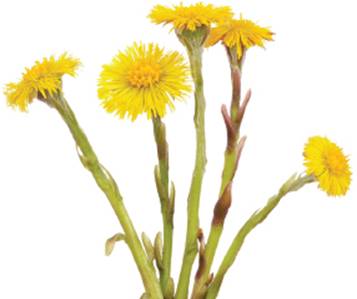
Tussilago farfara
Coltsfoot
Smoking coltsfoot for coughs and asthma was recommended by Dioscorides. Its botanical name means “cough dispeller” and even now herbal cigarettes often contain the plant. The flowers appear in late winter and only when they have died down do the leaves come – hence the plant’s old name filius ante patrem (the son before the father). In China only the flowers, known as kuan dong hua, are used.
Character: Warm, with a pungent, slightly sweet taste.
Constituents: Mucilage, tannins, pyrrolizidine alkaloids, inulin, zinc, bitter principle, sterols, flavonoids (inc. rutin), potassium, calcium.
Actions: Relaxing expectorant, anti-catarrhal, demulcent.
Topically: Tissue healer and demulcent.
PARTS USED
FLOWERS
The expectorant, anti-catarrhal and antispasmodic action makes these ideal for a wide range of chest problems including bronchitis, whooping cough, asthma, and stubborn, irritating coughs. Chinese medicine considers them specific for chronic coughs with profuse phlegm and to force rising lung qi to descend. Harvest in late winter when they appear.
LEAVES
Used to treat for coughs, as with the flowers. The leaves are also rich in zinc, which is very healing and can be applied, fresh, to a variety of skin sores and chronic wounds. Harvest in summer.
APPLICATIONS
Flowers
Decoction: Use for irritable coughs and catarrh. Also for coughs associated with the common cold or flu.
Syrup: Add 500 g of honey or sugar to 500 ml of infusion and heat gently to form a syrup. Use in 5 ml doses for coughs. The syrup is more moistening for dry, stubborn coughs.
Tincture: Used for chronic or persistent coughs. Combines well with thyme and elecampane.
Leaves
Poultice: Use the fresh leaf for ulcers, sores, and other slowly healing wounds.
Cigarettes: The dried leaf can be rolled in cigarette paper and smoked for asthma and bronchitis. Can be combined with dried thyme and eyebright leaf.
Decoction: As for flowers.
Tincture: As for flowers.
CAUTIONS:
• Contains pyrrolizidine alkaloids which are believed to cause liver damage. However, Swedish research suggests that in coltsfoot these are destroyed in making a decoction and the quantity is too minute to be harmful.