
Salix alba
Willow
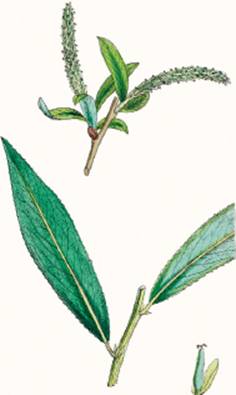
In traditional herbal medicine, white willow was classified as a cool, moist plant and was widely used for fevers and other “hot” conditions. It was one of the first herbs to be scientifically investigated, and in the nineteenth century a French chemist, Leroux, extracted the active constituent and named it salicine. By 1852 this same chemical was being produced synthetically, and by 1899 a less irritant and unpleasant tasting variant of this substance (acetylsalicylic acid) was manufactured and marketed as aspirin; the first of the modern generation of plant-derived drugs.
Character: Cool and dry with a slightly bitter taste.
Constituents: Salicin, tannins, flavonoids, glycosides.
Actions: Antirheumatic, anti-inflammatory, antipyretic, anti-hydrotic, analgesic, antiseptic, astringent, bitter digestive tonic.
PARTS USED
BARK
In modern herbal medicine only the bark is used. It is prescribed for many inflammatory conditions, including rheumatism and arthritis. It was popular in fever management and can relieve neuralgia, headaches and pains in general. As a gentle bitter it also acts as a mild digestive stimulant and is used for gastro-enteritis and diarrhea related to heat and inflammation. Harvest in autumn or winter, taking only a little from each tree.
LEAVES
In the past, the leaves were a popular home remedy used much as the bark is today. Willow leaf tea was used in fevers or colicky pains and the infusion was also used as a rinse for dandruff.
APPLICATIONS
Bark
Fluid extract: Stronger than a standard tincture and it is generally used for rheumatic conditions in standard doses. It can also be used for headaches and neuralgia.
Tincture: Use up to 15 ml doses for fevers. Combine with other suitable herbs – such as boneset, elder, or bitters.
Powder: The powdered root can be used in doses of up to 10 g for fevers and headaches. Take mixed with a teaspoon of honey.
Decoction: Use standard doses for feverish chills, headaches or as part of arthritic treatments.
Leaves
Infusion: Use a standard infusion after meals for digestive problems.
CAUTIONS:
• Avoid in aspirin allergy.
Salvia officinalis
Sage
Traditionally associated with longevity, sage has a reputation for restoring failing memory in the elderly. Like other herbs associated with memory it was also planted on graves. It is said that when the British started importing tea from China, the Chinese so valued the herb that they would exchange two cases of tea for one of dried English sage leaves. Green sage (S. officinalis) is often mixed with Greek sage (S. fruticosa), although the two have very similar properties. Purple sage (S. officinalis Purpurescens Group) is preferred by some herbalists instead.
Character: Pungent, bitter, slightly cold, and drying.
Constituents
Leaves (S. officinalis): volatile oil (includes thujone, linalool, and borneol); bitter, tannins, triterpenoids, flavonoids, estrogenic substances, resin, saponins;
Root (S. miltiorrhiza): ketones, vitamin E.
Actions
S. officinalis Leaves: Carminative, antispasmodic, astringent and healing to mucosa, antiseptic, peripheral vasodilator, suppresses perspiration, reduces salivation and lactation, uterine stimulant, systemically antibiotic, hypoglycemic, cholagogue.
Essential oil: Antiseptic, antispasmodic, astringent, hypertensive, stimulant, emmenagogue, antioxidant.
S. miltiorrhiza: Circulatory stimulant used to move blood, sedative, clears pathogenic heat.
PARTS USED
LEAVES
S. officinalis & S. officinalis Purpurescens Group
Sage has a special affinity with the mouth and throat, making it ideal as a gargle and mouthwash. Its antiseptic property is attributed to thujone found in the essential oil, which is highly antibacterial. It is also a good bitter digestive stimulant and its drying property, coupled with the estrogenic action, make it a useful herb both for menopausal problems and at weaning. Sage is strongly antioxidant to reduce symptoms of ageing; extracts have been used to relieve Alzheimer’s and senile dementia. Harvest throughout the summer and autumn.
ROOT
S. miltiorrhiza
In China, the root, known as dan shen, is primarily regarded as “moving blood” and is used wherever there is stagnation or stasis, as in some types of menstrual pain and heart conditions. It is also considered sedative and cooling to reduce heat, particularly in the heart and liver, conditions that the Chinese associate with symptoms such as insomnia, palpitations, and irritability.

APPLICATIONS
Leaves
S. officinalis & S. officinalis Purpurescens Group
Infusion: Use 20 g to 50 ml water as a general tonic. Also as a liver stimulant and to improve digestive function and circulation in debilitated conditions. Can also be used to reduce lactation at weaning and for night sweats and other menopause symptoms.
Gargle/mouthwash: Use a weak infusion as a gargle for sore throats, tonsillitis, quinsy, or as mouthwash for mouth ulcers, gingivitis, and similar problems.
Tincture: Used in menopausal remedies for night sweats and as a digestive stimulant. Also used to reduce salivation in Parkinsonism, giving symptomatic relief.
Cream: Popular in France to treat minor skin sores, grazes, and insect bites.
Hair rinse: For dandruff or to restore the color to gray hair.
Root
S. miltiorrhiza
Decoction: For menstrual pain caused by stagnation; also used in Chinese medicine for angina pectoris and coronary heart disease
CAUTIONS:
• Do not take therapeutic doses of sage leaf in pregnancy.
• Dan shen should only be used where the condition is caused by blood stasis. Seek professional help for all heart disorders.
• S. officinalis contains thujone which can trigger fits in epileptics who should avoid large amounts of the herb. S. fruticosa contains significantly less thujone so should be used in preference.
Sambucus nigra
Elder
A wealth of folklore is associated with the elder, which is often described as a “complete medical chest” because of its numerous therapeutic and prophylactic qualities. Classed as “hot and dry” by Galen, the herb was used for cold, damp conditions such as catarrh, excessive mucous or water retention. In the seventeenth century, it was a favorite for “clearing phlegm,” both as an expectorant for coughs and as a diuretic and violent purgative. Elderflower water was a favorite in the eighteenth century for whitening the skin and removing freckles.
Character: Mainly bitter and drying – flowers and berries also cool and slightly sweet; bark is hot.
Constituents: Volatile oil, flavonoids, mucilage, tannins, vitamins A & C, cyanogenic glycoside, viburnic acid, alkaloid.
Actions: Flowers: expectorant, anti-catarrhal, circulatory stimulant, diaphoretic, diuretic; locally – anti-inflammatory.
Berries: diaphoretic, diuretic, laxative.
Bark: internally – strong purgative, emetic (in large doses), diuretic; externally – softening.
Leaves: externally – softening, wound-healing; internally – purgative, expectorant, diuretic, diaphoretic.
Root: violent emetic and purgative (not used nowadays).
PARTS USED
FLOWERS
These are anti-catarrhal and encourage sweating so are ideal for feverish colds and influenza. They are also helpful for hay fever, taken as a prophylactic early in the year to strengthen the upper respiratory tract before the pollen count rises. Topically, they are anti-inflammatory, used in skin creams and for chilblains. Harvest in early summer.
BARK
Warming in character, the bark is an effective liver stimulant taken in the past for stubborn constipation, fluid retention, gout and arthritic conditions. Harvest the inner layer of bark in autumn from young trees.
LEAVES
The leaves were once popular in green elder ointment, known officially as unguentum sambuci viride, used for bruises, sprains, wounds and hemorrhoids. Harvest in summer after flowering.
BERRIES
The berries were once an important source of vitamin A and C. In the days before imported winter fruits, elderberry wines and syrups were a useful prophylactic against seasonal colds. Harvest in autumn when ripe.

APPLICATIONS
Flowers
Infusion: Drink hot for feverish and catarrhal conditions involving the lungs or upper respiratory tract (including hay fever); can be combined with yarrow, boneset, and peppermint in equal proportions.
Gargle: Use a standard infusion as a mouthwash and gargle for mouth ulcers, sore throats, tonsillitis.
Eye bath: Use a cold, well-strained infusion for inflamed or sore eyes.
Tincture: Use a standard infusion for colds and flu or take from February to April to help reduce hay fever symptoms.
Bark
Decoction: Use 10 g to 800 ml water for stubborn constipation or as a general digestive cleanser, also for chronic gout and arthritis.
Leaves
Ointments: For bruises, sprains, wounds, chilblains or hemorrhoids.
Berries
Syrup: As a prophylactic for winter colds or in combination with expectorants (e.g. thyme) for coughs.
Tincture: Can be useful in combination with other herbs for rheumatic conditions.
CAUTIONS:
• The bark should be avoided in pregnancy and standard doses should not be exceeded.
• The root can be a violent purgative and emetic and should not be used.
• For home use, the leaves should only be used externally, but the berries and flowers are safe in long-term use.
• The plant should be avoided if further drying or fluid depletion would worsen the condition.
Scrophularia spp.
Figwort
In both Eastern and Western traditions, figwort (S. nodosa) is a very cleansing herb: it was known as the scrofula plant – hence its botanical name – and used to treat abscesses, purulent wounds and the “king’s evil” or scrofula (tuberculosis of the lymph nodes). Culpeper called the herb “throatwort” because of its use in treating this disease. The Chinese use a related species (S. ningpoensis) known as xuan shen, as a prime remedies for “fire poisons,” the same sort of purulent conditions associated with it in the West.
Character: Bitter, cold and drying; xuan shen also has a salty taste.
Constituents: S. nodosa: Saponins, cardioactive glycosides, alkaloids, flavonoids, bitters; S. ningpoensis: Saponins, phytosterol, essential fatty acids, asparagine.
Actions: Aerial parts (S. nodosa): diuretic, laxative, heart stimulant, circulatory stimulant, anti-inflammatory, diuretic, laxative; Root (S. ningpoensis): tonic, antipyretic, anti-inflammatory, antibacterial, heart tonic, hypotensive, sedative.
PARTS USED
AERIAL PARTS
S. nodosa
Best known for treating skin problems, the aerial parts are used for cleansing. For example, in rheumatic disorders and gout; when there is stagnation in the lymphatic system; or for a sluggish digestion with constipation. Harvest in summer after flowering.
ROOT
S. ningpoensis
Also used as a cleansing plant, but it has a more relaxing action on the heart than S. nodosa, reducing blood pressure and with a slight sedating effect. It also replenishes jing or “vital essence” – one of the fundamental substances which traditional Chinese medicine believes underlies all life.

APPLICATIONS
Aerial parts
S. nodosa
Infusion: Use whenever there is a build-up of toxins to cleanse – in rheumatic conditions, lymphatic disorders, or for skin conditions like eczema and psoriasis.
Tincture: In combination with other digestive herbs for constipation and sluggishness or with herbs like yellow dock, bitter sweet, or burdock in skin conditions.
Wash: Use the infusion for eczema, skin inflammations, fungal infections, etc.
Compress: Use a pad soaked in the infusion for painful swellings, wounds, ulcers, etc.
Root
S. ningpoensis
Decoction: For deep-seated abscesses and lymphatic swellings. Also for throat problems – swollen glands, tonsillitis, etc. As yin tonic it is used with salt.
CAUTIONS:
• Figwort is a heart stimulant; avoid in cases of abnormally raised heartbeat.
Scutellaria spp.
Skullcap
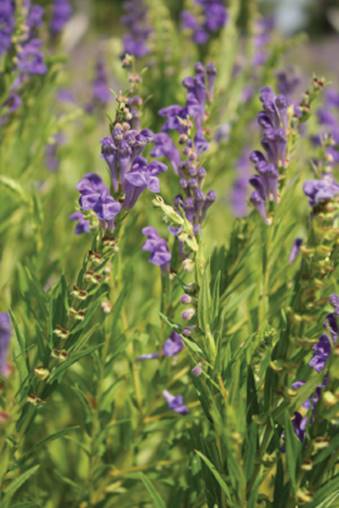
A comparative newcomer to the European materia medica, Virginian skullcap was used by Native Americans for rabies and to promote menstruation. It is characterized by its dish shaped seed-pods and flowers grow on only one side of the stem, hence its botanical name S. lateriflora. Today it is considered as one of the best herbal nervines – sedative, tonic, and antispasmodic. The Chinese plant, S. baicalensis (huang qin), is very different and mainly used for the stomach and lung problems.
Character: Bitter, cold, and drying.
Constituents
Aerial parts (S. lateriflora): Flavonoids, tannins, bitter, volatile oil, minerals;
Root (S. baicalensis): Flavonoids, sitosterols.
Actions
S. lateriflora: Relaxing and restorative nervine, antispasmodic;
S. baicalensis: Antibacterial, antipyretic, diuretic, antispasmodic, cholagogue.
USED
AERIAL PARTS
S. lateriflora
Calming for many nervous conditions, such as tension, excitability, insomnia, and depression, the herb also has a tonic effect on the central nervous system making it ideal in nervous exhaustion. It can also be helpful in premenstrual tension and has been used for epilepsy. Harvest late in the flowering period when some of the characteristic skullcap-shaped seed pods have formed.
ROOTS
S. baicalensis
In China huang qin is mainly used to clear heat from the respiratory and digestive systems and is used in diarrhea, jaundice, gastro-enteritis, or bronchitis, for example. It can also be useful in urinary tract infections and for skin infections. It is believed to contain high levels of melatonin which help combat insomnia and chronic headaches. Korean research suggests it may reduce the risk of gum and tooth disease.
S. baicalensis
APPLICATIONS
Aerial parts
S. lateriflora
Infusion: Use the fresh herb if possible as a calming tea in nervous exhaustion, excitability, over-anxiety, etc. The tea can also be helpful for PMT or taken – combined with wild lettuce or passionflower – at night for insomnia.
Tincture: Best made from the fresh herb and a very potent calming nervine. Take 5 ml as a simple or combine with lemon balm (1 ml) for any nervous stresses or depression.
Root
S. baicalensis
Decoction: Usually in combination with other cold, bitter herbs to purge heat from the system in gastric, chest, and urinary infections. Also combined with other herbs to reduce high blood pressure.
Senna alexandrina
Senna
For centuries, senna leaves and pods have been used as a potent laxative. In China, the leaves are known as fan xie ye, while in Sanskrit the plant is called rajavriksha, meaning “king of trees.” When using senna in herbal remedies, it is best to start with low doses of the pods, which are milder than the strongly purgative leaves, and move on to the leaves if need be. Today the herb is commonly found in many over-the-counter remedies.
Character: Bitter, sweet, cold.
Constituents: Sennosides (rhein-dianthrone diglucosides), monoanthraquinone glycosides, dianthrone diglycosides, aglycones, flavonoids.
Actions: Stimulating laxative, cooling, antibacterial, anthelmintic.
PARTS USED
LEAVES
Generally, the leaves are used in infusions, powders, or tablets. They irritate the digestive tract and encourages peristalsis so long-term, habitual use can weaken the digestive system. Senna should be avoided if there is inflammation in the gut, as in Crohn’s disease or ulcerative colitis. Senna produces a soft stool so it is used where there are problems with bleeding piles or anal fissures. The Chinese use dried senna leaf as a cooling remedy to clear heat from the digestive system, which can lead to abdominal bloating and discomfort, as well as a purgative for habitual constipation. In India, senna is also used to clear pitta and as a cooling and cleansing remedy for skin inflammations, obesity, and hypertension associated with that humor.
PODS
Senna pods are rather milder than the leaves and are generally preferred by Western practitioners. Pods are often classified as “Alexandrian senna” (Cassia senna) or “Tinnevelly senna” (Cassia angustifolia) although botanists now regard these as the same species renamed S. alexandrina.

APPLICATIONS
Pods
Infusion: The usual recommendation is 15–30 mg per dose, which generally means 3–6 pods. Leave the pods in a cup of warm water overnight and drink first thing in the morning. Add a slice of fresh ginger root or a teaspoon of fennel seeds to the maceration to help combat any griping pains which may be caused by increase in peristalsis.
Tablets/powders: Many commercial preparations are available: the usual dose is 1–2 teaspoons of granules or 2–4 tablets, taken in the morning.
Leaves
Tincture: 10–30 drops per dose; taken in the morning with a little water.
Infusion: Use ½ teaspoon of dried leaf with 1 teaspoon of fennel seeds per cup of boiling water for severe constipation. Do not continue for more than seven days and ensure a break of at least two weeks before repeating the treatment.
CAUTIONS:
• Do not take senna in pregnancy, while breastfeeding or in cases if inflammatory bowel disease.
Silybum marianum
Milk thistle
Milk thistle, or Mary thistle, takes its name from its traditional use in stimulating milk flow in nursing mothers. The plant is another example of the medieval doctrine of signatures with its white-streaked leaves said to symbolise splashes of milk. Milk thistle was once cultivated as a vegetable with the flower heads eaten like globe artichokes, the young leaves as spinach, and the root as salsify. Today it is regarded as one of our most important liver tonics and restoratives.
Character: Bitter, astringent, warm.
Constituents: Flavo-lignans (including silymarin), bitters.
Actions: Bitter tonic, stimulates bile flow, antidepressant, antioxidant, antiviral, stimulates milk flow.
PARTS USED
SEEDS
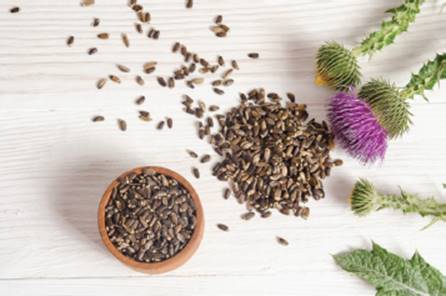
The seeds are rich in silymarin, which research studies since the 1970s have identified as being highly protective for the liver, helping to combat damage from pollutants and toxins. Extracts of silymarin have been used to treat liver cirrhosis and hepatitis, while taking milk thistle seeds is an effective way to prevent damaging the liver in alcohol abuse. The seeds can also help reduce high cholesterol levels and soothe inflammations of the gallbladder. Studies have also shown that milk thistle is a more powerful antioxidant than vitamin E so can help prevent damage to tissues caused by free radicals.
LEAVES
The leaves were traditionally used for stimulating milk flow and to ease menstrual problems. They can also be used in infusions to help stimulate the digestion. Harvest before flowering.
FLOWER HEADS
Like globe artichokes, milk thistle flower heads, eaten before the flowers open, make as a bitter-tasting vegetable that will also stimulate the liver and digestive system.
APPLICATIONS
Seeds
Tincture: Take 20–50 drops on a little water for liver and gallbladder problems or to stimulate the digestion. Take up to 5 ml daily in water as a preventative if there is a history of gall stones or liver disease: combine with an equal amount of dandelion root tincture. Instead of water, you can also add the tincture to a cup of peppermint infusion as a digestive tonic.
Capsules: Use 1–2 x 200 mg capsules to combat symptoms of a hangover or before drinking alcohol to reduce the risk of liver damage. Regular capsules can help combat the liver damage caused by drug and alcohol abuse.
Powder: Use topically to dust varicose ulcers.
Infusion: Drink a cup for any liver and gallbladder weakness: combines well with vervain. Use with lady’s mantle and St. John’s wort for premenstrual syndrome.
Leaves/Flower Heads
Infusion: Drink a cup to stimulate milk production when breastfeeding. Also helps to stimulate digestive function.
Solanum lycopersicum
Tomato
Spanish conquistadors introduced tomatoes into Europe from Peru in the fifteenth century. The first tomatoes to arrive were yellow in color, hence the Italian name pomodoro, or “golden apples.” By the time the fruit arrived in Britain in the sixteenth century, via France, this had been corrupted to pommes d’amours, giving the old English name “love apples.” The fruits were originally thought to be highly poisonous, as tomatoes are a member of the Solanaceae family and the flowers are similar to those of its relative, deadly nightshade (Atropa belladonna).
Character: Cold, sour, sweet.
Constituents: Vitamins A, B1, B2, B6 C, E, folic acid, malic acid, citric acid, bioflavonoids (including rutin), calcium, magnesium, phosphorous.
Actions: Antiscorbutic, antimicrobial, diuretic, mild laxative, digestive stimulant, reduces acidity in the blood.
PARTS USED
FRESH FRUIT
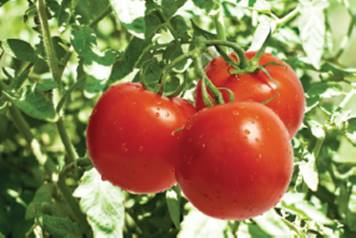
The fruit of the tomato is rich in nutrients: 100g provides the necessary daily intake of vitamins A, B1, C, and folic acid. It also contains rutin, so it can help to strengthen the capillaries. Research in the U.S. suggests that men who eat at least 10 servings of tomatoes a week have a 45% reduction in the risk of prostate cancer. This is probably due to the presence of lycopene, a type of carotene, which may be antitumor. Lycopene is also believed to reduce the risk of heart disease – one study suggests by as much as 50%.
JUICE
Drinking tomato juice before a meal makes a good aperitif to stimulate the digestion, particularly the pancreas. It is an ideal tonic in debility and convalescence and makes an effective lotion for acne. A pilot study suggests a daily glass is as effective as vitamin D or calcium in preventing osteoporosis in postmenopausal women.
LEAVES
Hanging bunches of tomato leaves above the bed is at traditional way to deter mosquitoes and gnats at night.
APPLICATIONS
Juice
Plain Juice: Drink three glasses of juice each day as a restorative tonic during debility and convalescence. Drink a glass before meals to stimulate the digestion.
Lotion: Mix 100 ml of tomato juice with 50 ml of vodka or other strong alcohol and shake well. Use as a lotion to help prevent acne.
Poultice: Use chopped fresh tomatoes as a face pack to clear acne pustules. Leave for half an hour and then rinse with clean water.
Leaves
Fresh: Rub crushed leaves on insect bites to relieve itching and discomfort.
Fruit
Cooked fruit: Cooking tomatoes make the lycopene easier to absorb. Use tomatoes daily in sauces, casseroles, and stews as a preventative for prostate cancer and heart disease.
Fresh fruit: Eat fresh tomatoes to ease arthritis, rheumatism, and gout: the plant is oxalate free and will clear uric acid and toxins from the system.
Stachys officinalis
Wood betony
Wood betony was the most important herb in the Anglo-Saxon repertoire, wood betony had around thirty uses listed in the Leech Book of Bald. As well as internal and external applications, it was possibly the most popular amulet herb, used well into the Middle Ages to ward off evil or ill humors. Gerard, in 1597, gives a very long list of applications, adding that “it maketh a man to pisse well.” Today, wood betony is neglected by many herbalists; it is, however, very well worth rediscovering.
Character: Cool, drying and with a bitter-sweet taste.
Constituents: Alkaloids (inc. stachydrine and trigonelline), tannins, saponins.
Action: Sedative, bitter digestive remedy, nervine, circulatory tonic particularly for cerebral circulation, astringent.
PARTS USED
AERIAL PARTS
Mainly used for headaches and nervous disorders, the herb is also a good digestive remedy – stimulating and cleansing for the system – with a mild diuretic action. It can be used as a pain killer and wound herb and may be helpful for catarrh and coughs. Harvest in summer while flowering.
ROOT
Although not commonly used nowadays, betony root is regarded as more bitter and specific for the liver with a gentle laxative action. Harvest in early autumn.

APPLICATIONS
Aerial parts
Infusion: Use in low doses (1 teaspoon per cup) as a general relaxing and tonic herb for everyday drinking. In therapeutic doses it can be used for menstrual pain, migraines, and other headaches, nervous tension, as a digestive stimulant and cleanser. Combine with elderflower or yarrow and drink hot at the onset of colds or flu. The hot infusion can also be drunk during difficult or painful labor.
Tincture: Use as the infusion. Especially helpful for nervous headaches when it combines well with lavender. For catarrhal conditions use with ground ivy or coltsfoot. Also useful as a cleansing herb in toxic and arthritic conditions.
Poultice: For wounds and bruises.
Tonic wine: Macerate 50 g of betony with 25 g each of vervain and hyssop in 750 ml of white wine for two weeks. Use for nervous headaches and tension in liqueur glass doses.
Mouthwash: Use an infusion for mouth ulcers and gum inflammations. Also as a gargle for sore throats.
Wash: Use an infusion for leg ulcers and infected wounds.
CAUTIONS:
• Uterine stimulant; avoid high doses during pregnancy but drink betony tea during labor.
Stellaria spp.
Chickweed
As the name suggests, chickweed is a favorite with small birds and in Gerard’s day chickweed (S. media) was given as a tonic to caged linnets. It is probably one of the most common weeds, growing in virtually all corners of the world. Instead of rooting it out, it is worth remembering that chickweed was once gathered as a vegetable. It was also used to heal wounds and in poultices for drawing boils. can should be sweated without water like spinach and served with butter or used as a salad herb. In China, the root of close relative S. dichotoma, or yin chai hu, is used.
Character: Sweet, moist, and cool.
Constituents: Mucilage, saponins, silica, minerals, vitamins A, B and C, fatty acids.
Action: Astringent, antirheumatic, wound herb, demulcent.
PARTS USED
AERIAL PARTS
S. media
Made into creams, the aerial parts are used today for eczema and skin irritations. In mainland Europe, the plant is generally taken internally as a cleansing diuretic and tonic used for rheumatic pains and debilitated conditions. Harvest throughout the growing season.
ROOT
S. dichotoma
In China yin chai hu is used as a cooling herb in fevers and also to stop nose bleeds, heavy menstrual bleeding, and similar bleeding disorders. It is also given as a tonic for malnourished children reflecting its European use as an emergency free food in poor country districts.

APPLICATIONS
Aerial parts
S. media
Infusion: Use the fresh herb, if possible, to produce a tonic, cleansing mixture for tiredness and debility. Also helpful for urinary tract inflammations such as cystitis.
Poultice: Use the fresh plant for boils and abscesses; also for rheumatic pain.
Tincture: Can be added to remedies for rheumatism.
Compress: Use the hot decoction or soak a hot pad in the tincture for rheumatic pains.
Cream: Used for eczema – especially if it is itching.
Infused oil: Use the cold infusion method for fresh herb or the hot method for dried, either can be used as an alternative to creams for irritant skin rashes or add 1 tablespoon to the bath-water for eczema sufferers.
Root
S. dichotoma
Decoction: Use for hot fevers related to weakness in chronic illness.
Symphytum officinale
Comfrey
A country name for comfrey is knitbone, a reminder of its traditional use in healing fractures. The herb contains allantoin, which encourages bone, cartilage, and muscle cells to grow: the chemical is absorbed through the skin and speeds up healing. Poultices of the leaves were once regularly spread on broken limbs. The botanical name is derived from the Greek sympho, meaning to unite, and in the past comfrey baths were popular before marriage in the belief that they would repair the hymen and restore “virginity” before the wedding night.
Character: Cool and moist with a sweet taste.
Constituents: Mucilage, steroidal saponins, allantoin (mainly flowering tops), tannin, pyrrolizidine alkaloids (mainly root), inulin, vitamin B12, protein.
Actions: Cell proliferator, astringent, demulcent, wound herb, expectorant.
PARTS USED
AERIAL PARTS
Rich in allantoin, the flowering tops and leaves are mainly used externally in ointments and infused oils for sprains, arthritic joints, and other injuries. Internally the plant is equally healing and is used for ulceration in the digestive tract. Harvest in summer.
ROOT
This has similar properties to the leaves but is more mucilaginous. It should only be used externally because of the high pyrrolizidine alkaloid content. Harvest in spring or autumn when the allantoin levels are highest.

APPLICATIONS
Aerial parts
Tincture: Use a standard dose internally for gastric ulceration, oesophagitis, hiatus hernia and ulcerative colitis. Treatment should not be continued beyond 6–8 weeks because of the potential risk of liver damage due to pyrrolizidine alkaloids.
Infused oil: Make by the hot infusion method and use as a massage for arthritic joints, sprains, bruises, and other traumatic injuries. Can also be used for inflamed bunions.
Compress: Soak a pad in the diluted tincture for bruises, sprains and other painful injuries
Cream: For any bone, cartilage, or muscle damage. For osteoarthritis apply cream twice daily for at least two months.
Syrup: Sweeten 500 ml of the infusion with 500 g of honey for dry coughs or stubborn, thick, phlegm.
Poultice: Use the puréed leaves on minor breaks that would not normally be set in plaster – such as broken toes, ribs, or hairline cracks in larger bones.
Root
Poultice: Make a paste of powdered root with a little water and use on varicose ulcers and other stubborn wounds. The same paste can be used on bleeding hemorrhoids.
CAUTIONS:
• Only take internally under professional guidance; the plant contains pyrrolizidine alkaloids which have been linked by some researchers to liver cancer in rats whose diets were composed of 33% comfrey leaf. Do not take the root internally.
• Do not use on dirty wounds as rapid healing may lead to trapped dirt.
• Use is restricted in Australia, New Zealand, Canada, and Germany.