
Hamamelis virginiana
Witch Hazel
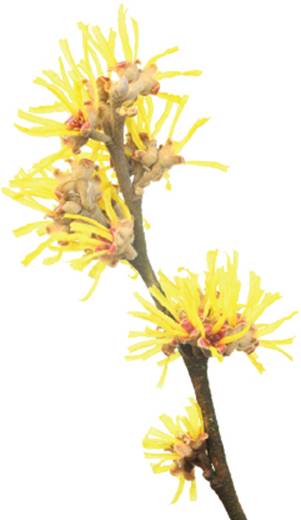
The healing properties of Virginian witch hazel were highly valued by various Native American peoples: the Menominees rubbed the decoction into their legs to keep them supple during sports, while the Potawatomis put witch hazel twigs into sweat baths to relieve sore muscles. The herb was adopted by settlers and listed in the US National Formulary until 1955. Distilled witch hazel is widely available today and is well known in domestic first aid.
Character: Cool, dry, bitter, pungent, astringent.
Constituents: Tannins, flavonoids (including kaempferol and quercetin), saponins, bitters, volatile oil (including eugenol and safrole), choline, Gallic acid.
Actions: Astringent, stops internal and external bleeding, anti-inflammatory.
PARTS USED
LEAVES & TWIGS
The leaves are less astringent than the bark and tend to be used in poultices or taken in infusions. Powdered leaves in capsules are sold commercially to combat varicose veins. Distilled witch hazel is produced by combining the wigs with leaves in a steam extraction process.
BARK
The bark is used in commercial tinctures, ointments, and fluid extracts rather than for distilled witch hazel production. Like leaf and twig extracts it is mainly used to stop bleeding, ease irritation, and treat varicose veins and hemorrhoids.
APPLICATIONS
Leaves
Infusion: Take for diarrhea or bleeding piles. A daily cup can also help combat capillary fragility associated with steroidal therapy.
Mouthwash/gargle: Use the infusion for sore throats, mouth ulcers, tonsillitis, pharyngitis, and spongy or bleeding gums.
Wash: Use the infusion to bathe varicose veins, bruises, grazes, irritant skin rashes, and areas of capillary fragility.
Distillate: Commercially available distilled witch hazel can be used as a wash, like the infusion, or to soak a cotton swab as a nasal plug for nosebleeds or applied to cuts and grazes to stop bleeding.
Eye pads: Use a cotton swab soaked in an infusion or distilled witch hazel to relieve tired eyes.
Twigs
Decoction: Use as an infusion of the leaves.
Bark
Tincture: The dilute tincture can be used externally as a substitute for distilled witch hazel.
Ointment: Use on piles or irritant varicose veins.
Cream: Use for minor, cuts and grazes or bruising.
Harpagophytum procumbens
Devil’s claw
Native to the Kalahari Desert in southern Africa, devil’s claw was introduced to the West after a Boer farmer noticed native Bushmen gathering the roots to treat digestive upsets and rheumatism. The plant was sent to Germany for investigation, and by the late 1950s its anti-inflammatory and antirheumatic properties were well established. The name devil’s claw derives from the characteristic claw-shaped fruits produced in the autumn, which are reputedly used as mouse traps in Madagascar. Today the herb is widely used to treat arthritis and rheumatism.
Character: Bitter, astringent, cooling.
Constituents: Iridoid glycosides (including harpagide, harpagoside and procumbide), phenols, carbohydrates, flavonoids (including kaempferol and luteolin), phytosterols.
Actions: Anti-inflammatory, antirheumatic, analgesic, sedative, diuretic, digestive stimulant.
PARTS USED
TUBER
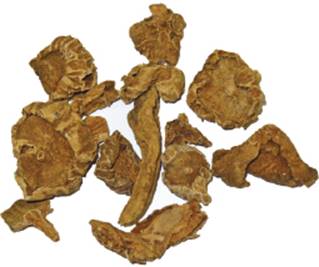
The tubers of devil’s claw, rather than the whole root structure, are used medicinally, although some commercial preparations combine the entire root mix thereby diluting the overall therapeutic effect. Researchers have also found that constant use of the herb for at least six weeks significantly improves the movement of arthritic joints and reduces swelling. Devil’s claw can also be used as a bitter digestive stimulant for a range of liver and gallbladder disorders.
APPLICATIONS
Tuber
Decoction: Take a cup before meals to stimulate the digestion in cases of liver congestion, poor appetite, or mild gall bladder disorders.
Tincture: Take 20-30 drops per dose for at least six weeks for osteoarthritis or rheumatic pains.
Wash: Use the decoction as a wash for irritated and inflamed piles and varicose veins.
Cream: Apply to arthritic and rheumatic aches and pains three or four times a day. Add a few drops of rosemary to improve pain relief. The same mix can be used on sprained or strained joints and muscles.
Capsules/Tablets: Take 2-3 x 200 mg capsules three times daily for arthritic and rheumatic pains as a maintenance dose in chronic conditions. Increase to 4 capsules per dose during any flare-up in symptoms. Check dosages of commercially available tablets and use an equivalent amount.
Powder: Use to dust open wounds to encourage healing.
CAUTIONS
• Devil’s claw is believed to stimulate uterine contractions and should be avoided in pregnancy.
• It should also be avoided in cases of gastric or duodenal ulcer.
Humulus lupulus
Hops
Used in brewing in Europe since at least the eleventh century, hops were never included in traditional English ale. Initially their use was thought to encourage the melancholic humor and too many hops in German-style beer was, as Gerard records, “ill for the head.” Hops were believed, however, to purge excess choleric and sanguine humors, and beer was regarded as a more “physicall drinke to keep the body in health” than the traditional English ale. Hops contain a high proportion of estrogen-like compounds and, as a result, too much beer can lead to a loss of libido in men.
Character: Cold and dry with a bitter but slightly pungent taste.
Constituents: Volatile oil, valerianic acid, estrogenic substances, tannins, bitter, flavonoids.
Action: Sedative, anaphrodisiac, restoring tonic for nervous system, bitter digestive stimulant, diuretic.
PARTS USED
STROBILES
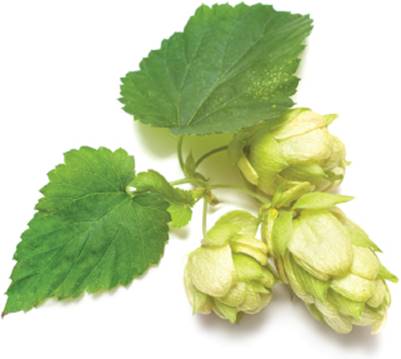
The flowers on the female plants, known as strobiles, are used medicinally.
The character of the plant changes significantly with age as the constituents oxidize. The strobiles are best used fresh for insomnia, and dried hops used in pillows for sleeplessness should be replaced every few months because dried hops more than six months old can be stimulating.
LUPULIN
The small yellow glands from freshly dried hop strobiles are removed and sold commercially as lupulin or Pharmacopoeia. This is a brownish-yellow powder and was official in the British and US Pharmacopoeia until the 1940s. It is still available from pharmacists in parts of Europe, and is generally dispensed in pills or sachets.
APPLICATIONS
Strobiles
Tincture: Use up to 2 ml three times a day as a sedative for nervous tension and anxiety. It can also be combined with digestive remedies – marshmallow, plantain, chamomile, peppermint, etc. – for irritable bowel syndrome. As an astringent it can be especially useful for mucus colitis; use 30 drops on a sugar lump for nervous stomachs. Hops can also be used for some sexual problems (such as premature ejaculation).
Infusion: Use a tea of fresh hops for insomnia with 2 teaspoons of fresh flowers per cup of boiling water, infused for five minutes. Freshly dried hops can also be used but older plant material may be less effective. Freeze-dried material, if available, is better than conventionally dried herb.
Wash: Use an infusion of fresh or freshly dried hops as a wash for chronic ulcers, skin eruptions, and wounds. Alternatively use a pad soaked in infusion or dilute tincture as a compress on varicose ulcers.
Compress: Use a pad soaked in the infusion or dilute tincture on varicose veins.
Capsules: Available commercially; take two before meals as an appetite stimulant. Do not use continuously for more than a few days.
CAUTIONS:
• The growing plant can also cause contact dermatitis.
• Hops should be avoided in depression as it acts as a mild depressant on the higher nerve centers. Do not exceed stated doses.
• The estrogen-like effect may disrupt the menstrual cycles in women working in hop fields.
Hydrastis canadensis
Goldenseal
A traditional healing herb of the North American Indians that has entered the Western herbal repertoire: goldenseal was used by the Cherokee for local inflammations, indigestion, and to improve the appetite, while the Iroquois used it for whooping cough, liver disorders, fevers, and heart problems. It was introduced into Europe in 1760. During the nineteenth century, the herb was a favorite with Thomsonian and Eclectic practitioners and was listed in the United States Pharmacopoeia until 1926 and the US National Formulary until 1955.
Character: Bitter and astringent, dry and predominantly cold.
Constituents: Alkaloids, volatile oil, resin.
Actions: Astringent, tonic, digestive and bile stimulant, anti-catarrhal, laxative, healing to gastric mucosa, hypertensive.
PARTS USED
RHIZOME
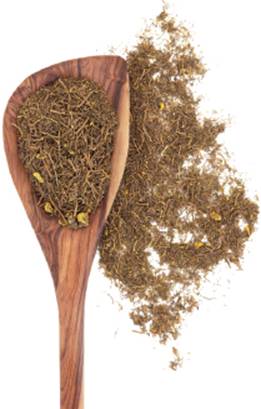
An excellent drying, anti-catarrhal remedy for the mucosa – gastric, upper respiratory tract, vagina – useful for conditions like mucus colitis, nasal inflammations, or ear infections. It is good for gynecological problems and can help reduce menopausal symptoms, ease swollen painful breasts, heavy periods, menstrual pain, and PMS symptoms linked with stagnation, and has also been used for difficult or stalled labor.
APPLICATIONS
Tincture: Up to 0.5–2 ml three times a day: larger doses are more laxative. Use for any catarrhal condition: nasal catarrh, mucus colitis, gastroenteritis, vaginal discharge. Also as a liver tonic for sluggish digestion and for digestive problems associated with food sensitivity and alcohol excess. Use with licorice for gastric ulceration, and add to remedies for PMS or heavy menstrual bleeding.
Mouthwash: Use the dilute tincture (2–3 ml in a tumbler of warm water) for mouth ulcers, and gum disease. Can also be used as a gargle for sore throats and catarrhal conditions.
Powder: Use the powder as snuff for nasal catarrh. The powder mixed in water can be used as the tincture.
Capsules: Use 1 x 200 mg capsule three times daily for catarrh and infections (gastric or respiratory). Combine with chaste-tree berry powder for symptomatic relief of hot flushes and night sweats at the menopause. Combine with eyebright for symptomatic relief of hay fever.
Douche: Use the dilute tincture as a douche for vaginal discharges and infections (including thrush). Can help vaginal itching (use 5 ml of goldenseal in 100 ml rosewater).
Ear drops: Use a 1 ml of goldenseal tincture in 10 ml of water as ear drops for glue ear, catarrhal congestions, “blocked” sensation in the ears.
Wash: Use the dilute tincture (5 ml of goldenseal in 100 ml rosewater) to bathe irritant skin inflammations, eczema, measles, etc.
CAUTIONS:
• Uterine stimulant so avoid in pregnancy.
• Hypertensive so should be avoided in cases of high blood pressure.
• Do not use ear drops of any sort if there is a risk that the ear drum has perforated.
• Goldenseal is now seriously endangered in the wild; avoid buying wild-crafted material and use barberry as an alternative in digestive complaints.
Hypericum perforatum
St. John’s wort
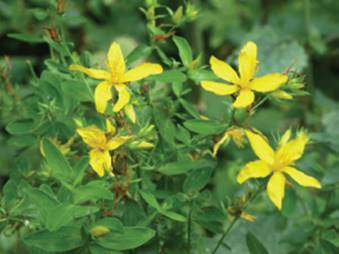
It is said that St. John’s wort supposedly takes its name from the Knights of St. John of Jerusalem who used it as a wound herb on Crusade battlefields. It was also used to ward off evil spirits, and the insane were often compelled to drink St. John’s wort infusions in an attempt to cure their madness. Old herbals often refer to tutsan (H. androsaemum) – from the French toutsain, or “all heal” – which was also used for injuries, ulcers, and inflammations but was taken internally to “purge choleric humors.” Although tutsan later fell into disuse as a medicinal herb, St. John’s wort became credited with similar properties.
Character: Bittersweet, cool, and drying.
Constituents: Glycosides, flavonoids (inc. rutin), volatile oils, tannins, resins.
Actions: Astringent, analgesic, anti-inflammatory, sedative, restoring tonic for the nervous system.
PARTS USED
AERIAL PARTS
Now recognized as a potent antidepressant and as effective as many orthodox drugs, the herb also makes a good restorative nerve tonic ideal for anxiety and irritability and can be especially effective for menopausal problems. It is good for long-standing nervous exhaustion. As an antiviral it has been used in AIDS and HIV treatments. St. John’s wort can help relieve a variety of nerve pains – used both internally and externally – including sciatica and neuralgia.
FLOWERING TOPS
Used to prepare St. John’s wort oil, a blood-red infused oil made by steeping the flowers in sunflower oil in the sun for a few weeks. This can be used topically for burns, inflammations (of skin, muscles, and connective tissues), and neuralgia. Harvest while flowering in mid- to late summer.
APPLICATIONS
Aerial parts
Infusion: Use for depression, anxiety or emotional upsets associated with the menopause or premenstrual syndrome; also helpful in colds and infections combined with herbs such as elderflower.
Tincture: Use standard doses for at least two months for long-standing nervous tension leading to exhaustion and depression. Drop doses (5–10 drops) at night can be useful for childhood bed-wetting.
Wash: Use the infusion to bathe wounds, skin sores and bruises.
Flowering tops
Infused oil: Use St. John’s wort oil on burns, muscle or joint inflammations (including conditions like tennis elbow), neuralgia, and sciatica. For burns, add a few drops of lavender oil; for joint inflammations add 4–10 drops of chamomile or yarrow oil to 10 ml of the infused oil to increase efficacy.
Cream: Use for localized nerve pains, such as sciatica, sprains, and cramps. Can also help to relieve breast engorgement during lactation. Can also be used as an antiseptic and styptic on grazes, sores, ulcers, etc.
CAUTIONS:
• Can cause dermatitis if pruning or gathering the plant in moist but sunny conditions.
• Seek professional advice before using St. John’s wort if taking prescription drugs.
• In very rare cases cataracts and nerve hypersensitivity have been linked to long-term or excessive use of St. John’s wort. It is also said to increase photosensitivity, but there is little clinical evidence for this.
Hyssopus officinalis
Hyssop
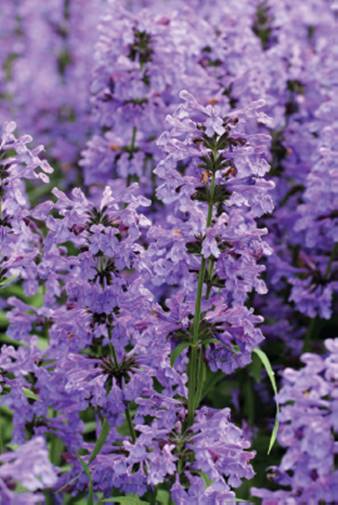
Prescribed by Hippocrates for pleurisy, hyssop, with rue, was recommended by Dioscorides for asthma and catarrh. Its name derives from the Greek azob, or “a holy herb,” although the hyssop mentioned in the Bible seems more likely to have been a local variety of marjoram. Hyssop is one of the more important of the 130 herbs used to flavor Chartreuse liqueur.
Character: Bitter, pungent and dry, slightly warming.
Constituents: Volatile oil, flavonoids, tannins, bitter substance (marrubin).
Action: Expectorant, carminative, peripheral vasodilator, diaphoretic, anti-catarrhal; topically anti-inflammatory, antiviral for Herpes simplex.
PARTS USED
AERIAL PARTS
Mainly used as an expectorant in bronchitis, chesty colds, and asthma, the aerial parts ease flatulence and soothe griping pains and were once popularly combined with figs for constipation. They also promote sweating in chills and influenza. Harvest during flowering in summer.
FLOWERS
In the past these were collected separately from the leaves and used to make cough syrups often in combination with other flowers such as mullein and marshmallow.
ESSENTIAL OIL
This increases alertness and is used as an uplifting and gently relaxing nerve tonic suitable for nervous exhaustion linked with over-work and anxiety or for depression. It is especially helpful for easing feelings of both grief and guilt.
APPLICATIONS
Aerial parts
Infusion: Drink hot during the early stages of colds or influenza. It also makes a soothing carminative for digestive upsets and nervous tummies.
Tincture: Can be combined with other expectorants – such as licorice, coltsfoot, and anise – for bronchitis and stubborn coughs.
Syrup: Use an infusion of the whole herb (or the flowers only if you have them) and preserve with honey or sugar: 500 ml of infusion to 500 g honey. Can be combined with coltsfoot and mullein flowers or licorice for stubborn coughs and lung weakness.
Essential oil
Baths: 5–10 drops in the bath for nervous exhaustion, melancholy, or sorrows.
Chest rub: 10 drops in 20 ml of carrier oil for bronchitis and chesty colds. Combines well the essential oils of thyme and eucalyptus.
CAUTIONS:
• The essential oil contains the ketone pino-camphone, which in high doses can cause convulsions (although low doses of the herb were used for petit mal).
• The essential oil should not be taken internally.