
Raymond D. Pitetti
Children often require relief of pain and anxiety when undergoing diagnostic or therapeutic procedures in the emergency department (ED). Despite adequate local anesthesia, distraction techniques, and reassurance, many children are unable to “lie still” during a procedure without being physically restrained. Physically restraining a child may facilitate the successful completion of a procedure but can result in psychological trauma for the child and creates less than optimal procedural conditions for clinicians. As a result, procedural sedation and analgesia (PSA) has become standard practice in the outpatient setting to help optimize care of such patients.
Historically, physicians have done a poor job of alleviating pain and anxiety in children undergoing diagnostic testing and procedures (1,2). Even as recently as 20 years ago, it was a commonly held belief among healthcare professionals that young children undergoing a painful or anxiety-provoking procedure did not experience pain, would be at risk of becoming addicted to opiates if they were used, would retain no memory of the event, and would not experience any lasting effects. Dramatic advances in procedural sedation techniques, a greater understanding of the pharmacodynamics of available sedatives and analgesics, and a greater understanding of the physiology and behavioral aspects of how children experience pain have led to an increase in the use of procedural sedation and to improved safety practices governing its use.
Providing effective and safe ED PSA requires a well-defined process including (1) preprocedural patient assessment; (2) appropriate selection of pharmacologic agents; (3) careful intraprocedural monitoring; and (4) proper postprocedure evaluation and discharge. In addition, complete and thorough documentation of each aspect of the sedation process should be included in the medical record, since many aspects of the sedation process are important JCAHO requirements.
GUIDELINES FOR PEDIATRIC SEDATION AND ANALGESIA
Guidelines for pediatric PSA (3) were first developed and published in 1985 by the National Institutes of Health and the American Academy of Pediatrics (AAP). These guidelines described patient selection, monitoring, equipment needs, and attempted to define various levels of sedation and analgesia. In 1996, the American Society of Anesthesiology (ASA) Task Force on Sedation and Analgesia by Non-anesthesiologists published similar guidelines. These guidelines sought to bring together consensus opinions proposed by various subspecialty societies (4). A recent revision by the ASA in 2002 and by the AAP in 2006 defined the various states of sedation as follows:
Minimal sedation: Drug-induced state during which patients respond normally to verbal commands; ventilatory and cardiovascular functions are unaffected.
Moderate sedation: Drug-induced depression of consciousness during which patients respond purposefully to verbal commands either alone or accompanied by light tactile stimulation; no intervention is necessary to maintain a patent airway and spontaneous ventilation is adequate; cardiovascular function is usually maintained.
Deep sedation: Drug-induced depression of consciousness during which patients cannot be easily aroused but respond purposefully after repeated verbal or painful stimulation; the ability to maintain a patent airway may be impaired, and spontaneous ventilation may be inadequate; cardiovascular function is usually maintained.
General anesthesia: Drug-induced loss of consciousness during which patients are not arousable even by painful stimulation; patients often require assistance in maintaining a patent airway, and positive-pressure ventilation may be required; cardiovascular function may be impaired.
Although most practitioners would undoubtedly feel more comfortable with the idea of moderate sedation, the reality is that most procedures performed in the ED require deep sedation. However, regardless of the level of sedation desired, it is important to stress that these states represent different points on a continuum and that movement along this continuum can occur in either direction at any time. It is therefore imperative for practitioners to have the appropriate training and resources to intervene if a patient moves into a level of sedation deeper than intended. This training should include the ability to manage a compromised airway and use advanced resuscitation techniques.
PATIENT SELECTION AND MONITORING
Administration of sedatives and analgesics should occur in a facility suitable for appropriate evaluation and monitoring of patients, and for performing emergency resuscitative measures if needed. Monitoring and emergency equipment suitable for children of all ages and sizes must be available (Table 220.1). This should include a positive-pressure oxygen delivery system, suction apparatus, blood pressure monitor, pulse oximeter, and an emergency crash cart.
TABLE 220.1
Equipment

Capnography should be considered when deep sedation is planned. Capnography allows for continuous assessment of ventilatory status and can provide an early indication of airway or respiratory compromise. In addition, capnography avoids depending on the pulse oximeter’s delayed detection of changes in oxygen desaturation.
Reversal agents should also be readily available. The practitioner responsible for monitoring the patient must be someone other than the one performing the diagnostic or therapeutic procedure and should be appropriately trained and certified.
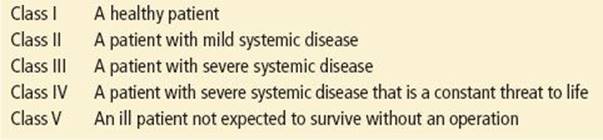
A full evaluation of the patient’s health and medical history should be performed, with consideration given to the patient’s physiologic reserve defined by the ASA physical status classification (Table 220.2). Patients who are ASA class I or II are usually considered appropriate candidates for moderate or deep sedation in the ED. Patients in ASA class III or IV present special problems that involve additional considerations (4).
TABLE 220.2
American Society of Anesthesiologists Physical Status Classification
Evaluation of the patient’s recent food and fluid intake is recommended. Although there is no evidence supporting a relationship between preprocedural fasting and incidence of adverse events during procedural sedation, current ASA and AAP guidelines recommend that patients undergoing elective sedation follow the same fasting guidelines as those for general anesthesia (Table 220.3). However, it may not be reasonable or acceptable to follow nil per os (NPO) guidelines in some emergent circumstances. Therefore, clinical judgment should be exercised, and the risks of aspiration versus the benefits of performing the procedure in a timely fashion should be carefully considered.
TABLE 220.3
Anesthesia Fasting Guidelines

Thorough documentation of a PSA event should start with informed consent. During sedation, the patient’s vital signs, medications, depth of sedation, and occurrence of unexpected events (Table 220.4) should be recorded. The frequency of documentation varies with the level of sedation. It is recommended that heart rate, blood pressure, and oxygen saturation be recorded prior to the sedation, every 5 minutes during moderate and deep sedation, and once again prior to discharge. After the procedure is completed and sedation is no longer desired, monitoring should continue until the patient has recovered sufficiently to meet the following discharge criteria:
TABLE 220.4
Documentation

1. Cardiovascular function and airway patency are satisfactory and stable.
2. Patient is easily arousable and protective reflexes are intact.
3. Patient can talk and sit up (age-appropriate level).
4. Hydration is adequate and the patient can tolerate PO intake.
In general, patients should be monitored for up to 1 hour following completion of the procedure. During this time, vital signs should be monitored and recorded every 15 minutes. For the very young or special-needs child who is incapable of the usual expected responses, the presedation level of responsiveness or a level as close as possible to the child’s baseline should be achieved prior to discharge. Appropriate discharge instructions specifically pertaining to PSA should be given to caretakers and include anticipatory guidance regarding sleep, diet, activity, safety precautions, and specific instructions on how to access care in the event of untoward effects or unexpected complications.
NONPHARMACOLOGIC THERAPY
The involvement of child life specialists in the management of pain and anxiety in the pediatric patient can be invaluable. By providing the patient with age-appropriate information regarding the procedures to be performed and teaching appropriate coping strategies, these specialists often succeed in lessening the child’s fear and anxiety, thereby reducing and occasionally eliminating the need for any pharmacologic intervention. Distraction techniques such as listening to music with headsets, singing, or imagery can also be powerful coping strategies. Finally, parental support at the bedside can play a significant role in reducing the child’s distress (5).
PHARMACOLOGIC THERAPY
There is currently no single agent available that possesses all of the qualities desired for optimal PSA in children. There are, however, many drugs that, when used alone or in combination for the right indications, are very effective and relatively safe. In selecting an agent, the physician must consider the effects desired, the risks and benefits, and the logistics of administration for each situation. When pure sedation is the desired end-point, agents such as benzodiazepines, barbiturates, and propofol should be considered. These agents do not inhibit perception of pain and should never be used as the sole agent when pain management is needed as part of the PSA. Purely sedative agents, however, can be used for painful procedures when used in conjunction with other agents that provide analgesia.
In contrast, nitrous oxide, ketamine, and sedating analgesics such as opioids are excellent choices for painful procedures. Although they provide varying degrees of sedation, they should rarely be used as single agents for nonpainful diagnostic studies. Combining different classes of agents is a way to produce an effect not present with either agent alone. Such combinations must be used with caution, however, for they may potentiate both desired responses and undesired adverse effects.
Pure Analgesics (Nonnarcotics)
Indications: relief of mild to moderate pain
Complications: gastritis, peptic ulcer disease
Specific Agents
Acetaminophen. Pure analgesic agent with antipyretic properties. The standard dose is 15 mg/kg every 4 hours; the agent can be given orally or rectally and can be combined with narcotics such as oxycodone and hydrocodone.
Ibuprofen: Nonsteroidal anti-inflammatory agent with analgesic and antipyretic properties. The standard dose is 10 mg/kg by mouth every 6 hours.
Ketorolac: Nonsteroidal anti-inflammatory agent best suited for relief of biliary and renal colic. The standard dose is 0.4 to 1.0 mg/kg intravenously (IV) or intramuscularly (IM).
Pure Sedatives
Indications: sedation for nonpainful diagnostic or therapeutic procedures
Complications: dose-dependent respiratory depression, hypotension, “paradoxical” (disinhibitory) effects
Specific Agents
Benzodiazepines
Midazolam: Potent sedative with amnesic and anxiolytic properties, rapid onset, and short duration of action (6).
The standard dose is 0.02 to 0.1 mg/kg IV, 0.5 to 0.7 mg/kg orally or rectally, and 0.3 mg/kg intranasally. Midazolam given orally, rectally, or intranasally is effective in providing anxiolysis. The intranasal route, using an appropriate atomizer, provides excellent and easily administered low-grade anxiolysis for a wide variety of applications, from IV starts and brief imaging studies to minor wound repairs. When titrating intravenously, onset of sedation may take 2 to 5 minutes. Children younger than 5 years of age can become excited and agitated when given midazolam (7). Whether this represents a paradoxical or disinhibitory effect and whether higher doses would eliminate the effect is unknown. IV and oral caffeine has successfully reversed this effect.
Barbiturates
Pentobarbital: Sedative agent best used intravenously for nonpainful diagnostic studies. The onset of action is within 1 to 2 minutes, with duration of 30 to 60 minutes, and the standard dose is 2 to 6 mg/kg IV. It is recommended to start with an initial dose of 2 mg/kg and titrate to effect with subsequent doses of 1 to 2 mg/kg every 30 seconds as needed.
Thiopental: Ultra–short-acting agent that can cause profound respiratory depression and hypotension. Standard dose is 3 to 5 mg/kg IV or 25 mg/kg rectally. In current EM practice it is rarely used.
Methohexital: Ultra–short-acting agent with dose-dependent respiratory depression and apnea but minimal associated cardiovascular side effects. Standard dose is 1 mg/kg IV.
Other Agents
Etomidate is an ultra–short-acting sedative hypnotic with no analgesic properties. It has an onset of action of <1 minute and duration of 3 to 5 minutes; cardiorespiratory effects are minimal. Standard dose is 0.1 to 0.3 mg/kg IV. Several studies have shown that etomidate is safe and effective when used in conjunction with analgesics for brief painful procedures (8).
Dexmedetomidine: Also known as precedex, this is a selective α 2-adrenoceptor agonist similar to clonidine, but with a much higher affinity for α 2-receptors than α 1-receptors. It produces “arousable sedation” in which patients experience clinically effective sedation yet are easily arousable. The initial dose of precedex is 3 μg/kg IV, administered over 10 minutes. This can be followed by a maintenance infusion of 2 μg/kg/hour. Precedex should not be given to infants <6 months of age or those with a history of acquired or congenital heart disease other than ASD, VSD and PDA, stroke, recent seizure, moyamoya disease, significant hepatic or renal failure, use of β-blockers, calcium channel blockers and digoxin, or allergy to clonidine. Episodes of bradycardia, hypotension, and sinus arrest have been associated with dexmedetomidine when administered rapidly IV (e.g., bolus administration) or with patients having high vagal tone. Use caution in patients with heart block, severe ventricular dysfunction, hypovolemia, diabetes, chronic hypertension, and in the elderly patients.
Propofol is an ultra–short-acting sedative hypnotic with no analgesic or amnestic properties. It has a rapid onset and brief duration of action and is a potent antiemetic agent. It does, however, have a narrow therapeutic range with a slightly higher reported incidence of partial airway obstruction, apnea, and hypotension in comparison to other commonly used sedative agents (8). Standard initial dose is 1 to 2 mg/kg, followed by either additional boluses of 0.5 mg/kg or a constant infusion of 50 to 100 μg/kg/min. It can cause pain at the site of infusion and should not be administered to patients with egg or soy allergy. Multiple studies have shown that propofol is a safe and effective single agent for painless diagnostic studies (8) or in conjunction with opioid analgesics for painful procedures (9).
Chloral hydrate is a sedative hypnotic with a long history of safety in pediatrics. It can be given orally or rectally. Because of its unpredictable and variable onset and recovery profile (onset taking as long as 40 to 60 minutes) its practical utility in the ED is severely limited. It is also a known gastrointestinal irritant with arrhymogenic potential when given in the higher dose ranges. Children <6 months of age appear to be at increased risk of adverse events when compared to older children. The standard dose is 25 to 100 mg/kg orally or rectally with a maximum of 1 g for infants and 2 g for older children. For infants less than 2 months of age who require sedation, a dose of 35 to 50 mg/kg PO is recommended.
Sedative Analgesics
Indications: moderate to severe pain management, painful procedures
Complications: respiratory depression, nausea, vomiting
Specific Agents
Opioids
Morphine is the gold standard against which all other narcotics are compared. The standard dose is 0.1 to 0.2 mg/kg IV. The use of morphine as a single agent is not considered procedural sedation. As with most narcotics, dosing may vary depending on degree and extent of pain.
Fentanyl, the most potent of the conventionally used narcotics, has a rapid onset of action (1 to 10 minutes) and a relatively brief duration of 30 to 60 minutes. It has fewer respiratory and cardiovascular depressive effects than other opioids but can cause severe respiratory depression and apnea when combined with benzodiazepines. The standard dose is 1 to 2 μg/kg IV, administered slowly. Rapid boluses have been associated with chest wall rigidity and should be avoided (10). Although available in transmucosal form as a lollipop, the high incidence of nausea and vomiting has limited its acceptability (11). Fentanyl is an excellent choice as an intranasal agent given at 2 μg/kg via for rapid treatment of pain before an IV is established (e.g., minor partial thickness burn patient). The use of fentanyl as a single agent is not considered procedural sedation. For procedural sedation, fentanyl is often combined with either propofol or midazolam.
Nonopioids
Ketamine is unique among the sedative analgesics in that it produces a dissociative state between the thalamus and limbic systems, which is characterized by four features: sedation, analgesia, amnesia, and catalepsies (12). It possesses positive inotropic and bronchodilatory effects, with preservation of spontaneous respirations and protective airway reflexes. These qualities make it an ideal choice for outpatient procedures, with an excellent safety and efficacy record documented in more than 11,000 children (13). The standard dose is 1 to 2 mg/kg IV, 3 to 5 mg/kg IM, and 10 mg/kg PO. The clinical state produced by ketamine differs from other sedatives; the patient’s eyes often remain open but with a disconnected stare and marked nystagmus. This “lights on, nobody home” look can be disconcerting to parents and they should be warned of this prior to administration of the drug. Potential side effects of ketamine may include increased salivary and tracheobronchial secretions and emergence reactions (13). Atropine (0.01 mg/kg; minimum, 0.1 mg; maximum, 0.5 mg) or glycopyrrolate (0.005 mg/kg; maximum, 0.25 mg) may help attenuate increased in secretions. Overall the literature describing increased secretions is not conclusive and additional suctioning maybe all that is required to manage secretions. Emergence reactions are uncommon in children younger than 8 years. Whether the frequency of emergence reactions can be reduced by premedication with a benzodiazepine (e.g., midazolam 0.05 mg/kg) is controversial. A recent study concluded that the incidence of emergence phenomena was not affected by the addition of midazolam (14). Laryngospasm after administration of ketamine has been documented especially in small infants (younger than 3 months) with respiratory tract infections, and use of ketamine is therefore contraindicated in this patient population. In older patients laryngospasm is noted in approximately 1 in 256 patients (13). It is typically seen shortly after administration of the medication (with in 30 seconds) and can be managed with effective positive pressure ventilation via bag valve mask; the vast majority of episodes of laryngospasm will resolve within 10 to 20 seconds. A very small minority of patients will require paralysis with succinylcholine to terminate laryngospasm. Other contraindications include conditions associated with increased intracranial or intraocular pressure, hypertension, thyroid disease, and porphyria.
Inhalational Agents
Nitrous oxide is the only inhalational agent in common use in EM practice, usually in concentrations of 30% to 70% N2O mixed with oxygen. Concentrations <50% generally provide analgesia only, with sedation occurring in concentrations >50%. It is a safe, effective sedative–analgesic with a rapid onset and short duration of action upon withdrawal. Nitrous oxide is inexpensive and easy to administer by experienced personnel. “Setting the scene” is very important when using nitrous oxide in young patients. The patient must be well prepared in terms of expectations and be able to cooperate. This method of sedation is best used in older children and adolescents who are more likely to cooperate with the mask.
Reversal Agents
Reversal agents available for PSA include the following:
Naloxone (narcan): opioid antagonist (dose 0.01 to 0.1 mg/kg IV or IM)
Flumazenil (mazicon): benzodiazepine antagonist (dose 0.01 mg/kg IV, maximum 0.2 mg, repeated every 1 minute to a maximum of 3 mg)
Topical Anesthetic Agents
LET: Topical solution of 4% lidocaine, 0.1% epinephrine, and 0.5% tetracaine. It should be applied directly into the wound and has an onset of action of 20 to 30 minutes. It should not be applied to areas where vasoconstriction is a concern. It can be made into a gel form with the addition of hydroxyethyl cellulose.
EMLA: Eutectic mixture of 2.5% lidocaine and 2.5% prilocaine. It should be applied to intact skin with an occlusive dressing and has an onset of action of 60 minutes.
LMX-4: Formulation of 4% lidocaine in a liposomal delivery system. It should be applied to intact skin with an occlusive dressing and has an onset of action of 30 minutes.
Common Pitfalls
• Insufficient monitoring during and after procedural sedation.
• Failure to assure that the provider responsible for monitoring the patient does not become involved in performing the procedure.
• Providing only a sedative agent for a painful procedure without providing analgesia.
• Giving insufficient medication because of time factors or fears about side effects, especially respiratory depression.
• Selecting an agent that cannot be titrated quickly enough and thus fails to produce the desired state.
• Failing to have reversal agents readily available.
• Failing to anticipate disinhibitory effects with the use of benzodiazepines in small children.
• Failing to prepare parents for the nystagmus and catalepsy seen with ketamine.
REFERENCES
1. Selbst SM, Clark M, Wathen JE. Does midazolam alter the clinical effects of intravenous ketamine sedation in children? Ann Emerg Med. 2000;36:579–588.
2. Wilson JE, Pendelton JM. Oligoanalgesia in the emergency department. Am J Emerg Med. 1989;7:620–623.
3. American Academy of Pediatrics, Committee on Drugs. Guidelines for monitoring and management of pediatric patients during and after sedation for diagnostic and therapeutic procedures. Pediatrics.1992;89:1110–1115.
4. American Society of Anesthesiologists. Practice guidelines for sedation and analgesia by non-anesthesiologist. Anesthesia. 1996;84:459–470.
5. Algren JJ. Sedation and analgesia for minor pediatric procedures. Pediatr Emerg Care. 1996;12:435–440.
6. Wright SW, Chudnofsky CR, Dronen CR, et al. Midazolam use in the emergency department. Am J Emerg Med. 1990;8:97–100.
7. Vander Bijl P, Roelofse JA. Disinhibitory reactions to benzodiazepines–a review. J Oral Maxillofac Surg. 1991;49:519–523.
8. Mace SE, Barata IA, Cravero JP, et al. Pharmacologic agents used in pediatric sedation and analgesia in the emergency department. Ann Emerg Med. 2004;44:342–377.
9. Bassett KE. Propofol for procedural sedation in children in the emergency department. Ann Emerg Med. 2003;42(6):792–797.
10. Sachetti A, Schafermeyer R, Geradi M, et al. Pediatric analgesia and sedation. Ann Emerg Med. 1994;23:237–250.
11. Cote CJ. Sedation for the pediatric patient—a review. Pediatr Clin North Am. 1994;41:31–59.
12. Green SM, Nakamura R, Johnson NE. Ketamine sedation for pediatric procedures: Part 1. A prospective series. Ann Emerg Med. 1990;19:1024–1032.
13. Green SM, Johnson NE. Ketamine sedation for pediatric procedures: Part 2. Review and implications. Ann Emerg Med. 1990;19:1033–1046.
14. Wathen JE, Roback MG, Mackenzie T, Bothner JP. Does midazolam alter the clinical effects of intravenous ketamine sedation in children? A double-blind, randomized, controlled emergency department trial. Ann Emerg Med. 2000; 36:579–588.