
Diana Felton and Michael J. Burns
The monoamine oxidase (MAO) inhibitors have been used to treat major depression since the 1950s (1) but are infrequently used today because of their risk for producing dangerous food and drug interactions and serious toxicity after overdose. These agents are generally reserved for the management of atypical, drug-resistant, neurotic, or reactive depression and occasionally to treat anxiety states, bulimia, hypertension, migraine headaches, narcolepsy, obsessive–compulsive disorder, attention deficit hyperactivity disorder, tobacco addiction, Parkinson disease, and phobias (1) and most recently, as a possibility for Alzheimer dementia. Newer selective, reversible inhibitors of MAO have a lower propensity for adverse effects (1,2,3). All of these agents block MAO, the oxidative deamination of endogenous and exogenous monoamines, in the outer mitochondrial membranes of most tissues (1). The two subtypes of MAO (MAO-A and MAO-B) differ in their substrate and inhibitor specificities and tissue distribution (1,2,4). MAO-A is found in the brain (monoaminergic neurons), peripheral sympathetic postganglionic neurons, intestinal mucosa, and liver. MAO-B is located in the brain (glial cells and some serotonergic neurons), platelets, liver, and intestinal mucosa (1).
Noradrenergic neurons contain predominantly MAO-A; serotonergic neurons contain both MAO-A and MAO-B. Inhibition of MAO-A is necessary for the treatment of depression (1). MAO enzymes function to maintain low body concentrations of monoamines (1,2,5). Hepatic and intestinal MAOs prevent the absorption of and systemic effects from dietary monoamines (e.g., tyramine) (1).
All MAO inhibitors are false substrates for the MAO enzyme and bind competitively to the active site of MAO and prevent further activity (1). MAO inhibitors may be classified by their differential selectivity for MAO subtypes, reversibility of MAO binding (inhibition), or by chemical structure (Table 342.1).
TABLE 342.1
Classification of Monoamine Oxidase Inhibitors
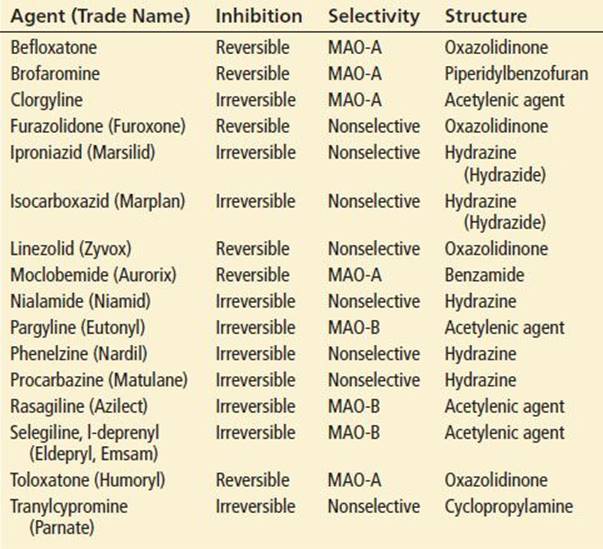
Currently, only irreversible inhibitors of MAO are available in the United States (1). Nonselective inhibitors include isocarboxazid, phenelzine sulfate, and tranylcypromine sulfate. Selegiline and rasagiline are selective inhibitors of MAO-B used to treat Parkinson disease (1,6). They are not associated with dangerous food and drug interactions at doses used clinically (1,3). Their specificity for MAO-B, however, is dose dependent and lost at supratherapeutic doses (1,3). Selegiline (Emsam) is approved and available as a transdermally delivered patch, as well as a transmucosal dissolving lozenge (7). The dangerous food interactions (as occurs from ingested monoamines) are less likely with cutaneous MAO inhibitor delivery that does not readily inhibit intestinal and hepatic MAO (3,7). Certain pharmaceuticals (e.g., furazolidone, linezolid, procarbazine) and herbal preparations (e.g., St. John’s Wort, yohimbe alkaloids, kava kava, and ayahuasca) also have MAO inhibitor activity (1,6). These agents are all weak, reversible, nonselective inhibitors of MAO but still have the potential for adverse drug and food interactions.
Reversible selective inhibitors of MAO-A (befloxatone, brofaromine, cimoxatone, moclobemide, and toloxatone) are used outside the United States (1,2). With these agents, MAO inhibition is short-lived (enzyme activity commonly restored within 24 hours) and may be overcome by increasing levels of amine substrate. Initial experience with these agents has demonstrated greater safety after overdose and a significant reduction of adverse effects when combined with other pharmaceutical agents or dietary amines (1,2,3).
Most MAO inhibitors are structurally similar to amphetamines and other sympathomimetic agents; in fact, both selegiline and tranylcypromine are partly metabolized to amphetamine and methamphetamine (1,8,9). MAO inhibitors exert their pharmacologic and toxic effects by decreasing the degradation of MAO substrates, MAO inhibitors result in expansion of cytosolic and vesicular storage of NE, DA, and 5-HT in presynaptic nerve terminals (Fig. 342.1). This subsequently increases their release from vesicles during normal neurotransmission, causes spontaneous spillover into the synaptic cleft independent of nerve activity, and decreases concentration-dependent reuptake by nerve-ending amine transporters (1,2). Spontaneous hypertensive episodes with therapeutic doses of MAO inhibitors are likely a result from spontaneous release of NE from nerve terminals (4,9). MAO inhibitors further enhance the release of cytoplasmic amines from the nerve ending in the absence of vesicle exocytosis (1,9). They bind competitively to the amine uptake transporter and prevent reuptake of natural amine neurotransmitters. When the MAO inhibitor is transported into the neuron, reverse transport of cytosolic biogenic amines occurs that further increases their synaptic concentrations. MAO inhibitors similarly prevent uptake from glial cell transporters that scavenge extracellular (synaptic) monoamines (1,2).
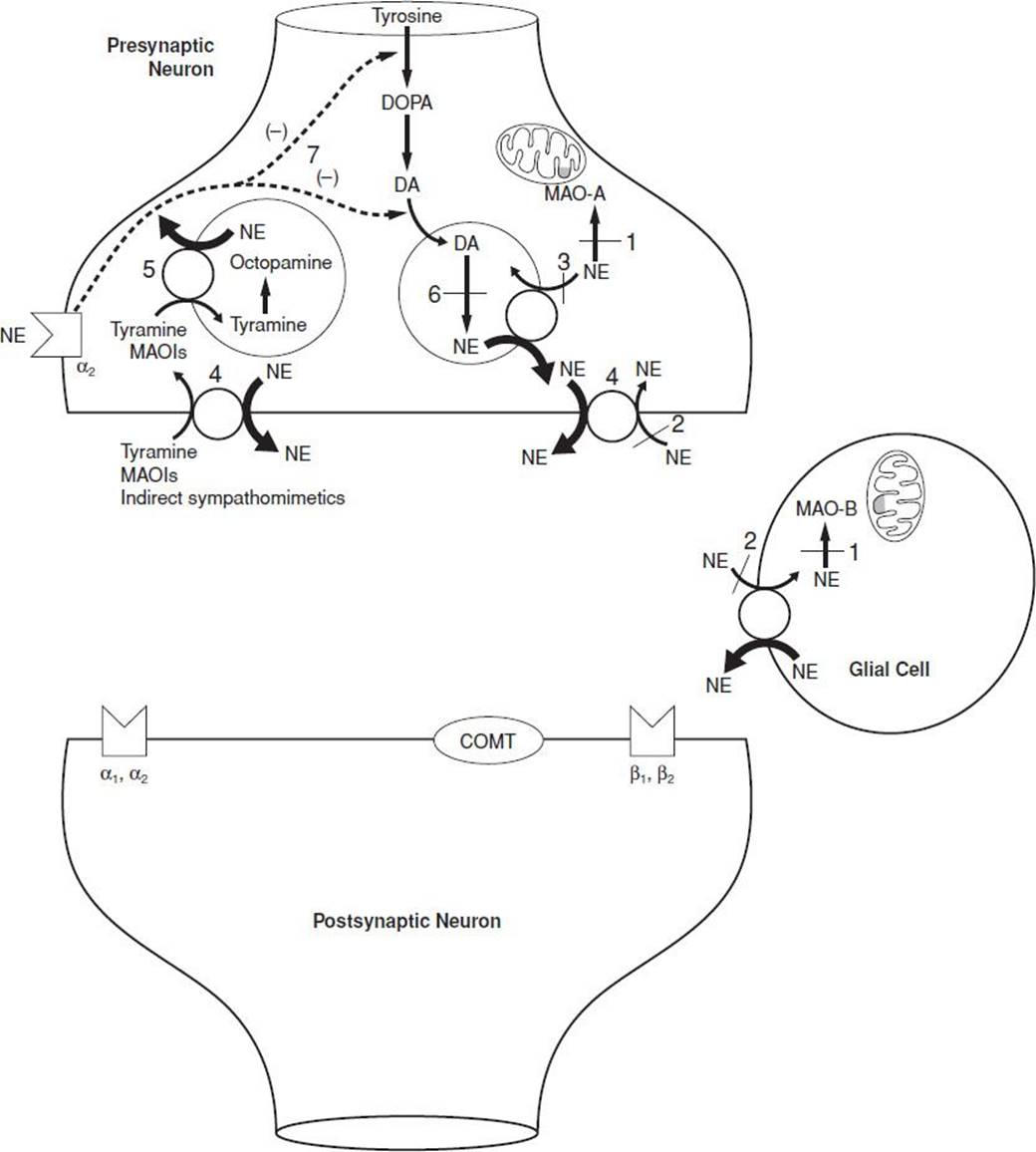
FIGURE 342.1 Diagram of a noradrenergic synapse illustrating the mechanisms underlying monoamine oxidase inhibitor (MAOI) toxicity: (1) Inhibit MAO to prevent norepinephrine (NE) degradation; (2) inhibit NE reuptake by monoamine transporter; (3) inhibit NE reuptake by vesicles; (4) promote reverse transport of NE from nerve ending; (5) promote reverse transport of NE from vesicles; (6) block dopamine (DA) β-hydroxylase; (7) indirectly inhibit enzymes necessary for production of NE. Similar mechanisms operate at dopaminergic and serotonergic nerve endings (α- and β- adrenergic receptors; COMT, catechol-O-methyltransferase, another enzyme that degrades catecholamines.)
Overdose of MAO inhibitors produces an exaggeration of these neuronal effects resulting in profound hyperadrenergic, hyperdopaminergic, and hyperserotonergic states. The delay of signs and symptoms after overdose is due to initial reversible binding with MAO and the time required for significant enzyme inhibition and cumulative effects to occur (e.g., neuronal accumulation of NE, DA, 5-HT) (1,4,9). The neuromuscular abnormalities (e.g., rigidity, myoclonus), hyperthermia, and unusual ocular movements associated with MAO overdose appear to be mediated primarily by enhanced serotonergic neurotransmission in the brainstem and spinal cord. Stimulation of 5-HT1 A receptors from raphe bulbospinal neurons results in myoclonus and rigidity. These neuromuscular effects combined with stimulation of 5-HT2 receptors in the diencephalon result in hyperthermia. Enhanced raphe serotonergic neurotransmission, which controls saccadic eye movements, may produce an unusual “ping-pong” gaze in patients with severe MAO inhibitor toxicity (5). These effects are also seen in the serotonin syndrome (Chapter 343).
The most serious adverse reactions associated with drug and food interactions are also the result of exaggerated neuronal effects (3,6). The administration or ingestion of any agent that increases CNS dopamine, norephinephrine, or serotonin levels may result in potentially life-threatening toxicity (1,3,6). Enhanced serotonergic neurotransmission, known as the serotonin syndrome (see Chapter 343, Serotonin Re-uptake Inhibitors and the Serotonin Syndrome), occurs when MAO inhibitors are combined with agents that enhance serotonin synthesis (e.g., L-tryptophan), promote serotonin release (e.g., methylenedioxymethamphetamine, fenfluramine, tramadol), or block serotonin reuptake (e.g., selective serotonin reuptake inhibitors, tricyclic antidepressants, lithium, phenylpiperidine, meperidine, dextromethorphan, propoxyphene, methadone) (1,3,6). Indirectly acting sympathomimetic agents (e.g., amphetamine, cocaine, synthetic cathinones (“bath salts”), ephedrine, phenylpropanolamine, methylphenidate) act primarily by causing the release of NE from the presynaptic nerve terminal, resulting in the release of the expanded pool of NE to cause signs and symptoms of catecholamine poisoning (hypertensive crisis) (4,6,9).
A similar sympathomimetic effect, called the “cheese reaction,” may occur when food containing tyramine (e.g., aged cheeses; aged, pickled, or smoked meats; certain beers; red wines; and yeast extracts) and other indirectly acting monoamines (e.g., ephedrine, phenylethylamine, phenylethanolamine, pseudoephedrine, octopamine, reserpine, and tryptamine) are ingested (3,6). Inhibition of MAO in the liver and intestine allows for systemic absorption of these amines which may precipitate a rapid, massive release of NE when taken up into noradrenergic nerve endings.
MAO inhibitors are rapidly and completely absorbed, with peak plasma concentrations 1 to 4 hours after ingestion (1,8,9). For irreversible MAO inhibitors, plasma drug concentrations do not correlate with level of MAO inhibition (4,9) and maximal inhibition of MAO occurs after 5 to 10 days of therapy (1,8) and the potential for drug or dietary interactions may last for 2 to 3 weeks after discontinuation of treatment (4,6). The ingestion of 2 to 3 mg/kg or more of an irreversible MAO inhibitor is potentially life-threatening (4,9), with 4 to 6 mg/kg reported to be fatal (9). For reversible inhibitors, however, maximal MAO inhibition is achieved within a few hours after the first dose but MAO activity is restored within 24 hours after the last dose, and the potential for drug and dietary interactions is much less (1,2).
CLINICAL PRESENTATION
Drug or food interactions with MAO inhibitors are common, with hypertensive crisis in 1% to 8% of those taking MAO inhibitors therapeutically (1,4). The clinical presentation includes headache, hypertension, tachycardia (or reflex bradycardia), diaphoresis, agitation, hypertonicity, hyperreflexia, myoclonus, rigidity, seizures, coma, hyperthermia, intracranial hemorrhage, and death. Toxicity begins within 30 to 90 minutes of the ingestion or administration of sympathomimetic amines (1). The duration of effect is variable but often resolves within a few hours.
MAO inhibitor overdose follows a completely different time course (5,9,10). The absence of early symptoms is typical with nonselective irreversible agents. Onset of toxicity is usually delayed 6 to 12 hours after overdose, peaks in 24 to 48 hours for severe cases, and may last for 72 to 96 hours (9). A latent period as long as 29 hours has been described after tranylcypromine overdose (1). During the latent phase, the patient usually appears well or mildly sedated (1,9,10). Classic symptoms include alterations in behavior, cognition, autonomic nervous system function, and neuromuscular activity and may be classified as mild, moderate, or severe (Table 342.2) (9). Signs and symptoms vary greatly in their onset, severity, and duration. Patients with early or mild toxicity may demonstrate mild lethargy or restlessness, dysarthria, nausea, headache, ataxia, palpitations, flushing, shivering, sweating, tremor, nystagmus, incoordination, or hyperreflexia. Moderate toxicity includes confusion, hallucinations, disorientation, agitated delirium, mutism, salivation, diarrhea, marked diaphoresis, myoclonus, fasciculations, trismus, writhing movements, and mild to moderate elevations of temperature, pulse, respiratory rate, and blood pressure. Severe toxicity is characterized by unresponsive coma; fixed, dilated pupils; “ping-pong” gaze; pathologic reflexes; generalized rigidity; seizures; hyperthermia (>104°F); marked tachypnea or respiratory depression; extreme sinus tachycardia or bradycardia; malignant cardiac dysrhythmias; hypotension; and death (1,5,9,10). Death from cardiovascular (CV) collapse is most likely in patients with severe hyperpyrexia (9,10).
TABLE 342.2
Clinical Course of Monoamine Oxidase Inhibitor Poisoning
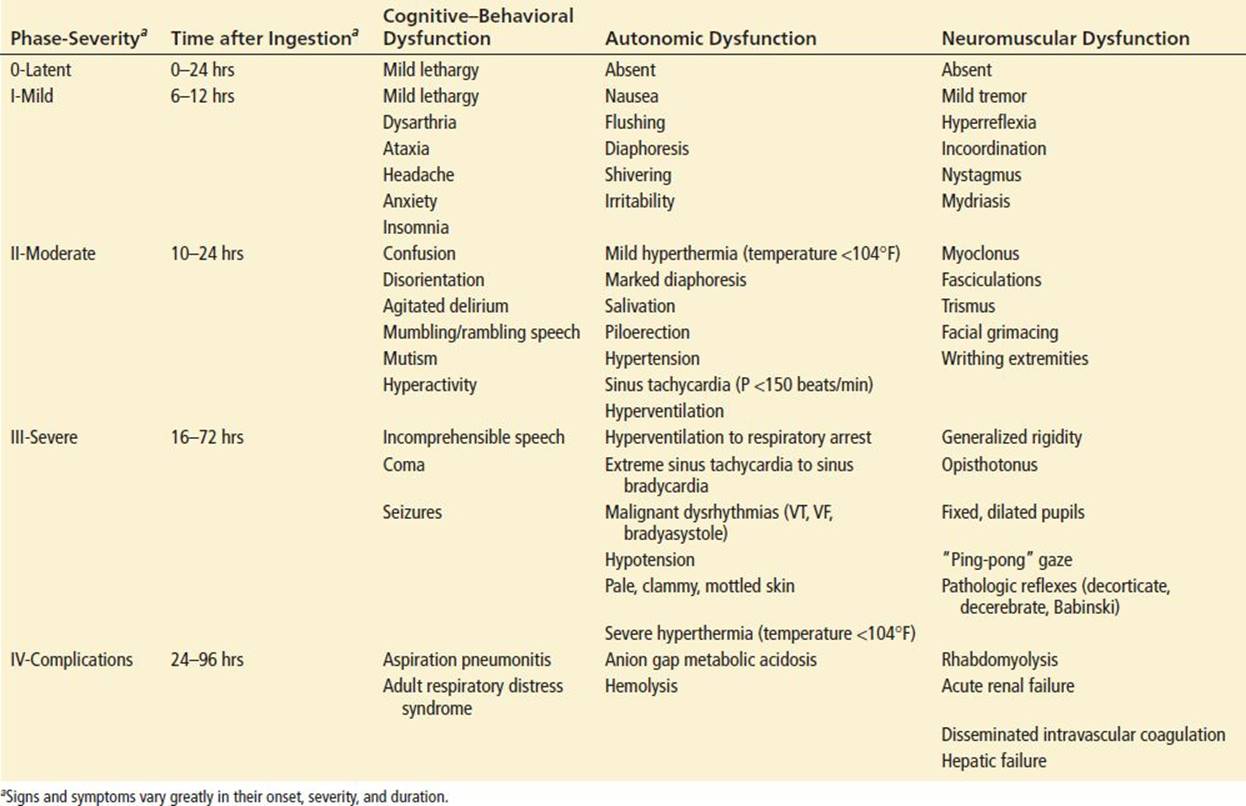
Although seizures may occur after MAO overdose, they are rare and can be confused with the neuromuscular hyperactivity produced by these agents (1,10). Secondary complications in patients with moderate to severe toxicity include aspiration pneumonitis, adult respiratory distress syndrome, rhabdomyolysis, acute renal failure, metabolic acidosis, and disseminated intravascular coagulation (DIC) (9). The likelihood of secondary complications (e.g., rhabdomyolysis, DIC) and death is related to the degree and duration of hyperthermia. Patients with severe toxicity can manifest fixed, dilated pupils, posturing, and extensor plantar response, yet make a complete neurologic recovery (1,5,10).
When taken alone, reversible MAO-A inhibitors have a benign course after acute overdose with doses as high as 20.5 g resulting in only mild to moderate toxicity. Large overdose is characterized by mild CNS depression, agitation, tachycardia, hypertension, and mydriasis. Although death is rare after overdose with moclobemide alone, many fatalities have been reported from the serotonin syndrome with moclobemide and other serotonin-potentiating drugs (e.g., citalopram, clomipramine, methylenedioxymethamphetamine, paroxetine, and sertraline). Chronic use of irreversible nonselective inhibitors has been associated with hyperadrenergic adverse effects similar to the chronic use of amphetamines. These effects include agitation, confusion, hallucinations, hyperhidrosis, hypomania, insomnia, tremors, and seizures (1).
DIFFERENTIAL DIAGNOSIS
Overdose of stimulants such as amphetamine, cocaine, and sympathomimetic (including over-the-counter appetite suppressants) produces a clinical picture similar to the hypertensive reactions associated with MAO inhibitors and dietary and drug monoamines. The clinical presentation of anticholinergic, hallucinogen (e.g., lysergic acid diethylamide, phencyclidine), lithium, salicylate, sympathomimetic (e.g., amphetamines, synthetic cathinones known as “bath salts,” cocaine), and strychnine poisoning may be similar to that of MAO inhibitor overdose. MAO inhibitor toxicity may be confused with the neuroleptic malignant syndrome and withdrawal from alcohol or sedative hypnotic agents. Clinical features of the serotonin syndrome are nearly identical to those after overdose with MAO inhibitors. Medical emergencies such as hypoglycemia, malignant hyperthermia, intracranial hemorrhage, meningitis, encephalitis, pheochromocytoma, septicemia, tetanus, and thyrotoxicosis may present in a similar manner. The history is most useful to narrow the differential diagnosis.
ED EVALUATION
The history should include the time, dose, and duration of exposure; the time of onset, nature, and severity of symptoms; the type of first aid undertaken; and the medical and psychiatric history. Accurate and complete historical data are essential in differentiating the toxic syndromes related to MAO inhibitors. The physical examination should focus on the vital signs and CV and neurologic functions. Except for “ping-pong” gaze, there are no pathognomonic physical findings or laboratory abnormalities. Initial testing for patients with suspected intentional overdose should include electrocardiogram, acetaminophen and salicylate, and routine serum chemistries. Patients with toxicity may need complete blood count; prothrombin and partial thromboplastin times; creatine phosphokinase, calcium, magnesium, lactate measurement, and a urinalysis for supportive care. Patients with altered mental status should have a bedside fingerstick glucose determination and intervention, as necessary. A lumbar puncture and computed tomography scanning may be appropriate to rule out intracranial hemorrhage, meningitis, and encephalitis.
Toxicology screening has many false positive and false negatives, especially with amphetamines (see Chapter 348, Amphetamines and Stimulants). Drug screening rarely detects MAO inhibitors because of their low concentrations in blood and urine samples (9). Overdose of selegiline or tranylcypromine may produce a false-positive qualitative screen for amphetamines (9). Quantitative MAO inhibitor levels and MAO enzyme activity are not generally available and do not correlate with the severity of poisoning (4,9).
KEY TESTING
• Routine blood or urine tests cannot confirm or rule out toxicity from MAO inhibitors
• Toxicology screens have many false positive and negatives
• For patients with moderate to severe toxicity, supportive care includes measurements of serum chemistries, lactate, magnesium, calcium, creatine phosphokinase, liver function tests, PT and PTT, and a urinalysis
• Electrocardiogram
ED MANAGEMENT
Supportive care is the primary treatment for MAO inhibitor overdose. Advanced life-support measures with glucose, oxygen, naloxone, and thiamine should be considered for patients with altered mental status. Activated charcoal is the preferred method of GI decontamination for recent MAO inhibitor overdose. Before any drug or food is given, the potential for an adverse interaction with MAO inhibitors must be considered.
Agitation, neuromuscular hyperactivity, and seizures should be treated promptly with liberal doses of benzodiazepines (e.g., diazepam, lorazepam) or barbiturates (e.g., phenobarbital) (9). Phenytoin is unlikely to be effective for seizures. Pyridoxine is recommended for seizures that occur after overdose with a hydrazine MAO inhibitor.
Rapid cooling is essential to minimize morbidity and mortality. Because hyperthermia is almost invariably associated with CNS agitation and neuromuscular hyperactivity, initial treatment with benzodiazepines or barbiturates is recommended in conjunction with evaporative and convective cooling methods, such as wet sheets or cool mist sprays and fans (9). Antipyretics and cooling blankets are ineffective. If these initial maneuvers do not provide rapid patient cooling, neuromuscular paralysis is strongly recommended (5,9,10) with cooling times of <1 hour. Although dantrolene (2.5 mg/kg orally or intravenously every 6 hours) has been reported to be effective, it is itself toxic and does not terminate muscular rigidity and hyperthermia as rapidly as paralyzing agents. Because the pathophysiology of serotonin syndrome overlaps with MAO inhibitor overdose, nonspecific serotonin receptor antagonists (e.g., cyproheptadine, methysergide) could be of theoretical benefit but without clinical data in this regard, such therapy cannot currently be recommended.
Severe hypertension may be treated with rapid-onset, short-acting, intravenous agents such as sodium nitroprusside, clevidipine, or phentolamine (4,9). Clevidipine (Cleviprex) is a short-acting, intravenous, dihydropyridine calcium channel blocker that is easy to administer and effective for rapid control of severe hypertension. It is given without a bolus starting at 1 to 2 mg/hr and doubled every 90 seconds until the blood pressure improves. Phentolamine (2 to 10 mg IV) is attractive because it blocks α-adrenergic receptors and antagonize the effects of NE. It is effective for the treatment of hypertension associated with the cheese reaction. Dexmedetomidine is a parenteral, titratable, selective, α2-adrenergic agonist, but the lack of published data precludes a recommendation. Long-acting agents (tolazoline, clonidine) can worsen the severe hypotension that often follows the hypertension (9). Unopposed α-adrenergic vasoconstriction with β-adrenergic antagonists can exacerbate the hypertension.
Hypotension should be treated with fluid resuscitation. When pressors are required, direct-acting agents (e.g., epinephrine, NE) are recommended (4,9). Indirectly acting agents such as dopamine, require the release of intracellular amines for their pressor effect which may either precipitate a hypertensive crisis or be ineffective with depleted stores of endogenous catecholamines (1). Additionally, MAO inhibition is less likely to potentiate the effects of exogenously administered, direct-acting pressors, which circulate extracellularly and are primarily metabolized by catechol-O-methyltransferase. Regardless, low doses of direct-acting pressors should be used initially to minimize the risk of an exaggerated pressor response. Phenylephrine has been associated with an exaggerated pressor response and is not recommended for MAO inhibitor poisoning.
Ventricular dysrhythmias and severe bradycardias, usually premorbid signs, should be treated according to current advanced cardiac life-support protocols.
Diuresis, urinary acidification, hemodialysis, and hemoperfusion have no role in the management of MAO inhibitor poisoning (1,4,8).
CRITICAL INTERVENTIONS
• Admit all patients with known or suspected MAO inhibitor overdose for 24-hour monitoring even if they have no initial symptoms.
• Treat neuromuscular hyperactivity with benzodiazepines or barbiturates; with neuromuscular paralysis if severe or accompanied by hyperthermia or rhabdomyolysis
• Rapidly and aggressively cool patients with hyperthermia.
• Administer a direct-acting pressor (e.g., norepinephrine) for hypotension unresponsive to fluid administration.
DISPOSITION
All patients with suspected MAO inhibitor overdose should be admitted for extended observation (24 hours) in a monitored setting. Symptomatic patients and those with abnormal vital signs should be admitted to an intensive care unit or transferred to an institution with this capacity.
Patients who present with drug or dietary interactions may not require hospital admission if the clinical response has been mild. Patients with severe reactions, any disorientation, hyperthermia, persistent symptoms, or abnormal vital signs after a 4- to 6-hour observation period, and those with symptoms that necessitate active intervention should be admitted. The level of in-hospital care required (intensive care or floor) depends on the severity of symptoms. For patients well enough to eat, an MAO inhibitor diet (e.g., low tyramine) should be ordered.
Common Pitfalls
• Failure to check for or recognize MAO inhibitor use before prescribing sympathomimetics or giving pain medications, particularly meperidine.
• Failure to appreciate that the history is key to differentiating acute overdose from drug and food interactions, including the serotonin syndrome.
• Failure to appreciate that the onset of toxicity may be delayed and gradual in onset after MAO inhibitor overdose.
• Failure to anticipate that early sympathetic stimulation may be followed by catecholamine depletion and CV collapse in patients with acute MAO inhibitor overdose.
REFERENCES
1. Baldessarini RJ. Drug therapy of depression and anxiety disorders. In: Brunton LL, Lazo JS, Parker KL, eds. Goodman & Gilman’s: The Pharmacological Basis of Therapeutics. 11th ed. New York, NY: McGraw-Hill; 2006:429–459.
2. Finberg JP. Pharmacology of reversible and selective inhibitors of monoamine oxidase type A. Acta Psychiatr Scand Suppl. 1995;386:8–13.
3. Rapaport MH. Dietary restrictions and drug interactions with monoamine oxidase inhibitors: The state of the art. J Clin Psychiatry. 2007;68(suppl 8):42–46.
4. Lipson RE, Stern TA. Management of monoamine oxidase inhibitor-treated patients in the emergency and critical care setting. J Intensive Care Med. 1991;6:117–125.
5. Erich JL, Shih RD, O’Connor RE. “Ping-pong” gaze in severe monoamine oxidase inhibitor toxicity. J Emerg Med. 1995;13:653–655.
6. Livingston MG, Livingston HM. Monoamine oxidase inhibitors. An update on drug interactions. Drug Saf. 1996;14:219–227.
7. Pae CU, Lim HK, Han C, et al. Selegiline transdermal system: Current awareness and promise. Prog Neuropsychopharmacol Biol Psychiatry. 2007;31:1153–1163.
8. Baker GB, Urichuk LJ, McKenna KF, et al. Metabolism of monoamine oxidase inhibitors. Cell Mol Neurobiol. 1999;19:411–426.
9. Linden CH, Rumack BH, Strehlke C. Monoamine oxidase inhibitor overdose. Ann Emerg Med. 1984;13:1137–1144.
10. Ciocatto E, Gagiano G, Bava GL. Clinical features and treatment of overdosage of monoamine oxidase inhibitors and their interaction with other psychotropic drugs. Resuscitation. 1972;1(1):69–72.