
Claudia L. Barthold and Jennifer A. Oakes
Serotonin re-uptake inhibitors (SRIs) are a diverse class of antidepressant agents that act by inhibiting re-uptake of serotonin (5-HT) at presynaptic receptors. Some of these drugs also have effects at norepinephrine receptors to varying degrees. These agents can be divided into two main categories: (1) selective serotonin re-uptake inhibitors (SSRIs) including fluoxetine, paroxetine, sertraline, fluvoxamine, citalopram, and escitalopram, and (2) the serotonin–norepinephrine re-uptake inhibitors (SNRIs) including venlafaxine, desvenlafaxine, duloxetine, nefazodone, and milnacipran which is approved by the FDA for the treatment of fibromyalgia (but not depression) in the United States.
SRIs are widely prescribed as first-line therapy for depression and generalized anxiety disorder, obsessive–compulsive disorder, and neuropathic pain. The therapeutic effects of these antidepressant medications are mediated by blockade of the re-uptake of serotonin and/or norepinephrine into the presynaptic nerve terminal, allowing for buildup of these neurotransmitters in the synaptic cleft where they are active. Though these biochemical changes, and some behavioral changes, occur fairly rapidly, the full clinical therapeutic effects are delayed for up to 6 weeks (1).
In general, the SRIs have a wide therapeutic margin and safe side-effect profile. Because significant cardiac or neurologic toxicity is rarely seen with overdose, these agents have replaced the more toxic, cyclic antidepressants (CAs) and monoamine oxidase inhibitors (MAOIs) (2). The most significant toxicity typically seen with SRIs is sedation and QTc prolongation. Seizures, antimuscarinic (anticholinergic) effects, and QRS prolongation are also reported in overdose with some of these agents. Fatalities are uncommon. A significant form of toxicity seen with this group is serotonin syndrome, which is a syndrome of serotonergic excess resulting from either drug interactions between two or more serotonergic agents or after overdose of SRIs or other serotonergic drugs. The SRIs are well absorbed from the gastrointestinal tract but may be delayed after an overdose, especially if coingested with agents that slow gut motility and absorption, such as anticholinergic agents or opioids. The SRIs are highly protein-bound and have large volumes of distribution, therefore not generally amenable to hemodialysis.
Half-lives range from 3 (paroxetine) to 144 (fluoxetine) hours and many agents have active metabolites and complex metabolism involving multiple hepatic microsomal enzymes. Activity at a variety of P450 sites contributes to drug–drug interactions seen with SRIs, and may increase the risk of developing serotonin syndrome. This risk is increased further when SRIs are used in combination with other drugs with serotonergic effects (e.g., MAOIs, dextromethorphan, or other SRIs).
Side effects of therapeutic use of SRIs are typically mild. These can include disruptions of sleep–wake cycles, sexual side effects, and weight gain. Symptoms such as mild agitation can occur with therapeutic use but are also an early sign of serotonin syndrome. A full history and physical examination can help differentiate between serotonergic toxicity and normal therapeutic side effects. There is a concern that the initiation of antidepressants can cause an increase in suicidal ideation or attempts especially in children and adolescents. This may affect the appropriate disposition or follow-up for a depressed patient newly started on SRIs.
There is no clear data on risks to the fetus after a single acute accidental or overdose exposure to an SRI in a pregnant woman. The severity of the mother’s symptoms, the fetus’ gestational age, and any evidence of fetal distress should be considered in determining the need for evaluation or follow-up with the patient’s obstetrician. In some cases, SRIs are prescribed therapeutically in pregnant women. Initiation of an SRI for a pregnant patient should be done in concert with her obstetrician and a mental health professional for concerns regarding fetal and neonatal effects of SRI exposure in utero.
CLINICAL PRESENTATION
Typically, signs and symptoms of toxicity occur in the first 6 hours especially for nonextended release preparations. Most SRIs are well tolerated in moderate overdoses presenting with little more than nausea or tremor, but more significant symptoms such as sedation, QTc prolongation, and seizures do occur (3). Patients can present with serotonin syndrome after overdose of an SRI. Citalopram and venlafaxine appear to be the most toxic of the SRIs with seizures and cardiac conduction abnormalities being more common than with other agents (3,4). Venlafaxine also been reported to cause widening of the QRS, similar to toxicity seen with TCAs (3).
In overdose, antimuscarinic (anticholinergic) effects can be seen with some agents. These may manifest as sedation, delirium, coma, hyperthermia, tachycardia, hypertension, dry mucous membranes, decreased bowel sounds, or urinary retention (see Chapter 344).
DIFFERENTIAL DIAGNOSIS
Because polydrug ingestions are the norm rather than the exception, especially in intentional adult overdoses, other agents with sedating or antimuscarinic properties must be considered as coingestants. Sympathomimetic agents (such as cocaine or amphetamines); dextromethorphan; anticholinergic agents such as diphenhydramine; hallucinogens such as lysergic acid diethylamide (LSD) or phencyclidine (PCP); alcohol; or withdrawal from benzodiazepines or alcohol can present with altered mental status, hallucinations, agitation, seizures, or autonomic instability. When evaluating a patient with hyperthermia and altered mental status, one should always consider a possible infectious etiology such as meningitis, encephalitis, or septicemia as well as the possibility of neuroleptic malignant syndrome (NMS) which may also mimic serotonin syndrome but has a different etiology entirely. Neurotrauma, hypoxia, hyponatremia, and hypoglycemia should also be considered with altered mental status. Though cardiac conduction delays can be common in SRI intoxications, they can also be a sign of ischemic injury, so the patient’s underlying cardiac status should be taken into account.
EMERGENCY DEPARTMENT EVALUATION
Since profound sedation can be seen in SRI intoxications, evaluation of a patient’s ability to protect the airway is vital. Breathing and circulation should be immediately assessed. The patient should have cardiac monitoring with telemetry and serial electrocardiograph (ECG) evaluations. Blood chemistries should be obtained to look for acid–base and electrolyte abnormalities. Serum acetaminophen levels should be obtained on intentional overdose patients.
KEY TESTING
• There is no specific testing for SRIs
• EKG for conduction delay
ED MANAGEMENT
Excellent symptomatic and supportive care is essential. The emergency physician should protect the airway and assist breathing, with endotracheal intubation in the rare case of respiratory depression. Though hypotension is rare, blood pressure should be supported with fluids and vasopressor agents to maintain perfusion if needed. Glucose (with thiamine) and naloxone can be considered for patients with altered mental status. Flumazenil is not advised in suspected SRI overdoses or any suspected polydrug overdose. It may not reverse the sedation from the SRIs and may induce withdrawal seizures in a benzodiazepine-dependent patient (see Chapter 308). Additionally, as benzodiazepines are the first-line therapy for seizures, flumazenil may impair the ability to control seizures should they occur from the overdose. Physostigmine to reverse the antimuscarinic side effects is probably best avoided because SRIs have some of the sodium channel blocking seen with the tricyclic antidepressants.
Seizures should be treated with benzodiazepines as first-line agents. If seizures persist and are not controlled by benzodiazepines consider barbiturates, propofol, and finally general anesthesia with electroencephalographic monitoring. Status epilepticus is not a typical feature of SRI-induced seizure activity, and its presence should prompt consideration of other causes such as trauma, infection, a secondary toxic exposure, or an unknown coingestant such as isoniazid.
If there is QRS prolongation (>100 msec or increasing on serial ECGs), serum alkalinization with sodium bicarbonate (NaHCO3) should be considered. Initial dosing of one to three ampules (50 mEq each) IV, usually followed by continuous infusion of three ampules NaHCO3 in 1 L of D5W at a high maintenance infusion rate. The goal is normalization of the QRS or a maximum serum pH of 7.5 to 7.55. NaHCO3 is the main treatment for TCA-induced QRS prolongation. The efficacy of this modality in QRS prolongation from other psychotropic agents including SRIs is variable, but it should be attempted if the patient has no contraindication to the sodium and volume load.
Drug-induced QTc prolongation from SRIs should be followed closely with serial ECGs, as the patient is at increased risk of torsades de pointes. QTc >470 msec on serial ECGs should be considered abnormal. Potassium, magnesium, and calcium levels should be normalized if possible, to mitigate their potential contribution to QTc prolongation.
Hyperthermia is a rare but potentially life-threatening result of SRI overdose or serotonin syndrome. Hyperthermic patients should be treated with active cooling and IV benzodiazepines if muscle hyperactivity and rigidity are contributing components.
Oral activated charcoal (1 g/kg) should be considered in any patient within 1 to 2 hours of acute overdose who is alert enough to protect the airway. Orogastric lavage is not indicated, as these agents have relatively low toxicity. Whole bowel irrigation (WBI) with polyethylene glycol solution should be considered for large acute ingestions of extended release preparations. The WBI solution should be given at 1 to 2 L/hr per nasogastric tube until the rectal effluent is clear. There is no role for hemodialysis, given the high level of protein binding and large volumes of distribution.
Beta-blockers or calcium channel blockers should generally be avoided in attempts to control drug-induced tachycardia or hypertension, unless there are signs of end-organ injury from these vital sign abnormalities. If necessary, it is best to use agents with a short duration of actions (e.g., nitroglycerin, nitroprusside, or esmolol), as they can be titrated down rapidly as appropriate.
CRITICAL INTERVENTIONS
• Establish IV access and cardiac monitoring with serial ECGs for QRS and QT prolongation.
• Benzodiazepines for agitation, muscle hypertonicity, hyperthermia, and seizures.
• Bicarbonate for QRS prolongation.
DISPOSITION
Admission to the hospital is indicated for the rare patient with persistent sedation, significant antimuscarinic effects, QRS or QT prolongation, seizures, or any clinical manifestations of serotonin syndrome. Persistently asymptomatic patients with no evidence of drug-induced conduction delays on their ECGs who have had an ingestion of a nonsustained release preparation can be observed and discharged 6 hours after ingestion. Psychiatric services should be considered for all intentional overdoses. Patients who have ingested large amounts of sustained release preparations may benefit from prolonged observation for possibly delayed toxic effects or serotonin syndrome.
SEROTONIN SYNDROME
Serotonin syndrome is the result of excess serotonergic stimulation in the CNS and remains the most common significant complication of SSRI overdose. Serotonin syndrome can occur with overdose of single SRI, when a second agent with serotonergic properties is added during therapeutic dosage of an SRI, and rarely after therapeutic initiation of a single SRI medication. The 5HT-2 A receptor has been implicated in most of the manifestations of serotonin syndrome, but it is likely that there is a significant contribution from other serotonergic receptors and possibly interactions with other neurotransmitters (5). As some of the SSRIs have prolonged elimination half-lives and pharmacologically active metabolites, serotonin syndrome can occur when a patient is switched from one SRI to another SRI or if multiple serotonergically active agents are combined. The emergency physician should be aware of this possibility and record a careful medication history that includes discontinued medications when evaluating someone for serotonin syndrome (Table 343.1).
TABLE 343.1
Common Drugs with the Potential to Produce Serotonin Syndrome (3,6)
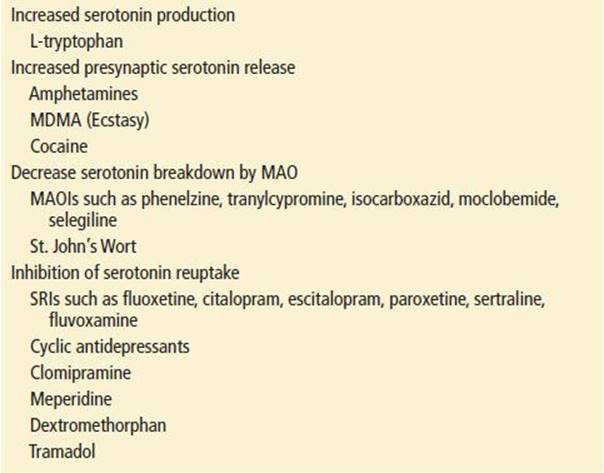
The syndrome is evident in up to 16% of patients who overdose on SSRIs (5). Clinical effects occur on a spectrum of mild to severe, and the history is vital in making the diagnosis and differentiating it from other etiologies, in particular NMS (Table 343.2).
TABLE 343.2
Comparison of Serotonin Syndrome and NMS

The signs and symptoms of serotonin syndrome can be divided into three major categories: (1) neuromuscular hyperactivity, (2) altered mental status, and (3) autonomic nervous system instability (Table 343.3). There may be abnormalities in only one or two of these categories. The most common clinical findings are myoclonus, hyperreflexia, confusion, hyperthermia, diaphoresis, and sinus tachycardia (1), but there is no single abnormality that is required for the diagnosis (7). Patients often have a combination of signs and symptoms, and these may not match one another in severity (e.g., a patient may have significant muscle hypertonicity with only mildly altered mental status and autonomic abnormalities). The diagnosis should thus be considered in patients with a history of recent exposure to serotonergic agents and findings in any of the major categories with some of the typical findings.
TABLE 343.3
Summary of Potential Clinical Findings Associated with Serotonin Syndrome (3,6)

The time of onset of symptoms after exposure to serotonergic agents is variable. Symptoms are often reported to develop within 1 to 2 hours of exposure (2). The syndrome has also been reported to occur several days after gradual increases in dosing of antidepressant medications (5). There appears to be no relationship between the amount of drug ingested and the risk of serotonin syndrome, as it can occur with both therapeutic dosing and in overdose. Serum drug levels measured in patients with the serotonin syndrome have been either at therapeutic or below therapeutic levels in up to 90% of cases (1).
Mild neuromuscular effects can include tremor and akathisia that progress to increased reflexes and clonus and then to frank hypertonicity of muscles, which contributes to hyperthermia. Hypertonicity is often greater in the lower extremities. Mild confusion, agitation, and sedation can worsen to profoundly altered mental status, coma, and seizures. Autonomic instability ranges from minimally elevated heart rate, blood pressure, and temperature to frankly unstable vital signs with significant hypertension, tachycardia, and life-threatening hyperthermia (>41°C).
Laboratory abnormalities may include evidence of rhabdomyolysis, with elevation of creatine phosphokinase, serum creatinine, and lactic acidosis from muscle tissue breakdown, seizures, or hyperthermia. Coagulation abnormalities (including disseminated intravascular coagulopathy), hypotension, and death have also been reported (7).
The differential diagnosis of serotonin syndrome includes sympathomimetic toxicity from agents such as cocaine, amphetamines (muscle hyperactivity, autonomic instability, potentially altered mental status), tetanus (opisthotonus, muscle spasms), strychnine poisoning (muscle spasms and rigidity), lithium toxicity (altered mental status, tremor, and clonus), and severe dystonic reaction infectious etiologies and metabolic derangements. The most similar condition, however, is the NMS. In contrast to patients with the serotonin syndrome, those with NMS have a history of recent commencement of, or increase in, dosage of neuroleptic medications; or a decrease or cessation in dopaminergic medications such as antiparkinsonian agents. Symptoms of NMS tend to develop (and later resolve) over days rather than hours; muscular hyperactivity is characterized by sustained “lead pipe” rigidity rather than by myoclonus; and hyperreflexia is rarely, if ever, seen (see Chapter 338, Antipsychotic Agents).
Both the history and physical examination should focus on excluding other causes of the clinical picture. In patients presenting with a clinical picture suggestive of serotonin syndrome the history should focus on drug and medication usage. The vital signs should be repeated frequently, as autonomic instability can result in fluctuating blood pressure and pulse. Laboratory investigation should focus on excluding other causes of the clinical picture and evaluating for potential complications of the serotonin syndrome.
The treatment of serotonin syndrome is discontinuing all serotonergic agents along with aggressive symptomatic and supportive care. This includes active external cooling, airway management, and control of muscle tone with benzodiazepines. Agitation, myoclonus, hypertonia, or hyperpyrexia should be treated with intravenous benzodiazepines, crystalloids, and rapid external cooling measures. If no response is observed, paralysis and sedation will reduce muscle tone and decrease hyperthermia. All medications with serotonergic activity should be discontinued, and care should be used in choosing medications for treatment avoiding those with serotonin activity (e.g., ondansetron, fentanyl, valproate, metoclopramide) (5).
Various serotonin receptor antagonists have been used to treat serotonin syndrome, with inconsistent efficacy and unclear impact on outcome. Cyproheptadine is an oral antihistamine with antagonist effects at 5HT-1 A and 2 receptors that has shown some efficacy in case reports in mitigating symptoms (8). Initial control of symptoms can be attempted using 4 to 12 mg of cyproheptadine orally (or per nasogastric tube), followed by dosing of 2 mg every 2 hours until symptoms improve, followed by maintenance dosing of 8 mg every 6 hours (5,8). The maximum dose in a 24-hour period is 32 mg. It is most effective with mild to moderate toxicity typically within 1 to 2 hours of initial administration (8). Patients with more severe or progressive serotonin syndrome do not respond as well, if at all (8).
The antipsychotic chlorpromazine is a serotonin receptor antagonist that can be used for parenteral administration. It has been used successfully in doses of 50 to 100 mg IV and IM but should be preceded by adequate intravenous fluid hydration to prevent hypotension. Other side effects include sedation and dystonic reactions. The use of chlorpromazine in patients with NMS misdiagnosed as serotonin syndrome has the potential to worsen the former condition. Preliminary observations suggest that olanzapine antagonizes 5-HT-2-receptors and may be effective in reversing serotonergic toxicity (9). Further study is required to delineate its role in the treatment of serotonin syndrome.
Serotonin syndrome is usually self-limited and resolves in days after cessation of any serotonergic agent and aggressive symptomatic and supportive care.
CRITICAL INTERVENTIONS
• Aggressive active cooling for hyperthermia
• Aggressive benzodiazepine therapy and paralysis for neuromuscular stimulation
Any patient manifesting even mild signs and symptoms of serotonin syndrome should be admitted to the hospital for further care until symptoms resolve. Patients with significant autonomic instability are best managed in an intensive care setting.
SELECTIVE SEROTONIN RE-UPTAKE INHIBITOR DISCONTINUATION SYNDROME
After abrupt discontinuation of an SSRI, a mild and transient syndrome can occur. Typically starting in the first few days after discontinuation of an SSRI and lasting 1 to 2 weeks, symptoms can include headache, dizziness, nausea, irritability, insomnia, and paresthesias (10). Symptoms resolve spontaneously, but resolution is more rapid when the medication is restarted (10). Though abrupt cessation of SSRIs is to be avoided in the outpatient setting because of these symptoms, this should not be a concern for the emergency physician in patients with an overdose. Resumption of treatment with an SSRI should be delayed until after any acute toxicity has resolved.
Common Pitfalls
• Prescribing medication with serotonergic effects (e.g., meperidine, tramadol, or dextromethorphan) in patients who are already taking serotonergic medications, especially MAOIs.
• Failing to admit patients with cardiac conduction delays (e.g., prolonged QTc) for telemetry.
• Failure to measure the temperature and begin cooling measures as indicated.
• Failure to recognize that a diagnosis of serotonin syndrome does not require all three elements of altered mental status, autonomic instability, and neuromuscular hyperactivity.
REFERENCES
1. Taylor, MJ, Freemantle N, Geddes JR, et al. Early onset of selective serotonin reuptake inhibitor antidepressant action: Systematic review and meta-analysis. Arch Gen Psychiatry. 2006;63:1217–1223.
2. McKenzie MS, McFarland BH. Trends in antidepressant overdoses. Pharmacoepidemiol Drug Saf. 2007;16:513–523.
3. Whyte IM, Dawson AH, Buckley NA. Relative toxicity of venlafaxine and selective serotonin re-uptake inhibitors in overdose compared to tricyclic antidepressants. QJM. 2003;96:369–374.
4. Kelly CA, Dhaun N, Laing WJ, et al. Comparative toxicity of citalopram and the newer antidepressants after overdose. J Toxicol Clin Toxicol. 2004;42(1):67–71.
5. Boyer EW, Shannon M. The serotonin syndrome. N Engl J Med. 2005;352:1112–1120.
6. Mills KC. Serotonin syndrome. In: Brent J, Wallace KL, Burkhart KK, et al., eds. Critical Care Toxicology. Philadelphia, PA: Elsevier Mosby; 2005:281–290.
7. Sternbach H. The serotonin syndrome. Am J Psychiatry. 1991;148(6):705–713.
8. Graudins A, Stearman A, Chan B. Treatment of the serotonin syndrome with cyproheptadine. J Emerg Med. 1998;16(4):615–619.
9. Boddy R, Dowsett RP, Jeganathan D. Sublingual olanzapine for the treatment of serotonin syndrome [abstract]. Clin Toxicol. 2006;44:439–440.
10. Black K, Shea C, Dursun S, et al. Selective serotonin reuptake inhibitor discontinuation syndrome: Proposed diagnostic criteria. J Psychiatry Neurosci. 2000;25(3):255–261.