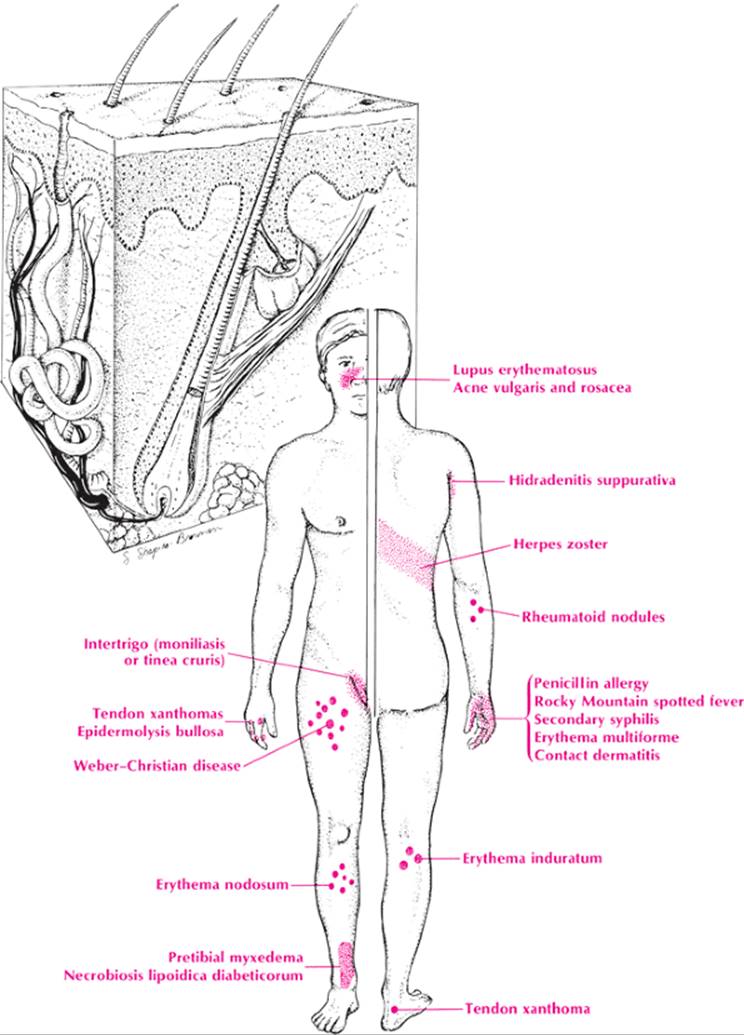
The differential diagnosis of a local rash is best approached with the mnemonic VINDICATE.
· V—Vascular lesions suggest livedo reticularis, acrocyanosis, gangrene of Raynaud syndrome, necrotic areas of periarteritis nodosa, and petechiae from emboli. Varicose and ischemic ulcers may also be considered here.
· I—Inflammatory lesions include boils, caruncles, folliculitis, hydradenitis suppurativa, abscesses, and erysipelas. Dermatophytosis, chancre, chancroid, and yaws, pinta, and tularemia are important. Scabies, insect bites, anthrax, tuberculosis, or actinomycotic sinus fall into this category. The fistulous tracts of regional ileitis may belong here. Warts and moluscum contagiosa also need mentioning here.
· N—Neoplasms of the skin include fibromas, melanomas, lipomas, basal cell and squamous cell carcinomas, and metastatic carcinoma. Kaposi sarcoma and mycosis fungoides must also be considered.
· D—Degenerative lesions such as senile keratosis are considered here. Kraurosis vulvae may be recalled here.
· I—Intoxication includes acid or alkaline burns of the skin. Fixed-drug eruptions should not be forgotten.
|
|
|
Rash, local |
|
|
|
Rash, local |
· C—Congenital lesions include epidermolysis bullosa, eczema, neurofibromatosis, and lipomas.
· A—Allergic and autoimmune diseases suggest pyoderma gangrenosum (ulcerative colitis), necrotic lesions of periarteritis nodosa, and subcutaneous fat necrosis of Weber–Christian disease.
· T—Trauma suggests burns, contusions, lacerations, and hemorrhages.
· E—Endocrine diseases immediately recall pretibial myxedema, necrobiosis lipoidica diabeticorum, diabetic ulcers, the flushed face of Cushing syndrome, and carcinoid.
Approach to the Diagnosis
The approach to the diagnosis is similar to that of the general rash (see page 380).