
Intelligence is not an innate aptitude, hardwired at conception or in the womb, but a collection of developing skills driven by the interaction between genes and environment. No one is born with a predetermined amount of intelligence. Intelligence (and IQ scores) can be improved. Few adults come close to their true intellectual potential.
[Some] assert that an individual’s intelligence is a fixed quantity which cannot be increased. We must protest and react against this brutal pessimism.
—Alfred Binet,
inventor of the original IQ test, 1909
London is a taxi driver’s nightmare, a preposterously large and convoluted urban jungle built up chaotically over some fifteen hundred years. This is not a city built neatly on a grid, like Manhattan or Barcelona, but a crude patchwork of ancient Roman, Viking, Saxon, Norman, Danish, and English settlement roads, all laid on top of and around one another. Within a six-mile radius of Charing Cross Station, some twenty-five thousand streets connect and bisect at every possible angle, dead-ending into parks, monuments, shops, and private homes. In order to be properly licensed, London taxi drivers must learn all of these driving nooks and crannies—an encyclopedic awareness known proudly in the trade as “The Knowledge.”
The good news is that, once learned, The Knowledge becomes literally embedded in the taxi driver’s brain. That’s what British neurologist Eleanor Maguire discovered in 1999 when she and her colleagues conducted MRI scans on London cabbies and compared them with the brain scans of others. In contrast with noncabbies, experienced taxi drivers had a greatly enlarged posterior hippocampus—that part of the brain that specializes in recalling spatial representations. On its own, that finding proved nothing; theoretically, people born with larger posterior hippocampi could have innately better spatial skills and therefore be more likely to become cabbies. What made Maguire’s study so striking is that she then correlated the size of the posterior hippocampi directly with each driver’s experience: the longer the driving career, the larger the posterior hippocampus. That strongly suggested that spatial tasks were actively changing cabbies’ brains. “These data,” concluded Maguire dramatically, “suggest that the changes in hippocampal gray matter … are acquired.”
Further, her conclusion was perfectly consistent with what others have discovered in recent studies of violinists, Braille readers, meditation practitioners, and recovering stroke victims: that specific parts of the brain adapt and organize themselves in response to specific experience. “The cortex has a remarkable capacity for remodeling after environmental change,” reported Harvard psychiatrist Leon Eisenberg in a comprehensive review.
This is our famous “plasticity”: every human brain’s built-in capacity to become, over time, what we demand of it. Plasticity does not mean that we’re all born with the exact same potential. Of course we are not. But it does guarantee that no ability is fixed. And as it turns out, plasticity makes it virtually impossible to determine any individual’s true intellectual limitations, at any age.

How smart can you become? What are you capable of intellectually? For many decades, psychologists thought they had a reliable instrument to answer this question: the Stanford-Binet Intelligence Scales, otherwise known as the IQ test. This combination of tests, measuring language and memory skills, visual-spatial abilities, fine motor coordination, and perceptual skills, was said by its inventor, Lewis Terman, to reveal a person’s “original endowment”—his innate intelligence.
Psychological methods of measuring intelligence [have] furnished conclusive proof that native differences in endowment are a universal phenomenon.
—Lewis Terman, Genetic Studies of Genius, 1925
A prominent research psychologist at Stanford University, Terman was part of a well-established movement convinced that intelligence was an inborn asset, inherited through genes, fixed at birth, and stable throughout life. Revealing each person’s intelligence would, they believed, help individuals find their rightful places in society and help society run more efficiently. The movement’s original founder had been Francis Galton, a half cousin to, and peer of, Charles Darwin in mid-nineteenth-century England. After Darwin published On the Origin of Species in 1859, Galton immediately sought to further define natural selection by arguing that differences in human intellect were strictly a matter of biological heredity—what he called the “hereditary transmission of physical gifts.”
Galton did not share the cautious scientific temperament of his cousin Darwin but was a forceful advocate for what he believed in his gut to be true. In 1869, he published Hereditary Genius, arguing that smart, successful people were simply “gifted” with a superior biology. In 1874, he introduced the phrase “nature and nurture” (as a rhetorical device to favor nature). In 1883, he invented “eugenics,” his plan to maximize the breeding of biologically superior humans and minimize the breeding of biologically inferior humans. All of this was in service to his conviction that natural selection was driven exclusively by biological heredity and that the environment was just a passive bystander. In fact, it was actually Galton, not Darwin, who laid the conceptual groundwork for genetic determinism.
A few decades later, though, Galton’s followers ran into a serious problem: they couldn’t actually locate the natural, innate intelligence they were arguing for. In fact, they couldn’t even agree how to define it. Was intelligence a facility in logical reasoning? Spatial visualization? Mathematical abstraction? Physical coordination? “In truth,” lamented British psychologist and statistician Charles Spearman, “[the word] ‘intelligence’ has become a mere vocal sound, a word with so many meanings that finally it has none.”
In 1904, Spearman introduced his own solution to this problem: there must be a single “general intelligence” (g for short), he theorized, a centralized entity of intellectual skills. And though it couldn’t be measured directly—and still can’t—Spearman argued that g could be detected statistically, through a correlation of different measures. Using his “simple” mathematical formula
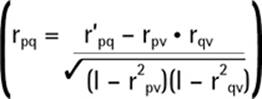
he established a correlation between school marks, teachers’ subjective assessments, and peers’ assessments of “common sense.” This correlation, Spearman argued, proved the existence of a central, inborn thinking ability. “G is, in the normal course of events, determined innately,” Spearman declared. “A person can no more be trained to have it in higher degree than he can be trained to be taller.”
In 1916, Stanford’s Lewis Terman produced a practical equivalent of g with his Stanford-Binet Intelligence Scales (adapted from an earlier version by French psychologist Alfred Binet) and declared it to be the ideal tool to determine a person’s native intelligence. While some immediately saw through Terman’s claim,2most greeted IQ with enthusiasm. The U.S. Army quickly adopted a version for recruiting, and schools followed. Everything about IQ’s crispness and neat classifications fit perfectly with the American hunger for enhanced social, academic, and business efficiencies.
Unfortunately, that same meritocracy movement carried an underbelly of profound racism in which alleged proof of biological superiority of white Protestants was used to keep blacks, Jews, Catholics, and other groups out of the higher ranks of business, academia, and government. In the early 1920s, the National Intelligence Test (a precursor to the SAT) was designed by Edward Lee Thorndike, an ardent eugenicist determined to convince college administrators how wasteful and socially counterproductive it would be to provide higher education to the masses. “The world will get better treatment,” Thorndike declared, “by trusting its fortunes to its 95 or 99-percentile intelligences.” Interestingly, just a few years later, the SAT’s creator, Princeton psychologist Carl Brigham, disavowed his own creation, writing that all intelligence tests were based on “one of the most glorious fallacies in the history of science, namely that the tests measured native intelligence purely and simply without regard to training or schooling.”
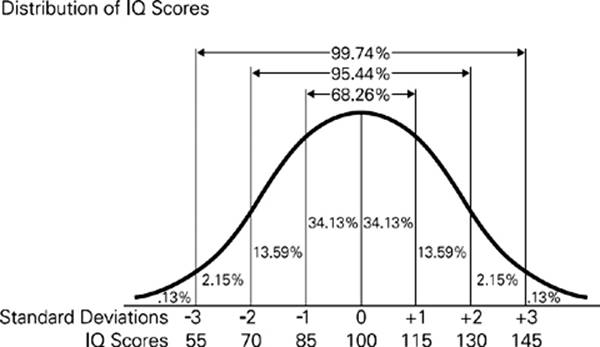
Aside from overt ethnic discrimination, the real and lasting tragedy of IQ and other intelligence tests was the message they sent to every individual—including the students who scored well. That message was: your intelligence is something you were given, not something you’ve earned. Terman’s IQ test easily tapped into our primal fear that most of us are born with some sort of internal restraining bolt allowing us to think only so deeply or quickly. This is extraordinary, considering that, at its core, IQ was merely a population-sorting tool.
Courtesy of Hadel Studio
IQ scores do not actually report how well you have objectively mastered test material. They merely indicate how well you have mastered it compared to everyone else. Given that it simply ranked individuals in a population, it is particularly sad to look back and see that Lewis Terman and colleagues actually recommended that individuals identified as “feebleminded” by his test be removed from society and that anyone scoring less than 100 be automatically disqualified from any prestigious position. To automatically dismiss the worth of anyone scoring below 100 was to mistake relative value for absolute value. It was like saying that, out of any one hundred oranges, fifty are never going to taste very good.
IQ did succeed admirably in one regard: it standardized academic comparisons and thus became a very useful way of comparing academic achievement across schools, states, even nations. Any school principal, governor, etc., would certainly want to know whether his students were underperforming or outperforming the national average. Further, these tests measured achievement broadly enough to predict generally how test takers would fare in the future, compared to others.
But measuring achievement was enormously different from pinpointing individual capacity. Predicting how most kids will do is entirely different from declaring what any particular kid can do. “Stability,” Exeter University’s Michael Howe points out, “does not imply unchangeability.” And indeed, individual IQ scores are quite alterable if a person gets the right push. “IQ scores,” explains Cornell University’s Stephen Ceci, “can change quite dramatically as a result of changes in family environment (Clarke, 1976; Svendsen, 1982), work environment (Kohn, 1981), historical environment (Flynn, 1987), styles of parenting (Baumrind, 1967; Dornbusch, 1987), and, most especially, shifts in level of schooling.”
In 1932, psychologists Mandel Sherman and Cora B. Key discovered that IQ scores correlated inversely with a community’s degree of isolation: the higher the cultural isolation, the lower the scores. In the remote hollow of Colvin, Virginia, for example, where most adults were illiterate and access to newspapers, radio, and schools was severely limited, six-year-olds scored close to the national average in IQ. But as the Colvin kids got older, their IQ scores drifted lower and lower—falling further and further behind the national average due to inadequate schooling and acculturation. (The very same phenomenon was discovered among the so-called canal boat children in Britain and in other isolated cultural pockets). Their unavoidable conclusion was that “children develop only as the environment demands development.”
Children develop only as the environment demands development. In 1981, New Zealand–based psychologist James Flynn discovered just how profoundly true that statement is. Comparing raw IQ scores over nearly a century, Flynn saw that they kept going up: every few years, the new batch of IQ test takers seemed to be smarter than the old batch. Twelve-year-olds in the 1980s performed better than twelve-year-olds in the 1970s, who performed better than twelve-year-olds in the 1960s, and so on. This trend wasn’t limited to a certain region or culture, and the differences were not trivial. On average, IQ test takers improved over their predecessors by three points every ten years—a staggering difference of eighteen points over two generations.
The differences were so extreme, they were hard to wrap one’s head around. Using a late-twentieth-century average score of 100, the comparative score for the year 1900 was calculated to be about 60—leading to the truly absurd conclusion, acknowledged Flynn, “that a majority of our ancestors were mentally retarded.” The so-called Flynn effect raised eyebrows throughout the world of cognitive research. Obviously, the human race had not evolved into a markedly smarter species in less than one hundred years. Something else was going on.
For Flynn, the pivotal clue came in his discovery that the increases were not uniform across all areas but were concentrated in certain subtests. Contemporary kids did not do any better than their ancestors when it came to general knowledge or mathematics. But in the area of abstract reasoning, reported Flynn, there were “huge and embarrassing” improvements. The further back in time he looked, the less test takers seemed comfortable with hypotheticals and intuitive problem solving. Why? Because a century ago, in a less complicated world, there was very little familiarity with what we now consider basic abstract concepts. “[The intelligence of] our ancestors in 1900 was anchored in everyday reality,” explains Flynn. “We differ from them in that we can use abstractions and logic and the hypothetical … Since 1950, we have become more ingenious in going beyond previously learned rules to solve problems on the spot.”
Examples of abstract notions that simply didn’t exist in the minds of our nineteenth-century ancestors include the theory of natural selection (formulated in 1864), and the concepts of control group (1875) and random sample (1877). A century ago, the scientific method itself was foreign to most Americans. The general public had simply not yet been conditioned to think abstractly.
The catalyst for the dramatic IQ improvements, in other words, was not some mysterious genetic mutation or magical nutritional supplement but what Flynn described as “the [cultural] transition from pre-scientific to post-scientific operational thinking.” Over the course of the twentieth century, basic principles of science slowly filtered into public consciousness, transforming the world we live in. That transition, says Flynn, “represents nothing less than a liberation of the human mind.”
The scientific world-view, with its vocabulary, taxonomies, and detachment of logic and the hypothetical from concrete referents, has begun to permeate the minds of post-industrial people. This has paved the way for mass education on the university level and the emergence of an intellectual cadre without whom our present civilization would be inconceivable.
Perhaps the most striking of Flynn’s observations is this: 98 percent of IQ test takers today score better than the average test taker in 1900. The implications of this realization are extraordinary. It means that in just one century, improvements in our social discourse and our schools have dramatically raised the measurable intelligence of almost everyone.
So much for the idea of fixed intelligence. We know now that, even though most people’s relative intellectual ranking tends to remain the same as they grow older:
· It’s not biology that establishes an individual’s rank to begin with (social, academic, and economic factors are well-documented contributors).
· No individual is truly stuck in her original ranking.
· Every human being (even a whole society) can grow smarter if the environment demands it.
None of this has dissuaded proponents of innate intelligence, who continue to insist that IQ’s stability proves a natural, biological order of minds: the gifted few naturally ascend to greatness while those stuck at the other end of the spectrum serve as an unwanted drag on modern society. “Our ability to improve the academic accomplishment of students in the lower half of the distribution of intelligence is severely limited,” Charles Murray wrote in a 2007 op-ed in the Wall Street Journal. “It is a matter of ceilings … We can hope to raise [the grade of a boy with an IQ slightly below 100]. But teaching him more vocabulary words or drilling him on the parts of speech will not open up new vistas for him. It is not within his power to follow an exposition written beyond a limited level of complexity … [He is] not smart enough.”
“Even the best schools under the best conditions cannot repeal the limits on achievement set by limits on intelligence,” Murray says bluntly.
But an avalanche of ongoing scholarship paints a radically different, more fluid, and more hopeful portrait of intelligence.
In the mid-1980s, Kansas psychologists Betty Hart and Todd Risley realized that something was very wrong with Head Start, America’s program for children of the working poor. It manages to keep some low-income kids out of poverty and ultimately away from crime. But for a program that intervenes at a very young age and is reasonably well run and generously funded—$7 billion annually—it doesn’t do much to raise kids’ academic success. Studies show only “small to moderate” positive impacts on three- and four-year-old children in the areas of literacy and vocabulary, and no impact at all on math skills.
The problem, Hart and Risley realized, wasn’t so much with the mechanics of the program; it was the timing. Head Start wasn’t getting hold of kids early enough. Somehow, poor kids were getting stuck in an intellectual rut long before they got to the program—before they turned three and four years old. Hart and Risley set out to learn why and how. They wanted to know what was tripping up kids’ development at such an early age. Were they stuck with inferior genes, lousy environments, or something else?
They devised a novel (and exhaustive) methodology: for more than three years, they sampled the actual number of words spoken to young children from forty-two families at three different socioeconomic levels: (1) welfare homes, (2) working-class homes, and (3) professionals’ homes. Then they tallied them up.
The differences were astounding. Children in professionals’ homes were exposed to an average of more than fifteen hundred more spoken words per hour than children in welfare homes. Over one year, that amounted to a difference of nearly 8 million words, which, by age four, amounted to a total gap of 32 million words. They also found a substantial gap in tone and in the complexity of words being used.
As they crunched the numbers, they discovered a direct correlation between the intensity of these early verbal experiences and later achievement. “We were astonished at the differences the data revealed,” Hart and Risley wrote in their book Meaningful Differences. “The most impressive aspects [are] how different individual families and children are and how much and how important is children’s cumulative experience before age 3.”
Not surprisingly, the psychological community responded with a mixture of interest and deep caution. In 1995, an American Psychological Association task force wrote that “such correlations may be mediated by genetic as well as (or instead of) environmental factors.” Note “instead of.” In 1995, it was still possible for leading research psychologists to imagine that better-off kids could be simply inheriting smarter genes from smarter parents, that spoken words could be merely a genetic effect and not a cause of anything.
Now we know better. We know that genetic factors do not operate “instead of” environmental factors, they interact with them: GxE. Genetic differences do exist. But those differences aren’t straightjackets holding us in place; they are bungee cords waiting to be stretched and stretched. When positive environmental triggers such as parental speaking are discovered, the appropriate response is not to caution against their possible irrelevance, but to embrace their influence on our genes—and our lives.
And now we know what some of those triggers are:
· Speaking to children early and often. This trigger was revealed in Hart and Risley’s incontrovertible study and reinforced by the University of North Carolina’s Abecedarian Project, which provided environmental enrichment to children from birth, with the study subjects showing substantial gains compared with a control group.
· Reading early and often. In 2003, a national study reported the positive influence of early parent-to-child reading, regardless of parental education level. In 2006, a similar study again found the same thing about reading, this time ruling out any effects of race, ethnicity, class, gender, birth order, early education, maternal education, maternal verbal ability, and maternal warmth.
· Nurturance and encouragement. Hart and Risley also found that, in the first four years after birth, the average child from a professional family receives 560,000 more instances of encouraging feedback than discouraging feedback; a working-class child receives merely 100,000 more encouragements than discouragements; a welfare child receives 125,000 more discouragements than encouragements.
· Setting high expectations. As Sherman and Key found in 1932, “children develop only as the environment demands development.”
· Embracing failure. Coaches, CEOs, teachers, parents, and psychologists all now recognize the importance of pushing their charges to the limit, and just beyond. Setbacks must be seen as learning tools rather than signs of permanent built-in limitation.
· Encouraging a “growth mindset.” Stanford psychologist Carol Dweck has built her prestigious career on the importance of individuals believing that their own abilities are malleable—not fixed from birth. Many studies show that the more a person believes that abilities can be developed, the greater the success that person will eventually enjoy. (More on Dweck in chapter 5.)
Recognizing the value of these and other environmental inputs doesn’t take away from the importance of genetics. In the new GxE paradigm, to embrace environmental influences is also to embrace the importance of genes: Reading expresses genes. Speaking expresses genes. Mentoring expresses genes.
With GxE, intelligence is not a thing, but a process. Why do some kids do better in school right from the start? Why are they earlier talkers, earlier achievers, and ultimately more creatively and financially successful in their adult lives? It’s because from day one, they are trained to be.
Around the same time that James Flynn was discovering his Flynn effect, and Hart and Risley were uncovering their early spoken-word effect, City University of New York research psychologist Sylvia Scribner came upon a very different (but no less striking) phenomenon that we might call “carton calculus.” This oddity was quietly unfolding in a Baltimore dairy plant, where uneducated carton packers revealed remarkable mathematical abilities in their work. Though they were easily the least educated people in the factory, they could, without hesitation or discussion, determine exactly which of many orders to fill in precisely which sequence so as to minimize bending over and walking. For example:
If an order called for 6 pints of whole milk, 12 pints of two-percent milk, and 3 pints each of skim milk and buttermilk, an experienced assembler might select a case for 24 pints that was already half-filled with two-percent milk and one-third filled with whole milk, rather than try to prepare the order from scratch with an empty case. Using the half-filled case would enable the assembler to fill the order by removing 2 pints of whole milk and adding 3 pints each of skim milk and buttermilk, for a total of only three [back] bends.
Moreover, when the orders were not evenly divisible into cases, the assemblers were able to shift between different representations of the order, a feat equivalent to shifting between different-base systems of numbers.
The math and mental effort involved was staggering, and yet the low-paid assemblers did this routinely all day long. “Assemblers calculated these least-physical effort solutions even when the ‘saving’ in moves amounted to only one unit (in orders that might total 500 units),” explained Scribner.
No signs of this ability showed up on IQ scores, math tests, or school grades. By any conventional academic measure, these laborers were thoroughly unintelligent. And yet, when the highly educated white-collar workers from the same factory occasionally filled in with assembler tasks, they couldn’t begin to match the case-filling expertise of an experienced low-IQ assembler.
Halfway around the world, in Kisumu, Kenya, Yale psychologist Robert Sternberg stumbled on exactly the same phenomenon in 2001 when studying the intelligence of Dholuo schoolchildren. First he measured their knowledge of local herbal remedies, then tested them according to their Western curriculum. Surprisingly, Sternberg found a “significantly negative” correlation. “The better the children did on the indigenous tacit knowledge,” he noted, “the worse they did on the test of vocabulary used in school, and vice-versa.”
Why—and which test represented true intelligence?
Actually, none of these studies will likely come as a real shock to the reader. We’re all familiar with the notion of “street smarts” as opposed to “school smarts.” But the Baltimore carton packers and the Kisumu schoolkids did pose a serious challenge to research psychologists adhering to traditional definitions of intelligence. As Robert Sternberg watched studies like these pile up—documenting the unusual, sometimes even untestable intelligence traits of Yup’ik Eskimo children, !Kung San hunters of the Kalahari Desert, Brazilian street youth, American horse handicappers, and Californian grocery shoppers—he realized that the lack of correlation between their expertise and IQ scores demanded nothing less than a whole new definition of intelligence.
He saw another problem, too, that reinforced this conclusion: the increasingly flimsy distinction between “intelligence” tests and so-called achievement tests like the SAT II. The more Sternberg compared the two, the harder it was for him to find any real difference between them. Both test types measure achievements, Sternberg concluded—skills that a person has developed.
All of this finally led Sternberg—one of the leading authorities in the study of human intellect—to tear down the wall that prevented the public from understanding the truth about intelligence.
“Intelligence,” he declared profoundly in 2005, “represents a set of competencies in development.”
In other words, intelligence isn’t fixed. Intelligence isn’t general. Intelligence is not a thing. Intelligence is a dynamic, diffuse, and ongoing process. This finding fits perfectly with the earlier work of Mihály Csikszentmihályi and colleagues, who concluded that “high academic achievers are not necessarily born ‘smarter’ than others, but work harder and develop more self-discipline.”
We can trick ourselves into thinking that measuring a person’s intelligence is like measuring the length of a table. But in truth, it’s more like measuring a five-year-old’s weight. Whatever measurement you get applies only for today. How will that child measure up tomorrow? In large part, that is up to the child, and to all of us.
2 “Without offering any data on all that occurs between conception and the age of kindergarten,” New Republic editor Walter Lippmann wrote in 1922, “[Terman and colleagues] announce … that they are measuring the hereditary mental endowment of human beings. Obviously, this is not a conclusion obtained by research. It is a conclusion planted by the will to believe.”