
Paraneoplastic neurologic disorders (PNDs) are cancer-related syndromes that can affect any part of the nervous system; caused by mechanisms other than metastasis or by complications of cancer such as coagulopathy, stroke, metabolic and nutritional conditions, infections, and side effects of cancer therapy. In 60% of pts the neurologic symptoms precede cancer diagnosis. PNDs occur in 0.5–1% of all cancer pts, but they occur in 2–3% of pts with neuroblastoma or small cell lung cancer (SCLC), and in 30–50% of pts with thymoma or sclerotic myeloma.
CLINICAL FEATURES
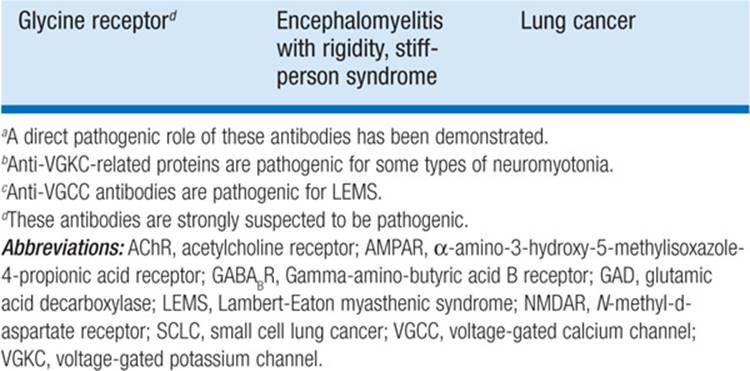
Recognition of a distinctive paraneoplastic syndrome (Table 84-1); should prompt a search for cancer, as prompt treatment of tumor may improve the course of PNDs; many of these disorders also occur without cancer. Diagnosis is based on the clinical pattern, exclusion of other cancer-related disorders, confirmatory serum or CSF antibodies, or electrodiagnostic testing. Most PNDs are mediated by immune responses triggered by neuronal proteins expressed by tumors. PNDs associated with immune responses against intracellular antigens often respond poorly to treatment (Table 84-2), whereas those associated with antibodies to antigens on the neuronal cell surface of the CNS or at neuromuscular synapses are more responsive to immunotherapy (Table 84-3). For any type of PND, if antineuronal antibodies are negative, the diagnosis rests on the demonstration of cancer and the exclusion of other cancer-related or independent disorders. Combined whole-body CT and PET scans often uncover tumors undetected by other tests.
TABLE 84-1 PARANEOPLASTIC SYNDROMES OF THE NERVOUS SYSTEM
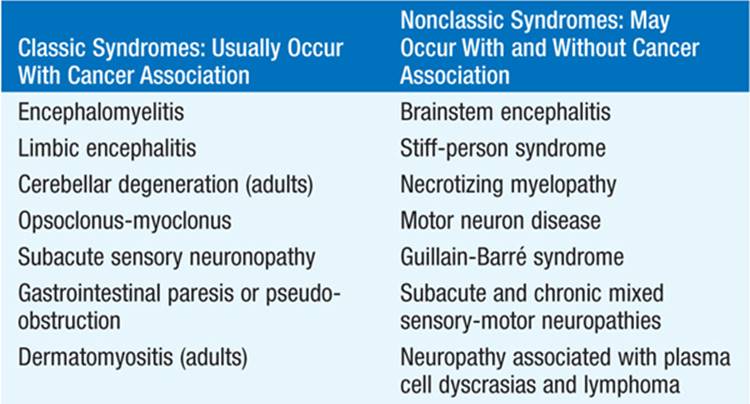

TABLE 84-2 ANTIBODIES TO INTRACELLULAR ANTIGENS, SYNDROMES, AND ASSOCIATED CANCERS


TABLE 84-3 ANTIBODIES TO CELL SURFACE OR SYNAPTIC ANTIGENS, SYNDROMES, AND ASSOCIATED TUMORS

PNDs of the Central Nervous System and Dorsal Root Ganglia
MRI and CSF studies are important to rule out neurologic complications due to the direct spread of cancer. In most PNDs the MRI findings are nonspecific. CSF findings typically consist of mild to moderate pleocytosis (<200 mononuclear cells, predominantly lymphocytes), an increase in the protein concentration, intrathecal synthesis of IgG, and a variable presence of oligoclonal bands.
• Limbic encephalitis is characterized by confusion, depression, agitation, anxiety, severe short-term memory deficits, partial complex seizures, and dementia; MRI usually shows unilateral or bilateral medial temporal lobe abnormalities.
• Paraneoplastic cerebellar degeneration begins as dizziness, oscillopsia, blurry or double vision, nausea, and vomiting; a few days or weeks later, dysarthria, gait and limb ataxia, and variable dysphagia can appear.
• Opsoclonus-myoclonus syndrome consists of involuntary, chaotic eye movements in all directions of gaze plus myoclonus; it is frequently associated with ataxia.
• Acute necrotizing myelopathy. Reports of paraneoplastic spinal cord syndromes have decreased in recent years; it is unclear if this is due to improved oncologic interventions or better detection of nonparaneoplastic etiologies.
• Paraneoplastic retinopathies involve cone and rod dysfunction characterized by photosensitivity, progressive loss of vision and color perception, central or ring scotomas, night blindness, and attenuation of photopic and scotopic responses in the electroretinogram (ERG).
• Dorsal root ganglionopathy (sensory neuronopathy) is characterized by sensory deficits that may be symmetric or asymmetric, painful dysesthesias, radicular pain, and decreased or absent reflexes; all modalities of sensation can be involved.
PNDs of Nerve and Muscle
These disorders may develop anytime during the course of the neoplastic disease. Serum and urine immunofixation studies should be considered in pts with peripheral neuropathy of unknown cause; detection of a monoclonal gammopathy suggests the need for additional studies to uncover a B cell or plasma cell malignancy. In paraneoplastic neuropathies, diagnostically useful antineuronal antibodies are limited to anti-CV/CRMP5 and anti-Hu.
Myasthenia gravis is discussed in Chap. 206, and dermatomyositis in Chap. 207.
TREATMENT Paraneoplastic Neurologic Disorders
• Treatment of PNDs focuses mainly on recognition and control of the underlying malignancy; a stabilization or improvement of symptoms has been reported in some pts with successful tumor control.
• Variable responses have been described following treatment with glucocorticoids and other immunosuppressive agents as well as IVIg and plasma exchange.
• Those PNDs caused by antibodies to cell surface or synaptic antigens have a much more favorable response to therapy.

For a more detailed discussion, see Dalmau J, Rosenfeld MR: Paraneoplastic Neurologic Syndromes, Chap. 101, p. 833, in HPIM-18.