
Sarah Janssen, MD, PhD, MPH
In studying male reproductive toxicants, the ultimate aim is to protect the reproductive health of men and the health of their offspring, which is fundamentally important for the health of future generations. The occurrence of adverse reproductive outcomes is of great concern to the individuals and families involved. This is especially true if the individuals perceive that they are living or working in areas with potential exposure to hazardous agents. Adverse reproductive effects can be very stressful for affected families. Existing human information on this subject is very sparse and inadequate for the reproductive assessment of most suspect compounds and physical agents.
Another reason to better understand male reproductive functions is that they may act as sentinels for detecting occupational and environmental hazards. Reproductive effects have a relatively short latency between exposure and detectable health event (such as abnormal semen profile) as compared with the long latency for cancer. If workers or community residents are protected from exposures that are harmful to reproduction, they usually will be protected from other health effects associated with these exposures as well. While the extent to which workplace and environmental hazards affect reproductive function is unknown, these hazards are potentially preventable. Measures that can be taken to prevent further exposure include substitution or containment of the suspect hazard. Thus, preventing exposure should play a primary role in the health care provider’s overall assessment of the patient’s situation.
REPRODUCTIVE OUTCOMES & RATES
Definitions
A number of adverse reproductive effects may result from male exposure to chemical and physical agents. These effects range from infertility to birth defects in the infant. Infertility is present when a couple has not conceived after 1 year of unprotected sexual intercourse. Male sexual dysfunction may involve changes in libido (interest in sexual activity), erectile dysfunction, or ejaculatory problems. Semen abnormalities can include azoospermia (complete absence of sperm), oligospermia (decreased sperm count), teratospermia (abnormally shaped sperm), and asthenospermia (sperm showing decreased motility). Abnormal birth outcomes include spontaneous abortion (fetal loss prior to the 28th gestational week), stillbirth (fetal loss after the 28th week), death (infant: younger than 1 year of age; neonatal: younger than 28 days of age; or postneonatal: 28 days to 11 months of age), congenital defect (abnormal appearance or function at birth), prematurity (birth prior to the 37th week of gestation), low birth weight (weight <2500 g at birth), and very low birth weight (weight <1500 g at birth).
Population Rates
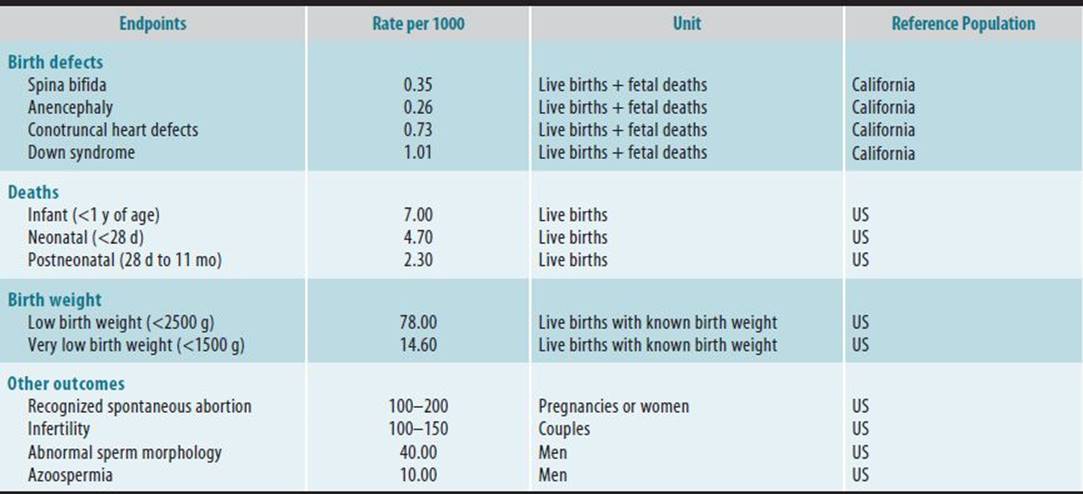
Precise rates for these types of pregnancy loss are difficult to obtain because of a lack of national monitoring systems and methodologic differences in individual epidemiologic studies. Nevertheless, a range of prevalence rates can be estimated (Table 29–1). Approximately 10% of couples in the United States are infertile. Additional couples may experience periods of subfertility or delayed conception. After conception, a variety of reproductive losses may occur at any time from conception up to full term. Up to 50% of embryos may be lost after implantation (the earliest time at which conception can be detected), with approximately 15% of pregnancies ending in a clinically detected spontaneous abortion (SAB). Of all liveborn infants, 7.8% are of low birth weight (LBW), and approximately 3% will have a clinically detectable congenital anomaly. The causes for most of these outcomes are unexplained. However, there are a few known risk factors for women such as older maternal age (associated with increased rates of SAB), certain infectious agents (eg, cytomegalovirus, hepatitis B virus, human immunodeficiency virus (HIV), rubella, toxoplasmosis, varicella-zoster virus, and human parvovirus), cancer treatment (eg, methotrexate), strenuous physical labor, and certain environmental agents (eg, lead and ionizing radiation).
Table 29–1. Prevalence of selected adverse reproductive events.
REPRODUCTIVE PHYSIOLOGY
Although this section focuses on male-mediated exposure associated with reproductive and developmental abnormalities, it is important to note that maternal and fetal exposures also need to be assessed for a complete evaluation. It is recognized that more prolonged direct sources of exposure to the products of conception occur in the woman and that maternal exposure can continue postnatally during lactation. However, changes in fertility have been reported in both sexes, and genetic changes can be transmitted by either parent.
Male Reproductive System
Adequate hormonal regulation is necessary for proper functioning of the male reproductive system (Figure 29–1). For this to occur, coordinated hypothalamic, pituitary, and gonadal interactions are critical. These include (1) hypothalamic production of gonadotropin-releasing hormone (GnRH), (2) pituitary gland production of follicle-stimulating hormone (FSH) and luteinizing hormone (LH), and (3) testis production of spermatozoa (germ cells) from the germinal epithelium, testosterone from the Leydig cell, and inhibin B from the Sertoli cell. GnRH release stimulates the pituitary gland production of FSH and LH. FSH acts on the Sertoli cell within the seminiferous tubules to stimulate spermatogenesis and produce inhibin B (which inhibits pituitary gland hormones). The action of LH is to stimulate testosterone production in the Leydig cell. Conversely, testosterone has a negative-feedback effect on the pituitary and hypothalamic hormones, as well as the production of germ cells (sperm) and Sertoli cell activity. Testosterone is found bound to sex hormone–binding globule (SHBG) or albumin and may be converted to the more potent dihydrotestosterone or estradiol in the circulatory system.

 Figure 29–1. Hypothalamic, pituitary, and testicular interactions involved in hormonal homeostasis necessary for adequate male reproductive function. DHT, dihydrotestosterone; E2, estradiol; FSH, follicle-stimulating hormone; GnRH, gonadotropin-releasing hormone; LH, luteinizing hormone.
In males, puberty is due to adequate testosterone levels and manifested by reproductive system maturity and development of secondary sexual characteristics (eg, increased muscle mass, beard growth, axillary and pubic hair, deepening of the voice, libido, and external genitalia growth).
In general, spermatogenesis involves two major sites within the testis. Starting from a germ cell, it takes 74 days for development through the stages of spermatogonium, spermatocyte, and spermatid into a mature spermatozoon (or sperm) in the seminiferous tubules of the testis. During the next 12 days, the sperm travels along the epididymis for eventual ejaculation. Thus approximately 3 months are required to complete the maturation and transport of the sperm.
Teratology
There are important issues in teratology to be considered when evaluating male reproductive function. Preconception exposure may act directly on the germ cell (sperm). This condition could lead to either no fertilization or an aberration of the zygote and an eventual SAB (possibly clinically undetected) or birth defect. The reproductive toxicant may affect the embryo even when exposure occurs prior to conception either to the mother or to the father. Thus one must consider infertility, SABs, and birth defects when assessing men exposed to suspect reproductive toxicants.
Another important aspect to consider is that spermatogenesis involves a continuously replicating cell population (in the billions), whereas oogenesis occurs prenatally with a finite population at birth (only approximately 400 oocytes ovulated during the reproductive years) that is depleted at around age 50 years. Therefore, chemical or physical agents whose toxicity depends on cell division will have greater effect on the male germ cell. A complete evaluation of a male exposed to a reproductive hazard should take into account the large variability in individual susceptibility to reproductive agents; the environmental, occupational, and lifestyle factors of both parents; and the possibility that a toxic effect may lead to a clinically nondetectable abnormality at the birth of the offspring.
Potential Mechanisms of Action
Most male reproductive hazards can be characterized by having one or more of the following potential mechanisms of action: central nervous system or endocrine abnormality (decreased libido and fertility as possible adverse reproductive effects), direct testicular toxicity (decreased fertility), spermatogenesis or germ cell damage in the form of morphologic change, decreased cell number, abnormal motility or chromosomal abnormality (decreased fertility, fetal loss, congenital malformations, childhood developmental disabilities, and cancers), and toxicants in the semen leading to abnormal sperm motility or direct action on the uterus or fetus (all the prior possible effects or outcomes). Although the focus of this chapter is on direct male reproductive effects, the potential for take-home exposure from the workplace leading to family member exposure needs to be assessed concurrently in the evaluation of a worker.
SCIENTIFIC LITERATURE
Human risk assessment of reproductive or other hazards in the workplace or environment involves the following components: hazard identification, dose-response assessment, exposure assessment, and risk characterization. The clinician may be involved in one or more of these steps when evaluating the health risk for a patient or worker.
Informational Sources
When evaluating a patient with potential exposure to reproductive hazards, the clinician needs to identify biologic, chemical, and physical agents in the workplace or environment via the patient exposure history and any available informational material such as warning signs, product labels, material safety data sheets, and purchase orders. These documents may identify the agents to which a person is potentially exposed but usually provide very little information on reproductive hazards. In 1998, the U.S. Environmental Protection Agency (EPA) estimated that more than 84,000 chemicals were being used in industry, with only 4000 of these having been evaluated in animals (with a much smaller number studied in humans). Adding to this problem is the approximately 2000 new chemicals being introduced into the workplace each year. Many of these chemicals lack adequate premarket reproductive assessment. Some informational sources on animal and human studies are available for those hazards that have been evaluated, such as the Registry of Toxic Effects of Chemical Substances (RTECS), REPROTOX (reproductive hazard information database), Shepard’s Catalog of Teratogenic Agents, and the Teratogen Information System (TERIS). All these sources review the human and animal literature for toxic effects of environmental chemicals and, for the latter three databases, drugs. Because of the scarcity of human data dealing with reproductive effects, it is important to know where this type of information can be obtained. In addition to the research databases listed, there are government-based efforts to evaluate the existing scientific literature with respect to reproductive hazards. In California, there is a state-mandated program that evaluates chemicals known to cause cancer or reproductive toxicity. There are 59 pharmaceutical or environmental compounds determined to have male reproductive toxicity by this program (Table 29–2).
Table 29–2. Chemicals known to cause male reproductive toxicity.
Altretamine
Amiodarone hydrochloride
Anabolic steroids
Benomyl
Benzene
Bromacil lithium salt
1- and 2-bromopropane
1,3-Butadiene
Cadmium
Carbon disulfide
Chlorsulfuron
Cidofovir
Colchicine
Cyclophosphamide (anhydrous or hydrated)
2,4-D-butyric acid
o,p’–and p,p’–DDT
1,2-Dibromo-3-chloropropane (DBCP)
Di-n-butyl 1-phthalate (BBP)
Di-n-hexyl phthalate (DnHP)
m-, o-, and p-Dinitrobenzene
Dinitrotoluene (2,4-, 2,6-, and technical grade)
Dinoseb
Doxorubicin hydrochloride
Epichlorohydrin
Ethylene dibromide
Ethylene glycol (monoethyl ether, monomethyl ether, monoethyl ether acetate, and monomethyl ether acetate)
Ganciclovir sodium
Gemfibrozil
Goserelin acetate
Hexamethylphosphoramide
Hydramethylnon
Idarubicin hydrochloride
Lead
Leuprolide acetate
Myclobutanil
Nifedipine
Nitrofurantoin
Oxydemeton methyl
Paclitaxel
Quizalofop-ethyl
Ribavirin
Sodium fluoroacetate
Streptozocin
(streptozotocin)
Sulfasalazine
Thiophanate methyl
Tobacco smoke
(primary exposure)
Triadimefon
Uracil mustard
Source: California Environmental Protection Agency.
Epidemiologic Studies
Well-conducted epidemiologic studies should provide the best means of evaluating whether a specific agent or group of agents adversely affects human reproduction and development. Human studies cannot be controlled, as can animal experiments, so certain criteria or a weight-of-evidence type of scheme often is used in evaluating whether a substance reasonably can be considered as having an adverse effect.
Study Designs
The basic study designs used to examine the association of an exposure and possible outcomes include the cross-sectional, case-control, and cohort studies, which are discussed thoroughly in the Appendix. The cross-sectional design is the simplest and has been used often in occupational and environmental reproductive studies. If the mechanism of action is thought to be interference with spermatogenesis, this study design is useful because there is a relatively short 3-month lag period between exposure and abnormal health outcome. However, if direct germinal epithelium damage is being considered as the mechanism of action, there is potential selection bias because the population existing in the workplace at the time of study may not be representative of the workforce during the time of prior exposure. For example, testicular biopsy among the workers exposed to chronic and high levels of dibromochloropropane (DBCP) demonstrated tissue scarring. This could result in permanent decreased sperm concentration, even after exposure has ended. The case-control study is most appropriate for evaluating relatively rare diseases in large populations (eg, birth defects or childhood cancers). Because the outcome of interest is specified at the onset, the continuum of reproductive effects that may result from a given exposure cannot be evaluated. The cohort study is the preferred study design for most reproductive outcomes. A prospective cohort study allows specific measures of an exposure and potential confounders to be ascertained at the etiologically relevant time periods. In addition, a cohort design allows repeated test measurements (eg, semen analysis) that tend to have relatively high individual variability.
The cohort and case-control studies are considered hypothesis-testing studies and usually are conducted after a possible association has been suggested by previous observations or a documented group exposure. For example, an acute clinician may recognize a series of cases that seem to have a factor in common. This situation is most likely to occur with a rare disease or new syndrome and was instrumental in identifying associations such as thalidomide and severe limb defects and diethylstilbestrol (DES) and vaginal clear-cell carcinoma. A reported cluster of adverse outcomes occurring in a group of people is a common way for environmental and occupational problems to be brought to attention, but such clusters often remain unexplained on further investigation.
Valuable data could be obtained from surveillance systems, but there are few established systems in place for adverse reproductive outcomes other than birth defects. Reasons for this include the fact that not all outcomes attract medical attention or require hospitalization (eg, semen abnormalities, SABs, and subfertility). As a result, these outcomes are more difficult to ascertain and are associated with a smaller financial impact for society.
Exposure Assessment
Although the methods used to measure occupational or environmental exposure are beyond the scope of this chapter, a brief overview with issues specific to evaluating male exposure associated with reproductive outcomes is presented. In addition, it should be kept in mind that the exposures of three individuals may be involved (ie, each parent and the embryo/fetus/offspring).
To affect fertility or spermatogenesis, an agent must reach the appropriate organs via the bloodstream (eg, chemical agent) or physical change (eg, radiation or excessive heat). Some chemicals react with the first tissues they encounter, such as the lungs or skin, and are not absorbed into the bloodstream unless they are ingested (eg, acids, chlorine, and asbestos). Unless a chronic exposure results in a steady-state level in the body, the rapidity with which a substance is cleared also can affect its toxicity. Often these issues are beyond the scope of epidemiologic studies but should be considered within the overall body of evidence about the toxicity of a substance.
In epidemiologic studies, exposures can be ascertained from interviews, existing records, or biomarkers. If exposure history is obtained by retrospective interview, there is the possibility of biased recall among cases or misclassification because of a lack of monitoring records or diminished memory. Recall may be affected by changes in exposures. Ascertainment of current exposure status for cohort studies limits possible recall bias, but men may not be aware of all their exposures. In interview studies, asking one spouse about the other may not provide sufficiently accurate information. Also, obtaining residence at time of delivery many not reflect timing of importance for sperm development.
Existing records often do not provide detailed information but rather serve to group men broadly. For example, the residence listed on a birth certificate might be used to assign the likelihood of an environmental exposure. However, residence at delivery may not reflect residence of the father, nor does it account for individual differences, such as how much time is spent out of the area at work. Similarly, occupational registries may be used to group men by broad exposures, but specific worksite practices will be unknown. The most accurate occupational exposures would be obtained by an industrial hygienist, but such studies are also likely to cost more or be limited in sample size to allow for more detailed study.
Laboratory measurement of exposure may be done in a prospective study or on stored biologic samples and provides a quantification of exposure that is less likely to be biased. Techniques for measuring environmental levels have been developed for many agents, including radon, electromagnetic fields (EMFs), solvents, pesticides, metals, and dust levels. Measurements on biologic samples provide an indication of internal dose, which would be more biologically relevant. A number of difficulties can arise with these types of studies, including small sample size or selection bias owing to the higher costs and greater participation required of subjects. Sampling at one point in time may not reflect the critical exposure period, particularly if the substance is cleared rapidly.
As noted earlier, it is important to consider the timing of exposure in an epidemiologic study. An association with an exposure at the critical time is more relevant, and such information may be useful for excluding the possibility of a particular effect if the timing is wrong. In addition to timing, a dose-response relationship usually is examined.
In summary, exposure assessment in epidemiologic studies may involve problems with unknown exposure levels, unknown biologic indicators, poor sources of information on exposure, imprecise exposure timing, and multifactorial exposure sources.
Biologic Outcomes
There is variable quality in the detection and measurement of biologic endpoints for male reproductive toxicity studies. For specific male reproductive conditions and male-mediated reproductive outcomes, the range of conditions includes sexual dysfunction, endocrine changes, semen abnormalities, chromosomal anomalies, infertility, and abnormalities in the fetus and offspring. The spectrum of birth outcome endpoints is discussed in Chapter 28. Case ascertainment methods can include the following: birth certificates, hospital records, surveillance programs (eg, birth defects registries), medical insurance forms, reproductive history questionnaires, and semen analyses. The latter two methods tend to be the most useful type of case ascertainment because of relatively more precise male information as opposed to the usually inadequate paternal information found in birth outcome records.
Statistical Issues
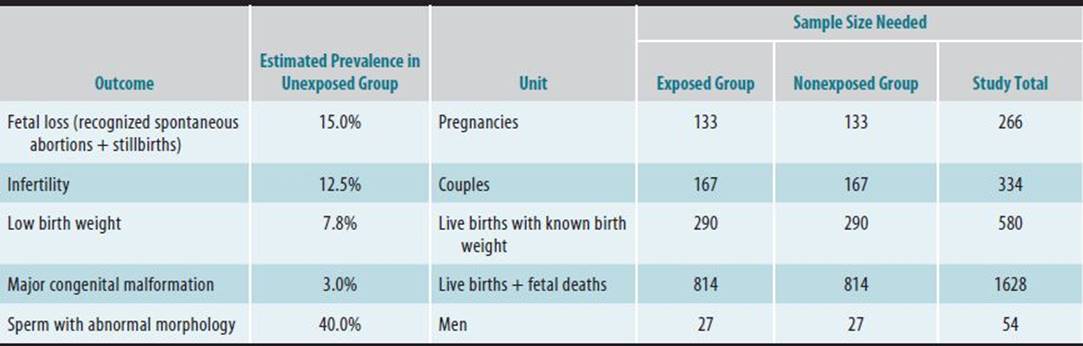
For selected reproductive endpoints, the necessary number of study participants for adequate statistical power is shown in Table 29–3. One advantage of conducting studies of semen analysis is that relatively fewer participants are needed, and there is a direct measurement of the abnormality being studied (eg, abnormal number, motility, and shape of sperm). It should be noted that the general population normal ranges for these semen endpoints are unreliable because of differences in laboratory proficiency and techniques. It is preferable to test for internal trend within a given worker group or community group or to obtain an appropriate control group. Although fewer participants are needed for semen studies, there may be a problem in selecting the most appropriate comparison group.
Table 29–3. Sample sizes needed to detect a relative risk of 2.0 among exposed and unexposed groups for selected reproductive endpoints (95% confidence level and 80% power).
Confounding Factors
Potential confounders need to be considered in the evaluation of men exposed to occupational or environmental reproductive hazards. For a factor to be a confounder, it must be related to both the endpoint and the exposure in the study of interest. Lack of control for a known confounder in prior studies does not imply that the study is deficient if the investigators found that this factor did not act as a confounder in their study or had reason to believe that the factor would not be associated with the exposure of interest. Potential confounding factors in male reproductive studies include personal characteristics (eg, paternal age), medical conditions (eg, recent infection, trauma to the gonads, impaired autoimmune status, high fever, mumps orchitis, diabetes, prostatitis, varicocele, and hydrocele), drug use (eg, marijuana, estrogen, chlorambucil, cyclophosphamide, and nitrofurantoin), and habits (eg, tobacco use, alcohol use, and frequent sauna or hot tub use). In addition, there is the possibility of a potential synergistic health effect from two or more coexisting exposure or risk factors. In conducting occupational studies, a potential confounder may be an environmental agent such as exposure to solvents, metals, pesticides, excess heat, ionizing radiation, and neurotoxins in nonworkplace settings. Conversely, one needs to assess workplace hazards when conducting community-based reproductive studies.
Selected Examples of Reproductive Hazards
Few chemicals have been studied adequately in terms of their reproductive effects. Most exposure standards are not based on reproductive effects. More evidence is available from animal than human studies, but direct extrapolation to the human cannot always be made. Although epidemiologic studies can be more difficult to interpret because of the methodologic issues described earlier, a number of potential reproductive or developmental hazards have been identified (Table 29–4). The agents that have been shown conclusively to be reproductive toxicants in humans (other than medications) are few and include DBCP, ionizing radiation, and lead.
Table 29–4. Established or highly suspect relationships between male reproductive abnormalities and selected environmental and occupational agents or processes, based on human studies.
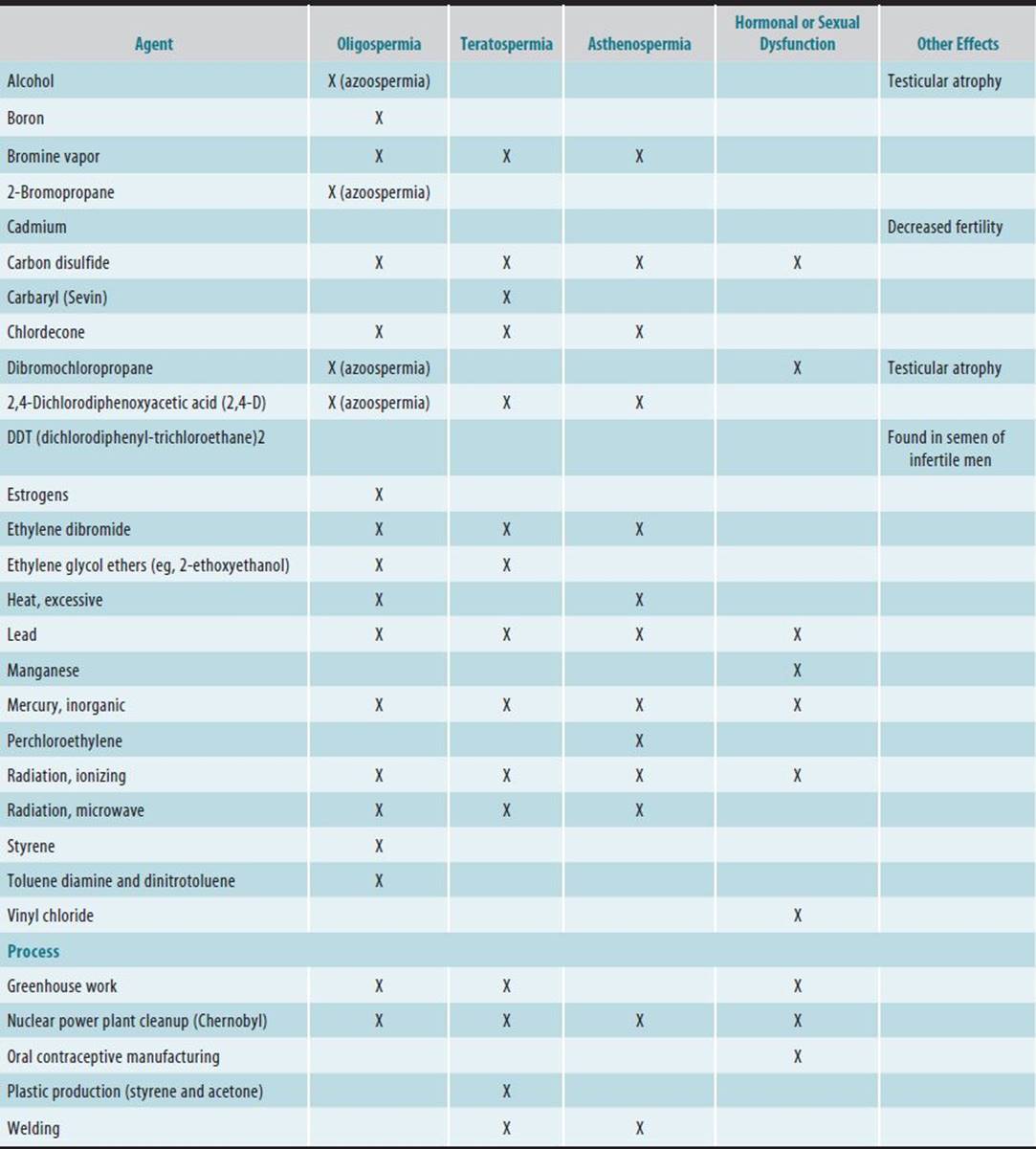
The majority of toxic agents in Table 29–4 have been examined in occupational settings where exposures tend to be of higher concentrations than those encountered in the environment and relatively easier to document. In the literature, most occupational events involving high-level exposures and documented adverse reproductive effects have occurred in male workers (eg, dibromochloropropane and exogenous estrogens). In addition, known reproductive hazards have been encountered environmentally from long-term use and disposal by industry, as well as from acute releases.
Declining Semen Quality and Environmental Factors
Several studies have noted a historical decrease in sperm count, with one report providing data as far back as 50 years. Over time, the method for evaluating sperm count (unlike the other semen-quality parameters) has not changed and is thought to be less susceptible to chronologic changes in laboratory technique. However, most of these retrospective trend analyses have been conducted at fertility centers that include semen donors, vasectomy candidates, or infertility clinic patients and thus may not be representative of the general male population. Furthermore, geographic differences and lack of information for known risk factors usually are associated with these older studies. Despite these limitations, various studies demonstrate decreased sperm concentrations in many European countries and in various US regions. The International Study of Semen Quality in Partners of Pregnant Women found significant differences in mean sperm count between men in Copenhagen, Paris, Edinburgh, and Turku, Finland. In the United States, a four-city prenatal clinic study (Los Angeles, Minneapolis, Columbia, Missouri, and New York City) is being conducted that uses identical clinical evaluation, data collection, and semen analysis techniques as the European study. Preliminary findings from the US study show a significantly lower sperm count among fertile men in Columbia, Missouri, in comparison with those in the other three cities. It is interesting to note that Columbia is in a more agricultural area than the other cities. Possible explanations given for the lower sperm count include estrogen exposure in utero, diet, lifestyle factors, and environmental pollution as a result of the increased worldwide use of chemicals (especially compounds with estrogen-like activity; see Chapter 43). Further follow-up of these multicenter studies will help to better explain this difference.
Dibromochloropropane
DBCP (1,2-dibromo-3-chloroporpane) is noteworthy for its role in the first documented outbreak of a male reproductive hazard in the workplace. DBCP is a nematocide that is associated with reproductive and developmental abnormalities in animals. These animal effects include oligospermia, asthenospermia, and testicular and seminiferous tubule atrophy. Workers exposed to DBCP in chemical production facilities have shown exposure-dependent testicular toxicity. The following associations have been noted in DBCP-exposed workers: azoospermia, oligospermia, increased plasma FSH levels, and histologic abnormalities of the testicular tissue (decrease or absence of germ cells in seminiferous tubules). Decreased fertility was experienced among workers with testicular changes, and the most extreme FSH elevations were found in workers who did not recover after a period of no exposure. Thus this compound represents one of the few well-established male reproductive toxicants and provided the stimulus for subsequent increased activity in male-mediated reproductive research in the work setting.
Lead
Lead is one of the most studied occupational and environmental agents and has a broad range of effects on multiple organ systems. Male reproductive effects have been found with both organic and inorganic lead exposures. Organic lead compounds, unlike the inorganic form, can be absorbed dermally. Sexual dysfunction (eg, decreased libido, abnormal erectile function, and premature ejaculation) has been noted in case reports after ingestion of fuels containing organic lead. A case series of tetraethyl lead–intoxicated men revealed reversible semen abnormalities: oligospermia, azoospermia, asthenospermia, and teratospermia. Inorganic lead case reports have noted decreased libido (including erectile problems) and abnormal ejaculations. Endocrine changes (decreased testosterone and increased LH levels) have been observed in clinic-based case series. In men not exposed to high levels of lead, detectable lead concentrations in sperm have been reported that are less than those found in whole blood but greater than those of serum.
Epidemiologic studies have used semen analyses to better quantify male reproductive outcomes. A cross-sectional survey of 150 male lead battery workers was conducted in Romania. Blood lead levels ranged from 23 to 75 μg/dL, with a mean lead exposure duration of 3.5 years. Oligospermia, asthenospermia, and teratospermia were noted in a dose-response fashion. There were certain methodologic problems with this study: (1) Both masturbation and coitus interruptus were allowed in semen collection. The latter method is not normally accepted because of the potential of semen mixing with the body fluids of the partner. (2) No environmental exposure data were presented. (3) The dose-response curve was constructed allowing multiple results from the same subject. (4) The controls included 50 plant technicians and office workers who were not assessed for comparability. This study provided the basis for the consideration of reproductive effects in establishing the Occupational Safety and Health Administration (OSHA) lead standard.
Lead exposure was evaluated among 18 battery workers and 18 cement workers in Italy. There was a statistically significant decrease in median sperm count and an increase in the prevalence of oligospermia among the battery workers. Participation rates were low, with 47% for the exposed and 22% for the comparison group. The exposed group had a mean blood lead level (BLL) of 61 μg/dL and a mean zinc protoporphyrin (ZPP) level of 208 μg/dL. In contrast, the nonexposed group had a mean BLL of 18 μg/dL and a mean ZPP of 24 μg/dL. Oligospermia was noted at a BLL as low as 40 μg/dL.
In summary, semen abnormalities (ie, oligospermia, asthenospermia, and teratospermia) have been detected in the blood lead range of 40–139 μg/dL. Also, hormonal disturbances have been documented for men at BLLs as low as 44 μg/dL (testosterone) and 10 μg/dL (FSH and/or LH).
Endocrine Disruptors
The term endocrine disruptor is used to refer to a variety of manufactured chemicals that may cause health abnormalities by interfering with the normal hormonal balance of humans or animals. The most commonly studied chemicals that may fit this category are polychlorinated biphenyls (PCBs), dioxins, and persistent pesticides. The four main disease categories attracting the most attention in endocrine disruptors research are reproductive, carcinogenic, neurologic, and immunologic health outcomes. Because of the complexity of the male reproductive system, each of these diseases may have an impact on this system.
There appears to be an increased incidence for endocrine-mediated cancers such as breast, testicular, and prostate tumors. Thus far no specific chemical has been identified as the cause for the increase in these tumors.
Current studies are concentrating on several suspect chemical groups that may act via an endocrine-mediated neurotoxicity: PCBs, dioxins, DDT, and other chlorinated pesticides and metals. It should be noted that for the male reproductive system to function normally, an intact neurologic system is necessary. Thus the results of these studies may have an impact on related reproductive research.
The suggestion of possible immunosuppression comes from the fact that certain endocrine disruptors (eg, DES, PCBs, and dioxins) alter the types of lymphocytes present in the bloodstream. Laboratory animals and wildlife have demonstrated such changes in association with exposure to DES, PCBs, carbamate, organochlorine pesticides, and organic and heavy metals. As was noted earlier, infection and associated immunologic disturbances are considered a risk factor for male infertility.
There are well-documented reports of human reproductive effects (semen abnormalities) from exposure to endocrine disruptors. For example, kepone exposure at a US pesticide factory led to workers with oligospermia. DES use during pregnancy can increase the incidence of non-malignant genital abnormalities in both male and female offspring. Also, wildlife and experimental animals with offspring showing feminization, demasculinization, and abnormalities in sexual behavior and development demonstrate endocrine-disrupting chemicals in their environment. Further studies are being conducted to better understand this situation.
Phthalates represent a newer type of chemical being considered as an endocrine disruptor. The CDC National Report on Human Exposure to Environmental Chemicals has shown that urinary phthalate metabolites are detectable in the general population at all ages and in different regions of the country. Phthalates are used in the production of hundreds of items, such as food packaging, plastic clothing, personal care products, detergents, adhesives, and vinyl flooring. More recent research looked at boys aged 2–36 months old and found that concentrations of four phthalate metabolites (prenatal urinary monoethyl, mono-n-butyl, monbenzyl, and monoisobutyl phthalates) were inversely related to anogenital distance. Also, the median concentrations for each of the metabolites associated with short anogenital distance and incomplete testicular descent are below the corresponding median levels seen among women in the National Exposure Survey. Animal studies support this potentially hazardous human health effect. These preliminary results may suggest that current widespread exposure to phthalates may cause human male reproductive damage at levels found in the general population.
Another endocrine disruptor with possible male reproductive effects is 2,2′4,4′5,5′-hexachlorobiphenyl (CB-153). This chemical is a persistent organochloride pollutant and has been associated with decreased sperm motility among fishermen having a diet high in fatty fish. Although the association in this study was not statistically significant, there is much interest in evaluating any possible reproductive effect from this persistent environmental contaminant, as well as other categories of endocrine disruptors.
REPRODUCTIVE ASSESSMENT
The medical evaluation of the patient with a potential exposure to a reproductive hazard follows the traditional components of history taking, physical examination, and laboratory assessment with an emphasis on both health and exposure parameters. In addition, special consideration is needed in the assessment, communication, and management of reproductive risk for the patient, as well as possible environmental evaluation and sampling at the worksite or other location of potential exposure.
Medical Evaluation
In the clinical setting, infertility is defined as an inability to conceive after 12 months of unprotected intercourse. It is estimated that the cause of infertility is related to male factors in 40% of the affected couples, female factors in 40–50% of the affected couples, and no known etiology in 10–20% of the affected couples. For the infertility and adverse pregnancy outcome workup, the female partner needs to be assessed concurrently (see Chapter 28). A full discussion of the diagnosis and treatment of various urologic and other related medical conditions is beyond the scope of this chapter. However, the following is a general overview of the types of evaluation techniques that can be used to assess the male reproductive system.
 Medical History
The patient interview should cover the following areas: demographic data (eg, both maternal and paternal age if birth outcome is being assessed), general medical history (eg, febrile illnesses, trauma, infections and structural abnormalities of the genitourinary system, and past surgeries), drug use (including medications, street drugs, alcohol, and tobacco), habits (eg, sauna and hot tub use), work history, and reproductive history (eg, past problems of infertility and pregnancies and birth outcomes for each sexual partner). It is important to ask about potential occupational and environmental exposure to any of the known or suspected reproductive hazards cited in Table 29–4. More complete details for an environmental and occupational history can be found in Chapter 4.
Physical Examination
This examination should focus on the physical integrity of the genital system to rule out any extraneous mass or abnormality and the presence of secondary sex traits (eg, hair growth pattern and possible gynecomastia). A physical abnormality may impede spermatogenesis, ejaculation, and erection (eg, varicocele, hydrocele, hypospadias, and cryptorchism). It is important to evaluate testicular size, prostate tenderness, and the presence of any structural anomalies. Testicular size averages 4.6 cm in length (range 3.5–5.5 cm) and 12–25 mL in volume, with the seminiferous tubules accounting for 95% of the testicular volume. Hypovirilization and infertility can indicate Klinefelter syndrome (47,XYY, often associated with small testes and occurring in 0.2% of adult men) or viral orchitis.
Hormonal Profile
A number of hormonal tests are available, and selection needs to be based on the medical conditions under consideration. A preliminary hormonal profile that can be obtained for field surveys includes FSH, LH (pituitary function), and testosterone (testicular function). For field biologic monitoring surveys, blood samples are relatively easy to collect for hormonal assays, but care must be taken to obtain samples at standardized times to avoid diurnal variability problems. The FSH is increased in individuals with azoospermia, such as the DBCP episode. With a normal testosterone level and an increased FSH level, a decrease in spermatogenesis occurs, which is usually associated with severe germinal epithelium damage. If there is a sperm abnormality with normal LH and testosterone, then an obstruction to the reproductive system can be ruled out. If both LH and testosterone are low, then a hypothalamic or pituitary abnormality is likely. In the situation where low testosterone and high LH concentrations are seen, there is the possibility of a primary defect at the testicular level. When there is a high level of testosterone and a low level of LH, an autonomous or exogenous source of testosterone needs to be considered. Finally, having both LH and testosterone elevated would suggest an autonomous LH secretion or resistance to testosterone action. One additional hormone being studied for utility in screening situations is inhibin B, which is reduced when damage to the seminiferous tubules occurs.
Semen Analysis
Analysis of semen parameters can be conducted by both traditional and computer-aided semen analysis (CASA) methods. The basic parameters of interest are ejaculate volume, sperm count or concentration, motility, morphology, swim velocity (direct measurement obtainable via CASA), and the presence of any suspect toxicant. The subsequent normal ranges discussed are to be used as general guidelines for the interpretation of a semen profile. There is much variability in the quality of semen analysis by laboratory, and the CASA may not be available at all reproductive/infertility laboratories. Because the normal ranges for semen characteristics may vary by laboratory, it is important to review the ranges provided by the laboratory being used.
The sperm concentration refers to the number of sperm per milliliter of ejaculate, with a normal level of more than 20 million per milliliter. Normal ejaculate volumes are 1.5–5.5 mL. Sperm motility is the percentage of motile sperm, with a normal sample showing greater than 40% motile sperm. Morphology refers to the percentage of normal (oval) and abnormal sperm head, midpiece, and tail shapes. The 10 general categories of sperm morphology are oval/normal, microcephalic, macrocephalic, tapered head, double head, headless, no head or tail, amorphous head, immature forms, and abnormal tails. Normal morphology is greater than 50% normally shaped sperm if using the World Health Organization (WHO) classification system and greater than 14 if using the stricter Kruger classification.
When semen analyses are used for epidemiologic or screening purposes, certain aspects need to be addressed. There is a need to conduct concurrent motility and count measures because most cells are nonmotile or poorly motile. Thus sperm count alone is not recommended. For count and motility, it is important to note the time since last ejaculation (48–72 hours maximum for accurate reading). Also, all semen analyses should be conducted at the same laboratory because of the high interlaboratory variability. Optimally, a semen sample should be analyzed within 1 hour of production so that the sperm remain viable for analysis. A standardized semen collection procedure needs to be established and followed by the individual being evaluated. Masturbation is recommended (preferably with no sexual partner, condom, or lubricant use), with the collection of semen in specially provided containers. It is extremely important that the entire volume of ejaculate be collected and that the specimen not be subjected to extreme temperatures in transport to the analysis site. Multiple samples from the same individual can show much variability; therefore, serial measurements are preferred. Most infertility evaluations involve three subsequent samples on separate days. Finally, there are three potential barriers to cooperation from individuals being recruited for participation in a study: (1) Highly motivated subjects are needed for the study, yet the individual is usually asymptomatic and may not understand the usefulness of an evaluation. (2) Religious and cultural taboos may be encountered. (3) There may be a lack of available sperm because of a preexisting medical condition such as vasectomy.
Other Tests
Other male reproductive tests are available for further clinical evaluation but are not usually included in epidemiologic field studies. These tests include GnRH challenge, thyroid profile, testicular biopsy, postcoital test, and sperm-oocyte interaction. Some more recent evaluation methods involve sperm DNA, chromosome and maturity bioassays, and biologic markers for fertilization function (eg, sperm antigen). In azoospermia or severe oligospermia, a testicular biopsy can assess the seminiferous tubules and Leydig cell histology for fibrosis and lack of spermatogenesis. The postcoital test involves the interaction of sperm examined in mucus following intercourse. If the index sperm penetrates a donor mucus but not the sexual partner’s mucus, the mucus of the sexual partner may be a problem. The patient’s sperm is considered abnormal if no penetration of either mucus occurs. The sperm-oocyte interaction test uses the zona pellucida of a hamster oocyte to evaluate if the patient’s sperm is able to fuse (the capacitation and acrosomal reaction needed for eventual conception). Antisperm antibodies on the sperm surface are a form of immunologic infertility and sometimes are a result of prior surgical reversal of a vasectomy. Furthermore, a wide range of medical tests and assays may be indicated for the underlying medical conditions thought to be present. Lastly, the assessment of body burden for certain exposures may be estimated via exhaled breath, blood, urine, semen, and other biologic tissue measurements.
To allow comparison among different studies, the WHO has published two manuals on a standardized approach to evaluating infertile men. One manual deals with the investigational process, diagnosis, and management of infertile males. Included are a patient data-collection form and a diagnostic decision flow diagram to facilitate the analysis of data between different clinicians. The laboratory manual describes procedures for examining human semen and provides lower limits for the normal range of various tests. These lower limits include 2.0 mL for semen volume, 20 million sperm per milliliter for concentration, and 40 million for number of sperm per ejaculate, 50% with progressive motility and 30% with normal morphology.
Occupational & Environmental Health Consultation
The health risk assessment process may prove to be difficult because of inadequate exposure or a lack of toxicologic or medical information. It is very helpful to have established professional contacts with expertise in occupational or environmental health consultation when a more difficult risk assessment is involved. Potential contacts may include local or state health departments, university medical centers or schools of public health, poison control centers, National Centers for Disease Control and Prevention (CDC, including the National Institute for Occupational Safety and Health and the National Center for Environmental Health), U.S. Environmental Protection Agency, Agency for Toxic Substances and Disease Registries, Occupational Safety and Health Administration, and the Association of Occupational and Environmental Clinics. Access to online literature databases also can be very useful such as REPROTOX and TERIS.
Communication Regarding Reproductive Hazards
There is an underlying principle that needs to be acknowledged and sensitively dealt with: The threat or actual fact of reproductive dysfunction or adverse reproductive outcome has a profound impact on an individual’s life and his or her family. All questions must be answered truthfully and completely. A description of the limitations in knowledge may be needed. The timing of exposure for the male and of the first contact with the involved female partner is very important. Whenever possible, the risk communication is conducted prior to actual exposure in order to intervene at the primary prevention stage. The options available for the male worker should be presented in such a way that the medical impact and the economic consequences of decisions are understood and discussed. The medical confidentiality of the involved individual should be maintained at all costs. If an occupational situation, it is imperative that the employer, involved employee(s), and medical consultant work together in resolving a particular exposure, as well as in developing a general policy on reproductive hazards in the workplace that involves both genders. Ideally, this policy should be developed within a health and safety committee composed of representatives from management and labor and consultants in occupational medicine and industrial hygiene.
Recommendations for Controlling Exposure
In the evaluation of the patient, a clinician can play an important consultative role in the control or elimination of exposure in the home, workplace, or other site of high risk. Working with the key health personnel or public health officials involved in this process, the following actions may be considered for a given reproductive hazard situation.
Exposure Reduction or Elimination
Replace hazards with safer ones: improved engineering controls, safer work practices, and personal protective equipment. Exposure reduction or elimination is the most desirable option and should be attempted in all situations where a reproductive hazard exists.
Temporary Job Transfer or Removal From Area of Exposure
Remove the individual from work environment, residence, or other site where the reproductive hazard exists. This option is rarely considered for men considering having children. In occupational settings, problems may occur when there is no nonexposed job location. This option should be considered when there is a high-risk situation, and exposure reduction/elimination is not possible.
Disability Leave if Occupational Exposure
This option usually is considered by the personal physician for the pregnant woman facing reproductive hazards and to our knowledge has not been used for men.
Permanent Removal of Individual From Work or Exposure Setting
This is the least desirable action in the occupational setting and has been used in the past for female workers. For female workers, it is illegal for an employer to terminate an affected woman because of pregnancy. An individual may choose to quit work for personal reasons, but it is important to help the individual to evaluate all the other options and to understand the possible consequences. In the residential setting, there have been permanent relocation of populations owing to environmental contamination, but this is a rare occurrence. The permanent removal of an individual from a residence, work setting, or other exposure site is considered after all the other options have been explored and the individual is comfortable with the possible consequences.
LEGAL ISSUES & WORKPLACE STANDARDS
In the lawsuit International Union, UAW versus Johnson Controls, Inc., the U.S. Supreme Court held that an employer violated Title VII’s ban on sex discrimination by excluding from production jobs in a lead-battery factory all women who could not prove their sterility. The Court indicated that a policy directed only at fertile women is overt discrimination on the basis of sex regardless of the scientific evidence of heightened safety concerns for mothers or potential mothers. In addition, any policies or actions taken by the employer must not violate existing laws prohibiting discrimination on the basis of pregnancy, childbirth, or related medical conditions. Employers cannot require that an individual be sterilized as a condition of employment. If an employee disabled by pregnancy, childbirth, or a related medical condition transfers to a less hazardous job, an employer must allow the employee to return to the employee’s original job or a similar one when the disability has resolved. Thus the workplace must be made safe, and reproductive hazard information must be provided to both men and women.
OSHA has the mandate to promulgate standards that protect workers from adverse health effects (including reproductive effects) resulting from workplace hazards. However, there are only four agents with OSHA standards that are based partially on reproductive effects: dibromochloropropane (DBCP), lead, ethylene oxide, and ionizing radiation. It should be recognized that many chemical and physical agents found in the workplace are not covered by an OSHA standard and that those standards that do exist for the most part are not based on reproductive endpoints. This is why the risk assessment process discussed earlier should be implemented at any worksite that has potential reproductive hazards present.
REFERENCES
Halling J: Semen quality and reproductive hormones in Faroese men: a cross-sectional population-based study of 481 men. BMJ Open. 2013;3 [PMID: 23457323].
Hosni H: Semen quality and reproductive endocrinal function related to blood lead levels in infertile painters. Andrologia 2013;45:120 [PMID: 22680063].
Iwamoto T: Semen quality of fertile Japanese men: a cross-sectional population-based study of 792 men. BMJ Open. 2013 Jan 25;3 [PMID: 23355656].
Jϕrgensen N: Human semen quality in the new millennium: a prospective cross-sectional population-based study of 4867 men. BMJ Open. 2012 Jul 2;2(4). [PMID: 22761286].
Mocarelli P: Perinatal exposure to low doses of dioxin can permanently impair human semen quality. Environ Health Perspect 2011;119:713 [PMID: 21262597].
Mocevic E: Environmental mercury exposure, semen quality and reproductive hormones in Greenlandic Inuit and European men: a cross-sectional study. Asian J Androl 2013;15:97 [PMID: 23223027].
NIOSH: Topics on reproductive health. http://www.cdc.gov/niosh/topics/repro.
Ravnborg TL: Prenatal and adult exposures to smoking are associated with adverse effects on reproductive hormones, semen quality, final height and body mass index. Hum Reprod 2011;26:1000 [PMID: 21335416].
Vwarws :Associations of in utero exposure to perfluorinated alkyl acids with human semen quality and reproductive hormones in adult men. Environ Health Perspect 2013;121:453 [PMID: 23360585].
 SELF-ASSESSMENT QUESTIONS
Select the one correct answer to each question.
Question 1: Semen abnormalities can include
a. azoospermia (low sperm count)
b. oligospermia (increased sperm count)
c. teratospermia (abnormally motile sperm)
d. asthenospermia (sperm showing decreased motility)
Question 2: Male reproductive toxicants
a. include DBCP, ionizing radiation, mercury, and lead
b. are of concern only in occupational settings
c. mostly involve low-level exposures
d. include DBCP and exogenous estrogens
Question 3: DBCP
a. is a nematocide that is associated with reproductive and developmental abnormalities
b. exposed workers exhibit azoospermia, oligospermia, and decreased plasma FSH levels
c. causes decreased sperm fertility among all exposed workers
d. exposure may result into a permanent azoospermia in some workers
Question 4: Inorganic lead
a. is the only form of lead with male reproductive effects
b. has been implicated in cases of increased libido
c. presents in some males as endocrine changes (decreased testosterone and increased LH levels)
d. is frequently detected in the sperm of workers with low-level exposure
Question 5: Phthalates
a. should not be considered as an endocrine disruptors
b. metabolites are detectable in the general population at all ages
c. are associated with short anogenital distance together with incomplete testicular descent
d. may cause human male reproductive damage at levels found in the general population