
Peter B. Rice, CIH, CSP, REHS
Industrial hygiene is the science of anticipating, recognizing, evaluating, and controlling workplace conditions that may cause workers’ injury or illness. Industrial hygienists use environmental monitoring and analytical methods to detect the extent of worker exposure and employ engineering, work practice controls, and other methods to control potential health hazards. The anticipation and recognition of health hazards have primacy because they must take place before proper evaluation or control (if needed) can take place. On anticipation or recognition of a health hazard, the industrial hygienist should be able to identify measures necessary for proper evaluation. On completion of the evaluation, the industrial hygienist then is in a position (in consultation with other members of the occupational health and safety team) to recommend and implement controls needed to reduce risks to within tolerable limits. Hazards arising from the workplace include the potential harm that may arise in the community by poorly controlled emissions and such issues as familial exposures from harmful debris taken home on workers’ clothing.
ANTICIPATION OF HEALTH HAZARDS IN THE WORKPLACE
The duty to anticipate health hazards in the workplace is a relatively new addition to the industrial hygienist’s traditional responsibilities for recognition, evaluation, and control; it is a heavy but necessary burden. Anticipation of health hazards may range from a reasonable expectation to mere speculation, but it implies that the industrial hygienist will understand the nature of changes in the processes, products, environments, and workforces of the workplace and how those changes might affect human health or well-being. Transplanting a successful chemical process from a unionized workplace in the United States or Canada to another country without understanding important cultural factors or the extent of the industrial experience in that country might cause significant risk of harm to the workers in that new country. As another example, changing weekly work schedules from five 8-hour days to three 12-hour days almost certainly will produce dislocation among the workforce because of the psychosocial and physical effects of shift work but also may lead to the danger of chemical intoxication if the chemical exposures are such as to lead to the buildup of excessive body burdens without the usual 16-hour “rest” period.
An important aspect of anticipation is an understanding of past exposures and practices and how that past experience may act to cause injury to those exposed. Such retrospective exposure assessment is, of course, essential to the performance of epidemiologic studies in order to come to a sound understanding of risks associated with occupational experience. The industrial hygienist is the person most likely to be able to perform such a retrospective study.
RECOGNITION OF HEALTH HAZARDS IN THE WORKPLACE
In a workplace where the processes are well established, the recognition of health hazards is the first step in the process that leads to evaluation and control through the identification of materials and processes that have the potential for causing harm to workers. In the workplace where the processes and work environment are not so well established (eg, hazardous waste site clean-up), the recognition of hazards can be more difficult. Nonetheless, the hazard recognition process is basically the same.
Sources of information about health hazards include clinical data about health problems in exposed populations; historical information about former processes and activities; information in scientific journals, bulletins of trade associations, and reports of government agencies; conversations with peers; and direct reports from current and former workers, union representatives, supervisors, or employers.
Inspection of the workplace is the best source of directly relevant information about potential health hazards. There is no substitute for observation by an experienced observer of work practices, the use of chemical and physical agents, and the apparent effectiveness of control measures. The physician should be able to recognize major and obvious health hazards and distinguish those that require formal evaluation by the industrial hygienist.
 The Walk-Through Survey
The walk-through survey, in the company of the occupational physician whenever possible, is the first and most important technique used to recognize occupational health hazards. The survey should begin with a proper introduction to facility management, a discussion of the purpose of the survey, and an inquiry about any relevant recent complaints. If appropriate, a simplified process flow diagram also should be prepared at this time.
Following the process flow through the facility usually is most productive. The survey thus might begin at the loading dock, where materials entering the facility can be examined. Warning labels, descriptive language about the chemical composition of materials, and the packaging of incoming materials should be noted. Questions then should be asked regarding the handling of unknown materials or materials about which insufficient information is available. The incoming materials then should be followed into the process flow stream, and each of the processes of interest in the facility should be observed in action. Of interest throughout the survey will be the methods used for materials handling and the labeling of materials, particularly at points where they are transferred from manufacturers’ containers into other vessels for use within the facility.
Observations to Be Made
At each point in the process or activity, the industrial hygienist and physician should observe all handling procedures as well as any protective measures that are employed. Use of respiratory protection and protective clothing should be recorded, as well as other commonsense observations, such as the apparent effectiveness of engineering controls, as indicated by absence of characteristic odors, visible dust accumulations, and loud noise. The survey should continue through to the final product produced by the facility and its packaging. The surveyors also should follow the pathway of any waste materials and determine their disposal sites.
The numbers of employees at each process step should be noted, as well as any relevant data on gender, ethnicity, or age that might affect employees’ sensitivity to chemicals in the workplace. It is also important to look for obvious stigmata such as drying and roughening of the skin, as might be expected where exposure to solvents, occurs. It is usually appropriate to discuss work practices with the personnel directly involved because the perception of those practices is often very different on the shop floor from what it is in the executive offices.
On completion of the walk-through survey, the industrial hygienist ordinarily will have a closing conference with the facility management or field project manager, at which time obvious concerns can be discussed and follow-up measures agreed on. Where the industrial hygienist is a regulatory agency representative, follow-up surveys may require special notices and interaction with agency officials as well as facility officials. In any case, a report on the walk-through survey, together with conclusions and recommendations, should be completed for the record.
Data Review
An important part of the industrial hygienist’s role in recognition of health hazards in the workplace is data review. Such data may include reports from physicians on clinical findings that may be related to exposures in the workplace as well as a review of company records on materials coming into the workplace that may represent significant health hazards. The current Occupational Safety and Health Administration (OSHA) Workers Right-to-Know regulation makes explicit (and subject to governmental investigation) the commonsense duty of the employer to inform workers of the nature and hazards of materials to which they may be exposed. Where exposures are to materials purchased from a third party, data on substances and their hazards usually are derived from Substance Data Sheets (SDSs), formerly called Material Safety Data Sheets (MSDSs).
Materials of Uncertain Toxicity
In some cases, the industrial hygienist must assess the potential for harm of chemicals for which no reliable human toxicologic data are available. This need arises most often in research and development settings but also wherever chemical intermediates are produced. An important consideration is that the worker must be protected at all cost. If uncertainty exists, it should be resolved in favor of a higher standard of concern.
EVALUATION OF HEALTH HAZARDS IN THE WORKPLACE
Evaluation of health hazards within the facility or during an activity includes measurement of exposures (and potential exposures), comparison of those exposures with existing standards, and recommendation of controls, if needed.
Exposure Measurements
Exposure measurements are intended to be surrogates for determinations of doses delivered to the individual. The mere existence of chemicals in the workplace or even in the workplace atmosphere does not necessarily mean that the chemicals are being delivered to a sensitive organ system in quantity sufficient to cause harm. The effective dose depends on such things as particle sizes of dust in the air, the use of protective devices (ie, respirators and protective clothing), and the existence of other contaminants in the workplace. The task of determining the dose delivered to the worker may be further complicated by the existence of multiple pathways of absorption and metabolism. Such contaminants as lead are absorbed through both inhalation and ingestion, and both routes of intake must be considered in evaluation of the potential for harm. Similarly, many solvents are absorbed readily through the skin, and mere determination of airborne levels is not sufficient to determine the complete range of potential exposures.
Sampling & Analysis of Airborne Contaminants
Inhalation of airborne contaminants is the major route of entry for systemic intoxicants in the workplace. Thus evaluation and control of airborne contaminants is an important part of any occupational health program.
Sampling and analysis of airborne contaminants is the definitive function of the industrial hygienist. While it is the joint responsibility of the hygienist and physician to interpret the results of such measurements, measurement alone makes a contribution to the awareness of hazards as well as to their evaluation. Recent developments in instrumentation have made it possible to measure very low concentrations, with the result that previously unsuspected contamination is now being discovered.
In some cases, these more sophisticated measurements, coupled with evaluations of the health status of those exposed, have led to discoveries of connections between relatively low levels of airborne contaminants and health effects. The field of indoor air quality is one such general case. The determination of exposures to occupants of buildings (office workers) has not received substantial attention in the past, but health effects are now being found at concentrations of contaminants well below established occupational standards.
Maximum acceptable exposure limits typically have been lowered in recent years as both our ability to discern clinical effects and our expectations of no risk of (detectable or undetectable) health effects have increased. A good example of this phenomenon is concern about asbestos in buildings. A hygienist should attempt to ensure that avoidable exposure to asbestos is eliminated. There is no definitive evidence that there is a threshold dose below which the asbestos-related disease mesothelioma will not occur. In addition, substantial liability may attach to the building owner who permits unnecessary exposure to building employees or tenants. Thus measurements of asbestos concentrations down to and including ambient levels have become commonplace.
General Approaches to Air Monitoring
There are two major approaches to air monitoring for determination of airborne contaminant levels. In the personal or breathing zone, sampling, the hygienist places a collection device near the breathing zone of a worker (Figure 39–1). The collection device may be either active, requiring that air be drawn through it, or passive, requiring no pump or other suction source (a dosimeter). The second approach (area sampling) employs fixed or mobile sampling stations in the work area.

 Figure 39–1. Worker wearing an air sampling unit of pump, tubing, and cassette to capture nuisance dust for subsequent analysis to determine exposure.
A. Personal Breathing Zone Monitoring
Personal breathing zone monitoring usually is preferred because exposures are measured at the point nearest to the actual entry of airborne contaminants, and the sampling system moves with the worker. Thus measurements are more likely to represent actual potential exposures. Figure 39–2 shows an example of a worker with a breathing zone (personal) sampler in place.

Figure 39–2. Worker wearing personal breathing zone monitor. The monitor samples air near enough to the nose and mouth to catch the same type of air that the worker is breathing.
B. Area Monitoring
There are disadvantages to the personal breathing zone approach, however. First, the volume of air sampled is limited by the capacity of the battery-operated pumps used (or the diffusion coefficient of a passive collection device), so trace contaminants may be difficult to measure. Second, where complex evaluations are required, the number of collection devices may be too cumbersome for practical installation in the worker’s breathing zone. In these circumstances, or when direct-reading instruments (usually larger and often requiring line power) are to be used, area monitoring by means of fixed monitoring stations may be employed. Fixed monitoring stations also may be used to measure emissions from sources, to measure background concentrations, or to measure concentrations in several areas simultaneously in order to evaluate the effectiveness of controls. Figure 39–3 shows the application of both area sampling and personal sampling inside a work area.

Figure 39–3. Worker wearing personal monitor. Industrial hygienist is gaining additional information by installing an area monitoring device.
DURATION & TIMING OF MONITORING
Determination of Time-Weighted Average Exposures
The time course of exposure potential should be identified before beginning the sampling process so that all times during which exposure is possible will be appropriately sampled. Time-weighted average exposure determinations should be made for the entire period of work to be evaluated. In a continuous (assembly-line) process, the period of exposure usually will be the entire work shift. In other cases, exposures may occur only for a relatively short time within the work shift. The time-weighted average exposure throughout the workday usually is required for determination of compliance with relevant standards and also may be useful for comparison of exposures at various points within the facility.
Determination of the Time Course of Exposure
Although chronic diseases usually are the result of long-continued exposures, peak exposure levels can be important in causing acute effects and may be more directly relevant even in long-term exposures than their relative contribution on a time-weighted average would indicate. In other words, peak exposures may overwhelm such defenses as the mucociliary pathway for removal of contaminants and may occur at times of maximal exertion and maximal intake of airborne contaminants. Peak exposures may be determined by taking an integrated sample for a relatively short period (for performance of a specific operation, or for 10–15 minutes at a time when maximum exposure is expected, or for such other period as may be required by a regulation or standard) or by using direct-reading instruments for real-time measurements.
SAMPLING FOR SPECIFIC CONTAMINANTS
The general approaches introduced earlier may be applied to determination of individual agents or groups of agents. In general, sampling and analytic methods are divided into those for gases and vapors and those for airborne particles.
1. Gas & Vapor Sampling
Gas and vapor sampling may be accomplished by any of five methods: (1) active collection, by drawing a measured volume of air through a collection system that is then analyzed, (2) passive collection, with a dosimeter that attracts gas or vapor molecules by diffusion from the atmosphere, (3) collection in a color-sensitive medium in a device in which color change is proportionate to concentration of the contaminant and which can be read directly, (4) collection in an evacuated container used to carry a sample of air to a convenient site for analysis, and (5) direct evaluation by direct-reading instruments sensitive to one or several atmospheric gases or vapors.
In general, the first and fourth methods—using active collection devices with subsequent laboratory analysis—are more sensitive and can be used to determine lower concentrations than can the other approaches listed. However, the direct-reading devices (both instrumental and color-change) provide a more rapid (immediate) result and are useful when an immediate hazard must be assessed. Passive dosimeters offer the advantage of not requiring a suction source to draw air through the collection device and thus are more acceptable to workers because the need for carrying a pump is avoided.
Collection Media & Analysis
Collection media for gases and vapors may be either solid or liquid.
A. Solid Sorbents
The most commonly used solid sorbent is activated charcoal, which can be used for collection of many low-molecular-weight hydrocarbons, as well as for some inorganic gases and vapors. The most common analytic procedure employed in determining concentrations from the gases and vapors collected on the charcoal is gas-liquid chromatography (gas chromatography). The collected sample, with the molecules of gas or vapor adsorbed to the surface of the charcoal, usually is desorbed with a solvent (often carbon disulfide) compatible with those to be determined. Then either the solvent extract of the charcoal is injected directly into the gas chromatograph column, or the volume of the extract is reduced to provide greater sensitivity, followed by injection (Figure 39–4).

Figure 39–4. Charcoal tube. Approximate actual size.
In some cases, particularly for oxygenated hydrocarbon species, silica gel is used in testing. Desorption often is accomplished with distilled water or oxygenated solvents, again followed by analysis by either gas chromatography or other analytic approaches. Another group of sorbents is used less commonly for routine industrial hygiene sampling but is finding increasing use in evaluation of indoor air quality and for collection of samples for analysis of higher-molecular-weight species. These are the solid sorbents that were developed initially as gas chromatographic column packings. Examples are Tenax and the variously numbered Chromosorb materials. Some of these sorbents can be characterized as molecular sieves and find particular use in collection of samples in environments where compounds that may bind irreversibly to charcoal are found. Desorption often is accomplished conveniently by heating the sample collection tube while injecting a carrier gas (nitrogen or another inert gas) through the sample tube during heating. This approach, coupled with analysis of the desorbed gas, by gas chromatography, mass spectrometry, or some other analytic method, often is useful where a complex environment with many trace components is suspected.
B. Liquid Media
Gases and vapors also may be collected effectively from the atmosphere using various liquids as the collection media. The air is drawn through the measured volume of the liquid into a device that may be called an impinger or bubbler or a gas-washing bottle. Sampling in liquid for gases and vapors has several disadvantages when personal breathing zone concentrations are to be determined. Some of the liquids that have been recommended are themselves toxic, and placing a glass vial on a worker’s lapel may add to the risk in the workplace. There is a danger also of spillage from any liquid container, and the liquid may evaporate, either of which will complicate evaluation of the results.
C. Evacuated Containers
Collection of samples of air in evacuated containers such as inert plastic bags, glass bottles, stainless steel cylinders, or other containers is appropriate only if it is certain that the samples will be analyzed before analytes of interest have had a chance to either degrade or react. In most cases, this limits the utility of the technique to relatively stable gases and vapors. The technique is particularly useful for inorganic and nonreactive gases such as carbon monoxide, although “passivated” stainless steel containers are used widely for collection of ambient air samples for trace hydrocarbon analysis. Reactions may include those with the walls of the container (or simple sorption to the walls), as well as reactions with other airborne contaminants held within the container. In addition, care must be taken to avoid exposure of the collected gas to sunlight or other sources of artificial light that may initiate photochemical reactions. This technique is very useful whenever such analytic procedures as gas-phase infrared spectrometry appear to be useful approaches and a laboratory-based instrument offers advantages in sensitivity or precision over field direct-reading instruments.
Direct-Reading Instruments
A variety of direct-reading battery-powered instruments is now available, so direct measurements of “real time” concentrations can be made conveniently in remote or isolated environments (Figure 39–5). Some of these units also measure oxygen concentrations, making them useful for evaluating the safety of entry into enclosed spaces. Others measure only one or two contaminants but are useful where the suspected contamination is relatively well known.

Figure 39–5. Handheld 4-gas meter designed to measure lower explosive limit (LEL), carbon monoxide (CO), Oxygen (O2) and hydrogen sulfide (H2S).
With the recent advent of small portable data loggers from which data may be downloaded to computer systems, it has become feasible to record the real-time output from very small direct-reading instruments. This has made it possible to construct some individual chemical exposure profiles over time because these units can be small and carried easily, and are not intrusive. An important application of this approach has been in indoor air quality studies, where the relative contributions of various sources to overall exposures to carbon monoxide and other gases of interest have become much better understood.
Other available direct-reading instruments are less portable but may be more accurate and more easily and permanently calibrated. The detection principles employed are often the same as those in the small instruments, but the detection systems and associated electronics may be more reliable. Output may be directed to digital or analog meters, strip-chart recorders, or data loggers.
Several kinds of direct-reading instruments respond to a wide variety of airborne contaminants, although with differing sensitivities. Each of these must be calibrated for specific chemical mixtures because each of them may respond differently.
A. Portable Chromatographs
A recent development in industrial hygiene instrumentation has been the adaptation of gas chromatographs to portable field use. With these instruments, a bolus of air may be drawn directly into the instrument through a gas sampling valve, or an evacuated container (often a syringe) may be used to collect a small sample of air that is then injected directly into the instrument. These instruments share the advantages (specificity and sensitivity) of laboratory gas chromatographs but have the disadvantage that a relatively extensive calibration effort may be required to obtain quantitative results. The detectors used may be selected to measure only the family of airborne contaminants of interest.
B. Infrared Spectrophotometers
These instruments (an example of which is the family of MIRAN instruments manufactured by Foxboro-Wilks) can be used to measure concentrations of several hundred gases and vapors at or near the 1-ppm level. An advantage of the instrument is that corrections for background concentrations of water vapor and other gases and vapors than those of immediate interest can be performed on site.
C. Direct-Reading Instruments With Specialized Detectors
Some of these instruments may give a single-number response to the totality of the atmosphere they are measuring. Such a single number may be imputed to be “total hydrocarbons” or “volatile organic carbon” (VOC) based on the response of the detector. Each such detector has its own characteristic response to the mixture of hydrocarbons present in the air, and comparison of the results from one type of instrument (eg, a photoionization detector) to another (eg, a flame ionization detector) usually is inappropriate.
Other specialized instruments may measure one or several specific individual gases or vapors in the atmosphere, such as carbon monoxide, sulfur dioxide, hydrogen sulfide, or the like. Although these are less likely to be affected by other atmospheric components than those that purport to measure “total hydrocarbons,” each may have idiosyncratic responses to other atmospheric components, and the nature of those responses must be known.
D. Fixed Monitors
Any of the direct-reading instruments just described can be made substantially more reliable if installed permanently with line power. Such installations have been used for many years where potential for exposure to highly toxic gases exists.
E. Colorimetric Indicators
These may be either passive or active. In the passive type, a “badge” that has a portion that changes color on exposure to specific gases or vapors at a given concentration for a sufficient period of time may be placed in an area or in the breathing zone of a worker. The system functions by diffusion of the molecules of interest from the atmosphere to the badge. Such devices can be useful to indicate the presence of potentially harmful concentrations of gases without having an industrial hygienist present in the workplace at all times. In the active type, a measured volume of air is drawn through a glass tube containing a reagent (usually adsorbed onto a solid support) that reacts with specified chemicals in the air. The degree of color change in the reagent—either the shade of coloration or the “length of stain” along the tube length—is proportionate to the concentration of contaminant and can be compared with standard charts. The major danger in their use is that they may not be reliable; they should not, generally speaking, be considered any more accurate than about plus or minus half of the indicated value. In addition, their reliable detection limit may be near to the level at which controls should be implemented.
2. Particulate Material Sampling
Measurement of airborne particulate contamination can be done either by collection of integrated samples with subsequent analysis or by use of direct-reading instruments. Integrated sample collection and analysis is by far the more common modality of evaluation both because of certain inherent difficulties associated with direct-reading measurements and because of the greater precision associated with laboratory analysis.
Filter Sampling
Modern airborne particle sampling ordinarily is done with filters. The filter selected for use must collect and retain the particles of interest, must not offer so much resistance to flow that pumps cannot draw air through it at a useful rate, and must be compatible with the analytic method of choice.
Size-Selective Sampling
Inhalation and retention of particulate material in the lung depend on the aerodynamic equivalent diameter (AED) of the particles. That is, only particles within a specific (small) size range (which also depends on the specific gravity and shape of the particles) will both penetrate to and be retained within the alveolar and lower bronchiolar (unciliated) airspaces. Somewhat larger particles may penetrate into the thoracic cavity, whereas those even larger will be collected in the upper respiratory system (nose and mouth). The very largest particles only rarely will be carried into the nose or mouth. Thus, sampling to evaluate hazards associated with agents such as crystalline silica is done with the aid of a size-selective sampling device preceding the filter on which the material is to be collected for analysis. When air is drawn through the sampling system at the proper rate, only particles small enough to both penetrate and be retained within the deep lung space will pass through the selective device and be captured on the filter for analysis. In recent years, general environmental sampling for particles also has used size-selective criteria to define the particles believed to be most likely to cause long-term harm to the respiratory system.
The size-selective criteria established and the devices used to collect the defined range(s) of particles differ from agency to agency, and it is important to verify the current status of regulations and scientific opinion in this rapidly changing field.
In addition to the cyclone, size-selective devices used in particulate material sampling include direct inertial collectors such as impingers and impactors. The former uses a wet collection system, wherein a jet of air is directed against a collecting surface within a liquid bath. While impingers are effective for the collection of large particles, they are not particularly suitable for collection of very small particles (<1 μm AED) owing to the limitations of the inertial forces employed for such collection. Impactors use a dry collection system, wherein particles are directed in a jet of air against a dry (or sometimes greased) collection surface. The final stage of the impactor is usually a filter, where the remaining (small) particles are collected. Size-selective sampling with greater detail than offered by the cyclone thus is provided.
Special versions of impactors are used widely for the evaluation of viable airborne particles (fungi and bacteria). The devices, having either one or several collection stages, are designed to accommodate Petri dishes of conventional microbiologic growth media as the collection surfaces. After air is drawn through the device, and the airborne particles are deposited on the surface of the selected medium, the dishes are taken to a laboratory, and the organisms are allowed to proliferate in the usual manner. The dishes are examined by a microbiologist, and the organisms are counted and identified by genus and species, if possible. The number of colony-forming units per cubic meter of air is reported.
Total Particulate Sampling
In circumstances where a biologically active material may be absorbed readily at many portals of entry, total particulate sampling may be the approach of choice. This is the case, for example, where such biologically active compounds as organophosphorus or carbamate pesticides require evaluation. For these and many other chemicals, it is important to collect all airborne particles if the full extent of the hazard is to be evaluated.
Analysis of Particulate Material Samples
Analysis of collected samples may be by any of a variety of techniques appropriate to the analyte of interest.
A. Microscopy
In the case of materials such as asbestos, where the numerical concentration of particles in air is the most important dose factor, a sample is taken by drawing air through a filter, and the number of particles on the filter is counted by microscopic techniques.
The most common analytic procedure used for evaluation of asbestos is that involving optical phase-contrast microscopy as specified by the National Institute for Occupational Safety and Health (NIOSH) and by OSHA. The procedure is relatively simple but has the disadvantages that not all airborne asbestos fibers are visualized or counted and that other (nonasbestos) fibers are counted. However, because only the fibers longer than 5 μm are counted, the method gives an imperfect index of exposure to all asbestos fibers.
Where more detailed information on the total airborne fiber population is desired, transmission electron microscopy is used. This method, which is capable of visualizing all airborne asbestos fibers (and differentiating asbestos fibers from other fibers) is much more complex and costly. In the United States in 2012, the analytic cost of the phase-contrast method typically was in the range of $15–20 per sample, whereas transmission electron microscopy typically costs from $100 to $300 per sample depending on the level of detail required in the results (and the speed of analysis).
B. Other Analytic Approaches
Other commonly used analytic approaches are atomic absorption or emission spectroscopy for analysis of elements in the particles, x-ray diffraction for identification of crystalline materials, and (where appropriate) any of the aforementioned organic analysis modalities where organic compounds exist in particulate form.
3. Combined Collection Devices
In some environments it may be appropriate to use combined particulate and gas or vapor collection devices. This may be the case where a substance exists in particulate form in the atmosphere but has an appreciable vapor pressure so that substantial amounts may evaporate following collection on a filter. In this case, a vapor-sorbing material would be used behind the filter to ensure complete collection. Such a combined sampling approach is used often for collection of pesticides and polynuclear aromatic hydrocarbons.
4. Surface Evaluation (Wipe Sampling)
Evaluation of surface contamination can be a useful supplementary technique to assist in the definition of exposure potential and particularly for evaluation of the effectiveness of control measures. Wipe sampling is useful also for identifying contaminated areas where a spill of a potentially hazardous material has occurred (Figure 39–6). As an example, wipe sampling is used routinely to evaluate the extent of contamination resulting from spills of such materials as polychlorinated biphenyls (PCBs), pesticides, and other materials for which absorption through the skin may be an important route of entry.

Figure 39–6. Surface wipe sample to determine potential lead contamination.
Wipe sampling also may be a useful adjunct to programs used to evaluate the effectiveness of housekeeping measures, particularly in manufacturing facilities where separation of manufacturing areas from cafeterias, offices, or dressing rooms is important. A typical program would call for the wipe sampling of identical areas monthly or quarterly.
Wipe sampling must be done according to a well-defined protocol if it is to have any significant utility for long-term evaluations. Most commonly, a template of a defined size (usually 10 × 10 cm) is prepared, and wiping is done within the exposed area of the template for the sake of uniformity. Any suitable substance may be used to perform the wiping, but filter papers (usually the low-ash, quantitative type papers) are used most commonly.
Other methods of surface evaluation also are sometimes useful. For example, the polynuclear aromatic hydrocarbons fluoresce readily when irradiated with ultraviolet light, and this characteristic can be used to make qualitative surveys of areas where contamination is feared.
PHYSICAL AGENT EVALUATION
Evaluation of physical agents requires specialized equipment that often is not available routinely (except for sound-level meters and noise dosimeters). Evaluation of ionizing or nonionizing radiation requires specialized training, but many industrial hygienists have developed expertise in these evaluations.
Noise Exposure Evaluation
Evaluation of exposures to noise is a traditional industrial hygiene function. The equipment used is of two principal types.
A. Sound-Level Meters
Sound-level meters consist of a microphone and associated electronic circuitry, with a meter that gives a readout in decibels. The circuitry typically contains filtering circuits that permit evaluation of exposures to components of the noise spectrum weighted in accordance with their effects on hearing. The A-weighting network has been adopted as the standard for determination of occupational noise exposure. In this weighting scheme, the very low and very high frequencies are suppressed, and the middle frequencies (1000–6000 Hz) are slightly accentuated. This gives primacy to the speech frequencies.
Sound-level meters also may be fitted with filtering circuits for determination of noise levels within specified bandwidths. One octave or one-third octave (less commonly) bandwidth circuits are often employed. With such devices, it is possible to isolate and identify the specific frequencies of occurrence of the noise. This identification of sources is essential to control in complex noise environments.
Figure 39–7 shows a sound-level meter in use. Note that the instrument is used to measure noise intensity in an area and thus is analogous to area sampling for chemicals.
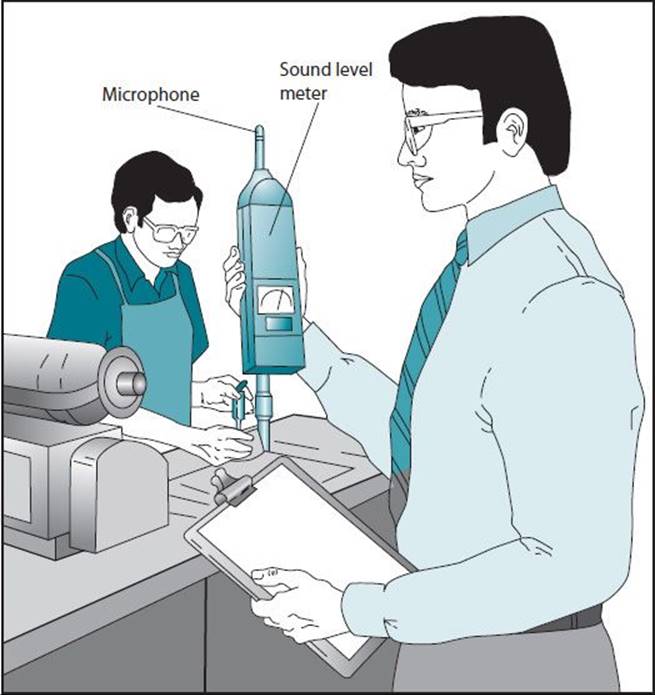
Figure 39–7. Industrial hygienist using a sound-level meter in a work area.
B. Noise Dosimetry
Noise dosimeters employ a recording circuit consisting of a small microphone placed close to the ear of the worker to record noise exposure. The devices may either give an overall integrated average exposure for the course of the measurement period or a readout showing exposure as a function of time. Dosimetry is the preferred approach because the exposures measured are specific and unique to the individual, and dosimetry offers the same advantage over area sampling as indicated earlier for breathing zone sampling for airborne contaminants. Figure 39–8 shows the use of a dosimeter. Note that the microphone is located close to the worker’s ear.

Figure 39–8. Worker wearing a noise dosimeter with a microphone located close to the ear.
Evaluation of Other Physical Agents
Other physical agents ordinarily require specialized equipment for competent evaluation. However, many industrial hygienists are experienced in evaluations for such agents as electrical and magnetic fields, microwaves, heat stress, ionizing radiation, ultraviolet and infrared radiation. Similarly, the evaluation of a workplace to determine the extent of hazard because of heat or cold stress usually can be done by an experienced industrial hygienist.
OBSERVATIONS OF WORK PRACTICES & PROCESS VARIABLES
Exposures often vary substantially from time to time during a day, week, month, or year. The work practices employed by workers whose exposures are measured should be observed during the monitoring period. The description of the work-place must include personal protective devices so that an estimation of true exposure (actual intake of chemical into the worker’s body) can be derived.
Ventilation equipment and other engineering controls also must be evaluated so that sampling results are placed in a sensible context. Workers and supervisors ordinarily will be able to estimate how closely conditions during the survey period approximate “usual” conditions. General conditions in the workplace, including such things as whether windows and doors are open or closed, also must be evaluated and recorded. The ideal industrial hygiene report will be detailed enough so that another industrial hygienist entering the workplace later will be able to determine whether conditions are the same as or different from those that existed during the survey period.
COMPARISON WITH STANDARDS
Statistical Considerations
The industrial hygienist must determine whether exposures measured are likely to cause harm to those exposed. If such harm seems likely, action must be taken to reduce exposures to tolerable levels (see “Control of Health Hazards” below). In most cases, the industrial hygienist will refer to a set of standards for various individual chemical contaminants or physical agents. Exposures usually are considered to be acceptable (1) if the measured concentrations are less than the allowable upper limit and (2) if exposures are unlikely to rise above that allowable limit under reasonably foreseeable circumstances.
Certain precautions are needed in such comparisons. The monitoring process is, in the statistical sense, a sampling process. If the systematic biases and random error in the measurements made are within acceptable limits, it can be presumed that the measurements are accurate. That is, not only that the monitoring results are reflective of the true mean of the results that might be obtained if all possible subsets of samples were examined but also that the measurements reflect the “truth” about concentrations to which workers are exposed.
However, all industrial hygiene measurements are inaccurate to some degree owing to sampling and analytic errors and cannot be absolutely reflective of all possible workplace conditions because all possible workplace conditions cannot be evaluated owing to cost considerations. Therefore, it is prudent to construct confidence intervals about the sample means so that the range within which the true average concentration may be expected to fall is known. The upper 95% confidence limit should fall below the allowable exposure limit before it can be stated, with 95% certainty, that the true average concentration probably is below that standard, assuming that the samples taken can be presumed to be otherwise reflective of typical conditions in the workplace.
A precautionary note is in order. Because of the inherently great dispersion of environmental data, it should be presumed that the data are log-normally distributed, and the logarithmic transformation of individual data points should be performed before the data are evaluated. The geometric mean (the inverse log of the average of the logarithms of the data points) is usually an appropriate measure of central tendency when evaluating environmental data, although the conventional arithmetic mean (the average) will more truly represent the exposures of the workforce.
Occupational Exposure Standards for Airborne Contaminants
Lists of occupational exposure standards for airborne contaminants have been available for more than 65 years. The first standards were for a few widely recognized health hazards such as lead, mercury, and benzene. Currently, hundreds of chemicals and physical agents are either regulated (eg, by federal or state OSHA programs) or have recommended control limits (from NIOSH or voluntary organizations). In the United States, the most important standards are derived from the following sources:
1. The American Conference of Governmental Industrial Hygienists (ACGIH) threshold limit values (TLVs): Threshold Limit Values and Biological Exposure Indices for 2014, ACGIH Guidelines for Industrial Hygienists, www.acgih.org/TLV/.
2. The recommended exposure levels (RELs) of the National Institute for Occupational Safety and Health: NIOSH Pocket Guide to Chemical Hazards (NPG), www.cdc.gov/niosh/npg/npg.html.
3. The permissible exposure limits (PELs) of the Occupational Safety and Health Administration: NIOSH Pocket Guide to Chemical Hazards (NPG), www.cdc.gov/niosh/npg/npg.html.
These and similar lists prepared by some state OSHA programs are legally enforceable by regulatory agencies. The TLVs and RELs should be considered advisory.
All these standards typically are based on time-weighted average (TWA) exposures. That is, concentrations within each day are averaged, with weighting assigned depending on the time period of exposure to each of the concentrations measured. They each may have some upper limit of exposure for shorter periods as well, expressed as a ceiling or as a short-term exposure limit (STEL). A ceiling limit ordinarily will be assigned to those substances for which tolerance of overexposure is slight and where the consequences of even modestly exceeding the ceiling for short periods of time may be disastrous. (As an example, hydrogen cyanide is regulated most appropriately by a ceiling standard.) An STEL may be assigned to substances for which harmful effects (but not life threatening or likely to cause permanent disability) may arise at short-term exposures to concentrations above the TWA exposure limit, even if there is sufficient time at lower concentrations to bring the TWA within the overall exposure limit. From a practical point of view, it must be recognized that short bursts of intense peak exposure to any substance may have harmful effects not anticipated in the usual workplace and that accumulating the entire exposure sufficient to reach the TWA in, say, an hour, would be unacceptable.
Threshold Limit Values
Of the sets of standards to which industrial hygienists have reference in this regard, the most important (in the United States) is the table of TLVs published annually by the Threshold Limit Values Committee of the American Conference of Governmental Industrial Hygienists (ACGIH). This listing has been published annually since the mid-1940s and is used in the United States and in other countries. In 1970, on enactment of OSHA, the 1968 TLVs were adopted and given the status of law. In their incarnation as OSHA regulations, they have been named PELs. ACGIH also publishes a loose-leaf binder (updated periodically) in which are set forth the data on which the TLVs are based.
The TLVs include values for chemical substances and physical agents (ie, heat, ionizing radiation, lasers, noise and vibration, radiofrequency and microwave radiation, ultraviolet and infrared radiation, and visible light). A recently added section sets forth biologic exposure indices for about 50 chemicals for which well-established acceptable levels of the parent chemical or its metabolites in body fluids have been documented. The ACGIH biological exposure indices (BEIs) are discussed in Chapter 42.
Despite warnings to the contrary in the ACGIH booklet, many people improperly consider TLVs (and PELs) as “safe” levels, that is, that no harm may come to those exposed at concentrations less than the TLVs. However, TLVs always have been intended only as guidelines for control of workplace atmospheres by personnel with adequate training and experience in industrial hygiene. The following is quoted (emphasis in the original) from the ACGIH publication, TLVs: Threshold Limit Values and Biological Exposure Indices for 2012-2013:
These values are intended for use in the practice of industrial hygiene as guidelines or recommendations to assist in the control of potential workplace health hazards and for no other use. These values are not fine lines between safe and dangerous concentrations and should not be used by anyone untrained in the discipline of industrial hygiene. It is imperative that the user of these values read the Introduction to each section of the TLV/BEI Book and be familiar with the Documentation of the TLVs and BEIs before applying the recommendations.
Too many personnel (both industrial hygienists and others) interpreting occupational exposure measurements have implied that exposures just beneath the TLVs are acceptable. In fact, it always has been considered good practice to hold exposures to the minimum practically possible; that is, no unnecessary exposure to any toxic material should be tolerated. In some cases, it is necessary, because of economic or engineering factors, to expose workers to levels greater than zero (ambient) levels. In such cases, the TLVs should be used as a guide to the maximum tolerable exposure levels. It is emphasized again that the TLVs—or the OSHA PELs and the NIOSH RELs—represent maximum allowable time-weighted exposure levels. The industrial hygienist or physician should attempt to hold exposures to the lowest level practically possible or to a level at which risk is acceptable, bearing in mind that there is no risk-free environment and that a “safe” environment is one in which the level of risk is acceptable.
Because some of those exposed may develop disease as a consequence of lifetime exposures even at the TLV level, many organizations have adopted a policy of setting standards at some fraction of the TLV. Thus 10%, 25%, or 50% of the TLV may be designated as the internal control level. Some companies have gone so far as to attempt to remove all contamination from workplace atmospheres. In such cases, any detectable odor or irritation is considered to be unacceptable, and control measures are instituted to reduce exposures when any process effluvia are detected.
The OSHA Permissible Exposure Limits
The OSHA PELs were first established in 1970, on implementation of the Occupational Safety and Health Act, by adopting in toto the 1968 ACGIH TLVs, as well as some other voluntary standards from the American National Standards Institute. It should be recognized that the OSHA PELs have not been modified significantly since 1970. Industrial experience, new developments in technology, and available scientific data clearly indicate that in many instances those adopted limits are now obsolete and inadequate. Furthermore, many new toxic materials commonly used in the workplace are not covered. These inadequacies are evidenced by the lower allowable exposure limits recommended by many technical, professional, industrial, and government organizations in the United States and elsewhere.
Only a few substances have been added to those regulated, and for a few more the allowable exposures were reduced. Substantial and significant changes were made in the TLVs in that period. Thus certain exposures that are generally agreed to be potentially harmful are officially acceptable to OSHA. In 1989, OSHA attempted a wholesale upgrade of their PELs, but the attempt was challenged in court by certain industrial interests, and the challengers prevailed. As a result, OSHA must now justify, in extreme detail, each change in each standard. Only a few such changes have been made since 1989.
Many of the individual states have established their own list of allowable exposures, often relying on the TLVs. These may be enforced in lieu of the federal PELs if they are at least as stringent as the PELs.
NIOSH-Recommended Exposure Limits
NIOSH has established recommendations for many work-place chemical and physical agents since its establishment in 1970, coincidentally with the establishment of OSHA. In fact, NIOSH was established in the same act with OSHA, with a legal mandate to provide research to support OSHA. A major function of NIOSH in the 1970s was the production of “criteria documents” for substances and agents, in which recommendations were made for relative exposure limits (RELs). In this set of documents, NIOSH has provided an evaluation of the literature, recommended control measures, and recommended upper limits for exposures. Since the early 1980s, fewer of these documents have been produced. Many of the allowable exposure recommendations of NIOSH are lower than the recommended TLVs or PELs for the same chemicals. In part, this is a result of NIOSH’s practice of recommending exposure limits for 10-hour workdays rather than the 8-hour workdays assumed by ACGIH and OSHA.
Other Sources of Standards
Several other sources of recommended exposure limits are available to the industrial hygienist. Among these are the “Workplace Environmental Exposure Limits” promulgated by the American Industrial Hygiene Association for several chemicals not listed by the TLV Committee. Although many countries outside the United States have adopted the ACGIH TLVs without substantial modification, several have active committees evaluating allowable exposure limits. The ACGIH has published (“Guide to Occupational Exposure Values, 2012”) a booklet giving the ACGIH TLVs, the OSHA PELs, the NIOSH RELs, the “Maximum Allowable Concentrations” from the German government, Chemical Abstracts Service (CAS) numbers, and carcinogenicity designations from ACGIH, OSHA, NIOSH, Germany, IARC, the U.S. National Toxicology Program, and the U.S. Environmental Protection Agency. Where no established standards are available for guidance, in-house research may be necessary to establish guidelines. Where a chemical not previously used is being widely adopted in a particular industry, a trade association study of the effects of that chemical may be an appropriate venue for such research. Because of the potential risks associated with subtle health effects not easily foreseen, such control limits should be established only with great caution.
Exposure Limits for Unusual or Extended Work Shifts
As noted earlier, the usual exposure limits have been established assuming regular work shifts of 8 (ACGIH and OSHA) or 10 (NIOSH) hours. Where the work shifts differ significantly from the usual day, consideration must be given to the effects of more protracted exposures on workers. A minimum adjustment can be made simply by cutting the allowable exposure limit in inverse proportion to the workday or workweek as a fraction of the usual 8-hour day or 40-hour week, depending on the effect of greatest concern and the biologic half-life of the chemical. A more conservative general approach is to take into account both the increased workday and the decreased period away from exposure, but this approach may yield unrealistically low allowable exposures. Finally, detailed physiologically based pharmacokinetic models may be established. These latter, although they may be the most accurate way to modify general exposure limits, require detailed knowledge of the metabolic pathways of each substance to be so regulated, including information on the biologic half-life of each of the substances.
CONTROL OF HEALTH HAZARDS
On completion of the evaluation, the industrial hygienist should be in a position to recommend appropriate controls, if needed. Recommendations should take into account not only the conditions found during the survey but also those that may be expected to prevail in the future. Planned process modifications should be taken into account, and recommendations should be adaptable to future needs. Controls should be adequate to prevent unnecessary exposure during accidents and emergencies, as well as during normal operating conditions. Consideration must be given to fail-safe operation of controls; that is, recommended controls always should operate to protect workers regardless of process fluctuations.
Elimination & Substitution
All possibilities for an outright elimination of the hazard or substitution of a nontoxic substance for example for a toxic material or agent should be explored. If a toxic material can be dispensed with and a less-harmful material substituted, that should be done. Substitution, of course, can be done only if a useful substitute is available—one that is suitable for existing processes or for which the processes can be relatively easily adapted. This obvious approach must be undertaken with caution, however, because several instances are known where an apparently harmless substitute for an obvious hazard was later found to be harmful in and of itself.
Engineering Controls
Engineering controls on toxic exposures consist mainly of enclosure (building structures around the sources of emissions), isolation (placing hazardous process components in areas with limited human contact), and ventilation.
A. Ventilation
Ventilation for the control of health hazards may be either local exhaust ventilation or general ventilation. Local exhaust ventilation conforms to the principle that control should be implemented as near to the source as practically possible. Thus, for example, application of a local exhaust inlet on a specific tool, such as a grinder, is inherently more desirable than performing the grinding operation in a ventilated hood, which, in turn, is more desirable than installing general ventilation in the room where the grinding is performed. In a situation where a very toxic substance is being manipulated in such a way that exposure is possible, all three ventilation systems might be reasonable to use. Thus the operator would be protected by ventilation of the specific tool, nearby workers (as well as the operator) would be protected by the hood, and the remainder of the building would be protected by the general ventilation system. Figure 39–9 is a conceptual model of a typical operation showing the three zones of control required.

Figure 39–9. Conceptual model of the three zones of influence to control work-place hazards.
On the other hand, where sources are more diffuse or dispersed, or where many people must be protected from relatively low-level contaminants, such as in indoor air quality in an office building, general ventilation alone may be appropriate. Furthermore, for control of comfort and provision of heating or cooling, general ventilation may be essential. In any case, the general ventilation system must be considered and evaluated for its potential to distribute contaminants throughout a facility or other building.
Design of ventilation systems for contamination control ordinarily should not be left to engineers without specific background or experience. Similarly, an industrial hygienist without engineering training and experience in the processes to be controlled may produce an unsatisfactory design. ACGIH publishes a biennial document on industrial ventilation that provides guidance on the principles of ventilation control.
B. Other Engineering Controls
In addition to ventilation, enclosure, and isolation, some specific engineering controls may be appropriate in the specific process environment. It is, for example, often necessary to design process pipelines and valves to minimize splashes and ejection of toxic chemicals. Control systems that will permit safe and orderly shutdown of the process to avoid runaway reactions also may be of substantial benefit.
Controls on Human Behavior
These controls on human behavior can be subdivided into the general categories of administrative controls and work-practice controls.
A. Administrative Controls
Control of behavior patterns within the process environment includes such things as establishment of prohibited areas, where smoking and eating are either prohibited or allowed, and safe pathways through the work environment. Administrative controls also include scheduling of work in such a way that dangerous operations are carried out when the fewest workers are present.
Less desirable is the practice of scheduling individual workers to perform tasks for short periods, where excessive exposures would be incurred over an extended period of time. This practice was at one time common in the nuclear power industry, where temporary employees were used to perform maintenance tasks in high-radiation environments. These “jumpers” were employed and paid by the day, although their actual work period may have been as short as 15 minutes. Such practices, where exposure to carcinogenic or genotoxic agents is spread across a larger population group, is entirely unacceptable, although individual exposures are lower. While the individual risk may be relatively low, the effect of distributing an exposure with potential genetic effects to many members of the population is inherently unsound.
On the other hand, administrative controls that include scheduling usually are essential to control of the work environment. An example is prohibiting personnel who do not have adequate training from entry into spaces where health or safety hazards exist.
B. Work-Practices Control
Control of work practices implies control over the behavior of individual workers on the job. Such work-related details as handling of contaminated tools and appliances are included in this type of control. Education (on the hazards to be avoided) and training (on the desired practices) are, of course, required. Close supervision of workers is needed in order to enforce compliance with proper work practices. Controls on work practices are particularly important where engineering controls are either not adequate or not possible and where there is significant potential for generation of airborne contaminants outside of controlled spaces.
Personal Protection
Personal protective equipment use, though often essential, is less desirable than other approaches because of the difficulty in ensuring both that it is used and that it is also effective. For example, on construction sites, personal protective equipment may consist of hard hats and safety shoes, and in laboratory environments, it may consist of protective eyewear, gloves, and protective garments such as laboratory coats.
However, there are significant complexities in both design and function of the protective devices used to reduce exposures. A worker who is issued and is wearing a respirator, for example, may feel adequately protected from all potential hazards in the workplace and therefore may neglect the use of engineering controls, violate administrative control guidelines, and ignore required work practices. In fact, without substantial attention to selection, fitting, training, and maintenance of respirators, exposures during their use may be nearly as high as for those of unprotected workers.
Respirators often are handed out without adequate attention to any of these precautions. It is common, for example, to see workers with beards wearing negative-pressure air-purifying respirators in areas where contaminants are present in the air. The devices are, of course, useless unless they fit tightly, which is nearly impossible if the wearer has facial hair.
Similarly, gloves protect against exposure to solvents and other toxicants only if chosen with knowledge of what materials are suitable in each case. Ironically, prolonged wearing of gloves into which skin hazardous materials have either leached or leaked through holes may result in substantial exposure to the worker (sometimes higher than would occur without the gloves).
Integrated Control
A well-regulated control program in a company with diverse operations usually will employ all the modes just mentioned plus adequate housekeeping and disposal of waste materials. It is emphasized again that elimination and substitution should be the first consideration. Where elimination and/or substitution cannot be rationally adopted, isolation of workers from exposure and enclosure of sources should be considered next. If no substitute material is readily available, and if complete isolation and enclosure are not possible, local exhaust ventilation should be considered next. General exhaust ventilation is a useful supplement to local exhaust ventilation and should be part of the ventilation design. When none of these engineering controls can completely abate the hazard, administrative controls, work-practices controls, and personal protection may be necessary.
The controls process must be viewed as a continuing one in which existing controls are continually evaluated for their effectiveness. Equipment ages, personnel change, processes evolve, and the level of management attention to control varies with time. All these forces act to change the effectiveness of a given control. The evaluation of effectiveness is the province of the industrial hygienist, who must involve physicians, managers, engineers, and workers in the evaluation.
EMERGING ISSUES
Among the new workplace exposure issues is the emergence of nanotechnology, the use of extraordinarily small particles in industrial processes (see Chapter 16). It is not yet clear what the harmful effects of these small particles may be, and the prudent occupational physician and industrial hygienist will be cautious about both allowable exposures and clinical evaluation.
The Globally Harmonized System
The globally harmonized system (GHS) of classification and labeling of chemicals is an international system that defines and classifies the hazards of chemical products, and communicates health and safety information on labels and safety data sheets. The goal is that the same set of rules for classifying hazards, and the same format and content for labels and safety data sheets will be adopted and used around the world. Also, GHS better protects human health and the environment by providing chemical users and handlers with enhanced and consistent information on chemical hazards (see Chapter 44).
REFERENCES
NIOSH: Emergency Response Resources. http://www.cdc.gov/niosh/topics/emres/.
NIOSH: Manual of Analytical Methods. http://www.cdc.gov/niosh/docs/2003-154/.
NIOSH: Pocket Guide to Chemical Hazards. http://www.cdc.gov/niosh/npg/.
OSHA: Personal Protective Equipment. http://www.osha.gov/Publications/osha3151.html.
 SELF-ASSESSMENT QUESTIONS
Select the one correct answer for each question.
Question 1: The walk-through survey
a. is the most important technique used to recognize occupational health hazards
b. should begin with an analysis of work injuries and illnesses
c. is needlessly delayed by preparation of a simplified process flow diagram
d. should end at the loading dock, where materials entering the facility can be examined
Question 2: OSHA Workers Right-to-Know regulation
a. alerts workers to all materials to which they may be exposed
b. relies on the accuracy and comprehensiveness of substance data sheets
c. is satisfied by walk-through surveys
d. specifies that the employer may be subject to governmental investigation
Question 3: Sampling and analysis of airborne contaminants
a. primarily discovers unsuspected contamination
b. is a definitive function of the industrial hygienist
c. is the sole responsibility of the physician to interpret the results
d. is unable to measure very low concentrations of hazardous materials
Question 4: Phase-contrast microscopy
a. is specified by NIOSH for the analysis of all inhaled fibers
b. is not as accurate as gravimetric methods
c. visualizes all asbestos fibers
d. gives an imperfect index of exposure to all asbestos fibers
Question 5: Wipe sampling
a. would not be appropriate for a PCB spill
b. does not detect pesticide residue
c. is a useful measure of housekeeping measures
d. should be done on a daily basis
Question 6: Sound-level meters
a. give a readout in decibels of hearing loss
b. evaluate exposures to components of the noise spectrum
c. have replaced the A-weighting network
d. give primacy to the nonspeech frequencies
Question 7: TLV, PEL, and REL
a. represent maximum allowable time-weighted exposure levels
b. fully protect workers in regulated industries
c. ensure a risk-free workplace environment
d. specify that the level of risk is acceptable