
Michael L. Fischman, MD, MPH
The Clean Air Act, passed in the mid-1960s, focused national attention on cleaning up outdoor air but directed little interest toward improving the quality of indoor air—even though people spend only 10–20% of their time outdoors and the rest of their time indoors at home or at work. Studies conducted during the past three decades confirm that indoor air quality (IAQ) problems can cause or contribute to a variety of symptoms and sometimes illnesses in building occupants, as well as reductions in productivity. Concentrations of some pollutants inside buildings may exceed standards established for outdoor concentrations.
The term building-associated illness is reserved for health problems that develop in nonindustrial settings customarily considered nonhazardous, such as homes, schools, and offices. Indoor air contamination is linked to a wide variety of building materials and consumer products.
TYPES OF BUILDING-ASSOCIATED ILLNESSES & HEALTH CONCERNS
It is possible to divide building-associated illnesses into two categories: (1) acute short-latency illnesses and (2) potentially chronic long-latency illnesses. The nature of the exposures that may give rise to each type differs substantially. Table 47–1 presents a classification scheme for building-associated illness. The principal focus of this chapter is on the acute short-latency illnesses.
Table 47–1. Types of building-associated illness.
Short-latency illnesses
Sick-building syndrome
Mass psychogenic illness
Building-associated hypersensitivity pneumonitis
Dampness-associated asthma exacerbations
Building-associated infections
Legionnaires disease
Pontiac fever
Q fever
Illnesses associated with specific contaminants
Formaldehyde
Carbon monoxide
Possible long-latency illnesses
Lung cancer
Chronic nonmalignant respiratory disease
The short-latency illnesses include sick-building syndrome, mass psychogenic illness, specific illnesses resulting from identifiable sources of noxious materials, certain infectious diseases, building-associated hypersensitivity pneumonitis, and dampness-associated asthma exacerbations. These conditions are characterized by a relatively acute onset, closely related in time to the individual’s presence within the building and often relieved by removal from further exposure. Some of the building-related illnesses do not resolve promptly on leaving the building. In 1987, a committee on indoor air quality for the National Research Council defined building-related illness as those specific clinical syndromes resulting from exposure to indoor air contaminants, for example, hypersensitivity pneumonitis or Legionnaires disease. In contrast, sick-building syndrome refers to the occurrence, in more than 20% of the work population, of a variety of nonspecific symptoms and minimal or no objective findings, wherein it is not possible to make a specific diagnosis.
In contrast, the long-latency illnesses include cancer and chronic pulmonary diseases perhaps resulting from long-term low-level exposure to contaminants in indoor air. Because of the long induction-latency periods for these conditions and their multifactorial origin, it is much more difficult to establish a causal link to the building exposure. Agents in indoor air that may be responsible for such illnesses include cigarette smoke, asbestos, radon gas, oxides of nitrogen, polycyclic aromatic hydrocarbons, and chlorinated hydrocarbon insecticides.
The relationship of these long-latency illnesses to indoor air pollution generally is speculative. Estimates of risk often are predicated on the basis of mathematical extrapolations from high-dose industrial or animal experimental exposures to substances encountered in much lower doses in building environments. There are more data suggesting a problem with cigarette smoke than with the other agents (see Chapter 40). Indoor asbestos exposure occurs at very low levels unless the insulation materials are disturbed or improperly removed. Exposure to low levels of radioactivity occurs in the form of radon gas from building materials and soil underlying basements or foundations. Polycyclic aromatic hydrocarbons are released into indoor air from wood-burning fireplaces and other sources. Based on the increased risk of lung cancer in much more heavily exposed asbestos workers, uranium miners, and coke oven workers, respectively, there is some concern about the impact of these agents on lung cancer incidence in the general population.
Certain products of combustion, such as oxides of nitrogen from unvented gas appliances, may pose long-term health risks. There is limited epidemiological evidence suggesting increased respiratory infections, symptomatic worsening of asthma, and reduced performance on pulmonary function testing associated with exposure to gas stove emissions.
NATURE, SOURCES, & CONCENTRATIONS OF EXPOSURES
Potential sources of indoor air contaminants can be classified as follows: (1) contaminants released from the building or its contents, including asbestos, formaldehyde, and radon, (2) contaminants generated by such diverse human activities as cooking, heating, cigarette smoking, and cleaning, and (3) infiltrated contaminants, that is, agents that enter the house or building along with the outside air but in lower concentration (typically by 25–75%).
The concentration of contaminants is influenced not only by the source of exposure but also by the exchange rate between indoor and outdoor air. The introduction of outdoor air into a home or building occurs either by implemented ventilation or by infiltration. Infiltration occurs through cracks or other leaks in the structure or through open doors and windows. The amount of infiltration depends on the type of building, the amount of insulation, and other weather-proofing and climatic conditions. Implemented ventilation, for example, forced-air heating or air-conditioning systems, may provide substantial amounts of outdoor air but also may be designed to recirculate preconditioned air with minimal fresh-air intake.
The amount of air exchange often is expressed in air changes per hour (ACH). ACH may vary from 0.2 in tightly sealed homes to 0.7 in an average home to 60 or more in some industrial settings with implemented ventilation. Alternatively, with implemented ventilation, the amount of outdoor air supplied may be expressed in cubic feet per minute (cfm) per occupant or liters per second per occupant.
The concentration of contaminants at any location within a building will be influenced by the location of the source and the degree of air mixing. In the case of reactive or particulate contaminants, the concentration will be affected by the rate of chemical reaction or the rate of deposition, respectively.
EVALUATION OF BUILDING-ASSOCIATED ILLNESS
Proper assessment of illnesses relating to indoor air quality involves both evaluation of the symptoms, usually by a physician, and assessment of the work environment, usually by an industrial hygienist. A symptom questionnaire may be helpful in establishing the nature, chronology, and frequency of complaints; the temporal relationship to presence in the building; the locations at which complaints arise; any incidents or activities that preceded the complaints; and the coexistence of any medical problems or risk factors that might account for some of the symptoms. Alternatively or in addition, personal interviews of affected employees may be useful; targeted physical examinations are less likely to be helpful. Analysis of the symptom data, with grouping of symptoms into categories and a search for factors associated with symptom occurrence across the population, is essential.
Industrial hygiene evaluation should begin with gathering of background information on the building, such as its age, type of construction, ventilation system design, and history of problems, renovations, and repairs. A walkthrough survey will permit an appreciation of the floor plan and the physical locations at which symptoms have occurred, as well as inspection of the ventilation system and any possible point sources of air contaminants, for example, blueprint machines, cleaning supplies, areas of microbial growth, and cafeteria equipment and exhaust (including cooking odors). A search for evidence of or a history of water intrusion that could lead to mold growth is also appropriate. A guideline jointly prepared by National Institute for Occupational Safety and Health (NIOSH) and Environmental Protection Agency (EPA) provides a thorough discussion of the approaches to prevention, investigation, and management of indoor air quality problems.
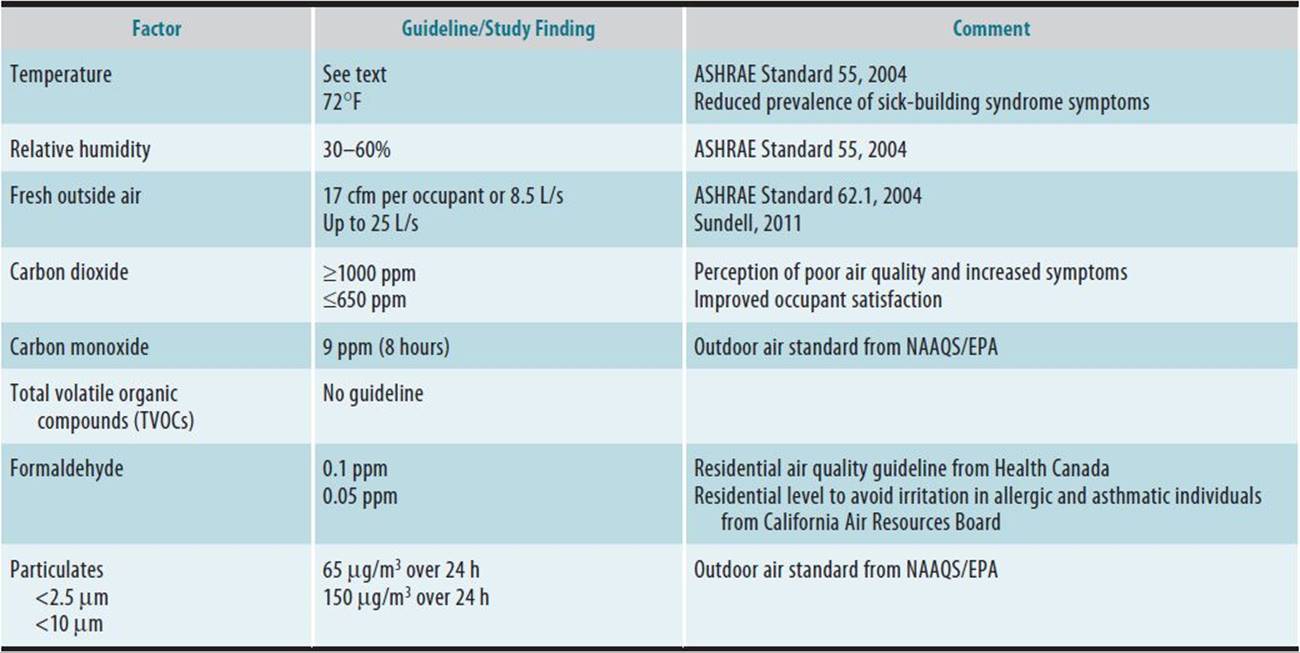
The American Society of Heating, Refrigerating, and Air Conditioning Engineers (ASHRAE) issued its most recent guideline for temperature and humidity control in 2004, designed to promote comfort for most (80%) occupants. The acceptable temperature range varies with the relative humidity (RH). Thus, for office workers, at a relative humidity of 30%, the acceptable temperature lies between 20.5 and 25.5°C (69 and 78°F) during the heating season and between 24.5 and 28°C (76 and 82°F) in the cooling season. The desired relative humidity is between 30% and 60%. Relative humidity levels below 20% often result in drying of mucous membranes, with associated discomfort, whereas levels above 60% support mold growth. Depending on the ventilation system design, there may be localized areas within buildings that fall outside the comfortable range even though the rest of the building is controlled adequately.
ASHRAE also has issued guidelines for provision of adequate amounts of fresh outside air. In the current 2004 ventilation guideline, outside air should be provided in office areas at a rate of 17 cfm per occupant (slightly reduced from the prior guideline of 20 cfm per occupant), which amounts to about 8.5 L/s per occupant of outside air. Some more recent consensus recommendations recommend much higher fresh air intake in offices, up to 25 L/s.
Limited environmental monitoring may be helpful in assessing the adequacy of ventilation—including the extent of fresh versus recirculated air—and temperature and humidity control. Minimal equipment is required for this monitoring—a room thermometer and relative humidity meter, smoke tubes to assess air movement, and direct-reading carbon dioxide colorimetric detector tubes.
Because carbon dioxide is a product of respiratory metabolism, its accumulation in office buildings reflects a balance between generation by building occupants and removal through ventilation and introduction of fresh outdoor air. Measurement of CO2 levels aids in evaluating whether sufficient quantities of fresh air are being introduced into the building. The outdoor concentration of CO2 varies typically from 250 to 350 ppm. The presence of CO2 in concentrations above 1000 ppm inside the building suggests inadequate fresh-air ventilation. In prior building investigations, levels above 1000 ppm often were associated with perceptions of poor air quality and complaints of headache and mucous membrane irritation. Although the CO2 itself is clearly not responsible for these symptoms, a high concentration suggests that other air contaminant levels are likely to be increased; in other words, the CO2level serves as a surrogate measure for the adequacy of fresh air ventilation and the presence of other as yet unidentified contaminants likely to be the cause of these symptoms. A ventilation rate of 15 cfm per person generally will keep CO2 levels below 1000 ppm. Indoor air quality complaints occur occasionally with concentrations of CO2 as low as 700–800 ppm. Increasing the fresh-air ventilation rate to 25 cfm per person will reduce the CO2 concentration below this level, often resulting in subsidence of symptoms. Table 47–2 lists some guidelines for factors having an impact on indoor air quality.
Table 47–2. Relevant guidelines for indoor air quality.
In many cases, conduct of these simple evaluations and measurements will be sufficient to assess likely sources of problems. Further and more specific air sampling should be performed if significant sources of air contaminants are identified or suspected. In the absence of such point sources, however, it is quite unlikely that extensive untargeted industrial hygiene sampling will identify an
Residential air quality guideline from Health Canada Residential level to avoid irritation in allergic and asthmatic individuals from California Air Resources Board Particulates unrecognized contaminant in concentrations sufficient to cause symptoms. Moreover, in part because of the very high sensitivity of available analytic methodology, sampling invariably detects some contaminants, often in the low-ppb range. These results likely will raise concerns in building occupants but are not likely to explain symptoms or identify the cause of the building problem. The investigators should attempt to resist often increasing demands by affected individuals for exhaustive industrial hygiene sampling, in part because it is unlikely to be productive and will likely become quite expensive.
RESULTS OBTAINED FROM BUILDING INVESTIGATIONS
Analysis of accumulated experience from multiple IAQ investigations facilitates an understanding of the relative frequency of different causal factors, permitting prioritization of building investigation approaches. Investigators at the National Institute for Occupational Safety and Health (NIOSH) reported the results of over 400 evaluations conducted during the 1980s of buildings with indoor air quality problems. While dated, the analysis remains the largest published compilation of building investigations. Although they recognized that some of the problems may have had multiple causes, the NIOSH investigators were able to classify the results by the primary identified cause. In 32% of the evaluations, building ventilation was found to be inadequate, as evidenced by inadequate fresh-air intake, poor air distribution and mixing, draftiness, poor temperature and humidity control, pressure differences between office spaces, or air filtration problems. Inside contamination from various types of wet copiers, improper pesticide application, improper use of cleaning agents such as rug shampoo, tobacco smoke, combustion gases (eg, from cafeterias), and the like accounted for 17% of the problems. Such contaminants were present at levels above the normal background but far below any permissible exposure limits. Outside contamination sources were the primary factor in 11% of the investigations, generally a result of entrainment of contaminated outside air as a result of improperly located exhaust and intake vents or contaminant generation near intake vents. A commonly identified source was the entrainment of vehicle exhaust fumes from parking garages into the air intake vent. Other contaminants included boiler gases, previously exhausted air, and asphalt from roofing operations. Microbiologic contamination accounted for 3% of the problems, resulting from standing water in ventilation system components or from water damage to carpets or other furnishings. A variety of disorders—including hypersensitivity pneumonitis, humidifier fever, allergic rhinitis, asthma, and allergic conjunctivitis—can arise from microbial contaminants. Building materials were the source of contaminants in 3% of the investigations, including such things as particle board, plywood, and some glues and adhesives. In 12% of the investigations, the factor or factors involved remained unknown. Recent data to establish the current frequency of causal factors do not exist, although more recent individual reports do not suggest a substantially different distribution of causes.
Although they did not list it as a primary cause, the NIOSH investigators indicated that tobacco smoke may have been a major contributor to indoor air quality problems largely because it contains numerous odoriferous and irritant compounds. Because of nonsmoking policies implemented in many workplaces and other locations in recent years, environmental tobacco smoke is now a less frequent contributor to indoor air quality problems in nonresidential buildings.
SHORT-LATENCY ILLNESSES
 Sick-Building Syndrome
The term sick-building syndrome (SBS; previously referred to as closed-building syndrome or tight-building syndrome and sometimes referred to as nonspecific building-associated illness) denotes a characteristic set of symptoms, typically headache and mucous membrane irritation, recognized among occupants of nonindustrial buildings such as offices and schools. Despite the name, it is the occupants who have symptoms or are sick, with some factor about the building being the culprit.
In an effort to conserve energy, many sealed structures with centrally controlled ventilation were built in the 1970s and 1980s. Initially, SBS tended to occur in these buildings without operable windows. However, SBS problems continue to occur despite engineering changes in newer buildings to improve outside air ventilation.
A. Occurrence and Etiology
The incidence of SBS is unknown, but the frequently reported outbreaks of illness consistent with this condition suggest that it is the most common building-associated illness. Symptoms that occupants relate to a building are common, even in buildings without recognized problems and with normal IAQ parameters. For example, in a questionnaire study of four nonproblem state buildings in Washington State, 55% of the 646 respondents reported recent upper respiratory symptoms temporally related to being at work, including dry eyes, nasal symptoms, and dry or sore throat. Forty-eight percent reported central nervous system symptoms, including commonly headache, unusual tiredness, tension, and mental fatigue. These symptoms were statistically associated with such factors as perception of the air as too dry, perception of too little air movement, and perception of the workspace as too noisy. Symptoms were not correlated with measured air contaminant levels.
Building outbreaks have occurred chiefly in government offices, business offices, and schools or colleges. There are a variety of known and suspected contributing factors to the development of SBS.
1. Physical factors—One common feature present in most afflicted buildings is a central ventilation system that depends on a significant proportion of recirculated air. Historically, these buildings often had low outdoor air ventilation rates, below 20 cfm per occupant (or about 10 L/s per occupant). However, SBS does occur in buildings that meet current ventilation and temperature control standards. A widely held theory is that suboptimal ventilation, in some cases below ventilation standards, permits the accumulation of low levels of many contaminants—volatile organic compounds (both nonreactive, such as toluene, and reactive, such as formaldehyde, ozone, cigarette smoke, dust (including ultra-fine particles), microbial contaminants, and the like—that together induce the symptoms. Contaminants with low odor threshold may particularly contribute to symptoms, even when air concentrations are well below irritation thresholds.
A recent comprehensive review from 2011 concluded from a review of 27 properly conducted, peer-reviewed studies, including several experimental studies, that increasing fresh-air ventilation rates reduced the frequency and intensity of SBS symptoms. Further, lower ventilation rates appear to be associated with airway inflammation, respiratory infections, asthma symptoms, and sick-leave absences. Similar findings were reported in a consensus statement from EUROVEN, published in 2002. These findings tend to support the hypothesis that at low outdoor-air ventilation rates, increases in the outdoor-air ventilation rates will reduce levels of contaminants, symptoms, and potentially respiratory conditions. The findings in these studies were largely but not universally consistent. The incomplete consistency probably reflects the substantial differences between buildings and the multitude of factors, in addition to outdoor-air ventilation rate, that may affect indoor air quality.
The EUROVEN consensus statement also reported that the presence of an air-conditioning system was associated in six of seven papers with increased reporting of SBS symptoms when compared with naturally or other mechanically ventilated buildings. The statement does, however, point out some potential confounding factors, such as building age, building materials, and operable windows that probably are associated with the presence (or absence) of air conditioning. The statement noted that one paper, a large study by NIOSH of 80 buildings, found an association between dirty heating, ventilation, and air-conditioning (HVAC) systems and SBS symptoms. This finding may reflect the impact of resulting increases in particulate concentrations in indoor air.
There is largely consistent evidence supporting an association of increased room temperature and SBS symptoms, including eye and mucous membrane dryness and irritation. There is a strong inverse relation of temperature changes, even within the “comfort zone,” on symptoms. One large study suggests that temperature elevations in winter may be particularly problematic. However, the authors also found increasing symptoms and decreased thermal comfort when buildings were over-cooled in summer. Thus there is a need to consider the impact of temperature in all observational and experimental studies evaluating indoor air quality.
Dryness of the indoor air, both perceived dryness and actual dryness, may contribute to some of the symptoms of SBS. The sensation of dryness in many cases actually reflects the presence of higher air temperature and probably dust and air contaminants with a lesser impact of lower relative humidity. In some cases, increasing air humidity when the RH is low has reduced the sensation of dryness and symptoms related to dryness. Dryness of indoor air appears to interact with work activities, such as prolonged computer/ monitor usage, and low levels of chemical contaminants, to increase the frequency of eye complaints. Given that RH often falls in indoor environments during the heating season, low humidity may play a significant role in the induction of symptoms of SBS (particularly mucous membrane symptoms) in some situations. On the other hand, high RH may lead to the apparent adverse impacts noted in some studies and to increased fungal, other microbial, and dust-mite growth, which could contribute to SBS symptoms and other problems. Humidifiers provide a potential site for microbial growth. Thus moderate levels of RH, in the range of 35–45%, appear most desirable.
2. Chemical factors—It appears that low levels of chemical contaminants present in indoor air do contribute, in some cases, to SBS, but no specific chemical causes have been identified. Despite extensive measurements for a wide variety of possible contaminants, no substances have been found to be present consistently in concentrations judged sufficient to induce symptoms, such as mucous membrane irritation.
The only exception to these findings may be the presence of formaldehyde (and potentially other biologically and chemically reactive contaminants), which can be present in indoor air at concentrations that have been shown to cause mucous membrane irritation, for example, as low as 50–100 ppb of formaldehyde. Such symptoms have been documented in epidemiologic studies in mobile homes and other structures. Formaldehyde is present in and will evaporate from resins in particle board and plywood (used in furniture and construction materials) and furnishings (including carpets and draperies), as well as from urea-formaldehyde foam insulation used previously to insulate homes.
There are a number of other potential sources for air contaminants in the office environment. Volatile organic compounds (VOCs) may evaporate from carpet glues and drying paints. Releases from photocopiers, including ozone, and other office equipment also may contribute to the symptoms. Chamber studies suggest that complex mixtures of VOCs at relatively low concentrations can lead to symptoms of mucous membrane irritation and perhaps other symptoms such as headaches. Some building studies have suggested a correlation between exposure to low-level VOC mixtures, particularly for those chemically and biologically reactive VOCs, and irritant symptoms. There is evidence that these reactive VOCs, including formaldehyde and terpenes (released from furniture and citrus and pine oils used in cleaning products), react chemically with ozone and oxides of nitrogen in indoor air to form more irritating oxidized chemicals.
Moreover, odors from chemicals, including VOCs, and from other sources, including mold or other microbial growth (including microbial VOCs), may contribute independently to SBS symptoms. Unpleasant odors are reported frequently by occupants of problem buildings. Odors are known to be capable of causing irritation, headaches, nausea, and other symptoms in the absence of toxicologically significant concentrations, with mechanisms that may include odor annoyance, anxiety about their source and potential associated hazards, and conditioned responses. Unlike the induction of irritation caused by indoor VOCs or other contaminants, for which there is a latency requiring prolonged exposure, odors may induce symptoms immediately upon entering an environment.
The presence of increased dust in the indoor environment has been associated with increased reporting of SBS symptoms in some studies. For example, a large study of office workers in 14 buildings in Copenhagen (the Danish Town Hall Study) reported that symptoms of mucosal irritation and headache and fatigue were significantly correlated with some measures of dust contamination or accumulation. Cross-sectional studies have not documented a correlation between airborne particulate concentration, at least in the typical range, and SBS symptoms. There is some suggestion that symptoms may be associated with inadequate cleaning practices, as well as some evidence that thorough office cleaning may reduce SBS symptoms. However, some interventions to reduce dust, such as HEPA filtration of air, have not been shown to reduce symptoms of SBS.
3. Biologic factors—There is some evidence that exposure to damp buildings and to molds may be a contributor to symptoms of SBS. Some studies indicate an association between dampness and certain nonspecific symptoms, such as headache and fatigue. There has been some study of the potential role of exposure to mold and mold products—fungal glucans and microbial VOCs (responsible for some of the mold odor)—in the induction of SBS symptoms. These findings suggest a possible role for dampness and mold in the induction of SBS symptoms, at least in buildings with moisture problems. Laumbach and Kipen, in a recent review, concluded that there is suggestive evidence for an association of bioaerosols with the development of SBS. However, they concluded that the role of mold exposures, including the role of mycotoxins and microbial VOCs, remains unclear, citing among other things significant limitations to existing studies and dose-response considerations. Given the many lay publications reporting (and sometimes exaggerating) the health hazards of mold exposure, anxiety about the impact of mold odors may also contribute to symptoms.
4. Host factors—Individuals with atopy appear to develop more mucosal irritation symptoms, an observation supported by chamber studies demonstrating reactions to lower concentrations of irritants than for nonatopics. Contact lens wearers tend to be more prone to eye irritation. Women tend to report symptoms of SBS more frequently than men when both are present in a problem building.
5. Work organization and psychosocial factors—Studies, including the Danish Town Hall Study, have observed that a variety of work organization and psychosocial characteristics, including absence of varied work, dissatisfaction with the supervisor, little influence on the organization, high work speed, and reported general and work stress, were associated with the prevalence of symptoms, both mucosal irritation and general symptoms. However, in the Danish study, these factors could not fully account for the differences observed in the reporting of symptoms; indoor climate factors remained strongly associated with the symptoms. Other factors that have been identified as affecting the perception of the indoor environment include noise, overcrowding, the degree of management response to IAQ complaints, and the sense of empowerment to be heard or effect change.
A cross-sectional and longitudinal questionnaire-based study conducted in Denmark and published in 2006 of over 1400 people assessed self-reported indoor environmental factors and health symptoms, including both symptoms expected and not expected “dummy” symptoms. They found that over 20% of this population experienced mucous membrane, general, and “dummy” symptoms at baseline, while 9–15% without these symptoms at baseline developed them at the end of the 1-year follow-up period. After adjustment, the authors not surprisingly found in the cross-sectional analysis some statistically significant associations between some reported environmental factors, for example, dry or stuffy air, draft, and noise, and mucous membrane symptoms, but they also found such associations with “dummy” symptoms. These factors at baseline were also associated with irritant symptoms but, in some cases, with “dummy” symptoms as well. Also unexpectedly they found statistically significant “reverse” associations between the presence of all types of symptoms at baseline and the incidence of self-reported exposures at 1-year follow-up. The authors concluded:
… [The] traditional SBS symptoms, as well as other symptoms, predict future complaints about the indoor environment. In addition, the perceived indoor environment is associated not only with symptoms that may be biologically plausibly associated with the indoor environment, but also with other symptoms. The results indicate a rather confusing web of pathways between the symptoms and perceived exposures, where it is difficult to determine what existed first: the outcome or the exposure. It does not exclude that problems in the indoor environment may have adverse health effects, but suggests that there is a high risk of reporting bias when assessing non-specific symptoms. Thus, many of the associations found in previous cross-sectional studies may possibly be explained by reporting bias.
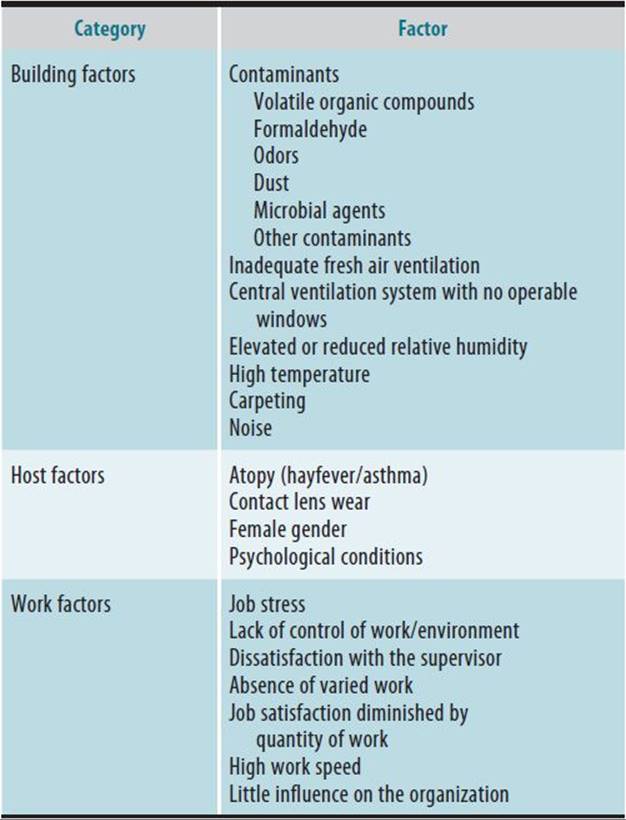
There is likely to be a complex interaction of these various factors in the induction of the symptoms of SBS, for example, the concurrent presence of low humidity levels, higher temperature, low levels of multiple air contaminants (for prolonged time periods), and odors, as well as work organization factors and psychological factors (including fear about exposures and behavioral conditioned responses). These studies support the prevalent view that most episodes of SBS are multifactorial in etiology. Some significant associations in these studies may not be causal because of the interrelationships between the many variables and the likelihood that some factors are merely surrogates for the actual underlying problem. Table 47–3 lists possible causative factors for the SBS.
Table 47–3. Postulated causative or contributing factors to sick-building syndrome.
B. Clinical Findings
The most common symptoms are those associated with mucous membrane irritation and headaches. Eye irritation, difficulty in wearing contact lenses, nasal and sinus irritation and congestion, throat irritation, chest tightness or burning, nausea, headache, dizziness, and fatigue are common complaints. As noted above, some symptoms may be psychophysiological in origin. Of note, many of these symptoms are nonspecific with multiple potential causes (including host and nonbuilding factors), although the temporal association with presence in the work environment suggests that there are some etiologic factors in the work environment.
Symptoms typically occur shortly after entering the building and are relieved soon after leaving. Physical findings are nonexistent or minimal, consisting perhaps of mild injection of the oropharyngeal or conjunctival mucous membranes. Laboratory studies, including spirometry and chest radiographs, are normal. Atopic subjects, with a history or findings consistent with allergic rhinitis or asthma, in general seem to be more prone to develop symptoms in association with indoor air-quality problems.
C. Building Evaluation, Treatment, and Prevention
An understanding of potential contributing factors provides the rationale for a targeted multidisciplinary approach to building evaluation. The proper approach in an individual problem building involves an iterative approach. One should start with the simplest activities, such as interviews of affected employees and a building walk-through to assess ventilation and to look for potential sources of exposure, as discussed above in the section on building evaluation.
For the individual patient, treatment consists of reassurance, with explanation of the apparent source and benign nature of symptoms, and temporary removal from the environment, if necessary. Fear about potential exposures, uncertainty about their health significance, and rumors about serious illnesses alleged to be related to the building in a population that is often medically and toxicologically unsophisticated may lead to considerable anxiety, which, in turn, may amplify or prolong the symptoms.
Findings from the studies cited earlier, which have been reasonably consistent, suggest a possible benefit from certain building interventions. Thus reduction in room temperature to the lower end of the comfort zone could be considered. If the outdoor-air ventilation rate is low (below 10 L/s, or about 20 cfm per occupant), efforts to increase outdoor-air intake could be considered. Recommendations for the optimal outdoor-air ventilation rate vary. The reviews discussed above recommend outdoor-air ventilation rates up to 25 L/s per occupant, although the authors acknowledge that this measure would increase energy costs significantly. There is some support for conducting thorough cleaning of office areas, ideally during periods of low occupancy, and using cleaning materials with low volatility and odor. Limited information suggests a benefit from cleaning dirt and debris from dirty HVAC systems. Especially with new or newly renovated buildings, there is some empirical support for “purging” the building, that is, maximizing ventilation with the system set for maximum fresh-air intake and perhaps raising temperatures in the building, while the building is unoccupied. In addition to reducing the occurrence of symptoms, there is limited evidence that interventions to improve air quality have led to improvements in productivity. There are a number of other studies that have found that the occurrence of building-related symptoms tends to reduce subjective and objective measures of productivity and to increase absenteeism. These findings, if confirmed, suggest that interventions to improve air quality may be justifiable not only to increase occupant comfort but also on cost-benefit grounds.
Depending on the nature of the problem identified, other changes may be necessary as well, such as relocation of airintake vents or alteration in cleaning or pesticide application practices. Prevention would appear to require balancing energy-conservation concerns with the need to provide adequate fresh-air intake rates when designing ventilation systems.
Open communications of findings and any remediation plans to the group and responsiveness to employee concerns should be considered important interventions for SBS. One should attempt to follow general recommendations for health risk communication in these situations.
Mass Psychogenic Illness
Mass psychogenic (or sociogenic) illness is an illness of psychophysiologic origin occurring simultaneously in a group of individuals. Less-satisfactory terms include mass hysteria and behavioral contagion.
A. Occurrence and Etiology
Episodes felt to represent building-associated mass psychogenic illness have occurred in office buildings, light industrial facilities, and electronics plants. The incidence of these illnesses is unknown. The precise cause, though unknown, would appear to involve the occurrence of an appropriate stimulus or trigger in a psychologically susceptible or anxious population. The trigger often is an unexplained odor. Concern that the odor represents a toxic gas or other threat may initiate psychophysiologic symptoms in some individuals. Individuals must perceive the threat to be credible in order to be affected. Because the trigger may be low levels of a respiratory irritant or an irritating odor, symptoms of SBS may occur concurrently. Thus SBS and mass psychogenic illness may occur simultaneously or sequentially in the same building incident. While SBS symptoms tend to occur in individuals who appear to be most exposed to the suspected environmental causal factors, building-associated mass psychogenic illness is transmitted within specific social networks in the workplace. In other words, friends of the initially affected individuals (index cases) are more likely to be affected.
Episodes of mass psychogenic illness have occurred in groups of workers in low-paying jobs they perceive as stressful, often with repetitive work and physical stress. Some evidence suggests that individuals who have lived and worked under high levels of stress and anxiety, often long prior to the illness outbreak, may be more prone to the development of mass psychogenic illness. These individuals then incorrectly attribute their symptoms of psychophysiologic origin to a possible toxic hazard from a problem building or a noxious odor. Since the attacks on the World Trade Center in September 2001, concerns about terrorist threats of a chemical or biologic nature have triggered episodes of mass psychogenic illness, even when no actual threat existed.
B. Clinical Findings
Symptoms commonly reported in NIOSH investigations of outbreaks felt to represent mass psychogenic illness include headaches, dizziness, light-headedness, drowsiness, and nausea; dry mouth and throat; eye, nose, and throat irritation and chest tightness; and weakness, numbness, and tingling. It may be difficult to attribute particular symptoms in any given incident to mass psychogenic illness as opposed to SBS. Headache, dizziness, nausea, and numbness tend to predominate over symptoms of mucous membrane irritation in mass psychogenic illness when compared with symptom profiles in SBS. In mass psychogenic illness, symptoms are diverse in individuals in the group and occur or recur when the group is together both inside and outside the building. There are few or no physical or laboratory findings. Some subjects may be observed to hyperventilate. Of note, the illness in the index case or cases may be a result of actual exposure to an unpleasant odor or noxious substance or to a nonoccupational cause, for example, a viral syndrome.
In contrast to SBS, symptoms often do not resolve promptly when the individual leaves the building. One should use caution in applying the label of mass psychogenic illness to an outbreak of building-related symptoms, given the similarity of symptoms to those of SBS and the frequent occurrence of psychophysiologic symptoms in SBS.
Certain features strongly suggest the diagnosis of mass psychogenic illness. The symptoms are difficult to explain on an organic basis and are not consistent with the toxicologic properties of any suspected contaminants. There is a high level of anxiety in the group. The attack rate generally is higher among women than among men. There is a visual or auditory chain of transmission. In other words, subjects typically do not become ill unless they see or hear that others are becoming ill. A recent report identified episodes of mass psychogenic illness apparently spread through information transmitted on social networks, such as Facebook and Twitter, and other modes of telecommunication, potentially obviating the need for direct visual or auditory contact. Despite apparent severity and sudden onset of illness, the illnesses are consistently benign and without sequelae.
C. Treatment
Some investigation of the building is indicated to exclude the presence of significant contaminants. The scope of such an investigation will depend on the potential sources of exposure, which usually are limited in an office setting. An exhaustive search for every measurable chemical substance is a costly, low-yield effort. Because it typically takes time to conduct an investigation and obtain results, it may be necessary to consider closure of the building or area for a time if the symptoms and concerns warrant it. Removing employees from the area of concern also may reduce anxiety and transmission of symptoms to others.
Treatment involves primarily reassurance in a supportive environment. Early, open, and frequent communication with concerned individuals is important. Emphasis should be placed on the lack of physical findings and other abnormalities, the absence of evidence suggesting a significant toxic exposure, and the benign nature of the symptoms. Because many individuals potentially would be alienated by being told that their symptoms were psychologically mediated, it is important to be cautious about attributing symptoms to psychological factors or anxiety.
Building-Associated Hypersensitivity Pneumonitis
Hypersensitivity pneumonitis (HP) is a form of interstitial lung disease characterized pathologically by lymphocytic and granulomatous infiltration of alveolar walls that results from inhalation of a variety of organic dusts. Please refer to Chapters 17 and 23 for more detailed information about hypersensitivity pneumonitis, including etiologic factors, mechanisms, clinical findings, diagnosis, and treatment. Hypersensitivity pneumonitis has been reported in a number of individuals in homes or offices where mold or bacteria had been allowed to grow on humidifiers or air conditioners. Attack rates in such outbreaks have varied from 1% to 71% of the exposed population. There is limited information about the incidence of building-associated HP, but it appears to be a rare condition.
A. Occurrence and Etiology
Hypersensitivity pneumonitis is an immunologic disorder triggered by repeated inhalation exposures to a foreign antigen that probably results from a combination of immunopathogenic mechanisms. In building-associated hypersensitivity pneumonitis, a number of agents and antigens are implicated, including bacteria (thermophilic actinomycetes such as Thermoactinomyces vulgaris and Micropolyspora faeni), fungi (Aspergillus, Penicillium, Alternaria, and others), and amebas (Naegleria and Acanthamoeba). The source of antigens usually is contaminated ventilation systems. Less commonly, persistently moist carpets, furnishings, and surfaces from water leaks in occupied areas are implicated.
B. Clinical Findings
The symptoms, signs, and laboratory and imaging findings in building-associated HP are not different than in other types of HP, other than the observation that symptoms and signs in acute HP are temporally related to presence in the affected building.
C. Diagnosis
The presence of serum-precipitating antibodies to suspected microbial antigens is of limited usefulness in that it documents intense and extensive exposure but does not indicate the presence of clinical pulmonary disease. Such antibodies may be seen in asymptomatic individuals, and some individuals with hypersensitivity pneumonitis may have negative precipitin tests.
In a study of hypersensitivity pneumonitis in office workers exposed to a contaminated air cooling system, shortness of breath and fever were present in all the affected individuals. If the onset of these two symptoms was in close temporal association with exposure to the workplace, this finding was even more suggestive of hypersensitivity pneumonitis. Because dyspnea and fever are uncommon in SBS, the presence of these symptoms in one or more individuals in a building should trigger concern about possible hypersensitivity pneumonitis. Similarly, abnormal findings on chest imaging procedures or pulmonary function tests (particularly reductions in the diffusing capacity for carbon monoxide) in individuals whose respiratory symptoms are temporally related to presence in a building should strongly suggest this diagnosis. Such findings would not be expected with most other types of building-associated illness, including SBS.
D. Treatment
Avoidance of further exposure by removal from the building environment usually results in resolution of symptoms and abnormalities, unless the disease has progressed to a chronic stage. Treatment approaches are discussed in Chapter 23. In some outbreaks, extensive cleanup efforts, including removal of contaminated items and alteration of ventilation systems, have allowed the return of affected workers without recurrence of symptoms.
The Role of Building Dampness, Mites, & Molds in the Induction of Asthma & Respiratory Symptoms or Conditions
Dampness in buildings results in conditions that favors the growth of dust mites and mold. Exposure to dust mite allergens, primarily in homes, is associated with the occurrence of inhalant allergies in susceptible individuals. Molds are ubiquitous in the outdoor and indoor environment, including in the air. There has been a considerable amount of interest recently in the possible health effects of building dampness and indoor mold in buildings. Cladosporium, Penicillium, Aspergillus, and Alternaria are the most common genera of mold identified indoors during building investigations, all of which likely arise from outdoor sources but which proliferate indoors on some surfaces in the presence of dampness or water damage. Of note, allergies to molds (manifesting as allergic rhinitis and/or asthma), as demonstrated by tests that indicate the presence of IgE antibodies to certain molds, are relatively common, perhaps occurring 5% of the general population. Presumably, some and perhaps most of these allergies result from outdoor (vs indoor) airborne exposure to mold, although it generally would not be possible to definitively identify the responsible source.
A recent World Health Organization (WHO) review, amplifying upon an earlier review in 2004 by the Institute of Medicine (IOM) of the National Academy of Sciences, concluded:
There is sufficient epidemiological evidence of associations between dampness or mould and asthma development, asthma exacerbation, current asthma, respiratory infections (except otitis media), upper respiratory tract symptoms, cough, wheeze and dyspnoea.
At the same time, the authors stated, in regard to causal relationships (as opposed to associations):
The epidemiological evidence is not sufficient to conclude causal relationships between indoor dampness or mould and any specific human health effect, although the findings of one strong epidemiological intervention study, in conjunction with the other available studies, suggest that dampness or mould exacerbates asthma in children.
In the WHO report, “Sufficient evidence of an association” is a lower level of scientific evidence than a determination of a causal association, although the observed associations do not appear to be due to chance, bias or confounding factors. The underlying epidemiological studies generally indicate statistically significant associations between visible dampness or mold and upper respiratory symptoms, cough, wheeze, and asthma exacerbations, with about 1.3- to 1.7-fold increased risks.
One limitation to the conclusions is that dampness and mold growth indicators and health measures were self-reported in most of the studies in adults. The reviewers were unable to conclude what agent or factor associated with dampness led to the health effects, although available evidence tended to implicate mite sensitization and mold exposure. The appropriate measure of dampness to use to assess health risk is unclear.
Again, according to the WHO report: “There is sufficient clinical evidence of associations between mould and other dampness-associated microbiological agents and hypersensitivity pneumonitis, allergic alveolitis and mould infections in susceptible individuals, and humidifier fever and inhalation fevers. This is the only conclusion that is based primarily on clinical evidence and also the only conclusion that refers explicitly to microbial agents, as opposed to dampness-related factors.”
Another recent review/meta-analysis updated the relevant epidemiological literature regarding associations between dampness or mold and respiratory infections. This more recent review and meta-analysis also supported the presence of an association but did not establish causation between dampness and mold and common respiratory infections. The associated infections were common ones, such as colds, sinusitis, and bronchitis, with increased risks of roughly 1.5. It is worth noting that with common conditions (such as these respiratory infections) for which there is an apparent small increase in risk, it is not possible to accurately attribute a given infection in an individual to dampness or mold.
Many molds under certain circumstances are known to produce mold toxins, referred to as mycotoxins, which sometimes may become airborne. There has been considerable scientific inquiry and speculation, news media attention, and litigation regarding exposure to mycotoxins in buildings and alleged illness. A number of common indoor fungi produce mycotoxins, including Aspergillus, Cladosporium, Penicillium, and Stachybotrys species. These mycotoxins are of high molecular weight and are not appreciably volatile; exposure requires aerosolization of spores or fungal fragments. While exposure to Stachybotrys species, so-called black mold or “toxic” mold, has generated considerable interest, there is no scientific evidence suggesting it has a greater potential to cause toxicity. Reflecting recognized adverse toxicologically mediated effects of mycotoxins from ingestion of large doses, there has been concern that inhalation exposure to these toxins might cause symptoms or conditions. The dose of mycotoxins, to which someone could be exposed from indoor air, is, however, much smaller than that absorbed from ingestion of heavily contaminated food. In this regard, the WHO and IOM conclusions from their review are the same, indicating that mycotoxins in indoor air have not been established to cause illness in humans. The WHO review authors concluded: “Although mycotoxins can induce a wide range of adverse health effects in both animals and human beings, the evidence that they play a role in health problems related to indoor air is extremely weak.”
A. Building Evaluation for Mold Exposure
It is very important to investigate dampness, water damage, and mold growth problems properly. The initial approach involves a thorough walk-through of the building, searching for sources of water intrusion and visible evidence of mold growth on surfaces, such as walls. Sampling of suspect contamination, for example, on wall surfaces, can confirm the presence and type of fungi present. Further investigation may not be necessary, especially if the factors leading to water intrusion can be corrected and mold growth can be readily identified and remediated.
While air sampling can be performed, it is not generally required. There are two primary methods of air sampling, nonviable and viable testing, results of which are expressed in spores and colony-forming units (CFUs) per cubic meter of air, respectively. Air sampling is costly and technically demanding. It may be useful to confirm a source for documented hypersensitivity in an individual. There are significant limitations in the interpretation of results, including the lack of exposure limits for airborne fungi and the absence of known dose-response relationships for health effects. The prevailing view, stated by the American Conference of Governmental Industrial Hygienists (ACGIH) and other authorities, is that it is not possible to establish airborne exposure limits for indoor fungi, based upon currently available scientific information. In a recent review, Eduard, a researcher at the National Institute of Occupational Health in Norway, suggested, based upon epidemiological studies in populations heavily exposed to airborne mold, that no observed adverse effect levels for effects on lung function, airway inflammation, and respiratory symptoms fell in the range of 105 spores/cubic meter, concentrations that are substantially higher than those documented generally in homes or offices. He indicated that there is evidence that effects probably occur at lower air concentrations in hypersensitive subjects. Further, he concluded that studies in populations exposed in typical indoor air settings are insufficient to establish dose-effect relationships. Recognizing uncertainty in this area, the consensus approach at this time is that a finding of higher concentrations of fungi indoors compared with concurrent outdoor sampling suggests that there is a source of biomagnification/growth within the building that might require remediation.
B. Clinical Findings and Diagnosis
The clinical findings and diagnosis of asthma exacerbations (and potentially de novo asthma) related to dampness and exposure to mites and mold would be identical to those for other types of asthma, as discussed in Chapters 17 and 23. Diagnosis may be aided by performance of skin prick tests to detect IgE specific to fungal allergens or serologic testing for IgE antibodies to fungal allergens, although such testing is limited by the availability of standardized fungal antigens, cross-reactivity among fungi, and the occurrence of false-positive and false-negative tests. These tests need to be interpreted carefully in conjunction with the history and physical findings. Documentation, through appropriate testing of the building, and of presumed exposure to the type of mold to which there appears to be IgE-mediated hypersensitivity may provide additional evidence of a connection between the asthma exacerbation and the building. There would normally not be baseline, preillness results to allow a determination as to whether hypersensitivity was caused by the building exposure or, alternatively, by some earlier exposure. Clinical and building investigation findings in cases of hypersensitivity pneumonitis or opportunistic fungal respiratory tract infections, the latter typically in immunocompromised individuals, might permit attribution to a building source, although such conditions would typically only occur rarely.
Because other symptoms and conditions potentially associated with mold exposure, such as upper respiratory symptoms or common respiratory tract infections, occur frequently in the general population and are not specific to a mold etiology, it is not possible to definitively confirm that airborne mold or building dampness is the cause in a particular case. Of note, laboratory studies to detect fungal antigens or toxins or IgG or other antibodies to them are subject to a number of technical and interpretation problems and have not been shown to be of use in confirming a fungal etiology for an illness.
C. Treatment and Building Remediation
Treatment for asthma would involve the same therapeutic approaches employed in other cases of asthma. Removal from exposure also might be warranted, at least until remediation occurs. There is no specific treatment for other potential adverse effects from airborne mold exposure, such as respiratory irritation. Removal from exposure of symptomatic individuals should be considered, based upon the severity of symptoms and the level of their concern, but it would not always be warranted, especially if remediation can be quickly effected.
The potential that respiratory symptoms and infections, allergy/asthma, and hypersensitivity pneumonitis may result from substantial airborne exposures, in addition to the unaesthetic impact and unpleasant odors associated with indoor mold growth, warrants prompt interventions to correct the underlying problems. Repair of the structural problems in a building that led to water intrusion is essential, or the problem will likely recur. Remediation of any identified fungal growth by properly trained individuals using appropriate equipment and work practices is clearly important. A recent Cochrane review concluded that there was “moderate to very low-quality evidence that repairing mould-damaged houses and offices decreases asthma-related symptoms and respiratory infections compared to no intervention in adults.”
Other Building-Associated Hazards & Illnesses
Certain infectious diseases that are noncommunicable may be transmitted in indoor air. Legionnaires disease—a multisystem disease dominated by pneumonia—is caused by the bacterial organism Legionella pneumophila and occasionally other Legionella species. Pontiac fever, also caused by L pneumophila, is an influenza-like illness characterized by fever, chills, headache, myalgias, and sometimes cough and sore throat. Most reported cases are sporadic, with only about 11% of cases associated with an outbreak of illness.
Most commonly, building-associated outbreaks result from contaminated aerosols, usually disseminated in the ventilation system from cooling towers, evaporative condensers, humidifiers, and air-conditioning systems. Other sources of aerosols include decorative fountains, whirlpool hot tubs, and produce misters in grocery stores. Legionella species can be cultured in up to 40% of cooling towers, although infections stemming from exposure to the aerosols are reported uncommonly. Legionella bacteria thrive in water systems maintained at warm temperatures between approximately 26.7°C (80°F) and 48.9°C (120°F). Proper cleaning and maintenance of these potential sources is critical in preventing outbreaks of Legionnaires disease.
The appropriate investigation and management of a building and its occupants, when one or more individuals are found to have Legionella infection, often will find the source of exposure to be in the community outside the workplace. Nevertheless, it is appropriate to begin a building investigation and to inquire about compatible illnesses in other building occupants, referring those with symptoms for medical care. Investigation of the building involves identification of relevant elements in the water and ventilation systems, particularly those from which aerosolization could occur, and testing the water by culture for Legionella. Any likely source then should be cleaned properly and decontaminated with chlorine or other biocides. If such decontamination can occur promptly, the facility typically can remain open and operational while the investigation proceeds. Characterization of isolated organisms from water systems and from the case patient by species and serogroup may provide evidence for or against a link with the building.
Q fever, caused by the rickettsial organism Coxiella burnetii, has been responsible for several building-associated outbreaks. The animal reservoirs for this infection typically are sheep, goats, and cattle and less commonly cats, dogs, and rabbits. Airborne transmission of organisms from animal excreta and products of parturition to humans has occurred via ventilation systems in animal-handling and medical research facilities.
Certain hazardous materials whose presence is not suspected routinely in nonindustrial buildings have been linked to building-associated symptoms or illnesses. Carbon monoxide in buildings may be the cause of mild symptoms, such as headache and nausea, or more severe, potentially life-threatening intoxication. Incomplete combustion in defective gas furnaces or unvented gas stoves and other appliances, typically in residences, may be the source of significant indoor emissions of carbon monoxide. In addition to the potential for acute intoxication, long-term low-level exposure can cause recurrent subacute symptoms, such as headaches. Attentiveness to these symptoms, when temporally related to presence in a building, may help to identify and eliminate previously unrecognized CO exposure sources. Less commonly, carbon monoxide may be entrained from the outside via air intakes in the vicinity of vehicle loading docks.
REFERENCES
Bartholomew RE: Mass psychogenic illness and the social network: is it changing the pattern of outbreaks? J R Soc Med 2012;105:509 [PMID: 23288084].
Eduard W: Fungal spores: a critical review of the toxicological and epidemiological evidence as a basis for occupational exposure limit setting. Crit Rev Toxicol 2009;39:799 [PMID: 19863384].
Fisk WJ: Association of residential dampness and mold with respiratory tract infections and bronchitis. Environ Health 2010;15:72 [PMID: 21078183].
Mendell MJ: Indoor thermal factors and symptoms in office workers: findings from the US EPA BASE study. Indoor Air 2009;19:291 [PMID: 19302503].
NIOSH/EPA: Building air quality: a guide for building owners and facility managers. http://www.epa.gov/iaq/largebldgs/baqtoc.html.
Sauni R: Remediating buildings damaged by dampness and mould for preventing or reducing respiratory tract symptoms, infections and asthma. Evid Based Child Health 2013;8:944 [PMID: 23877912].
Sundell J: Ventilation rates and health: multidisciplinary review of the scientific literature. Indoor Air 2011;21:191 [PMID: 21204989].
White SK: Work-related peak flow and asthma symptoms in a damp building. Occup Med 2013;63:287 [PMID: 23599177].
WHO Guidelines for Indoor Air Quality: Dampness and Mould. Geneva: World Health Organization; 2009 [PMID: 23785740]. http://web.jrc.ec.europa.eu/radpar/docview.cfm?docid=104.
 SELF-ASSESSMENT QUESTIONS
Select the one correct answer to each question.
Question 1: Short-latency illnesses
a. include sick-building syndrome, mass psychogenic illness, but exclude specific illnesses resulting from identifiable sources of noxious materials
b. include certain infectious diseases, building-associated hypersensitivity pneumonitis, but exclude dampness-associated asthma exacerbations
c. are characterized by a relatively slow onset
d. are closely related in time to the individual’s presence within the building and often relieved by removal from further exposure
Question 2: Long-latency illnesses
a. include cancer and chronic pulmonary diseases, perhaps resulting from long-term low-level exposure to contaminants in indoor air
b. usually have exposure histories that clearly establish a causal link to the building exposure
c. present little difficulty in establishing a causal link to the building exposure if industrial hygiene data are available
d. may be caused by agents in indoor air such as cigarette smoke, asbestos, radon gas, and carbon dioxide
Question 3: Sick-building syndrome
a. is a more definitive term than nonspecific building-associated illness
b. denotes a characteristic set of symptoms, typically headache and mucous membrane irritation, recognized among occupants of nonindustrial buildings such as offices and schools
c. is a term used when the occupants are sick, but no factor about the building being a possible culprit
d. results without exception from sealed structures with centrally controlled ventilation
Question 4: Mass psychogenic illness
a. is not to be confused with sociogenic illness, mass hysteria, or behavioral contagion
b. is an illness of psychophysiologic origin occurring simultaneously in a group of individuals
c. has occurred in office buildings, but not in light industrial facilities and electronics plants
d. is triggered solely in a psychologically susceptible or anxious population
Question 5: Carbon monoxide in buildings
a. may be the cause of mild symptoms, such as headache and nausea, but is never life threatening
b. results solely from incomplete combustion in defective gas furnaces
c. does not cause recurrent subacute symptoms
d. may be entrained from the outside via air intakes in the vicinity of vehicle loading docks.