Definition
• Injuries to the soft tissue or bones of the face (50% caused by MVCs)
Approach
Inspection
• Deformities, enophthalmos (orbital blowout fracture), jaw malocclusion, dentition step-offs, nasal septal/auricular hematomas, rhinorrhea (CSF leak), trigeminal/facial nerve deficits, abnl EOM, diplopia, gross visual acuity
Palpation
• Facial prominences for tenderness/bony defects/crepitance/false motion, FB
Radiology
• Panoramic x-ray for mandibular/dental fractures, maxillofacial CT scan for most injuries, CTA in injuries at high risk for vascular trauma
Soft Tissue Injury
Definition
• Injury to the soft tissue of the face
History
• MVC/bites/assault
Evaluation
• CT only if bony injury/FB suspected
Treatment
• Irrigate/eval for FB/primary closure w/in 24 h, abx (cefazolin, Ampicillin/Sulbactam, amoxicillin/clavulanate) for contaminated wounds (eg, bites), plastic surgery repair for nerve damage/extensive repair
Disposition
• Home
Septal/Auricular Hematomas
Definition
• Hematoma of nasal septum/ear
History
• Direct trauma to the nose (a/w nasal bone fractures)/ear (classically in wrestlers)
Physical Findings
• Swelling/purple discoloration
Treatment
• Septal: Apply topical anesthetic, incise/evacuate w/ elliptical incision, pack bilateral nares, abx (amoxicillin/clavulanate) (failure to drain → cartilage necrosis → saddle nose deformity)
• Auricular: Anesthetize area (lidocaine 1%) or auricular block, needle aspiration (chronic hematomas) or incise along skin folds, evacuate, apply compression dressing (failure to drain/compress → cauliflower ear/infection)
Disposition
• Home, f/u in 24 h
Nasal Fractures
Definition
• Fractures of the nasal bone
History
• Direct trauma to the nose
Physical Findings
• Swelling/deformity note: Patency of nares & appearance of septum
Evaluation
• CT only if significant deformity/persistent epistaxis/rhinorrhea
Disposition
• Isolated nasal fractures → Most home w/ plastic/ENT f/u in 5–7 d for reduction, consider reduction in ED if displaced, (pediatric pts → 3 d, ↑ risk for growth dysplasia)
Pearl
• Septal hematoma requires immediate I&D to prevent necrosis
Zygomatic Fracture
Definition
• Fractures of the zygomatic arch or fracture at the zygomaticotemporal suture/zygomaticofrontal suture/infraorbital foramen (tripod fracture)
History
• Direct trauma to face
Physical Findings
• Shallow depression over temporal region, trismus, edema, diplopia/vertical dystopia/infraorbital nerve anesthesia (tripod fracture)
Evaluation
• Maxillofacial CT
Treatment
• ENT/OMFS/Plastics consult
Disposition
• Home, ENT/OMFS/plastics f/u for delayed ORIF, sinus precautions
Mandibular Fractures
Definition
• Fracture of the mandible (>50% multiple fracture sites)
History
• Direct trauma to mandible (assaults usually = body/angle fractures, MVC usually = symphysis/condylar fractures)
Physical Findings
• Malocclusion, trismus, associated dental & lingual injury
Evaluation
• Panorex (isolated mandibular fractures): Can miss condylar fracture, maxillofacial CT (preferred): Condylar fractures/additional facial trauma
Treatment
• OMFS or plastic surgery consult: Temporary immobilization (wiring of jaw) or delayed ORIF, abx (PCN, clindamycin) if gingival bleeding
Disposition
• Home
Pearls
• Pts discharged w/ temporary wiring must be discharged w/ wire cutters
• Tongue blade test has high sens for mandibular fx
Maxillary Fractures
Definition
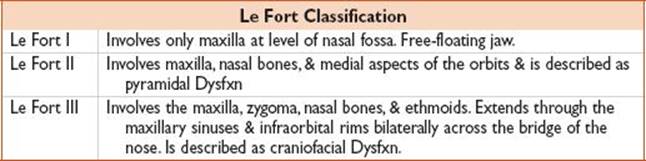
• Fracture of the maxilla, rare in isolation, a/w significant mechanism, greatest risk of airway compromise, traditionally classified by Le Fort system
History
• Significant mechanism trauma to the face (high-speed MVC)
Physical Findings
• Midface swelling/mobility, malocclusion of mandible, CSF rhinorrhea
Evaluation
• Maxillofacial CT
• CTA in Le Fort II & III should be strongly considered
Treatment
• Airway management (eval for difficult airway, Le Fort II/III highest risk), hemorrhage control (nasal packing/nasal Foley/elevation of head), abx (ceftriaxone) for CSF communication, ENT/OMFS consult
Disposition
• Admit