Definition
• Abnl paroxysmal d/c of CNS neurons leading to abnl neurologic function
• Epilepsy: Chronic or recurrent szs
Approach
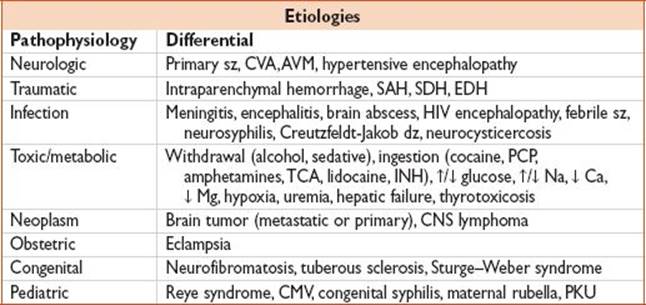
• Immediate bedside glucose fingerstick. If female, hCG (concern for eclampsia).
• History: Description of events before & after sz, associated sxs (fever, vomiting, HA, trauma, photophobia, visual changes), focal neurologic sxs, ingestions/medications
• Was there motor involvement? If so, generalized or localized? Was there a postictal period or immediate return to nl mental status (which would suggest syncope)
• Physical: Assess for trauma, AMS, neuro deficits, sign of ingestion
Primary Seizures
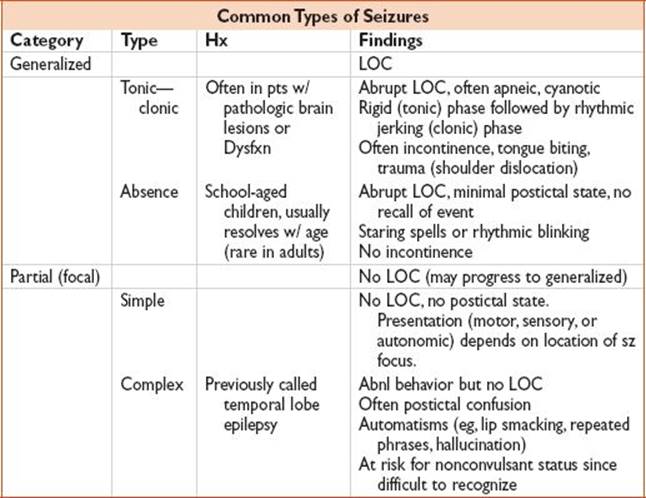
Presentation: Depends on type of sz (see table)
Evaluation
• First time: If back to baseline & no comorbidities BMP (for glucose, Na), hCG
• Most pts should have CTH w/ 1st sz; may defer if neuro intact & good outpt f/u
• If immunocompromised: CTH, LP (From: ACEP Clinical Policy. Ann Emerg Med 2004;43:605)
• Breakthrough sz: Check anticonvulsant levels. Consider factors that may lower sz threshold (stress, sleep, noncompliance, meds, toxins, alcohol, infection), w/u as indicated for these (eg, glucose, UA, tox screen).
• If new sz pattern or new trauma, consider CTH
• Consider LP after head CT if persistently AMS, fever & therapeutic med levels
• Keep differential broad even if known sz d/o, esp if therapeutic med levels
• EEG if concern for nonconvulsant status epilepticus, o/w can be done as outpt
Treatment
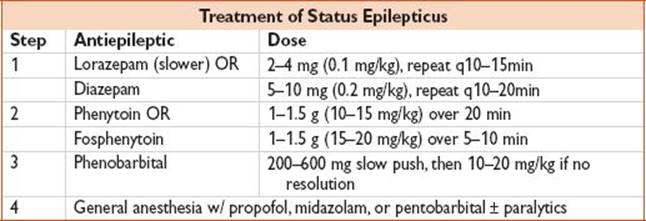
• Airway (usually nasal trumpet, supplemental O2, but may need to intubate if in status)
• Protect from aspiration if vomiting, protect from trauma
• Abortive meds: Benzodiazepines are 1st line (eg, lorazepam 2 mg IV/IM)
• Phenytoin 1 g IV over 1 h (2nd line in adults, 3rd line in peds)
• Phenobarbital 200–600 mg IV up to 20 mg/kg (watch for hypotension & resp depression)
• Long-term antiepileptic medications: Load if subtherapeutic on home meds
• Phenytoin load (1 g or 10–20 mg/kg IV), fosphenytoin load (15–20 mg/kg IM or IV)
• Generally do not start antiepileptics after 1st-time sz if nl exam, no comorbidity
Disposition
• Explicit instructions to not drive, operate hazardous machinery or perform tasks where recurrent sz may cause harm; some states have mandatory reporting to DMV.
• If on long-term meds or 2nd sz, discuss w/ neurology regarding dose adjustments or starting a long-term med.
Pearls
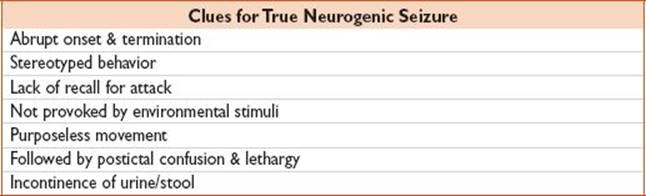
• Pseudoseizure is Dx of exclusion
• Treat alcohol withdrawal sz w/ BZD, almost never responsive to phenytoin
Status Epilepticus
History: Szs that persist for >30 min or repetitive szs w/o a return to lucidity
Findings: AMS, continuous sz activity
Evaluation: As above, include Cr kinase levels, UA to check for myoglobinuria
Treatment
• Often require multiple rounds & classes of antiseizure meds before breaking
• Intubation if indicated for hypoxia, risk of aspiration, expected clinical course
• Consider INH tox (treat w/ pyridoxine 1 g), eclampsia (treat w/ magnesium 4 g)
• If persistently refractory, may need paralytics
Disposition: Admit