Background
• Caused by acute exposure to hypobaric hypoxia (low PO2) usually above 8K ft
• Altitude illness is generally considered as a progressive spectrum from AMS to HACE
• Acclimatization allows body to minimize effects of hypoxia; ↑ RR (↓ PaCO2), ↑ CO, ↑ hematopoiesis & 2,3-DPG production (favors O2 release to tissues)
• Takes 5–7 d for full effect; inherent acclimatization ability varies by individual
Approach
• Oxygen, descent, symptomatic relief; HAPE can be fatal w/i hours unless treated
History
• Rapid ascent to altitude >8K ft, risk increased by exertion, past h/o altitude illness
• Flu-like sxs, “hangover,” HA, fatigue, DOE, sleep disturbance, N/V, dizziness, paresthesias
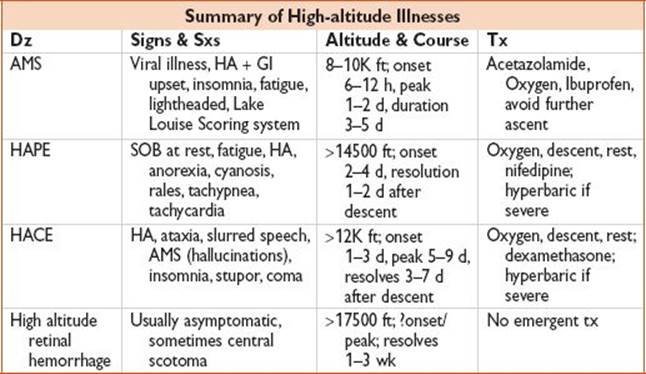
• Sxs manifest 6–12 h after ascent, subside in 1–2 d or may progress to HAPE, HACE
• Watch for sxs of HAPE (dry cough, fever, SOB at rest) or HACE (ataxia, emesis, LOC)
Findings
• Depends on severity of altitude illness
• HAPE: Tachycardia, tachypnea, rales/wheeze, fever, orthopnea, pink/frothy sputum
• HACE: AMS, ataxia, sz, slurred speech, stupor, coma, death from brain herniation
Evaluation
• Clinical Dx
• HAPE: CXR (patchy infiltrates), US (comet tails), pulse oximetry (relative hypoxia)
• HACE: Head CT negative, MRI (white matter Δ showing ↑ edema)
Treatment
• Descent! If unable: Oxygen, symptomatic relief, bed rest
• Hyperbaric oxygen chamber: Used as temporizing measure until descent
• Meds: Some w/ unclear benefit but low risk:
• Acetazolamide: 125–250 mg PO q12h; for ppx start 1 d prior to ascent Dexamethasone: 8 mg PO × 1, then 4 mg PO q6h
• In HAPE:
• Nifedipine (pulm vasodilation): 10 mg PO q6h, SR 30 mg PO q8–12h (<90–120 mg/d)
• Inhaled β-agonist (Salmeterol; clears alveolar fluid): Inhalation q12h
• PDE-5 inhibitors (tadalafil, sildenafil) have shown efficacy in HAPE ppx & can be considered in tx: Tadalafil 10 mg q12h, sildenafil 50 mg q8h
Disposition
• Admit if hypoxic, dyspnea at rest; prognosis excellent for survivors
Pearls
• Avoid abrupt ascent, spend 1–2 nights at intermediate elevation, descend to sleep
• Underlying medical conditions (COPD, CAD, HTN, SSD, pregnancy) affected more
• Consider other causes of sxs: PNA (HAPE does not usually cause fever), PE, SDH, stroke
• Descent is the mainstay of any tx