
David A. Gorelick, MD, PhD and Michael H. Baumann, PhD
CHAPTER OUTLINE
■ DEFINITION
■ SUBSTANCES INCLUDED
■ FORMULATIONS AND METHODS OF USE AND ABUSE
■ HISTORICAL FEATURES
■ EPIDEMIOLOGY
■ PHARMACOKINETICS
■ DRUG–DRUG INTERACTIONS
■ PHARMACODYNAMIC ACTIONS
■ NEUROBIOLOGY
■ CONCLUSIONS AND FUTURE RESEARCH
DEFINITION
Stimulants are a class of drugs that stimulate activity in the central and sympathetic peripheral nervous systems, chiefly by enhancing neurotransmitter activity at catecholaminergic synapses.
SUBSTANCES INCLUDED
Stimulants include both naturally occurring plant alkaloids, such as cocaine (Fig. 10-1), ephedra, and khat, and more than a dozen synthetic compounds, such as the amphetamines and methylphenidate. Most of these are variants of the basic phenethylamine chemical structure, which is shared by the endogenous catecholamine neurotransmitters norepinephrine and dopamine (Fig. 10-2). The wakefulness-promoting agents modafinil and its (R)-isomer, armodafinil, have a mechanism of action similar to that of stimulants, but a different chemical structure and reduced propensity for abuse (1). They are not considered in this chapter.
All stimulants share the same range of psychological and physiologic effects, while differing in potency and pharmacokinetic characteristics. Caffeine, the most widely used stimulant, is considered separately in Chapter 11. 3,4-Methylenedioxymethamphetamine (MDMA, “Ecstasy”), a structural analog of methamphetamine with both stimulant and hallucinogenic characteristics, is considered separately in Chapter 14.
FORMULATIONS AND METHODS OF USE AND ABUSE
Plant-Derived Stimulants
Several naturally occurring, plant-derived stimulants are widely available for traditional oral use in many areas of the world. These include cocaine (in South America), ephedra (in North America and East Asia), and khat (in East Africa and Arabia). Such use often is culturally sanctioned and may not be associated with abuse or dependence. Use of more potent formulations (e.g., the extracted active chemical) or more rapidly acting routes of administration has significant abuse potential and is illegal even where oral formulations are allowed.
Cocaine
Cocaine is an alkaloid with a tropane ester chemical structure (see Fig. 10-1) similar to that of scopolamine and other plant alkaloids. It occurs in leaves of the coca bush, Erythroxylum coca, which grows at altitudes of 1,500 to 6,000 feet in the Andean region of South America (chiefly Colombia, Peru, and Bolivia). The leaf contains cocaine (0.2% to 1%) and more than a dozen other tropane alkaloids (such as benzoylecgonine, methylecgonine, ecgonine, and cinnamoylcocaine), most of which are of unknown pharmacologic activity. Another Erythroxylumspecies, E. novogranatense, contains lesser amounts of cocaine and greater levels of other alkaloids (1a). Cocaine exists as two stereoisomers: naturally occurring (−)-cocaine and (+)-cocaine, which has less affinity for the dopamine transporter and is relatively inactive in vivo because of its very rapid metabolism by butyrylcholineesterase (2).

FIGURE 10-1 Chemical structures of cocaine, mazindol, and methylphenidate.
About 149,000 hectares of coca were cultivated in Bolivia, Colombia, and Peru in 2010. This resulted in an estimated production of 800 to 1,000 metric tons of cocaine (3), most destined for export. Domestic use of oral cocaine is legal in these countries, usually as coca tea or by chewing the leaves. Coca leaves typically are chewed in conjunction with lime or plant ash, which alkalinizes the saliva and thus enhances absorption of the cocaine. Cocaine is legally available in the United States only as a 4% or 10% injectable solution (or powder for reconstitution) or viscous liquid for use as a local or topical anesthetic. Legal cocaine preparations rarely are diverted for misuse.
Illicit cocaine is smuggled into the United States specifically for abuse purposes from its countries of origin. The average retail purity was 50% in the United States and 32% in Western and Central Europe (3).
Preparation of illicit cocaine begins with crushing the coca leaves and heating them in an organic solvent (often kerosene) to extract and partially purify the cocaine (4). After several more extraction and filtering steps, the coca paste (now 80% to 90% pure) is heated in an organic solvent (often ether or acetone) with a concentrated acid to convert it to a salt form. The salt is readily converted back to the base by heating it in an organic solvent at basic pH. This process is known as “freebasing,” and was practiced by cocaine users during the 1980s, before cocaine base (or “freebase”) was widely available on the retail street market. “Crack” as a street name for base cocaine reportedly derives from the crackling sound made during this process.
Cocaine is available for street use in two forms: base and salt (5,6). These have different physical properties, which favor different routes of administration. The base has a relatively low melting point (98°C) and vaporizes before substantial pyrolytic destruction has occurred. This allows cocaine base to be smoked, though the majority of the cocaine may be in the form of small particles (<5 μm) that reach the alveoli, rather than true cocaine vapor (7). Cocaine base is relatively insoluble in water (alcohol:water solubility ratio of 100:1), making it difficult to dissolve for injection purposes. In contrast, cocaine salt does not melt at less than 195°C, so heating it for smoking results in destruction of most of the cocaine. However, cocaine salt is highly water soluble (alcohol:water solubility ratio of 1:8), making it easy to dissolve for injection purposes and facilitating absorption across mucous membranes. Regardless of the chemical form or route of administration, the cocaine molecule exerts the same actions once it reaches the brain or other target organ (5).
Adulterants are added (i.e., the cocaine is “cut”) to enhance dealer profits. These include both inert fillers that look like cocaine (such as dextrose, lactose, mannitol, or starch) and active chemicals that either mimic the local anesthetic effect of cocaine (such as benzocaine, lidocaine, or procaine) or provide some psychoactive effect (such as ephedrine, amphetamine, caffeine, or phencyclidine [PCP]) (4,8). The veterinary antihelminthic agent levamisole is increasingly common as a cocaine adulterant, found in more than 60% of analyzed street cocaine samples in the United States (9). Cocaine adulterated with levamisole is associated with serious side effects, including agranulocytosis and cutaneous vasculitis. Street cocaine may also contain contaminants from the preparation process (such as benzene, acetone, or sodium bicarbonate) (8).
Ephedra
Ephedrine and pseudoephedrine are naturally occurring alkaloids with a phenethylamine chemical structure (see Fig. 10-2) that are found in several Ephedraceae species (especially Ephedra sinica, E. equisetina, and E. gerardiana) (6,10). Ephedra is a preparation of dried young branches of Ephedra species, typically containing 1% to 3% ephedrine. This may be converted into a capsule, tincture, liquid extract, or tea. Ephedra products are widely used in East Asia and North America; they appear in the pharmacopoeias of China, Japan, and Germany.

FIGURE 10-2 Chemical structures of endogenous catecholamine neurotransmitters (dopamine, norepinephrine) and phenethylamine stimulant drugs.
Ephedra products often are advertised as legal versions of or alternatives to the more strictly regulated manufactured stimulants. They may appeal to consumers as safer than synthetic stimulants because they are “natural” or “herbal.” Synthetic ephedrine and pseudoephedrine also are available as tablets or capsules (see below). Ephedra alkaloids have the same range of psychological and physiologic effects as do cocaine and amphetamines. There is limited evidence of their efficacy for weight loss in obese individuals (11). Ephedra use has been associated with severe cardiovascular and central nervous system (CNS) effects, including death (12), leading to its banning from the US market in 2006.
Khat
Khat is the common term for preparations of the Catha edulis plant, which is native to East Africa (Sudan to Madagascar) and the southern Arabian peninsula (Yemen) (10,13,14). Fresh khat leaves contain at least two stimulant alkaloids with phenethylamine chemical structures: cathinone (present at 1% to 3%) and cathine (norpseudoephedrine).
Pure cathinone is a Schedule I controlled substance; cathine is in Schedule IV. Cathinone displays neuropharmacologic potency similar to amphetamines (15). Recreational use of potent synthetic cathinone congeners such as mephedrone, methylone, and 3,4-methylenedioxypyrovalerone, often marketed as “bath salts,” has increased markedly around the world in the past decade (see “Synthetic Stimulants” below and “Bath Salts” sidebar).
Khat use has been a widely accepted social custom for centuries, apparently predating the use of coffee (caffeine). The leaves are used in the same way as coca leaves in South America, that is, chewed and kept in the cheek for several hours. Less often, the leaves are brewed into tea or crushed with honey to make a paste. Moderate use reduces fatigue and appetite. Compulsive use may result in manic behavior or psychotic symptoms such as paranoia or hallucinations. The extent of abuse or dependence is unclear. Khat loses much of its potency within 2 days of harvesting, as cathinone is converted to the much less potent cathine. Some khat use is found among immigrant communities in Europe, but there appears to be negligible use of khat in the United States. Methcathinone is widely abused in Russia and the Baltic area.
Synthetic Stimulants
More than a dozen synthetic stimulant medications are legally available in the United States, by either prescription (Table 10-1) or over the counter (OTC) (Table 10-2). Most represent variations on the basic phenethylamine structure (see Fig. 10-2). Common trade and street names, controlled substance scheduling, clinical uses (U.S. Food and Drug Administration [FDA] approved and otherwise), and typical doses are listed in Tables 10-1 and 10-2. All legal stimulants, other than cocaine, are sold for oral use in a tablet, capsule, or liquid form.
TABLE 10-1 STIMULANTS AVAILABLE BY PRESCRIPTION IN THE UNITED STATES

aNot labeled for this indication by the U.S. Food and Drug Administration.
ADHD, attention deficit/hyperactivity disorder; CSA, the U.S. Controlled Substances Act.
TABLE 10-2 STIMULANTS AVAILABLE AS OVER-THE-COUNTER PREPARATIONS IN THE UNITED STATES

Several stimulants are available in extended- or sustained-release formulations (16,17), chiefly prescribed for the treatment of attention deficit disorder (ADD). Methylphenidate is also available as a transdermal patch, which releases the drug at a rate of 1.1 to 3.3 mg/h, depending on the patch size (18). Amphetamine is available as a prodrug, lisdexamfetamine, consisting of d-amphetamine coupled to the amino acid L-lysine (19,20). The active drug is formed as the inactive lysine is hydrolyzed off in the intestines and liver. All these formulations have two theoretical advantages over conventional immediate-release formulations: improved patient compliance and effectiveness because of longer duration of action and reduced abuse liability because of slower onset of action and weaker peak subjective effects (21).
Some OTC stimulants also are available in aerosolized formulations for nasal inhalation (insufflation) for use as decongestants. Phenylephrine is available as a sterile solution for parenteral administration to treat hypotension.
Synthetic stimulants typically are abused by the oral or intravenous route. Amphetamines, especially highly pure crystallized methamphetamine (“ice”), may be used intranasally or smoked, as is cocaine. Some abused synthetic stimulants, such as methylphenidate, are diverted from legitimate sources and thus are of known content and purity. If oral administration is not intended, the original tablet or capsule may be crushed or opened to allow the drug to be taken intranasally or mixed with water for injection. In contrast, amphetamines, especially methamphetamine, usually are synthesized in clandestine laboratories directly for illicit use. This can be done with standard chemical reactions applied to legally available precursors. For example, methamphetamine (desoxyephedrine) can be made by reducing ephedrine or pseudoephedrine. For this reason, retail purchases in the United States of products containing ephedrine or pseudoephedrine are limited to 3.6 g/d and 9 g/mo and require photographic identification. Stimulants with a phenylisopropylamine structure (such as amphetamine, methamphetamine, ephedrine, pseudoephedrine, and phenylpropanolamine) have a chiral (stereoisomeric) center at the alpha-carbon atom (see Fig. 10-2), and so exist in two (or more) stereoisomer forms that differ in pharmacodynamic and pharmacokinetic properties (22,23). The d- or S-(+) isomer generally has three to five times the CNS activity and about one-third the half-life of the l- or R-(−) isomer. The l-isomers have more peripheral alpha-adrenergic activity. For example, d-methamphetamine is a potent CNS stimulant, whereas l-methamphetamine (l-desoxyephedrine) has been used as a decongestant (as in the Vicks nasal inhaler) (24). Methylphenidate exists in four stereoisomeric forms, of which the d-threo enantiomer is the active one (25).
The recreational use of synthetic stimulants not related to prescription medications has increased substantially in recent years. These compounds are typically synthetic analogs of cathinone (stimulant found in the khat plant) and are classified in Schedule I as having high abuse potential and no legitimate medical use. The products are purchased over the Internet or at retail outlets not typically associated with illicit drugs and marketed with innocuous names (e.g., “bath salts,” “plant food”) as “legal” alternatives to cocaine and methamphetamine (26). Synthetic cathinones exert potent amphetamine-type stimulant effects and can cause serious cardiovascular and neurologic side effects requiring emergency medical care (see “Bath Salts” sidebar for more details).
Clinical Uses
Cocaine is used clinically only as a local or topical anesthetic, chiefly for eye, ear, nose, or throat surgery or procedures (27). Other prescription stimulants generally are used for one of the several FDA-approved indications: ADD in both children (28,29) and adults (30–32), narcolepsy and excessive daytime sleepiness (33,34), and appetite suppression to promote weight loss in exogenous obesity (35,36) (see Table 10-1).
OTC stimulants generally are used for decongestion and bronchodilation in the treatment of asthma, upper respiratory infections, allergic rhinitis, sinusitis, or bronchitis and for appetite suppression to promote weight loss in exogenous obesity (both of which are FDA-approved indications) (see Table 10-2). Parenteral phenylephrine also is approved by the FDA as an adjunct to prolong the duration of spinal anesthesia, to terminate paroxysmal supraventricular tachycardia (probably indirectly by stimulation of arterial baroreceptors), and for immediate, short-term treatment of hypotension (especially when due to anesthesia, drugs, or hypersensitivity reactions).
In addition to their FDA-approved indications, oral stimulants have a long history of accepted clinical use for other indications (37,38). Amphetamines and methylphenidate are used as quick-acting (2- to 3-day), short-term antidepressants in persons who are elderly, medically ill, or HIV infected or in those with neurologic conditions such as stroke or traumatic brain injury, especially those who cannot tolerate the side effects of standard antidepressants (38,39). Such patients may exhibit apathy, fatigue, and psychomotor retardation, rather than a full-blown classic depressive syndrome. Often, it is unclear whether the beneficial effect of stimulants in such patients is due to the drug’s activating effects or to true antidepressant actions (40). Stimulants also have been used to augment the response to standard antidepressants (41). Amphetamines have been used to improve recovery after stroke, but their efficacy is questionable (42). Amphetamines, methylphenidate, and mazindol have been used to potentiate opiate analgesia and to counteract opiate-induced sedation and respiratory suppression, thus allowing larger doses of opiates to be used (37,38). Cocaine has been used for this purpose as part of Brompton cocktail (with alcohol and an opiate) in the treatment of cancer pain. Ephedrine and phenylephrine still are used parenterally to counteract hypotension associated with spinal anesthesia (especially in obstetrical and urologic surgery) (6). Most other clinical uses of stimulants for their pressor effect have been superseded by more selective agents.
There is no evidence that medical use of stimulants at therapeutic doses in appropriately diagnosed patients leads to stimulant abuse or increases the risk of serious adverse events, although there are few data from long-term, controlled trials (32,38,43). Prospective, longitudinal studies of children receiving stimulant treatment for attention deficit/ hyperactivity disorder (ADHD) find no increased risk of developing substance abuse (44).
Nonmedical Use, Abuse, and Dependence
Oral stimulants (both prescription and OTC) are widely used in work, school, military, and sports settings, often without medical supervision, for their alerting, antifatigue, sleep-suppressing, and performance-enhancing properties (45,46). Nonmedical use of prescription stimulants in the general US population has increased substantially since the early 1990s (47), whereas use in the U.S. military has declined more than 80%, largely as the result of a comprehensive antidrug policy that includes mandatory urine drug testing. In 2005, 1.9% of U.S. military personnel had used cocaine, and 1.4% had used other stimulants within the preceding 12 months (48)—substantially less than among the general population of similar age and gender. Use by other occupational groups, such as long-distance truck drivers and night-shift workers, remains problematic.
The stimulants’ antifatigue and sleep-suppression effects have been well demonstrated in laboratory and field studies. Enhancement of cognitive and psychomotor performance is more difficult to demonstrate in controlled studies and occurs more robustly in persons who already are fatigued or sleep deprived. Stimulants are used by athletes to improve performance, especially in endurance sports such as cycling, which require anaerobic exercise, although there is little published evidence of their efficacy (49–51). Stimulants of all types (illicit, prescription, and OTC) are banned by the World Anti-Doping Agency and many other sports organizations (52).
All stimulants have a potential for misuse, abuse, and dependence, varying only in their potency. Cocaine, amphetamine, and methamphetamine have high abuse potential, as reflected in their placement in Schedule II. Community-based interview surveys suggest that up to one in six persons who use cocaine and one in nine who use prescription stimulants for other than medical purposes will become dependent (53). Even higher rates are found in treatment-seeking populations: up to four-fifths of those who have used cocaine several times and up to half of those who have used amphetamines become dependent (54). Heavier users and those who use the intravenous and smoked forms are more likely to become dependent than are lighter users or those who use the intranasal and oral forms (54–56). Even lower-potency stimulants in Schedule IV, such as pemoline and phentermine, or OTC stimulants, such as ephedrine, pseudoephedrine, and phenylpropanol-amine, have been misused and abused (57).
Studies of psychoactive drug use and abuse/dependence by pairs of fraternal (dizygotic) and identical (monozygotic) twins suggest that there is a genetic influence both on initiation and use of stimulants and on stimulant abuse and dependence (58,59). Findings are best explained by a single genetic factor influencing illegal drugs (as distinct from legal drugs such as alcohol, tobacco, and caffeine), which may account for about three-fourths of the variance in cocaine dependence and one-fourth of the variance in amphetamine dependence. There do not appear to be significant gender differences in genetic influence. Efforts to identify a specific gene or genes responsible for stimulant dependence have not been successful. Many candidates have been identified in genome-wide association studies, but none has been robustly replicated (60).
The greater abuse liability of intravenous and smoked (as opposed to oral and intranasal) routes of administration is considered owing to their faster rate of drug delivery to the brain (6 to 8 seconds, in the case of smoking), resulting in a faster onset of psychological effects (61,62). This faster onset is associated with a more intense pleasurable response and greater abuse liability (the so-called “rate hypothesis” of psychoactive drug action) (21).
Stimulants are used in a variety of patterns (63,64). “Binge” use involves short periods of heavy use (e.g., on weekends or after payday), separated by longer periods of little or no use. Others may use frequently for an extended period until their finances are exhausted or their access to drug is interrupted. A small number of users may use low doses daily without dose escalation over time. Some of these users may be self-medicating an underlying neuropsychiatric disorder such as ADD or narcolepsy. Typical cocaine doses are 12 to 15 g orally (coca leaf chewing), 20 to 100 mg intranasally, 10 to 50 mg intravenously, and 50 to 200 mg smoked.
High rates of stimulant abuse have been documented in persons involved with the criminal justice system. A national survey of 6,982 local jail inmates in 2002 found that 20.7% reported using cocaine in the month before their offense; 10.6% had used cocaine at the time of their offense (65). The figures for use of other stimulants were 11.4% and 5.2%, respectively. These occurrence rates suggest an association between stimulant use and crime, violence, and aggression. There are several potential causal mechanisms for this association, including behaviors associated with the illegal manufacture, distribution, and marketing of drugs; behaviors associated with users obtaining drug (or the money to buy drug); or a direct pharmacologic effect of stimulants on behavior (66–68). The association also may reflect the co-occurrence of stimulant use and antisocial personality disorder (which is associated with high rates of criminal behavior).
Stimulant use is associated with agitation and aggressive behavior (69). Low doses increase aggressive behavior in human experimental laboratory models of aggression (e.g., willingness to administer electric shock) (67). Numerous case reports document violent behavior due to stimulant-induced irritability, paranoia, or frank psychosis (70).
Unintended use of cocaine may occur in persons who swallow the drug in their possession to avoid arrest or prosecution (“body stuffers”) or who swallow large quantities to transport it without detection by law enforcement authorities (“body packers,” “mules”) (71). The drug may be wrapped in plastic bags, balloons, condoms, paper, aluminum foil, or a combination. If the wrapper fails, the carrier may be exposed suddenly to large doses of cocaine in the gastrointestinal tract, resulting in severe acute cocaine intoxication.
Stimulants often are used in combination with other drugs, either concurrently or sequentially. Concurrent use of a stimulant and an opiate, sometimes in the same injecting syringe, is considered by many users to provide a qualitatively better subjective effect (“high”) than either drug alone (72,73). Concurrent intravenous use of cocaine plus heroin is termed speedballing. Combined use of oral amphetamine plus an oral opiate (such as codeine) also is common. Human experimental studies suggest that the acute psychological effects of cocaine are somewhat enhanced with concurrent administration of cocaine and an opiate (74). Other drugs sometimes used concurrently with smoked cocaine include PCP, marijuana, or tobacco (75). CNS depressant drugs, such as alcohol, benzodiazepines, opiates, and marijuana, often are used after cocaine use to temper unpleasant effects of cocaine intoxication (such as anxiety, paranoia, restlessness) and/or to relieve symptoms of cocaine withdrawal.
HISTORICAL FEATURES
Naturally occurring plant alkaloids have been used for their CNS stimulant properties for thousands of years (6). Chinese medicine has used the herbal preparation Mahuang (ephedra) for at least 5,000 years. Chewing of coca leaves has been prevalent in the Andean regions of South America for at least 2,000 years (76). Coca leaves and pottery images of figures with bulging cheeks (presumably wads of coca leaf) have been found in 1,400-year-old Peruvian burial sites. The Spanish conquerors of South America found coca leaf chewing common in the Andean regions and noted its association with increased energy and decreased need for food and sleep. They did not discourage the practice, which continues to this day and is legal in Bolivia and Peru (77).
Coca received little attention in Europe until the second half of the 19th century. In 1860, a German graduate student, Albert Niemann, isolated cocaine as the active ingredient of coca leaf. This discovery helped generate the popularity of cocaine-containing products throughout Europe and North America. Cocaine-containing wines, such as Vin Mariani (containing 6 to 8 mg of cocaine per ounce), were widely advertised and endorsed by prominent political and cultural figures. A nonalcoholic beverage (containing 4.5 mg of cocaine per 6 ounces) was introduced in 1886 and quickly became one of the world’s most popular soft drinks: CocaCola. A fluid extract of coca for medical use (containing 0.5 mg of cocaine per mL) appeared in the U.S. Pharmacopeia in 1882. The first specific use of cocaine in medicine came in 1884, when the German ophthalmologist Koller discovered its efficacy as a local anesthetic during surgery. In the same year, Sigmund Freud published his monograph, Uber Coca, describing the first systematic study of cocaine’s psychological effects (albeit with a sample of one, himself) and suggesting its use as a treatment for morphine addiction.
With widespread use of cocaine came increasing reports of adverse effects. The first report of cocaine-associated cardiac arrest and stroke was published in 1886. By 1903, cocaine had been removed from Coca-Cola. In 1914, the Harrison Narcotic Act banned cocaine from OTC medications, beverages, and foods in the United States, restricting its use to prescription drugs. For the next 50 years, cocaine remained largely out of public view and medical attention, except for limited use as a local anesthetic.
Synthetic stimulants first appeared with the synthesis of amphetamine in 1887 (by Edeleau) and of methamphetamine in 1919. These attracted little attention until amphetamine became popular as an OTC bronchodilator (in the Benzedrine inhaler) in the early 1930s. By 1933, its CNS stimulant properties were recognized, leading to its use for weight loss, narcolepsy, depression, and childhood hyperactivity. Amphetamine’s advantages also were recognized by stimulant abusers. It largely replaced cocaine in illicit use because of its low cost, ready availability, and longer duration of action. This growing abuse pattern led to a switch in 1937 from OTC to prescription-only status. During World War II, amphetamine was widely used by the Allied and Axis countries to enhance the performance of troops and factory workers. After the war, widespread abuse in Japan and Sweden of large leftover stockpiles led to tight restrictions on amphetamine manufacture and dispensing. In response to increasing rates of intravenous abuse of amphetamine extracted from Benzedrine inhalers, the U.S. FDA banned the inhalers in 1959. With passage of the Controlled Substances Act in 1970, cocaine, amphetamine, and methamphetamine were placed in Schedule II because they have high potential for abuse and accepted medical use only with severe restrictions. As recognition of their abuse potential grew, the number of prescription stimulants available in the United States declined from 65 (marketed by 40 different companies) in 1970 to 8 (marketed by six companies) in 1995 (38).
EPIDEMIOLOGY
There are substantial geographic and sociodemographic differences in the epidemiology of stimulant use (3,78). In 2011, there were an estimated 17 million cocaine users worldwide, representing 0.4% of the 15- to 64-year-old population. About one-quarter (27%) were in North America (4.6 million; 1.5% prevalence), where use declined about one-third over the prior 5 years. In contrast, use is increasing in West and Central Europe (4.0 million users, 1.2%), South America (3.3 million users, 1.3%), Central America and the Caribbean (0.36 million users, 0.7%), West, Central, and Southern Africa (2.2 million users, 0.7%), and Oceania (0.37 million users, 1.5%). Cocaine use is also increasing, but remains at low prevalence, in East and Southeast Europe
(0.56 million, 0.2%), North and Eastern Africa (0.03 million, 0.02%), and Asia (1.3 million, 0.05%). In 2011, there were an estimated 33.7 million (0.7% prevalence) global nonmedical users of synthetic amphetamine-type stimulants (primarily amphetamine and methamphetamine). Such misuse is most prevalent in Oceania (0.5 million, 2.1%), North America (4.0 million, 1.3%), Central America (0.33 million, 1.3%), Africa (5.1 million, 0.9%), the Caribbean (0.2 million, 0.8%), Asia (19.1 million, 0.7%), and West and Central Europe (2.2 million, 0.7). There is relatively less use in East and Southeast Europe (0.87 million, 0.4%) and South America (1.4 million, 0.5%). These patterns of stimulant use probably reflect availability and access, because the only source of cocaine is the Andean region of South America, whereas amphetamines are readily synthesized anywhere.
Oral use of cocaine has a long cultural tradition and is legal in Bolivia and Peru, where surveys estimate a lifetime prevalence of coca leaf use up to 90% and 30%, respectively (77). Purified cocaine, suitable for intravenous, smoked, or intranasal administration, is illegal in all Andean countries. The lifetime prevalence of such cocaine use is similar to that reported in North America.
A detailed view of stimulant epidemiology in the United States comes from two annual national surveys conducted by the Substance Abuse and Mental Health Services Administration. The National Survey on Drug Use and Health (NSDUH) surveys a representative sample of household residents 12 years and older that is sufficiently large (about 67,500 annually) to generate valid population estimates of drug use. NSDUH data may tend to underestimate overall drug use because the survey sample does not include some groups in which drug use is likely to be higher, such as persons in correctional settings, homeless persons, hospital patients, and residential college students. The NSDUH includes nonmedical use of prescription drugs but does not measure use of OTC medications or drugs considered dietary supplements, such as ephedra or caffeine (see Chapter 2). Information on adverse consequences of stimulant use comes from the Drug Abuse Warning Network (DAWN). The DAWN is a nationwide survey of 233 general, nonfederal, short-stay hospitals with 24-hour emergency departments, selected to be representative of all US hospitals. Data are collected on patient visits associated with the use of illegal drugs or nonmedical use of prescription and OTC medications. According to NSDUH data, cocaine is the second most widely used illegal drug in the United States, after marijuana. Cocaine use in the United States peaked during the mid-1980s. The 2011 NSDUH estimated that 36.9 million Americans (14.3% of the US population 12 years old or older) had used cocaine at some time during their lifetimes (8.2 million [22.2%] by smoking “crack” cocaine); 3.9 million (1.5%) had used cocaine (0.63 million [16.3%] by smoking) within the preceding year; and 1.4 million (0.5%) had used cocaine (0.23 million [16.7%] by smoking) within the preceding month, considered current use (79). There were an estimated 670,000 new cocaine users in 2011 (76,000 [11,3%] by smoking), with a mean age of 20.1 years. An estimated 821,000 Americans met the psychiatric diagnostic criteria (DSM-IV) (80) for cocaine abuse or dependence in 2011; an estimated 511,000 people received specialty treatment for their cocaine use.
Cocaine use occurs in all segments of American society but is substantially more prevalent in certain population groups. Data from the 2001–2003 National Comorbidity Survey Replication (a representative, community-based sample of 5,692 adults) suggest that the most likely cocaine user is an unemployed, divorced/separated, non-Hispanic white male high school dropout or graduate in his 20s, living in a nonrural area in the Northeast or West, for whom religion is not important (81). These associations between cocaine use and age, gender, education level, and employment and marital status are generally found throughout the world (82).
Cocaine use is highly associated with legal substance use and with psychiatric syndromes. Cigarette smokers or heavy alcohol drinkers are each at least 10 times more likely to use cocaine than are nonsmokers or moderate (non-binge) drinkers. Current cocaine users are twice as likely to have symptoms of depressive or anxiety disorders than are nonusers (83).
The 2011 NSDUH estimated that 20.4 million Americans (7.9% of the US population aged 12 years or older) were nonmedical users of stimulants other than cocaine at some time during their lifetimes; 2.7 million (1.0%) had used such stimulants within the preceding year; and 0.97 million (0.4%) were current (past month) users. There were 845,000 new stimulant users in 2006, with a mean age of 23 years. An estimated 390,000 (0.2%) Americans met psychiatric diagnostic criteria (DSM-IV) for noncocaine stimulant abuse or dependence in 2006.
The most commonly misused synthetic stimulant is methamphetamine. The 2011 NSDUH estimated that 439,000 Americans (0.2% of population) were current users (79). Methamphetamine use is more prevalent in the western two-thirds of the United States (84).
Stimulant use often is associated with adverse consequences. In the 2011 DAWN survey, cocaine was the drug associated most often with visits to hospital emergency departments, with an estimated half-million visits (40.3% of all illicit drug–related visits), a rate of 162 cocaine-associated visits per 100,000 population (85). Amphetamines were associated with 160 thousand visits (12.8%), a rate of 51.3 visits per 100,000 population. There were 15,514 stimulant-related deaths among 15- to 64-year-olds in the United States from 1999 through 2009 (based on death certificate data collected by the Centers for Disease Control and Prevention), a rate of 0.97/100,000 person-years in 2009 (86). The highest death rates were among American Indians or Alaska Natives and those living in the West. Only a minority of stimulant users appear to seek drug abuse treatment. In 2010, there were 148,000 admissions (8.1% of all admissions) of individuals reporting cocaine as their primary drug of abuse to publicly funded and/or licensed substance abuse treatment programs, a rate of 56 admissions per 100,000 population and a 38% decrease over the preceding decade (87). More than two-thirds (70.6%) of these admissions involved smoked cocaine. Another 112,000 admissions (6.2%) were for primary amphetamine/methamphetamine use, a rate of 43 per 100,000 and a 40% increase over the preceding decade.
PHARMACOKINETICS
Absorption and Distribution
Route of administration has a major effect on the pharma-cokinetic characteristics of stimulants (88). Smoked stimulants (such as cocaine base or methamphetamine) are rapidly absorbed through the lungs and probably reach the brain in 6 to 8 seconds. Thus, the onset and peak effect occur within minutes of administration. As the stimulant redistributes from the brain, there is a rapid decline in effect. Intravenous administration produces peak brain uptake in 4 to 7 minutes, based on positron emission tomography (PET) studies with radiolabeled cocaine (89). Greatest cocaine uptake occurs in the striatum (caudate, putamen, and nucleus accumbens) and least uptake in the orbital cortex and cerebellum. Clearance to half-peak brain levels requires 17 to 30 minutes and is fastest in the orbital cortex, thalamus, and cerebellum and slowest in the striatum. The rapid offset after rapid onset often is experienced as a “crash” by users of smoked or intravenous stimulants. Heavy cocaine users have about 20% less brain cocaine uptake than do healthy nonusers (90). The mechanism of this difference is not known but could be related to differences in plasma protein binding or permeability of the blood–brain barrier.
Intranasal and oral stimulants have a slower absorption and onset of effect (30 to 45 minutes), a longer peak effect, and a more gradual decline from peak. The peak intensity of effect is weaker than with smoked or intravenous administration because less active drug reaches its site of action in the brain. Coca leaf chewing produces less than half the peak cocaine plasma concentrations of an equivalent dose of intranasal cocaine (91). However, even a single oral dose of cocaine (such as 2 mg in a cup of coca tea) may yield detectable urine concentrations of cocaine metabolites (92,93). Pharmacokinetic parameters for oral stimulants are given in Table 10-3.
TABLE 10-3 PHARMACOKINETIC PARAMETERS OF ORAL STIMULANTS

a Urine pH dependent: lower pH yields a shorter half-life.
Tmax, time of maximum plasma concentration (in hours); T1/2, half-life (in hours); Vd, apparent volume of distribution (in liters per kg of body weight); pKa, acid dissociation constant (= pH at which drug is 50% ionized); Fb, fraction of bound drug.
From Baselt RC. Disposition of toxic drugs and chemicals in man, 7th ed. Foster City, CA: Chemical Toxicology Institute, 2004.
Cocaine is well absorbed through mucous membranes and also is absorbed through intact skin or by passive inhalation of smoked cocaine or aerosolized particles (94–96). Passive exposure can result in adverse medical effects in infants (96,97) and detectable urine concentrations of cocaine metabolites in medical and laboratory personnel (95,98). In many cases, these concentrations are too low to trigger a positive result on routine urine drug testing.
Stimulants distribute into most tissues of the body. Cocaine is rapidly taken up into the heart, kidney, adrenal glands, and liver (2). In addition to blood and urine (99), cocaine and its hydrolytic metabolites, amphetamines, phentermine, and ephedrine and its analogs appear in hair (100–102), sweat (103), oral fluid (saliva) (104–106), nails (107), and breast milk (108) and cross the placenta to appear in umbilical cord blood, amniotic fluid, and meconium (107). Analysis of these tissues and fluids is used for drug detection in workplace, legal, and treatment settings (109). Stimulants can also be detected postmortem in body fluids and tissues (110).
Metabolism
In humans (and other primates), 95% of cocaine is metabolized by hydrolysis of ester bonds to benzoylecgonine (the primary urinary metabolite) and ecgonine methyl ester by the action of carboxylesterases in the liver and butyryl-cholinesterase in the liver, plasma, brain, lung, and other tissues (91,111–113). The remaining 5% of cocaine is N-demethylated to norcocaine by the CYP3A4 isozyme of the liver cytochrome P450 microsomal enzyme system. This is the predominant metabolic pathway in rodents.
Norcocaine has some pharmacologic actions similar to those of cocaine and is hepatotoxic. This may account for the significant hepatotoxicity of cocaine in rodents, which is not found in primates. Cocaine’s hydrolytic metabolites appear to be much less active pharmacologically, though this has not been well studied (114,115).
Amphetamines are metabolized in the liver via three different pathways: deamination to inactive metabolites, oxidation to norephedrine and other active metabolites, and parahydroxylation to active metabolites (116). Amphetamine itself is the initial metabolite of methamphetamine.
When cocaine is smoked, a pyrolysis product is formed (methylecgonidine or anhydroecgonine methyl ester), the presence of which allows identification of the smoked route of administration (88,91,113).
Elimination
Stimulants and their metabolites are largely eliminated in the urine (22,91). Benzoylecgonine is the cocaine metabolite found in highest concentration in urine for several days after cocaine use. It is this substance, rather than the parent drug cocaine, that actually is measured in routine urine drug tests for cocaine. GI absorption and urinary elimination of amphetamines are highly pH dependent (37). Because amphetamines are weak bases (pKa around 9.9) (116), acidification of the GI tract or urine substantially decreases absorption and increases excretion, respectively (91). Conversely, alkalinization of the GI tract or urine can increase GI absorption and reduce excretion to negligible levels. This fact is exploited by drug users who take large doses of sodium bicarbonate to prolong the action of amphetamines and reduce the amount present in the urine for detection by drug tests (117).
DRUG–DRUG INTERACTIONS
The primary drug interaction of stimulants that is of clinical concern is with other stimulants or with other medications that also enhance catecholamine activity (38). Such interactions risk overstimulation of the sympathetic nervous system, with possible cardiac arrhythmia, hypertension, seizure, cardiovascular collapse, and death. The major potential for interaction is presented by monoamine oxidase inhibitors (MAOIs), which are used as antidepressants. MAOIs enhance catecholamine activity by inhibiting a major metabolic pathway for catecholamines. Potent prescription stimulants, such as amphetamine and methamphetamine, should not be used within 2 weeks of MAOI use. Stimulants should be used cautiously in conjunction with tricyclic antidepressants, many of which block presynaptic reuptake of catecholamines.
When cocaine is used in combination with alcohol, a new compound, cocaethylene, is formed by transesterification (118). Cocaethylene has pharmacologic actions similar to, but less potent than, those of cocaine, with a longer half-life. Formation of cocaethylene may contribute to more severe or longer-lasting toxic effects of cocaine when it is used along with alcohol. However, human laboratory studies of the cocaine/alcohol/cocaethylene interaction have given inconsistent results (119,120).
PHARMACODYNAMIC ACTIONS
Central Nervous System
Intoxication
All stimulants produce a similar range of psychological, behavioral, and physiologic effects, with the intensity and duration depending on potency, dose, route of administration, and duration of use (see Section 6, Chapter 46, “Management of Stimulant, Hallucinogen, Marijuana, Phencyclidine, and Club Drug Intoxication and Withdrawal”). The initial effects—usually desired— include increased energy, alertness, and sociability; elation or euphoria; and decreased fatigue, need for sleep, and appetite (121). The intense pleasurable feeling has been described as a “total body orgasm” (122). These effects may occur after 5 to 20 mg of oral amphetamine, methamphetamine, or methylphenidate; 100 to 200 mg of oral cocaine; 40 to 100 mg of intranasal cocaine; or 15 to 25 mg of IV or smoked cocaine (122,123). Such single oral doses of stimulants improve cognitive and psychomotor performance in subjects whose performance has been impaired by fatigue, sleep deprivation, or alcohol, especially in tasks that require focused and sustained attention (vigilance) (123,124).
There is less consistent evidence that stimulants are of any benefit in subjects who are fully alert and attentive or engaged in tasks involving learning, memory, or problem solving. With increasing potency, dose, duration of use, or a more efficient route of administration, stimulant effects often progress to include dysphoric effects such as anxiety, irritability, panic attacks, interpersonal sensitivity, hyper-vigilance, suspiciousness, paranoia, grandiosity, impaired judgment, and psychotic symptoms such as delusions and hallucinations. Among nontreatment-seeking users, 10% to 40% may have sleep disturbance and weight loss (due to appetite suppression), and up to 25% may experience severe paranoia and/or hallucinations (125,126). The proportion of stimulant users experiencing paranoia or psychotic symptoms varies with intensity and duration of use and degree of dependence and has been as high as 100% in some studies, even among community-based and non–treatment-seeking individuals (127–129).
Patients with stimulant psychosis may closely resemble those with acute schizophrenia (130,131)—perhaps not surprising, given that both conditions share the presumed pathophysiology of excessive brain dopamine activity (132). Cocaine-induced psychosis may differ from acute schizophrenic psychosis in being marked by less thought disorder and bizarre delusions and fewer negative symptoms such as alogia and inattention (129). Stimulant-induced hallucinations may be auditory, visual, or somatosensory (127,133). Tactile hallucinations are especially typical of stimulant psychosis and include the sensation of something (e.g., insects) crawling under the skin (“formication,” “cocaine bugs”).
Parallel behavioral effects include restlessness, agitation, tremor, dyskinesia, and repetitive or stereotyped behaviors such as picking at the skin or foraging for drug (“punding,” “hung-up activity”) (69,134). Associated physiologic effects include tachycardia, pupil dilation, diaphoresis, and nausea, reflecting stimulation of the sympathetic nervous system. Criteria for the psychiatric diagnosis of stimulant intoxication are given in (80). Treatment of acute stimulant intoxication is reviewed in Section 6, Chapter 46, “Management of Stimulant, Hallucinogen, Marijuana, Phencyclidine, and Club Drug Intoxication and Withdrawal.” Cocaine and the more potent synthetic stimulants (such as amphetamines) produce these adverse effects at readily available doses by any route of administration. Less potent oral stimulants may require chronic, high-dose use or diversion to intravenous use to cause these effects. Even OTC stimulants have been associated with severe psychological effects, abuse, and dependence.
There is wide individual variability in the response to stimulants. The reasons are poorly understood but presumably are related to differences in genetics, psychological characteristics (including personality traits), previous drug experience, the setting in which the drug is taken, and the existence of psychiatric or medical comorbidities (122,135,136). Identical twins are highly concordant in their response to single doses of stimulants, suggesting an important genetic component. In animals, response to stimulants appears to be under polygenic control, with independent genetic influences on responses to cocaine or amphetamine (137). In rats, behavioral response to cocaine shows a negative correlation with baseline brain dopamine concentrations and a positive correlation with the increase in dopamine concentration elicited by a cocaine challenge (138).
Individual differences in tolerance and sensitization to stimulants (see later discussion: Neuroadaptation) may account for the poor correlation between stimulant plasma concentrations and toxic effects (122,139,140). Fatal cases of amphetamine or cocaine intoxication may present with 100-fold differences in plasma stimulant concentration (6).
Chronic Effects
Chronic cocaine or amphetamine abuse is associated with cognitive impairment that may persist for at least several months of abstinence (141,142). Most affected are visuomotor performance, attention, inhibitory control, and verbal memory. Several studies have found abnormalities of behavioral regulation and risk–reward decision making. This type of impairment is associated with lesions of the frontal cortex, a brain area that shows decreased regional blood flow and metabolic activity in abstinent cocaine abusers.
Chronic cocaine use is associated with decreased gray and white matter volumes in the frontal cortex of the brain (143), enlarged basal ganglia, and lower concentrations of N-acetylaspartate (a magnetic resonance spectroscopy marker for normal neuronal function) and higher concentrations of creatine and myoinositol (markers of glial cell activity and inflammation) (144).
Chronic amphetamine or methamphetamine use (either oral or intravenous) can cause a psychotic syndrome (with paranoia and hallucinations) that may persist for years after the last drug use, even in persons with no personal or family history of psychiatric disorder (145,146). Methamphetamine psychosis may be associated with focal perfusion deficits in the frontal, parietal, and temporal lobes of the cerebral cortex (147). Psychotic flashbacks have been reported in methamphetamine abusers up to 2 years after their last drug use and often are precipitated by threatening experiences (146). A persisting psychosis after cocaine use has not been reported, except in patients with an underlying psychiatric disorder (such as schizophrenia or bipolar disorder) (148).
Withdrawal
Cessation of stimulant use may result in a withdrawal syndrome that does not have prominent physiologic features and is not life threatening (149–151). Withdrawal symptoms generally are the opposite of those associated with stimulant intoxication and include depressed mood, anhedonia (inability to experience pleasure), fatigue, difficulty concentrating, increased total sleep and rapid eye movement sleep duration (but with poor sleep quality) (152), and increased appetite. Criteria for the psychiatric diagnosis of stimulant withdrawal are given in (80). Treatment of stimulant withdrawal is reviewed in Section 6, Chapter 46, “Management of Stimulant, Hallucinogen, Marijuana, Phencyclidine, and Club Drug Intoxication and Withdrawal.”
An early report of cocaine withdrawal among 30 outpatients described a complex triphasic syndrome lasting several months. This finding has not been replicated in subsequent inpatient or outpatient studies (149,151,153). Several studies of inpatients undergoing cocaine withdrawal found a monotonic decline in symptoms over 1 to 2 weeks.
Rodents undergoing cocaine or amphetamine withdrawal after a period of chronic drug exposure tend to show biphasic changes in the brain: initial increases in extracellular dopamine concentrations and expression of dopamine transporter and kappa and mu opiate receptors, followed by decreases in these variables (154,155). The few human studies on cocaine withdrawal do not find consistent changes in peripheral markers of dopamine activity, as in plasma concentrations of dopamine metabolites or of prolactin (a hormone under dopamine control) (156,157).
Human brain imaging studies suggest a modest increase in dopamine transporter binding during early cocaine withdrawal (using single-photon emission computed tomography [SPECT]) (158), followed by a decrease after 11 to 30 days of abstinence (using PET) (157). This pattern is consistent with most, but not all, postmortem studies of cocaine users (159).
Behavioral Pharmacology
Cocaine, amphetamines, cathinone, ephedrine, and most other stimulants that have been tested in animals consistently produce increased motor activity, repetitive stereotyped behavior, drug discrimination, and evidence of reinforcing effects (such as drug self-administration and conditioned place preference) (160–162). Animals allowed free access to stimulants often self-administer in a “binge-abstinence” pattern: periods of high levels of drug intake (producing stereotyped behavior, hyperactivity, decreased eating, and little sleep), alternating with periods of abstinence, during which behavior returns to normal (138). Animals given unlimited access to stimulants may self-administer to the point of death during a binge period. The rewarding effect of stimulants in animals is influenced by the same factors as are other drug and natural reinforcers, for example, the dose of drug available, the schedule of reinforcement, the animal’s past history of development and drug exposure, and the current environment and condition of the animal. Stimulant self-administration is reduced by increased work requirements, availability of an alternative potent reinforcer, or the concurrent presence of punishment (as by electric shock) and increased by food deprivation or stress (136,163).
Animals undergoing enforced abstinence after a period of stimulant self-administration initially increase their responding in an apparent attempt to obtain drug but eventually extinguish their drug-seeking behavior (138). However, they will promptly resume drug-seeking behavior if given a single “priming” dose of the drug or exposed to drug-associated stimuli or stress (such as electric foot shock) (164). This reinstatement of drug-seeking behavior has been considered an animal model of relapse to drug use after treatment.
Stimulants produce a distinctive set of subjective psychological effects (including euphoria, drug liking, increased energy, and increased alertness) in humans under controlled double-blind experimental conditions (161,165). d-Amphetamine, benzphetamine, cocaine, ephedrine, mazindol, methylphenidate, phenmetrazine, and phenyl-propanolamine are readily distinguished from placebo or sedative drugs but often are not distinguished from each other when equipotent doses are given.
Other Central Nervous System Effects
Acute stimulant administration is associated with transient increases in electroencephalographic (EEG) alpha, beta, and theta activity, which correlate with the acute psychological effects (166). Stimulant use by any route of administration is associated with seizures, even in persons without a preexisting seizure disorder (167–169). These can occur with the first use and most often are single, generalized tonic–clonic seizures, although multiple seizures and status epilepticus can occur. Most cocaine-associated seizures occur within 90 minutes of drug use, during the time of peak plasma concentration.
Cocaine and amphetamine use are associated with cerebral vasoconstriction, cerebrovascular atherosclerosis, cere-brovascular disease, and stroke (170–172). In a study of more than 800,000 discharges from Texas hospitals in 2003, cocaine and amphetamine users had more than twice the risk of stroke than do patients not using stimulants (173). Hemorrhagic stroke appears more common in intranasal or intravenous users, whereas ischemic stroke is more common in smokers. Neurologic symptoms usually appear within 3 hours of drug use, though a minority of patients may be asymptomatic for up to 24 hours. An underlying cerebrovascular abnormality (such as arterial aneurysm or arteriovenous malformation) probably increases the risk of cocaine-associated stroke, but the majority of such stroke patients do not have any cerebrovascular risk factors. The OTC stimulant phenylpropanolamine, marketed as a decongestant and appetite suppressant, was associated with a significant risk of hemorrhagic stroke in a recent case–control study, even in patients who used it at recommended doses (174). This finding led the FDA to remove phenylpropanol-amine from the US market in October 2000.
Stimulant use is associated with a variety of movement disorders, presumably as the result of increased dopamine activity in the basal ganglia and other brain areas that control movement (122,167,175). Such disorders include repetitive stereotyped behaviors (such as repeated dismantling of objects, cleaning, doodling, and searching for imaginary objects), acute dystonic reactions, choreoathetosis and akathisia (so-called crack dancers), buccolingual dyskinesias (“twisted mouth” or “boca torcida”), and exacerbation of Tourette syndrome and tardive dyskinesia. Cocaine users are at increased risk of extrapyramidal symptoms (but not akathisia) when taking antipsychotic medications (176).
Cardiovascular System
Stimulants act acutely on the cardiovascular system both directly (by increasing adrenergic activity at sympathetic nerve terminals) and via the CNS to increase heart rate, blood pressure, and systemic vascular resistance (170,177). Stimulant-induced increases in heart rate and blood pressure are significantly correlated with increases in plasma norepinephrine and epinephrine concentrations (178,179), suggesting mediation by increased activity of the sympathetic nervous system. The mechanism may be prolonged blockade of norepinephrine transporters in the heart, amplifying the action of endogenous norepinephrine.
Cocaine-induced tachycardia is blocked by beta-adrenergic receptor blockade (propranolol) but not by muscarinic receptor blockade (atropine) (180), further suggesting a sympathetic role. The resulting increase in myocardial oxygen demand, often accompanied by decreased coronary blood flow (from vasospasm and vasoconstriction), may cause acute myocardial infarction, even in young persons without atherosclerosis. This process may be promoted by cocaine-induced increases in circulating activated platelets, platelet aggregation, and thromboxane synthesis. Cocaine use is a factor in about one-fourth of nonfatal heart attacks in persons younger than 45 years (181). Frequent cocaine users are up to seven times more likely to have a nonfatal heart attack than are nonusers (181). Postmortem studies suggest that chronic cocaine use is associated with higher levels of coronary atherosclerosis (171).
Cocaine use is associated with cardiac arrhythmias (such as ventricular tachycardia or fibrillation) and sudden death (177,182). The mechanisms include blockade of myocyte sodium channels (resulting in impaired cardiac conduction and areas of localized conduction block) and increased concentration of plasma norepinephrine (which sensitizes the myocardium).
Chronic cocaine or amphetamine use is associated with cardiomyopathy and myocarditis (177,183,184). Case series of asymptomatic cocaine abusers have found up to half with echocardiographic abnormalities such as left ventricular hypertrophy and abnormal segmental wall motion. Cocaine-associated cases of dilated cardiomyopathy and myocardial fibrosis may be due to direct toxic effects of high concentrations of circulating norepinephrine. Cocaine-associated myocarditis (whose acute symptoms may mimic myocardial infarction) may be a direct toxic effect of cocaine or a hypersensitivity effect. Autopsy series of current cocaine users have found myocarditis in up to 20%.
Other Organ Systems
No large surveys or prospective studies have comprehensively evaluated the natural history of stimulant use or the frequency of adverse effects. Existing knowledge derives largely from case reports or case series of persons who come to medical attention (185). In the absence of experimental data, it may be difficult to determine the extent to which an observed adverse effect is the result of a direct action on the affected organ or tissue, an indirect action, an effect of a street drug contaminant, or secondary to other factors that are part of a drug-using lifestyle, such as needle sharing, malnutrition, use of other substances, and the like. The most relevant indirect action of cocaine in producing adverse effects in many organs and tissues is ischemia and infarction. These result from several mechanisms, including vasoconstriction, vasospasm, damage to endothelium, and increased clotting as the result of increased number of circulating activated platelets, enhanced platelet aggregation, and increased thromboxane synthesis (167). These mechanisms often reinforce one another: for example, vasospasm may damage endothelium, endothelial damage increases thromboxane synthesis, and thromboxane causes platelet aggregation and vasoconstriction.
Adverse effects of stimulant use on particular organ systems often depend on the route of administration. For example, smoked stimulants produce lung toxicity not found with other routes, injection use is associated with infectious diseases such as human immunodeficiency virus and hepatitis C, and intranasal use is associated with damage to the nasal septum.
Pulmonary
Smoked cocaine produces both acute and chronic pulmonary toxicity (186–189). Acute respiratory symptoms may develop in up to half of users within minutes to several hours after smoking. Symptoms include productive cough, shortness of breath, wheezing, chest pain, hemoptysis, and exacerbation of asthma. More severe, and rarer, acute effects include pulmonary edema, pulmonary hemorrhage, pneumothorax, pneumomediastinum, and thermal airway injury. Pulmonary edema also has been reported after intravenous cocaine use. Chronic cocaine smoking has been associated in case reports with pulmonary and peripheral eosinophilia, interstitial pneumonitis, and bronchiolitis obliterans. The pathophysiology of these adverse effects is not definitively understood but presumably involves a combination of direct damage by cocaine or inhaled microparticles to the alveolar–capillary membrane, vasoconstriction and damage to the pulmonary vascular bed, and/or interstitial disease.
The long-term effect of cocaine smoking on pulmonary function remains unclear (186). Standard pulmonary function tests (spirometry) have been normal in most studies. Some studies have found increased alveolar epithelial permeability and moderately decreased (up to 20%) pulmonary diffusion capacity among cocaine smokers without acute symptoms, although other studies have found normal function. The attribution of these abnormalities to cocaine use is confounded by the fact that the vast majority of cocaine-smoking subjects also were smokers of tobacco and/or marijuana.
Renal
Stimulants have little direct toxic effect on the kidneys. Acute renal failure can occur as a result of renal ischemia or infarction, malignant hypertension, or rhabdomyolysis (see later discussion: Musculoskeletal) (190–192). Release of myoglobin during rhabdomyolysis may cause renal tubular obstruction or direct myoglobin damage to renal tubules. Intrarenal arterial constriction with resulting renal medullary ischemia also may contribute to renal tubular damage.
Gastrointestinal
Cocaine reduces gastric motility and delays gastric emptying, in part by affecting medullary centers that regulate these functions (167). The major gastrointestinal effects of cocaine use are due to vasoconstriction and ischemia: gastroduodenal ulceration and perforation, intestinal infarction and perforation, and ischemic colitis (167,185,193). The distribution of cocaine-associated ulcers is primarily in the greater curvature and prepyloric region of the stomach, pyloric canal, and first portion of the duodenum, whereas peptic ulcers occur primarily in the duodenal bulb. Concealing cocaine by swallowing large packets (“body packing”) may result in severe acute toxicity if the wrapping deteriorates and allows cocaine into the gastrointestinal tract (175).
Liver
Cocaine is hepatotoxic in rodents, presumably because of oxidative metabolism to norcocaine by the cytochrome P450 microsomal enzyme system in the liver, with further transformation to reactive hepatotoxic compounds such as N-hydroxynorcocaine (175). This is a very minor metabolic pathway in humans (see previous discussion: Metabolism). There is no direct evidence that cocaine is hepatotoxic in humans. Liver abnormalities reported in case series of cocaine users can be accounted for by viral hepatitis from injection drug use, alcoholic liver disease, or other consequences of a drug-using lifestyle.
Pemoline has been associated with hepatocellular toxicity, sometimes resulting in fulminant liver failure and death (6,194). This led to pemoline’s withdrawal from the US market in 2005.
Endocrine
Acute cocaine use activates the hypothalamic–pituitary–adrenal (HPA) axis, stimulating secretion of epinephrine, corticotropin-releasing hormone, adrenocorticotrophic hormone (ACTH), and cortisol (175,195,196). Acute cocaine use decreases plasma prolactin concentrations in cocainenaïve individuals, presumably because of increased dopamine activity (dopamine inhibits prolactin release from the pituitary). Chronic cocaine users may have increased, normal, or decreased prolactin levels and usually do not show changes in response to acute cocaine. Acute cocaine use increases plasma luteinizing hormone, but chronic cocaine users have normal levels of testosterone, cortisol, luteinizing hormone, and thyroid hormones. A blunted thyroid-stimulating hormone response to thyroid-releasing hormone stimulation has been reported in one study but has not been replicated. Cocaine use is associated with increased risk of diabetic ketoacidosis, because of either poor treatment adherence or acute stimulation of the HPA (197).
Musculoskeletal
Stimulants may cause rhabdomyolysis by several different mechanisms: a direct toxic effect causing myofibrillar degeneration (probably rare except at very high doses), indirectly by vasoconstriction of intramuscular arteries resulting in ischemia, and secondary to stimulant-induced hyperthermia or seizures (167,198). Up to one-third of patients with rhabdomyolysis will develop acute renal failure, sometimes accompanied by disseminated intravascular coagulation and liver damage. This syndrome often is fatal.
Head and Neck
Common head and neck complications of cocaine use depend on the route of administration (167,175). Intranasal cocaine use (“snorting”) is associated with chronic rhinitis, perforated nasal septum and nasal collapse, oropharyngeal ulcers, and osteolytic sinusitis, presumably due to vasocon-striction and resulting ischemic necrosis (199). Changes in the sense of smell are rare, even in heavy users with intranasal damage (200). Oral cocaine use is associated with gingival ulceration and erosion of dental enamel (175). In South America, chronic coca leaf chewing has been associated with mild epithelial changes but no evidence of premalignant or malignant lesions (201). The observed changes may result from the alkaline ash usually chewed with the leaves to enhance cocaine extraction rather than from the cocaine itself. Smoked cocaine (“crack”) may cause corneal ulcers (202). Use of cocaine or methamphetamine by any route of administration reduces salivary secretions (xerostomia) and causes bruxism (203,204). Chronic use is associated with several dental problems, including caries, cracking of tooth enamel, and loss of teeth (“meth mouth”). Because oral health problems are pervasive among stimulant users, dental professionals serve an important role in identifying these users and getting them into treatment.
Immune System
Cocaine use has been associated with a variety of vasculitic syndromes primarily affecting skin and muscle (205). These may mimic rheumatologic conditions such as Henoch-Schönlein purpura, Stevens-Johnson syndrome, or Raynaud phenomenon. Cocaine-associated midline destructive lesions may resemble Wegener granulomatosis (206). In experimental studies, cocaine impairs innate immune mechanisms (e.g., the response of monocytes to bacterial lipopolysaccharide) (207).
Sexual Function
Stimulants are commonly thought of as an aphrodisiac, but chronic use usually reduces libido and impairs sexual function (208–210). Men may experience erectile dysfunction or delayed or inhibited ejaculation. Priapism is rare. Women may develop irregular menses.
Cocaine has been applied to the penis or clitoris to use its local anesthetic effect to delay orgasm (209).
Reproductive, Fetal, and Neonatal Health
Prescription stimulants, including cocaine and amphetamines, are classified by the FDA in pregnancy category C, meaning that risk cannot be ruled out because human studies are lacking. One exception is diethylpropion, which is category B (no evidence of risk in humans). Male chronic cocaine users have reduced sperm count and motility (210).
Prenatal (in utero) exposure to cocaine, amphetamines, or methylphenidate has been associated with vaginal bleeding, abruptio placenta, placenta previa, premature rupture of membranes, decreased head circumference, low birth weight, tremulousness, irritability, poor feeding, and autonomic instability (211–213). It is usually difficult in these studies to distinguish a direct effect of the stimulant from the effects of concomitant factors frequently present in drug users, such as other drug use (including alcohol, nicotine, and opiates), poor nutrition, and lack of prenatal care. Long-term studies suggest that prenatal cocaine exposure is associated with small but statistically significant impairments in sustained attention and behavioral self-regulation among preschool- and school-aged children (214) and in language and memory among adolescents (215). These effects appear modifiable by environmental factors such as prenatal care and the care-giving environment. Their causal mechanisms remain unknown. Cocaine, amphetamines, phentermine, ephedrine, and pseudoephedrine appear in breast milk (108). Cocaine and amphetamines may cause irritability, sleep disturbance, and tremors in the infant. Medical use by the mother of other prescription and OTC stimulants in appropriate doses usually does not have clinically significant adverse effects on nursing infants
NEUROBIOLOGY
Mechanisms of Action
Molecular mechanisms
All stimulant drugs act to enhance extracellular concentrations of monoamine neurotransmitters (dopamine, nor-epinephrine, and serotonin) in the central and peripheral nervous systems. Stimulants achieve their effects by disrupting the function of plasma membrane transporter proteins expressed on neurons that synthesize and release these neurotransmitters (216) (Fig. 10-3). Under normal circumstances, monoamine transporters (MATs) (or uptake pumps) mediate the uptake (or reuptake) of previously released neurotransmitter molecules from the extracellular space back into nerve cells (i.e., transmitter uptake), thus terminating neurotransmitter action. MATs belong to a gene family of neurotransmitter–sodium transporters, which depend upon intact sodium gradients to facilitate neurotransmitter uptake. Because transporters are not confined to nerve endings (i.e., synapses), being also found on cell bodies, dendrites and axons, they are critically involved with controlling extrasynaptic volume transmission of monoamines (217).

FIGURE 10-3 Mechanism of action of stimulants acting as monoamine transporter blockers (A) or substrates (B). Drugs that act as monoamine transporter (MAT) blockers increase the concentration of amine neurotransmitters (i.e., dopamine, norepinephrine, and serotonin) in the extracellular fluid (ECF) by blocking reuptake of previously released neurotransmitter molecules. Drugs that act as MAT substrates increase concentrations of amine transmitters in the ECF by a two-pronged mechanism: (a) they promote nonexocytotic release of cytoplasmic amine transmitters by entering neurons and reversing the normal direction of transporter flux (i.e., reverse transport); and (b) they disrupt storage of transmitters in vesicles by interacting with vesicular monoamine transporters (VMAT). The disruption of transmitter storage increases cytoplasmic concentration of transmitter molecules available for transporter-mediated release.
Stimulant drugs can be divided into two classes based on their molecular mechanism of action: transporter blockers (see Fig. 10-3A) and transporter substrates (see Fig. 10-3B; Table 10-4). Transporter blockers, like cocaine and methylphenidate, bind to the extracellular face of transporters and inhibit the uptake of previously released monoamine neurotransmitters. Thus, transporter blockers are often called uptake or reuptake blockers. Transporter substrates, like amphetamine and phentermine, have a more complex mechanism of action (218). These drugs bind to transporters, are transported into the neuronal cytoplasm along with sodium ions, and trigger release of intracellular monoamines by reversing the normal direction of transporter flux. Once inside the neuronal cytoplasm, transporter substrates interact with VMATs to disrupt monoamine storage, thereby greatly increasing cytoplasmic concentrations of amines available for release. Because transporter substrates elicit transmitter efflux by reverse transport, they are sometimes referred to as releasers.
Potent stimulants like cocaine and amphetamine are active at dopamine and norepinephrine transporters, whereas weaker stimulants like (−)-ephedrine and its isomers preferentially target norepinephrine transporters (219,220). Drugs that selectively interact with serotonin transporters are generally not perceived as stimulant-like and are not addictive (e.g., serotonin selective reuptake inhibitors). Many stimulant drugs also have nontransporter sites of action that contribute to their pharmacologic effects. For example, cocaine blocks sodium channels and amphetamines inhibit monoamine oxidase. Ephedrine, pseudo-ephedrine, phenylephrine, and phenylpropanolamine are weak agonists at alpha-adrenergic receptors, which mediate vasoconstriction (hence their use as decongestants and antihypotensive agents). Ephedrine also has some action at beta-adrenergic receptors, which mediate bronchodilation.
Neural Circuits and Systems
Animal studies demonstrate that rewarding effects of stimulants and other drugs of abuse are mediated by activation of the mesocorticolimbic dopamine system (221). In the rat, this pathway consists of cell bodies in the ventral tegmental area (VTA) that send axonal projections to the prefrontal cortex, nucleus accumbens, and amygdala. Mesocorticolimbic dopamine neurons are part of a complex cortical– striatal–pallidal circuitry that is involved with the selection of adaptive behavioral responses (222). The nucleus accumbens is a critical node in the circuitry, receiving stimulatory glutamate afferents from the hippocampus, amygdala, and frontal cortex. The primary cell type in the nucleus accumbens is the GABA-containing spiny neuron, which receives direct synaptic contacts from both dopamine and glutamate inputs. Spiny neurons send efferent projections to a variety of targets, including pallidal structures (e.g., substantia nigra pars reticulata) that are involved in tonic suppression of motor nuclei. Thus, activation of GABAergic spiny neurons can recruit motor behaviors by inhibiting pallidal output (i.e., via disinhibition).
Spiny neurons can be divided into two types based on phenotype (and other factors): neurons expressing low- affinity D1 dopamine receptors and those expressing high-affinity dopamine D2 receptors (223). Spiny neurons require glutamate stimulation to drive their activity; dopamine receptors differentially modulate responsiveness to glutamate input. In general, activation of D1 receptors increases the excitability of spiny neurons (i.e., so-called up state), making them more receptive to glutamate stimulation, whereas activation of D2 receptors has the opposite effect. Under basal resting conditions, when extracellular dopamine levels are low, high-affinity D2 receptors inhibit activity of spiny neurons, and behavior is suppressed. When dopamine levels are increased, activation of low-affinity D1 receptors facilitates excitation of spiny neurons, and behavior is executed. Natural rewards induce transient, localized changes in extracellular dopamine in the nucleus accumbens (via VTA cell firing) that are capable of modulating stimulatory drive in discrete populations of spiny neurons. By contrast, stimulant drugs induce sustained supraphysiologic elevations in extracellular dopamine that cause widespread excitation of spiny neurons, and repeated drug exposure changes circuit function.
The nucleus accumbens and prefrontal cortex (PFC) are the key sites for stimulant reward (138). In rodents, selective dopamine lesions or administration of dopamine receptor blockers in the nucleus accumbens, but not in other sites, abolish the rewarding effects of cocaine or amphetamine. Rodents will self-administer amphetamine directly into the nucleus accumbens or PFC and cocaine directly into the PFC, but not into other brain sites. Cocaine administration into the PFC increases dopamine turnover in the nucleus accumbens. The relationship between cocaine self-administration and extracellular dopamine concentration in the nucleus accumbens also suggests a key role for this site (138). A period of cocaine self-administration increases tonic concentrations of extracellular dopamine, with each individual dose producing a time-locked phasic increase. The subsequent decline in dopamine concentration predicts the self-administration of the next dose. Overall, the animal appears to be titrating extracellular dopamine concentration in the nucleus accumbens to maintain an increase above baseline concentration.
The evidence for brain localization of stimulant effects in humans is limited, but somewhat consistent with the animal studies. Brain imaging studies using PET, SPECT, or functional magnetic resonance imaging have found stimulant-induced changes in blood flow or metabolic rate in a variety of brain regions, including the frontal cortex, anterior cingulate, ventral striatum (which includes the nucleus accumbens), and amygdala (297). Exposure to cocaine-associated stimuli that elicit cocaine craving is associated with increased blood flow or metabolic activity in the prefrontal cortex, amygdala, and anterior cingulate gyrus.
Dopamine
Cocaine, amphetamines, methylphenidate, and modafinil enhance dopamine transmission by acting at dopamine transporters, as described earlier (see Table 10-4). The cocaine-binding site on the dopamine transporter overlaps with the binding sites for dopamine and amphetamine (224). Acute administration of cocaine or amphetamine transiently increases brain extracellular dopamine concentrations in animals and humans, especially in the striatum (which includes the nucleus accumbens) (225), and increases dopamine D1 receptor density in the striatum. Repeated administration of cocaine or amphetamine increases D1 receptor sensitivity in the nucleus accumbens but has variable effects on other dopamine receptor measures (226).
TABLE 10-4 NEUROPHARMACOLOGIC ACTIONS OF SELECTED STIMULANTS
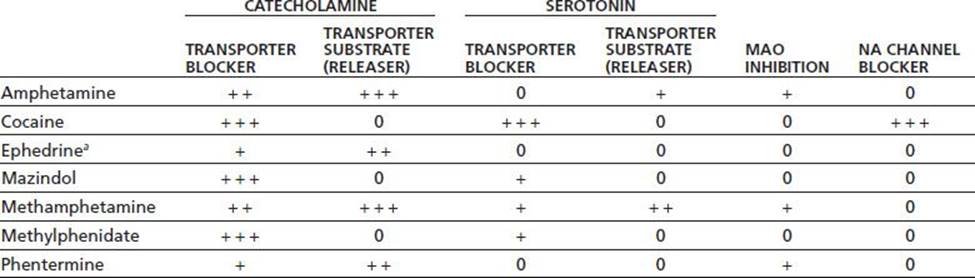
aAlso a direct agonist at adrenergic (norepinephrine) receptors.
MAO, monoamine oxidase; 0, no effect; +, marginal effect; + +, substantial effect; + + +, predominant effect.
Based on data from Rothman RB, Baumann MH, Dersch CM, et al. Amphetamine-type central nervous system stimulants release norepinephrine more potently than they release dopamine and serotonin. Synapse 2001;39:32–41 (256); Howell LL, Kimmel HL. Monoamine transporters and psychostimulant addiction. Biochem Pharmacol 2008;75:196–217 (219).
Several lines of evidence from animal studies show that increased synaptic dopamine activity in the mesocorticolimbic reward circuit mediates the behavioral effects of stimulants (138,219). In rats, the magnitude of locomotor activation produced by methamphetamine and other stimulants is positively correlated with extracellular concentrations of dopamine in the nucleus accumbens (227). Fluctuations in extracellular dopamine and neuronal firing in the nucleus accumbens parallel cocaine self-administration (237). The potency of cocaine analogs and other stimulants for being self-administered or producing cocaine-like discriminative stimuli is highly correlated with their affinity for and speed of binding to the dopamine transporter (238), but not with their binding to other MATs or receptors (239). Conversely, lesions of dopamine neurons in the reward circuit (but not other brain regions) reduce cocaine self-administration (240). Mice genetically engineered to express functional dopamine transporters without a cocaine binding site do not show reinforcing or other behavioral effects of cocaine (241–243). Knockout mice lacking any dopamine transporters fail to reliably self-administer cocaine, while displaying normal food-maintained behavior (244).
Dopamine D1 and D2/D3 receptors appear to play reciprocal roles in the behavioral effects of stimulants (226). Blockade of D1 receptors in regions of the brain reward circuit (e.g., the shell of the nucleus accumbens or VTA) reduces the rewarding effects of cocaine or amphetamine in the rat, as does stimulation of D3 receptors (245–247). Knockout mice that lack the D1receptor do not self-administer cocaine (248), whereas D3 knockout mice show enhanced responses to cocaine or amphetamine (249). In vivo calcium imaging studies, carried out in transgenic mice expressing fluorescent proteins to label defined cell types, show that psychomotor stimulant effects of cocaine are accompanied by rapid activation of D1 receptors on striatal spiny neurons, followed by slower more persistent deactivation of D2 receptors in the same region (250).
Evidence from human brain imaging studies using PET or SPECT is largely consistent with an important role for dopamine in the acute psychological effects of stimulants. The acute positive psychological response (euphoria or “high”) to cocaine or methylphenidate correlates in time course and intensity with drug concentration in the brain, with dopamine transporter occupancy (in the case of cocaine) (225), and with extracellular dopamine release in the striatum (as measured by ligand displacement from dopamine receptors) (225,233). Exposure to cocaine-associated cues is also associated with dopamine release in the striatum; the degree of release is correlated with cocaine craving (225). Blockade of more than half the dopamine transporters is needed to reduce cocaine self-administration in animals (239) or reduce the subjective effects in humans.
Some clinical evidence does not support a role for dopamine activity in stimulant effects. For example, patients with schizophrenia taking first-generation antipsychotics (which are potent dopamine D2 receptor antagonists) at doses that control their schizophrenic symptoms still experience the psychoactive effects of cocaine and frequently abuse it (251). Experimental attempts to block the acute psychological effects of cocaine or amphetamine with antipsychotic medication or by blocking dopamine and norepinephrine synthesis with the tyrosine hydroxylase inhibitor alpha-methyl-p-tyrosine have not been successful (252–254). The failure of antipsychotics to block effects of cocaine could be due to lack of D1 receptor antagonism by these medications or the inability of subjects to tolerate sufficient doses of medication to influence cocaine’s effects.
Postmortem studies of the human brain suggest that cocaine abusers have decreased dopamine levels in the frontal cortex (228), normal levels of dopamine receptor binding (229), decreased VMAT transporter in striatum (230), and decreased transporter protein and messenger RNA levels (159,231,232). In vivo human studies using PET show that cocaine users have decreased dopamine D2 receptor binding in the striatum and frontal cortex, which may persist for months of abstinence, but normal levels of dopamine transporter binding (225,233). Cocaine-addicted subjects also display blunted dopamine release in response to amphetamine challenge, suggesting a presynaptic dopamine deficiency (234). In contrast, methamphetamine abusers have increased D1 receptors in the nucleus accumbens (235) and decreased dopamine transporter density in the nucleus accumbens, striatum, and prefrontal cortex (236). Reductions in dopamine transporter number in the brains of methamphetamine users could reflect neurotoxic loss of dopamine nerve terminals.
Norepinephrine
Cocaine, amphetamines, methylphenidate, phentermine, and ephedrine enhance norepinephrine neurotransmission by acting at norepinephrine transporters (see Table 10-4), but the importance of norepinephrine in mediating behavioral effects of cocaine is not well understood. Intravenous cocaine increases plasma norepinephrine and epinephrine concentrations within minutes of injection, probably due to blockade of norepinephrine transporters on peripheral sympathetic nerve terminals (178). There is a significant positive correlation between potency of norepinephrine release (measured in vitro) and the oral stimulant dose that produces stimulant-like subjective effects in humans, suggesting a role for nor-epinephrine in the psychological effects of stimulants (255). Chronic cocaine exposure increases norepinephrine transporter function in the monkey and human brain (240,256).
Evidence supports a modulatory role for specific nor-epinephrine receptor subtypes in the effects of cocaine and other stimulants. Blockade of alpha-1 adrenergic receptors attenuates locomotor effects of stimulants in rats (257) and blunts the subjective effects of cocaine in human drug users (258). Activation of alpha-2 adrenergic receptors with clonidine reduces stress-induced reinstatement of extinguished cocaine seeking in rats (259) and drug craving in abstinent cocaine-dependent human subjects (260). The therapeutic effects of alpha-2 agonists in cocaine addiction are most likely related to activation of presynaptic autore-ceptors on norepinephrine cells, which serve to dampen norepinephrine cell firing and transmitter release.
Serotonin
Most stimulant drugs exhibit lower potency at serotonin transporters than at catecholamine transporters (see Table 10-4). Cocaine is an exception, as it blocks uptake at transporters for serotonin, dopamine, and norepinephrine with comparable potency. Acute cocaine administration increases extracellular serotonin concentrations in the nucleus accumbens and VTA and reduces firing of serotonin neurons in the dorsal raphe (261). The latter action probably is mediated by negative feedback from stimulation of 5-HT1A autoreceptors (262).
The role of serotonin in stimulant reward in animals is unclear. Knockout mice lacking the serotonin transporter still find cocaine rewarding (self-administration, conditioned place preference), whereas double knockout mice lacking both the dopamine and serotonin transporters do not (261). Knockout mice lacking both the norepinephrine and serotonin transporters show increased sensitivity to cocaine reward (261). These findings suggest a permissive, but not obligatory, role for the serotonin transporter in cocaine reward.
Determining the importance of serotonin receptors in mediating effects of cocaine is complicated by the presence of more than a dozen receptor subtypes, which can differentially influence cocaine-induced behavior (261–263). Activation of the 5-HT1A, 5-HT1B, 5-HT2A, or 5-HT3 receptors enhances the locomotor and rewarding actions of cocaine, whereas activation of 5-HT2Creceptors reduces the effects of cocaine and other stimulants. 5-HT2A antagonists and 5-HT2C agonists exert similar inhibitory modulation of cocaine’s effects. The 5-HT2A antagonist M100907 and 5-HT2C agonist Ro60-0175 attenuate reinstatement of extinguished cocaine-seeking behavior produced by priming injections of cocaine or cue exposure (264). These same drugs inhibit the premature responding produced by cocaine and amphetamine in the 5-choice serial reaction test, a measure of impulsive action (265). Microinjection studies reveal that 5-HT2A receptors in the VTA and 5-HT2C receptors in the prefrontal cortex could be involved with the effects of serotonergic receptor drugs on cocaine-induced behaviors (266). Human studies using nonselective serotonin manipulations provide an inconsistent picture of the influence of serotonin on cocaine reward. Enhancement of synaptic serotonin activity with selective serotonin reuptake inhibitors, activation of serotonin receptors with a partial agonist, or depletion of serotonin levels (via a tryptophan-free diet) all are reported to reduce the acute subjective effects (“high,” craving) of cocaine (267,268). Neuroendocrine challenge studies in cocaine-dependent human subjects show that hormonal responses to serotonin releasers (fenfluramine) and serotonin receptor agonists (mCPP) are blunted during withdrawal (269,270). These findings suggest that chronic cocaine use engenders deficits in serotonergic transmission, which is consistent with symptoms of depression and negative affect experienced by withdrawn cocaine-addicted subjects (271). The clinical availability of receptor-selective agonists and antagonists will aid in determining the role of serotonin in stimulant reward.
Endogenous Opiates
Stimulants do not directly interact with opiate receptors but do influence endogenous opiate (endorphin, enkephalin) systems in the brain. In rats, single doses of cocaine or amphetamine increase extracellular endorphin levels in the nucleus accumbens and enkephalin and dynorphin mRNA levels in striatum (272). The mechanism is indirect, via other neurotransmitters, especially dopamine, that influence endogenous opiate release.
Repeated cocaine administration, especially in an intermittent binge pattern, increases brain mu and kappa opiate receptor binding in rodents, with no change in delta opiate receptors (272). Human cocaine users show increased mu opiate receptor binding in some brain regions with PET scanning, and this increased binding correlates with self-reported cocaine craving (273). Postmortem brains from fatal cocaine overdose victims show increased kappa opiate receptor binding in limbic areas (274).
Animal studies suggest that brain kappa opiate systems have an influence on cocaine effects. In general, activation of endogenous kappa opiate receptor systems (such as by administration of the endogenous ligand dynorphin) reduces behavioral and neuropharmacologic effects of stimulants (275).
Glutamate
The acute administration of cocaine or amphetamine increases glutamate release in the VTA, nucleus accumbens, dorsal striatum, ventral pallidum, septum, and cerebellum (276). Low doses of cocaine enhance glutamate-evoked neuronal firing and have variable effects on the different subtypes of glutamate receptors. Several glutamate receptor subtypes appear to play an important role in cocaine reinforcement. Blockade of N-methyl-D-aspartate receptors in the nucleus accumbens reduces cocaine reinforcement, as does reduction of mGluR5 receptor activity. Indirect reduction of glutamate activity by stimulating presynaptic mGluR2 receptors also reduces cocaine reinforcement, whereas reduction of mGluR2 activity enhances reinforcement.
A growing body of evidence from rat studies suggests that chronic treatment with noncontingent or self-administered cocaine produces changes in nucleus accumbens glutamate transmission, which persist for weeks after cessation of cocaine exposure (277). For instance, chronic cocaine treatment is accompanied by a marked decrease in nonsynaptic extracellular glutamate levels, due to a reduction in cysteine–glutamate exchange. Cocaine-induced decreases in accumbens glutamate levels may be involved in drug-seeking behavior because treatment with the prodrug N-acetylcysteine restores extracellular glutamate to normal levels and attenuates reinstatement of extinguished cocaine-seeking behavior (278). Withdrawal from chronic cocaine decreases membrane excitability in GABA-containing spiny neurons, which in turn induces a persistent up-regulation of AMPA-type glutamate receptors on these cells (279). Up-regulation of AMPA receptors renders spiny neurons more receptive to glutamate inputs from the cortex and other regions. Enhanced glutamate responsiveness in mesolimbic circuits could underlie stronger responding to drug-associated cues (280).
Acetylcholine
Cocaine and methamphetamine block neuronal nicotinic acetylcholine (ACh) receptors; cocaine also blocks muscarinic ACh receptors in the brain and on cardiac myocytes (281,282). Cocaine, amphetamine, and methamphetamine cause ACh release in several brain regions, including the striatum, nucleus accumbens, medial thalamus, and interpeduncular nucleus (282–284). Chronic cocaine exposure appears to cause down-regulation of brain cholinergic systems, reflected in decreased choline acetyltransferase activity and decreased nicotinic receptors. In contrast, chronic methamphetamine exposure appears to result in increased nicotinic receptor density (281).
Cholinergic receptors may play a role in cocaine reward. Rodents with reduced muscarinic receptor activity show decreased cocaine self-administration and conditioned place preference (285,286). Nicotinic receptor blockade has variable effects, depending on the receptor subtype and brain region (287). Enhancing cholinergic activity by inhibiting acetylcholinesterase (the enzyme that breaks down ACh) reduces the behavioral effects of cocaine but has no effect on those of methamphetamine (288,289).
Other Actions
Some stimulants have additional neuropharmacologic actions (see 10-4). Amphetamines and phentermine inhibit monoamine oxidase, which also would increase catecholamine activity. This action probably is not significant at the drug concentrations achieved with typical therapeutic or abused doses (290). Cocaine is unique in also blocking voltage-gated membrane sodium ion channels. This action accounts for its effect as a local anesthetic and may contribute to cardiac arrhythmias.
Signal Transduction
When monoamine neurotransmitters such as dopamine activate their membrane receptors on the nerve cell surface, they trigger a cascade of intracellular chemical events (291). The neurotransmitter receptors are coupled to G-proteins, which regulate adenylyl cyclase activity to alter levels of cyclic 3',5'-adenosine monophosphate (cAMP), an intracellular “second messenger.” Cyclic AMP, in turn, regulates the activity of protein kinases, phospholipases, and other intracellular enzymes. These enzymes regulate various intracellular processes, including the activity of transcription factors that regulate gene transcription by binding to specific DNA sequences in the regulatory regions of genes (see further: Gene Expression). Stimulants activate several signaling pathways in neurons of the brain reward circuit, including cAMP, extracellular signal-regulated kinase, mitogen-activated protein kinase, and phosphoinositide 3-kinase, as well as altering expression of proteins that regulate G protein signaling. Direct manipulation of steps in these pathways can modify stimulant-induced behavior (292,293). Changes to these pathways from chronic exposure to stimulants may mediate tolerance and sensitization (see further: Neuroadaptation).
Gene Expression
Acute administration of stimulants (such as cocaine, amphetamine, and methylphenidate) to rodents promptly activates several “immediate early” genes in the brain, such as cAMP response element–binding protein (CREB), c-fos, zif268, and c-jun, probably via activation of dopamine receptors (294). The protein products of these genes are nuclear transcription factors that regulate gene expression. Repeated administration of stimulants results in a long-lasting blunting of the gene activation effect in many brain regions. Chronic stimulant administration leads to accumulation of some transcription factors, which may mediate the development of sensitization (see further: Neuroadaptation).
In animal studies, acute or chronic stimulant administration results in changes in expression of a variety of genes in many brain regions related to addiction, including genes involved in neuronal growth, cytoskeletal structure, synaptic plasticity, and receptors and signal transduction (295,296). Human postmortem studies of chronic cocaine users do not always find the same changes. Genes significantly up-regulated in human studies include cocaine- and amphetamine-related transcript, CREB, and several glutamate receptor subunits, whereas several myelin-related genes were down-regulated.
Neuroadaptation
Repeated exposure to stimulants results in two distinct neu-roadaptations: sensitization (increased drug response) and tolerance (decreased drug response) (298,299).
Behavioral sensitization has two temporally distinct phases: initiation or induction and expression. A combination of environmental and pharmacologic factors influences both phases. Sensitization may be influenced by circadian rhythm (300) and by the animal’s prior drug experience in the environment in which the drug is administered (so-called context-specific or “conditioned” sensitization). Behavioral sensitization to stimulants is due, in part, to increased activity in glutamatergic pyramidal neurons in the medial prefrontal cortex, which project to the nucleus accumbens and VTA (301). This increased excitatory input makes the dopaminergic neurons in these regions more responsive to stimulation.
Kindling is a process by which low-intensity, intermittent electrical or chemical stimulation of neurons results in a progressive increase in cellular response to subsequent stimulation. Kindling has been considered the neurophysiologic process mediating the sensitization that occurs after repeated stimulant administration and may play a role in cocaine-induced seizures (302).
Behavioral sensitization to stimulants has been suggested as a mechanism for drug craving and relapse (303) and for stimulant-induced psychosis (304). Neither has been directly demonstrated in humans. Several retrospective evaluations of patients presenting with stimulant-induced psychosis found that psychotic symptoms were more severe than during prior episodes of use or were elicited at lower doses that previously had not caused such symptoms (305). This pattern is consistent with sensitization (i.e., an enhanced response to the drug after prior exposure).
Attempts to demonstrate sensitization prospectively in humans have yielded inconsistent results (306). Studies using intravenous, intranasal, or oral cocaine in experienced cocaine users failed to show sensitization after one to several prior cocaine doses. However, one study using oral cocaine did find significant sensitization to cocaine’s cardiovascular effects but not to its psychological effects (307). Studies using oral amphetamines in subjects with little or no prior stimulant exposure have shown sensitization to psychological and physiologic (eye blink rate) responses after one to three prior oral amphetamine doses. This sensitized response was still present 1 year after the last amphetamine dose and included increased dopamine release in the ventral striatum (measured by PET scanning) (308). The failure to show sensitization in other studies may have been due to the substantial prior stimulant exposure of most subjects, resulting in sensitization already having occurred (i.e., a “ceiling” effect).
Tolerance
Tolerance to the behavioral (including reinforcing and appetite-suppressing) effects of stimulants has been demonstrated in animals after high-dose, frequent, or continuous administration (122,299,309,310). Tolerance to cardiovascular, hyperthermic, and lethal effects occurs even more quickly, sometimes after just one or two exposures (122,311). Stimulant tolerance dissipates after 7 to 14 days of no exposure (309–311). There is significant cross-tolerance among various stimulants, but not between stimulants and other drug groups, such as opiates (312).
Stimulant tolerance is pharmacodynamic (i.e., due to adaptive changes in the brain) rather than pharmacokinetic; chronic stimulant exposure does not cause substantial changes in stimulant pharmacokinetics (309). Development of behavioral tolerance is associated with attenuation of the dopamine response to stimulants, decreased activation of immediate early genes, and increased activity of the signal transduction pathway involving protein kinase A and the gene transcription factor CREB (309,313).
In clinical use, tolerance to stimulants develops differentially to various effects. Patients typically become tolerant to the appetite-suppressing effects within several weeks of daily use, whereas the beneficial effects in narcolepsy or ADHD remain over months of treatment (122). In human laboratory studies, tolerance to psychological, cardiovascular, and neuroendocrine effects of cocaine and amphetamines may develop after several doses (314–316). There is some evidence that tolerance to cardiovascular effects develops more quickly and completely than does tolerance to psychological effects (316,317). Rapid tolerance to adverse effects presumably allows binge users to take large cumulative doses of stimulants (318).
Neurotoxicity
In animal studies, transporter blockers like cocaine and methylphenidate do not produce appreciable neurotoxicity of dopamine or serotonin neurons (15,319). In contrast, high doses of transporter substrates like amphetamine or methamphetamine produce substantial dopamine and serotonin neurotoxicity, probably because these drugs enter nerve terminals and increase production of reactive oxygen species (320). Such neurotoxicity in human users has not been conclusively demonstrated. Chronic methamphetamine or methcathinone users have reduced density of dopamine transporters in the brain (measured by PET scanning) for at least 3 years after last use (321), but there is evidence of recovery after a year of abstinence (322). Thus, it is not clear whether the loss of transporters represents a reversible physiologic response (down-regulation) to chronic stimulant exposure or a true loss of dopamine nerve endings. Postmortem brain studies in methamphetamine abusers are more consistent with the former alternative. Their findings of decreased dopamine synthesis and dopamine transporter function, but intact vesicular transporter function, suggest that dopamine nerve terminals and the intracellular storage vesicles they contain remain intact (23).
Cocaine has caused DNA synthesis inhibition and cell death of brain neurons in rodents (323), but the clinical relevance of these findings is unknown.
CONCLUSIONS AND FUTURE RESEARCH DIRECTIONS
Future research at both preclinical and clinical levels is needed to increase understanding of the mechanisms of stimulant addiction and to develop more effective prevention and treatment approaches. Productive areas for preclinical research include the neurochemical mechanisms that underlie stimulant sensitization and tolerance, the role of nondopamine neurotransmitter systems (e.g., glutamate, neuropeptides) in modulating the dopamine reward circuit, the intracellular signaling cascades triggered by stimulant attachment to membrane-binding sites, and the role of various genes and gene transcription factors in stimulant action.
Productive areas for clinical research include the genetic, hormonal, psychological, and environmental factors that influence response to stimulants and the progression to stimulant addiction and the development of effective treatments for stimulant addiction and its medical consequences.
ACKNOWLEDGMENTS
The authors are supported by the Intramural Research Program, National Institutes of Health, National Institute on Drug Abuse.

BATH SALTS CONTAIN SYNTHETIC CATHINONES
In recent years, there has been a dramatic increase in the abuse of so-called “bath salt” products sold on the Internet and in retail shops (1). Such products are not used as bath additives; rather, they are purchased as legal alternatives to illicit drugs like cocaine, methamphetamine, and 3,4-methylenedioxymethamphetamine (MDMA). Bath salt powders are usually self-administered by insufflation (intranasally), but may be taken orally or injected intravenously. Clinical reports indicate that recreational doses of bath salts enhance mood and increase alertness, whereas higher doses can lead to dangerous neurologic and cardiovascular complications requiring emergency medical care (2,3). The psychoactive compounds in bath salts have been identified as synthetic derivatives of cathinone, an amphetamine-like stimulant found in the khat plant (3,4). Figure 10-4 illustrates the chemical structures of three popular bath salt constituents: 4-methylmeth-cathinone (mephedrone), 3,4-methylenedioxymethcathinone (methylone), and 3,4-methylenedioxypyrovalerone (MDPV). MDPV is the chief substance detected in blood and urine from patients hospitalized for bath salt overdose in the United States (3,4), while mephedrone is more commonly associated with adverse clinical outcomes in Europe. (5). Owing to public health risk, the governments of many countries—including the United States—have made these synthetic cathinones illegal (6,7). In response, a new wave of cathinone derivatives has appeared in the marketplace to replace those drugs now subject to regulatory control (4).
SYNTHETIC CATHINONES TARGET MONOAMINE TRANSPORTERS
Despite the widespread use of bath salts, there is a paucity of information about their mechanisms of action and pharmacologic effects. Available evidence shows that synthetic cathinones interact with plasma membrane transporter proteins (8–10). Specifically, mephedrone and methylone act as substrates of transporters for nor-epinephrine, dopamine, and serotonin, thereby stimulating nonexocytotic release of these neurotransmitters (8). Mephedrone is about twice as potent as methylone as a transporter substrate. In vivo microdialysis studies in rats confirm that administration of mephedrone or methylone, at doses similar to those used by humans (0.3 to 3.0 mg/kg), increases extracellular levels of dopamine and serotonin in the brain. The neurochemical effects of mephedrone and methylone resemble those produced by MDMA (8,11). Less is known about the pharmacology of MDPV, but the structurally related compound, pyrovalerone, is a potent blocker of dopamine and norepinephrine uptake (12). The fact that synthetic cathinones stimulate dopamine transmission predicts high abuse liability. Mephedrone (0.24 mg per infusion) is readily self-administered intravenously by rats (12), but reinforcing effects of other synthetic cathinones are unexplored. Little is known about the pharmacokinetics and metabolism of synthetic cathinones, or the consequences of chronic drug dosing.

FIGURE 10-4 Chemical structures of synthetic cathinones and related compounds.
TOXICITY AND ADVERSE EFFECTS
Serotonin transporter substrates like MDMA can produce sustained deficits in brain serotonin neurons of laboratory animals, so mephedrone and methylone could have similar actions. Binge administration of either drug to single-housed rats (3 or 10 mg/kg, sc, 3 doses) has no long-lasting effects on brain tissue monoamines (8), while administration of higher doses of mephedrone to group-housed rats (10 or 25 mg/kg, sc, 4 doses) produces persistent depletion of brain serotonin (9). Patients coming to medical attention with bath salt intoxication display agitation, combative behavior, psychosis, tachycardia, and hyperthermia (1–3). Health care workers should be cognizant that patients presenting with this constellation of symptoms may have taken bath salts. Treatment is primarily supportive, with benzodiazepines for agitation and excessive sympathetic stimulation and aggressive cooling for severe hyperthermia (2,3). At the present time, synthetic cathinones are not detected by routine toxicology screens, and new cost-effective screening methods are just becoming available; this situation often precludes verification of bath salt exposure. Given the emergence of new synthetic cathinones with unknown pharmacology (4), it seems likely that emergency departments will continue to encounter patients suffering from adverse effects of synthetic cathinone use.
REFERENCES
1.Prosser JM, Nelson LS. The toxicology of bath salts: a review of synthetic cathinones. J Med Toxicol 2012;8(1):33–42.
2.Ross EA, Watson M, Goldberger B. “Bath salts” intoxication. N Engl J Med 2011;365(10):967–968.
3.Spiller HA, Ryan ML, Weston RG, et al. Clinical experience with and analytical confirmation of “bath salts and “legal highs” (synthetic cathinones) in the United States. Clin Toxicol (Phila)2011;49(6):499–505.
4.Shanks KG, Dahn T, Behonick G, et al. Analysis of first and second generation legal highs for synthetic cannabinoids and synthetic stimulants by ultra-performance liquid chromatography and time of flight mass spectrometry. J Anal Toxicol 2012;36(6):360–371.
5.James D, Adams RD, Spears R, et al. Clinical characteristics of mephedrone toxicity reported to the U.K. National Poisons Information Service. Emerg Med J 2011;28(8):686–689.
6.Drug Enforcement Administration. Schedules of controlled substances: temporary placement of three synthetic cathinones in Schedule I. Final Order. Fed Regist 2011;76(204): 65371–65375.
7.Schifano F, Albanese A, Fergus S, roneet al. Mephed (4-methylmethcathinone; ‘meow meow’): chemical, pharma cological and clinical issues. Psychopharmacology (Berl)2011;214(3):593–602.
8.Baumann MH, Ayestas MA Jr, Partilla JS, et al. The designer methcathinone analogs, mephedrone and methylone, are substrates for monoamine transporters in brain tissue. Neuropsychopharmacology 2012;37(5):1192–1203.
9.Hadlock GC, Webb KM, McFadden LM, et al. 4-Methylmethcathinone (mephedrone): neuropharmacological effects of a designer stimulant of abuse. J Pharmacol Exp Ther2011;339(2):530–536.
10.Martinez-Clemente J, Escubedo E, Pubill D, et al. Interaction of mephedrone with dopamine and serotonin targets in rats. Eur Neuropsychopharmacol 2012;22(3):231–236.
11.Kehr J, Ichinose F, Yoshitake S, et al. Mephedrone, compared with MDMA (ecstasy) and amphetamine, rapidly increases both dopamine and 5-HT levels in nucleus accumbens of awake rats. Br J Pharmacol 2011;164(8):1949–1958.
12.Meltzer PC, Butler D, Deschamps JR, et al. 1-(4-Methylphenyl)-2-pyrrolidin-1-yl-pentan-1-one (Pyrovalerone) analogues: a promising class of monoamine uptake inhibitors. J Med Chem2006;49(4):1420–1432.
REFERENCES
1.Volkow ND, Fowler JS, Logan J, et al. Effects of modafinil on dopamine and dopamine transporters in male human brain: clinical implications. JAMA 2009;301:1148–1154.
1a.Moore JM, Casale JF. In-depth chromatographic analyses of illicit cocaine and its precursor, coca leaves. J Chromatogr 1994;674: 165–205.
2.Fowler JS, Volkow ND, Wang G-J, et al. [11]Cocaine: PET studies of cocaine pharmacokinetics, dopamine transporter availability and dopamine transporter occupancy. Nucl Med Biol2001;28: 561–572.
3.United Nations Office on Drugs and Crime. World Drug Report 2013. United Nations publication E.13.XI.6. Vienna, Austria: Author, 2013.
4.Bono JP. Criminalistics—introduction to controlled substances. In: Karch SB, ed. Drug abuse handbook. Boca Raton, FL: CRC Press, 1998:1–75.
5.Hatsukami DK, Fischman MW. Crack cocaine and cocaine hydrochloride: are the differences myth or reality? JAMA 1996;276(19):1580–1588.
6.Karch SB. The pathology of drug abuse, 2nd ed. Boca Raton, FL: CRC Press, 1996.
7.Snyder CA, Wood RW, Graefe JF, et al. “Crack smoke” is a respirable aerosol of cocaine base. Pharmacol Biochem Behav 1988;29(1):93–95.
8.Shesser R, Jotte R, Olshaker J. The contribution of impurities to the acute morbidity of illegal drug use. Am J Emerg Med 1991;9:336–342.
9.Larocque A, Hoffman RS. Levamisole in cocaine: unexpected news from an old acquaintance. Clin Toxicol 2012;50:231–241.
10.Richardson WH III, Slone CM, Michels JE. Herbal drugs of abuse: an emerging problem. Emerg Med Clin North Am 2007;25:435–457.
11.Yanovski SZ, Yanovski JA. Drug therapy: obesity. N Engl J Med 2002;346:591–602.
12.Haller CA, Benowitz NL. Adverse cardiovascular and central nervous system events associated with dietary supplements containing ephedra alkaloids. N Engl J Med 2000;343:1833–1838.
13.Bruce-Chwatt RM. Intoxication with Qaat, Catha edulis L. J Forens Legal Med 2010;17:232–235.
14.al’Absi M, et al. Effects of chronic khat use on cardiovascular, adrenocortical, and psychological responses to stress in men and women. Am J Addict 2013;22:99–107.
15.Fleckenstein AE, Gibb JW, Hanson GR. Differential effects of stimulants on monoaminergic transporters: pharmacological consequences and implications for neurotoxicity. Eur J Pharmacol 2000;406:1–13.
16.Faraone SV. Stimulant therapy in the management of ADHD: mixed amphetamine salts (extended release). Expert Opin Pharmacother 2007;8:2127–2134.
17.Parasrampuria DA, Schoedel KA, Schuller R, et al. Assessment of pharmacokinetics and pharmacodynamic effects related to abuse potential of a unique oral osmotic-controlled extended-release methylphenidate formulation in humans. J Clin Pharmacol 2007;47:1476–1488.
18.Arnold LE, Lindsay RL, Lopez FA, et al. Treating attention-deficit/ hyperactivity disorder with a stimulant transdermal patch: the clinical art. Pediatrics 2007;120:1100–1106.
19.Wigal SB, et al. An update on lisdexamfetamine dimesylate for the treatment of attention deficit hyperactivity disorder. Expert Opin Pharmacother 2013;14:137–145.
20.Faraone SV. Lisdexamfetamine dimesylate: the first long-acting prodrug stimulant treatment for attention deficit/hyperactivity disorder. Expert Opin Pharmacother 2008;9:1565–1574.
21.Gorelick DA. The rate hypothesis and agonist substitution approaches to cocaine abuse treatment. Adv Pharmacol 1998;42:995–997.
22.Baselt RC. Disposition of toxic drugs and chemicals in man, 7th ed. Foster City, CA: Chemical Toxicology Institute, 2004.
23.Cho AK, Melega WP. Patterns of methamphetamine abuse and their consequences. J Addict Dis 2002;21:21–34.
24.Ellenhorn MJ, Schonwald S, Ordog G, et al. Ellenhorn’s medical toxicology: diagnosis and treatment of human poisoning, 2nd ed. Baltimore, MD: Williams & Wilkins, 1997.
25.Ding Y-S, Fowler JS, Volkow ND, et al. Chiral drugs: comparison of the pharmacokinetics of [11C]d-threo and l-threo-methylphenidate in the human and baboon brain. Psychopharmacology 1997;131:71–78.
26.Baumann MH, Partilla JS, Lehner KR. Psychoactive “bath salts”: not so soothing. Eur J Pharmacol 2013;698:1–5.
27.Harper SJ, Jones NS. Cocaine: what role does it have in current ENT practice? A review of the current literature. J Laryngol Otol 2006;120:808–811.
28.Pliszka S. Practice parameter for the assessment and treatment of children and adolescents with attention-deficit/hyperactivity disorder. J Am Acad Child Adolesc Psychiatry2007;46:894–921.
29.Harpin VA. Medication options when treating children and adolescents with ADHD: interpreting the NICE guidance 2006. Arch Dis Child Educ Pract Ed 2008;93:58–65.
30.Nutt DJ, Fone K, Asherson P, et al. Evidence-based guidelines for management of attention-deficit/hyperactivity disorder in adolescents in transition to adult services and in adults: recommendations from the British Association for Psychopharmacology. J Psychopharmacol 2007;21:10–41.
31.Tcheremissine OV, Salazar JO. Pharmacotherapy of adult attention deficit/hyperactivity disorder: review of evidence-based practices and future directions. Expert Opin Pharmacother2008;9:1299–1310.
32.Peterson K, McDonagh MS, Fu R. Comparative benefits and harms of competing medications for adults with attention-deficit hyperactivity disorder: a systematic review and indirect comparison meta-analysis. Psychopharmacology (Berl) 2008;197:1–11.
33.Banerjee D, Vitiello MV, Grunstein RR. Pharmacotherapy for excessive daytime sleepiness. Sleep Med Rev 2004;8:339–354.
34.Morgenthaler TI, Kapur VK, Brown T, et al. Practice parameters for the treatment of narcolepsy and other hypersomnias of central origin. Sleep 2007;30:1705–1711.
35.Greenway FL, Caruso MK. Safety of obesity drugs. Expert Opin Drug Saf 2005;4:1083–1095.
36.Mancini MC, Halpern A. Pharmacological treatment of obesity. Arq Bras Endocrinol Metabol 2006;50:377–389.
37.Homsi J, Walsh D, Nelson KA. Psychostimulants in supportive care. Support Care Cancer 2000;8:385–397.
38.Masand PS, Tesar GE. Use of stimulants in the medically ill. Psychiatr Clin North Am 1996;19:515–547.
39.Candy M, Jones L, Williams R, et al. Psychostimulants for depression. Cochrane Database Syst Rev 2008;CD006722.
40.Glenn MB. Methylphenidate for cognitive and behavioral dysfunction after traumatic brain injury. J Head Trauma Rehab 1998;13(5):87–90.
41.DeBattista C. Augmentation and combination strategies for depression. J Psychopharmacol 2006;20:11–18.
42.Martinsson L, Hardemark H, Eksborg S. Amphetamines for improving recovery after stroke. Cochrane Database Syst Rev 2007;CD002090.
43.Martinez-Raga J, et al. Risk of serious cardiovascular problems with medications for attention-deficit hyperactivity disorder. CNS Drugs 2013;27:15–30.
44.Humphreys KL, et al. Stimulant medication and substance use outcomes: A meta-analysis. JAMA Psychiatry 2013;70:740–749.
45.Svetlov SI, Kobeissy FH, Gold MS. Performance enhancing, nonprescription use of Ritalin: a comparison with amphetamines and cocaine. J Addict Dis 2007;26:1–6.
46.Wilens TE, Adler LA, Adams J, et al. Misuse and diversion of stimulants prescribed for ADHD: a systematic review of the literature. J Am Acad Child Adolesc Psychiatry 2008;47:21–31.
47.Blanco C, Alderson D, Ogburn E, et al. Changes in the prevalence of non-medical prescription drug use and drug use disorders in the United States: 1991–1992 and 2001–2002. Drug Alcohol Depend2007;90:252–260.
48.United States Department of Defense. 2005 Department of Defense survey of health related behaviors among active duty military personnel. Arlington, VA: Author, 2006.
49.McDuff DR, Baron D. Substance use in athletics: a sports psychiatry perspective. Clin Sports Med 2005;24:885–888.
50.Avois L, Robinson N, Saudan C, et al. Central nervous system stimulants and sport practice. Br J Sports Med 2006;40(Suppl 1): i16–i20.
51.Jones G. Caffeine and other sympathomimetic stimulants: modes of action and effects on sports performance. Essays Biochem 2008;44:109–123.
52.Docherty JR. Pharmacology of stimulants prohibited by the World Anti-Doping Agency (WADA). Br J Pharmacol 2008;154: 606–622.
53.Anthony JC, Warner LA, Kessler RC. Comparative epidemiology of dependence on tobacco, alcohol, controlled substances, and inhalants: basic findings from the National Comorbidity Survey. Exp Clin Psychopharmacol 1994;2:244–268.
54.Woody GE, Cottler LB, Cacciola J. Severity of dependence: data from the DSM-IV field trials. Addiction 1993;88:1573–1579.
55.Gorelick DA. Progression of dependence in male cocaine addicts. Am J Drug Alcohol Abuse 1992;18:13–19.
56.Gossop M, Griffiths P, Powis B, et al. Cocaine: Patterns of use, route of administration, and severity of dependence. Br J Psychiatry 1994;164:660–664.
57.Tinsley JA, Watkins DD. Over-the-counter stimulants: abuse and addiction. Mayo Clin Proc 1998;73:977–982.
58.Kendler KS, Myers J, Prescott CA. Specificity of genetic and environmental risk factors for symptoms of cannabis, cocaine, alcohol, caffeine, and nicotine dependence. Arch Gen Psychiatry 2007;64:1313–1320.
59.Agrawal A, Lynskey MT. Are there genetic influences on addiction: evidence from family, adoption and twin studies. Addiction 2008;103:1069–1081.
60.Uhl GR, Drgon T, Johnson C, et al. “Higher order” addiction molecular genetics: convergent data from genome-wide association in humans and mice. Biochem Pharmacol 2008;75:98–111.
61.Volkow ND, Fowler JS, Wang G-J. Imaging studies on the role of dopamine in cocaine reinforcement and addiction in humans. J Psychopharmacol 1999;13:337–345.
62.Nelson RA, Boyd SJ, Ziegelstein RC, et al. Effect of rate of administration on subjective and physiological effects of intravenous cocaine in humans. Drug Alcohol Depend 2006;82:19–24.
63.Levin FR, Hess JM, Gorelick DA, et al. Patterns of cocaine use among cocaine-dependent outpatients. Am J Addict 1993;2(2):109–115.
64.Myers MG, Rohsenow DJ, Monti PM, et al. Patterns of cocaine use among individuals in substance abuse treatment. Am J Drug Alcohol Abuse 1995;21(2):223–231.
65.United States Bureau of Justice Statistics. Substance dependence, abuse, and treatment of jail inmates, 2002. Report NCJ 209588. Washington, DC: Author, 2005.
66.Giannini AJ, Miller NS, Loiselle RH, et al. Cocaine-associated violence and relationship to route of administration. J Subst Abuse Treat 1993;10:67–69.
67.Licata A, Taylor S, Berman M, et al. Effects of cocaine on human aggression. Pharmacol Biochem Behav 1993;45:549–552.
68.Miller NS, Gold MS, Mahler JC. Violent behaviors associated with cocaine use: possible pharmacological mechanisms. Int J Addict 1991;26(10):1077–1088.
69.Tang Y-L, Kranzler HR, Gelernter J, et al. Transient cocaine-associated behavioral symptoms rated with a new instrument, the Scale for Assessment of Positive Symptoms for Cocaine-induced Psychosis (SAPS-CIP). Am J Addict 2009;18:339–345.
70.Fukushima A. Criminal responsibility in amphetamine psychosis. Jpn J Psychiatry Neurol 1994;48(Suppl):1–4.
71.Burillo-Putze G, et al. Liquid cocaine body packers. Clin Toxicol 2012;50:522–524.
72.Leri F, et al. Understanding polydrug use: review of heroin and cocaine co-use. Addict 2003;98:7–22.
73.Kreek MJ. Opiate and cocaine addictions: challenge for pharmacotherapies. Pharmacol Biochem Behav 1997;57:551–569.
74.Foltin RW, Fischman MW. Effects of methadone or buprenorphine maintenance on the subjective and reinforcing effects of intravenous cocaine in humans. J Pharmacol Exp Ther1996;278:1153–1164.
75.Gorelick DA, Simmons MS, Carriero N, et al. Characteristics of smoked drug use among cocaine smokers. Am J Addict 1997;6:237–245.
76.Karch SB. A brief history of cocaine, 2nd ed. Boca Raton, FL: CRC Press, 2006.
77.Montoya ID, Chilcoat HD. Epidemiology of coca derivatives use in the Andean Region: A tale of five countries. Subst Use Misuse 1996;31:1227–1240.
78.Anthony JC, Helzer JE. Epidemiology of drug dependence. In: Tsuang MT, Tohen M, Zahner GEP, eds. Textbook in psychiatric epidemiology. New York: Wiley-Liss, 1995:361–406.
79.Substance Abuse and Mental Health Services Administration. Results from the 2011 National Survey on Drug Use and Health: Summary of National Findings. NSDUH Series H-44, DHHS Publication No. SMA 12-4713. Rockville, MD: Substance Abuse and Mental Health Services Administration, 2012.
80.American Psychiatric Association. Diagnostic and statistical manual of mental disorders (text rev.) (DSM-IV-TR), 4th ed. Washington, DC: American Psychiatric Press, 2000.
81.Degenhardt L, Chiu WT, Sampson N, et al. Epidemiological patterns of extra-medical drug use in the United States: evidence from the National Comorbidity Survey Replication, 2001–2003. Drug Alcohol Depend 2007;90:210–223.
82.Degenhardt L, Chiu WT, Sampson N, et al. Toward a global view of alcohol, tobacco, cannabis, and cocaine use: findings from the WHO World Mental Health Surveys. PLoS Med2008;5:e141.
83.Kandel DB, Huang FY, Davies M. Comorbidity between patterns of substance use dependence and psychiatric syndromes. Drug Alcohol Depend 2001;64:233–241.
84.Maxwell JC, Rutkowski BA. The prevalence of methamphetamine and amphetamine abuse in North America: a review of the indicators, 1992–2007. Drug Alcohol Rev 2008;27:229–235.
85.Substance Abuse and Mental Health Services Administration. Drug Abuse Warning Network, 2011: National Estimates of Drug Related Emergency Department Visits. DAWN Series D-39, DHHS Publication No. (SMA) 13-4760. Rockville, MD: Author, 2013.
86.Calcaterra S, Binswanger IA. National trends in psychostimulant-related deaths: 1999–2009. Substance Abuse 2013;34:129–136.
87.Substance Abuse and Mental Health Services Administration, Center for Behavioral Health Statistics and Quality. Treatment Episode Data Set (TEDS): 2000-2010. State Admissions to Substance Abuse Treatment Services, DASIS Series: S-63, DHHS Publication No. SMA-12-4729. Rockville, MD: Author, 2012.
88.Cone EJ, Tsadik A, Oyler J, et al. Cocaine metabolism and urinary excretion after different routes of administration. Ther Drug Monit 1998;20:556–560.
89.Telang FW, Volkow ND, Levy A, et al. Distribution of tracer levels of cocaine in the human brain as assessed with averaged [11C]cocaine images. Synapse 1999;31:290–296.
90.Volkow ND, Wang G-J, Fowler JS, et al. Cocaine uptake is decreased in the brain of detoxified cocaine abusers. Neuropsychopharmacology 1996;14(3):159–168.
91.Jenkins AJ, Cone EJ. Pharmacokinetics: drug absorption, distribution, and elimination. In: Karch SB, ed. Drug abuse handbook. Boca Raton, FL: CRC Press, 1998:151–201.
92.Jackson GF, Saady JJ, Poklis A. Urinary excretion of benzoylecgonine following ingestion of health Inca tea. Forens Sci Int 1991;49:57–64.
93.Kavanagh KT, Maijub AG, Brown JR. Passive exposure to cocaine in medical personnel and its effect on urine drug screening tests. Otolaryngol Head Neck Surg 1992;107:363–366.
94.Cone EJ, Yousefnejad D, Hillsgrove MJ, et al. Passive inhalation of cocaine. J Anal Toxicol 1995;19:399–411.
95.Le SD, Taylor RW, Vidal D, et al. Occupational exposure to cocaine involving crime lab personnel. J Forens Sci 1992;37(4):959–968.
96.Mott SH, Packer RJ, Soldin SJ. Neurologic manifestations of cocaine exposure in childhood. Pediatrics 1994;93(4):557–560.
97.Mirchandani HG, Mirchandani IH, Hellman F, et al. Passive inhalation of free-base cocaine (‘crack’) smoke by infants. Arch Pathol Lab Med 1991;115:494–498.
98.Bruns AD, Zieske LA, Jacobs AJ. Analysis of the cocaine metabolite in the urine of patients and physicians during clinical use. Otolaryngol Head Neck Surg 1994;111:722–726.
99.Verstraete AG. Detection times of drugs of abuse in blood, urine, and oral fluid. Ther Drug Monit 2004;26:200–205.
100.Musshoff F, Driever F, Lachenmeier K, et al. Results of hair analyses for drugs of abuse and comparison with self-reports and urine tests. Foren Sci Int 2006;156:118–123.
101.Boumba VA, Ziavrou KS, Vougiouklakis T. Hair as a biological indicator of drug use, drug abuse or chronic exposure to environmental toxicants. Int J Toxicol 2006;25:143–163.
102.Moore C, Coulter C, Crompton K. Determination of cocaine, benzoylecgonine, cocaethylene and norcocaine in human hair using solid-phase extraction and liquid chromatography with tandem mass spectrometric detection. J Chromatogr B Analyt Technol Biomed Life Sci 2007;859:208–212.
103.De Giovanni N, Fucci N. The current status of sweat testing for drugs of abuse: a review. Curr Med Chem 2013;20:545-561.
104.Pil K, Verstraete A. Current developments in drug testing in oral fluid. Ther Drug Monit 2008;30:196–202.
105.Cone EJ, Huestis MA. Interpretation of oral fluid tests for drugs of abuse. Ann N Y Acad Sci 2007;1098:51–103.
106.Samyn N, Laloup M, De BG. Bioanalytical procedures for determination of drugs of abuse in oral fluid. Anal Bioanal Chem 2007;388:1437–1453.
107.Gray T, Huestis M. Bioanalytical procedures for monitoring in utero drug exposure. Anal Bioanal Chem 2007;388:1455–1465.
108.American Academy of Pediatrics, Committee on Drugs. The transfer of drugs and other chemicals into human milk. Pediatrics 2001;108(3):776–789.
109.Caplan YH, Goldberger BA. Alternative specimens for workplace drug testing. J Anal Toxicol 2001;25(5):396–399.
110.Drummer OH. Postmortem toxicology of drugs of abuse. Forens Sci Int 2004;142:101–113.
111.Cone EJ. Pharmacokinetics and pharmacodynamics of cocaine. J Anal Toxicol 1995;19:459–478.
112.Warner A, Norman AB. Mechanisms of cocaine hydrolysis and metabolism in vitro and in vivo: a clarification. Ther Drug Monit 2000;22:266–270.
113.Maurer HH, Sauer C, Theobald DS. Toxicokinetics of drugs of abuse: current knowledge of the isozymes involved in the human metabolism of tetrahydrocannabinol, cocaine, heroin, morphine, and codeine. Ther Drug Monit 2006;28:447–453.
114.Wang J, Carpentier RG. Electrophysiologic in-vitro effects of cocaine and its metabolites. Int J Cardiol 1994;46:235–242.
115.Gorelick DA. Pharmacokinetic approaches to treatment of drug addiction. Expert Rev Clin Pharmacol 2008;1(2):277–290.
116.de la Torre R, Farre M, Navarro M, et al. Clinical pharmacokinetics of amfetamine and related substances: monitoring in conventional and non-conventional matrices. Clin Pharmacokinet 2004;43: 157–185.
117.Braithwaite RA, Jarvie DR, Minty PSB, et al. Screening for drugs of abuse: I. Opiates, amphetamines and cocaine. Ann Clin Biochem 1995;32:123–153.
118.Pennings EJ, Leccese AP, Wolff FA. Effects of concurrent use of alcohol and cocaine. Addiction 2002;97:773–783.
119.Baker J, Jatlow P, Pade P, et al. Acute cocaine responses following cocaethylene infusion. Am J Drug Alcohol Abuse 2007;33:619–625.
120.Harris DS, Everhart ET, Mendelson J, et al. The pharmacology of cocaethylene in humans following cocaine and ethanol administration. Drug Alcohol Depend 2003;72:169–182.
121.Romanelli F, Smith KM. Clinical effects and management of methamphetamine abuse. Pharmacotherapy 2006;26:1148–1156.
122.Angrist B. Clinical effects of central nervous system stimulants: a selective update. In: Engel J, Oreland L, Ingvar DH, et al., eds. Brain reward systems and abuse. New York: Raven Press, 1987:109–127.
123.Baselt RC. Drug effects on psychomotor performance. Foster City, CA: Biomedical Publications, 2001.
124.Heishman SJ. Effects of abused drugs on human performance: laboratory assessment. In: Karch SB, ed. Drug abuse handbook. Boca Raton, FL: CRC Press, 1998:206–235.
125.Hando J, Topp L, Hall W. Amphetamine-related harms and treatment preferences of regular amphetamine users in Sydney, Australia. Drug Alcohol Depend 1997;46:105–113.
126.Williamson S, Gossop M, Powis B, et al. Adverse effects of stimulant drugs in a community sample of drug users. Drug Alcohol Depend 1997;44:87–94.
127.Smith MJ, et al. Prevalence of psychotic symptoms in substance users: a comparison across substances. Compr Psychiatry 2009;50:245–250.
128.Fiorentini A, et al. Substance-induced psychoses: A critical review of the literature. Curr Drug Abuse Rev 2011;4:228–240.
129.Roncero C, et al. Prevalence and risk factors of psychotic symptoms in cocaine-dependent patients. Actas Esp Psiquiatr 2012;40:187–197.
130.Harris D, Batki SL. Stimulant psychosis: symptom profile and acute clinical course. Am J Addict 2000;9(1):28–37.
131.Medhus S, et al. A comparison of symptoms and drug use between patients with methamphetamine associated psychoses and patients diagnosed with schizophrenia in two acute psychiatric wards. Psychiatr Res 2013:206:17–21.
132.Featherstone RE, Kapur S, Fletcher PJ. The amphetamine-induced sensitized state as a model of schizophrenia. Prog Neuropsychopharmacol Biol Psychiatry 2007;31:1556–1571.
133.Mahoney JJ III, Kalechstein AD, De La GR, et al. Presence and persistence of psychotic symptoms in cocaine- versus methamphetamine-dependent participants. Am J Addict2008;17:83–98.
134.Fasano A, Barra A, Nicosia P, et al. Cocaine addiction: from habits to stereotypical-repetitive behaviors and punding. Drug Alcohol Depend 2008;96:178–182.
135.Laviola G, Adriani W, Terranova ML, et al. Psychobiological risk factors for vulnerability to psychostimulants in human adolescents and animal models. Neurosci Biobehav Rev1999;23:993–1010.
136.LeSage MG, Stafford D, Glowa JR. Preclinical research on cocaine self-administration: environmental determinants and their interaction with pharmacological treatment. Neurosci Biobehavl Rev1999;23:717–741.
137.Elmer GI, Miner LL, Pickens RW. The contribution of genetic factors in cocaine and other drug abuse. In: Higgins ST, Katz JL, eds. Cocaine abuse: behavior, pharmacology, and clinical applications. San Diego, CA: Academic Press, 1998:289–311.
138.O’Brien CP, Gardner EL. Critical assessment of how to study addiction and its treatment: human and non-human animal models. Pharmacol Ther 2005;108:18–58.
139.Blaho K, Logan B, Winbery S, et al. Blood cocaine and metabolite concentrations, clinical findings, and outcome of patients presenting to an ED. Am J Emerg Med 2000;18(5):593–598.
140.Stephens BG, Jentzen JM, Karch S, et al. Criteria for the interpretation of cocaine levels in human biological samples and their relation to the cause of death. Am J Forensic Med Pathol2004;25:1–10.
141.Rogers RD, Robbins TW. Investigating the neurocognitive deficits associated with chronic drug misuse. Curr Opin Neurobiol 2001;11:250–257.
142.Yucel M, Lubman DI, Solowij N, et al. Understanding drug addiction: a neuropsychological perspective. Aust N Z J Psychiatry 2007;41:957–968.
143.Lim KO, Wozniak JR, Mueller BA, et al. Brain macrostructural and microstructural abnormalities in cocaine dependence. Drug Alcohol Depend 2008;92:164–172.
144.Magalhaes AC. Functional magnetic resonance and spectroscopy in drug and substance abuse. Top Magn Reson Imaging 2005;16:247–251.
145.Flaum M, Schultz SK. When does amphetamine-induced psychosis become schizophrenia? Am J Psychiatry 1996;153(6):812–815.
146.Yui K, Ishiguro T, Goto K, et al. Factors affecting the development of spontaneous recurrence of methamphetamine psychosis. Acta Psychiatr Scand 1998;97:220–227.
147.Buffenstein A, Heaster J, Ko P. Chronic psychotic illness from methamphetamine. Am J Psychiatry 1999;156(4):662.
148.Satel SL, Seibyl JP, Charney DS. Prolonged cocaine psychosis implies underlying major psychopathology. J Clin Psychiatry 1991;52(8):349–350.
149.Coffey SF, Dansky BS, Carrigan MH, et al. Acute and protracted cocaine abstinence in an outpatient population: a prospective study of mood, sleep and withdrawal symptoms. Drug Alcohol Depend2000;59:277–286.
150.D’Souza MS, Markou A. Neural substrates of psychostimulant withdrawal-induced anhedonia. Curr Topics Behav Neurosci 2009;3:119–178.
151.Zorick T, et al. Withdrawal symptoms in abstinent methamphetamine-dependent subjects. Addict 2010;105:1809–1818.
152.Matuskey D, et al. A multistudy analysis of the effects of early cocaine abstinence on sleep. Drug Alcohol Depend 2011;115:62–66.
153.Satel SL, Price LH, Palumbo JM, et al. Clinical phenomenology and neurobiology of cocaine abstinence: a prospective inpatient study. Am J Psychiatry 1991;148:1712–1716.
154.Pilotte NS. Neurochemistry of cocaine withdrawal. Curr Opin Neurol 1997;10:534–538.
155.Sharpe LG, Pilotte NS, Shippenberg TS, et al. Autoradiographic evidence that prolonged withdrawal from intermittent cocaine reduces mu-opioid receptor expression in limbic regions of the rat brain. Synapse 2000;37:292–297.
156.Kuhar MJ, Pilotte NS. Neurochemical changes in cocaine withdrawal. Trends Pharmacol Sci 1996;17:260–264.
157.Wu JC, Bell K, Najafi A, et al. Decreasing striatal 6-FDOPA uptake with increasing duration of cocaine withdrawal. Neuropsychopharmacology 1997;17:402–409.
158.Malison RT, Best SE, van Dyck CH, et al. Elevated striatal dopamine transporters during acute cocaine abstinence as measured by [123β]beta-CIT SPECT. Am J Psychiatry1998;155:832–834.
159.Little KY, McLaughlin DP, Zhang L, et al. Brain dopamine transporter messenger RNA and binding sites in cocaine users. Arch Gen Psychiatry 1998;55:793–799.
160.Glennon RA. Arylalkylamine drugs of abuse: an overview of drug discrimination studies. Pharmacol Biochem Behav 1999;64(2):251–256.
161.Kollins SH, MacDonald EK, Rush CR. Assessing the abuse potential of methylphenidate in nonhuman and human subjects. A review. Pharmacol Biochem Behav 2001;68:611–627.
162.Preston KL, Walsh SL. Evaluating abuse liability: methods and predictive value. In: Karch SB, ed. Drug abuse handbook. Boca Raton, FL: CRC Press, 1998:276–306.
163.Bergman J, Katz JL. Behavioral pharmacology of cocaine and the determinants of abuse liability. In: Higgins ST, Katz JL, eds. Cocaine abuse: behavior, pharmacology, and clinical applications. San Diego, CA: Academic Press, 1998:51–79.
164.Bossert JM, Ghitza UE, Lu L, et al. Neurobiology of relapse to heroin and cocaine seeking: an update and clinical implications. Eur J Pharmacol 2005;526:36–50.
165.Heishman SJ, Henningfield JE. Discriminative stimulus effects of d-amphetamine, methylphenidate, and diazepam in humans. Psychopharmacology 1991;103:436–442.
166.Reid MS, Flammino F, Howard B, et al. Topographic imaging of quantitative EEG in response to smoked cocaine self-administration in humans. Neuropsychopharmacology2006;31:872–884.
167.Boghdadi MS, Henning RJ. Cocaine: pathophysiology and clinical toxicology. Heart Lung 1997;26:466–483.
168.Brust JCM. Acute neurologic complications of drug and alcohol abuse. Neurol Clin North Am 1998;16(2):503–519.
169.Neiman J, Haapaniemi HM, Hillbom M. Neurological complications of drug abuse: pathophysiological mechanisms. Eur J Neurol 2000;7:595–606.
170.O’Connor AD, Rusyniak DE, Bruno A. Cerebrovascular and cardiovascular complications of alcohol and sympathomimetic drug abuse. Med Clin North Am 2005;89:1343–1358.
171.Darke S, Kaye S, Duflou J. Comparative cardiac pathology among deaths due to cocaine toxicity, opioid toxicity and non-drug-related causes. Addiction 2006;101:1771–1777.
172.Treadwell SD, Robinson TG. Cocaine use and stroke. Postgrad Med J 2007;83:389–394.
173.Westover AN, McBride S, Haley RW. Stroke in young adults who abuse amphetamines or cocaine: a population-based study of hospitalized patients. Arch Gen Psychiatry 2007;64:495–502.
174.Kernan WN, Viscoli CM, Brass LM. et al. Phenylpropanolamine and the risk of hemorrhagic stroke. N Engl J Med 2000;343(25):1826–1832.
175.Warner EA. Cocaine abuse. Ann Intern Med 1993;119:226–235.
176.Zhornitsky S, et al. Extrapyramidal symptoms in substance abusers with and without schizophrenia and in nonabusing patients with schizophrenia. Mov Disord 2010;25:2188–2194.
177.Afonso L, Mohammad T, Thatai D. Crack whips the heart: a review of the cardiovascular toxicity of cocaine. Am J Cardiol 2007;100:1040–1043.
178.Sofuoglu M, Nelson D, Babb DA, et al. Intravenous cocaine increases plasma epinephrine and norepinephrine in humans. Pharmacol Biochem Behav 2001;68:455–459.
179.Volkow ND, Wang GJ, Fowler JS, et al. Cardiovascular effects of methylphenidate in humans are associated with increases of dopamine in brain and of epinephrine in plasma. Psychopharmacology (Berl)2003;166:264–270.
180.Vongpatanasin W, Mansour Y, Chavoshan B, et al. Cocaine stimulates the human cardiovascular system via a central mechanism of action. Circulation 1999;100:497–502.
181.Qureshi AI, Suri FK, Guterman LR, et al. Cocaine use and the likelihood of nonfatal myocardial infarction and stroke. Circulation 2001;103:502–506.
182.Phillips K, et al. Cocaine cardiotoxicity. A review of the pathophysiology, pathology, and treatment options. Am J Cardiovasc Drugs 2009;9:177–196.
183.Schwartz BG, et al. Cardiovascular effects of cocaine. Circulation 2010;122:2558–2569.
184.Yeo KK, Wijetunga M, Ito H, et al. The association of methamphetamine use and cardiomyopathy in young patients. Am J Med 2007;120:165–171.
185.Glauser J, Queen JR. An overview of non-cardiac cocaine toxicity. J Emerg Med 2007;32:181–186.
186.Tseng W, Sutter ME, Albertson TE. Stimulants and the lung: review of the literature. Clin Rev Allergy Immunol 2013, in press.
187.Wolff AJ, O’Donnell AE. Pulmonary effects of illicit drug use. Clin Chest Med 2004;25:203–216.
188.Restrepo CS, Carrillo JA, Martinez S, et al. Pulmonary complications from cocaine and cocaine-based substances: imaging manifestations. Radiographics 2007;27:941–956.
189.Wilson KC, Saukkonen JJ. Acute respiratory failure from abused substances. J Intensive Care Med 2004;19:183–193.
190.Gitman MD, Singhal PC. Cocaine-induced renal disease. Expert Opin Drug Saf 2004;3:441–448.
191.Bemanian S, Motallebi M, Nosrati SM. Cocaine-induced renal infarction: report of a case and review of the literature. BMC Nephrol 2005;6:10.
192.Jaffe JA, Kimmel PL. Chronic nephropathies of cocaine and heroin abuse: a critical review. Clin J Am Soc Nephrol 2006;1:655–667.
193.Hagan IG, Burney K. Radiology of recreational drug abuse. Radiographics 2007;27:919–940.
194.Marotta PJ, Roberts EA. Pemoline hepatotoxicity in children. J Pediatr 1998;132:894–897.
195.Mello NK, Mendelson JH. Cocaine’s effects on neuroendocrine systems: clinical and preclinical studies. Pharmacol Biochem Behav 1997;57(3):571–599.
196.Warner EA, Greene GS, Buchsbaum MS, et al. Diabetic ketoacidosis associated with cocaine use. Arch Intern Med 1998;158:1799–1802.
197.Nyenwe EA, Loganathan RS, Blum S, et al. Active use of cocaine: an independent risk factor for recurrent diabetic ketoacidosis in a city hospital. Endocr Pract 2007;13:22–29.
198.Doctora JS, Williams CW, Bennett CR, et al. Rhabdomyolysis in the acutely cocaine-intoxicated patient sustaining maxillofacial trauma: report of a case and review of the literature. J Oral Maxillofac Surg2003;61:964–967.
199.Goodger NM, Wang J, Pogrel MA. Palatal and nasal necrosis resulting from cocaine misuse. Br Dent J 2005;198:333–334.
200.Gordon AS, Moran DT, Jafek BW, et al. The effect of chronic cocaine abuse on human olfaction. Arch Otolaryngol Head Neck Surg 1990;116:1415–1418.
201.Hamner JE III, Villegas OL. The effect of coca leaf chewing on the buccal mucosa of Aymara and Quechua Indians in Bolivia. Oral Surg Oral Med Oral Pathol 1969;28:287–295.
202.Ghosheh FR, Ehlers JP, Ayres BD, et al. Corneal ulcers associated with aerosolized crack cocaine use. Cornea 2007;26:966–969.
203.Maloney WJ. The significance of cocaine use in dental practice. NY State Dent J 2010;76:36–39.
204.Hamamoto DT, Rhodus NL. Methamphetamine abuse and dentistry. Oral Dis 2009;15:27–37.
205.Graf J. Rheumatic manifestations of cocaine use. Curr Opin Rheumatol 2013;25:50–55.
206.Peikert T, Finkielman JD, Hummel AM, et al. Functional characterization of antineutrophil cytoplasmic antibodies in patients with cocaine-induced midline destructive lesions. Arthritis Rheum 2008;58:1546–1551.
207.Irwin MR, Olmos L, Wang M, et al. Cocaine dependence and acute cocaine induce decreases of monocyte proinflammatory cytokine expression across the diurnal period: autonomic mechanisms. J Pharmacol Exp Ther 2007;320:507–515.
208.Carey JC. Pharmacological effects on sexual function. Obstet Gynecol Clin North Am 2006;33:599–620.
209.Palha AP, Esteves M. Drugs of abuse and sexual functioning. Adv Psychosom Med 2008;29:131–149.
210.Fronczak CM, Kim ED, Barqawi AB. The insults of illicit drug use on male fertility. J Androl 2012;33:515–528.
211.Chiriboga CA. Fetal alcohol and drug effects. Neurologist 2003;9:267–279.
212.Kuczkowski KM. The effects of drug abuse on pregnancy. Curr Opin Obstet Gynecol 2007;19:578–585.
213.Phupong V, Darojn D. Amphetamine abuse in pregnancy: the impact on obstetric outcome. Arch Gynecol Obstet 2007;276:167–170.
214.Ackerman JP, et al. A review of the effects of prenatal cocaine exposure among school-aged children. Pediatrics 2010;125:554–565.
215.Buckingham-Howes S, et al. Systematic review of prenatal cocaine exposure and adolescent development. Pediatrics 2013;131:e1931–e1936.
216.Kristensen AS, et al. SLC6 neurotransmitter transporters: structure, function, and regulation. Pharmacol Rev, 2011;63:585–640.
217.Vizi ES, et al. Non-synaptic receptors and transporters involved in brain functions and targets of drug treatment. Br J Pharmacol 2010;160:785–809.
218.Sitte HH, Freissmuth M. The reverse operation of Na(+)/Cl(-)-coupled neurotransmitter transporters—why amphetamines take two to tango. J Neurochem 2010;112:340–355.
219.Howell LL, Kimmel HL. Monoamine transporters and psychostimulant addiction. Biochem Pharmacol 2008;75:196–217.
220.Rothman RB, et al. In vitro characterization of ephedrine-related stereoisomers at biogenic amine transporters and the recepterome reveals selective actions as norepinephrine transporter substrates. J Pharmacol Exp Ther 2003;307:136–145.
221.Feltenstein MW, See RE. The neurocircuitry of addiction: an overview. Br J Pharmacol 2008;154:261–274.
222.Sesack SR, Grace AA. Cortico-basal ganglia reward network: microcircuitry. Neuropsychopharmacology, 2010;35:27–47.
223.Gerfen CR, Surmeier DJ. Modulation of striatal projection systems by dopamine. Annu Rev Neurosci 2011;34:441–466.
224.Beuming T, Kniazeff J, Bergmann ML, et al. The binding sites for cocaine and dopamine in the dopamine transporter overlap. Nat Neurosci 2008;11:780–789.
225.Volkow ND, Fowler JS, Wang GJ, et al. Imaging dopamine’s role in drug abuse and addiction. Neuropharmacology 2009;56(Suppl 1): 3–8.
226.Goodman A. Neurobiology of addiction. An integrative review. Biochem Pharmacol 2008;75:26.
227.Zolkowska DJ, et al. Evidence for the involvement of dopamine transporters in behavioral stimulant effects of modafinil. J Pharmacol Exp Ther 2009;329:738–746.
228.Little KY, Patel UN, Clark TB, et al. Alteration of brain dopamine and serotonin levels in cocaine users: a preliminary report. Am J Psychiatry 1996;153(9):1216–1218.
229.Meador-Woodruff JH, Little KY, Damask SP, et al. Effects of cocaine on D3 and D4 expression in the human striatum. Biol Psychiatry 1995;38:263–266.
230.Little KY, Krolewski DM, Zhang L, et al. Loss of striatal vesicular monoamine transporter protein (VMAT2) in human cocaine users. Am J Psychiatry 2003;160:47–55.
231.Letchworth SR, Nader MA, Smith HR, et al. Progression of changes in dopamine transporter binding site density as a result of cocaine self-administration in rhesus monkeys. J Neurosci 2001;21:2799–2807.
232.Wilson JM, Levey AI, Bergeron C, et al. Striatal dopamine, dopamine transporter, and vesicular monoamine transporter in chronic cocaine users. Ann Neurol 1996;40:428–439.
233.Martinez D, Kim JH, Krystal J, et al. Imaging the neurochemistry of alcohol and substance abuse. Neuroimag Clin North Am 2007;17:539–555.
234.Martinez D, et al. Amphetamine-induced dopamine release: markedly blunted in cocaine dependence and predictive of the choice to self-administer cocaine. Am J Psychiatry2007;164:622–629.
235.Worsley JN, Moszczynska A, Falardeau P, et al. Dopamine D1 receptor protein is elevated in nucleus accumbens of human, chronic methamphetamine users. Mol Psychiatry2000;5:664–672.
236.Sekine Y, Iyo M, Ouchi Y, et al. Methamphetamine-related psychiatric symptoms and reduced brain dopamine transporters studied with PET. Am J Psychiatry 2001;158(8):1206–1214.
237.Anderson SM, Pierce RC. Cocaine-induced alterations in dopamine receptor signaling: implications for reinforcement and reinstatement. Pharmacol Ther 2005;106:389–403.
238.Wee S, Carroll FI, Woolverton WL. A reduced rate of in vivo dopamine transporter binding is associated with lower relative reinforcing efficacy of stimulants. Neuropsychopharmacology2006;31:351–362.
239.Kimmel HL, O’Connor JA, Carroll FI, Howell LL. Faster onset and dopamine transporter selectivity predict stimulant and reinforcing effects of cocaine analogs in squirrel monkeys. Pharmacol Biochem Behav 2007;86:45–54.
240.Weinshenker D, Schroeder JP. There and back again: a tale of norepinephrine and drug addiction. Neuropsychopharmacology 2007;32:1433–1451.
241.Chen R, Tilley MR, Wei H, et al. Abolished cocaine reward in mice with a cocaine-insensitive dopamine transporter. Proc Natl Acad Sci U S A 2006;103:9333–9338.
242.Tilley MR, Cagniard B, Zhuang X, et al. Cocaine reward and locomotion stimulation in mice with reduced dopamine transporter expression. BMC Neurosci 2007;8:42.
243.Tilley MR, Gu HH. Dopamine transporter inhibition is required for cocaine-induced stereotypy. Neuroreport 2008;19:1137–1140.
244.Thomsen M, Han FS, Uhl GR, Caine SB. Dramatically decreased cocaine self-administration in dopamine but not serotonin transporter knock-out mice. J Neurosci 2009;29:1087–1092.
245.Koob GF. The role of the striatopallidal and extended amygdala systems in drug addiction. Ann N Y Acad Sci 1999;877:445–460.
246.Pierre PJ, Vezina P. D1 dopamine receptor blockade prevents the facilitation of amphetamine self-administration induced by prior exposure to the drug. Psychopharmacology1998;138:159–166.
247.Ranaldi R, Wise RA. Blockade of D1 dopamine receptors in the ventral tegmental area decreases cocaine reward: possible role for dendritically released dopamine. J Neurosci2001;21(15): 5841–5846.
248.Caine SB, Thomsen M, Gabriel KI, et al. Lack of self-administration of cocaine in dopamine D1 receptor knock-out mice. J Neurosci 2007;27:13140–13150.
249.Zhang J, Xu M. Toward a molecular understanding of psychostimulant actions using genetically engineered dopamine receptor knockout mice as model systems. J Addict Dis2001;20:7–18.
250.Luo Z, Volkow ND, Heintz N, et al. Acute cocaine induces fast activation of D1 receptor and progressive deactivation of D2 receptor striatal neurons: in vivo optical microprobe [Ca2+]i imaging. J Neurosci2011;31:13180–13190.
251.Buckley PF. Substance abuse in schizophrenia: a review. J Clin Psychiatry 1998;59:26–30.
252.Brauer LH, de Wit H. High dose pimozide does not block amphetamine-induced euphoria in normal volunteers. Pharmacol Biochem Behav 1997;56:265–272.
253.Kuhar MJ, Ritz MC, Boja JW. The dopamine hypothesis of the reinforcing properties of cocaine. Trends Neurosci 1991;14:299–302.
254.Stine SM, Krystal JH, Petrakis IL, et al. Effect of alpha-methylpara-tyrosine on response to cocaine challenge. Biol Psychiatry 1997;42:181–190.
255.Rothman RB, Baumann MH, Dersch CM, et al. Amphetamine-type central nervous system stimulants release norepinephrine more potently than they release dopamine and serotonin. Synapse2001;39:32–41.
256.Mash DC, Ouyang Q, Qin Y, et al. Norepinephrine transporter immunoblotting and radioligand binding in cocaine abusers. J Neurosci Methods 2005;143:79–85.
257.Drouin C, et al. Critical role of alpha1-adrenergic receptorsin acute and sensitized locomotor effects of D-amphetamine, cocaine, and GBR 12783: influence of preexposure conditions and pharmacological characteristics. Synapse 2002;43:51–61.
258.Newton TF, et al. Noradrenergic α1 receptor antagonist treatment attenuates positive subjective effects of cocaine in humans: a randomized trial. PLoS One 2012;7:e30854.
259.Erb S, et al. Alpha-2 adrenergic receptor agonists block stress-induced reinstatement of cocaine seeking. Neuropsychopharmacology 2000;23:138–150.
260.Jobes ML, et al. Clonidine blocks stress-induced craving in cocaine users. Psychopharmacology (Berl) 2011;218:83–88.
261.Filip M, Frankowska M, Zaniewska M, et al. The serotonergic system and its role in cocaine addiction. Pharmacol Rep 2005;57:685–700.
262.Muller CP, Carey RJ, Huston JP, et al. Serotonin and psychostimulant addiction: focus on 5-HT1A-receptors. Prog Neurobiol 2007;81:133–178.
263.Muller CP, Huston JP. Determining the region-specific contributions of 5-HT receptors to the psychostimulant effects of cocaine. Trends Pharmacol Sci 2006;27:105–112.
264.Filip M, et al. Behavioral evidence for the significance of serotoninergic (5-HT) receptors in cocaine addiction. Addict Biol 2010;15:227–249.
265.Fletcher PJ, et al. Impulsive action induced by amphetamine, cocaine and MK801 is reduced by 5-HT(2C) receptor stimulation and 5-HT(2A) receptor blockade. Neuropharmacology2011;61:468–477.
266.Bubar MJ, Cunningham KA. Prospects for serotonin 5-HT2R pharmacotherapy in psychostimulant abuse. Prog Brain Res 2008;172:319–346.
267.Buydens-Branchey L, Branchey M, Fergeson P, et al. Craving for cocaine in addicted users: Role of serotonergic mechanisms. Am J Addict 1997;6:65–73.
268.Walsh SL, Cunningham KA. Serotonergic mechanisms involved in the discriminative stimulus, reinforcing and subjective effects of cocaine. Psychopharmacology 1997;130:41–58.
269.Haney M, et al. Neuroendocrine effects of d-fenfluramine and bromocriptine following repeated smoked cocaine in humans. Drug Alcohol Depend 2001;64:63–73.
270.Patkar AA, et al. Relationship of prolactin response to meta-chlorophenylpiperazine with severity of drug use in cocaine dependence. Hum Psychopharmacol 2006;21:367–375.
271.Rothman RB, et al. Dual dopamine-5-HT releasers: potential treatment agents for cocaine addiction. Trends Pharmacol Sci 2006;27:612–618.
272.Unterwald EM. Regulation of opioid receptors by cocaine. Ann N Y Acad Sci 2001;937:74–92.
273.Gorelick DA, Kim YK, Bencherif B, et al. Imaging brain mu-opioid receptors in abstinent cocaine users: time course and relation to cocaine craving. Biol Psychiatry 2005;57:1573–1582.
274.Staley JK, Rothman RB, Rice KC, et al. κ2 Opioid receptors in limbic areas of the human brain are upregulated by cocaine in fatal overdose victims. J Neurosci 1997;17:8225–8233.
275.Shippenberg TS, Zapata A, Chefer VI. Dynorphin and the pathophysiology of drug addiction. Pharmacol Ther 2007;116: 306–321.
276.Gass JT, Olive MF. Glutamatergic substrates of drug addiction and alcoholism. Biochem Pharmacol 2008;75:218–265.
277.Wolf ME. The Bermuda Triangle of cocaine-induced neuroadaptations. Trends Neurosci 2010;33:391–398.
278.Kupchik YM, et al. The effect of N-acetylcysteine in the nucleus accumbens on neurotransmission and relapse to cocaine. Biol Psychiatry 2012;71:978–986.
279.Bowers MS, et al. AMPA receptor synaptic plasticity induced by psychostimulants: the past, present, and therapeutic future. Neuron 2010;67:11–24.
280.Wolf ME, Ferrario CR. AMPA receptor plasticity in the nucleus accumbens after repeated exposure to cocaine. Neurosci Biobehav Rev 2010;35:185–211.
281.Garcia-Rates S, Camarasa J, Escubedo E, et al. Methamphetamine and 3,4-methylenedioxymethamphetamine interact with central nicotinic receptors and induce their up-regulation. Toxicol Appl Pharmacol 2007;223:195–205.
282.Williams MJ, Adinoff B. The role of acetylcholine in cocaine addiction. Neuropsychopharmacology 2008;33:1779–1797.
283.Hussain RJ, Taraschenko OD, Glick SD. Effects of nicotine, methamphetamine and cocaine on extracellular levels of acetylcholine in the interpeduncular nucleus of rats. Neurosci Lett2008;440:270–274.
284.Rada P, Hernandez L, Hoebel BG. Feeding and systemic D-amphetamine increase extracellular acetylcholine in the medial thalamus: a possible reward enabling function. Neurosci Lett2007;416:184–187.
285.Carrigan KA, Dykstra LA. Behavioral effects of morphine and cocaine in M1 muscarinic acetylcholine receptor-deficient mice. Psychopharmacology (Berl) 2007;191:985–993.
286.Mark GP, Kinney AE, Grubb MC, et al. Injection of oxotremorine in nucleus accumbens shell reduces cocaine but not food self-administration in rats. Brain Res 2006;1123:51–59.
287.Zanetti L, Picciotto MR, Zoli M. Differential effects of nicotinic antagonists perfused into the nucleus accumbens or the ventral tegmental area on cocaine-induced dopamine release in the nucleus accumbens of mice. Psychopharmacology (Berl) 2007;190:189–199.
288.Takamatsu Y, Yamanishi Y, Hagino Y, et al. Differential effects of donepezil on methamphetamine and cocaine dependencies. Ann N Y Acad Sci 2006;1074:418–426.
289.Grasing K, He S, Yang Y. Dose-related effects of the acetylcholinesterase inhibitor tacrine on cocaine and food self-administration in rats. Psychopharmacology (Berl) 2008;196:133–142.
290.Rothman RB, Baumann MH. Neurochemical mechanisms of phentermine and fenfluramine: therapeutic and adverse effects. Drug Dev Res 2000;51:52–65.
291.McGinty JF, Shi XD, Schwendt M, et al. Regulation of psychostimulant-induced signaling and gene expression in the striatum. J Neurochem 2008;104:1440–1449.
292.Lu L, Koya E, Zhai H, et al. Role of ERK in cocaine addiction. Trends Neurosci 2006;29:695–703.
293.Stipanovich A, Valjent E, Matamales M, et al. A phosphatase cascade by which rewarding stimuli control nucleosomal response. Nature 2008;453:879–884.
294.Yano M, Steiner H. Methylphenidate and cocaine: the same effects on gene regulation? Trends Pharmacol Sci 2007;28:588–596.
295.Yuferov V, Nielsen D, Butelman E, et al. Microarray studies of psychostimulant-induced changes in gene expression. Addict Biol 2005;10:101–118.
296.Hemby SE. Assessment of genome and proteome profiles in cocaine abuse. Prog Brain Res 2006;158:173–195.
297.Kalivas PW. Neurobiology of cocaine addiction: implications for new pharmacotherapy. Am J Addict 2007;16:71–78.
298.Koob GF. Drug addiction: the yin and yang of hedonic homeostasis. Neuron 1996;16:893–896.
299.Schenk S, Partridge B. Sensitization and tolerance in psychostimulant self-administration. Pharmacol Biochem Behav 1997;57(3):543–550.
300.Gaytan O, Lewis C, Swann A, et al. Diurnal differences in amphetamine sensitization. Eur J Pharmacol 1999;374:1–9.
301.Steketee JD. Cortical mechanisms of cocaine sensitization. Crit Rev Neurobiol 2005;17:69–86.
302.Witkin JM, Levant B, Zapata A, et al. The dopamineD3/D2 Agonist R-(+)-trans-3,4a,10b-tetrahydro-4-propyl-2H,5H-[1]benzopyrano [4,3-b]-1,4-oxazin-9 -ol [(+)-PD-128,907] protects against acute and cocaine-kindled seizures in mice: further evidence for the involvement of D3 receptors. J Pharmacol Exp Ther 2008;326:930–938.
303.Kalivas PW, Pierce RC, Cornish J, et al. A role for sensitization in craving and relapse in cocaine addiction. J Psychopharmacol 1998;12(1):49–53.
304.Post RM, Weiss SRB. Stimulant-induced behavioral sensitization: a model for neuroleptic nonresponsiveness. In: Simon P, Soubrie P, Wildlocer D, eds. Animal models of psychiatric disorders. Basel, Switzerland: S Karger, 1988:52–60.
305.Ujike H, Sato M. Clinical features of sensitization to methamphetamine observed in patients with methamphetamine dependence and psychosis. Ann N Y Acad Sci 2004;1025:279–287.
306.Leyton M. Conditioned and sensitized responses to stimulant drugs in humans. Prog Neuropsychopharmacol Biol Psychiatry 2007;31:1601–1613.
307.Kollins SH, Rush CR. Sensitization to the cardiovascular but not subject-rated effects of oral cocaine in humans. Biol Psychiatry 2002;51(2):143–150.
308.Boileau I, Dagher A, Leyton M, et al. Modeling sensitization to stimulants in humans: an [11C]raclopride/positron emission tomography study in healthy men. Arch Gen Psychiatry2006;63:1386–1395.
309.Hammer RP Jr, Egilmez Y, Emmett-Oglesby MW. Neural mechanisms of tolerance to the effects of cocaine. Behav Brain Res 1997;84:225–239.
310.King GR, Xiong Z, Ellinwood EH Jr. Withdrawal from continuous cocaine administration: time dependent changes in accumbens 5-HT3 receptor function and behavioral tolerance. Psychopharmacology1999;142:352–359.
311.Tella SR, Schindler CW, Goldberg SR. Cardiovascular responses to cocaine self-administration: acute and chronic tolerance. Eur J Pharmacol 1999;383:57–68.
312.Woolverton WL, Weiss SRB. Tolerance and sensitization to cocaine: an integrated view. In: Higgins ST, Katz JL, eds. Cocaine abuse: behavior, pharmacology, and clinical applications. San Diego, CA: Academic Press, 1998:107–134.
313.Nestler EJ. Molecular neurobiology of addiction. Am J Addict 2001;10:201–217.
314.Comer SD, Hart CL, Ward AS, et al. Effects of repeated oral methamphetamine administration in humans. Psychopharmacology 2001;155:397–404.
315.Mendelson JH, Sholar M, Mello NK, et al. Cocaine tolerance: behavioral, cardiovascular, and neuroendocrine function in men. Neuropsychopharmacology 1998;18:263–271.
316.Ward AS, Haney M, Fischman MW, et al. Binge cocaine self-administration in humans: Intravenous cocaine. Psychopharmacology 1997;132:375–381.
317.Perez-Reyes M, White WR, McDonald SA, et al. Clinical effects of daily methamphetamine administration. Clin Neuropharmacol 1991;14(4):352–358.
318.Cho AK, Melega WP, Kuczenski R, et al. Relevance of pharmacokinetic parameters in animal models of methamphetamine abuse. Synapse 2001;39:161–166.
319.Yuan J, McCann U, Ricaurte G. Methylphenidate and brain dopamine neurotoxicity. Brain Res 1997;767:172–175.
320.Yamamoto BK, et al. Amphetamine toxicities: classical and emerging mechanisms. Ann N Y Acad Sci 2010;1187:101–121.
321.McCann UD, Wong DF, Yokoi F, et al. Reduced striatal dopamine transporter density in abstinent methamphetamine and methcathinone users: evidence from positron emission tomography studies with [11C]WIN-35,428. J Neurosci 1998;18(20):8417–8422.
322.Volkow ND, Chang L, Wang G-J, et al. Loss of dopamine transporters in methamphetamine abusers recovers with protracted abstinence. J Neurosci 2001;21(23):9414–9418.
323.Li J-H, Lin L-F. Genetic toxicology of abused drugs: a brief review. Mutagenesis 1998;13(6):557–565.