
Laura M. Juliano, PhD, Sergi Ferré, MD, PhD, and Roland R. Griffiths, PhD
CHAPTER OUTLINE
■ DRUGS IN THE CLASS
■ HISTORY
■ EPIDEMIOLOGY
■ SOURCES OF CAFFEINE
■ THERAPEUTIC USES
■ NEUROBIOLOGY
■ PHARMACOKINETICS
■ PHYSIOLOGIC EFFECTS
■ SUBJECTIVE EFFECTS
■ SLEEP AND PERFORMANCE EFFECTS
■ DISCRIMINATIVE STIMULUS EFFECTS
■ REINFORCING EFFECTS
■ CAFFEINE TOLERANCE
■ CAFFEINE INTOXICATION
■ CAFFEINE WITHDRAWAL
■ CAFFEINE USE DISORDER
■ GENETICS
■ EFFECTS ON PHYSICAL HEALTH
■ DRUG–DRUG INTERACTIONS
Presently, caffeine is the most widely used mood-altering drug in the world. In the United States, 87% of children and adults regularly consume foods and beverages containing caffeine (1). As a nonselective A1and A2A adenosine receptor antagonist and mild central nervous system stimulant, caffeine produces various physiologic and psychological effects. Caffeine is not highly associated with any life-threatening illnesses, and typical daily dietary doses can be consumed under many circumstances without incident. Moreover, caffeine has valuable therapeutic effects and may offer protective effects from some diseases (e.g., Parkinson disease). However, caffeine is not completely innocuous. It has the potential to produce clinically significant negative physiologic and psychological effects (e.g., anxiety), tolerance and withdrawal, and psychiatric disorders (e.g., caffeine intoxication, caffeine use disorder). Furthermore, its coadministration with some commonly used recreational and psychotherapeutic drugs can have important clinical implications. The ubiquitous use of caffeine and its integration in daily customs and routines (e.g., coffee break) may result in a lack of appreciation for the role that caffeine plays in one’s daily subjective experiences, thus making the recognition and treatment of caffeine-associated problems particularly challenging.
DRUGS IN THE CLASS
Caffeine is the common name for 1,3,7-trimethylxanthine (Fig. 11-1). More than 60 types of plants containing caffeine have been identified, including coffee, tea, cola, guarana, cacao, and yerba maté. Caffeine is a member of the methyl-xanthine class of alkaloids, which includes the structurally related dimethylxanthines, theophylline, and theobromine. Caffeine in its free base form is a bitter white powder that is moderately soluble in water (21.7 mg/mL) (2). Pharmaceutical preparations of caffeine include caffeine anhydrous, caffeine sodium benzoate, and caffeine citrate.
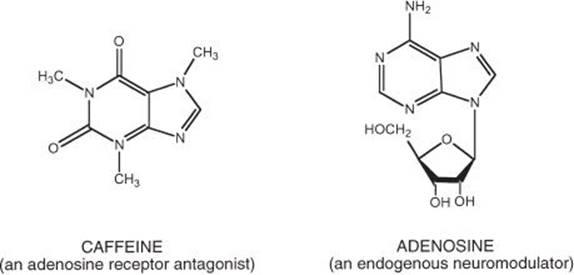
FIGURE 11-1 The chemical structure of caffeine. The chemical structure of caffeine (1,3,7-trimethylxanthine) and adenosine. Adenosine is an endogenous neuromodulator that has structural similarities to caffeine. Most of the physiologic effects of caffeine, including the central nervous system stimulant effects, are likely mediated through adenosine receptor antagonism.
HISTORY
Caffeine was first isolated from coffee and tea in the early 1800s, and its chemical structure was identified in 1875. Cultivation of tea in China, coffee in Ethiopia, and cacao pod in South America date back to time immemorial (3). Records of caffeine use date back at least 2,000 years for tea in China. With the development of worldwide trade in the 17th and 18th centuries, caffeinated foods and beverages rapidly spread from their original constrained geographic origins (4). In America, the protest of a British tax on tea became a symbolic focal point for revolution, resulting in the famous “Boston tea party” in 1773. After the Continental Congress passed a resolution against tea consumption, America was transformed from a predominately tea drinking land to one in which coffee was the caffeinated drink of choice (3,5). Presently, coffee is a major agricultural import of the United States, second only after oil in total value of all imports. In the late 1880s, entrepreneurs began selling carbonated beverages with caffeine, and the last century has seen a steady increase in caffeinated soft drink consumption. One of the first energy drinks, Red Bull, was introduced in Austria in 1987 and in the United States in 1997. Presently, energy drinks represent a multibillion dollar market with hundreds of different brands available to consumers (6). Liquid dietary supplements with very high concentrations of caffeine (e.g., 280 mg/2 oz) are also being mass marketed in the United States and elsewhere. Some countries ban the sale of energy drinks or strictly regulate their caffeine content and/or labeling because of concerns about negative health effects. However, the regulation of energy drinks in the United States has been heretofore quite lax (6). The increasing incidence of adverse events after consumption of energy drinks (7) and recent claims that energy drinks have contributed to sudden deaths in young people have led to public scrutiny and an ongoing FDA investigation on the safety of energy drinks (8).
EPIDEMIOLOGY
The most recent large-scale published epidemiologic data on caffeine consumption in the United States was collected nearly 15 years ago. Based on the Continuing Survey of Food Intakes by Individuals in 1994–1996 and 1998, it is estimated that 87% of the population in the United States 2 years and older regularly consume caffeine with an average daily consumption of about 193 mg (1). The highest consumption is among individuals aged 35 to 64 years (1). Mean daily intake of caffeine for adult caffeine consumers has been estimated to be about 280 mg in the United States, with higher intakes estimated for consumers in the United Kingdom and Denmark (9). In the United States, coffee and soft drinks are the major dietary sources of caffeine while energy drink consumption continues to sharply increase each year. More than half of the adult U.S. population consumes coffee every day. A recent survey of active duty U.S. Army soldiers found that 82% were regular caffeine consumers, consuming on average 347 mg/d. Coffee was the most common source of caffeine in general; however, younger soldiers consumed most of their caffeine from energy drinks (10). A 2010 study by the Centers for Disease Control involving a random sample of male Marine and Army platoons in Afghanistan reported that 45% consumed energy drinks on a daily basis with 14% consuming three or more daily (11).
There have been no large-scale epidemiologic surveys on caffeine-related psychiatric disorders. One random-digit telephone survey in Vermont found that 7% of current caffeine users had symptoms consistent with DSM-IV caffeine intoxication in the past year (12). Prior studies that have used ambiguous criteria and have focused on special populations (e.g., psychiatric patients, college students) have reported caffeine intoxication rates ranging from 2% to 19%. A large-scale twin study found that 29% reported having felt ill or shaky or jittery after consuming caffeinated beverages (13).
The Vermont-based random-digit telephone survey also assessed the incidence of caffeine withdrawal using DSM-IV research criteria (12). In that study, 44% of caffeine users reported having stopped or reduced caffeine use for at least 24 hours in the past year. Of those, 41% reported that they experienced one or more DSM-IV–defined caffeine withdrawal symptoms. Among individuals who attempted to permanently stop using caffeine, at least 71% reported experiencing DSM-IV–defined withdrawal symptoms, and 24% met criteria by reporting headache plus other symptoms that interfered with functioning.
This same study examined the prevalence of substance dependence applied to caffeine in the general population and found that 30% of caffeine consumers fulfilled DSM-IV diagnostic criteria in the past year (12). The most commonly endorsed symptom was desire or unsuccessful efforts to cut down or control use (56%).
SOURCES OF CAFFEINE
As shown in Table 11-1, sources of caffeine include beverages, foods, dietary supplements, and over-the-counter and prescription medications. Estimating caffeine exposure can be challenging because of the wide variety of products that contain caffeine, large differences in common serving sizes, and great variability in caffeine content across products of the same type. For example, a 12-oz cup of coffee may contain anywhere from 107 to 420 mg of caffeine. The U.S. Food and Drug Administration (FDA) limits the amount of caffeine contained in soft drinks to 0.02%, or 71.5 mg/12 oz. However, at this time, such limits do not apply to energy drinks, which can vary more than 10-fold in caffeine content across brands (e.g., 36 to 375 mg per can or bottle). In recent years, there has been widespread marketing of highly caffeinated dietary supplements (e.g., 5-Hour Energy), and manufacturers have begun to add caffeine to foods that have traditionally not contained caffeine (e.g., potato chips, jelly beans). Caffeinated beer, malt beverages, and hard liquors were available to consumers for a short while before the FDA banned the sale of these products in 2010 due to safety concerns (14). However, it is an increasingly common practice, especially among young people, to mix energy drinks with alcohol (e.g., Red Bull and vodka) (14).
TABLE 11-1 CAFFEINE CONTENT OF COMMON FOODS AND MEDICATIONS
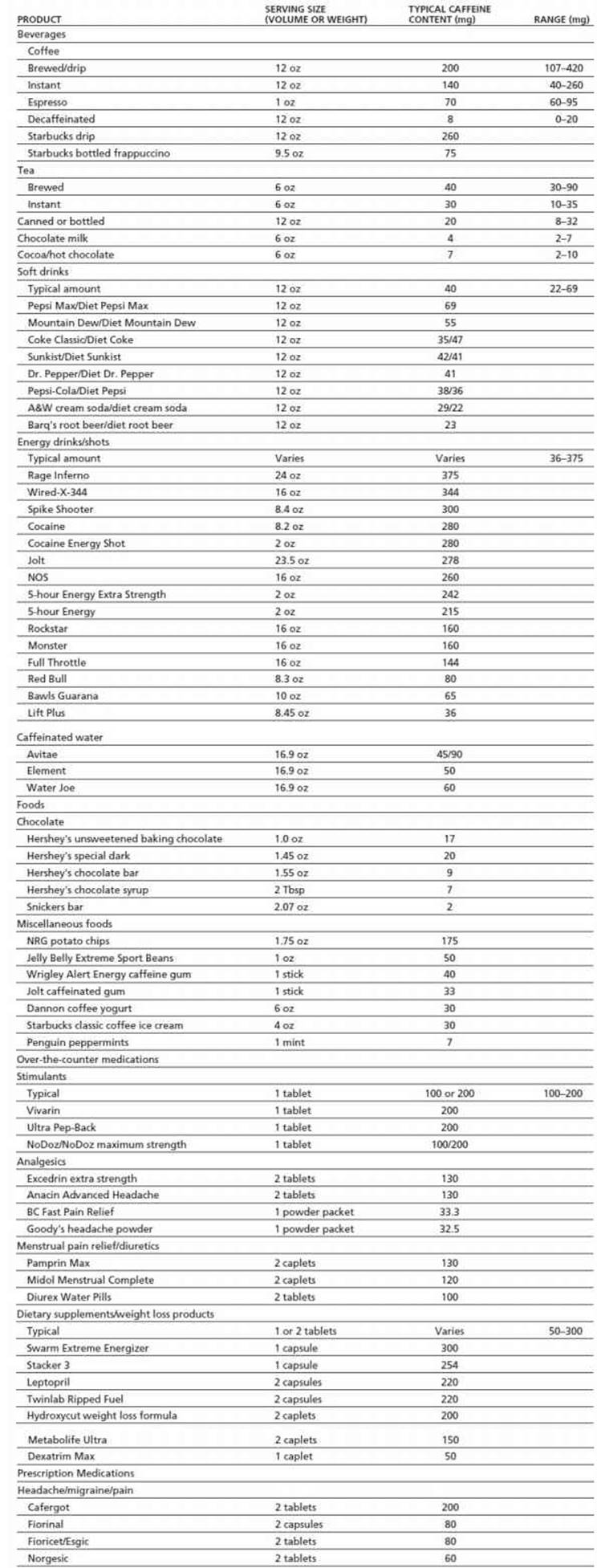
Caffeine values for all brand name products were obtained directly from product labels, the manufacturer’s Web site, or customer service department with the exception of 5-hour Energy that was obtained from Consumer Reports Magazine, December 2012.
Data from Barone JJ, Roberts HR. Caffeine consumption. Food Chem Toxicol 1996;34:119–129; McCusker RR, Fuehrlein B, Goldberger BA, et al. Caffeine content of decaffeinated coffee. J Anal Toxicol 2006;30:611–613; and McCusker RR, Goldberger BA, Cone EJ. Caffeine content of specialty coffees. J Anal Toxicol 2003;27:520–522.
THERAPEUTIC USES
As a mild central nervous system stimulant, caffeine is widely used to increase energy and prevent sleepiness. Because of its analgesic-enhancing effects, caffeine is found in the formulations of a wide range of over-the-counter and prescription analgesic products that are frequently used to treat various types of pain, including migraine (15). A recent Cochrane Review concluded that the addition of caffeine to pain medication increased the percentage of people having a significant analgesic effect by 5% to 10% (16). Not surprisingly, caffeine alone is the most effective treatment for caffeine withdrawal headache, with prophylactic caffeine administration recognized as an effective way to prevent postsurgical headaches in caffeine consumers (17,18). As a respiratory stimulant, caffeine is used to treat apnea in neonates and infants (19). Intravenous caffeine has also been administered before electroconvulsive therapy to lengthen seizure duration; however, its therapeutic merits are unclear (20). Caffeine has been used to treat postprandial hypotension, although its effectiveness has been questioned (21). Because of its lipolytic and thermogenic effects, caffeine is commonly used in weight loss preparations and nutritional supplements. Caffeine is also used to facilitate athletic performance because of its ergogenic effects, although meaningful enhancements may be limited to well-conditioned athletes (22).
NEUROBIOLOGY
The primary cellular site of action of caffeine is the adenosine receptor. Adenosine is an endogenous purine nucleoside found throughout the brain. It is formed from the breakdown of adenosine triphosphate (ATP) and modulates a variety of central and peripheral nervous system effects. Caffeine is structurally similar to adenosine (see Fig. 11-1). As a competitive A1 and A2A adenosine receptor antagonist, caffeine produces a variety of effects that are opposite to the effects of adenosine (e.g., central nervous stimulation, vasoconstriction).
More specifically, caffeine produces its motor and reinforcing effects by releasing the pre- and postsynaptic brakes that adenosine imposes on striatal dopaminergic neuro-transmission. At the presynaptic level, caffeine induces dopamine release by a glutamate-independent mechanism, by targeting adenosine A1 receptors localized in striatal dopaminergic terminals. Furthermore, caffeine induces dopamine release by a glutamate-dependent mechanism, by targeting A1 receptors that form heteromers with adenosine A2A receptors in striatal glutamatergic terminals. These pre-synaptic effects of caffeine are potentiated by postsynaptic effects, which depend on the existence of strong antagonistic adenosine–dopamine receptor–receptor interactions. These interactions depend on the ability of A1 and A2A receptors to form heteromers with dopamine D1 and D2 receptors, respectively. The effects of caffeine on sleep do not seem to be dopamine dependent and are related to the ability of adenosine to act as an endogenous sleep-promoting substance by acting on not only A1 and A2A receptors localized in the brainstem, basal forebrain, and hypothalamic areas but also A2A receptors localized in the ventral part of the striatum. These effects are discussed in greater detail in the following sections.
Adenosine A1 and A2A Receptor Antagonism
Among the four cloned adenosine receptors (A1, A2A, A2B, and A3 receptors), A1 and A2A receptors are the ones predominantly expressed in the brain. Caffeine is a nonselective adenosine receptor antagonist, with similar in vitro affinities for A1, A2A, and A2B receptors and with much lower affinity for A3 receptors (23,24). A1 and A2A receptors are the preferential targets for caffeine in the brain, because physiologic extracellular levels of adenosine are sufficient to occupy and, therefore, stimulate A1 and A2A receptors. On the other hand, A2B receptors have a lower affinity for adenosine, and they are only activated by high pathologic extracellular levels of adenosine (23). A1 receptors are widely expressed in the brain, including the striatum, whereas A2A receptors are highly concentrated in the striatum (23,25). The striatal localization of both receptors seems to underlie the motor-activating and reinforcing effects of caffeine (See Postsynaptic Mechanisms: Adenosine–Dopamine Receptor Interactions). On the other hand, A1receptors localized in the brainstem and basal forebrain and A2A receptors localized in the hypothalamus have been suggested to be involved in caffeine effects on sleep regulation.
There has been a long debate about the preferential involvement of A1 and A2A receptors in the psychostimulant effects of caffeine (26,27). By comparing both quantitative and qualitative aspects of the motor activity induced by caffeine and selective A1 and A2A receptor antagonists, recent studies have clearly shown that caffeine, when administered acutely, shows a profile of a nonselective adenosine receptor antagonist with preferential A1 receptor antagonism (28,29). Also, recent drug discrimination experiments support a key role of A1 receptors in the psychostimulant effects of acutely administered caffeine (24). Importantly, chronic exposure to caffeine differentially modifies its motor effects dependent on A1 and A2A receptor blockade. Thus, chronic exposure to caffeine in the drinking water of rats results in partial tolerance to the motor effects of an additional acute administration of caffeine and total cross-tolerance to the motor effects of an A1 but not an A2A receptor antagonist (29). This indicates that tolerance to the effects of A1 receptor blockade is mostly responsible for the tolerance to the motor-activating effects of caffeine and that the residual motor-activating effects of caffeine in tolerant individuals might be mostly because of A2A receptor blockade.
An important amount of experimental evidence supports a key role of dopamine in the psychostimulant effects of caffeine in animals and humans. For instance, dopamine depletion or blockade of dopamine receptors significantly impairs the motor and discriminative stimulus effects of caffeine (30,31). Most probably, the same basic dopamine-mediated mechanisms are involved in the motor-activating and reinforcing effects of caffeine, as happens with classical psychostimulants (32,33). The key to understanding these mechanisms of action is to appreciate how adenosine modulates dopaminergic neurotransmission in the brain.
The effects of caffeine on sleep regulation do not seem to be dopamine dependent, and they are related to its ability to antagonize the sleep-promoting effects of adenosine (34–37). Although previous results suggested that A1 receptors are involved in sleep regulation by inhibiting ascending cholinergic neurons of the basal forebrain (34,37), more recent studies, which include experiments with global and selective genetic blockade of A2A receptors in mice, indicate that A2A receptors play a crucial role in the sleep-promoting effects of adenosine and the arousal-enhancing effects of caffeine (35,36,38). Some of these A2Areceptors are probably localized in the ventrolateral preoptic area of the hypothalamus, and their stimulation promotes sleep by inducing gamma-aminobutyric acid (GABA) release in the histaminergic tuberomammillary nucleus, thereby inhibiting the histaminergic arousal system (35,36). Furthermore, A2Areceptors localized in the ventral part of the striatum (shell of the nucleus accumbens) also seem to be involved (38). This striatal area directly and indirectly connects with hypothalamic and mesencephalic nuclei of origin of several ascending arousal systems (38).
Adenosine is a key modulator of dopaminergic and glutamatergic neurotransmission in the striatum (39). Recent studies suggest that astroglia plays a fundamental role in the formation of extracellular adenosine, which can influence synaptic transmission. Astrocytes express glutamate receptors (mostly metabotropic) and ATP receptors that, when activated, induce astrocytes to release glutamate and ATP (40,41). Astroglial-released ATP is then converted to adenosine in the extracellular space by means of ectonucleotidases (42). Finally, there is an increasing amount of data suggesting the existence of a neurotransmitter-like formation of adenosine, a synaptic pool of adenosine. Adenosine can be produced from ATP coreleased with glutamate, which is also metabolized to adenosine by means of ectonucleotidases (25,39). GABAergic enkephalinergic and dynorphinergic medium-sized spiny neurons constitute more than 90% of the striatal neuronal population (43). In the striatum, A2A receptors are localized postsynaptically in the dendritic spines of enkephalinergic medium-sized spiny neurons, colocalized with D2receptors and presynaptically in glutamatergic terminals, colocalized with A1 receptors (25,39,44,45). In addition to the glutamatergic terminals, A1 receptors are localized in a fraction of dopaminergic nerve terminals (46) and, postsynaptically, in the dendritic spines of dynorphinergic medium spiny neurons, colocalized with D1 receptors (45). Antagonistic interactions between A2A and D2 receptors modulate the function of the enkephalinergic medium spiny neuron, and antagonistic interactions between A1and D1 receptors modulate the function of the dynorphinergic medium spiny neuron (47,48). This gives the explanation at the neuronal level of an important number of pharmacologic findings indicating a selective modulation of A1 and A2A receptor ligands on D1 and D2 receptor–mediated behavioral effects, respectively (30,45,49).
Postsynaptic Mechanisms: Adenosine–Dopamine Receptor Interactions
The molecular mechanisms responsible for the selective antagonistic A1–D1 and A2A–D2 receptor interactions have been found to involve allosteric interactions in A1–D1 and A2A–D2receptor heteromers (44,50). Thus, there is compelling evidence for the existence of A1–D1 and A2A–D2 receptor heteromers in artificial cell systems and in the striatum (44,50). In the A2A–D2 heteromer, the stimulation of the A2A receptor decreases the binding of dopamine to the D2 receptor (51). This intramembrane interaction controls neuronal excitability and, consequently, neuronal firing and neurotransmitter (GABA) release by the GABAergic enkephalinergic neuron (25,48,52,53). Furthermore, there is a reciprocal antagonistic A2A–D2 receptor interaction by which D2 receptor stimulation counteracts the effects induced by A2A receptor stimulation at the level of adenylyl cyclase and, consequently, at the level of protein phosphorylation and gene expression (54–56).
The allosteric interaction in the A2A–D2 heteromer seems to play a key role in the motor-activating effects of caffeine. In fact, this A2A–D2 receptor interaction has been given a lot of attention in the literature, more recently with the application of A2A receptor antagonists as an adjuvant therapy for levodopa in Parkinson disease (57). But, as mentioned previously, A1–D1 receptor interactions are also of significant functional and pharmacologic importance. Thus, A1 receptor antagonists selectively potentiate the motor- activating effects of D1 receptor–mediated motor activation in different animal models (47,58). Similar to what happens with the A2A–D2 receptor heteromers, A1 and D1 receptors antagonistically interact both allosterically and at the adenylyl cyclase level. However, in this case, the interactions are not reciprocal, and stimulation of A1 receptors inhibits both the binding of dopamine to the D1 receptor (59,60) and the D1receptor–mediated activation of cAMP–PKA signaling pathway and the expression of genes, such as c-fosand preprodynorphin (60,61).
Presynaptic Mechanisms: Modulation of Glutamate and Dopamine Release
Studies have repeatedly shown that A1 and A2A receptors exert opposite modulatory roles on extracellular levels of glutamate and dopamine in the striatum, with activation of A1 receptors inhibiting and activation of A2A receptors stimulating glutamate and dopamine release (26,27). More recently, it has been shown that systemic or striatal administration of caffeine or an A1, but not an A2A, receptor antagonist produces a significant increase in the extracellular concentrations of glutamate and dopamine in the ventral striatum, particularly in the most medial part, the medial shell of the nucleus accumbens (62,63). It was hypothesized that dopamine release mostly depended on glutamate release induced by blockade of A1 receptors localized in glutamatergic terminals and on stimulation of ionotropic glutamate receptors localized in dopaminergic terminals (63,64). Importantly, chronic administration of caffeine in the rat’s drinking water completely counteracted the effects of caffeine or an A1 receptor antagonist on dopamine and glutamate, whereas the effect of an A2A receptor antagonist was not modified (62). Thus, these biochemical changes are consistent with the studies on motor activity described previously (29), strongly suggesting an involvement of presynaptic mechanisms in the psychostimulant effects of caffeine. The ability of caffeine to release dopamine in the nucleus accumbens was questioned by one research group (65), but a recent study demonstrated the existence of sub-regional differences in the effect of A1 receptor blockade in different parts of the nucleus accumbens and other striatal areas, most probably related to subregional differences in the level of tonic activation by endogenous adenosine (46). Furthermore, glutamate-independent mechanisms were also found to be involved in A1 receptor blockade–mediated striatal dopamine release, which depended on A1 receptors localized in dopaminergic nerve terminals (46).
Dopamine release in the very medial striatal compartments seems to be involved in both motor-activating and reinforcing effects of psychostimulants (32). Therefore, the motor and reinforcing effects of caffeine most probably depend on the pre- and postsynaptic dopaminergic mechanisms mentioned previously (striatal dopamine release and adenosine–dopamine receptor–receptor interactions) taking place in the medial striatal compartments. At least two factors related to the dopamine-releasing effects of caffeine could explain its weaker reinforcing effects as compared with other psychostimulants: its specific subregional effects (46) and the development of tolerance (62).
Under chronic caffeine exposure, different factors might contribute to the predominant tolerance of the effects of A1 receptor blockade. Up-regulation of A1 receptors has been repeatedly demonstrated (29,66–68), but its significance as a mechanism involved in caffeine tolerance has been seriously questioned (69). Modifications in the function of A1–A2A receptor heteromers might play a key role in the development of caffeine tolerance. Thus, radioligand- binding experiments have shown that chronic treatment with caffeine causes an increase in the potency of A2A receptor agonist–mediated inhibition of A1 receptor agonist binding and a significant reduction in the affinity of the striatal A2A receptor for caffeine (70). An additional factor that might play a significant role in caffeine tolerance is the significant increase in plasma and extracellular concentrations of adenosine with chronic caffeine exposure (71). The higher adenosine levels and lower affinity of the A2A receptor for caffeine could allow endogenous adenosine to stimulate A2Areceptors even in the presence of caffeine, which would not reach enough concentration to compete with adenosine for binding A2A receptors. Under these conditions, A1 receptor signaling in the A1–A2Areceptor heteromer would be expected to be chronically turned down, because of its continuous blockade by caffeine and because of the strong A2A receptor–mediated inhibition of A1 receptor agonist binding. On the other hand, an additional administration of caffeine would be expected to produce a blockade of the residual A2A receptor signaling.
PHARMACOKINETICS
Absorption and Distribution
Caffeine is rapidly and completely absorbed after oral administration, with peak levels reached in 30 to 45 minutes (72). It is readily distributed throughout the body, with concentrations in blood correlating with those in saliva, breast milk, amniotic fluid, fetal tissue, semen, and the brain (73). Binding to plasma proteins is estimated to range between 10% and 35% (74). Saliva caffeine concentrations, which often exceed 75% of plasma concentrations, are used as a noninvasive alternative to serum monitoring.
Metabolism
Caffeine metabolism is complex, with more than 25 metabolites identified in humans (75). Caffeine is metabolized by the cytochrome P-450 liver enzyme system. In particular, the CYP1A2 isoenzyme demethylates caffeine to three biologically active dimethylxanthines: paraxanthine, theobromine, and theophylline, accounting for 80%, 10%, and 4% of caffeine metabolism, respectively (74). The large amounts of paraxanthine, coupled with the demonstration of similar sympathomimetic effects of paraxanthine and caffeine, suggest that paraxanthine needs to be considered in understanding the clinical pharmacology of caffeine (76).
Elimination
On average, caffeine half-life is 4 to 6 hours. However, there are wide individual differences in rates of caffeine elimination (74), which are due in large part to CPY1A2 genetic variation across individuals (77). An important implication of the central role of cytochrome P-450 liver enzymes in metabolizing caffeine is that drugs or conditions that affect this metabolic system significantly alter caffeine elimination. Caffeine’s half-life is prolonged with liver disease (74), presumably because of lower CYP1A2 activity (78). Although caffeine half-life does not differ between younger and older adults (79), caffeine half-life is markedly increased in premature and full-term newborns (half-life of 80 to 100 hours) whose liver enzyme capacity is not completely developed until about 6 months of age (80). Cigarette smoking, which induces liver enzymes, decreases caffeine half-life by as much as 50% (81). Numerous compounds have been shown to inhibit caffeine metabolism including oral contraceptives, cimetidine, some quinoline antibiotics (e.g., ciprofloxacin), fluvoxamine, and mexiletine (75,82). Caffeine half-life increases markedly during the end of pregnancy (83), which could increase the risk of caffeine toxicity among women who maintain high levels of caffeine use during pregnancy (84).
PHYSIOLOGIC EFFECTS
At moderate dietary dose levels, caffeine increases systolic and diastolic blood pressure (85). Caffeine tends to have no effect (86) or to reduce heart rate in humans (87). Caffeine constricts blood vessels in the head and neck. Caffeine stimulates gastric acid secretions and is a colonic stimulant, with caffeinated coffee producing colonic motor activity similar to that produced by a meal (88). It is a diuretic, increasing urine volume 30% or more for several hours after ingestion (89). Caffeine also increases detrusor pressure on the bladder of patients with complaints of urinary urgency and confirmed detrusor instability (90). Caffeine is a respiratory stimulant (91) and a bronchodilator at high doses (92). Caffeine is ergogenic across a variety of exercise situations, and in particular during prolonged exercise (93), with activity potentially mediated via multiple mechanisms, including effects on muscle contractility (94). Caffeine increases plasma epinephrine, norepinephrine, renin, and free fatty acids, particularly in nontolerant individuals (76,95,96). It also increases adrenocorticotropic hormone and cortisol (97–99). Caffeine increases insulin levels in healthy subjects (100) and increases postprandial glucose and insulin responses among patients with type 2 diabetes who are habitual coffee drinkers (100,101).
SUBJECTIVE EFFECTS
Human laboratory studies demonstrate that single low to moderate doses of caffeine typically produce a profile of positive subjective effects, including increased well-being, happiness, energy, arousal, alertness, and sociability (102). Positive effects are more likely to be observed in studies that require participants abstain from caffeine before testing and that administer a caffeine dose in the range of typical dietary consumption (e.g., 20 to 200 mg) (103). Physical dependence also increases the positive mood effects of caffeine, likely through suppression of low-grade withdrawal symptoms (104,105). However, positive mood effects occur among nonhabitual users and those maintained on a caffeine-free diet, as well as under conditions of minimal caffeine deprivation (106–111).
Negative subjective effects of caffeine are more likely to be observed after acute doses of caffeine greater than 200 mg and include anxiety, nervousness, jitteriness, negative mood, upset stomach, sleeplessness, and “bad effects” (102). Individual differences in use, sensitivity, and tolerance seem to play an important role in the likelihood and severity of negative subjective effects (112). Acute doses of caffeine greater than 200 mg can increase anxiety ratings in both individuals with anxiety disorders (113–115) and nonclinical samples (116–118), with greater effects among the former (113–115,119,120). Higher doses of caffeine can also elicit panic attacks (116,121,122). The DSM-5 (Diagnostic and statistical manual of mental disorders, 5th ed.) recognizes Caffeine-Induced Anxiety Disorder, which is defined as anxiety symptoms or an anxiety disorder (e.g., generalized anxiety disorder) caused by caffeine use (123).
SLEEP AND PERFORMANCE EFFECTS
Caffeine can also have negative effects on planned sleep. Caffeine delays sleep onset, reduces total sleep time, alters the normal stages of sleep, and decreases the reported quality of sleep (124–126). Even caffeine taken early in the day can disrupt nighttime sleep (127). Caffeine-induced sleep disorder is a diagnosis recognized by DSM-5 characterized by a prominent sleep disturbance etiologically related to caffeine use (123).
A large number of studies have examined the effects of caffeine on human performance. The most consistent generality to emerge is that caffeine reliably increases performance on task performance that has been degraded by fatigue (e.g., under conditions of sleep deprivation or prolonged vigilance) (73,128,129). Although the results are variable (73,130), and observed effects are often small (130), compared with placebo, caffeine at normal dietary doses may improve tapping speed, reaction time, sustained attention (or vigilance), and perhaps focused attention (130,131). The effect of caffeine on various memory tasks has also been investigated but is inconclusive (130). A growing literature on the effects of caffeine on exercise performance suggests that, relative to placebo, caffeine can enhance performance during long-term (30 to 60 minutes) aerobic exercise (22,93), can reduce ratings of perceived exhaustion (132,133), and can improve speed or power output in simulated race conditions (22,134). Some studies have also demonstrated caffeine-induced enhancement during short-term, high-intensity exercise (134,135), but these effects are generally more difficult to demonstrate (22,133,136). A problem in interpreting the effects of caffeine on performance is that most studies have compared the effects of caffeine and placebo on the performance of habitual caffeine users who have been required to abstain from caffeine, usually overnight. Thus, improvements in performance after caffeine relative to placebo may simply reflect a relief of withdrawal symptoms or restoration to baseline performance (106,137). However, some studies have shown caffeine-related performance enhancements among light nondependent caffeine consumers and non-consumers (107), nonwithdrawn caffeine consumers (138) as well as caffeine consumers after a protracted period of abstinence (139). Based on the preclinical literature, which clearly documents the behavioral stimulant effects of caffeine, it seems quite likely that caffeine enhances human performance on some types of tasks (e.g., vigilance), especially among nontolerant individuals. Among high-dose habitual caffeine consumers, performance enhancements above and beyond withdrawal reversal effects are perhaps modest at best (104).
DISCRIMINATIVE STIMULUS EFFECTS
Carefully controlled double-blind studies show that the majority of individuals (>80%) can learn to reliably discriminate caffeine from placebo (140), using initial caffeine doses ranging from 100 to 320 mg. Studies that have explicitly trained discrimination of progressively lower caffeine doses show that caffeine doses as low as 1.8 to 10 mg can be reliably discriminated by some participants (109,110,141). These studies documenting that caffeine can produce reliable discriminative effects at very low doses are consistent with studies showing that low doses of caffeine (e.g., 9 to 12.5 mg) can produce improvements in behavioral performance (142,143). Drug discrimination studies in humans and animals have demonstrated both similarities and differences between caffeine and other stimulant drugs (e.g., cocaine, d-amphetamine, methylphenidate) (102).
REINFORCING EFFECTS
The circumstantial evidence for caffeine functioning as a reinforcer is compelling. Caffeine is the most widely self-administered mood-altering drug in the world and, historically, repeated efforts to restrict or eliminate consumption of caffeinated foods have been completely unsuccessful (3,5). Several carefully controlled research studies over the past 20 years provide unequivocal evidence for the reinforcing effects of caffeine (102). Caffeine reinforcement has been demonstrated with various participant populations, using a variety of methodologic approaches (e.g., choice procedures, ad libitum self-administration), and across different caffeine vehicles (e.g., coffee, soft drinks, capsules). The average incidence of caffeine reinforcement across studies in normal caffeine users is approximately 40%, with higher rates observed (i.e., 82% to 100%) among certain subsamples such as high caffeine consumers, those with histories of drug or alcohol abuse, in studies involving repeated exposure to caffeine and placebo test conditions before reinforcement testing (102,144), and in the context of having to perform a vigilance task after drug administration (111). Doses as low as 25 mg per cup of coffee and 33 mg per serving of soft drink function as reinforcers (145–147). Doses greater than 50 or 100 mg tend to decrease choice or self-administration, with relatively high doses of caffeine (e.g., 400 or 600 mg) sometimes producing significant caffeine avoidance (148). The subjective effects of caffeine covary with caffeine reinforcement (103). Positive subjective effects of caffeine predict the subsequent choice of caffeine relative to placebo, and negative subjective effects predict the subsequent choice of placebo relative to caffeine (149). Furthermore, caffeine users who report negative effects of placebo (i.e., withdrawal symptoms) also tend to choose caffeine over placebo (150). Avoidance of caffeine withdrawal symptoms clearly plays a central role in the reinforcing effects of caffeine among regular caffeine consumers. For example, in studies that prospectively manipulated caffeine physical dependence, subjects chose caffeine more than twice as often when they were physically dependent than when they were not physically dependent (151,152).
A series of studies has used a conditioned flavor preference paradigm to provide suggestive evidence of caffeine reinforcement. These studies have shown that abstinent caffeine consumers who are repeatedly given a novel flavored drink paired with either caffeine (e.g., 70 mg) or placebo, rate the caffeine-paired drink as more pleasant or preferred, and the placebo-paired drink as less so (153,154). Caffeine paired with a novel-flavored yogurt increased preference for the yogurt suggesting that food preferences may be influenced by caffeine coadministration (155). The ability of caffeine to produce changes in flavor liking also appears to be driven by the alleviation of withdrawal symptoms among habitual caffeine consumers (i.e., negative reinforcement) (156). In the natural environment, the development of such conditioned flavor preferences over many days of self-administration likely play an important role in engendering strong consumer preferences for specific types and brands of caffeine-containing beverages.
Caffeine reinforcement has also been investigated in animals using self-injection or conditioned place preference paradigms. Animals will self-inject caffeine, sometimes showing patterns of irregular intake (e.g., high rates of intake alternating irregularly with periods of low intake) (102). Somewhat consistent with self-injection studies of nicotine, caffeine does not reliably maintain self-administration across animals and studies to the extent that is observed in studies of classic abused stimulants (e.g., cocaine, d-amphetamine). Low doses of caffeine produce conditioned place preference in rats, whereas higher doses produce clear place avoidance (102). Similar to the self-injection data, a direct comparison of place preference between caffeine and cocaine suggested that cocaine has greater reinforcing effects (157). A recent study found that caffeine pretreatment in rats increased the reinforcing value of nondrug stimuli (i.e., sucrose, visual stimulus) but that tolerance developed to this effect in the 15 days of testing (158).
CAFFEINE TOLERANCE
The degree of tolerance development to caffeine can be expected to depend on the caffeine dose, the dose frequency, the number of doses, and the individual’s elimination rate (159). Tolerance has been clearly demonstrated in both animals and humans; however, quantitative parametric information is quite fragmentary. Complete tolerance does not occur at low daily dietary doses. Very high doses of caffeine (750 to 1,200 mg/d spread throughout the day), administered daily, produce “complete” tolerance (i.e., caffeine effects are no longer different from baseline or placebo) to some but not all effects. For example, in one study, differences in ratings of mood and other subjective effects were observed between participants given 300 mg of caffeine three times daily and those given placebo three times daily only during the first 4 days of an 18-day study, clearly suggesting tolerance development (150). One within-subjects study administered 400 mg caffeine or placebo daily for 21 days and found that tolerance developed to the subjective effects of caffeine but not its effects on cerebral blood flow and EEG (160). Tolerance develops to the sleep- disrupting effects of caffeine (161,162) and to physiologic effects including diuresis, parotid gland salivation, increased metabolic rate (oxygen consumption), increased plasma nor-epinephrine and epinephrine, and increased plasma renin activity (140). Tolerance also develops to blood pressure increases caused by caffeine ingestion; however, controlled research has shown that tolerance to such pressor effects is incomplete (163–165).
Studies in animals have demonstrated complete, insurmountable tolerance to high doses of caffeine. Caffeine tolerance occurs across different animal species (e.g., mice, rats, monkeys) and a wide range of experimental measures (e.g., locomotor activity, schedule-controlled responding, reinforcement thresholds for electrical brain stimulation, caffeine-induced seizure thresholds, discriminative responding in caffeine-trained animals).
CAFFEINE INTOXICATION
Reports of caffeine intoxication can be found in the medical literature dating back to the 1800s (166). “Caffeinism” is an older term that has been used to describe negative or toxic consequences of caffeine resulting from acute or chronic use (167). Unlike many other drugs of dependence, but similar to nicotine, the high-dose intoxicating effects of caffeine are not usually sought out by users.
Caffeine intoxication is a diagnosis in DSM-5 (123) and in the ICD-10 (International Statistical Classification of Diseases and Related Health Problems) (168). Caffeine intoxication is defined by the DSM-5 as the emergence of five or more of the following symptoms after excess ingestion of caffeine (>250 mg): restlessness, nervousness, excitement, insomnia, flushed face, diuresis, gastrointestinal disturbance, muscle twitching, rambling flow of thought and speech, tachycardia or cardiac arrhythmia, inexhaustibility, and psychomotor agitation. In addition, there have been reports of patients with caffeine intoxication having fever, irritability, sensory disturbances, tachypnea, and headaches (166). Individual sensitivity (e.g., metabolic differences) and tolerance likely influence the dose effects.
Symptoms of caffeine intoxication overlap with other medical and psychiatric disorders, and thus, identifying recent ingestion of caffeine is critical in identifying caffeine intoxication. Serum or saliva assays of caffeine can be used to confirm caffeine use. Caffeine intoxication should be considered as a differential diagnosis when assessing possible intoxication and withdrawal from other drugs, medication side effects (e.g., akathisia), other psychiatric disorders (e.g., anxiety disorders, mania, sleep disturbances), and somatic disorders (e.g., arrhythmia, hyperthyroidism). Caffeine intoxication resolves rapidly (consistent with caffeine's half-life of 4 to 6 hours) and usually with no long-lasting consequences. However, medical treatment and monitoring is necessary when significant caffeine overdose occurs. Caffeine can be lethal after ingestion of very high doses (i.e., about 5 to 10 g), and there is documentation of accidental overdose and suicide by caffeine ingestion, usually in the form of pills (102). It has been suggested that the emergence of highly caffeinated energy drinks in recent years may be increasing the incidence of caffeine intoxication. For example, a series of case reports based on California poison control data found that a particular energy drink containing 250 mg of caffeine was repeatedly implicated in caffeine intoxication reports, mostly among young people. The most common symptoms reported were hypertension, tachycardia, jitteriness, agitation, tremors, nausea, vomiting, and dizziness (169). A recent report by the Drug Abuse Warning Network found that the number of emergency department (ED) visits involving energy drinks doubled from 2007 to 2011 with most visits involving males and individuals between the ages of 18 and 25. Of the 20,783 energy drink–related ED visits in 2011, 58% involved only energy drinks and 42% involved energy drinks combined with other drugs or alcohol (13%) (7). Furthermore, at this time, the FDA is investigating a number of unexpected deaths among young people after consumption of energy drinks that some have attributed to high doses of caffeine.
CAFFEINE WITHDRAWAL
Reports of caffeine withdrawal in the medical literature date back more than 175 years, and presently, the caffeine withdrawal syndrome is well characterized. A 2004 comprehensive review of carefully controlled caffeine withdrawal research identified 13 symptoms with a strong empirical basis (Table 11-2). The symptoms were conceptually grouped into the following five categories and later validated by a factor analysis of symptoms reported by habitual caffeine consumers undergoing a trial of acute caffeine abstinence (170): (a) headache; (b) fatigue or drowsiness; (c) dysphoric mood, depressed mood, or irritability; (d) difficulty concentrating; and (e) flu-like somatic symptoms nausea, vomiting, and muscle pain/stiffness. Caffeine withdrawal syndrome is currently defined by the DSM-5 as the presence of three or more of these five signs or symptoms within 24 hours after abrupt cessation of or reduction in caffeine use. Symptoms must cause clinically significant distress or impairment in social, occupational, or other important areas of functioning. A review of research found that habitual caffeine consumers undergoing acute caffeine abstinence experience clinically significant distress and/or functional impairment about 13% of the time. Reports of functional impairment include but are not limited to being unable to care for children or go to work, school, or church (171).
TABLE 11-2 EMPIRICALLY VALIDATED SIGNS AND SYMPTOMS RESULTING FROM CAFFEINE ABSTINENCE

From Juliano LM, Griffiths RR. A critical review of caffeine withdrawal: empirical validation of symptoms and signs, incidence, severity, and associated features. Psychopharmacology (Berl) 2004;176:1–29.
Headache is a hallmark feature of caffeine withdrawal with approximately 50% of regular caffeine users reporting headache by the end of the 1st day of abstinence. Caffeine withdrawal headaches have been described as gradual in development, diffuse, throbbing, and sensitive to movement. Caffeine constricts cerebral blood vessels via antagonism of adenosine. Caffeine abstinence produces rebound cerebral vasodilatation and increased cerebral blood flow, and such vascular changes are the likely mechanism underlying caffeine withdrawal headache (160,172).
Caffeine withdrawal symptoms overlap with various psychological and physical complaints. Thus, caffeine withdrawal should be considered in the differential diagnosis when individuals present with headaches, fatigue, mood disturbances, impaired concentration, and flu-like symptoms. It should also be noted that caffeine withdrawal has been observed in children and in neonates as a result of in utero exposure to caffeine (173,174).
Time Course of Withdrawal
The caffeine withdrawal syndrome follows an orderly time course. Onset usually occurs 12 to 24 hours after terminating caffeine intake, although onset as early as 6 hours and as late as 43 hours has been documented (105). Peak withdrawal intensity occurs in the range of 20 to 51 hours after abstinence (105). The duration of withdrawal appears to range from 2 to 9 days (105), although some have suggested that caffeine withdrawal headache may last for up to 3 weeks (175).
Dosing Parameters
Although there is wide variability across individuals, the incidence and severity of caffeine withdrawal appears to be roughly an increasing function of daily caffeine dose (176). However, caffeine withdrawal occurs after abstinence from a dose as low as 100 mg/d (176,177). Caffeine withdrawal also occurs after relatively short-term exposure to daily caffeine, such that significant withdrawal can occur after only 3 consecutive days of 300 mg/d caffeine, with somewhat greater severity shown after 7 and 14 consecutive days of exposure (176). Another study showed that caffeine withdrawal headache occurred in three individuals who normally abstained from caffeinated beverages but were given 600 to 750 mg/d caffeine for 6 or 7 days (178). The spacing of caffeine dose throughout the day (i.e., 300 mg once daily versus 100 mg three times daily) does not appear to influence the range or severity of caffeine withdrawal symptoms (176). Low doses of caffeine are capable of suppressing caffeine withdrawal. For example, when individuals were maintained on 300 mg caffeine/day and tested with a range of lower doses (200, 100, 50, 25, and 0 mg/d), a substantial reduction in caffeine dose (to >100 mg/d) was necessary for the manifestation of caffeine withdrawal. Interestingly, just 25 mg/d was sufficient to suppress significant caffeine withdrawal headache (176).
Short-Term Caffeine Abstinence for Medical Procedures
Patients are often asked to stop food and fluids before certain blood tests, surgery, or procedures such as endoscopies, colonoscopies, and cardiac catheterizations. Whether patients scheduled to undergo these procedures could be allowed caffeine supplements to avoid symptoms of withdrawal should be considered. Caffeine withdrawal has been identified as a significant cause of postoperative headaches, the risk of which can be reduced if regular caffeine users are given caffeine on the day of the surgical procedure (179,180).
Caffeine Withdrawal in Animals
Of the dozen or so reports of caffeine withdrawal in laboratory animals (mice, rats, cats, monkeys), most have documented substantial behavioral disruptions after cessation of chronic caffeine dosing (e.g., 50% to 80% reductions in spontaneous locomotor activity; 20% to 50% reductions in operant responding) (140,181). Similar to human studies, the severity of withdrawal in laboratory animals is an increasing function of the caffeine maintenance dose, with maximal withdrawal effects occurring on the first or second day of caffeine withdrawal (182,183). It has been speculated and there is some evidence supporting that increased functional tissue sensitivity to endogenous adenosine is the mechanism underlying some caffeine withdrawal effects (184–186).
CAFFEINE USE DISORDER
A substance use disorder diagnosis (i.e., substance addiction) is based on several features of problematic drug use including but not limited to withdrawal, difficulty controlling use, use despite harm, using more than intended, and tolerance. Studies using generic DSM-IV-TR criteria for substance dependence applied to caffeine have identified adults and adolescents with problematic caffeine consumption (12,171,187–191). Individuals meeting criteria for caffeine dependence have shown a wide range of daily caffeine intake (e.g., 120 mg to 2,667 mg/d in one study) and have been consumers of various types of caffeinated products (e.g., coffee, soft drinks, tea, medications). A recent investigation of 94 individuals (mean age of 41 years, 55% female) presenting to a caffeine treatment program found that 93% met DSM-IV-TRcriteria for caffeine dependence (187). Coffee was the primary source of caffeine for 50%, and soft drinks were the primary source of caffeine for 37% of the sample (187). A diagnosis of caffeine dependence has been shown to prospectively predict a greater incidence of caffeine reinforcement (147) and more severe withdrawal (171). Furthermore, among a sample of pregnant women advised by their physician to eliminate all caffeine throughout pregnancy, a caffeine dependence diagnosis predicted greater use of caffeine during pregnancy and a history of daily cigarette smoking (191). In this study, those with a caffeine dependence diagnosis and a family history of alcoholism used potentially problematic amounts of caffeine during pregnancy (i.e., 50% used >300 mg/d). Caffeine dependence has also been shown to be associated with a history of alcohol abuse or dependence (171).
The ICD-10 includes a diagnosis of substance dependence due to caffeine (168,192) and caffeine use disorder is now recognized by the DSM-5 as a condition for further study (123). At this time, the DSM-5research criteria for caffeine use disorder contain a more restrictive set of criteria than the generic DSM-5 substance use disorder criteria that apply to other recreational drugs. That is, individuals must show a problematic pattern of caffeine use leading to clinically significant impairment or distress, as manifested by all three of the following criteria occurring within a 12-month period: (a) a persistent desire or unsuccessful efforts to cut down or control caffeine use; (b) continued caffeine use despite knowledge of having a persistent or recurrent physical or psychological problem that is likely to have been caused or exacerbated by caffeine; and (c) withdrawal, as manifested by either of the following: (i) the characteristic withdrawal syndrome for caffeine or (ii) caffeine (or a closely related substance) is taken to relieve or avoid withdrawal symptoms. Other symptoms that define a substance use disorder by the DSM-5(e.g., tolerance, using more than intended) are also features of problematic caffeine use. However, a more restrictive set of criteria may serve to limit the diagnosis to the most clinically important cases of problematic caffeine use. As is intended with a research diagnosis, additional research is needed to more fully char-acterize the features and prevalence of caffeine use disorder, its clinical significance and prognosis, associated features, and effective treatment strategies.
GENETICS
Genetic factors account for some of the variability in the use of and effects of caffeine. Relative to dizygotic twins, monozygotic twins have higher concordance rates for total caffeine consumption, heavy caffeine consumption, coffee and tea intake, caffeine intoxication, caffeine withdrawal, caffeine tolerance, and caffeine-related sleep disturbances with heritability ranging between 30% and 77% (193). Interestingly, three twin studies using multivariate structural equation modeling of caffeine, cigarette, and alcohol use concluded that a common genetic factor (polysubstance use) underlies the use of these three substances, with 28% to 41% of the heritable effects of caffeine use (or heavy use) shared with alcohol and smoking (194–196). A study of monozygotic and dizygotic male and female twin pairs found that caffeine and nicotine dependence were substantially influenced by genetic factors unique to these licit drugs and distinct from genetic factors found to be common among illicit drugs (197,198). Twin studies have also concluded that caffeine use shares genetic factors with some psychiatric disorders (199).
The CYP1A2 gene, which codes for the primary enzyme responsible for caffeine metabolism, and ADORA2A gene, which codes for the adenosine A2A receptor, have been shown to be associated with caffeine use, effects of caffeine, and health outcomes. Variability in the CYP1A2 gene is associated with variability in caffeine consumption (193,200,201). Furthermore, individuals who carry the slow metabolism variant of the CYP1A2 gene have been shown to be at increased risk for coffee-associated hypertension and myocardial infarction (202,203) and decreased risk for Parkinson disease (204). A recent study also found an association between the CYP1A2 gene and greater ergogenic effects of caffeine as measured by cycling time (205). ADORA2A receptor gene polymorphisms have been shown to be associated with caffeine consumption (206), self-reported caffeine sensitivity, and caffeine’s effects on psycho-motor vigilance (207), anxiety (208,209), sleep (210,211), and blood pressure (212). Recent meta-analyses have found genome-wide associations between caffeine use and variants of the ACH receptor gene (aryl hydrocarbon receptor, which regulates CYP12A) and CYP12A gene (213–215).
EFFECTS ON PHYSICAL HEALTH
The body of research on the health effects of caffeine is vast and has been the focus of several scholarly books and reviews (216–218). Although caffeine is not associated with any life-threatening illnesses, there are some medical conditions that may be adversely affected by caffeine or coffee consumption. Epidemiologic research has also provided evidence that caffeine or coffee consumption may have some protective effects against specific diseases.
Although the U.S. FDA does not provide guidelines on safe levels of caffeine intake, researchers, professional associations, and other countries have offered recommendations. For example, the American College of Obstetricians and Gynecologists has concluded that consuming less than 200 mg of caffeine per day is unlikely to cause adverse birth outcomes. Likewise, the Food Standards Agency in the United Kingdom and Health Canada have suggested a 200 mg per day limit for pregnant women. Health Canada recommends a limit of 400 mg per day for healthy adults and 2.5 mg/kg for children under 12. One scholarly review of the effects of caffeine on health suggested limits of 300 mg per day for reproductive aged women, 400 mg per day for healthy adults, and 2.5 mg/kg/d for children (218).
Adverse Health Effects
Caffeine can increase blood pressure by 5 to 15 mm Hg systolic and 5 to 10 mm Hg diastolic for several hours in healthy adults (218). It has been argued that such effects are clinically significant and represent an important cardiovascular risk factor (163), although this has been debated (218). Caffeine can influence heart rate variability and increase arterial stiffness (219), but the implications of these findings are unclear (220). Both caffeinated and decaffeinated coffees contain lipids that raise total and low-density lipoprotein cholesterol with higher levels obtained from unfiltered brewing methods (e.g., French press, boiled) (221).
Although some early case–control studies reported positive associations between caffeine consumption and certain types of cancer including pancreatic, bladder, and ovarian cancer, more recent and carefully controlled studies have not provided convincing evidence that caffeine consumption increases the risk of cancer development (216,217).
Coffee has been shown to exacerbate gastroesophageal reflux (222), however, it is not clear if it is due to caffeine or other coffee constituents (223,224). There is no clear association between caffeine use and peptic or duodenal ulcers (73,225). Caffeine is a general risk factor for urinary incontinence in women (226) and men (227). Caffeine reduction has been shown to decrease urinary incontinence (228). Caffeine increases urinary calcium excretion. Thus, it has been suggested that caffeine may negatively affect overall calcium balance and increase the risk of osteoporosis; however, the clinical significance of the calcium loss is debated (218). Associations between high caffeine consumption and bone fractures have been observed in some epidemiologic studies, particularly among women with low calcium intake (229); however, a direct effect of caffeine on the increased likelihood of fractures has not been confirmed.
Caffeine readily crosses the placenta barrier and is distributed to all fetal tissues including the central nervous system (83). Furthermore, caffeine elimination decreases substantially over the course of pregnancy (83). Some large-scale studies and a meta-analysis of previous studies suggest that maternal caffeine use increases the rate of spontaneous abortion in a roughly dose-dependent fashion (230,231). Caffeine use is also associated with decreased fecundity and reduced fetal growth, although methodologic differences across studies prohibit definitive conclusions (218). However, it is notable that a recent large prospective cohort study found that caffeine use was associated with decreased birth weight (232). It has been suggested that polymorphisms in the CYP1A2 gene may interact with caffeine dose and increase the risk of pregnancy loss and other negative pregnancy outcomes (233,234).
Health Protective Effects
Case–control and epidemiologic studies have elucidated a relationship between caffeine consumption and reduced risk of Parkinson disease (235–238). Epidemiologic studies have also reported an association between coffee drinking and reduced incidence of chronic liver disease (239), although the potential mechanisms are unclear (240) and may be unrelated to caffeine. Additionally, epidemiologic studies have reported a protective effect of coffee drinking for risk of developing type 2 diabetes (241,242), with the effects attributed to coffee constituents other than caffeine (243,244).
DRUG–DRUG INTERACTIONS
Nicotine and Cigarette Smoking
Cigarette smokers consume more caffeine than nonsmokers (245), and twin and co-occurrence studies suggest links between caffeine use and smoking (194–196,246). In one study, pregnant women were nine times more likely to report a history of daily cigarette smoking if they met criteria for substance dependence on caffeine (191). Pregnant women who smoke consume more caffeine than those who do not (232). This may be in part due to smoking increasing the speed of caffeine elimination (81). Coffee drinking and cigarette smoking tend to temporally covary (247). Human and animal studies demonstrate that caffeine can increase the reinforcing and discriminative stimulus effects of intravenous nicotine (248–252). However, caffeine administration has not been shown to reliably increase cigarette or nicotine self-administration or alter the effects of nicotine (253–255), suggesting that the coffee smoking interaction is not controlled by the pharmacologic effects of caffeine alone. However, studies have shown that caffeine can increase the analgesic effects of cigarette smoking (256) and produce moderate decreases in arousal after cigarette smoking (257). One recent study found that oral pretreatment with 250 mg caffeine decreased the positive subjective effects of high dose, but not low dose, i.v. nicotine in smokers (258). Several studies have shown that cigarette smoking abstinence can produce substantial increases in caffeine blood levels among heavy caffeine consumers, presumably because of the reversal of cigarette smoking– induced caffeine metabolism (259,260); however, the clinical significance during smoking cessation attempts has not been demonstrated (245,261,262).
Alcohol
Heavy use and clinical dependence on alcohol is associated with heavy use and clinical dependence on caffeine (246,261,263). One study reported substantial increases in caffeine consumption after alcohol detoxification in alcoholics (264). A study of individuals fulfilling DSM-IV diagnostic criteria for substance dependence on caffeine found that almost 60% had a past diagnosis of alcohol abuse or dependence (171).
Alcohol and Energy Drinks
It has become an increasingly common practice in recent years to mix highly caffeinated energy drinks with alcohol, particularly among young adults and college students (14). There is growing concern and some research to suggest that the coingestion of caffeinated energy drinks and alcohol increases the consumption and misuse of alcohol and alters psychological and behavioral effects of alcohol, which could result in increased harm. Studies have concluded that individuals consuming caffeine along with alcohol underestimate their levels of intoxication and impairment (265,266) and may be more prone to injury (267). Recent laboratory studies have shown that compared to alcohol alone, caffeine with alcohol reduces the drop in subjective alertness (131) and perceptions of mental fatigue and increases feelings of stimulation (268,269). This is problematic if distorted perceptions of intoxication (e.g., feeling more alert) permits continued drinking and engagement in risky activities (e.g., driving). A recent survey of bar patrons who had consumed energy drinks with alcohol concluded that they were at increased risk for leaving the bar highly intoxicated and driving while intoxicated (270). Survey studies have found that combining energy drinks with alcohol is associated with greater consumption of alcohol and/or binge drinking (271–273). One laboratory study found that subjects reported a greater desire to consume more alcohol when alcohol was coadministered with an energy drink (274).
Studies have also found that college students who have a higher frequency of energy drink consumption drink alcohol more heavily (275) and are at greater risk for alcohol dependence (276) and illicit drug use (277). However, it is important to note that these associations may be explained by general risk-taking behavior or other personality traits (278).
More research is needed regarding the risks associated with energy drink use both alone and in combination with alcohol, including their possible role in the development of substance use problems.
Other Drug Interactions
Animal studies show that caffeine increases acquisition of cocaine self-administration, reinstates self-administration behavior previously maintained by cocaine, and potentiates the stimulant and discriminative stimulus effects of cocaine (30). In human experimental studies, oral caffeine increases drug-appropriate responding in individuals trained to discriminate cocaine (279). One study found that oral pretreatment of 250 mg caffeine increased the pressor response to cocaine but had no effect on the subjective effects of cocaine (258). Caffeine and ephedrine have been shown to mutually potentiate each other’s stimulus effects (280). There is preclinical evidence to suggest that caffeine may increase the toxic effects of other stimulant drugs such as d-amphetamine, cocaine, and MDMA (281–283).
Both animal and human studies suggest a mutually antagonistic relationship between caffeine and benzodiazepines (284). Although it is possible that this interaction occurs at the benzodiazepine receptor, the lack of uniform antagonism across measures suggests that the effect is functional in nature (284–286).
There is some evidence that caffeine inhibits the metabolism of the antipsychotic clozapine to an extent that might be clinically significant (287). Because caffeine and theophylline mutually inhibit each other’s metabolism, caffeine consumption during theophylline therapy should be monitored. Lithium toxicity may occur after caffeine withdrawal because of decreased renal clearance of lithium (75).
ACKNOWLEDGMENTS
Preparation of this chapter was supported in part by U.S. Public Health Service grant R01 DA03890 from the National Institute on Drug Abuse and by intramural funds of the National Institute on Drug Abuse.
REFERENCES
1.Frary CD, Johnson RK, Wang MQ. Food sources and intakes of caffeine in the diets of persons in the United States. J Am Diet Assoc 2005;105(1):110–113.
2.Budavari S, O’Neil M, Smith A, et al. The Merck Index. Whitehouse Station, NJ: Merck Research Laboratories, 1996.
3.Weinburg BA, Bealer BK. The world of caffeine: the science and culture of the world’s most popular drug. New York, NY: Routledge, 2001.
4.Fredholm BB. Notes on the history of caffeine use. Handbook of experimental pharmacology. 2011;200:1–9.
5.Pendergrast M. Uncommon grounds: the history of coffee and how it transformed our world. New York, NY: Basic Books, 1999.
6.Reissig CJ, Strain EC, Griffiths RR. Caffeinated energy drinks—a growing problem. Drug Alcohol Depend 2009;99(1–3):1–10.
7.Substance Abuse and Mental Health Services Administration Center for Behavioral Health Statistics and Quality. The DAWN Report: Update on Emergency Department Visits Involving Energy Drinks:A Continuing Public Health Concern. Rockville, MD, 2013.
8.Sepkowitz KA. Energy drinks and caffeine-related adverse effects. JAMA 2013;309(3):243–244.
9.Barone JJ, Roberts HR. Caffeine consumption. Food Chem Toxicol 1996;34(1):119–129.
10.Lieberman HR, Stavinoha T, McGraw S, White A, Hadden L, Marriott BP. Caffeine use among active duty US Army soldiers. J Acad Nutr Diet 2012;112(6):902–912.
11.Centers for Disease Control and Prevention. Energy Drink Consumption and Its Association with Sleep Problems Among U.S. Service Members on a Combat Deployment—Afghanistan, 2010. MMWR Morb Mortal Wkly Rep 2012;61(44):895–898.
12.Hughes JR, Oliveto AH, Liguori A, Carpenter J, Howard T. Endorsement of DSM-IV dependence criteria among caffeine users. Drug Alcohol Depend 1998;52(2):99–107.
13.Kendler KS, Myers J, Garoker CO. Caffeine intake, toxicity and dependence and lifetime risk for psychiatric and substance use disorders: an epidemiologic and co-twin control analysis. Psychol Med2006;36(12):1717–1725.
14.Howland J, Rohsenow DJ. Risks of energy drinks mixed with alcohol. JAMA 2013;309(3):245–246.
15.Sawynok J, Yaksh TL. Caffeine as an analgesic adjuvant: a review of pharmacology and mechanisms of action. Pharmacol Rev 1993;45(1):43–85.
16.Derry CJ, Derry S, Moore RA. Caffeine as an analgesic adjuvant for acute pain in adults. Cochrane Database Syst Rev 2012;3:1–37.
17.Fennelly M, Galletly DC, Purdie GI. Is caffeine withdrawal the mechanism of postoperative headache? Anesth Analg 1991;72(4):449–453.
18.Hampl KF, Schneider MC, Ruttimann U, Ummenhofer W, Drewe J. Perioperative administration of caffeine tablets for prevention of postoperative headaches. Can J Anaesth1995;42(9):789–792.
19.Schmidt B, Roberts RS, Davis P, et al. Caffeine therapy for apnea of prematurity. N Engl J Med 2006;354(20):2112–2121.
20.Rosenquist PB, McCall WV, Farah A, Reboussin DM. Effects of caffeine pretreatment on measures of seizure impact. Convuls Ther 1994;10(2):181–185.
21.Jansen RW, Lipsitz LA. Postprandial hypotension: epidemiology, pathophysiology, and clinical management. Ann Intern Med 1995;122(4):286–295.
22.Graham TE. Caffeine and exercise: metabolism, endurance and performance. Sports Med 2001;31(11):785–807.
23.Fredholm BB, Irenius E, Kull B, Schulte G. Comparison of the potency of adenosine as an agonist at human adenosine receptors expressed in Chinese hamster ovary cells. Biochem Pharmacol2001;61(4):443–448.
24.Solinas M, Ferre S, Antoniou K, et al. Involvement of adenosine A1 receptors in the discriminative-stimulus effects of caffeine in rats. Psychopharmacology (Berl) 2005;179(3):576–586.
25.Schiffmann SN, Fisone G, Moresco R, Cunha RA, Ferre S. Adenosine A2A receptors and basal ganglia physiology. Prog Neurobiol 2007;83(5):277–292.
26.Ferre S. An update on the mechanisms of the psychostimulant effects of caffeine. J Neurochem 2008;105(4):1067–1079.
27.Ferre S, Ciruela F, Borycz J, et al. Adenosine A1–A2A receptor heteromers: new targets for caffeine in the brain. Front Biosci 2008;13:2391–2399.
28.Antoniou K, Papadopoulou-Daifoti Z, Hyphantis T, et al. A detailed behavioral analysis of the acute motor effects of caffeine in the rat: involvement of adenosine A1 and A2A receptors. Psychopharmacology (Berl) 2005;183(2):154–162.
29.Karcz-Kubicha M, Antoniou K, Terasmaa A, et al. Involvement of adenosine A1 and A2A receptors in the motor effects of caffeine after its acute and chronic administration. Neuropsychopharmacology2003;28(7):1281–1291.
30.Ferre S, Fuxe K, von Euler G, Johansson B, Fredholm BB. Adenosine-dopamine interactions in the brain. Neuroscience 1992;51(3):501–512.
31.Garrett BE, Griffiths RR. The role of dopamine in the behavioral effects of caffeine in animals and humans. Pharmacol Biochem Behav 1997;57(3):533–541.
32.Ikemoto S. Dopamine reward circuitry: two projection systems from the ventral midbrain to the nucleus accumbens-olfactory tubercle complex. Brain Res Rev 2007;56(1):27–78.
33.Wise RA. Dopamine, learning and motivation. Nature Neurosci Rev 2004;5:483–494.
34.Basheer R, Strecker RE, Thakkar MM, McCarley RW. Adenosine and sleep-wake regulation. Prog Neurobiol 2004;73(6):379–396.
35.Ferre S, Diamond I, Goldberg SR, et al. Adenosine A2A receptors in ventral striatum, hypothalamus and nociceptive circuitry implications for drug addiction, sleep and pain. Prog Neurobiol 2007;83(5):332–347.
36.Huang ZL, Urade Y, Hayaishi O. Prostaglandins and adenosine in the regulation of sleep and wakefulness. Curr Opin Pharmacol 2007;7(1):33–38.
37.Porkka-Heiskanen T, Strecker RE, McCarley RW. Brain site-specificity of extracellular adenosine concentration changes during sleep deprivation and spontaneous sleep: an in vivo microdialysis study. Neuroscience 2000;99(3):507–517.
38.Lazarus M, Shen HY, Cherasse Y, et al. Arousal effect of caffeine depends on adenosine A2A receptors in the shell of the nucleus accumbens. J Neurosci 2011;31(27):10067–10075.
39.Ferre S, Agnati LF, Ciruela F, et al. Neurotransmitter receptor heteromers and their integrative role in ’local modules‘: the striatal spine module. Brain Res Rev 2007;55(1):55–67.
40.Hertz L, Zielke HR. Astrocytic control of glutamatergic activity: astrocytes as stars of the show. Trends Neurosci 2004;27(12):735–743.
41.Newman EA. New roles for astrocytes: regulation of synaptic transmission. Trends Neurosci 2003;26(10):536–542.
42.Pascual O, Casper KB, Kubera C, et al. Astrocytic purinergic signaling coordinates synaptic networks. Science 2005;310(5745):113–116.
43.Gerfen CR. Basal Ganglia. In: Paxinos G, ed. The Rat Nervous System. Amsterdam: Elsevier Academic Press, 2004:445–508.
44.Agnati LF, Ferre S, Lluis C, Franco R, Fuxe K. Molecular mechanisms and therapeutical implications of intramembrane receptor/receptor interactions among heptahelical receptors with examples from the striatopallidal GABA neurons. Pharmacol Rev 2003;55(3):509–550.
45.Ferre S, Fredholm BB, Morelli M, Popoli P, Fuxe K. Adenosine-dopamine receptor-receptor interactions as an integrative mechanism in the basal ganglia. Trends Neurosci1997;20(10):482–487.
46.Borycz J, Pereira MF, Melani A, et al. Differential glutamate-dependent and glutamate-independent adenosine A1 receptor-mediated modulation of dopamine release in different striatal compartments. J Neurochem 2007;101(2):355–363.
47.Ferre S, O‘Connor WT, Svenningsson P, et al. Dopamine D1 receptor-mediated facilitation of GABAergic neurotransmission in the rat strioentopenduncular pathway and its modulation by adenosine A1 receptor-mediated mechanisms. Eur J Neurosci 1996;8(7):1545–1553.
48.Ferre S, O‘Connor WT, Fuxe K, Ungerstedt U. The striopallidal neuron: a main locus for adenosine-dopamine interactions in the brain. J Neurosci 1993;13(12):5402–5406.
49.Ferre S, Popoli P, Gimenez-Llort L, et al. Adenosine/dopamine interaction: implications for the treatment of Parkinson‘s disease. Parkinsonism Relat Disord 2001;7(3):235–241.
50.Ferre S, Ciruela F, Woods AS, Lluis C, Franco R. Functional relevance of neurotransmitter receptor heteromers in the central nervous system. Trends Neurosci 2007;30(9):440–446.
51.Ferre S, von Euler G, Johansson B, Fredholm BB, Fuxe K. Stimulation of high-affinity adenosine A2 receptors decreases the affinity of dopamine D2 receptors in rat striatal membranes. Proc Natl Acad Sci U S A 1991;88(16):7238–7241.
52.Axdad K, Gall D, Woods AS, Author AA. Antagonistic modulatory role of adenosine A2A receptor on dopamine D2 receptor regulation of down- to up-state transitions in striatopallidal neurons: involvement of A2A–D2 receptor heteromerization. Society for Neuroscience Abstracts. 2007:513.
53.Stromberg I, Popoli P, Muller CE, et al. Electrophysiological and behavioural evidence for an antagonistic modulatory role of adenosine A2A receptors in dopamine D2 receptor regulation in the rat dopamine-denervated striatum. Eur J Neurosci 2000;12(11):4033–4037.
54.Svenningsson P, Lindskog M, Ledent C, et al. Regulation of the phosphorylation of the dopamine- and cAMP-regulated phosphoprotein of 32 kDa in vivo by dopamine D1, dopamine D2, and adenosine A2A receptors. Proc Natl Acad Sci U S A 2000;97(4):1856–1860.
55.Hakansson K, Galdi S, Hendrick J, Snyder G, Greengard P, Fisone G. Regulation of phosphorylation of the GluR1 AMPA receptor by dopamine D2 receptors. J Neurochem2006;96(2):482–488.
56.Lindskog M, Svenningsson P, Pozzi L, et al. Involvement of DARPP-32 phosphorylation in the stimulant action of caffeine. Nature 2002;418(6899):774–778.
57.Muller CE, Ferre S. Blocking striatal adenosine A2A receptors: a new strategy for basal ganglia disorders. Recent Patents CNS Drug Discov 2007;2(1):1–21.
58.Popoli P, Gimenez-Llort L, Pezzola A, et al. Adenosine A1 receptor blockade selectively potentiates the motor effects induced by dopamine D1 receptor stimulation in rodents. Neurosci Lett1996;218(3):209–213.
59.Ferre S, Popoli P, Gimenez-Llort L, et al. Postsynaptic antagonistic interaction between adenosine A1 and dopamine D1 receptors. Neuroreport 1994;6(1):73–76.
60.Ferre S, Torvinen M, Antoniou K, et al. Adenosine A1 receptor-mediated modulation of dopamine D1 receptors in stably cotransfected fibroblast cells. J Biol Chem 1998;273(8):4718–4724.
61.Ferre S, Rimondini R, Popoli P, et al. Stimulation of adenosine A1 receptors attenuates dopamine D1 receptor-mediated increase of NGFI-A, c-fos and jun-B mRNA levels in the dopamine-denervated striatum and dopamine D1 receptor-mediated turning behaviour. Eur J Neurosci 1999;11(11):3884–3892.
62.Quarta D, Ferre S, Solinas M, et al. Opposite modulatory roles for adenosine A1 and A2A receptors on glutamate and dopamine release in the shell of the nucleus accumbens. Effects of chronic caffeine exposure. J Neurochem 2004;88(5):1151–1158.
63.Solinas M, Ferre S, You ZB, et al. Caffeine induces dopamine and glutamate release in the shell of the nucleus accumbens. J Neurosci 2002;22(15):6321–6324.
64.Quarta D, Borycz J, Solinas M, et al. Adenosine receptor-mediated modulation of dopamine release in the nucleus accumbens depends on glutamate neurotransmission and N-methyl-D-aspartate receptor stimulation. J Neurochem 2004;91(4):873–880.
65.De Luca MA, Bassareo V, Bauer A, et al. Caffeine and accumbens shell dopamine. J Neurochem 2007;103(1):157–163.
66.Jacobson KA, von Lubitz DK, Daly JW, et al. Adenosine receptor ligands: differences with acute versus chronic treatment. Trends Pharmacol Sci 1996;17(3):108–113.
67.Hawkins M, Dugich MM, Porter NN, et al. Effects of chronic administration of caffeine on adenosine A1 and A2 receptors in the brain. Brain Res Bul 1988;21:479–482.
68.Boulenger JP, Patel J, Post RM, et al. Chronic caffeine consumption increases the number of brain adenosine receptors. Life Sci 1983;32:135–142.
69.Holtzman SG, Mante S, Minneman KP. Role of adenosine receptors in caffeine tolerance. J Pharmacol Exp Ther 1991;256(1):62–68.
70.Ciruela F, Casado V, Rodrigues RJ, et al. Presynaptic control of striatal glutamatergic neurotransmission by adenosine A1–A2A receptor heteromers. J Neurosci 2006;26(7):2080–2087.
71.Conlay LA, Conant JA, deBros F, et al. Caffeine alters plasma adenosine levels. Nature 1997;389(6647):136.
72.Mumford GK, Benowitz NL, Evans SM, et al. Absorption rate of methylxanthines following capsules, cola and chocolate. Eur J Clin Pharmacol 1996;51(3–4):319–325.
73.James JE. Understanding caffeine. Thousand Oaks, CA: Sage Publications, Inc., 1997.
74.Denaro CP, Benowitz NL. Caffeine metabolism: disposition in liver disease and hepatic-function testing. In: Watson RR, ed. Drug and alcohol abuse reviews, Vol. 2: liver pathology and alcohol. Totowa, NJ: The Human Press, Inc., 1991:513–539.
75.Carrillo JA, Benitez J. Clinically significant pharmacokinetic interactions between dietary caffeine and medications. Clin Pharmacokinet 2000;39(2):127–153.
76.Benowitz NL, Jacob P, Mayan H, et al. Sympathomimetic effects of paraxanthine and caffeine in humans. Clin Pharmacol Ther 1995;58(6):684–691.
77.Rasmussen BB, Brix T, Kyvik K, et al. The interindividual differences in the 3-demthylation of caffeine alias CYP1A2 is determined by both genetic and environmental factors. Pharmacogenetics2002;12(6):473–478.
78.Frye RF, Zgheib NK, Matzke GR, et al. Liver disease selectively modulates cytochrome P450–mediated metabolism. Clin Pharmacol Ther 2006;80(3):235–245.
79.Blanchard J, Sawers SJ. Comparative pharmacokinetics of caffeine in young and elderly men. J Pharmacokinet Biopharm 1983;11(2):109–126.
80.Parsons WD, Neims AH. Prolonged half-life of caffeine in healthy tem newborn infants. J Pediatr 1981;98(4):640–641.
81.Parsons WD, Neims AH. Effect of smoking on caffeine clearance. Clin Pharmacol Ther 1978;24(1):40–45.
82.Denaro CP, Brown CR, Wilson M, et al. Dose-dependency of caffeine metabolism with repeated dosing. Clin Pharmacol Ther 1990;48(3):277–285.
83.Aldridge A, Bailey J, Neims AH. The disposition of caffeine during and after pregnancy. Semin Perinatol 1981;5(4):310–314.
84.Anderson BA, Juliano LM, Schulkin J. Caffeine‘s implications for women‘s health and survey of obstetrician-gynecologists‘ caffeine knowledge and assessment practices. J Womens Health2009;18(9):1457–1466.
85.James JE. Critical review of dietary caffeine and blood pressure: a relationship that should be taken more seriously. Psychosom Med 2004;66(1):63–71.
86.Sudano I, Spieker L, Binggeli C, et al. Coffee blunts mental stress-induced blood pressure increase in habitual but not in nonhabitual coffee drinkers. Hypertension 2005;46(3):521–526.
87.Quinlan PT, Lane J, Moore KL, et al. The acute physiological and mood effects of tea and coffee: the role of caffeine level. Pharmacol Biochem Behav 2000;66(1):19–28.
88.Rao SS, Welcher K, Zimmerman B, et al. Is coffee a colonic stimulant? Eur J Gastroenterol Hepatol 1998;10(2):113–118.
89.Wemple RD, Lamb DR, McKeever KH. Caffeine vs caffeine-free sports drinks: effects on urine production at rest and during prolonged exercise. Int J Sports Med 1997;18(1):40–46.
90.Creighton SM, Stanton SL. Caffeine: does it affect your bladder? Br J Urol 1990;66(6):613–614.
91.Pianosi P, Grondin D, Desmond K, et al. Effect of caffeine on the ventilatory response to inhaled carbon dioxide. Respir Physiol 1994;95(3):311–320.
92.Becker AB, Simons KJ, Gillespie CA, et al. The bronchodilator effects and pharmacokinetics of caffeine in asthma. N Engl J Med 1984;310(12):743–746.
93.Doherty M, Smith PM. Effects of caffeine ingestion on exercise testing: a meta-analysis. Int J Sport Nutr Exerc Metab 2004;14(6):626–646.
94.Tarnopolsky M, Cupido C. Caffeine potentiates low frequency skeletal muscle force in habitual and nonhabitual caffeine consumers. J Appl Physiol 2000;89(5):1719–1724.
95.Robertson D, Wade D, Workman R, et al. Tolerance to the humoral and hemodynamic effects of caffeine in man. J Clin Invest 1981;67(4):1111–1117.
96.Patwardhan RV, Desmond PV, Johnson RF, et al. Effects of caffeine on plasma free fatty acids, urinary catecholamines, and drug binding. Clin Pharmacol Ther 1980;28(3):398–403.
97.al‘Absi M, Lovallo WR, McKey B, et al. Hypothalamic–pituitary– adrenocortical responses to psychological stress and caffeine in men at high and low risk for hypertension. Psychosom Med 1998;60(4):521–527.
98.Lin AS, Uhde TW, Slate SO, et al. Effects of intravenous caffeine administered to healthy males during sleep. Depress Anxiety 1997;5(1):21–28.
99.Lovallo WR, Farag NH, Vincent AS, et al. Cortisol responses to mental stress, exercise, and meals following caffeine intake in men and women. Pharmacol Biochem Behav2006;83(3):441–447.
100.MacKenzie T, Comi R, Sluss P, et al. Metabolic and hormonal effects of caffeine: randomized, double-blind, placebo-controlled crossover trial. Metabolism 2007;56(12):1694–1698.
101.Lane JD, Feinglos MN, Surwit RS. Caffeine increases ambulatory glucose and postprandial responses in coffee drinkers with type 2 diabetes. Diabetes Care 2008;31(2):221–222.
102.Griffiths RR, Juliano LM, Chausmer AL. Caffeine pharmacology and clinical effects. In: Graham AW, Schultz TK, Mayo-Smith M, Ries RK, Wilford BB, eds. Principles of addiction medicine, 3rd ed. Chevy Chase, MD: American Society of Addiction Medicine, 2003:193–224.
103.Griffiths RR, Mumford GK. Caffeine-A drug of abuse? In: Bloom FE, Kupfer DJ, eds. Psychopharmacology: the fourth generation of progress. New York, NY: Raven Press, Ltd., 1995:1699–1713.
104.James JE, Rogers PJ. Effects of caffeine on performance and mood: withdrawal reversal is the most plausible explanation. Psychopharmacology (Berl) 2005;182(1):1–8.
105.Juliano LM, Griffiths RR. A critical review of caffeine withdrawal: empirical validation of symptoms and signs, incidence, severity, and associated features. Psychopharmacology (Berl)2004;176(1):1–29.
106.James JE. Acute and chronic effects of caffeine on performance, mood, headache, and sleep. Neuropsychobiology 1998;38(1):32–41.
107.Childs E, de Wit H. Subjective, behavioral, and physiological effects of acute caffeine in light, nondependent caffeine users. Psychopharmacology (Berl) 2006;185(4):514–523.
108.Christopher G, Sutherland D, Smith A. Effects of caffeine in non-withdrawn volunteers. Hum Psychopharmacol 2005;20(1):47–53.
109.Mumford GK, Evans SM, Kaminski BJ, et al. Discriminative stimulus and subjective effects of theobromine and caffeine in humans. Psychopharmacology (Berl) 1994;115(1–2):1–8.
110.Silverman K, Griffiths RR. Low-dose caffeine discrimination and self-reported mood effects in normal volunteers. J Exp Anal Behav 1992;57(1):91–107.
111.Silverman K, Mumford GK, Griffiths RR. Enhancing caffeine reinforcement by behavioral requirements following drug ingestion. Psychopharmacology (Berl) 1994;114(3):424–432.
112.Rogers PJ, Heatherley SV, Mullings EL, et al. Faster but not smarter: effects of caffeine and caffeine withdrawal on alertness and performance. Psychopharmacology (Berl)2013;226(2):229–240.
113.Bruce M, Scott N, Shine P, Lader M. Anxiogenic effects of caffeine in patients with anxiety disorders. Arch Gen Psychiatry 1992;49(11):867–869.
114.Charney DS, Heninger GR, Jatlow PI. Increased anxiogenic effects of caffeine in panic disorders. Arch Gen Psychiatry 1985;42(3):233–243.
115.Beck JG, Berisford MA. The effects of caffeine on panic patients: response components of anxiety. Behav Ther 1992;23:405–422.
116.Nickell PV, Uhde TW. Dose-response effects of intravenous caffeine in normal volunteers. Anxiety 1994;1(4):161–168.
117.Stern KN, Chait LD, Johanson CE. Reinforcing and subjective effects of caffeine in normal human volunteers. Psychopharmacology (Berl) 1989;98(1):81–88.
118.Botella P, Parra A. Coffee increases state anxiety in males but not in females. Hum Psychopharmacol 2003;18(2):141–143.
119.Boulenger JP, Uhde TW, Wolff EA, III, Post RM. Increased sensitivity to caffeine in patients with panic disorders. Preliminary evidence. Arch Gen Psychiatry 1984;41(11):1067–1071.
120.Lee MA, Cameron OG, Greden JF. Anxiety and caffeine consumption in people with anxiety disorders. Psychiatry Res 1985;15(3):211–217.
121.Nardi AE, Valenca AM, Lopes FL, et al. Caffeine and 35% carbon dioxide challenge tests in panic disorder. Hum Psychopharmacol 2007;22(4):231–240.
122.Uhde TW. Caffeine provocation of panic: a focus on biological mechanisms. In: Ballenger JC, ed. Neurobiology of panic disorder. New York, NY: Alan R. Liss, Inc., 1990:219–242.
123.American Psychiatric Association. Diagnostic manual of mental disorders, 5th ed. Washington, DC: American Psychiatric Association, 2013.
124.Snel J. Coffee and caffeine: sleep and wakefulness. In: Garattini S, ed. Caffeine, coffee, and health. New York, NY: Raven Press, Ltd., 1993:255–290.
125.Alford C, Bhatti J, Leigh T, et al. Caffeine-induced sleep disruption: effects of waking the following day and its reversal with a hypnotic. Hum Psychopharmacol 1996;11:185–198.
126.Hindmarch I, Rigney U, Stanley N, et al. A naturalistic investigation of the effects of day-long consumption of tea, coffee and water on alertness, sleep onset and sleep quality. Psychopharmacology (Berl)2000;149(3):203–216.
127.Landolt HP, Werth E, Borbely AA, et al. Caffeine intake (200 mg) in the morning affects human sleep and EEG power spectra at night. Brain Res 1995;675(1–2):67–74.
128.McLellan TM, Kamimori GH, Voss DM, et al. Caffeine effects on physical and cognitive performance during sustained operations. Aviat Space Environ Med 2007;78(9):871–877.
129.van der Stelt O, Snel J. Caffeine and human performance. In: Snel J, Lorist MM, eds. Nicotine, caffeine, and social drinking. Amsterdam, Netherlands: Harwood Academic Publishers, 1998:167–183.
130.Stafford LD, Rusted J, Yeomans MR. Caffeine, mood, and performance: a selective review. In: Smith BD, Gupta U, Gupta BS, eds. Caffeine and activation theory: effects on health and behavior. Boca Raton, FL: Taylor & Francis Group, 2007:283–309.
131.Smith AP. Effects of caffeine and alcohol on mood and performance changes following consumption of lager. Psychopharmacology (Berl) 2013:227:595–604.
132.Doherty M, Smith PM. Effects of caffeine ingestion on rating of perceived exertion during and after exercise: a meta-analysis. Scand J Med Sci Sports 2005;15(2):69–78.
133.Bottoms L, Greenhalgh A, Gregory K. The effect of caffeine ingestion on skill maintenance and fatigue in epee fencers. J Sports Sci 2013;31:1091–1099.
134.Wiles JD, Coleman D, Tegerdine M, et al. The effects of caffeine ingestion on performance time, speed and power during a laboratory-based 1 km cycling time-trial. J Sports Sci2006;24(11):1165–1171.
135.Doherty M, Smith P, Hughes M, et al. Caffeine lowers perceptual response and increases power output during high-intensity cycling. J Sports Sci 2004;22(7):637–643.
136.Glaister M, Patterson SD, Foley P, et al. Caffeine and sprinting performance: dose responses and efficacy. J Strength Cond Res 2012;26(4):1001–1005.
137.Rogers PJ, Heatherley SV, Hayward RC, et al. Effects of caffeine and caffeine withdrawal on mood and cognitive performance degraded by sleep restriction. Psychopharmacology (Berl) 2005;179(4):742–752.
138.Addicott MA, Laurienti PJ. A comparison of the effects of caffeine following abstinence and normal caffeine use. Psychopharmacology (Berl) 2009;207(3):423–431.
139.Smith AP, Christopher G, Sutherland D. Acute effects of caffeine on attention: a comparison of non-consumers and withdrawn consumers. J Psychopharmacol 2013;27(1):77–83.
140.Griffiths RR, Mumford GK. Caffeine reinforcement, discrimination, tolerance, and physical dependence in laboratory animals and humans. In: Schuster CR, Kuhars MJ, eds. Pharmacological aspects of drug dependence: toward an integrated neurobehavioral approach. Vol. 118. Heidelberg: Springer-Verlag, 1996:315–341.
141.Griffiths RR, Evans SM, Heishman SJ, et al. Low-dose caffeine discrimination in humans. J Pharmacol Exp Ther 1990;252(3):970–978.
142.Smit HJ, Blackburn RJ. Reinforcing effects of caffeine and theobromine as found in chocolate. Psychopharmacology (Berl) 2005;181(1):101–106.
143.Haskell CF, Kennedy DO, Milne AL, et al. Caffeine at levels found in decaffeinated beverages is behaviourally active. Appetite 2008;50:559.
144.Evans SM, Critchfield TS, Griffiths RR. Caffeine reinforcement demonstrated in a majority of moderate caffeine users. Behav Pharmacol 1994;5(3):231–238.
145.Hughes JR, Hunt WK, Higgins ST, et al. Effect of dose on the ability of caffeine to serve as a reinforcer in humans. Behav Pharmacol 1992;3(3):211–218.
146.Hughes JR, Oliveto AH, Bickel WK, et al. The ability of low doses of caffeine to serve as reinforcers in humans: a replication. Exp Clin Psychopharmacol 1995;3(4):358–363.
147.Liguori A, Hughes JR. Caffeine self-administration in humans: 2. A within-subjects comparison of coffee and cola vehicles. Exp Clin Psychopharmacol 1997;5(3):295–303.
148.Griffiths RR, Woodson PP. Reinforcing effects of caffeine in humans. J Pharmacol Exp Ther 1988;246(1):21–29.
149.Sigmon SC, Griffiths RR. Caffeine choice prospectively predicts positive subjective effects of caffeine and d-amphetamine. Drug Alcohol Depend 2011;118(2):341–348.
150.Evans SM, Griffiths RR. Caffeine tolerance and choice in humans. Psychopharmacology (Berl) 1992;108(1–2):51–59.
151.Garrett BE, Griffiths RR. Physical dependence increases the relative reinforcing effects of caffeine versus placebo. Psychopharmacology (Berl) 1998;139(3):195–202.
152.Griffiths RR, Bigelow GE, Liebson IA. Human coffee drinking: reinforcing and physical dependence producing effects of caffeine. J Pharmacol Exp Ther 1986;239(2):416–425.
153.Rogers PJ, Richardson NJ, Elliman NA. Overnight caffeine abstinence and negative reinforcement of preference for caffeine-containing drinks. Psychopharmacology (Berl)1995;120(4):457–462.
154.Yeomans MR, Jackson A, Lee MD, et al. Expression of flavour preferences conditioned by caffeine is dependent on caffeine deprivation state. Psychopharmacology (Berl)2000;150(2):208–215.
155.Panek LM, Swoboda C, Bendlin A, et al. Caffeine increases liking and consumption of novel-flavored yogurt. Psychopharmacology (Berl) 2013:1–12.
156.Tinley EM, Yeomans MR, Durlach PJ. Caffeine reinforces flavour preference in caffeine-dependent, but not long-term withdrawn, caffeine consumers. Psychopharmacology (Berl)2003;166(4):416–423.
157.Patkina NA, Zvartau EE. Caffeine place conditioning in rats: comparison with cocaine and ethanol. Eur Neuropsychopharmacol 1998;8(4):287–291.
158.Brianna Sheppard A, Gross SC, Pavelka SA, et al. Caffeine increases the motivation to obtain non-drug reinforcers in rats. Drug Alcohol Depend 2012;124(3):216–222.
159.Shi J, Benowitz NL, Denaro CP, et al. Pharmacokinetic-pharmacodynamic modeling of caffeine: tolerance to pressor effects. Clin Pharmacol Ther 1993;53(1):6–14.
160.Sigmon SC, Herning RI, Better W, et al. Caffeine withdrawal, acute effects, tolerance, and absence of net beneficial effects of chronic administration: cerebral blood flow velocity, quantitative EEG, and subjective effects. Psychopharmacology (Berl) 2009;204(4):573–585.
161.Bonnet MH, Arand DL. Caffeine use as a model of acute and chronic insomnia. Sleep 1992;15(6):526–536.
162.Zwyghuizen-Doorenbos A, Roehrs TA, Lipschutz L, et al. Effects of caffeine on alertness. Psychopharmacology (Berl) 1990;100(1):36–39.
163.James JE. Blood pressure effects of dietary caffeine are a risk for cardiovascular disease. In: Smith BD, Gupta U, Gupta BS, eds. Caffeine and activation theory: effects on health and behavior. Boca Raton, FL: Taylor & Francis Group, 2007:133–153.
164.Farag NH, Vincent AS, McKey BS, et al. Hemodynamic mechanisms underlying the incomplete tolerance to caffeine‘s pressor effects. Am J Cardiol 2005;95(11):1389–1392.
165.Farag NH, Vincent AS, Sung BH, et al. Caffeine tolerance is incomplete: persistent blood pressure responses in the ambulatory setting. Am J Hypertens 2005;18(5):714–719.
166.Griffiths RR, Reissig CJ. Substance abuse: caffeine use disorders. In: Tasman A, Kay J, Lieberman HR, First MB, Maj M, eds. Psychiatry, 3rd ed. Vol. 1. Chichester, UK: John Wiley & Sons, 2008:1019–1040.
167.American Psychiatric Association (APA). Diagnostic and statistical manual of mental disorders, 3rd ed. Revised. Washington, DC: American Psychiatric Press, 1987.
168.World Health Organization. The ICD-10 classification of mental and behavioural disorders: clinical descriptions and diagnostic guidelines. Geneva, Switzerland: World Health Organization, 1992.
169.Walsh MJ, Marquardt KA, Albertson TE. Adverse effects from the ingestion of redline energy drinks. Clin Toxicol 2006;44:642.
170.Juliano LM, Huntley ED, Harrell PT, et al. Development of the caffeine withdrawal symptom questionnaire: caffeine withdrawal symptoms cluster into 7 factors. Drug Alcohol Depend2012;124(3):229–234.
171.Strain EC, Mumford G, Silverman K, et al. Caffeine dependence syndrome: evidence from case histories and experimental evaluations. JAMA 1994;272(13):1043–1048.
172.Jones HE, Herning RI, Cadet JL, et al. Caffeine withdrawal increases cerebral blood flow velocity and alters quantitative electroencephalography (EEG) activity. Psychopharmacology (Berl)2000;147(4):371–377.
173.Martin I, Lopez-Vilchez MA, Mur A, et al. Neonatal withdrawal syndrome after chronic maternal drinking of mate. Ther Drug Monit 2007;29(1):127–129.
174.McGowan JD, Altman RE, Kanto WP Jr. Neonatal withdrawal symptoms after chronic maternal ingestion of caffeine. South Med J 1988;81(9):1092–1094.
175.Richardson NJ, Rogers PJ, Elliman NA, et al. Mood and performance effects of caffeine in relation to acute and chronic caffeine deprivation. Pharmacol Biochem Behav1995;52(2):313–320.
176.Evans SM, Griffiths RR. Caffeine withdrawal: a parametric analysis of caffeine dosing conditions. J Pharmacol Exp Ther 1999;289(1):285–294.
177.Griffiths RR, Evans SM, Heishman SJ, et al. Low-dose caffeine physical dependence in humans. J Pharmacol Exp Ther 1990;255(3):1123–1132.
178.Driesbach RH, Pfeiffer C. Caffeine-withdrawal headache. J Lab Clin Med 1943;28:1212–1219.
179.Galletly DC, Fennelly M, Whitwam JG. Does caffeine withdrawal contribute to postanaesthetic morbidity? Lancet 1989;1(8650):1335.
180.Weber JG, Klindworth JT, Arnold JJ, et al. Prophylactic intravenous administration of caffeine and recovery after ambulatory surgical procedures. Mayo Clin Proc 1997;72(7):621–626.
181.Fredholm BB, Battig K, Holmen J, et al. Actions of caffeine in the brain with special reference to factors that contribute to its widespread use. Pharmacol Rev 1999;51(1):83–133.
182.Finn IB, Holtzman SG. Tolerance to caffeine-induced stimulation of locomotor activity in rats. J Pharmacol Exp Ther 1986;238(2):542–546.
183.Holtzman SG. Complete, reversible, drug-specific tolerance to stimulation of locomotor activity by caffeine. Life Sci 1983;33(8):779–787.
184.Ahlijanian MK, Takemori AE. Cross-tolerance studies between caffeine and (–)-N6-(phenylisopropyl)-adenosine (PIA) in mice. Life Sci 1986;38(7):577–588.
185.Hirsh K. Central nervous system pharmacology of the dietary methylxanthines. Prog Clin Biol Res 1984;158:235–301.
186.von Borstel RW, Wurtman RJ, Conlay LA. Chronic caffeine consumption potentiates the hypotensive action of circulating adenosine. Life Sci 1983;32(10):1151–1158.
187.Juliano LM, Evatt D, Griffiths RR. Characterization of individuals seeking treatment for caffeine dependence. Psychol Addict Behav 2012;26(4):948–954.
188.Bernstein GA, Carroll ME, Thuras PD, et al. Caffeine dependence in teenagers. Drug Alcohol Depend 2002;66(1):1–6.
189.Jones HA, Lejuez CW. Personality correlates of caffeine dependence: the role of sensation seeking, impulsivity, and risk taking. Exp Clin Psychopharmacol 2005;13(3):259–266.
190.Oberstar JV, Bernstein GA, Thuras PD. Caffeine use and dependence in adolescents: one-year follow-up. J Child Adolesc Psychopharmacol 2002;12(2):127–135.
191.Svikis DS, Berger N, Haug NA, et al. Caffeine dependence in combination with a family history of alcoholism as a predictor of continued use of caffeine during pregnancy. Am J Psychiatry2005;162(12):2344–2351.
192.World Health Organization. International statistical classification of diseases and related health problems, 10th Revision. Vol. 1. Geneva, Switzerland: World Health Organization, 1992.
193.Yang A, Palmer AA, de Wit H. Genetics of caffeine consumption and responses to caffeine. Psychopharmacology (Berl) 2010;211(3):245–257.
194.Hettema JM, Corey LA, Kendler KS. A multivariate genetic analysis of the use of tobacco, alcohol, and caffeine in a population based sample of male and female twins. Drug Alcohol Depend1999;57(1):69–78.
195.Swan GE, Carmelli D, Cardon LR. The consumption of tobacco, alcohol, and coffee in Caucasian male twins: a multivariate genetic analysis. J Subst Abuse 1996;8(1):19–31.
196.Swan GE, Carmelli D, Cardon LR. Heavy consumption of cigarettes, alcohol and coffee in male twins. J Stud Alcohol 1997;58(2):182–190.
197.Kendler KS, Chen X, Dick D, et al. Recent advances in the genetic epidemiology and molecular genetics of substance use disorders. Nat Neurosci 2012;15(2):181–189.
198.Kendler KS, Myers J, Prescott CA. Specificity of genetic and environmental risk factors for symptoms of cannabis, cocaine, alcohol, caffeine, and nicotine dependence. Arch Gen Psychiatry2007;64(11):1313–1320.
199.Bergin JE, Kendler KS. Common psychiatric disorders and caffeine use, tolerance, and withdrawal: an examination of shared genetic and environmental effects. Twin Res Hum Genet2012;15(4):473–482.
200.Josse AR, Da Costa LA, Campos H, et al. Associations between polymorphisms in the AHR and CYP1A1–CYP1A2 gene regions and habitual caffeine consumption. Am J Clin Nutr2012;96(3):665–671.
201.Rodenburg EM, Eijgelsheim M, Geleijnse JM, et al. CYP1A2 and coffee intake and the modifying effect of sex, age, and smoking. Am J Clin Nutr 2012;96(1):182–187.
202.Palatini P, Ceolotto G, Ragazzo F, et al. CYP1A2 genotype modifies the association between coffee intake and the risk of hypertension. J Hypertens 2009;27(8):1594–1601.
203.Cornelis MC, El-Sohemy A, Kabagambe EK, et al. Coffee, CYP1A2 genotype, and risk of myocardial infarction. JAMA 2006;295(10):1135–1141.
204.Popat RA, Van Den Eeden SK, Tanner CM, et al. Coffee, ADORA2A, and CYP1A2: the caffeine connection in Parkinson‘s disease. Eur J Neurol 2011;18(5):756–765.
205.Womack CJ, Saunders MJ, Bechtel MK, et al. The influence of a CYP1A2 polymorphism on the ergogenic effects of caffeine. J Int Soc Sports Nutr 2012;9(1):7.
206.Cornelis MC, El-Sohemy A, Campos H. Genetic polymorphism of the adenosine A2A receptor is associated with habitual caffeine consumption. Am J Clin Nutr 2007;86(1):240–244.
207.Bodenmann S, Hohoff C, Freitag C, et al. Polymorphisms of ADORA2A modulate psychomotor vigilance and the effects of caffeine on neurobehavioural performance and sleep EEG after sleep deprivation. Br J Pharmacol 2012;165(6):1904–1913.
208.Childs E, Hohoff C, Deckert J, et al. Association between ADORA2A and DRD2 polymorphisms and caffeine-induced anxiety. Neuropsychopharmacology 2008;33:2791–2800.
209.Rogers PJ, Hohoff C, Heatherley SV, et al. Association of the anxiogenic and alerting effects of caffeine with ADORA2A and ADORA1 polymorphisms and habitual level of caffeine consumption. Neuropsychopharmacology 2010;35(9):1973–1983.
210.Byrne EM, Johnson J, McRae AF, et al. A genome-wide association study of caffeine-related sleep disturbance: confirmation of a role for a common variant in the adenosine receptor. Sleep2012;35(7):967–975.
211.Retey JV, Adam M, Khatami R, et al. A genetic variation in the adenosine A2A receptor gene (ADORA2A) contributes to individual sensitivity to caffeine effects on sleep. Clin Pharmacol Ther2007;81(5):692–698.
212.Renda G, Zimarino M, Antonucci I, et al. Genetic determinants of blood pressure responses to caffeine drinking. Am J Clin Nutr 2012;95(1):241–248.
213.Cornelis MC, Monda KL, Yu K, et al. Genome-wide meta-analysis identifies regions on 7p21 (AHR) and 15q24 (CYP1A2) as determinants of habitual caffeine consumption. PLoS Genet2011;7(4):e1002033.
214.Sulem P, Gudbjartsson DF, Geller F, et al. Sequence variants at CYP1A1–CYP1A2 and AHR associate with coffee consumption. Hum Mol Genet 2011;20(10):2071–2077.
215.Amin N, Byrne E, Johnson J, et al. Genome-wide association analysis of coffee drinking suggests association with CYP1A1/CYP1A2 and NRCAM. Mol Psychiatry 2011;17(11):1116–1129.
216.Higdon JV, Frei B. Coffee and health: a review of recent human research. Crit Rev Food Sci Nutr 2006;46(2):101–123.
217.James JE. Caffeine and health. San Diego, CA: Academic Press, Inc., 1991.
218.Nawrot P, Jordan S, Eastwood J, et al. Effects of caffeine on human health. Food Addit Contam 2003;20(1):1–30.
219.Vlachopoulos C, Hirata K, Stefanadis C, et al. Caffeine increases aortic stiffness in hypertensive patients. Am J Hypertens 2003;16(1):63–66.
220.Smith BD, Aldridge K. Acute cardiovascular effects of caffeine: hemodynamics and heart function. In: Smith BD, Gupta U, Gupta BS, eds. Caffeine and activation theory: effects on health and behavior. Boca Raton, FL: Taylor & Francis Group, 2007:81–91.
221.Wei M, Schwertner HA. Effects of coffee and caffeine consumption on serum lipids and lipoproteins. In: Smith BD, Gupta U, Gupta BS, eds. Caffeine and activation theory: effects on health and behavior. Boca Raton, FL: Taylor & Francis Group, 2007:155–178.
222.Boekema PJ, Samsom M, van Berge Henegouwen GP, et al. Coffee and gastrointestinal function: facts and fiction. A review. Scand J Gastroenterol Suppl 1999;230:35–39.
223.Pehl C, Pfeiffer A, Wendl B, et al. The effect of decaffeination of coffee on gastro-oesophageal reflux in patients with reflux disease. Aliment Pharmacol Ther 1997;11(3):483–486.
224.Wendl B, Pfeiffer A, Pehl C, et al. Effect of decaffeination of coffee or tea on gastro-oesophageal reflux. Aliment Pharmacol Ther 1994;8(3):283–287.
225.Aldoori WH, Giovannucci EL, Stampfer MJ, et al. A prospective study of alcohol, smoking, caffeine, and the risk of duodenal ulcer in men. Epidemiology 1997;8(4):420–424.
226.Gleason JL, Richter HE, Redden DT, et al. Caffeine and urinary incontinence in US women. Int Urogynecol J 2013;24(2):295–302.
227.Davis NJ, Vaughan CP, Johnson TM, et al. Caffeine Intake and its association with urinary incontinence in US men: results from National Health and Nutritional Examination Surveys (NHANES) 2005–06 and 2007–08. J Urol 2013;189:2170–2174.
228.Bryant CM, Dowell CJ, Fairbrother G. Caffeine reduction education to improve urinary symptoms. Br J Nurs 2002;11(8):560–565.
229.Hallstrom H, Wolk A, Glynn A, et al. Coffee, tea and caffeine consumption in relation to osteoporotic fracture risk in a cohort of Swedish women. Osteoporos Int 2006;17(7):1055–1064.
230.Fernandes O, Sabharwal M, Smiley T, et al. Moderate to heavy caffeine consumption during pregnancy and relationship to spontaneous abortion and abnormal fetal growth: a meta-analysis. Reprod Toxicol1998;12(4):435–444.
231.Weng X, Odouli R, Li DK. Maternal caffeine consumption during pregnancy and the risk of miscarriage: a prospective cohort study. Am J Obstet Gynecol 2008;198(3):279.e271–279.e278.
232.Sengpiel V, Elind E, Bacelis J, et al. Maternal caffeine intake during pregnancy is associated with birth weight but not with gestational length: results from a large prospective observational cohort study. BMC Med 2013;11:42.
233.Grosso LM, Bracken MB. Caffeine metabolism, genetics, and perinatal outcomes: a review of exposure assessment considerations during pregnancy. Ann Epidemiol 2005;15(6):460–466.
234.Sata F, Yamada H, Suzuki K, et al. Caffeine intake, CYP1A2 polymorphism and the risk of recurrent pregnancy loss. Mol Hum Reprod 2005;11(5):357–360.
235.Tan EK, Tan C, Fook-Chong SM, et al. Dose-dependent protective effect of coffee, tea, and smoking in Parkinson‘s disease: a study in ethnic Chinese. J Neurol Sci 2003;216(1):163–167.
236.Paganini-Hill A. Risk factors for Parkinson‘s disease: the leisure world cohort study. Neuroepidemiology 2001;20(2):118–124.
237.Ascherio A, Zhang SM, Hernan MA, et al. Prospective study of caffeine consumption and risk of Parkinson‘s disease in men and women. Ann Neurol 2001;50(1):56–63.
238.Ross GW, Abbott RD, Petrovitch H, et al. Association of coffee and caffeine intake with the risk of Parkinson disease. JAMA 2000;283(20):2674–2679.
239.Ruhl CE, Everhart JE. Coffee and tea consumption are associated with a lower incidence of chronic liver disease in the United States. Gastroenterology 2005;129(6):1928–1936.
240.Cadden IS, Partovi N, Yoshida EM. Review article: possible beneficial effects of coffee on liver disease and function. Aliment Pharmacol Ther 2007;26(1):1–8.
241.Pereira MA, Parker ED, Folsom AR. Coffee consumption and risk of type 2 diabetes mellitus: an 11-year prospective study of 28 812 postmenopausal women. Arch Intern Med2006;166(12):1311–1316.
242.van Dam RM, Hu FB. Coffee consumption and risk of type 2 diabetes: a systematic review. JAMA 2005;294(1):97–104.
243.van Dam RM. Coffee and type 2 diabetes: from beans to beta-cells. Nutr Metab Cardiovasc Dis 2006;16(1):69–77.
244.Bhupathiraju SN, Pan A, Malik VS, et al. Caffeinated and caffeine-free beverages and risk of type 2 diabetes. Am J Clin Nutr 2013;97(1):155–166.
245.Swanson JA, Lee JW, Hopp JW. Caffeine and nicotine: a review of their joint use and possible interactive effects in tobacco withdrawal. Addict Behav 1994;19(3):229–256.
246.Kozlowski LT, Henningfield JE, Keenan RM, et al. Patterns of alcohol, cigarette, and caffeine and other drug use in two drug abusing populations. J Subst Abuse Treat 1993;10(2):171–179.
247.Emurian HH, Nellis MJ, Brady JV, et al. Event time-series relationship between cigarette smoking and coffee drinking. Addict Behav 1982;7(4):441–444.
248.Liu X, Jernigan C. Effects of caffeine on persistence and reinstatement of nicotine-seeking behavior in rats: interaction with nicotine-associated cues. Psychopharmacology (Berl)2012;220(3):541–550.
249.Gasior M, Jaszyna M, Munzar P, et al. Caffeine potentiates the discriminative-stimulus effects of nicotine in rats. Psychopharmacology (Berl) 2002;162(4):385–395.
250.Jones HE, Griffiths RR. Oral caffeine maintenance potentiates the reinforcing and stimulant subjective effects of intravenous nicotine in cigarette smokers. Psychopharmacology (Berl)2003;165(3):280–290.
251.Shoaib M, Swanner LS, Yasar S, et al. Chronic caffeine exposure potentiates nicotine self-administration in rats. Psychopharmacology (Berl) 1999;142(4):327–333.
252.Tanda G, Goldberg SR. Alteration of the behavioral effects of nicotine by chronic caffeine exposure. Pharmacol Biochem Behav 2000;66(1):47–64.
253.Chait LD, Griffiths RR. Effects of caffeine on cigarette smoking and subjective response. Clin Pharmacol Ther 1983;34(5):612–622.
254.Blank MD, Kleykamp BA, Jennings JM, et al. Caffeine‘s influence on nicotine‘s effects in nonsmokers. Am J Health Behav 2007;31(5):473–483.
255.Perkins KA, Fonte C, Stolinski A, et al. The influence of caffeine on nicotine‘s discriminative stimulus, subjective, and reinforcing effects. Exp Clin Psychopharmacol 2005;13(4):275–281.
256.Nastase A, Ioan S, Braga RI, et al. Coffee drinking enhances the analgesic effect of cigarette smoking. Neuroreport 2007;18(9):921–924.
257.Rose JE, Behm FM. Psychophysiological interactions between caffeine and nicotine. Pharmacol Biochem Behav 1991;38(2):333–337.
258.Johnson MW, Strain EC, Griffiths RR. Effects of oral caffeine pretreatment on response to intravenous nicotine and cocaine. Exp Clin Psychopharmacol 2010;18(4):305–315.
259.Benowitz NL, Hall SM, Modin G. Persistent increase in caffeine concentrations in people who stop smoking. BMJ 1989;298(6680):1075–1076.
260.Brown CR, Jacob P III, Wilson M, et al. Changes in rate and pattern of caffeine metabolism after cigarette abstinence. Clin Pharmacol Ther 1988;43(5):488–491.
261.Hughes JR, Oliveto AH. Coffee and alcohol intake as predictors of smoking cessation and tobacco withdrawal. J Subst Abuse 1993;5(3):305–310.
262.Oliveto AH, Hughes JR, Terry SY, et al. Effects of caffeine on tobacco withdrawal. Clin Pharmacol Ther 1991;50(2):157–164.
263.Istvan J, Matarazzo JD. Tobacco, alcohol, and caffeine use: a review of their interrelationships. Psychol Bull 1984;95(2):301–326.
264.Aubin HJ, Laureaux C, Tilikete S, et al. Changes in cigarette smoking and coffee drinking after alcohol detoxification in alcoholics. Addiction 1999;94(3):411–416.
265.Marczinski CA, Fillmore MT. Clubgoers and their trendy cocktails: implications of mixing caffeine into alcohol on information processing and subjective reports of intoxication. Exp Clin Psychopharmacol2006;14(4):450–458.
266.Ferreira SE, de Mello MT, Pompeia S, et al. Effects of energy drink ingestion on alcohol intoxication. Alcohol Clin Exp Res 2006;30(4):598–605.
267.Oteri A, Salvo F, Caputi AP, et al. Intake of energy drinks in association with alcoholic beverages in a cohort of students of the School of Medicine of the University of Messina. Alcohol Clin Exp Res2007;31(10):1677–1680.
268.Marczinski CA, Fillmore MT, Bardgett ME, et al. Effects of energy drinks mixed with alcohol on behavioral control: risks for college students consuming trendy cocktails. Alcohol Clin Exp Res2011;35(7):1282–1292.
269.Marczinski CA, Fillmore MT, Henges AL, et al. Effects of energy drinks mixed with alcohol on information processing, motor coordination and subjective reports of intoxication. Exp Clin Psychopharmacol2012;20:129–138.
270.Thombs DL, O‘Mara RJ, Tsukamoto M, et al. Event-level analyses of energy drink consumption and alcohol intoxication in bar patrons. Addict Behav 2010;35(4):325–330.
271.Price SR, Hilchey CA, Darredeau C, et al. Energy drink co-administration is associated with increased reported alcohol ingestion. Drug Alcohol Rev 2010;29(3):331–333.
272.Woolsey C, Waigandt A, Beck NC. Athletes and energy drinks: reported risk-taking and consequences from the combined use of alcohol and energy drinks. J Appl Sport Psychol2010;22(1):65–71.
273.Velazquez CE, Poulos NS, Latimer LA, et al. Associations between energy drink consumption and alcohol use behaviors among college students. Drug Alcohol Depend2012;123(1):167–172.
274.Marczinski CA, Fillmore MT, Henges AL, et al. Mixing an energy drink with an alcoholic beverage increases motivation for more alcohol in college students. Alcohol Clin Exp Res 2012.
275.Brache K, Stockwell T. Drinking patterns and risk behaviors associated with combined alcohol and energy drink consumption in college drinkers. Addict Behav 2011;36(12):1133–1140.
276.Arria AM, Caldeira KM, Kasperski SJ, et al. Energy drink consumption and increased risk for alcohol dependence. Alcohol Clin Exp Res 2011;35(2):365–375.
277.Arria AM, Caldeira KM, Kasperski SJ, et al. Increased alcohol consumption, nonmedical prescription drug use, and illicit drug use are associated with energy drink consumption among college students. J Addict Med 2010;4(2):74.
278.Verster JC, Aufricht C, Alford C. Energy drinks mixed with alcohol: misconceptions, myths, and facts. Int J Gen Med 2012;5:187.
279.Oliveto AH, McCance-Katz E, Singha A, et al. Effects of d-amphetamine and caffeine in humans under a cocaine discrimination procedure. Behav Pharmacol 1998;9(3):207–217.
280.Young R, Gabryszuk M, Glennon RA. (–)Ephedrine and caffeine mutually potentiate one another‘s amphetamine-like stimulus effects. Pharmacol Biochem Behav 1998;61(2):169–173.
281.Derlet RW, Tseng JC, Albertson TE. Potentiation of cocaine and d-amphetamine toxicity with caffeine. Am J Emerg Med 1992;10(3):211–216.
282.McNamara R, Kerans A, O‘Neill B, et al. Caffeine promotes hyperthermia and serotonergic loss following co-administration of the substituted amphetamines, MDMA (“Ecstasy”) and MDA (“Love”). Neuropharmacology 2006;50(1):69–80.
283.McNamara R, Maginn M, Harkin A. Caffeine induces a profound and persistent tachycardia in response to MDMA (“Ecstasy”) administration. Eur J Pharmacol 2007;555(2–3):194–198.
284.White JM. Behavioral effects of caffeine coadministered with nicotine, benzodiazepines and alcohol. Pharmacopsychoecologia 1994;7:119–126.
285.Oliveto AH, Bickel WK, Hughes JR, et al. Functional antagonism of the caffeine-discriminative stimulus by triazolam in humans. Behav Pharmacol 1997;8(2–3):124–138.
286.Roache JD, Griffiths RR. Interactions of diazepam and caffeine: behavioral and subjective dose effects in humans. Pharmacol Biochem Behav 1987;26(4):801–812.
287.Hagg S, Spigset O, Mjorndal T, et al. Effect of caffeine on clozapine pharmacokinetics in healthy volunteers. Br J Clin Pharmacol 2000;49(1):59–63.