
A. Thomas McLellan, PhD
CHAPTER OUTLINE
■ THE CONCEPTUAL AND HISTORICAL BASIS FOR THE EXISTING ADDICTION TREATMENT SYSTEM
■ ENTERING A NEW ERA OF INTEGRATION IN HEALTH CARE
■ A NEW MODEL FOR CARE OF SUBSTANCE USE DISORDERS
■ SUMMARY AND CONCLUSIONS
THE CONCEPTUAL AND HISTORICAL BASIS FOR THE EXISTING ADDICTION TREATMENT SYSTEM
The Societal Problems of Addiction
Addiction to nicotine, to alcohol, or to any of the many other licit and illicit drugs (i.e., any substance use meeting DSM-IVR criteria for abuse or dependence) occurs in approximately 8% to 12% of the adult population (1) and results in dramatic costs to society (2–4). The consequences of substance abuse and dependence on the family are well established. For example, researchers found that 25% of all US children are exposed to alcohol or other drug abuse/ dependence within their families (5). In turn, problematic use of alcohol and other drugs in the home is linked with poorer school performance, increased risk of delinquency, child neglect, divorce, homelessness, and violence. With regard to the latter, available evidence indicates that as many as 80% of incidents of familial violence are associated with alcohol abuse (6,7).
Violence and other harms associated with alcohol and other drug abuse and dependence do not stay in the privacy of the home. In 2008 to 2012, overdose from prescription opioid medications was the number 1 or 2 cause of accidental death in the United States—higher death rates than from automobile or gun accidents (8). Approximately 40% of traffic fatalities in the United States are alcohol related (9), and many more are thought to result from undetected marijuana and other drug use. Apart from frank “alcoholism,” research has shown that “problem drinking” alone is associated with more than 100,000 deaths per year—the statistical equivalent of a plane crash killing 274 people every single day (10).
Less important but more quantifiable than the broad human suffering are the costs associated with alcohol and other substance addictions. Substance addiction costs society over $400 billion annually (3). Over $120 billion of this was spent in wasted or inappropriate health care procedures (3). The justice system costs of substance abuse are similarly astounding. Driving while intoxicated has been the most frequent arrest in the United States since 1985; possession of marijuana is usually second (11). Arrest, arraignment, trial, incarceration, and community supervision costs associated with substance-related crime total $230 billion annually (3).
These remarkable rates of social harms and social costs do more than simply underline the severity of America’s problems with addiction—they make it very easy to understand why these problems have for so long been considered public safety problems to be dealt with through legislation, regulation, and deterrence, rather than public health problems that require prevention, treatment, and management through mainstream health care. Perhaps related is the persistent fact that over 23 million Americans of adult age suffer from substance abuse or dependence, and over 40 million additional adults meet diagnostic criteria for less severe but still significant “medically harmful use of alcohol or other drugs” (3)—only about 2.3 to 2.5 million of these individuals enter any type of treatment for their condition (12).
The Quality Problems Associated with Treating Addiction
However, the problems go beyond simply getting care to those who need it. Among those who do enter treatment, over 80% receive only outpatient care, usually in a nonprofit (69%) community-based specialty treatment program that is not affiliated with any part of the larger health care system, that is not likely to employ even one full-time physician or nurse, and that has few medical or health care services beyond individual and (predominantly) group counseling (13–15). Perhaps for these reasons, studies of state treatment systems indicate that the modal duration of outpatient treatment is only one to three visits; less than 30% remain actively engaged in outpatient care by 60 days (16). The problems in delivering quality care for addiction treatment were summarized by the Institute of Medicine, in their 2006 Quality Chasm Series, saying “…the understanding and use of modern quality improvement methods have not yet permeated the day-to-day operations of organizations and individual clinicians delivering mental and substance use services” (2, p. 141).
While research over the past several decades has documented over 64 effective medications, behavioral therapies, and other interventions that can be used during treatment (17), the great majority of addiction treatment programs provide only group counseling and referral to AA—much as they did 40 years ago (12–15). One reason for this is that many studies of addiction counselors—the major care providers within the system—show that their training, licensure, and certification do not require proficiency or even understanding of most of the contemporary therapies, medications, or biologic discoveries in addiction (18). Moreover, counselor turnover rates have ranged from 35% to 50% each year, making it impractical from a business standpoint to invest training resources into this group (13). Of course, it is true that many other sectors within the health care field also fail to deliver the kind of evidence-based treatments that work. However, studies have shown that the quality of addiction treatment is frequently worse than the quality of general health care (19). Thus, individuals with addictive disorders simply cannot count on receiving attractive, individualized, effective, or, sometimes, even adequate care.
Nobody wants unattractive, expensive, ineffective addiction treatment. Certainly, addiction treatment providers do not like the current status of care; most are deeply committed to helping addicted individuals, and none are satisfied providing poor quality care. Similarly, addicted patients, the referral sources, and society at large are dissatisfied with the current state of affairs in addiction treatment. Things have gotten this way for many reasons, and an understanding of these factors could be very important for developing practical, scalable solutions for improving our nation’s treatment system.
A Brief History of the Addiction Treatment System
Addiction treatment is historically one of the youngest treatment systems in operation. As detailed by Musto (20) and White (21), the contemporary system was designed during the early 1970s following the emergence of a drug culture among the 1960s college-aged baby boomers and particularly following the return of opiate-addicted Vietnam era veterans.
The health care systems of the day were neither trained for nor particularly eager to accept patients with addiction disorders, and so a new system was designed and financed separately. Originally, these state systems were well funded and organizationally placed at the highest levels of government bureaucracy, reflecting the political importance of the issue at the time. Many of the initial “State Systems Administrators” (SSAs) were physicians and often personal friends of the governors within those states—virtually all SSAs were in state cabinet–level positions (16). The treatments that emerged were largely based upon the personal experiences, life histories, and prevailing schools of thought from a very wide range of care providers (e.g., physicians, psychologists, nurses, clergy, correction counselors) (21). With the exception of the methadone maintenance programs, most addiction care was time limited. However, patients treated in therapeutic community settings (approximately 30% of patients at that time) routinely received 6 to 12 months of care (20,21).
Because there were initial concerns among federal and state policy makers that funds for substance abuse prevention and treatment would be quickly appropriated by politically stronger mental health and mainstream medical practitioners and because there were significant concerns for the privacy and confidentiality needs of substance-abusing patients, special efforts were made to create dedicated funding through federal block grants to states. By 2000, most addiction treatment was purchased with government funding (primarily state block grant and Medicaid dollars), and private insurance accounted for less than 12% of all care episodes (2).
Over the ensuing decades, the much heralded treatments of the time failed to produce a cure for alcohol or other drug addictions. Health care spending became an increasingly important issue within the private sector. Employers became disenchanted with Employee Assistance Program (EAP) efforts to control workplace substance use and took special efforts to reduce employee health care benefits for addiction treatment through managed care organizations (22). Meanwhile, in the public sector, the political positions of most state drug agencies became reduced in visibility, budget, and organizational power (19). By the first decade of the new century, there were only two states whose SSAs remained in the cabinet (16,18).
In the rest of health care, pharmaceutical benefits in private insurance packages grew fostering the development of new medications with the potential for significant cost savings from reduced hospital stays and fewer retreatments. However, in the addiction field, care was already very inexpensive; there were few addiction medicine specialists and enduring ideologic conflicts among those specialists regarding the appropriateness of medications for addiction fractionated an already small market. Thus, there was little political pressure within the field for insurers (federal or private) to include medication benefits—thus, no incentive for pharmaceutical firms to invest in addiction pharmaco-therapies. Consequently, until the late 1990s, there were very few existing medications available to treat addiction and little active research to develop new ones (23,24).
As is evident from this short description, contemporary addiction treatment was developed well outside mainstream health care. There were very good reasons for most of the initial policies that created the initial, separate system, but there were also negative consequences in the longer term. Lack of basic science information about the nature of addiction, strong public sentiment against addiction, combined with ideology led to misalignment of treatment interventions, insurance benefits, and outcome expectations. Organizational devolution of state addiction offices, “carving out” of addiction benefits from most private insurance plans, and poor or disincentives for pharmaceutical investment left physicians with few new medications and thus little incentive to make a career in this field. At this writing, drug counselors are the major professional group in the addiction field, and group counseling is by far the most prevalent component of care—just as it was in the early 1970s.
ENTERING A NEW ERA OF INTEGRATION IN HEALTH CARE
Addiction as a Chronic Illness: Addiction Treatment in the Chronic Care Model
Over the past two decades, work originally done by Anglin and later by many other researchers (25,26) suggested that most serious cases of addiction might be best considered as a chronic illness, similar in terms of onset, course, management, and outcome to chronic illnesses such as hypertension, diabetes, and asthma (26). Significant advances in addiction science have largely confirmed these initial suggestions. Evidence of significant genetic heritability of cigarette, alcohol, opioid, and other substance addictions (27) and persistent brain changes associated with heavy use of many substances (28) have suggested that many addictions may be best considered as acquired illnesses like many forms of hypertension, adult diabetes, and other similar diseases. In turn, because there is now evidence that long-term treatments can be effective in managing—but not curing—addictions (4,29), it is reasonable to think of these disorders as chronic illnesses. But as described above, addictions have never been treated, insured, or evaluated like other chronic illnesses.
Contemporary Management of Chronic Illness
Chronic illnesses by definition have no cure—but they can be managed. Thus, patients are expected to be retained and managed for long periods—there are no time, session, or visit limitations on the insurance that finances chronic care. The management of chronic illness starts in the primary care setting—before an illness actually begins. For example, patients are screened by their primary care practitioner for hereditary or behavioral risk factors that may predispose a patient to contract an illness. Primary care practitioners are trained and reimbursed to apply approved preventive or early intervention efforts to reduce these risk factors by prescribing various evidence-based behavioral change strategies, exercise regimens, diet, and/or medications.
Cases that do not respond to these “first-line” treatments are typically referred—increasingly through exchange of patient information through the electronic health record— to specialty care providers. Specialty care providers typically have access to advanced procedures and methods, often in hospital settings, to stabilize and reduce the emergent disease symptoms, to educate the patient, and then to refer the patient back to the primary care team.
Patients who reduce the severity of their symptoms and adopt lifestyle changes to better self-manage their illnesses within specialty care are nonetheless followed for periods of at least a year by the primary care team, albeit through less invasive means such as telephone, Internet, and home visits. At this stage of treatment, the goal is to maintain the gains from more intensive stages of specialty care and to prevent clinically damaging and costly relapses. These interlocking, interdependent stages of treatment, monitoring, and management are referred to as the continuum of care.
Care management throughout this continuum is considered a team responsibility, using a shared clinical information system (patient registry) to monitor and adapt components of care to changes in the symptoms and function of the patient (35,38,41). Because most chronic illnesses have broad effects on patient and family function and because these effects may compound the course (and potential expense) of the illness, medical insurance now covers a broad array of treatment components (e.g., medications, behavioral therapies, family interventions).
Outcome evaluation in the management of chronic illnesses—like the care itself—is an ongoing clinical process. Clinicians are expected to evaluate individual patients during regularly scheduled appointments. These evaluations measure important elements—typically standard measures of symptom severity, patient function, and medication side effects. Importantly, these measures serve the dual purposes of evaluating patient improvement and also providing clinical decision support for judgments on whether to change the nature of care. This is critical because without ongoing care, management, and evaluation, time-limited treatments are likely to result in relapse, reoccurrence of serious symptoms, and significant expense.
The Chronic Care Management Model
The chronic care management (CCM) model is a long-term, proactive strategy involving multidisciplinary teams instead of just a single physician. The ultimate goal of the CCM model is teaching the patient and his/her family to acquire the motivation, skills, and supports necessary for continued self-management of their chronic disease. Rather than providing reactive, acute care episodes of expensive hospital care following a disease relapse, the CCM is decidedly proactive, using a range of electronic mechanisms to stay in contact with patients and to provide anticipatory clinical care options to maximize disease control and to prevent relapses that can lead to emergency department visits, hospitalizations, and poor health outcomes (see reference (36) for a detailed discussion).
There is mounting evidence indicating that the CCM model is more effective than standard clinical care (36), is effective in the treatment of behavioral health conditions such as depression and anxiety (37), as well as physical illnesses (36,38), is more appreciated by patients and physicians (39), and does not appear to cost more than more traditional clinic care (40).
The Affordable Care Act and the Parity Act
While the concept of addiction as a chronic illness has been attractive in research, neither the conceptual shift nor the significant new scientific findings have yet led to much change in the way addictions have been treated, insured, or evaluated. However, this is likely to change with full implementation of the Accountable Care Act of 2010 (30) and the Mental Health Parity and Addiction Equity Act 2010 (18,31). These two pieces of legislation include provisions requiring (by 2014) essentially all health plans to offer prevention, early intervention, and treatment for the full spectrum of “substance use disorders.” The implications are significant. Instead of denying treatment to all but the most severely affected and segregating that care and its financing, the new legislation requires expanded efforts within mainstream health care settings to prevent the onset of substance use disorders, to detect and reduce “medically harmful use” before it advances to the point of addiction, and to provide better access to a broader range of attractive addiction treatment services for those most severely affected.
The legislation specifies that the care for “substance use disorders” will be of generally the same type and duration, with approximately the same range of service options and with no greater patient copays or access barriers—than is now available to patients with comparable physical illnesses. The most severe and chronic cases of addiction will still be managed in specialty care programs, but that specialty care will also likely be predominantly financed through the same health insurance plans as the rest of general health care (18,30). In short, there are significant scientific, public, and legislative pressures to treat “addiction”—but also the rest of the “substance use disorders”—like other chronic illnesses.
Integrating the treatment of substance use disorders into mainstream health care as a chronic illness is necessary for improving care for the 23 million adults suffering from “addiction,” but also because undiagnosed, unaddressed “medically harmful substance use” is far more prevalent in general medical settings and severely compromises the diagnosis and management of 15% to 45% of patients receiving treatments for many other illnesses in general care hospitals and outpatient clinics (32).
Despite the obvious need and the new legislative pressures for better integration of care for substance use disorders into general medicine, this change is likely to be particularly complicated for two reasons. First, outside of research grants, this type of care has never been done—for the many reasons described in The Conceptual and Historical Basis for the Existing Addiction Treatment System section of this chapter. Very few physicians or other care providers have learned about substance use disorders in their clinical training (33).
The second reason integration is likely to be difficult is that there are major changes in the general clinical model for treating other chronic illnesses—toward the “CCM” model first described by Wagner et al. (34) and Bodenheimer et al. (35) and more recently within the Affordable Care Act legislation as the “Patient-Centered Medical Home” (30).
A NEW MODEL FOR CARE OF SUBSTANCE USE DISORDERS
Chronic Care Management for Substance Use Disorders within Mainstream Health Care
There is conceptual (26) and some methodologic indication (42–44) that addictions may also be manageable through the CCM model. However, a recent systematic review of CCM studies in behavioral health conditions indicates there has not yet been an experimental evaluation of the chronic care model within primary care settings for the treatment of substance use disorders (38).
It is thus reasonable to ask what an appropriately concep-tualized and organized continuum of care for substance use disorders might look like and how patients might be managed using a CCM model within the new provisions of the Affordable Care Act. In this regard, four linked clinical stages are suggested, each with a specific clinical purpose that is related to the overall goal: patient self-management of the illnesses, with maximum function and low likelihood of relapse. These four stages are described in Figure 25-1 and Table 25-1 and discussed in the text that follows: Early Identification/ Intervention, Stabilization, Clinical Monitoring/Management, and Patient Management.
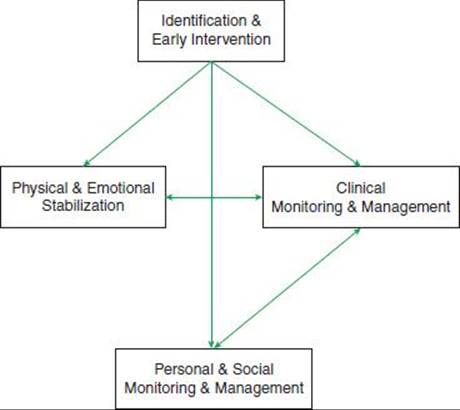
FIGURE 25-1 Clinical flow between stages of care.
TABLE 25-1 FOUR STAGES OF CCM FOR SUBSTANCE USE DISORDERS
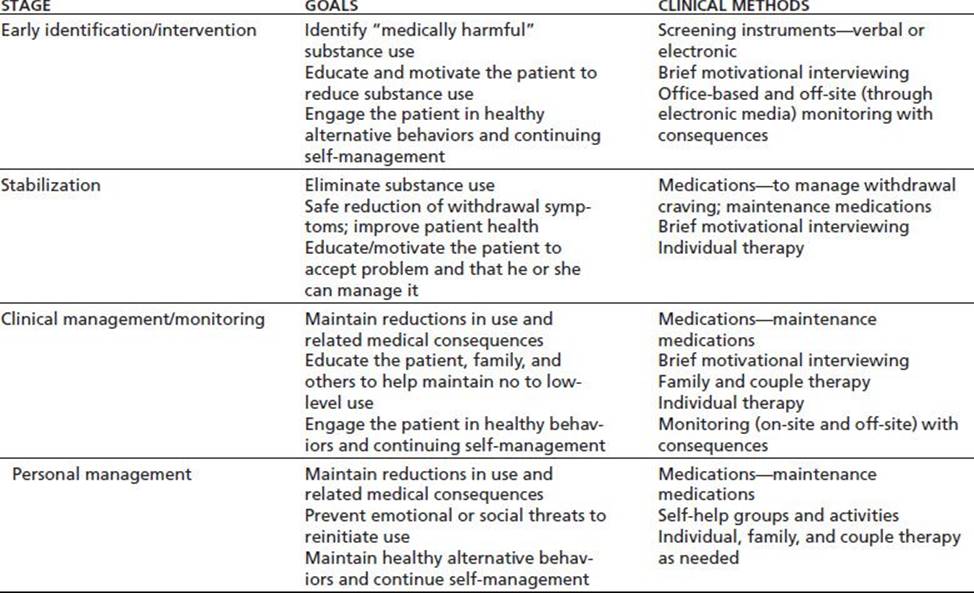
Five introductory points are important prior to discussion of the stages of care. First, primary care practitioners will notice that these stages of care and many of the clinical activities that occur within each are quite similar to those associated with the management of other chronic illnesses. Of course, there are special clinical issues associated with substance use disorders—as there are special issues associated with chronic noncancer pain, sleep disorders, diabetes, and asthma. But the overall goals for the CCM model are similar across virtually all chronic illnesses.
Second, it must be remembered that the CCM model and the suggested stages are not just for the management of “addiction” but rather the full spectrum of substance use disorders. This can be a difficult issue for both general and specialist practitioners. Many general practitioners have learned only about “addiction” and fail to recognize prevalent, lower-severity substance use problems in their practices. Experienced addiction professionals often perceive ANY inappropriate substance use as “addiction,” and this too can limit more accurate clinical perception and more appropriate/attractive clinical options. Some clinical goals that may be attractive and appropriate to individuals with lower-severity use (e.g., reduction of use) are generally not appropriate for those with more serious, complex, and chronic substance abuse or dependence.
The third point is that because these stages and their clinical goals are conceptually linked, many of the treatment practices will have a role in more than one stage—but to address different problems. For example, a medication may be prescribed within the stabilization stage to reduce withdrawal symptoms, but within the clinical management stage to avoid situational craving. An important implication from this point is that outcome expectations and evaluation methods are most useful when tied directly to a specific stage of care. For example, under the CCM model, it is not informative to ask “Is naltrexone effective in the treatment of alcohol dependence?” A much more clinically informative question would be “Is naltrexone effective in reducing alcohol craving among well-stabilized patients receiving clinical monitoring and management?”
The fourth point is that there are as yet very few clear biologic or behavioral markers to guide clinical decision making in questions of transition among these stages. For example, an HgA1c reading below 6% and/or a blood pressure of 140/80 is a good marker of “disease control.” Such precise markers are not yet available in the management of substance use disorders. This is in part due to the fact that substance use disorders have only recently been studied as chronic illnesses. But as is true with many other chronic illnesses, there are many comorbid conditions, genetic factors, and social determinants of clinical progress that add complexity to clinical management.
The final point—a new one for experienced “addiction” treatment providers—is that the clinical stages are NOT synonymous with specific settings or modalities of care. The changes in insurance coverage discussed in A New Model for Care of Substance Use Disorders section, advances in medication and intervention development, and new forms of electronic communication and information exchange offer new opportunities to achieve the goals of every stage of care in different settings (e.g., primary care office) or with previously unavailable modalities of care (e.g., nursing home visits, new medications, new group meetings delivered through social media).
The Early Identification/Intervention Stage of Care
Clinical Goals in the Early Identification/Intervention Stage
The main and most desirable goal from this stage of the care continuum is to inform and motivate change among individuals (adolescents or adults) whose substance use is too frequent or too serious for their medical health. This may be particularly important for those with other diagnosed medical or psychiatric conditions. Once identified, a linked goal of this stage of treatment is to use the power of the medical teaching moment as well as clinical techniques such as motivational interviewing to help patients accept that their substance use may be a problem and that they are capable of reducing their use. Initial screening and brief motivational interventions should conclude with an agreed-upon target for use frequency and amount and an identified plan by which the patient will reduce their use. It is critical that the patient is monitored at least weekly for the 1st month following the initial intervention and biweekly to monthly over the ensuing 3 to 4 months. The monitoring can occur through telephone or other social media contact methods to check the effectiveness of the patient’s efforts and to offer support and encouragement for those efforts.
Clinical Practices Associated with the Identification and Early Intervention Stage
It is important to understand that screening and brief interventions will generally NOT be effective in more severe cases of substance abuse or dependence. Thus, postscreening monitoring of patient alcohol and other substance use will be an essential part of clinical decision making in these cases. If monitoring reveals that the patient cannot reduce their use to levels that are no longer medically harmful, this will be an indication of a more serious problem. In these cases, an important secondary goal from this stage of care is to have those patients accept that they may have more serious substance use problem and agree to a more intensive effort to manage care. In practice, achieving this level of patient acceptance generally involves repeated motivational interviewing sessions and some practical suggestions for use management in various social situations—always accompanied by monitoring. Evidence-based clinical practices that have been effective in this stage of care are screening for substance use and brief motivational interventions to promote reductions in use.
Screening
Beyond the fact that identifying and addressing early-stage substance use disorders is an important public health problem in itself, primary care practitioners can often improve the outcomes and reduce the costs of treating other illnesses simply by identifying and managing co-occurring substance use problems (45). For example, the PRISM project commissioned 33 systematic reviews describing the role of alcohol and other substance use problems in the course, complications, outcomes, and costs of treating prevalent chronic illnesses (46). These reviews, published in mainstream medical journals, showed that “medically harmful” drinking or other substance use can significantly impair the diagnosis, complicate the treatment, and elevate the costs of most chronic illnesses. Harmful alcohol and other substance use problems can now be reliably and accurately identified through standard screening instruments available in computerized, paper and pencil, or individual interview formats.
Brief Motivational Intervention(s)
There has now been broad development and testing of several brief therapies typically consisting of two to six sessions. One-session interventions such as motivational interviewing are considered advice and are typically administered within medical contexts (45). Brief therapies such as motivational enhancement therapy (47) are designed to promote problem recognition among reluctant or unaware substance abusers, to foster a sense of willingness and ability to address the problem, and, often, to promote engagement in treatment.
Brief interventions have been tested extensively in over one hundred trials with alcohol-and other drug-dependent individuals usually as a strategy for encouraging non– treatment-seeking individuals to enter into formal treatment but also as a treatment intervention (48). Because of their brevity and low reliance on treatment compliance, they have been particularly attractive to primary care physicians dealing with alcohol-dependent individuals in emergency medical settings, but they have also been used successfully in primary care settings (49). Brief intervention (i.e., educational and motivational interventions lasting <10 minutes) and brief treatment (similar interventions of two to five sessions) studies within these populations have generally shown significant reductions in substance use, lasting at least 6 months (48).
Indications for Transition to a Different Stage of Care
In cases in which monitoring reveals significant reductions in the quantity and frequency of substance use below the levels that may be medically or socially harmful, this will signal a transition to the patient management stage of care. In that stage, formal clinical interventions are typically not needed. The patient is well educated and motivated to maintain his/her substance use at low levels; they have a number of techniques to use to achieve these reductions and, ideally, are well supported by family and social relationships to control their use.
It is not presently known how long or with what frequency clinical monitoring should be undertaken before making the suggested transition—this is an important subject for future clinical research. Similarly, there are very few well-researched monitoring methods or social support alternatives to help those with “medically harmful use” to reduce that use—again, an important research topic with great clinical and practical significance.
In cases where substance use does NOT reduce, this is an important indication that there may be a more serious substance use problem, and among the first follow-up activities suggested is a full, standardized assessment of the patient’s substance use history and their use-related medical, personal, and social problems. That assessment should provide clinical suggestions for a more intensive intervention. If there has been protracted and/or severe recent use, the suggested next stage of care may require a period of stabilization of physical and/or emotional symptoms associated with very heavy use of substances. Following completion of that stabilization stage will likely require transfer to the clinical monitoring/management stage of care within either a primary care setting or an outpatient specialty substance abuse treatment program.
There are as yet no clear guidelines from research regarding which of these options is better or for which types of patients and problems. In both cases, the goal is to help the patient regain control of their substance use—which may require some patients to abstain totally—and it will be important to negotiate frankly with the patient about available options and the behavioral goals from those options.
The Stabilization Stage of Care
Clinical Goals in the Stabilization Stage
Alcohol and other drugs of abuse often cause significant physical and emotional problems directly due to the development of tolerance and/or indirectly due to long periods of sleep deprivation, poor nutrition, and general lack of personal care that are often associated with heavy substance use. The purpose of the stabilization stage of treatment is NOT to produce cure or lasting sobriety—but rather to prepare an unstable patient to do well in a subsequent clinical monitoring/management stage of care. Significant physiologic withdrawal is not present in all cases—even in those with more serious forms of addiction. However, prolonged, heavy alcohol, opioid, or sedative/tranquilizer use may produce a characteristic rebound physiologic withdrawal syndrome of several hours to several days following the last dose of the drug (depending upon the drug, dose, and duration/frequency of use). Users of amphetamine, cocaine, and even marijuana can also experience substantial emotional and physiologic symptoms requiring a period of stabilizing care.
Motivating and ultimately engaging the stabilized patient into some form of continuing care involving monitoring and management (in a residential or outpatient specialty care setting; or in a primary care setting) are considered an important clinical goal of this stage of treatment because on its own, stabilization is rarely effective in helping patients achieve lasting recovery—particularly patients with more severe and/or protracted histories of substance dependence. Thus, this stage of treatment is the best considered preparation for continued rehabilitation.
Clinical Practices Associated with the Stabilization Stage
The major components of this stage of care include medications to relieve physiologic and emotional symptoms and to reduce craving for the abused substance(s). These medications are typically accompanied by rest and motivational forms of therapy—usually in the context of a residential or hospital setting.
Medications
There have been significant advances in the use of medications to reduce the dangers and alleviate the suffering associated with the withdrawal and stabilization of physiologic and emotional problems attendant to the cessation of heavy substance use. This area of addiction medicine is quite specialized and well beyond the scope of this chapter (see references (23) and (24) and Section 7 “Pharmacologic Interventions” of this text for more detailed discussion).
Behavioral Therapies
Because stabilization is a typically short (3 to 7 days) medical procedure and because patients’ attention and concentration may be compromised for much of this period, extended therapies within this context are not typically possible. However, the same brief interventions and brief therapies described in the early identification/intervention stage of care are also practical in this context. In this stage, the goal of behavioral therapy should generally be to have the patient understand that they have a significant substance use problem and that they have the ability to gain control over that problem through continued participation in some form of continuing care involving monitoring and management.
Indications for Transition to a Different Stage of Care
There are typically clear and standard biologic and behavioral indicators of both physiologic and emotional stabilization (vital signs, sleep pattern, appetite, mood). There is great variability in the time required to achieve physical and emotional stabilization depending upon the nature, duration, and intensity of the substance(s) used and the general physical and emotional health of the affected patient. However, most patients make rather rapid and often dramatic improvements in the standard indicators within 3 to 7 days of medical care.
There is only one recommended transition from the stabilization stage, and that is to some form of clinical monitoring/management. Clinical experience suggests it is unlikely that any patient who requires physiologic and emotional stabilization will do well with a less intensive stage of care. The clinical monitoring/management stage of care may occur within the primary care setting or within an outpatient specialty care substance abuse treatment program. Again, there are as yet no clear guidelines from research on which of these options is better or for which types of patients and problems. Regardless of setting, the goal is to help the patient gain control of their substance use. Again, it is possible for less chronically or severely affected patients to achieve “control” through careful moderation of their use. For patients with more protracted and/or severe use problems, it is likely that abstinence may be the only way to attain and maintain control. It will be important to negotiate frankly with the patient and their family about their options for attaining and maintaining control, as this will shape referral decision making. Regardless of the care setting, patients entering (or reentering) the clinical monitoring/ management stage of care will likely require a rather intensive combination of individual, group, or family therapies; contingency contracting; and/or one or more medications.
The Clinical Monitoring/Management Stage of Care
Clinical Goals in the Monitoring/Management Stage
Clinical monitoring and management are the most variable—in time, procedure, and patient eligibility—of all the stages of care. It is appropriate for patients who are physiologically and emotionally stabilized and who have at least gained initial behavioral control over their urges to use substances—through clinical care provided in the early identification/intervention or stabilization stages. Clinical goals for this stage of care are to maintain the reductions in (or elimination of) substance use, by providing care for the health and social problems that were identified in the assessment as contributors to the substance use problems, and to continue monitoring for relapse threats. In practice, this stage of care may last 3 to 9 months and can involve varying numbers and frequencies of medications, therapies, and social services (depending again upon the severity and complexity of the patient’s problems). One important resource within this stage of care is the availability of a living environment that is free from active substance abuse, as this is often an irresistible relapse factor. This type of living arrangement may be available within the family home, in drug-free housing, or in a residential specialty substance abuse treatment setting.
An additional and important goal from this stage of care is to educate and engage the patient’s family and social relationships to assist in the monitoring and support of the patient’s efforts to control their substance use. Several long-term studies of recovery from substance use disorders have identified ongoing support from family and social networks as key factors in the recovery, as well as the development of prosocial, healthy activities and behaviors that are inconsistent with substance use (25,26,29,44). In summary, the continued maintenance of abstinence or very reduced substance use, good health, and good social function in the clinical management/monitoring stage of care has the following four goals:
1. Maintain physiologic and emotional stability initiated during stabilization
2. Enhance and sustain reductions in alcohol and drug use (more severe and chronic patients will require complete abstinence)
3. Teach model and support behaviors that lead to improved personal health, family, and social function and reduced threats to public health and public safety
4. Motivate behavioral and lifestyle changes that are incompatible with substance use
Clinical Practices Associated with the Clinical Management/Monitoring Stage
Antiaddiction Medications
There are now three Food and Drug Administration (FDA) approved medications for the treatment of alcohol dependence (disulfiram/Antabuse; acamprosate/Campral; and naltrexone/Revia and Vivitrol) and three FDA-approved medications for the treatment of opiate dependence (methadone, naltrexone, and buprenorphine [Suboxone]). There are also some promising medications for the treatment of cocaine dependence (modafinil; topiramate/Topamax).
Most of these medications have been tested on more chronic and severely affected patients—it is not presently known whether or to what extent anticraving medications are effective in early-stage harmful medical use of alcohol and other drugs. This is likely to be a new opportunity for medical researchers, and for this reason, we will not review these medications extensively here, but they are the subject of much greater review elsewhere (see references (24) and (25) and Section 7 “Pharmacologic Interventions” of this text).
Other Medications
As indicated, many patients who require more intensive services within the clinical management/monitoring stage of care have additional general medical and particularly psychiatric illnesses that can be effectively treated with traditional antidepressant and other appropriate psychotropic medications. This is an important area for physician involvement and research. Psychiatric disorders such as depression, anxiety, phobia, and others are prominent among nicotine-, alcohol-, opiate-, cocaine- and benzodiazepine-dependent individuals. There is abundant evidence that addicted individuals with concurrent psychiatric problems are more likely to drop out of standard drug dependence treatments, more likely to perform poorly during those treatments, and more likely to relapse early following those treatments. Finally, there is increasing evidence that the prescription of appropriate psychotropic medications can alter that prognosis (50,51).
Behavioral Therapies
Significant clinical research over the past two decades has led to the development, testing, and wide availability of behavioral therapies to help patients control their urges to use substances but also to help with the emotional and relationship problems that so often accompany substance use disorders. Most of these therapies have been studied in outpatient specialty care settings—and it remains for additional research to investigate their role in other settings within the clinical management/monitoring stage of care. Three of the most widely studied are described here briefly.
Cognitive–Behavioral Therapy
Cognitive–behavioral therapy (CBT) in the treatment of substance use disorders emphasizes the role of thinking and behavior in determining both craving for drugs and the ensuing drug seeking and use. Put simply, the therapy is based upon the findings that inaccurate thoughts and beliefs, coupled with poor coping skills, lead to a greater risk for relapse. Therefore, CBT treatments involve techniques to modify biased or inaccurate beliefs and expectancies and to improve behavioral coping skills. There are several approaches to, or variations on, cognitive–behavioral therapy, including rational emotive behavior therapy, rational behavior therapy, rational living therapy, cognitive therapy, and dialectic behavior therapy. CBT may be the most studied of all the therapies in addiction due perhaps to the very carefully developed manuals developed to train and guide the provision of the therapy (52–54). Studies of CBT with cocaine-dependent patients have shown general acceptance by patients (attendance at over 50% of planned sessions) and better posttreatment rates of abstinence than patients given no therapy or group counseling alone (54).
12-Step Facilitation Therapy
The 12-step facilitation (TSF) therapy was developed and is most widely used in outpatient specialty addiction treatment (55). One aspect of TSF that clearly separates it from other therapies is its active promotion of spirituality as a key to promoting lasting reductions in substance use problems. In this context, spirituality is considered a force that provides direction and meaning to one’s life.
Many studies have confirmed the effectiveness of this therapy as compared against usual care. For example, Thevos et al. found that alcoholic-dependent women who received CBT or TSF had better outcomes than women who received the control condition (56). It should be noted that most treatment provided in addiction specialty care programs has elements of TSF, but the great majority of the 12-step oriented therapy provided in these programs is group oriented (57).
Individual Drug Counseling
Individual counseling, delivered in structured sessions to foster abstinence and general adjustment, has been extensively studied in outpatient specialty care settings but very rarely within primary or general health care settings. In almost all studies, patients who have received this form of counseling had better during treatment and posttreatment outcomes (58) than those who received medication or other interventions alone, without the counseling (58–60). Importantly, there are very few studies that have shown positive effects from group drug counseling. Indeed, in one large trial among cocaine-dependent patients, only individual counseling and not group counseling was associated with improved outcomes (61). This is important in that group drug counseling is by far the most prevalent component of treatment in the national treatment system (12–14).
Perhaps the clearest example of the role of the counselor and the counseling process is found in a study of methadone-maintained patients, all of whom were within the same treatment program and receiving the same methadone dose, who were randomly assigned to receive counseling or no counseling in addition to the methadone (62). Results showed that 68% of patients assigned to the no counseling condition failed to reduce their drug use (confirmed by urinalysis) and 34% of those patients required at least one episode of emergency medical care. In contrast, no patient in the counseling group required emergency medical care, 63% showed sustained elimination of opiate use, and 41% showed sustained elimination of cocaine use over the 6 months of the trial.
Contingency Management of Drug Use
Higgins et al. (63) brought laboratory principles of behavioral change to the treatment of cocaine dependence. In a now classic set of studies in a clinical laboratory setting, cocaine-dependent patients seeking outpatient treatment were randomly assigned to receive either standard drug counseling and referral to AA or a multicomponent behavioral treatment in which vouchers for desirable goods and services, provided by community shops and stores, were provided contingent upon drug-negative urine tests. Voucher-based reinforcement of abstinence retained more patients in treatment, produced more abstinent patients, produced longer periods of abstinence, and produced greater improvements in personal function than the standard counseling approach (see reference (63) for review).
In the 20 years since the publication of these studies, the technique of providing positive reinforcement contingent upon drug-free urines has been replicated and extended in alcohol-, cocaine-, opiate-, and methamphetamine-dependent patients—all with similarly positive findings (63). A very promising extension of the contingent monitoring of substance use procedure has been developed and studied by Silverman et al. (64). These investigators operate a data entry center where recovering patients may learn data entry skills and earn wages for data entry, contingent upon their providing a drug-free urine sample (65). This procedure appears to be practical and potentially useful as a means of extending the principles of contingency management practices into real-world settings.
Clinical Case Management and Wraparound Services
Many patients suffering from substance use disorders have significant additional problems in one or more other areas of life function such as medical status, employment, family relations, and/or psychiatric function. Studies have documented that “wraparound services”—such as primary medical care, housing, employment training, psychiatric care, and parenting assistance for these substance use-related problems—can be effective in reducing threats to relapse and in maintaining active patient involvement in treatment.
Not all studies of wraparound services have required clinical case management. Similar findings have been seen from adding wraparound services to standard addiction treatment through special computer systems or special training of counselors. Better outcomes have been seen when the services were “matched” to the problems presented by the patients and when those services were requested by the patients. For example, Friedmann et al. (51) conducted a large-scale study of services-to-needs matching, with a sample of over 3,100 addiction treatment patients. The study focused on the degree to which reported needs in five domains—medical, mental health, family, vocational, and housing—were addressed with services and whether better matching produced better substance use outcomes. Overall, higher rates of services-to-problems matching predicted better substance use outcomes. The effect was concentrated in patients who reported problems in more areas (e.g., at least four of the five domains) and was strongest among patients in long-term residential facilities. Matching of vocational and housing services was particularly important.
Family Involvement in Treatment
Mainstream health care has long acknowledged the benefits of engaging family and social supports to improve treatment adherence and to foster necessary behavioral changes associated with the treatment of many chronic illnesses (66). This type of clinical practice has not been extensively studied in the treatment of substance use disorders. There have been family-oriented interventions such as ALANON to assist families of substance-dependent individuals to deal with the associated problems of addiction (67), but two forms of family involvement have received substantial attention and are discussed below.
Marital, Family and Couple Therapies
Over the past 20 years, there have been over 60 studies in which marital, family, or couple therapies have been provided to reduce substance use or use-related problems such as violence. In a recent review of controlled studies with alcohol-dependent patients, marital and family therapy and particularly behavioral couple therapy (BCT) were significantly more effective than individual treatments at inducing and sustaining abstinence, improving relationship functioning, and reducing domestic violence and emotional problems of children (68,69). Similar reductions in substance use and partner violence have also been seen in controlled trials of marital, family, or couple therapy with opiate- and cocaine-dependent patients (70). Perhaps the most widely studied and applied version has been BCT. A cardinal feature of BCT is the “daily sobriety contract” between the affected patient and his/her spouse in which the patient states his or her intent not to drink or use drugs and the spouse expresses support for the patient’s efforts to stay abstinent. BCT also teaches communication and non–substance-associated positive activities for couples. Findings show that BCT produces more abstinence and better relationship function than typical individual-based treatment and also reduces social costs and domestic violence (70).
Community Reinforcement and Family Training
Community reinforcement and family training (CRAFT) is based on a combination of standard functional analysis of behavior combined with principles of reinforcement. The therapy was developed to teach and promote the practice of these principles by members of a household. Specifically, families who learn the CRAFT intervention are taught skills for modifying a loved one’s alcohol or drug-using behavior and for enhancing treatment engagement (71). The intervention has been generally well accepted by families, and several studies have shown that CRAFT produces greater likelihood of entry and engagement of substance-abusing family members and greater likelihood of posttreatment abstinence than standard treatments (72). In addition, families of the substance abusers in these studies show significantly less depression, anxiety, anger, and physical abuse than families of patients who received standard treatment (see reference (71) for review).
Telephone Continuing Care
Consistent with a “disease management” perspective, several research groups have shown that extended therapeutic contact provided via the telephone can have positive effects on maintaining reductions in substance use and related health and social problems (73). For example, McKay et al. (74,75) compared telephone-based continuing care with two clinic-based continuing care treatments, standard group counseling (STND) and CBT relapse prevention (RP), for 12 weeks after discharge from an outpatient treatment program. Results indicated that the telephone condition produced better abstinence outcomes than standard group counseling and better outcomes than RP on several outcomes (e.g., cocaine urine toxicology, liver function measures indicative of heavy drinking). Importantly, findings from this line of research suggest that this type of monitoring works best with individuals who have achieved stable reductions in substance use and related problem— but not as well as an intervention to help patients initiate those behavioral changes (73).
Indications for Transition to a Different Stage of Care
It is intuitive that patients with more severe, complex, and chronic substance use problems will likely require a greater number and frequency of clinical practices to achieve and sustain these clinical goals and will likely require a longer period of successful maintenance of these goals prior to transfer to a less intensive stage of care. However, even these intuitive assumptions have received very little research attention. There are important opportunities to study the specific behavioral indicators of high likelihood for successful transition to the patient management stage of care and the particular sets of clinical interventions that are most likely to produce patient changes that reach the designated performance threshold for transition.
Though important in all earlier stages of care, monitoring of substance use through biologic and self-report means is critical in the clinical monitoring/management stage for important clinical determinations such as whether to increase or decrease the intensity or change the composition of clinical practices provided to a patient and particularly whether to transition a patient to a more intensive or less intensive stage of care. Again, there has been little research regarding the appropriate behavioral and biologic criteria for these transitions. There are thus important opportunities for practical research in this area.
In general, self-disclosed or positive biologic tests for substances of abuse are an indication that there is a need for more frequent monitoring (in person and/or through electronic media) and likely more intensive clinical interventions. As indicated above, there are already many types of medications, therapies, and clinical services that may be recommended toward the goal of reducing substance use and related problems. The question of how long to continue any level of clinical management/monitoring in the face of continued positive biologic test results will always be an individual clinical determination. However, in general, it is wise to negotiate in advance of care initiation regarding the specific behavioral goals and to get patient acceptance for more intensive clinical options if there is not progress toward the agreed-upon goals (perhaps referral to specialty substance abuse care if the patient is being managed in a primary care office or to a residential treatment program if the patient is being managed in an outpatient treatment program).
A more welcome but no more informed question is when to refer a well-functioning patient with few to no indications of substance use to the personal management stage of care. It is currently not known how long a period of sustained abstinence should be achieved before a stable, well-motivated patient can be expected to continue good function with little or no clinical management. Even when clinically managed and monitored patients are able to achieve stable periods of abstinence, the transition to personal management can be difficult and unsettling. Among the most reliable and robust findings from clinical studies of alcohol- and drug-addicted patients is that continued, active participation in Alcoholics Anonymous or other social support form of recovery maintenance is an excellent predictor of sustained sobriety and good social function. While this is quite clear in the case of severely addicted patients treated in specialty care programs, it is not known whether or to what extent it will hold true among less severely or chronically affected patients treated in primary care settings. Regardless, there is much to commend referral to AA or other social support group with instructions to get a sponsor, “share and chair” at meetings, and to attend 90 meetings in 90 days. Research studies done to date have generally found that only about 25% to 35% of those who attend one meeting of AA go on to active participation (attend 90 meetings, acquire a sponsor, etc.). However, for those who do attend, there is every indication that this peer support component of rehabilitation is valuable for maintaining rehabilitation (76). There are now many controlled trials and field studies of AA participation showing that participation in posttreatment self-help groups is related to better outcome among cocaine- or alcohol-dependent individuals (77,78).
The Personal Management Stage
The term “personal management” is designed to indicate the transition from some/any form of clinically directed care and monitoring, toward self-management by the patient of his/her substance use and related problems (avoiding or otherwise dealing with craving and social cues to reinitiate uncontrolled use), likely with the informed assistance of family and friends.
Historically, these kinds of informal care interventions were not included as part of formal treatment or as part of most treatment research studies—either in the field of substance use disorders or in other types of chronic illness care. However, with the change in approach toward substance use disorders as a chronic illness, substantial research showing the value of participation in AA and the emerging research on the value of simply contacting, supporting, and monitoring the condition of previously treated patients, this stage of the continuum has shown its importance. For these reasons, there has been increasing interest in fostering patient involvement in social support groups (AA and other substance abuse programs) as a way of insuring continued maintenance of health and function gains made during formal treatment and as a hedge against reinitiation of substance use problems and reutilization of expensive care options.
Goals of the Personal Management Stage
The personal management stage of care shares many of the goals of the clinical management stage of care—the essential difference is that in the latter stage responsibility and capability for management rests on the patient and his family and social circle. In turn, it follows that one of the goals of the later phases of the clinical management/monitoring stage is to inform, train, engage, and practice the family and other social supports to take on these responsibilities in a practical and effective manner. Personal management has the following four goals:
1. Maintain physiologic and emotional improvements initiated during earlier stages
2. Self-monitor threats to relapse and make corrections where appropriate
3. Learn and practice more effective coping behaviors and self-care
4. Maintain healthy relationships and social behaviors incompatible with substance use
Clinical Practices Associated with the Personal Management Stage
Medications
All antiaddiction medications previously described earlier may also be useful in self-management of substance use disorders. Craving may occur in unexpected situations or through routine interactions with “people, places, and things” that were previously associated with the use of substances.
In addition, co-occurring problems of depression, anxiety, or phobia are prevalent and may reoccur. Thus, maintenance psychotropic medications can be important in the maintenance of improved mental health, which will, in turn, reduce likelihood of substance use reinstatement. The assistance of these medications may provide pharmacologic support for the benefits of traditional behavioral and social interventions.
Behavioral Therapies
Interventions designed to engage family supports and to forge new, healthy peer relationships may be particularly valuable as a recovering patient attempts to integrate a new recovering lifestyle into the historical environment and relationships. However, as is true of so much of the clinical practice in this developing field, there has been little systematic research to guide patients or their clinicians in suggesting or selecting continuing care interventions or practices that a patient and his/her family can manage independently. To date, the only well-researched aspect of personal care is Alcoholics Anonymous.
Participation in AA/NA/CA
AA remains the most prevalent form of continuing care for individuals who are dealing with alcohol and/or other substance use problems, and these meetings can be very helpful to a wide range of individuals including those considering reducing their substance use, those actively participating in earlier stages of the care continuum, and particularly those in the personal management stage. AA groups can be found in every town and city and that there is great variability among these groups. Some groups are for particular types of individuals (gay or lesbian, nonsmokers, atheists, individuals with co-occurring substance use and mental health problems, etc.). Within any single AA group, it is common that some meetings will be “open” to all individuals regardless of whether they have a substance use problem; some will feature speakers who will share their stories and topic meetings where the group discusses views on a particular aspect of recovery from substance use. The point is that patients should attend several groups in several locations before deciding whether to become an active participant and which group to use as the home group.
For various reasons, AA research has begun to increase (29,57,76). This research has shown that patients who participated in AA have much better continuing abstinence and social performance than patients who have received rehabilitation treatments but have not continued in AA. For example, Moos and Moos (29) found that faster affiliation with AA and longer participation predicted better 1-, 8-, and 16-year alcohol-related outcomes. Individuals who attended AA at least five times per week for the first year had almost a 90% likelihood of abstinence at 1 year, and participation in AA had a positive effect on alcohol-related outcomes over and above the effects of formal treatment (29).
SUMMARY AND CONCLUSIONS
This chapter begins with a review of the concepts under which “addiction” has been considered by the public and the health care field. The early, well-intentioned but scientifically uninformed set of concepts about the “condition” of addiction led to the design and organization of a system of specialty care addiction treatment programs that was funded, regulated, and evaluated independently from the rest of mainstream health care. While this organization was likely necessary in the early 1970s to initiate and organize care, there were longer-term negative consequences from this segregated system, including poor understanding and acceptance about “substance use disorders” among mainstream health care professionals, and an acute care–oriented treatment evaluation model that has made it virtually impossible for the specialty care system to meet the public’s demands for enduring reductions in substance use and the associated public health and public safety problems that plague our society.
The recent legislative changes in health care organization and financing through the Affordable Care Act (2010) and the Parity Act (2008) (30,31) are likely to end the past 40 years of separate and unequal resources for this field. Key elements of that legislation include
■ Recognition that “substance use disorders” include “medically harmful use” as well as “abuse” and “dependence”
■ Requirements on every health plan to provide a full continuum of care for these substance use disorders from prevention through early intervention, all FDA-approved medications and, of course, specialty care for seriously addicted individuals
■ Requirements that approximately the same range, duration, and types of health care services should be provided for mental health and substance use disorders as are provided for other, comparable medical disorders
■ An emphasis upon prevention services, use of evidence-based practices and modern methods of patient management, and information exchange within health care
■ An emphasis upon and reorganization of primary care into multidisciplinary care teams trained in the “CCM” model of proactive care for chronic illnesses including substance use disorders
The chapter argues that because substance use disorders are similar to other chronic illnesses in etiology, course, and response to medications and therapies, the CCM model (34–36) is an appropriate foundation for the management of all substance use disorders. This argument integrates the care of alcohol and other drug use problems using the same concepts, methods, care teams, and organizational infrastructure now being designed for all other chronic illnesses.
It is clear that despite the conceptual similarities between substance use disorders and other chronic illnesses, the contemporary mainstream health care system has neither the training nor the inclination to integrate care for these still-stigmatized disorders, and there are many who doubt true integration will ever happen. This is a bad bet—there are at least five powerful forces that will push for integration. First, the failure to identify and address harmful substance use within general medicine now accounts for over $100 billion in wasted medical care, rapid rehospitalizations, poor adherence to treatment plans, and drug–drug interactions requiring emergent care (3,4). Second, the Affordable Care Act now carries the weight of congressional, Supreme Court, and presidential election authority— substance use disorders are an “essential service” within that legislation—health plans simply must find a way to integrate this care. Third, integration of previously segregated illnesses into mainstream health care has happened before—many times. Examples include tuberculosis, breast cancer, depression, and AIDS. Fourth, the reorganization of care for other chronic illnesses has created new, larger, and more coordinated care teams that are very likely to include “behavioral health specialists” who have both the training and the responsibility to assist the rest of the care team to manage the substance use problems of patients in their care.
The final and perhaps most important force for integration is the creation of new and very powerful market forces associated with the integration of substance use disorders into mainstream health care. For example, there are currently only six FDA-approved medications for the treatment of alcohol or other drug problems; and three of them (methadone, buprenorphine, and naltrexone) were initially developed by the federal government. Beyond the often cited stigma associated with substance use disorders, there is the fact that there are currently less than 2.5 million patients receiving “addiction treatment” and fewer than 4,000 specialist addiction medicine physicians: Many of these have been reluctant to prescribe any medication. The expansion of insurance coverage will soon cover the 40 million individuals with “substance use disorders,” most of whom are currently receiving primary care from one of over 500,000 primary care physicians. This is a substantially larger market than ever before, and that market has needs for new screening tools, medications, monitoring systems, and patient registries.
The integration of substance use disorder care into the CCM model was the foundation for a suggested four-stage approach to caring for and managing patients with substance use disorders. The four stages suggested included
■ Early identification/intervention—appropriate for health care teams in schools, primary care, hospitals, ERs, and other specialty medical clinics. Activities within this stage of care include the use of standardized screening instruments to identify emerging “medically harmful use” of alcohol and other substances and the use of brief motivational interviewing sessions to help the patient reduce their use or to help the patient realize that their use has moved beyond their control.
■ Stabilization—appropriate for hospitals and residential specialty addiction treatment programs. Activities within this stage of care include traditional detoxification of patients with serious and chronic substance dependence but also general stabilization of patients whose mental and physical health have been compromised by heavy substance use and related behaviors. The goals of this stage of care are to return the patient to good physical and mental function, to motivate the patient to accept the severity of their substance use, and to engage them into an appropriate form of clinical management and monitoring.
■ Clinical management/monitoring—appropriate for a wide range of clinical settings including primary care, outpatient specialty addiction treatment programs. This stage of care is characterized by an assessment of a patient’s particular substance use syndrome with all the contributing problems, the negotiation and initiation of an initial clinical regimen tailored to address those problems, and a parallel monitoring system to evaluate the effects of that initial care plan and adjust as needed.
■ Personal management—this is the final stage of the care continuum and represents the culmination of professional services to reduce the symptoms of the substance use but also concurrent patient motivation, education, and skill development to equip the patient and his or her family to assist in the continued self-management of the patient’s health.
While these stages of a proposed continuum have distinct goals, they are conceptually linked with the more intensive stages designed to prepare patients for less intensive, self-management–oriented stages. Importantly, the medications, behavioral therapies, and other interventions discussed in this part of the chapter were seen as having multiple roles at different stages of the continuum, hopefully leading to a more nuanced series of research studies designed to elucidate those roles.
It is hoped that this version of the CCM model adapted to accommodate management of substance use disorders may offer a basis to stimulate much-needed research and new clinical management efforts. However, it is clearly just a trial horse. There are important gaps in our knowledge about the most appropriate and effective options. Nonetheless, the conclusions possible from the still meager knowledge base are quite optimistic. There is an increasing range of evidence-based treatment components. There are adequate medications and a medical basis for treatment, as well as the promise of new compensation to attract and provide a meaningful role for physicians in the treatment of substance use disorders.
There are also individual and family-oriented behavioral therapies that sophisticated therapists from various backgrounds can use to reduce substance use and its associated personal and family pathologies. Moreover, work in these important areas is continuing with new progress made each month. The possibilities for improved treatment have never been better.
ACKNOWLEDGMENTS
Research and writing of this chapter were supported by grants from the National Institute on Drug Abuse, the Norlien Foundation, and the Betty Ford Institute.
REFERENCES
1.National Household Survey on Drug Use and Health (NHSDUH): Results from the 2010 survey. (2011) SAMHSA, http://www.oas.samhsa.gov/nsduh/2k6nsduh/2k6Results.pdf
2.Institute of Medicine (IOM) (2006). Crossing the quality chasm for mental and substance use disorders. Washington, DC: National Academy Press.
3.Obama B. National drug control strategy 2010. Collingdale, PA: DIANE Publishing, 2011.
4.Buck JA. The looming expansion and transformation of public substance abuse treatment under the Affordable Care Act. Health Aff 2011;30(8):1402–1410.
5.Grant, BF. Estimates of US children exposed to alcohol abuse and dependence in the family. Am J Public Health 2000;90(1):112.
6.Collins JJ, Messerschmidt PM. Epidemiology of alcohol-related violence. Alcohol Health Res World 1993.
7.The eighth special report to the US Congress on alcohol and health from the Secretary of Health and Human Services, September 1993. NIH Publication No. 94-3699. Washington, DC: US Department of Health and Human Services, Public Health Service, National Institutes of Health, National Institute on Alcohol Abuse and Alcoholism, 1994.
8.Centers for Disease Control and Prevention, National Center for Injury Prevention and Control. Web-based Injury Statistics Query and Reporting System (WISQARS). (2012) [cited 2012 Feb 1]
9.Mokdad AH, Marks JS, Stroup DF, et al. Actual causes of death in the United States, 2000. JAMA 2004;291(10):1238–1245.
10.Bouchery EE, Harwood HJ, Sacks JJ, et al. Economic costs of excessive alcohol consumption in the US, 2006. Am J Prev Med 2011;41(5):516–524.
11.Pacula RL, Kilmer B, Grossman M, et al. Risks and prices: the role of user sanctions in marijuana markets. BE J Econ Anal Policy 2010;10(1):1–36.
12.National Survey of Substance Abuse Treatment Services (NSSATS), 2006. http://wwwdasis.samhsa.gov/webt/state_data/US06.pdf
13.McLellan AT, Kleber HD, Carise D. The national addiction treatment infrastructure: can it support the public’s demand for quality care? J Subst Abuse Treat 2003;25:117–121.
14.Treatment Episode Dataset (TEDS) (2006). SAMHSA. http://wwwdasis.samhsa.gov/webt/quicklink/US06.htm
15.McLellan AT, Meyers K. Contemporary addiction treatment: a review of systems problems in the treatment of adults and adolescents with substance use disorders. Biol Psychiatry2004;28:345–361.
16.Gelber S. Funding and Financing of California’s Alcohol/Drug Treatment System: Issues for System Efficiency, Access, Management, Coordination and Improvement. Testimony before the California Little Hoover Commission. Sacramento CA, 2002.
17.Cacciola JS, Meyers K, Bates SE, et al. Assessing adolescent substance abuse programs with updated quality indicators: the development of a consumer guide for adolescent treatment. J Child Adolesc Subst Abuse. NIHMSID: NIHMS442781 (in press).
18.Kerwin ML, Walker-Smith M, Kirby K. Comparative analysis of state requirements for the training of substance abuse and mental health counselors. J Subst Abuse Treat 2006;30(3):173–181.
19.McGlynn E, Asch J, Adams J, et al. The quality of health care delivered to adults in the United States. NEJM 2006;348:2635–2645.
20.Musto DF. The American disease: the origins of narcotic control. New Haven, CT: Yale University Press, 1973.
21.White W. Slaying the dragon: the history of addiction treatment and recovery in America. Bloomington, IL: Chestnut Health Systems, 1998.
22.Weisner C, Hinman A, Lu Y, et al. Addiction treatment ultimatums and US health reform: a case study. Nordisk Alkohol Nark 2010;27(6):685.
23.Willenbring ML. Medications to treat alcohol dependence: adding to the continuum of care. JAMA 2007;298(14):1691–1692.
24.O’Brien CP, McKay JR. Psychopharmacological treatments of substance use disorders. In: Nathan PE, Gorman JM, eds. Effective treatments for DSM-IV disorders, 2nd ed. New York, NY: Oxford University Press, 2002:125–156.
25.Anglin MD, Hser Y, Grella CE. Drug addiction and treatment careers among clients in the Drug Abuse Treatment Outcomes Study (DATOS). Psychol Addict Behav 1997;11(4):308–323.
26.McLellan AT, O’Brien CP, Lewis D, et al. Drug addiction as a chronic medical illness: Implications for treatment, insurance and evaluation. JAMA 2000;284:1689–1695.
27.Foll B, Gallo A, Strat Y, et al. Genetics of dopamine receptors and drug addiction: a comprehensive review. Behav Pharmacol 2009;201:1–17.
28.Volkow N, Li TK. The neuroscience of addiction. Nat Neurosci 2005;8:1429–1430.
29.Moos R, Moos B. Participation in treatment and Alcoholics Anonymous: a 16-year follow-up of initially untreated individuals. J Clin Psychol 2006;62:735–750.
30.The Patient Protection and Affordable Care Act, P.L. 111-148, March 23, 2010.
31.Paul Wellstone and Pete Domenici Mental Health Parity and Addiction Equity (MHPAE) Act (P.L. 110-343)
32.Saitz R, Horton NJ, Sullivan LM, et al. Addressing alcohol problems in primary care: a cluster randomized, controlled trial of a systems intervention. The screening and intervention in primary care (SIP) study. Ann Intern Med 2003;138(5):372–382.
33.Wyatt SA, Wilford BB. Medical student and physician education in substance use disorders. Drug Abus Addict Med Illn 2012:531–544.
34.Wagner E, Austin BT, Von Korff M. Organizing care for patients with chronic illness. Milbank Q 1996;74(4):511–544.
35.Bodenheimer T, Wagner EH, Grumbach K. Improving primary care for patients with chronic illness: the chronic care model, Part 2. JAMA 2002;288:1909–1914.
36.Dobscha SK, Corson K, et al. Collaborative care for chronic pain in primary care: a cluster randomized trial. JAMA 2009;301(12): 1242–1252.
37.O’Connor PJ, Crain AL, Rush WA, et al. Impact of an electronic medical record on diabetes quality of care. Ann Fam Med 2005;3(4):300–306.
38.Woltmann E, Grogan-Kaylor A, Perron A, et al. Comparative effectiveness of collaborative chronic care models for mental health conditions across primary, specialty, and behavioral health care settings: systematic review and meta-analysis. Am J Psychiatry 2012;169:790–804.
39.Marsteller JA, Hsu YJ, Reider L, et al. Physician satisfaction with chronic care processes: a cluster-randomized trial of guided care. Ann Fam Med 2010;8(4):308–315.
40.Rosenthal MB, Beckman HB, Forrest DD, et al. Will the patient-centered medical home improve efficiency and reduce costs of care? A measurement and research agenda. Med Care Res Rev2010;67(4):476–484.
41.Stange KC, Nutting PA, Miller WL, et al. Defining and measuring the patient-centered medical home. J Gen Intern Med 2010;25(6):601–612.
42.Alford DP, LaBelle CT, Kretsch N, et al. Collaborative care of opioid-addicted patients in primary care using buprenorphine: five-year experience. Arch Intern Med 2011;171(5):425–431.
43.Goler NC, Armstrong MA, Osejo VM, et al. Early start: a cost-beneficial perinatal substance abuse program. Obstet Gynecol 2012;119(1):102–110.
44.Schackman BR, Leff JA, Fiellin DA, et al. Cost-effectiveness of long-term outpatient buprenorphine-naloxone treatment for opioid dependence in primary care. J Gen Intern Med2012;27(6):669–676.
45.Fleming MF, Barry KL, Manwell LB, et al. Brief physician advice for problem alcohol drinkers: a randomized controlled trial in community-based primary care practices. JAMA1997;277:1039–1045.
46.Program of Research to Integrate Substance Use Information into Mainstream Healthcare (PRISM), 2008. http://www.tresearch.org/add_health/about_prism.htm
47.Bertholet J, Daeppen J, Wietlisbach V, et al. Reduction of alcohol consumption by brief alcohol intervention in primary care. Arch Intern Med 2005;165:986–995.
48.Bien T, Miller WR, Tonigan JS. Brief interventions for alcohol problems: a review. Addiction 1993;88(3):315–336.
49.Saitz R, Horton N, Larson MJ, et al. Primary medical care and reductions in addiction severity: a prospective cohort study. Addiction 2005;100(1):70–78.
50.Back S, Dansky BS, Coffey SF, et al. Cocaine dependence with and without posttraumatic stress disorder: a comparison of substance use, trauma history and psychiatric comorbidity. Am J Addict2000;9(1):51–62.
51.Friedmann PD, Hendrickson JC, Gerstein DR, et al. The effect of matching comprehensive services to patients’ needs on drug use improvement in addiction treatment. Addiction2004;99:962–972.
52.Kadden RM, ed. Cognitive-behavioral coping skills therapy manual: a clinical research guide for therapists treating individuals with alcohol abuse and dependence (No. 94). Collingdale, PA: DIANE Publishing, 1995.
53.Morgenstern J, Blanchard, KA, Morgan TJ, et al. Testing the effectiveness of cognitive-behavioral treatment for substance abuse in a community setting: within treatment and post-treatment findings. J Consult Clin Psychol 2001;69(6):1007–1017.
54.Carroll KM, Onken L. Behavioral therapies for drug abuse. Am J Psychiatry 2005;62:1452–1460.
55.Walitzer KS, Dermen KH, Barrick C. Facilitating involvement in Alcoholics Anonymous during out‐patient treatment: a randomized clinical trial. Addiction 2009;104(3):391–401.
56.Thevos A, Thomas S, Randall C. Social support in alcohol dependence and social phobia: treatment comparison. Res Social Work Pract 2001;11(4):458–472.
57.Kaskutas LA, Subbaraman MS, Witbrodt J, et al. Effectiveness of making Alcoholics Anonymous easier: a group format 12-step facilitation approach. J Subst Abuse Treat2009;37(3):228–239.
58.Fiorentine R, Anglin DM. More is better: counseling participation and the effectiveness of outpatient drug treatment. J Subst Abuse Treat 1996;13(4):232–240.
59.Moos RH. Addictive disorders in context: principles and puzzles of effective treatment and recovery. Psychol Addict Behav 2003;17(1):3–14.
60.McLellan AT. The outcomes movement in substance abuse treatment: comments, concerns and criticisms. In: Sorenson J, et al., eds. Drug abuse treatment through collaboration: practice and research partnerships that work. Washington, DC: American Psychological Association Press, 2002:58–63.
61.Crits Christoph P, Siqueland L, Blaine, J, et al. Psychosocial treatments for cocaine dependence: National Institute on Drug Abuse Collaborative Cocaine Treatment Study. Arch Gen Psychiatry1999;56:493–502.
62.McLellan AT, Arndt IO, Woody GE, et al. Psychosocial services in substance abuse treatment? A dose-ranging study of psychosocial services. JAMA 1993;269(15):1953–1959.
63.Higgins ST, Heil SH, Sigmon SC. Voucher-based contingency management in the treatment of substance use disorders. 2013.
64.DeFulio A, Everly JJ, Leoutsakos JMS, et al. Employment-based reinforcement of adherence to an FDA approved extended release formulation of naltrexone in opioid-dependent adults: a randomized controlled trial. Drug Alcohol Depend 2012;120(1):48–54.
65.Koffarnus MN, Wong CJ, Diemer K, et al. A randomized clinical trial of a therapeutic workplace for chronically unemployed, homeless, alcohol-dependent adults. Alcohol Alcohol2011;46(5):561–569.
66.Norris SL, Nichols PJ, Caspersen CJ, et al. Increasing diabetes self-management education in community settings: a systematic review. Am J Prevent Med 2002;22(4):39–66.
67.Barber JG, Gilbertson R. An experimental study on brief unilateral intervention for the partners of heavy drinkers. Res Social Work Pract 1996;6(2):325–336.
68.O’Farrell TJ, Clements K. Review of outcome research on marital and family therapy in treatment for alcoholism. J Marital Fam Ther 2001;38(1):122–144.
69.Stanton D, Heath A. Family/couples approaches to treatment engagement and therapy. In: Lowinson JH, et al., eds. Substance abuse: a comprehensive textbook. Baltimore, MD: Lippincott Williams & Wilkins, 2005:680–690.
70.Winters J, Fals Stewart W, O’Farrell TJ, et al. Behavioral couples therapy for female substance-abusing patients: effects on substance use and relationship adjustment. J Consult Clin Psychol 2002;70:344–355.
71.Smith JE, Robert JM, Miller WR. The community reinforcement approach to the treatment of substance use disorders. Am J Addict 2010;10(s1):s51–s59.
72.Smith JE, Meyers RJ. Motivating substance abusers by treating their loved ones: the CRAFT Program. New York, NY: Guilford Press, 2008.
73.McKay JR, Lynch KG, Shepard DS, et al. The effectiveness of telephone-based continuing care for alcohol and cocaine dependence: 24-month outcomes. Arch Gen Psychiatry2005;62(2):199.
74.McKay JR, Lynch KG, Shepard DS, et al. The effectiveness of telephone-based continuing care in the clinical management of alcohol and cocaine use disorders: 12 month outcomes. J Consult Clin Psychol 2004;72:967–979.
75.McKay JR, Van Horn DH, Oslin DW, et al. A randomized trial of extended telephone-based continuing care for alcohol dependence: within-treatment substance use outcomes. J Consult Clin Psychol2010;78(6):912.
76.Humphreys K. Circles of recovery: self-help organizations for addictions. Cambridge University Press, 2003.
77.Timko C, Moos RH, Finney JW, et al. Outcome of treatment for alcohol abuse and involvement in Alcoholics Anonymous among previously untreated problem drinkers. J Ment Health Adm 1994;21:145–160.
78.Tonigan JS, Toscova R, Miller WR. Meta-analysis of the literature on Alcoholics Anonymous: sample and study characteristics moderate findings. J Stud Alcohol 1996;57:65–72.