
Nady el-Guebaly, MD, DPsych, DPH, FRCPC, DABAM, Vladimir Poznyak, MD, PhD, and Juana M. Tomás-Rosselló, MD, MPH
CHAPTER OUTLINE
■ WORLDWIDE PREVALENCE OF PSYCHOACTIVE SUBSTANCE USE
■ HISTORICAL SYNOPSIS OF INTERNATIONAL DRUG TREATIES
■ SELECTED ACTIVITIES OF THE UNITED NATIONS OFFICE ON DRUGS AND CRIME
■ SELECTED ACTIVITIES OF THE WORLD HEALTH ORGANIZATION RELATED TO ADDICTION MEDICINE
■ THE EVOLVING ROLE OF INTERNATIONAL MEDICAL ASSOCIATIONS
■ CONCLUSIONS
Historically, international efforts to control use of psychoactive substances have focused on reducing the worldwide supply. International efforts to decrease the demand for drugs are more recent and are gaining momentum. This chapter will focus on major international endeavors: The first two sections will describe the relevant activities under the umbrella of the United Nations: the World Health Organization (WHO) and the United Nations Office of Drug Control (UNODC). The third part describes the mostly volunteer efforts of physicians to develop international networks to address the public health aspects of the use of drugs. These collaborations have resulted in a number of international medical organizations committed to demand reduction, including the World Medical Association, the World Psychiatric Association (WPA), and the International Society of Addiction Medicine (ISAM).
WORLDWIDE PREVALENCE OF PSYCHOACTIVE SUBSTANCE USE
Worldwide psychoactive substance use is highly prevalent, and large segments of the world population are exposed to the effects of dependence-producing substances. Alcohol is the most widely used psychoactive substance worldwide, and about 2.5 billion people use alcohol beverages around the world or approximately 55% of the world's adult population (1). Currently, more than 1 billion people in the world, or 22% of the world's adult population (aged 15 years and over) are estimated to be current tobacco smokers (2), and around 230 million people, or 5% of the world's adult population, are estimated to have used illicit drugs at least once in 2010 (3). Significant proportions of populations repeatedly exposed to such dependence-producing substances as alcohol, tobacco, or drugs develop substance use disorders. According to the WHO estimates, in 2000, the number of people with alcohol dependence or harmful use of alcohol worldwide reached 76.4 million, and the number of people with drug use disorders was 15.3 million (4).
The UNODC's World Drug Report 2012 estimates the total number of drug users as 230 million people. Cannabis represents the first, and amphetamine-type stimulants, or ATS, the second most widely used classes of substances, followed by “ecstasy,” opioids, and cocaine. UNODC estimates indicate that 27 million people, equivalent to 0.6% of the world population aged 15 to 64, are “problem” drug users (3) (Fig. 33-1).
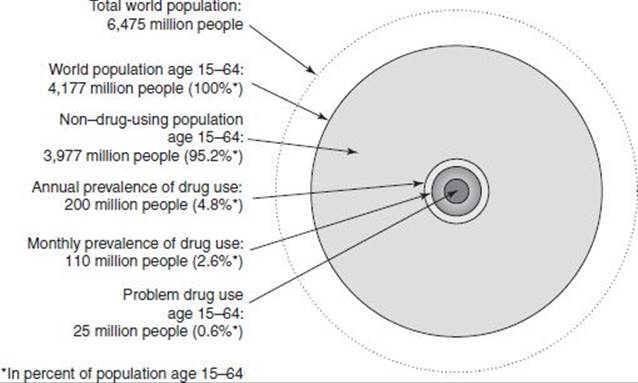
FIGURE 33-1 Illegal drug use at the global level (2005/2006). (Reprinted from World Drug Report, UNODC, 2007.)
The reports to the Commission on Narcotic Drugs on the world situation with regard to drug abuse (5) are based on the opinion of national experts as reported by the member states in the Annual Reports Questionnaire (6). The 2008 report provided an overview of trends in consumption of the main types of illicit drugs from 1998 to 2006 and contributed to the global evaluation of progress toward the achievement of the United Nations General Assembly Special Session (UNGASS) goals set in 1998 (5). The available information suggests that the consumption of opioids and cocaine is stabilizing or decreasing particularly in high-consumption countries (cocaine in North America and heroin in Western and Central Europe, in particular), and the prevalence of heroin injection remains highest in Central Asian and Eastern European countries. Increases in the use of ATS are reported to be tapering off as consumption tends to stabilize or even decrease in Western and Central Europe, East and Southeast Asia, North America, and Oceania. In contrast, cannabis consumption remains globally widespread, as experimentation among youth continues to increase.
In the last 25 years, one of the most visible negative consequences of drug dependence has been human immunodeficiency virus and acquired immunodeficiency syndrome (HIV/AIDS), and it is estimated that more than 10% of all HIV infections worldwide are due to the use of contaminated drug-injecting equipment. If sub-Saharan Africa and the Caribbean are excluded, this rate of injecting drug users rises even to 30% to 40% among those with HIV infection. Data on the size of the injection drug user (IDU) population from 130 countries indicate that there are 13.1 million IDUs worldwide. It also indicates that sharing of contaminated injection equipment is a major route of HIV transmission in many regions, including Eastern Europe; Central, South, and South East Asia; and some countries in Latin America (7).
HISTORICAL SYNOPSIS OF INTERNATIONAL DRUG TREATIES
International drug treaties concluded between 1912 and 1988 provide the legal basis for the present international drug control system aimed at reducing the supply of and demand for illicit narcotic drugs and psychotropic substances. The three major international drug control treaties are complementary and aim at ensuring the availability of narcotic and psychotropic substances for medical and scientific purposes while preventing their diversion into illicit channels, with a view of reducing human suffering and protecting the public health and welfare (8–10).
Particularly relevant to addiction medicine, the conventions specify that signatory countries take all practicable measures for the prevention of abuse of drugs and for the early identification, treatment, education, aftercare, rehabilitation, and social reintegration of the persons involved, including interventions to counteract the social and health consequences of drug abuse. They also require parties to promote the training of personnel involved in delivering such interventions and to facilitate an understanding of the problems of drug abuse among professionals and the general public.
Further clarifying such provisions in the conventions, the International Narcotics Control Board (INCB), in its 2003 report, noted that “Governments needed to adopt measures that may decrease the sharing of hypodermic needles among injecting drug abusers in order to limit the spread of HIV/AIDS.” At the same time, the INCB stressed that such measures should not promote and/or facilitate drug abuse. The same report also observes that “many Governments have opted in favour of drug substitution and maintenance treatment” and that “the implementation of this treatment does not constitute any breach of treaty provisions, whatever substance may be used for such treatment in line with established national sound medical practice” (6).
The conventions further state that when drug abusers have committed drug offences, countries may provide drug treatment, education, aftercare, rehabilitation, and social reintegration either as an alternative or as an addition to conviction or punishment. Such bridges between the criminal justice system and the treatment system may be established at different stages of the criminal process, including the prosecution stage or at the stage of enforcement of a prison sentence.
SELECTED ACTIVITIES OF THE UNITED NATIONS OFFICE ON DRUGS AND CRIME
The United Nations has had drug control functions since its inception, having inherited them from the League of Nations to provide leadership for international drug control efforts. In response to the various mandates reflected under the three major international drug control treaties, work on demand reduction is an integral part of the activities of the UNODC. This important area of work was given further impetus by the special United Nations session in 1998 and thereafter through the adoption of the Political Declaration, the Declaration on the Guiding Principles of Demand Reduction, and the Action Plan for its implementation, which provide focus for the UNODC's work in providing assistance to member states toward the goal of achieving significant and measurable results in the field of demand reduction by the year 2008. The UNODC's program of work aims specifically at improving national and global information systems for reporting on activities for the reduction of demand for illicit drugs, sharing of information on best practices, and supporting member states seeking expertise in developing their own strategies and activities for the reduction of demand for illicit drugs (11).
Progress toward Reaching a Balance between Supply and Demand Reduction
As reported by member states to the UNODC through the Biennial Reports Questionnaire, despite the size of the problem and the enormous costs related to drug abuse, in many countries, specialized services are not available or, if present, are not accessible. Although treatment and rehabilitation interventions are being expanded, they are still well below the amount and quality that is needed. For instance, opioid dependence detoxification remains the most common reported approach despite evidence of its lack of effectiveness as a stand-alone intervention, while the intervention with the most solid evidence base—pharmacologic maintenance—remains rather infrequently used in most regions. Interventions for reducing the negative health and social consequences of drug abuse have registered a strong increase at the global level and have overtaken treatment and rehabilitation interventions in terms of reported coverage of activities. In some regions, this trend appears to be associated with efforts to prevent the spread of HIV and other infections among IDUs.
UNODC advocates a comprehensive approach including prevention, treatment, and prevention of health and social consequences in line with the evidence base and has recently released a paper highlighting the complementarities of all those measures and calling for a continuum of care in services for drug users (12). In such a continuum, steps are taken to reach out to and engage drug users in prevention, treatment, and care strategies that protect them, their partners, and their families from infectious disease, other health problems, and negative social consequences. Within this model, a wide range of community-based services offer easy access to different target groups, responding to diverse age, gender, and other needs, and encourage entry to social and health care, substance dependence treatment, and rehabilitation. The UNODC-WHO discussion paper on principles of drug dependence treatment (13) notes that interventions and investments in treatment within such a model would be guided by human rights and evidence-based good practice and the high-quality standards that are required to approve pharmacologic or psychosocial interventions in all the other medical disciplines. Community- and prison-based treatment and rehabilitation programs can form part of the same overall treatment system and guarantee the same level of quality. In an international context, such interventions and strategies need to be adapted to the diverse regional, national, and local circumstances, taking into account cultural and economic factors.
Unfortunately, underutilization of such approaches represents a long-standing problem for the field, and those who would most benefit from research advances (community treatment agencies and the clients they serve) have historically been the least likely to be exposed to innovative evidence-based methods. Training of prevention and treatment professionals from early on in their careers and evaluation and feedback on service performance are essential to improve knowledge and disseminate evidence-based methodologies worldwide.
Key Initiatives and Tools: Youthnet and Treatnet—Knowledge Transfer Initiatives
With the aim of supporting countries in achieving significant results in reducing demand for drugs by 2008, the UNODC supports the Global Youth Network (www.unodc.org/youthnet) for the prevention of drug abuse. Regional networks reach with information, resources, and training more than 500 youth groups around the world and provide grants to some 125 organizations to implement comprehensive drug abuse prevention activities. Unfortunately, many prevention programs around the world, while well intentioned, implement activities that do not have the backing of scientific evidence (e.g., life skills education and family skills training programs) (14–17).
The UNODC aims at positioning drug dependence treatment as a key public health and development intervention. Its work, therefore, will increasingly focus on raising awareness about addiction as a treatable, multifactorial disease and about the need to improve the quality and coverage of drug treatment services around the world. Treatnet, the “International Network of Drug Dependence Treatment and Rehabilitation Resource Centres” (www.unodc.org/treatnet), aims to improve the provision of diversified and effective drug treatment and rehabilitation services, including the support to HIV/AIDS prevention and care, in all regions. The Network's members included, in its first stage from 2005 to 2007, 20 drug dependence treatment and rehabilitation resource centers, a training consortium led by University of California, Los Angeles Integrated Substance Abuse Programs and other partners. In its second phase, starting in 2008, it evolved into regional networks and involved in addition to treatment centers universities and governmental institutions in charge of treatment and rehabilitation. The work of the network has focused on and developed good-practice documents on four key topics: community-based treatment (18), treatment in prison settings (19), treatment and HIV/AIDS prevention and care (20), and sustained recovery management (21). Through Treatnet, the UNODC has developed a comprehensive training package on treatment and rehabilitation (22) and training of trainers in 14 countries who in turn have trained more than 1,000 physicians, psychologists, counselors, social workers, nurses, and other professionals. The trainers have assessed very positively the comprehensive training package and, in many cases, have continued to disseminate the training well beyond the UNODC's supported program.
The UNODC's Global Assessment Programme (GAP) on Drug Abuse aims at improving the local and global knowledge of the drug abuse situation and at building the capacity to design and implement effective responses to the drug abuse problem through establishing drug epidemio-logic surveillance and monitoring and evaluation systems for drug demand reduction. The GAP has been operational since 2000 in several regions of the world and is currently providing training and technical assistance in the Russian Federation, Central Asia, West and Central Africa, and the Middle East and North Africa.
The UNODC is a cosponsor of the Joint United Nations Programme on HIV/AIDS (UNAIDS) and the lead agency for HIV/AIDS prevention and care among IDUs and in prison settings. The UNODC is also responsible for assisting countries in implementing large-scale and wide-ranging interventions to prevent HIV infections and providing care and support to people living with HIV/AIDS. The UNODC advocates that evidence-informed, comprehensive, and large-scale interventions for IDUs be an integral part of national HIV/AIDS framework.
SELECTED ACTIVITIES OF THE WORLD HEALTH ORGANIZATION RELATED TO ADDICTION MEDICINE
The WHO, as the UN specialized agency on health, is concerned with all psychoactive substances irrespective of their legal status in the international treaties and advocates for a public health approach to problems related to tobacco, alcohol, illicit drugs, and other psychoactive substance use.
Global Burden of Disease Attributable to Psychoactive Substance Use
Better understanding of the impact of psychoactive substance use on the population health resulted from the influential Global Burden of Disease (GBD) study, a groundbreaking international effort to quantify the disease burden of different diseases and health conditions using mortality estimates and the estimates of disease burden expressed in disability-adjusted life years (DALYs) lost (23). In 2000, the WHO published its World Health Report with figures of comparative contribution of different risk factors to the disease burden in different parts of the world (24). Tobacco, alcohol, and illicit drug use were among the top leading preventable risk factors to health, responsible for 8.9% of the total disease burden if taken together (25).
The public health impact of psychoactive substance use is not limited to substance use disorders, and significant harm comes from acute intoxication, risks associated with the form of administration, or toxic effects of a substance (25). The proportion of the burden attributable to substance use disorders in the overall burden attributable to psychoactive substances is at least moderate. For example, according to the WHO estimates for 2002, alcohol use disorders are responsible for 1.4% of the total global disease burden, whereas drug use disorders account for 0.5%, compared to a much higher contribution of alcohol and drug use as risk factors to the global disease burden (illustrated in Table 33-1). At the same time, alcohol and drug use disorders (harmful use/ abuse and dependence) are the second largest contributor— after unipolar depressive disorders—to the global disease burden among “neuropsychiatric disorders,” which are responsible for 13% of the total global disease burden in 2002 (26). These data have important policy implications: From a public health perspective, effective reduction of the disease burden attributable to psychoactive substance use cannot be achieved just by treatment of substance dependence and implies a broader spectrum of effective policies. These include reducing exposure to psychoactive substances, limiting their availability in populations, and specific targeted interventions aimed at reducing the harm associated with continued use of psychoactive substances.
TABLE 33-1 PERCENTAGE OF TOTAL GLOBAL MORTALITY AND DALYs ATTRIBUTABLE TO TOBACCO, ALCOHOL, AND ILLICIT DRUGS, 2000

From World Health Organization. Neuroscience of psychoactive substance use and dependence. Geneva, Switzerland: World Health Organization, 2004.
Prevention and Treatment of Substance Use Disorders
Tobacco
The WHO's work on tobacco is an example of a comprehensive public health approach to problems caused by psychoactive substances. Reducing tobacco use is one of the key objectives of the current WHO work on the global tobacco epidemic supported by the WHO Framework Convention on Tobacco Control—a multilateral international treaty aimed at preventing tobacco-related diseases and promoting health (27). The WHO advocates for the six most effective tobacco control policies: raising taxes and prices; banning advertising, promotion, and sponsorship; protecting people from second-hand smoke; warning everyone about the dangers of tobacco; offering help to people who want to quit; and carefully monitoring the epidemic and prevention policies (2). Tobacco dependence treatment is one of the key effective measures in controlling tobacco-related harms, but a full range of treatment for tobacco dependence and at least partial financial support is available to only 5% of the world's population in developing countries in spite of the fact that tobacco use and dependence has the largest impact on health in populations of less resourced countries and that, by 2030, more than 80% of deaths attributable to tobacco will occur in low- and middle-income countries (28). Significant impact on public health can be achieved provided that coverage of effective interventions is sufficient and population-based measures are included in a comprehensive societal response and are properly implemented. This is equally applicable to prevention and treatment interventions.
Alcohol and Other Drugs
The WHO for many years advocated for the promotion of screening and brief intervention procedures for hazardous and harmful use of alcohol in health care and other settings, which have strong evidence base for their effectiveness and cost-effectiveness (29). The WHO sponsored the Project on Identification and Management of Alcohol-Related Problems in numerous countries with the objective of adoption of screening and brief interventions in national or regional health care systems to achieve the impact on population's health (30). Applying the principles of Alcohol Use Disorders Identification Test (AUDIT)-based screening and brief interventions for alcohol problems, the WHO initiated and supported the development of a screening instrument for hazardous and harmful use of any psychoactive substance, from tobacco to heroin and cocaine, which resulted in the development and testing of the WHO instrument called ASSIST (Alcohol, Smoking and Substance Involvement Screening Test) (31). The WHO sponsored the randomized controlled trial of screening and brief interventions for drug use implemented in the framework of the WHO ASSIST project in several countries, including Australia, Brazil, India, and the United States. Results of the study proved the effectiveness of brief interventions in reducing cannabis, opioid, and stimulant use among clients of health care settings (32). One of the milestones of the WHO ASSIST project was release of the manuals for screening and brief interventions based on the ASSIST including the self-help manual (33–33).
One of the conclusions in the WHO report “Neuroscience of psychoactive substance use and dependence” was that substance dependence “is not a failure of will or of strength of character but a medical disorder that could affect any human being” and “a complex disorder with biological mechanisms affecting the brain and its capacity to control substance use” (25). Pharmacologic interventions for some substance use disorders proved their effectiveness and became an important component of public health interventions in many parts of the world. Reflecting the growing public health importance of pharmacologic interventions for substance use disorders, a new section, “Medicines used in substance dependence programmes,” was introduced in the WHO Model List of Essential Medicines, and methadone and buprenorphine were the first medications included in the complementary list of essential medicines recommended by the WHO under this section (36). The public health relevance and importance of drug dependence treatment, including opioid agonist pharmacotherapy, are increasingly recognized worldwide in connection with HIV epidemics among injecting drug users, and this is reflected in several WHO policy documents (37,38).
Treatment Systems for Substance Use Disorders
Development of a treatment system for substance use disorders should be an integral part of the overall response to health and social problems (39). In many countries, substance use disorders are being addressed in the framework of existing mental health care services. The World Health Report 2001 addressed priority areas for actions for countries with different levels of resources for developing mental health care, which are directly relevant to developing treatment systems for substance use disorders. These priority areas include the following: provision of treatment in primary health care; making psychotropic drugs available; providing care in the community; educating the public; involving communities, families, and consumers; establishing national policies, programs, and legislation; developing human resources; linking with other sectors; monitoring community mental health; and supporting more research (40). New opportunities for supporting improvement of treatment systems emerge with evolving methodology of their structured assessment developed by the WHO for mental health care services (41) and in the process of development for prevention and treatment systems for substance use disorders.
THE EVOLVING ROLE OF INTERNATIONAL MEDICAL ASSOCIATIONS
The founding of medical associations created opportunities for addressing issues of global concern by medical professionals. The World Medical Association has several position statements in relation to the use of substances (http://www.wma.net/en/30publications/10policies/index.html) (42). After World War II, the World Medical Association modernized the Hippocrates Oath in 1948 to what became known as the “Declaration of Geneva” enshrining an International Code of Medical Ethics. Spurred by similar ethical concerns in relation to the treatment of mental disorders, the WPA was founded in 1950. It now includes two Sections of Addiction Psychiatry and Dual Disorders that organize educational activities about substance and behavioral addictions at meetings of the WPA and provides an addiction perspective on international strategies such as the development of a physician health and wellness international network or the optimal psychiatric response to comorbidities. It also contributes to the WPA role as a watchdog against the occurrence or recurrence of abuses of those suffering from mental illness and addictions.
To address the international aspects of addiction medicine, the need for an international society was recognized by international attendants at a number of meetings of the American Society of Addiction Medicine (ASAM) in the mid-1980s. On April 26, 1998, 25 physicians representing 11 countries from four continents met in New Orleans and decided to formalize their international collaboration. In 1999, at a founding meeting at the Betty Ford Center in Palm Springs, the ISAM came into being. The ISAM committed itself to advancing the knowledge about addiction seen as a treatable disease, advocate for the major role physicians worldwide have to play in its management as well as enhance the credibility of their role, and, lastly, develop educational activities including consensus guidelines.
Nine years later, the ISAM has a membership spanning 98 countries from all continents. It has added to the initial membership-based organization a network of national societies. It has a special affiliation agreement with the Austrian, Canadian, Dutch, Egyptian, Finnish, Icelandic, and Indian Addiction Medicine Societies, and a number of other agreements with national societies are in the works. We welcome associate memberships from allied health disciplines as well; the only activity restricted to physicians is board membership. Differential dues based on their economic potential follow the four World Bank categories of countries.
The Advocacy Role
The same objectives guiding the advocacy of the ASAM are at play in various countries of the world. Embarking on a career in addiction medicine means battling the public stigma attached to the disease that rubs off on the care providers. By and large, the general attitudes of the medical profession mirror those of the public. As the national organizations are involved in similar struggles within different resource constraints, an umbrella international organization can provide the external validation required to strengthen national advocacy. For example, several national medical insurance schemes, such as Canada's, successfully provide parity coverage for the treatment of addiction disorders, thus contributing to the experimental validation required by the United States struggles for such parity.
International medical associations help bolster the perception of addiction as a treatable disease by disseminating information about empirically based treatment practices arising from various parts of the globe while respectful of the local culture. This often involves a local needs assessment gathered by local medical opinion leaders and a culturally sensitive stepwise approach to remedial action. The ISAM has supported the research surrounding the experimental application of the ASAM's Patient Placement Criteria in diverse systems of care (43).
International Dissemination of Information
From the onset, a major goal for the ISAM was to hold an annual meeting in different parts of the world to overcome the barriers of distance and travel costs and network with practitioners worldwide. The ISAM have so far held or cosponsored meetings in Palm Springs, Cairo, Tel Aviv, Trieste, Ljubljana, Reykjavik, Amsterdam, Helsinki, St. Petersburg, Oporto, Buenos Aires, and Mar del Plata. Travel fellowships supported by the WHO for members from developing countries and the National Institute on Drug Abuse (NIDA) for young scientists help reduce the burden of cost. For members of the ISAM, the world becomes a much smaller place, connections with colleagues from across the globe are established, their programs and practices are directly observed, and the impact of their national drug strategies is compared. At each meeting, the local organizing committee strives to display their country's reservoir of hospitality and ensure optimal safety. In most ISAM meetings, about 40% of the scientific presentations originate from North America, anchored by presentations from the NIDA and the National Institute of Alcohol Abuse and Alcoholism (NIAAA); a third originate from Europe and Australasia; and one-fourth from the rest of the world. The presentations are in English, but a half-day track may be allotted to presentations in the local language. The meetings are a forum for the exchange of cutting-edge research as well as local and international clinical experience. The meetings bring visibility to the field locally and raise public awareness through media reports. International and local opinion leaders enhance one another's credibility in comparing empirically based practices.
A number of complementary educational activities have also been developed, including an information Web site (www.isamweb.org), a newsletter, and several position papers. The ISAM members are also playing key roles in the previously described UNODC Treatnet and the UNGASS feedback.
International Accreditation of Specialists
The development of a field with specialized expertise must be accompanied by an accreditation process. Since 2005, an International Certification in Addiction Medicine with an international editorial board has been held with applicants from 13 countries and 80 certificants so far (www.isamweb.org) (44). Based on the ASAM's pioneering efforts, the International Certification strives to provide affordable, valid, and comparable international credentialing. It is mainly a test of knowledge with several clinical judgment questions. It is not meant to compete with national qualifications but rather to be a main resource for countries that do not have such a validation instrument and eventually establish an internationally standardized core test of knowledge in addiction medicine. National legislation and/ or cultural requirements as well as observation of clinical skills could be easily tagged to the core knowledge test. The criteria of eligibility of physicians for writing the exam are meant to be inclusive. The certification test also helps point “new knowledge” frontiers to be promoted in the educational activities. Currently, knowledge about behavioral addictions as well as the management of pain and addiction constitutes two such frontiers. Another challenge is for the exam to be as “culturally neutral” as possible.
Reaching out to Colleagues from Developing Countries
Resource constraints are a major impediment to our colleagues in many areas of the world. Aside from a differential fee structure, organizing meetings in different continents, and maximizing our electronic outreach, the ISAM has collaborated with the WHO and NIDA in providing fellowships to colleagues from developing nations and young investigators (44).
Impact of Culture on Medical Practice
Policies addressing the use of various drugs including alcohol and tobacco vary from country to country. The management of opioid dependence may, arguably, arouse the most polarizing divide among national drug policies and, more specifically, the support or denial of the need for opioid maintenance therapy. Unfortunately, in areas of the world where the use of opioids creates the heaviest burden of morbidity, cultural and structural factors have impeded the dissemination of opioid maintenance treatment. The international medical associations are striving to promote empirically based practices that account for the local culture and economic resources. In many Islamic countries, for example, a thriving network of therapeutic communities with religious underpinning is the main resource for the management of opioid dependence. More recently, however, countries such as Iran and China are incorporating methadone maintenance and/or buprenorphine as part of their strategic panoply to combat opioid dependence (45).
Many countries limit their efforts to opioid detoxification. This preference has spurred the development of controversial practices such as rapid antagonist induction under general anesthesia. Despite modifications and improvement (46), the potential serious morbidity and mortality of this procedure along with its relatively high cost has led to charges of exploitation of the patient's desire for a “pain-free” detoxification. The long-term effect of the procedure is not supported by evidence (47).
CONCLUSIONS
Although demand reduction has gained international momentum in recent decades, increased political support and financial commitment are needed to develop further effective and ethical policies and programs for prevention and treatment of substance use disorders. Development of adequate international responses to problems related to psychoactive substance use requires concerted action. Synergy is emerging among the main international bodies involved in the management of legal and illegal drug problems, such as the WHO and the UNODC, research institutes such as the NIDA and the NIAAA in the United States, and the medical associations, such as the ISAM, concerned with the related problems. However, each organization has the need for resources to facilitate the necessary collaborations.
Prevention and treatment approaches delivered within the community and as a continuum of care can maximize coverage and response to needs as well as help reduce stigma and discrimination. International mechanisms for knowledge transfer such as communities of knowledge, networks, and partnership schemes are key to disseminate evidence-based practices and ultimately improve the quality and effectiveness of interventions. Health professionals, and particularly specialists in addiction medicine, have an important role in development, shaping, and implementation of international responses. The medical associations have a major peer-led educational role either through their meetings and fellowships or in collaboration with other organizations' activities. The associations promote culturally sensitive, empirically based medical practices at the local level and may credential local medical practitioners.
To achieve public health goals and impact on population health, it is imperative to go beyond individual-level interventions and promote and support effective problem- and population-based preventive strategies and measures on an international basis.
REFERENCES
1.World Health Organization. Global status report on alcohol and health. Geneva, Switzerland: World Health Organization, 2011.
2.World Health Organization. WHO report on the global tobacco epidemic: warning about the dangers of tobacco. Geneva, Switzerland: World Health Organization, 2011.
3.United Nations Office on Drugs and Crime (UNODC). World Drug Report 2012. Vienna, Austria: UNODC, 2012. Retrieved June 19, 2013 from http://www.unodc.org/unodc/en/data-and-analysis/WDR-2012.html
4.Mathers CD, Stein C, Fat DM, et al. Global burden of disease 2000: version 2 methods and results. GPE Discussion paper 50. Geneva, Switzerland: World Health Organization, 2001.
5.Commission on Narcotic Drugs. World situation with regard to drug abuse. Report of the Secretariat, Commission on Narcotic Drugs. Vienna, Austria 2008—E/CN. Retrieved July 7, 2008 from. http://documents-dds-ny.un.org/doc/UNDOC/GEN/V08/501/18/pdf/V0850118.pdf?OpenElement
6.International Narcotics Control Board Report of the International Narcotics Control board for 2003 (E/INCB/2003/1). Retrieved November 11, 2008 from http://www.incb.org/incb/annual_ report_2003.htm
7.Mathers BM, Degenhardt L, Phillips B, et al.; the Reference Group to the United Nations on HIV and injecting drug use. The global epidemiology of injecting drug use and HIV among people who inject drugs: a systematic review. Lancet 2008;372(9651):1733–1745.
8.Single Convention on Narcotic Drugs, 1961 (amended by the Protocol of 25 March 1972), United Nations. Retrieved November 11, 2008 from http://www.unodc.org/pdf/convention_1961_en.pdf
9.Convention on Psychotropic Substances, 1971, United Nations. Retrieved November 11, 2008 from http://www.unodc.org/pdf/convention_1971_en.pdf
10.Convention against the Illicit Traffic in Narcotic Drugs and Psychotropic Substances, 1988, United Nations. Retrieved November 11, 2008 from http://www.unodc.org/pdf/convention_1988_en.pdf
11.UNODC Annual Report 2008. Retrieved November 11, 2008 from http://www.unodc.org/documents/about-unodc/AR08_web.pdf
12.Reducing the adverse health and social consequences of drug abuse: A comprehensive approach, UNODC, 2008. Retrieved November 11, 2008 from http://www.unodc.org/docs/treatment/reducing-adverse-consequences-drug-abuse%5B1%5D.pdf
13.Principles of Drug Dependence Treatment. Discussion paper. UNODC, WHO, 2008. Retrieved November 11, 2008 from "http://www.unodc.org/documents/drug-treatment/UNODC-WHO-Principles-of-Drug-Dependence-Treatment-March08.pdf
14.Foxcroft DR, Ireland D, Lister-Sharp DJ, et al. Longer-term primary prevention for alcohol misuse in young people: a systematic review. Addiction 2003;98:397–411.
15.Foxcroft DR, Ireland D, Lowe G, Breen R. Primary prevention for alcohol misuse in young people. Cochrane Database Syst Rev 2002;3:CD003024.
16.Foxcroft DR. Alcohol misuse prevention for young people: a rapid review of recent evidence. WHO Technical Report. Geneva, Switzerland: World Health Organization, 2006.
17.Faggiano F, Vigna-Taglianti FD, Versino E, et al. School-based prevention for illicit drugs' use. Cochrane Database Syst Rev 2005;2:CD003020.
18.United Nations Office of Drug Control. Treatment good practice document—drug dependence treatment: community based treatment. Geneva, Switzerland: UNODC, 2008.
19.United Nations Office of Drug Control. Treatment good practice document—drug dependence treatment in prison settings. Geneva, Switzerland: UNODC, 2008.
20.United Nations Office of Drug Control. Treatment good practice document—drug dependence treatment—its role in HIV/AIDS prevention and care. Geneva, Switzerland: UNODC, 2008.
21.United Nations Office of Drug Control. Treatment good practice document—drug dependence treatment—sustained recovery management UNODC, 2008.
22.United Nations Office of Drug Control. Treatment drug dependence treatment training package. UNODC, 2008.
23.Murray CJL, Lopez AD, eds. The global burden of disease: a comprehensive assessment of mortality and disability from diseases, injuries and risk factors in 1990 and projected to 2020. Cambridge, MA: Harvard University Press, 1996.
24.World Health Organization. The World Health Report 2002. Reducing risks, promoting healthy life. Geneva, Switzerland: World Health Organization, 2002.
25.World Health Organization. Neuroscience of psychoactive substance use and dependence. Geneva, Switzerland: World Health Organization, 2004.
26.World Health Organization. The World Health Report 2004: changing history. Geneva, Switzerland: World Health Organization, 2004.
27.World Health Organization. WHO framework convention on tobacco control. [updated reprint 2004, 2005]. Geneva, Switzerland: World Health Organization, 2003.
28.Mathers CD, Loncar D. Projections of global mortality and burden of disease from 2002 to 2030. PLoS Med 2006;3(11):442.
29.Whitlock EP, et al. Behavioral counseling interventions in primary care to reduce risky/harmful use by adults: a summary of the evidence for the U.S. Preventive Services Task Force. Ann Intern Med2004;140:557–568.
30.Heather N, ed. WHO Project on identification and management of alcohol-related problems: report on phase IV. Geneva, Switzerland: WHO, 2006. Retrieved November 11, 2008 from http://www.who.int/substance_abuse/publications/identification_management_alchoholproblems_phaseiv.pdf
31.WHO ASSIST Working Group. The alcohol, smoking and substance involvement screening test (ASSIST): development, reliability and feasibility. Addiction 2002;97:1183–1194.
32.The effectiveness of a brief intervention for illicit drugs linked to the alcohol, smoking and substance involvement screening test (ASSIST) in primary health care settings: a technical report of phase III findings of the WHO ASSIST randomized controlled trial. Retrieved November 11, 2008 from http://www.who.int/substance_abuse/activities/assist_technicalreport_phase3_final.pdf
33.Humeniuk RE, Henry-Edwards S, Ali RL, et al. The Alcohol, Smoking and Substance Involvement Screening Test (ASSIST): manual for use in primary care. Geneva, Switzerland: World Health Organization, 2010. Available at: http://www.who.int/substance_abuse/activities/assist/en/index.html (Accessed 19 June 2013).
34.Humeniuk RE, Henry-Edwards S, Ali RL, et al. The ASSIST-linked brief intervention for hazardous and harmful substance use: manual for use in primary care. Geneva, Switzerland: World Health Organization, 2010. Available at: http://www.who.int/substance_abuse/activities/assist/en/index.html (Accessed 19 June 2013).
35.Humeniuk RE, Henry-Edwards S, Ali RL, et al. Self-help strategies for cutting down or stopping substance use: a guide. Geneva, Switzerland: World Health Organization, 2010. Available at: http://www.who.int/substance_abuse/activities/assist/en/index.html. Accessed June 18, 2013.
36.WHO Expert Committee on the Selection and Use of Essential Medicines. 14th report (including the 14th model list of essential medicines). Geneva, Switzerland: World Health Organization, 2005.
37.World Health Organization. Substitution maintenance therapy in the management of opioid dependence and HIV/AIDS prevention: position paper. Geneva, Switzerland: WHO, UNODC, UNAIDS, 2004.
38.World Health Organization. Basic principles for treatment and psychosocial support of drug dependent people living with HIV/AIDS. Geneva, Switzerland: World Health Organization, 2006.
39.World Health Organization, WHO Expert Committee on Drug Dependence. 30th report. Geneva, Switzerland: World Health Organization, 1998.
40.World Health Organization. The World Health Report 2001: mental health: new understanding, new hope. Geneva: World Health Organization, 2001.
41.World Health Organization. Assessment instrument for mental health systems, Version 2.2. Geneva, Switzerland: World Health Organization, 2005.
42.World Medical Association: World Medical Association Statement on the Prescription of Substitute Drugs in the Outpatient Treatment of Addicts to Opiate Drugs. Adopted by the 47th General Assembly Bali, Indonesia, September 1995 and rescinded at the WMA General Assembly, Pilanesberg, South Africa, 2006. Retrieved 11/11/2008 from http://www.wma.net/e/policy/a8.htm
43.Gastfriend DR, ed. Addiction treatment matching. Research foundations of the American Society of Addiction Medicine Criteria. Binghamton, NY: Haworth Medical Press, 2003.
44.International Society of Addiction Medicine. ISAM Web page. Retrieved November 11, 2008 from www.isamweb.org.
45.Lu L, Zhao D, Bao- Y-P, et al. Methadone maintenance treatment of heroin abuse in China. Am J Drug Alcohol Abuse 2008;34:127–131.
46.Brewer C. Ultra-rapid, antagonist-precipitated opioid detoxification under general anesthesia or sedation. Addict Biol 1997;2:291–302.
47.Collins ED, Kleber HD, Whittington RA, et al. Anaesthesia-assisted vs. buprenorphine- or clonidine-assisted heroin detoxification and naltrexone inductions. A randomized trial. JAMA2005;294:903–913.
Disclaimer: The views expressed herein are those of the authors, Drs. V. Poznyak, J. Tomás-Rosselló, and N. el-Guebaly, and do not necessarily reflect the positions, decisions, or stated policies of the World Health Organization, the United Nations Office on Drugs and Crime, the World Psychiatric Association, or the International Society of Addiction Medicine.