
Martha J. Wunsch, MD, FAAP, FASAM, Pamela K. Gonzalez, MD, MS, FAAP John A. Hopper, MD, FAAP, FACP, FASAM, Mary G. McMasters, MD, FASAM, and Carol J. Boyd, PhD, MSN, RN, FAAN
CHAPTER OUTLINE
■ DEFINING THE TERMS
■ PREVALENCE
■ NONMEDICAL USE AMONG ADOLESCENTS AND YOUNG ADULTS
■ SOURCES OF PRESCRIPTION MEDICATIONS
■ DRUG POISONING DEATHS AND LEGAL CONSEQUENCES
■ PREVENTION OF PRESCRIPTION DRUG ABUSE
■ PRESCRIPTION MONITORING PROGRAMS
■ MANAGEMENT OF PRESCRIPTION DRUG ABUSE
■ SUMMARY
Abuse of illicit drugs such as marijuana, heroin, and cocaine has been a concern since the latter half of the 20th century, but, in the first decade of the new millennium, there are additional problems caused by the rapid growth of prescription drug abuse, particularly high-potency opioids (1,2). The abuse of controlled medications is complex because it involves the physician prescribing as well as the patient gaining access to powerful drugs with high abuse risks and resale value (3). Controlled medications, such as those prescribed to relieve pain, anxiety, depression, insomnia, narcolepsy, and attention deficit disorders, are increasingly misused, abused, diverted, implicated in addiction, and linked to nonfatal overdose and deaths. The scheduled (controlled) drug classes most often involved in nonmedical use are opioid analgesic, sedative–hypnotic, sedative–anxiolytic, and stimulant medications.
Prescription opioid medications are second only to marijuana as the most common first illicit drug used among individuals over 12 years of age (Fig. 34-1) (4). A 10-year trend toward greater nonmedical use among adolescents and young adults is now apparent (5–7). The National Survey on Drug Use and Health (NSDUH) and Monitoring the Future study find significant increases in nonmedical use of prescription opioids in particular (8) (Fig. 34-2). Although the motives for nonmedical use vary among young people—including self-treatment as well as sensation seeking—any nonmedical use places an adolescent at risk for injury, addiction, and overdose death (9,10).

FIGURE 34-1 Past-year initiates of specific illicit drugs among persons aged 12 or older: 2010. (From Substance Abuse and Mental Health Services Administration. Results from the 2010 National Survey on Drug Use and Health: Summary of National Findings, NSDUH Series H-41, HHS Publication No. (SMA) 11–4658. Rockville, MD: Substance Abuse and Mental Health Services Administration, 2011.)
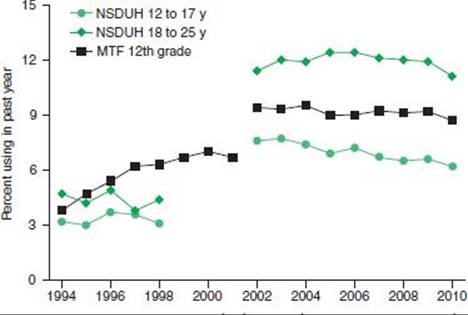
FIGURE 34-2 Past-year nonmedical pain reliever use among youths and young adults in the NSDUH and MTF: 1994 to 2010. (From Johnston LD, O’Malley PM, Bachman JG, et al. Marijuana use continues to rise among U.S. teens, while alcohol use hits historic lows. Ann Arbor, MI: University of Michigan News Service, 2011. Retrieved February 18, 2013 from http://www.monitoringthefuture.org)
Although adolescents and young adults have the highest prevalence rates for nonmedical use, adult patients misusing or diverting medications is also a problem. Indeed, it is often hard to differentiate between those patients addicted to pain medication and those seeking analgesic relief in primary care offices (11,12) and pain clinics (13,14). Even the most scrupulous and appropriate prescriber knows that once a prescription is written, patient behavior (or family behavior) can lead to diversion for nonmedical use.
This chapter presents an overview of what is known about nonmedical use, misuse, and abuse of prescription medications. The chapter also reviews sequelae from nonfatal poisonings, in which ingestion of a prescription medication causes serious harm, to the most serious consequence, overdose death. Strategies for the identification and management of the patient engaged in the nonmedical use of prescription medications will be presented as well as selected prevention strategies.
DEFINING THE TERMS
Various scientific, clinical, and research definitions of misuse, abuse, addiction, problematic use, and nonmedical use of prescription medications exist. This leads to difficulties in estimating the incidence and prevalence of the problem (1). Compton and Volkow focus upon individuals without prescriptions by defining nonmedical use as “any intentional use of a medication with intoxicating properties outside of a physician’s prescription for a bona fide medical condition, excluding accidental misuse.” According to the National Institute on Drug Abuse, a patient with a prescription for a psychoactive medication taking the medication in ways other than those intended by the prescriber, increasing the dose without a physician’s knowledge, or combining medications without the prescriber’s awareness is engaging in medication misuse (1). The term prescription drug abuse is generally used as an “umbrella term” and includes both nonmedical use and medical misuse.
Boyd and McCabe expand on Compton and Volkow’s definition in their extensive research on this subject (4,5,8,15–20). First, they distinguish between medical and nonmedical users (16) and then note that people with a legitimate prescription may use the medication to self-treat (e.g., take more than prescribed) or to sensation seek (e.g., take to get high) (4). These people are termed medical misusers since they are using their own prescriptions. They may also take more than prescribed (altering the prescribed dose, not taking the medication within a prescribed time interval) or coingest medication with alcohol or other psychoactive drugs (16). Alternatively, people may use someone else’s medication (4). These people are the nonmedical users of prescription medications. Self-treatment motivations carry different risks than sensation-seeking motivations, although all medical misuse and nonmedical use place the user at risk for accidental events and substance use disorders (5,6).
Public perception that prescription drug abuse differs from “street drug use” was described by a national survey 20 years ago in the 1992 National Household Survey on Drug Abuse, the precursor to NSDUH. Of those respondents who denied engaging in nonmedical use of prescription medications, 70% admitted to taking their medications more often, taking in greater amounts than prescribed, or taking medication that was borrowed or bought without a prescription (15). Few endorsed taking a drug for kicks, to get “high,” to feel good, or out of curiosity. These findings suggest that there is a cultural belief that abuse of prescription drug only includes behavior focused on seeking euphoria or an altered state. Self-treatment with someone else’s medication was not seen as a problem. These results underline the importance of educating patients about appropriate use of medications. From the point of view of the patient, education about unintended risks of excessive doses or combinations of medications is most important.
PREVALENCE
Several epidemiologic studies and national population surveys have reported an increase in nonmedical use of prescription medications that began in the 1990s. The annual NSDUH uses a computer-assisted survey method to ask respondents, “Have you ever, even once, used [insert the name of a specific medication] that was not prescribed for you or that you took only for the experience or feeling it caused?” The NSDUH uses pill cards with pictures to assist the respondent in identification of particular medications. Between 2006 and 2010, the percentage of Americans aged 12 or older reporting nonmedical use of psychotherapeutic medications in the prior month has been stable. In the 2010 survey, 7 million people (2.7% of the population surveyed) reported nonmedical use (Fig. 34-3). The NSDUH defines psychotherapeutic medications to include any prescription-type pain relievers, tranquilizers, stimulants, or sedatives. Prescription opioid medications are the type of medication most often used in a nonmedical manner, a consistent pattern since 2002 (Fig. 34-4). These results should be interpreted with caution since, as noted above, individuals with very different conditions and motivations for use may answer the questions in the affirmative.

FIGURE 34-3 Past-month illicit drug use among persons aged 12 or older: 2010. (From Substance Abuse and Mental Health Services Administration. Results from the 2010 National Survey on Drug Use and Health: Summary of National Findings, NSDUH Series H-41, HHS Publication No. (SMA) 11–4658. Rockville, MD: Substance Abuse and Mental Health Services Administration, 2011.)

FIGURE 34-4 Past-month nonmedical use of types of psychotherapeutic drugs among persons aged 12 or older: 2002 to 2010. +Difference between this estimate and the 2010 estimate is statistically significant at the 0.05 level. (From Substance Abuse and Mental Health Services Administration. Results from the 2010 National Survey on Drug Use and Health: Summary of National Findings, NSDUH Series H-41, HHS Publication No. (SMA) 11–4658. Rockville, MD: Substance Abuse and Mental Health Services Administration, 2011.)
The increase in nonmedical use of prescription medications among young women adversely affects the entire family, particularly neonates and young children. Among the population of pregnant women, it is difficult to estimate the prevalence of illicit substance use due to the added stigma of perinatal addiction, prevalence of multiple substances used, legitimate prescription of psychiatric medications for dual diagnoses, abuse of tobacco, and potential consequences of loss of child custody when abuse and/or addiction is discovered. However, proxy measures such as the increase in the diagnoses of antepartum opiate use and neonatal abstinence syndrome (NAS) between 2000 and 2009 in the United States suggest that substance use disorders are identified more often among pregnant and parenting women (16). An analysis of health care expenditures revealed a more than threefold increase in the incidence of NAS from 1.20/1,000 births (95% CI, 1.04 to 1.37) in 2000 to 3.39/1,000 live births (95% CI, 3.12 to 3.67) in 2009. There has been more than a fourfold increase in antepartum maternal opioid use with an increase of 1.9/1,000 affected hospital births per year (95% CI, 1.01 to 1.35) in 2000 to 5.63/1000 affected births in 2009 (95% CI, 4.40 to 6.71). Both increases are statistically significant (p < 0.0001) and are indicative of the great burden perinatal addiction places upon the health care system. For more information about the effect of non-medical use of prescription medications on pregnancy and newborns, please see Chapter 81.
Unintentional child poisonings with opioids (buprenorphine, fentanyl, hydrocodone, hydromorphone, methadone, morphine, and oxycodone) have increased among children under age 6. Between January 2003 and June 2006, the Researched Abuse, Diversion and Addiction-Related Surveillance (RADARS) System reported that 9,179 children (54% male, median age 2 years) were exposed to a prescription opioid. This resulted in eight deaths and many more seriously ill children. Exposures were primarily ingestions of a medication prescribed to an adult in the household. RADARS reported that pediatric exposures were more likely to occur in communities where more prescriptions had been filled for opioids (21).
In another study to elucidate the prevalence of the problem of prescription opioid abuse, RADARS pooled information from drug abuse experts, law enforcement, and poison control centers. They reported an increase in abuse of all prescription opioids in the United States; extended-release and immediate-release oxycodone and hydrocodone were the most widely abused medications (22,23). According to their reports, those abusing prescription opioids were more likely to live in rural, suburban, and small-to medium-sized urban areas, although these demographic factors may be changing. Now much expanded in scope and located at the Rocky Mountain Poison and Drug Center-Denver Health, RADARS continues to be a rich source of data about nonmedical use of prescription medications.
Prescription Opioids and Chronic Pain
The reported prevalence of nonmedical use of opioid prescription medication among patients with prescriptions, predominantly prescribed for chronic pain, varies significantly due to lack of agreement in the definition of misuse, abuse, addiction, or problematic behavior; variations in identification and screening; and the criteria used to define opioid abuse or addiction (24,25). Study populations can include patients with cancer, patients with nonmalignant chronic pain, patients in treatment for addiction, or those treated for pain in primary care settings. In some studies, patients with known addiction are excluded. The American Society of Interventional Pain Physicians provides important guidelines for the clinician interfacing with this population (26,27).
Benzodiazepine Medications
A review of benzodiazepine treatment in the last 50 years reveals that prescribers are well aware of potential for abuse and addiction to these sedative–anxiolytics (28). In the last decade, the increase in the nonmedical use of benzodiazepines, most commonly alprazolam, clonazepam, and diazepam, has been widely reported. The NSDUH, which classifies benzodiazepines as tranquilizers, reports that in the prior 30 days about 1% of those using illicit drugs also endorse abusing benzodiazepines (see Fig. 34-3), a steady trend since 2002. The Treatment Episode Data Set reported that treatment for benzodiazepines, as a primary problem, increased from 2.5% of admissions in 1992 to nearly 20% in 2009 (29). Some patients in opioid addiction treatment such as methadone maintenance or office-based buprenorphine treatment continue to abuse benzodiazepines (30).
Between 1999 and 2008, poisonings involving benzodiazepines increased along with opioid analgesic overdose deaths (31), and benzodiazepines have increasingly been involved in opioid overdose deaths where methadone was identified (32–34). In an analysis of overdose deaths in France, where methadone and/or buprenorphine was implicated, benzodiazepines were postulated to have been a synergistic factor along with alcohol and other neuroleptics (35). It has been known since the 1990s that those using benzodiazepines nonmedically were more likely to have anxiety symptoms and serious mental illness, to engage in illicit drug use, to initiate drug use at a younger age, and to use drugs intravenously (36). Epidemiologic information, as well as clinical experience, informs physicians that individuals use sedative hypnotics and tranquilizers for a variety of reasons. These patients are at higher risk for other forms of substance abuse as well. In any case, it is important to note that benzodiazepines are no longer considered firstline chronic medications for the treatment of anxiety and panic disorder; that role has been assumed by selective serotonin reuptake inhibitors.
NONMEDICAL USE AMONG ADOLESCENTS AND YOUNG ADULTS
Earlier onset of alcohol, tobacco, and marijuana use is associated with development of increased rates of substance dependence in adulthood (37). A similar picture is emerging for early nonmedical use of prescription medications. In the 2001–2002 National Epidemiologic Survey on Alcohol and Related Conditions, researchers found that if respondents reported using a scheduled prescription medication nonmedically before age 13, they were significantly more likely to have a diagnosis of prescription medication abuse or dependence than individuals who began nonmedical use at 21 years (or older) (17). Additionally, individuals who had reported beginning nonmedical of prescription medication use at younger age (18 to 24) at Wave 1 had higher odds (adjusted odds ratio [AOR] = 3.42) of meeting criteria for opioid or other abuse/dependence at Wave 2 than those individuals who began use after age 24 (15). Moreover, in a school-based sample of adolescents, nonmedical use of prescription medication was also associated with other drug use, including alcohol, tobacco, marijuana, and other illicit drugs, as well as reports of substance use problems (18). Among adolescents, nonmedical prescription opioid use may escalate from oral to nasal to IV administration and, perhaps because of the cost of prescription medications, may progress to less-costly heroin abuse and addiction (38).
Prevalence
Nearly 6% of young adults report nonmedical use of a scheduled pain medication in the past month (4). Less is known about pharmaceutical stimulant misuse and abuse than about prescription opioids; however, nonmedical use of stimulants appears to be most prevalent after high school among young adults aged 18 to 25 (39,40). Although self-medication (dextroamphetamine, methylphenidate) often involves use of a single drug to increase attention or improve concentration for study or to reduce hyperactivity, nonmedical use often occurs in conjunction with alcohol and other substances (with males more likely than females to engage in instances of polydrug use) (41,42). In cases of intoxication or overdose, the physician should suspect involvement of more than one substance. Urine toxicology results can be helpful in the management of the patient.
Motivation for Adolescent/Young Adult Misuse
Adolescents and young adults engaging in nonmedical use frequently endorse self-treatment as a reason for use. In one Web-based survey of Midwestern 10- to 18-year-olds, adolescents were asked to endorse reasons for nonmedical use and most often endorsed treatment of symptoms for which a medication is often prescribed, including using stimulants to study, focus, and lose weight; pain medication to relieve pain; and tranquilizers and sedative hypnotics for anxiety or as sleep aids (19,43). However, some respondents candidly endorsed experimentation, “to get high,” and “because I’m addicted,” as reasons for use. As with the general population, the motivation for nonmedi-cal use in youth can range from “self-treatment,” to experimentation, intoxication or euphoria. Those who endorsed reasons other than self-treatment for nonmedical use were significantly more likely to have substance abuse problems as indicated by high scores on the Drug Abuse Screening Test-10 (44). When working with teens and young adults, physicians should be aware of the use of alcohol and other drugs in addition to prescription medications, consider multiple motivations including self-treatment, and have a high index of concern for the potential for accidental overdose.
SOURCES OF PRESCRIPTION MEDICATIONS
Most controlled medications used nonmedically are obtained from friends and family, although other sources include prescriptions from one physician, multiple physician offices, emergency departments, and/or urgent care sites; theft in the distribution chain including from pharmacies; online purchases; stealing from friends or family members who have them legally prescribed; forging prescriptions; and purchase from strangers or “drug dealers” (19,45).
Information obtained from prescription opioid abusers, both in treatment and still actively using, sheds some light on the provenance of medications diverted to nonmedical use and abuse. Sources (from most often to least often) are drug dealers, sharing/trading, legitimate medical practices, illegitimate medical practices (“pill mills”), and theft (46). Drug dealers participating in qualitative interviews reported strategies to procure medication. These included posing as patients visiting multiple pain clinics, stealing from pharmacies with the cooperation of employees, and purchase of medication prescribed to indigent patients. The most commonly sold medications were prescription opioid analgesics followed by benzodiazepines such as alprazolam (47). Although this study was conducted in heavily affected south Florida, the findings may generalize to other communities.
The NSDUH 2010 data indicate that, among respondents age 12 or older who used pain relievers nonmedically in the past 12 months, the most common source of opioid medications was “from a friend or relative for free” (55%) and 79% of the time the friend or relative was prescribed the drugs from just one doctor. Only 17.3% of respondents had themselves obtained medication from a doctor, another 11.4% bought them from a friend or relative (increased from 8.9% in 2007 to 2008), 4.8% took them from a friend or relative without asking, and less than 1% bought medication on the Internet (4). Purchase from street sources was less common, with only 4.4% buying pain relievers from a drug dealer or other strangers. Where known, stimulant medications appear to be more often (than is observed for prescription opioids) obtained from a drug dealer or other strangers (6.5%) and through the Internet (7.2%). Although most surveys report relatively little use of the Internet as a source for nonmedical use, there is a proliferation of online storefronts that sell and ship primarily Schedule III and IV medications, often without the need for a prescription (48–50). The sources of benzodiazepines are not well described in the literature; however, it is likely that they are commonly obtained, as other prescription medications, from friends and family.
Adolescents may take bottles of medications from their parents’ medicine cabinets, with or without their knowledge, or misuse or divert their own prescribed medications to peers. Students in middle and high school are more likely to get medication from family or peers (51), male college students are more likely to obtain diverted medications from peers, and family members remain the source of sedative– hypnotic, sleeping, and pain medications for women (20). In the case of nonmedical use of stimulants, high school and college students are often approached at school to share or sell their own legitimately prescribed medications (41).
The number of opioids prescribed to adolescents and young adults (ages 15 to 29) nearly doubled between 1994 and 2007 (52). Although a causal relationship has yet to be elucidated, increased rates of prescribing may have provided access to medications diverted for nonmedical use and abuse. More than half of these opioid prescriptions were for hydrocodone- and oxycodone-containing products. For patients aged 10 to 19, dentists were the main prescribers, followed by non–pediatrician primary care, and emergency medicine physicians; the same three groups were the predominant prescribers for the 20 to 29 age group, although with predominance shifted from dentists toward non–pediatrician primary care physicians (53).
Screening for substance use problems among teens may decrease nonmedical use. The CRAFFT is a validated screening measure for alcohol and drug abuse among teens that also successfully screens for the risk of nonmedical use in this age group (54,55).
DRUG POISONING DEATHS AND LEGAL CONSEQUENCES
In 2007, approximately 27,000 unintentional drug overdose deaths occurred in the United States, one death every 19 minutes (56).
The most devastating consequence of prescription drug abuse is progression to unintentional overdose leading to a fatality. A review of the pathophysiology and guidelines regarding clinical management of opioid overdose is beyond the scope of this review and has been covered elsewhere (57).
While illicit opioid heroin poisonings increased by 12.4% from 1999 to 2002, the number of prescription opioid analgesic poisonings in the United States increased by 91.2% during that same time period (58). Thus, prescribed drugs have supplanted the illicit drugs heroin and cocaine as the leading cause of drug-related overdose deaths (59) (Fig. 34-5). The stigma of drug abuse and addiction, a lack of timely or accurate death certificate data, an absence of standards for investigation of drug deaths, inadequate toxicologic testing, and differences in death classification by medical examiners may contribute to postulations of under-reporting and underestimation of decedent cases.

FIGURE 34-5 Unintentional drug overdose deaths involving opioid analgesics, cocaine, and heroin in the United States during 1999 to 2007. (From National Vital Statistics System. Multiple cause of death dataset. Available at http://www.cdc.gov/nchs/nvss.html)
Drug poisoning deaths are defined by the National Center for Health Statistics’ National Vital Statistics System as unintentional deaths or those of undetermined intent whose underlying cause is coded as “narcotics” (X43) or “other and unspecified” drugs (X44) (58). The Drug Abuse Warning Network and the Substance Abuse and Mental Health Services Administration (SAMHSA) report that for every unintentional death, there are 9 admissions to substance abuse treatment (60) and 35 visits to emergency departments (61). The paucity of knowledge about the pharmacokinetics and appropriate dosages of methadone, inadequate counseling and monitoring of patients, a lack of understanding by patients of the danger of misuse, patient sharing and borrowing medications, undetected doctor shopping, dosing errors, and pharmaceutical abuse are postulated as contributing to the increase in poisoning deaths (62). Increases in overdose deaths appear to parallel the increase in the number of prescriptions written and doses of opioid analgesics at a regional or state level (62).
Medical examiners and forensic toxicologists have access to a wealth of information about deaths where prescription medications are identified on toxicology. By 2005, medical examiners had reported increased cases of opioidrelated drug deaths in Maine, New Hampshire, Vermont, Maryland, Utah, and New Mexico, involving predominantly the prescription medications oxycodone, hydrocodone, and methadone (63). By 2010, rural states including West Virginia, Virginia, New Mexico, Utah, Louisiana, Oklahoma, Nevada, Kentucky, and Tennessee reported the highest incidence of drug poisoning deaths in the United States (64). Demographic characteristics, medical and psychiatric history, prescriptions held, and other information from death scene investigations have now been described for both the United States and several states (33,65–73).
Deaths are primarily classified as accidental, rather than due to suicide, and multiple drugs, illicit and licit, are often identified. Often, the presence of multiple prescription medications (opioids, benzodiazepines, and antidepressants), illicit drugs, and alcohol identified on toxicology makes precise determination of the cause of death difficult (66). The most commonly identified prescription opioids found in fatal overdose cases are hydrocodone, oxycodone, and methadone and, in the benzodiazepine class, alprazolam (59). Even if pills are found in the stomach, medical examiners are unable to determine if this was the dosage form ingested by the decedent. When other substances, including alcohol, are present, there is amplification of the depressant effect of opioids, sedatives, and benzodiazepines (67,68). Furthermore, it may be unknown if the concentration of the medication was lethal or pharmacologic and physiologic interactions were at work (66,69).
The rates and types of poisoning deaths vary by gender, race/ethnic minority, prescriptions for the decedent, and region of the nation. The Centers for Disease Control reported that US drug poisoning death rates for males exceeded females from 2003 to 2007. For males, the highest rates were seen among non-Hispanic blacks and non-Hispanic whites. Generally, members of racial/ethnic minorities may have lower death rates, most likely because they are less likely to be prescribed prescription medications; however, the highest death rates for females were found among American Indian/Alaskan Native women (33).
Among unintentional drug overdose death cases with prescriptions for controlled substances in New Mexico, there was an increased risk of overdose death among decedents with one or more sedative–hypnotic prescriptions, those who were older, those with more prescriptions, and those with a prescription for buprenorphine, fentanyl, hydromorphone, methadone, or oxycodone (70).
In West Virginia and Virginia, deaths occurred more commonly among males, and decedents ranged in age from 18 to 54. Indications of active substance abuse were commonly present; women aged 35 to 44 years old were more likely to have a prescription when compared to men; multiple substances were identified on toxicology, and opioids were the most common drug class to be identified followed by benzodiazepines and antidepressants (32,33).
Poisoning deaths where methadone is a direct or contributing cause of death have increased dramatically since 2000 and are of particular concern. This is because methadone can be prescribed for treatment of pain or amelioration of the withdrawal associated with addiction, increasing engagement in treatment (61). Many times, it is not possible to identify the source, or dosage type, of methadone in an overdose death. Thus, it is not obvious for whom the medication was prescribed, if prescribed to treat pain or addiction, and if the pharmaceutical was prescribed or dispensed in a pill or liquid form (62,68). In a study of methadone overdose deaths in rural southwestern Virginia, the source of methadone in the 61 methadone-related overdose deaths was mostly nonprescribed (67%), although 28% of decedents were prescribed methadone for analgesia. Only 5% of decedents were actively enrolled in an opioid treatment program for the treatment of addiction. As usual, the majority of deaths were attributed to polysubstance overdose (68).
A difference has emerged between rates of drug overdose deaths in rural and urban areas. The National Vital Statistics System compared age-adjusted unintentional and undetermined drug poisoning rates by urbanization between 1999 and 2004. Overall mortality rose 64% for “narcotics” (heroin, cocaine, and opioid analgesics) over the 5 years. By 2004, however, these poisoning deaths had increased in the most urban counties by only 16%, while the most rural counties saw a 248% increase. The increase in deaths was similar in cases of opioid analgesic poisonings. Rates increased to 52% in the large central metro counties in comparison to a 371% increase in nonmetropolitan, noncore counties (71).
In Kentucky, rural subjects reported earlier ages of onset of nonmedical drug use when compared to urban subjects. There were also significantly higher odds of lifetime and recent use of methadone, OxyContin, and oxycodone among the rural subjects as well as higher odds of lifetime use of cocaine and crack use among rural decedents (72,73).
There are significant legal consequences of nonmedical prescription abuse. Individuals may face financial problems and be arrested for possession of medication without a prescription, prescription forgery, theft, and distribution and trafficking of medications for illegal purposes. In one study of 233 adult arrestees in rural southwestern Virginia, those abusing prescription medications were more likely to abuse alcohol and illicit drugs and to have engaged in criminal behavior than arrestees primarily abusing alcohol (74). Additionally, a study of subjects abusing and addicted to oxycodone in the same region revealed psychiatric comorbidity, associated criminal activity, and psychosocial problems similar to any person with addiction to illicit opioids (75).
PREVENTION OF PRESCRIPTION DRUG ABUSE
Given the most common source of diverted medications is from friends or family members, begin by increasing awareness, at the time of providing a prescription, that pharmaceutical products are increasingly diverted from patient prescriptions. All medications, particularly those with psychoactive potential, should be stored safely away from children, adolescents, and other family members. Emphasize the importance of taking medications exactly as directed; do not share medications with others, including family; and closely monitor the number of pills in each bottle each month. Destroy unused medication properly consulting the FDA’s continuously updated educational website outlining the safe disposal of unused medications (http://www.fda.gov/ForConsumers/ConsumerUpdates). The Drug Enforcement Agency coordinates disposal of medications through “National Prescription Drug Take-Back Day” days in many communities (www.deadiversion.usdoj.gov/drug). For parents, the Partnership for a Drug-Free America is an important resource for prevention strategies particularly concerning nonmedical use (www.drugfree.org).
Identification of a validated screening method for non-medical use among adults remains elusive; however, Sehgal, Manchikanti, and Smith have written a scholarly review of strategies to identify opioid abuse (24). Before the first prescription for controlled medication is written, patients should be made aware of clinic strategies that are implemented primarily to reduce nonmedical use. A clear list of these policies helps to reduce misunderstandings and smooth relationships between patients, staff, and physicians. Some of the following strategies may be helpful:
■ Inform patients they must bring prescribed medications to every appointment to validate the date of fill, dosage instructions, pharmacy location, and amount of remaining medication.
■ Require patients to randomly, or for reason, bring medication for a count of medication remaining, thus reconciling dosing directions with the remaining medication. Such assessments/counts can be performed at the office or dispensing pharmacy, a practice that may discourage both misuse and diversion.
■ Patients should expect to be asked for a sample for urine drug testing (UDT), with laboratory confirmation, at random intervals or anytime there is clinical suspicion of misuse, abuse, or diversion. A negative urine drug test will confirm the patient is using medications appropriately; not combining prescription medication with other substances, illicit, legal, and prescribed; and not likely to be diverting.
■ With the assistance of a toxicology laboratory, UDT can assist the physician in assuring adherence or identifying nonprescribed medications and/or illicit substances although there are a myriad of strategies to invalidate results. Negative tests will confirm the patient is using medications appropriately and not combining prescription medication with other substances, illicit, legal, and prescribed.
■ Require that patients utilize one pharmacy for all controlled substances, and give the pharmacy contact information for your office. Pharmacists may be willing to assist in monitoring appropriate use of the prescriptions and alert the physician about prescriptions presented for contraindicated medications or attempts for an early refill (76). Pharmacies can be provided with a form to record and fax the results of a medication count to the prescribing physician’s office.
■ Inform patients that you may minimize the amount of medication dispensed and, when appropriate, limit the number of refills. This may decrease medication available for diversion by family and friends.
■ Increased time between physician visits and increased amounts of medication may be “earned” as the patient complies with policies to reduce nonmedical use.
■ Require abstinence from alcohol and illicit drug use as an expectation when prescribed controlled medication.
■ Encourage the patient to identify a support network and/or family members who encourage responsible use of medication. With permission, this support can corroborate abstinence, validate adherence to dosage instructions, and assist in proper storage of medication to minimize theft or diversion.
■ Utilize a state prescription monitoring program (PMP), as described in the next section of this chapter. As allowed by law, incorporate results into the medical record. Consult the PMP at entry to treatment, when there is concern about behavior, and randomly. Patient awareness about utilization of the PMP and inclusion in chart documents may discourage problems with medications.
PRESCRIPTION MONITORING PROGRAMS
The U.S. Centers for Disease Control recommends utilization of PMPs as a means of identifying patients at high risk for harm from controlled substances and prescribers who “….clearly deviate from accepted medical practice…” in prescribing controlled substances (77). There are currently 43 states with operational PMPs, and programs have been legislated in an additional five states (78). State agencies have designed and developed unique PMPs with the most common goals of these programs being education, delivery of information, execution of public health initiatives, early intervention and prevention of diversion, investigation and enforcement of abuse, and protection of confidentiality. Programs differ in specific details, including the need for patient consent to access information, the means by which physicians garner information, those classes of medications tracked, and the timeliness of reporting by pharmacies.
Despite the support and enthusiasm of clinicians and regulatory agencies, there are few studies evaluating the efficacy of specific state PMPs in decreasing nonmedical use. (79) Limited evidence suggests changes in prescribing practices after the implementation of a statewide monitoring program. Real-time access to patient specific records in an Ohio emergency room resulted in changes in prescribing in 41% of visits as well as decreased opioid prescribing in 61% of cases (80). Observational data from poison control centers from 2003 to 2009 show significant differences in intentional opioid exposures when PMPs are in place. Specifically, intentional opioid exposures increased, on average, 1.9% per quarter without a PMP and increased only 0.2% per quarter when PMPs were in place (p = 0.036) (81). This data may represent temporal trends, and causality cannot be assumed. Thus far, the use of PMPs has not resulted in a decrease in opioidrelated mortality at the national level (82).
In many states, the PMP requires informed consent from the patient; however, this should not be a barrier to accessing the system. The use of computer technology allows prescribing physicians to access the database immediately, sometimes while a patient is undergoing evaluation in the practitioner’s office. The PMP is one mechanism a physician can use to decrease diversion by determining when a patient is receiving multiple prescriptions from multiple providers for a controlled substance. The Centers for Disease Control recommends that PMPs link with electronic health records to allow integration of PMP data into daily practice (77).
MANAGEMENT OF PRESCRIPTION DRUG ABUSE
The context within which nonmedical use occurs varies greatly, dictating a tailored response. As has been described, prescription drug abuse includes diversion of medication for euphoria, selling or sharing medication in exchange for illicit drugs, alteration or forgery of prescriptions, or concurrent use of alcohol, marijuana, or other illicit drugs. Prescription misuse can include taking less or more medication than prescribed, shortening the dosage interval to achieve more effect, sale of excess prescribed medication to augment income, sharing medication with friends or family, or combining multiple prescriptions from multiple physicians without regard to interactions. Sometimes, a “short” randomly requested medication count reveals unsuspected theft or diversion of which the patient is unaware. If the risk of diversion, overdose death, or misuse of medication outweighs the rationale for continued prescribing, the physician may decide to discontinue the medication. At this point, the patient should be referred to a physician addiction specialist for management of prescription drug abuse or addiction.
Abuse and addiction to controlled prescription medications complicates effective treatment of other diagnoses when medication is discontinued. Initial stabilization may include treatment of withdrawal if medication has been abruptly discontinued or if there is abuse of illicit drugs and alcohol concurrently. Treatment should address comorbid psychiatric and medical diagnoses and include initial and ongoing psychological evaluation and support, individual counseling, and therapeutic group treatment. Community-supported 12-step programs such as Alcoholics Anonymous are helpful for this patient population. If treatment with controlled medications is indicated after addiction treatment, a multidisciplinary team composed of addiction medicine, psychiatry, and other physicians can best address the potential for misuse, abuse, addiction, and diversion of controlled substances.
When there is concern about nonmedical use of benzodiazepines, it is important to distinguish between addiction and normal physical dependence (83). Patients and others intentionally abusing benzodiazepines usually have concurrent substance abuse problems and use benzodiazepines secondarily to augment the high of another drug or treat withdrawal symptoms. Normal physiologic dependence differs from addiction and is best treated with appropriate dose tapering, medication switching, or medication augmentation.
SUMMARY
Nonmedical use, misuse, abuse, dependence, diversion, and addiction to prescription medications became a significant public health problem in the United States at the turn of the 21st century. Concurrently, prescription drug overdose deaths have increased and, between 1999 and 2007, exceeded deaths associated with cocaine and heroin combined in the United States. Rates of prescription drug abuse are highest in the youth and, as with any psychoactive substance, early nonmedical use is associated with increased rates of addiction in adulthood. Prevention should include education of patients about the diversion of medications and proper disposal of any unused medication. When a controlled medication with abuse potential is prescribed, expectations of appropriate behavior should be evident to the patient including the following:
■ Teach the patients that they must bring all prescribed medication containers, including those that are empty, to every appointment.
■ Require random medication counts at the office or pharmacy to reconcile dosage instructions with the remaining medication. If there is concern about misuse, abuse, or diversion, the patient must agree to an immediate medication count.
■ Obtain samples for UDT, with laboratory confirmation, at entry to treatment, at random intervals, or anytime there is clinical concern about misuse, abuse, or diversion.
■ Work closely with a toxicology laboratory to identify substances that will be screened, and confirmed, on UDT.
■ Require that patients utilize one pharmacy for all controlled substances, and give the pharmacy contact information for your office. You may provide a form to the pharmacy that can easily be faxed to your office by the pharmacy. Ask the pharmacists to inform you if there is concern about misuse, abuse, or diversion.
■ Inform patients that you limit the amount of medication dispensed and, when appropriate, number of refills, to decrease misuse of medications.
■ Reward compliance with office strategies and dosage instructions with increased intervals between physician visits and increased amounts of medication.
■ Require abstinence from alcohol and illicit drug use while controlled medications are prescribed.
■ Encourage the patient to identify a support network and/ or family members who encourage responsible use of medication.
■ Utilize state PMPs, and, where possible, include results in the patient chart.
Patients abusing medications may require treatment for withdrawal, stabilization, treatment of addiction, and, when appropriate, reassessment of the contributing medical conditions. Treatment for nonmedical use, misuse, abuse, and addiction should balance the treatment of conditions that necessitated prescription of controlled medications. Management of prescription drug abuse is optimal within a multidisciplinary team including addiction specialists as well as other physicians and health care providers.
REFERENCES
1.Compton WM, Volkow ND. Abuse of prescription drugs and the risk of addiction. Drug Alcohol Depend 2006;83(Suppl 1):S4–S7.
2.Manchikanti L. Prescription drug abuse: what is being done to address this new drug epidemic? Testimony before the Subcommittee on Criminal Justice, Drug Policy and Human Resources. Pain Physician2006;9(4):287–321.
3.Maxwell JC. The prescription drug epidemic in the United States: a perfect storm. Drug Alcohol Rev 2011;30(3):264–270.
4.Substance Abuse and Mental Health Services Administration. Results from the 2010 National Survey on Drug Use and Health: Summary of National Findings. Rockville, MD: Substance Abuse and Mental Health Services Administration, 2011:2011.
5.Boyd CJ, Teter CJ, West BT, et al. Non-medical use of prescription analgesics: a three-year national longitudinal study. J Addict Dis 2009;28(3):232–242.
6.Boyd C. Adolescents’ Nonmedical Use of Prescription Opioid Analgesics. “Pain, Opioids, and Addiction” An Urgent Problem for Doctors and Patients. National Institute on Drug Abuse and American Heart Association. Washington, DC: National Institute on Drug Abuse and American Heart Association, 2007.
7.Eaton DK, Kann L, Kinchen S, et al. Youth risk behavior surveillance— United States, 2009. MMWR Surveill Summ 2010;59(5):1–142.
8.Johnson LD, O’Malley PM, Bachman JG, et al. Volume I: secondary school students. Ann Arbor, MI: Institute for Social Research: University of Michigan, 2012.
9.McCabe SE, Boyd CJ, Cranford JA, et al. Motives for nonmedical use of prescription opioids among high school seniors in the United States: self-treatment and beyond. Arch Pediatr Adolesc Med2009;163(8):739–744.
10. McCabe SE, Boyd CJ, Teter CJ. Subtypes of nonmedical prescription drug misuse. Drug Alcohol Depend 2009;102(1–3):63–70.
11.McCarberg BH. Pain management in primary care: strategies to mitigate opioid misuse, abuse, and diversion. Postgrad Med 2011;123(2):119–130.
12.Reid MC, Engles-Horton LL, Weber MB, et al. Use of opioid medications for chronic noncancer pain syndromes in primary care. J Gen Intern Med 2002;17(3):173–179.
13.Wilsey BL, Fishman SM, Casamalhuapa C, et al. Documenting and improving opioid treatment: the Prescription Opioid Documentation and Surveillance (PODS) System. Pain Med2009;10(5):866–877.
14.Compton P, Darakjian J, Miotto K. Screening for addiction in patients with chronic pain and “problematic” substance use: evaluation of a pilot assessment tool. J Pain Symptom Manage1998;16(6):355–363.
15.Hubbard ML, Pantula J, Lessler JT. Effects of decomposition of complex concepts. In: Turner CF, Lessler JT, Gfroerer JC, eds. Survey measurement of drug use: methodological studies. DHHS Pub. No. (ADM) 92–1929 ed. Washington, DC: Government Printing Office, 1992.
16.Patrick SW, Schumacher RE, Benneyworth BD, et al. Neonatal abstinence syndrome and associated health care expenditures: United States, 2000–2009. JAMA 2012;307(18):1934–1940.
17.McCabe SE, West BT, Morales M, et al. Does early onset of non-medical use of prescription drugs predict subsequent prescription drug abuse and dependence? Results from a national study. Addiction2007;102(12):1920–1930.
18.McCabe SE, Boyd CJ, Young A. Medical and nonmedical use of prescription drugs among secondary school students. J Adolesc Health 2007;40(1):76–83.
19.McCabe SE, Boyd CJ. Sources of prescription drugs for illicit use. Addict Behav 2005;30(7):1342–1350.
20.McCabe SE, Teter CJ, Boyd CJ. Medical use, illicit use, and diversion of abusable prescription drugs. J Am Coll Health 2006;54(5): 269–278.
21.Bailey JE, Campagna E, Dart RC. The underrecognized toll of prescription opioid abuse on young children. Ann Emerg Med 2009;53(4):419–424.
22.Cicero TJ, Dart RC, Inciardi JA, et al. The development of a comprehensive risk-management program for prescription opioid analgesics: researched abuse, diversion and addiction-related surveillance (RADARS). Pain Med 2007;8(2):157–170.
23.Hughes AA, Bogdan GM, Dart RC. Active surveillance of abused and misused prescription opioids using poison center data: a pilot study and descriptive comparison. Clin Toxicol (Phila)2007;45(2):144–151.
24.Sehgal N, Manchikanti L, Smith HS. Prescription opioid abuse in chronic pain: a review of opioid abuse predictors and strategies to curb opioid abuse. Pain Physician 2012;15(3 Suppl):ES67–ES92.
25.Jamison RN, Serraillier J, Michna E. Assessment and treatment of abuse risk in opioid prescribing for chronic pain. Pain Res Treat 2011;2011:941808.
26.Manchikanti L, Abdi S, Atluri S, et al. American Society of Interventional Pain Physicians (ASIPP) guidelines for responsible opioid prescribing in chronic non-cancer pain: part 2—guidance. Pain Physician2012;15(3 Suppl):S67–S116.
27.Trescot AM, Helm S, Hansen H, et al. Opioids in the management of chronic non-cancer pain: an update of American Society of the Interventional Pain Physicians’ (ASIPP) guidelines. Pain Physician2008;11(2 Suppl):S5–S62.
28.Lader M. Benzodiazepines revisited–will we ever learn? Addiction 2011;106(12):2086–2109.
29.Treatment Episode Data Set— Admissions (TEDS-A), 2009 [computer program]. Inter-university Consortium for Political and Social Research (ICPSR) [distributor]; 2012.
30.Chen KW, Berger CC, Forde DP, et al. Benzodiazepine use and misuse among patients in a methadone program. BMC Psychiatry 2011;11:90.
31.Warner M, Chen LH, Makuc DM, et al. Drug poisoning deaths in the United States, 1980–2008. NCHS Data Brief 2011(81):1–8.
32.Wunsch MJ NK, Behonick G, Massello W. Opioid Deaths in Rural Virginia: A Description of the High Prevalence of Accidental Fatalities involving Prescribed Medications. Am J Addict2009;18:5.
33.Paulozzi LJ. Drug-induced deaths—United States, 2003–2007. MMWR Surveill Summ 2011;60(Suppl):60–61.
34.Hall AJ, Logan JE, Toblin RL, et al. Patterns of abuse among unintentional pharmaceutical overdose fatalities. JAMA 2008;300(22):2613–2620.
35.Pirnay S, Borron SW, Giudicelli CP, et al. A critical review of the causes of death among post-mortem toxicological investigations: analysis of 34 buprenorphine-associated and 35 methadone-associated deaths. Addiction(Abingdon, England) 2004;99(8):978–988.
36.Miller NS, Gold MS. Benzodiazepines: a major problem. Introduction. J Subst Abuse Treat 1991;8(1–2):3–7.
37.Chen CY, Storr CL, Anthony JC. Early-onset drug use and risk for drug dependence problems. Addict Behav 2009;34(3):319–322.
38.Lankenau SE, Teti M, Silva K, et al. Initiation into prescription opioid misuse amongst young injection drug users. Int J Drug Policy 2012;23(1):37–44.
39.Kaye S, Darke S. The diversion and misuse of pharmaceutical stimulants: what do we know and why should we care? Addiction 2012;107(3):467–477.
40.Herman L, Shtayermman O, Aksnes B, et al. The use of prescription stimulants to enhance academic performance among college students in health care programs. J Physician Assist Educ 2011;22(4):15–22.
41.White BP, Becker-Blease KA, Grace-Bishop K. Stimulant medication use, misuse, and abuse in an undergraduate and graduate student sample. J Am Coll Health 2006;54(5):261–268.
42.Garnier-Dykstra LM, Caldeira KM, Vincent KB, et al. Nonmedical use of prescription stimulants during college: four-year trends in exposure opportunity, use, motives, and sources. J Am Coll Health2012;60(3):226–234.
43.Boyd CJ, McCabe SE, Cranford JA, et al. Adolescents’ motivations to abuse prescription medications. Pediatrics 2006;118(6):2472–2480.
44.McCabe SE, Boyd CJ, Cranford JA, et al. A modified version of the Drug Abuse Screening Test among undergraduate students. J Subst Abuse Treat 2006;31(3):297–303.
45.Inciardi JA, Surratt HL, Cicero TJ, et al. The “black box” of prescription drug diversion. J Addict Dis 2009;28(4):332–347.
46.Cicero TJ, Kurtz SP, Surratt HL, et al. Multiple determinants of specific modes of prescription opioid diversion. J Drug Issues 2011;41(2):283–304.
47.Rigg KK, Kurtz SP, Surratt HL. Patterns of prescription medication diversion among drug dealers. Drugs (Abingdon Engl) 2012;19(2):144–155.
48.Schepis TS, Marlowe DB, Forman RF. The availability and portrayal of stimulants over the Internet. J Adolesc Health 2008;42(5):458–465.
49.Forman RF, Marlowe DB, McLellan AT. The Internet as a source of drugs of abuse. Curr Psychiatry Rep 2006;8(5):377–382.
50.Forman RF. Innovations: alcohol & drug abuse: narcotics on the net: the availability of web sites selling controlled substances. Psychiatr Serv 2006;57(1):24–26.
51.Boyd CJ, McCabe SE, Cranford JA, et al. Prescription drug abuse and diversion among adolescents in a southeast Michigan school district. Arch Pediatr Adolesc Med 2007;161(3):276–281.
52.Fortuna RJ, Robbins BW, Caiola E, et al. Prescribing of controlled medications to adolescents and young adults in the United States. Pediatrics 2010;126(6):1108–1116.
53.Volkow N, McLellan TA, Cotto JH. Characteristics of opioid prescriptions 2009. JAMA 2011;305(13):1299–1301.
54.McCabe SE, West BT, Teter CJ, et al. Adolescent nonmedical users of prescription opioids: brief screening and substance use disorders. Addict Behav 2012;37(5):651–656.
55.Knight JR, Sherritt L, Shrier LA, et al. Validity of the CRAFFT substance abuse screening test among adolescent clinic patients. Arch Pediatr Adolesc Med 2002;156(6):607–614.
56.Centers for Disease Control and Prevention. CDC GRAND Round: Prescription Drug Overdoses—A U.S. Epidemic. Vol 61: Centers for Disease Control and Prevention, 2012.
57.Boyer EW. Management of opioid analgesic overdose. N Engl J Med 2012;367(2):146–155.
58.Paulozzi LJ, Budnitz DS, Xi Y. Increasing deaths from opioid analgesics in the United States. Pharmacoepidemiol Drug Saf 2006;15(9):618–627.
59.Paulozzi LJ. Opioid analgesic involvement in drug abuse deaths in American metropolitan areas. Am J Public Health 2006;96(10):1755–1757.
60.Substance Abuse and Mental Health Services Administration, Office of Applied Studies. National Admissions to Substance Abuse Treatment Services. Rockville, MD: Substance Abuse and Mental Health Services Administration, 2009.
61.Substance Abuse and Mental Health Services Administration, Center for Behavioral Health Statistics and Quality. The DAWN Report: Highlights of the 2009 Drug Abuse Warning Network (DAWN) Findings on Drug-Related Emergency Department Visits. Rockville, MD. Substance Abuse and Mental Health Services Administration, 2010.
62.Webster LR, Cochella S, Dasgupta N, et al. An analysis of the root causes for opioid-related overdose deaths in the United States. Pain Med 2011;12 (Suppl 2):S26–S35.
63.Substance Abuse and Mental Health Services Administration. The DAWN Report: Opiate-Related Drug Misuse Death in Six States: 2003. 2003.
64.Okie S. A flood of opioids, a rising tide of deaths. N Engl J Med 2010;363(21):1981–1985.
65.Sorg MH GM. Maine drug-related mortality patterns: 1997–2002. Augusta, ME: Office of the Maine Attorney General, 2002.
66.Cone EJ, Fant RV, Rohay JM, et al. Oxycodone involvement in drug abuse deaths: a DAWN-based classification scheme applied to an oxycodone postmortem database containing over 1000 cases. J Anal Toxicol 2003;27(2):57–67; discussion 67.
67.Nattala P, Leung KS, Abdallah AB, et al. Motives and simultaneous sedative-alcohol use among past 12-month alcohol and nonmedical sedative users. Am J Drug Alcohol Abuse2012;38(4):359–364.
68.Weimer MB, Korthuis PT, Behonick GS, et al. The source of methadone in overdose deaths in Western Virginia in 2004. J Addict Med 2011;5(3):188–202.
69.Landen MG, Castle S, Nolte KB, et al. Methodological issues in the surveillance of poisoning, illicit drug overdose, and heroin overdose deaths in new Mexico. Am J Epidemiol2003;157(3):273–278.
70.Paulozzi LJ, Kilbourne EM, Shah NG, et al. A history of being prescribed controlled substances and risk of drug overdose death. Pain Med 2012;13(1):87–95.
71.Paulozzi LJ, Xi Y. Recent changes in drug poisoning mortality in the United States by urban–rural status and by drug type. Pharmacoepidemiol Drug Saf 2008;17(10):997–1005.
72.Young AM, Havens JR, Leukefeld CG. A comparison of rural and urban nonmedical prescription opioid users’ lifetime and recent drug use. Am J Drug Alcohol Abuse 2012;38(3):220–227.
73.Wang KH, Becker WC, Fiellin DA. Prevalence and correlates for nonmedical use of prescription opioids among urban and rural residents. Drug Alcohol Depend 2012;127(1–3):156–162.
74.Wunsch MJ, Nakamoto K, Goswami A, et al. Prescription drug abuse among prisoners in rural Southwestern Virginia. J Addict Dis 2007;26(4):15–22.
75.Knisely JS, Wunsch MJ, Cropsey KL, et al. Prescription Opioid Misuse Index: a brief questionnaire to assess misuse. J Subst Abuse Treat 2008;35(4):380–386.
76.Lofwall MR, Wunsch MJ, Walsh SL. Pharmacy willingness to partner with office-based opioid dependence treatment providers in conducting random buprenorphine pill counts. Am J Addict 2010;19(2):195–196.
77.Centers for Disease Control and Preventions. Policy Impact: Prescription Painkiller Overdose. 2011.
78.The National Alliance for Model State Drug Laws. Status of State Prescription Drug Monitoring Programs. 2012.
79.Gugelmann HM, Perrone J. Can prescription drug monitoring programs help limit opioid abuse? JAMA 2011;306(20):2258–2259.
80.Baehren DF, Marco CA, Droz DE, et al. A statewide prescription monitoring program affects emergency department prescribing behaviors. Ann Emerg Med 2010;56(1):19–23 e11–13.
81.Reifler LM, Droz D, Bailey JE, et al. Do prescription monitoring programs impact state trends in opioid abuse/misuse? Pain Med 2012;13(3):434–442.
82.Paulozzi LJ, Kilbourne EM, Desai HA. Prescription drug monitoring programs and death rates from drug overdose. Pain Med 2011;12(5):747–754.
83.O’Brien CP. Benzodiazepine use, abuse, and dependence. J Clin Psychiatry 2005;66(Suppl 2):28–33.