
Stephen T. Higgins, PhD, Ryan Redner, PhD, and Thomas J. White, PhD
CHAPTER OUTLINE
■ HISTORICAL PERSPECTIVE
■ TREATMENT MODEL
■ TREATMENT PLANNING
■ PRETREATMENT ISSUES
■ TREATMENT AND TECHNIQUE
■ EMPIRICAL SUPPORT
■ CONCLUSIONS
Contingency management (CM) interventions and community reinforcement approach (CRA) therapy for treating substance use disorders (SUDs) are based in the conceptual framework of learning and conditioning theory. Especially fundamental to these treatment approaches is operant conditioning, which is the study of how systematically applied environmental consequences increase (i.e., reinforce) or decrease (i.e., punish) the frequency and patterning of voluntary behavior (1). The approaches are also informed by the disciplines of behavioral pharmacology regarding the fundamental role of the reinforcing effects of abused substances in promoting SUDs and behavioral economics regarding the potential role of systematic biases in how humans make choices in complex environments and how they may increase the likelihood of SUDs and other health problems (2).
In this chapter, we describe how SUDs are conceptualized within such a theoretical framework, describe the treatments, and review controlled studies on the efficacy of CM and CRA in the treatment of SUDs. These interventions have been researched most extensively with regard to treating alcohol, cocaine, and opioid dependence, each of which is addressed in this chapter. More recently, CM and CRA have been extended to other forms of SUDs and to special populations (2,3). Those advances are reviewed as well. The review is restricted to controlled studies published in peer-reviewed journals. The only exceptions are where an uncontrolled study is mentioned as the first in a series of studies that included a controlled trial.
HISTORICAL PERSPECTIVE
Studying and conceptualizing SUDs within an operant conditioning framework began in earnest in the 1960s and early 1970s (4). Convergent evidence from studies conducted with laboratory animals residing in highly controlled experimental chambers, humans with SUDs residing in medically supervised hospital settings, and humans seeking treatment for SUDs demonstrated the operant nature of drug use. In the studies with laboratory animals, for example, subjects fitted with intravenous catheters readily learned arbitrary behavioral responses such as pressing a lever or pulling a chain when the only consequence for doing so was the delivery of an injection of a commonly abused drug (e.g., morphine or cocaine). Effects were pharmacologically specific in those injections of drugs that humans rarely abuse (e.g., chlorpromazine) or saline failed to generate or maintain responding. In some instances, the reinforcing effects of the commonly abused drugs were so robust that they promoted in these laboratory animals the dangerous extremes in consumption characteristic of humans with SUDs. Monkeys given unconstrained opportunities to self-administer intravenous cocaine, for example, would consume the drug to the exclusion of basic sustenance, and barring experimenter intervention, to the point of death (5). Substitute saline for the cocaine, and the animals would readily discontinue giving themselves injections (i.e., responding extinguished). A robust body of evidence demonstrated that the drugs that humans commonly abuse function as unconditioned positive reinforcers much as do food, water, and sex (4).
The residential studies of humans with SUDs often examined the sensitivity of drug use to systematically administered environmental consequences. An elegant series of studies, for example, demonstrated the operant nature of alcohol use among severe alcoholics (6). In this programmatic series of studies, alcoholics resided on an inpatient unit where they were permitted to purchase and consume alcoholic drinks. Abstinence from voluntary drinking increased when (a) access to an alternative reinforcer (enriched environment) was made available contingent on doing so, (b) monetary reinforcement was provided contingent on abstinence from drinking, (c) the amount of work required to obtain drinks was increased, or (d) brief periods of social isolation were imposed contingent upon drinking. The studies provided strong evidence that even among individuals with diagnosed severe SUDs, drug use was sensitive to environmental consequences.
Initial studies with treatment seekers typically involved small-sample demonstrations that systematically applied consequences could improve treatment outcome. In a controlled case study, for example, breath samples were collected twice weekly on a quasi-random schedule from a male with severe alcoholism (7). Baseline observations demonstrated a high rate of drinking. During the intervention period, the patient received a $3.00 coupon book contingent on randomly scheduled alcohol-negative breath samples. Coupons could be exchanged for goods at a hospital commissary. After a discernible increase in the rate of negative breath tests during the period of contingent coupon delivery, the contingency was removed, and booklets were delivered independent of breath results. Under that condition, the frequency of negative specimens decreased toward baseline levels. Reimposing the contingency again increased the frequency of alcohol-negative breath results. Around this same time, several studies were reported suggesting that allowing participants to earn back monetary deposits contingent on objective verification of smoking abstinence improved outcomes among those trying to quit cigarette smoking (8,9). These studies illustrated the clinical implications of the emerging body of evidence supporting the operant nature of SUDs.
Such studies provided the empirical foundation for a conceptual model wherein drug use is considered a normal, learned behavior that falls along a continuum ranging from little use and few problems to excessive use and many untoward effects (4,10). The same principles of learning and conditioning are assumed to operate across this continuum. Within this framework, all physically intact humans are considered to possess the necessary neurobiologic systems to experience drug-produced reinforcement and hence to develop drug use and SUDs. Genetic or acquired characteristics (e.g., family history of alcoholism, other psychiatric disorders) are recognized as factors that affect the probability of developing SUDs but are not deemed to be necessary for the problem to emerge.
TREATMENT MODEL
Within an operant conceptual framework, reinforcement derived from drug use and the associated lifestyle is deemed to have monopolized the behavioral repertoire of the user. Treatments developed within this framework are designed to reorganize the user’s environment to systematically increase the rate of reinforcement obtained while abstinent from drug use and reduce or eliminate the rate of reinforcement obtained through drug use and associated activities. Primary emphasis is placed on decreasing drug use by systematically increasing the availability and frequency of alternative reinforcing activities through either relatively contrived sources of reinforcement as in CM interventions or more naturalistic sources as in CRA therapy (2,11). Additionally, arranging the environment so that aversive events or the loss of reinforcing events (i.e., punishment procedures) occurs as a consequence of drug use also can decrease drug use. As with reinforcement, such aversive procedures can involve relatively contrived (e.g., forfeiture of a large-value incentive) or more naturalistic (e.g., suspension from work) consequences. This distinction between CM and CRA with regard to the former’s relying primarily on contrived contingencies and the latter’s relying primarily on naturalistic contingencies will become clearer when the treatments are described in greater detail later. By contrived, we mean a set of contingencies that are put in place explicitly and exclusively for therapeutic purposes (e.g., earning vouchers exchangeable for retail items contingent on cocaine-negative urine toxicology results). By naturalistic, we mean a set of contingencies that are already operating in the natural environment for nontherapeutic purposes but can be used to support the therapeutic process (e.g., teaching a spouse to deliver praise when a patient avoids bars and to withhold praise or express disapproval for going to bars).
Some treatments, such as the CRA + voucher treatment for cocaine dependence (12,13), are designed to deliver contrived consequences during the initial treatment period, with a transition to more naturalistic sources later in treatment. The rationale for that sequence is that the lifestyle of the user is often so disrupted upon treatment entry that it is largely devoid of effective alternative sources of reinforcement that can compete with the reinforcement derived from drug use. Contrived sources of alternative reinforcement delivered through CM are designed to promote initial abstinence, thereby allowing time for therapists and patient to work toward reestablishing more naturalistic alternatives (e.g., job, stable family life, participation in self-help and other social groups that reinforce abstinence). Of course, it is these naturalistic alternatives that eventually will need to sustain long-term abstinence once the contrived reinforcers are discontinued.
Also important to recognize is that for any number of reasons, some patients may have behavioral repertoires that are too limited to recruit sufficient sources of naturalistic reinforcement to effectively compete with drug use, and, as such, these patients will need some form of maintenance treatment involving contrived reinforcement contingencies in order to sustain long-term abstinence. Certainly that is widely recognized with opioid-dependent individuals who often need a maintenance pharmacotherapy in order to sustain long-term abstinence from illicit drug use. Others may need lifelong participation in self-help programs in order to succeed. Such programs might be deemed as falling somewhere around the midpoint on the continuum of contrived versus naturalistic sources of alternative reinforcement
(11). The following discussion illustrates how this general strategy is implemented in CM and CRA interventions.
TREATMENT PLANNING
A thorough patient evaluation is an essential first step in effective clinical management of SUDs and that certainly holds true when using CM and CRA interventions. In this section, we outline the assessment practices used in the CRA + voucher treatment for cocaine dependence to illustrate the type of assessments conducted when using CM and CRA interventions (13). The assessment framework is relatively generic and can be readily applied to other types of SUDs by substituting information specific to cocaine use with pertinent information on whatever other type of SUD is the presenting problem.
Every effort is made to schedule an intake assessment interview as soon as possible after initial patient contact with the clinic. Scheduling the interview within 24 hours of clinic contact significantly reduces attrition between the initial clinic contact and assessment interview, which is a substantial problem among those with SUDs (14). Some patients cannot come in to the clinic within 24 hours, so secondary plans are made to get them in within 72 hours or as soon as is practicable.
Detailed information is collected on drug use, treatment readiness, psychiatric functioning, employment/vocational status, recreational interests, current social supports, family and social problems, and legal issues. The following is a list of instruments that we use to obtain such information, listed in the order in which they are typically administered. Modifications can be readily made to the list depending on the population being treated. We use several patient-rated questionnaires that can be completed upon clinic arrival for an intake assessment. We have clients complete a brief demographics questionnaire. Obtaining a current address and phone number is important, as is a number of someone who will always know the client’s whereabouts. This information is important for purposes of during-treatment outreach efforts should the client stop coming to scheduled therapy sessions or need to be contacted for other clinical purposes and for contacting clients for routine posttreatment follow-up evaluations. The Stages of Change Readiness and Treatment Eagerness Scale (SOCRATES) (15) provide information on the clients’ perception of the severity of their drug use problems and their readiness to engage in behavior to reduce their use. We use three versions of the SOCRATES that refer to specific substances (i.e., cocaine, alcohol, and other drug use), as the patient’s motivation to reduce substance use is often drug specific.
We use an adaptation of the Cocaine Dependency Self-Test (16) to collect information on the type of adverse effects from cocaine use that patients have experienced. Such information can be useful in helping patients problem solve regarding the pros and cons of cocaine use as part of efforts to promote and sustain motivation for change during the course of treatment. A sizeable proportion of patients with illicit drug use disorders are also problem drinkers, making assessment of that problem essential. As part of our alcohol assessment, we use the Michigan Alcoholism Screening Test, a widely used brief alcoholism screening instrument (17), along with a drug history questionnaire described later. Depressed mood is another common problem among those presenting for treatment for drug use disorders. We use the Beck Depression Inventory to screen for depressive symptoms (18). The SCL-90-R (19) is also used to screen for psychiatric symptoms more broadly and is helpful in determining whether a more in-depth psychiatric evaluation is warranted.
A semistructured drug history interview developed in our clinic is used to facilitate the collection of information on current and past substance use. Such detailed information is essential for proper treatment planning. The goal in completing a drug use history is to obtain detailed information regarding the duration, severity, and pattern of the patient’s drug use. The accuracy of the patient’s report of drug use (amount and frequency) is facilitated by the use of an effective technique for reviewing recent use (i.e., the timeline follow-back) (20). Diagnoses of abuse and dependence are made later by master’s- or doctorate-level psychologists. We use the addiction severity index (ASI) (21) to assess multiple problems commonly associated with drug use. The ASI provides a quantitative, time-based assessment of problem severity in the following areas: alcohol use, drug use, and employment, medical, legal, family, social, and psychological functioning. The information obtained in this interview is quite useful for developing treatment plans that include lifestyle change goals.
A practical needs assessment questionnaire (developed in our clinic) is used to determine whether the patient has any pressing needs or crises that may interfere with initial treatment engagement (e.g., housing, legal, transportation, or child care). The intake worker asks specific questions regarding current housing, child care, legal circumstances, medical issues, and other matters that might been of current and serious concern to the client. Detailed information is collected on any identified crisis. The rationale here is to identify matters that may need immediate clinical attention.
If it appears that a medication is indicated, initial steps are taken after the initial intake assessment toward implementing the relevant medical protocols. With the cocaine-dependent population, we routinely use a regimen of clinic-monitored disulfiram therapy to address problem drinking, which also reduces cocaine use (22). More recently, we are often using a regimen of clinic-monitored naltrexone therapy as the prevalence of prescription opioid use has increased.
PRETREATMENT ISSUES
Motivation
Within an operant framework, motivation is not thought of as a characteristic of the patient per se but rather as a product of current and past reinforcement contingencies tempered by potential individual differences in delay discounting, educational attainment, and other matters that may influence behavioral choice (2,10). The overarching focus of the interventions is to directly ensure the availability of sufficient reinforcement to promote and sustain therapeutic change. Following, we discuss how that is accomplished.
Rationale for Choice of Treatment
The historical and conceptual background information described previously provides the overarching rationale for the use of CM and CRA interventions. CM and CRA have the potential to be useful with virtually any type of SUDs. There is no minimal or maximal intensity or duration of CM or CRA, and thus there is a great deal of flexibility in terms of adapting them to particular forms of SUDs and special populations.
Selection and Preparation of Patients
As noted, we know of no particular type of SUD patient for whom CM or CRA is contraindicated. Both have been used effectively across a wide spectrum of patient populations and types of SUDs. Both interventions require a detailed and careful patient orientation. With CM, it is quite common to have patients sign a written contract stipulating all aspects of the CM arrangement so as to avoid any confusion about the contingencies. Brief tests are also commonly administered to ensure that patients understand the contingencies. The vocabulary and other information contained in the contract and tests should be prepared with the potential intellectual limitations of the patient population in mind and plans to surmount potential individual difficulties. For example, reading problems are common among patients with SUDs, and certain patients may need to have written materials read aloud to them.
Therapist Characteristics
Therapists typically do not manage CM programs owing to the detailed record keeping involved and the need to biochemically verify abstinence, though there are exceptions. Thus, this section largely pertains to characteristics of CRA therapists. CRA is a manually based intervention that minimizes the influence of therapist characteristics on outcome. In the series of studies examining CRA + voucher treatment of cocaine dependence, for example, there have not been any significant therapist effects on outcome noted.
To implement CRA effectively, therapists need to be directive but also flexible, which we believe facilitates treatment retention and progress toward achieving treatment goals. Particularly in the early stages of treatment, therapists try to work around patient schedules and generally make participation in treatment convenient to the patient. Therapists try to be flexible with regard to tardiness to sessions, early departure from sessions, and the time of day that sessions are scheduled and will meet with patients outside the office if necessary. With especially difficult patients, improvements in these areas can be worked on as part of the treatment plan. CRA therapists must exhibit appropriate empathy and good listening skills. They need to convey a sincere understanding of the patient’s situation and its inherent difficulties. Throughout treatment, therapists avoid making value judgments and, instead, exhibit genuine empathy and consideration for the difficult challenges that patients face.
CRA requires that therapists and patients develop an active, make-it-happen attitude throughout treatment. Therapists must have good organizational skills, which are important for developing, implementing, monitoring, and adapting treatment plans. Problem-solving skills also are important. Within ethical boundaries, therapists must be committed to doing what it takes to facilitate lifestyle changes on the part of patients. For example, therapists often accompany patients to appointments or job interviews. They initiate recreational activities with patients and schedule sessions at different times of day to accomplish specific goals. They have patients make phone calls from their office. They search newspapers for job possibilities or ideas for healthy recreational activities in which patients might be able to participate. Without question, the amount of direct support that CRA therapists provide to patients can represent a rather significant departure from more traditional forms of substance abuse counseling. However, in CRA, these therapeutic efforts are deemed to be very important for at least three reasons. First, while patients may have the aptitude, they may simply lack certain skills to accomplish important tasks (e.g., effective job searching). Second, early in treatment, patients may lack the requisite reinforcement history (i.e., motivation) with certain healthy activities (e.g., attending the local YMCA) to carry through on assigned tasks in the absence of the therapist being present to prompt the response and provide social reinforcement for completing the task. Third, patients may lack the necessary material resources (e.g., transportation or materials for résumé preparation) to complete a task in a timely manner. CRA therapists are committed to overcoming such deficiencies in skills, motivation, or resources in order to facilitate patient movement in the direction of a healthier, non–drug-abusing lifestyle.
TREATMENT AND TECHNIQUE
In this section, we describe basic elements of CM and CRA interventions using the CRA + voucher treatment for cocaine dependence for illustration purposes.
Contingency Management
The efficacy of CM interventions is very much dependent on how they are structured and implemented. Following, we provide a brief description of a voucher-based CM intervention. Next, we outline 10 features of CM interventions that are important to their efficacy (23).
In the voucher-based CM program, patients sign a written contract stipulating all aspects of the CM interventions. Vouchers exchangeable for retail items are earned contingent on cocaine-negative results in thrice-weekly urine toxicology testing. The program is 12 weeks in duration (on Monday, Wednesday, and Friday). The first cocaine-negative specimen earns a voucher worth $2.50 in purchasing power. The value of each subsequent consecutive cocaine-negative specimen increases by $1.25. The equivalent of a $10 bonus is provided for each three consecutive cocaine-negative specimens. The intent of the escalating magnitude of reinforcement and bonuses is to reinforce continuous cocaine abstinence. A cocaine-positive specimen or failure to submit a scheduled specimen resets the value of vouchers back to the initial $2.50 value. This reset feature is designed to punish relapse to cocaine use after a period of sustained abstinence, with the intensity of the punishment tied directly to the length of sustained abstinence that would be broken. In order to provide patients with a reason to continue abstaining from drug use after a reset, submission of five consecutive cocaine-negative specimens after a cocaine-positive specimen returns the value of points to where they were prior to the reset. Points cannot be lost once earned. If someone is continuously abstinent throughout the 12-week intervention, total earnings would be approximately $997.50. However, because most patients are unable to sustain abstinence throughout the intervention, the average earning is usually about half that maximal amount.
The voucher CM intervention contains most features important to effective CM. First, as was noted, the details of the intervention are carefully explained to patients in the form of a written contract prior to beginning treatment. Second, the response being targeted by the CM intervention—cocaine abstinence—is defined in objective terms (i.e., cocaine-negative urine toxicology results). Third, the methods for verifying that the target response occurred are well specified and objective (urine toxicology testing). Fourth, the schedule for monitoring progress is well specified (each Monday, Wednesday, and Friday). Fifth, the schedule is designed to include frequent opportunities for patients to experience the programmed consequences (thrice weekly). Sixth, the duration of the intervention is stipulated in advance (12 weeks). Seventh, the intervention is focused on a single target (cocaine abstinence). CM interventions that focus on a single target on average produce larger treatment effects than those that target multiple targets (e.g., abstinence from multiple substances) (24). Eighth, the consequences that will follow success and failure to emit the target response are clear (consequences including voucher reinforcement schedule carefully detailed). Ninth, there is a minimal delay in delivering designated consequences (urine specimens are analyzed on-site, and vouchers earned are delivered immediately after testing). Delivering the consequence on the same day that occurrence of the target response is verified produces larger treatment effects than delivering the consequence at a later time (24). Tenth, the magnitude of reinforcement that can be earned is relatively substantial (maximal total earnings = $997.50). Larger value incentives on average produce larger treatment effects (24).
Community Reinforcement Approach
The CRA component of the CRA + voucher treatment has seven elements. First, patients are instructed in how to recognize antecedents and consequences of their cocaine use; that is, how to functionally analyze their cocaine use. They are also instructed in how to use that information to reduce the probability of using cocaine. A twofold message is conveyed to the patient: (i) His or her cocaine use is orderly behavior that is more likely to occur under certain circumstances than others, and (ii) by learning to identify the circumstances that affect one’s cocaine use, plans can be developed and implemented to reduce the likelihood of future cocaine use. In conjunction with functional analysis, patients are taught self-management plans for using the information revealed in the functional analyses to decrease the chances of future cocaine use. Patients are counseled to restructure their daily activities in order to minimize contact with known antecedents of cocaine use, to find alternatives to the positive consequences of cocaine use, and to make explicit the negative consequences of cocaine use.
Second, developing a new social network that will support a healthier lifestyle and getting involved with recreational activities that are enjoyable and do not involve cocaine or other drug use is addressed with all patients. Systematically developing and maintaining contacts with “safe” social networks and participation in “safe” recreational activities remains a high priority throughout treatment for the vast majority of patients. Specific treatment goals are set, and weekly progress on specific goals is monitored. Clearly, plans for developing healthy social networks and recreational activities must be individualized depending on the circumstances, skills, and interests of the patient. For those patients who are willing to participate, self-help groups (Alcoholics or Narcotics Anonymous) can be an effective way to develop a new network of associates who will support a sober lifestyle.
Third, various other forms of individualized skills training are provided, usually to address some specific skill deficit that may influence directly or indirectly a patient’s risk for cocaine use (e.g., time management, problem-solving, assertiveness training, social skills training, and mood management). For example, essential to success with the self-management skills and social/recreational goals discussed is some level of time-management skills. As another example, we implement protocols on controlling depression with those patients whose depression continues after discontinuing cocaine use (25,26).
Fourth, unemployed patients are offered Job Club, which is an efficacious method for assisting chronically unemployed individuals obtain employment (Job Club manual, Azrin and Besalel) (27). The majority of patients who seek treatment for cocaine dependence are unemployed, so this is a service that we offer many of our patients. For others, we assist in pursuing educational goals or new career paths.
Fifth, patients with romantic partners who are not drug abusers are offered behavioral couple therapy, which is an intervention designed to teach couples positive communication skills and how to negotiate reciprocal contracts for desired changes in each other’s behavior (28). We attempt to deliver relationship counseling across eight sessions, with the first four sessions delivered across consecutive weeks and the next four delivered on alternating weeks.
Sixth, human immunodeficiency virus/acquired immunodeficiency syndrome (HIV/AIDS) education is provided to all clients in the early stages of treatment, along with counseling directed at addressing any specific needs or risk behavior of the individual patient (29). We address with all clients the potential for acquiring HIV/AIDS from sharing injection equipment and through sexual activity. This involves at least two sessions. First, patients complete an HIV/AIDS knowledge test. They next watch and discuss with their therapist a video on HIV/AIDS. Patients are also provided HIV/AIDS prevention pamphlets and free condoms if desired. The HIV/ AIDS knowledge test is repeated, and any remaining errors are discussed and resolved. Last, patients are given information about testing for HIV and hepatitis B and C and are encouraged to get tested. Those interested in being tested are assisted in scheduling an appointment to do so.
Seventh, all who meet diagnostic criteria for alcohol dependence or report that alcohol use is involved in their use of cocaine are offered disulfiram therapy, which is an integral part of the CRA treatment for alcoholism (30) and decreases alcohol and cocaine use in clients dependent on both substances (22). Patients generally ingest a 250-mg daily dose under clinic staff observation on urinalysis test days and, when possible, under the observation of a significant other (SO) on the other days. Disulfiram therapy is only effective when implemented with procedures to monitor compliance with the recommended dosing regimen. We find that having staff monitor compliance on days that patients attend clinic works very well. Having an SO monitor compliance on the other days can work well if an appropriate person is available to do so at the frequency needed. When that is not possible, we sometimes adopt a practice of having the client ingest a larger dose (500 mg) on days when the patient reports to the clinic and skip dosing on the intervening days.
Use of substances other than tobacco and caffeine is discouraged as well via CRA therapy. Anyone who meets criteria for physical dependence on opiates is referred to an adjoining service located within our clinic for methadone or other opioid replacement therapy (31). We recommend marijuana abstinence because of the problems associated with its abuse, but have found no evidence that marijuana use or dependence adversely affects treatment for cocaine dependence (32). As important, we never dismiss or refuse to treat a patient owing to other drug use. We recommend cessation of tobacco use but typically have not done so during the course of treatment for cocaine dependence. That practice is changing as evidence is suggesting that smoking cessation can be successfully integrated into simultaneous treatment for other SUDs.
Upon completion of the 24 weeks of treatment, patients are encouraged to participate in 6 months of aftercare in our clinic, which involves at least once-monthly brief therapy sessions and urine toxicology screening. More frequent clinic contact is recommended if the therapist or patients deem it necessary.
EMPIRICAL SUPPORT
Contingency Management Interventions
Initial Contingency Management Studies
Among the most impressive of the early CM studies on SUDs was a randomized controlled trial conducted with 20 chronic public drunkenness offenders (33). Subjects randomly assigned to the CM group earned housing, employment, medical care, and meals based on sobriety (measured by direct staff observation or blood alcohol level [BAL] of < 0.01%), and those in the control group received the same goods and services independent of sobriety status. The intervention produced a fivefold decrease in arrests for subjects in the CM group and no or minimal change for the control group.
Another early approach to treating alcohol use disorders with CM involved reinforcing disulfiram treatment compliance. At least three experimental reports support the efficacy of CM for increasing disulfiram compliance in methadone-maintained patients with alcohol use disorders (34–36). For example, in one well-controlled study (36), alcoholic methadone patients whose daily methadone doses were contingent upon compliance with disulfiram spent 2% of study days drinking, as compared to 21% for the noncontingent control group. Similar results were reported using a controlled case study design (34).
Despite these impressive results, the use of CM to treat primary alcohol use disorders has largely failed to gain a foothold among the alcohol research or clinical communities. One obstacle is that objectively monitoring alcohol intake using BALs provides evidence about use only during the few hours preceding the test. Considering that alcohol often is abused in an episodic or binge manner, the absence of a biologic marker with a longer detection duration makes it difficult to reinforce or punish alcohol use. There is some evidence that newer technologies such as an ethyl glucuronide alcohol biomarker may surmount this long-standing problem (37). The earlier reports such as those by Miller (33) also illustrate that this difficulty can be surmounted by relying on a combination of observations by individuals in the subject’s natural environment and randomly scheduled BALs. Alternatively, the studies already described illustrate how reinforcing compliance with disulfiram or with other treatment goals can reduce drinking when the contingencies are managed systematically. Overall, CM appears to have more to offer alcohol treatment than currently is being realized. Worth noting is that while the work begun using CM to reinforce disulfiram compliance has not been continued in any programmatic manner, the concept was successfully extended to reinforcing naltrexone compliance among patients with opioid use disorders (38,39) as well as reinforcing adherence to antiretroviral therapies among HIV-positive patients with SUDs (40).
Developing Contingency Management as a Treatment for Illicit Drug Use Disorders
Though research on CM among those with primary alcohol use disorders was having difficulty gaining a foothold during the 1970s and 1980s, a concerted body of work emerged on the use of CM to treat illicit drug use. That work was almost exclusively conducted with patients enrolled in methadone treatment for opioid use disorders.
Though methadone and related substitution therapies are effective at eliminating the use of illicit opioids, a subset of patients continue abusing other nonopioid drugs. A commonly used reinforcer in this area of CM research is the medication take-home privilege, where an extra daily dose of opioid medication is dispensed to the patient for ingestion at home on the following day, thereby granting the patient a break from the grind of having to travel daily to the clinic to ingest the medication under staff supervision (41–45). For example, in what is probably the most rigorous evaluation of the use of contingent medication take-home privileges, Stitzer et al. (45) examined the use of take-home incentives among 54 newly admitted methadone maintenance patients. Half the group received take-home privileges contingent on abstinence from illicit drug use, while the other half received the take-home doses noncontingently. Overall, 32% of the contingent patients achieved sustained periods of abstinence during the intervention (mean, 9.4 weeks; range, 5 to 15 weeks), compared with approximately 10% in the control group (Fig. 58-1). The beneficial effect of contingent take-home delivery was replicated within the group of noncontingent patients who switched over to the contingent intervention after their 6-month evaluation in the main study (partial crossover design).

FIGURE 58-1 Improvement in urine test results. Percentages of subjects whose urine test results improved 10% or more from baseline to intervention periods and submitted at least 12 consecutive drug-free tests during the intervention period are shown for the original contingent and noncontingent take-home groups and also for the group of non-contingent subjects who received delayed exposure to the contingent protocol later in treatment. (Reprinted from Stitzer ML, Iguchi MY, Felch LJ. Contingent take-home incentive: effects on drug use of methadone maintenance patients. J Consult Clin Psychol 1992;60:927–934, with permission.)
Other consequences in addition to medication take-home privileges were investigated as well. For example, suppression of opiate use during outpatient methadone detoxification was achieved in a study in which the contingent incentive for opiate abstinence was an increase in the methadone dose of up to 20 mg (46). Noncontingent dose increases failed to produce the same degree of abstinence. Another study also using contingent dose changes demonstrated that decreases in polydrug use could be achieved among methadone maintenance patients when the usual dose was increased above original maintenance levels contingent on drug-free urine toxicology results and also when the usual dose was decreased below original maintenance levels as a consequence of drug-positive urine toxicology results (47).
Voucher-Based Contingency Management as a Treatment for Illicit Drug Use Disorders
The introduction of voucher-based interventions in the 1990s was associated with a substantial increase in research on the use of CM to treat SUDs (48). A major reason why this intervention garnered significant interest was its efficacy with cocaine use disorders. At a time when most clinical trials investigating treatments for cocaine use disorders were consistently producing negative outcomes, a series of controlled trials examining voucher-based CM produced reliably positive outcomes (12,49–57).
The seminal voucher-based procedure was described earlier. The initial two trials involving this intervention combined voucher-based CM with CRA using research designs that did not permit a dissociation of the separate effects of the two interventions (12,49). The first randomized trial designed to isolate the contribution of voucher-based CM to outcome was conducted with 40 cocaine-dependent outpatients who were assigned to receive CRA with or without vouchers (50). Of those, 75% in the group with vouchers completed 24 weeks of treatment, compared to 40% in the group without vouchers. Average duration of continuous cocaine abstinence in the two groups was 11.7 ± 2.0 weeks in the voucher group versus 6.0 ± 1.5 in the no-voucher group (Fig. 58-2). At the end of the 24-week treatment period and during follow-up, significant decreases from pretreatment scores were observed in both treatment groups on the ASI family/social and alcohol scales, with no differences between the groups (51). Both groups also decreased on the ASI drug scale, but the magnitude of change was significantly greater in the voucher than the nonvoucher groups, and only the voucher group showed a significant improvement on the ASI psychiatric scale. In more recent randomized trials further examining the efficacy of contingent vouchers when combined with CRA (52), positive effects on cocaine abstinence remained discernible through posttreatment follow-up periods extending out to 21 months following discontinuation of the voucher program (Fig. 58-3).
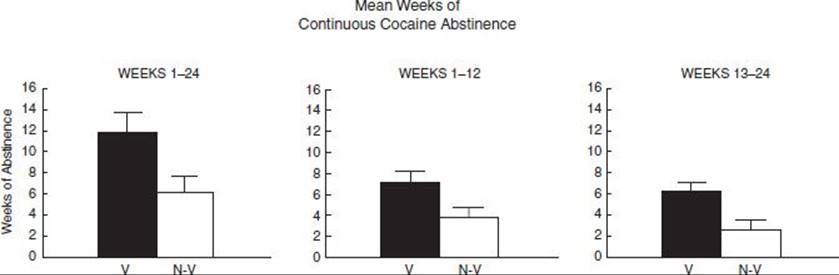
FIGURE 58-2 Mean durations of continuous cocaine abstinence. Mean durations of continuous cocaine abstinence documented via urinalysis testing in each treatment group during weeks 1–24, 1–12, and 13–24 of treatment. Solid and shaded bars indicate the voucher and no-voucher groups, respectively. Error bars represent + standard error of the mean. (Reprinted from Higgins ST, Budney AJ, Bickel WK, et al. Incentives improve outcome in outpatient behavioral treatment of cocaine dependence. Arch Gen Psychiatry 1994;51:568–576, with permission.)

FIGURE 58-3 Point-prevalence abstinence during posttreatment follow-up. Percentage of patients in the two treatment conditions who were cocaine abstinent at specific posttreatment assessments (i.e., point-prevalence abstinence). Patients were considered abstinent at an assessment period if they reported no cocaine use for the 30 days preceding the assessment and had cocaine-negative urinalysis test results. (Reprinted from Higgins ST, Wong CJ, Badger GJ, et al. Contingent reinforcement increases cocaine abstinence during outpatient treatment and 1 year of follow-up. J Consult Clin Psychol 2000;68:64–72, with permission.)
The series of studies by Higgins et al. (49–53) were all conducted in a clinic located in relatively rural Vermont. The seminal study demonstrating the generality of this approach to abusers residing in a large urban area examined the efficacy of the voucher program with cocaine-abusing methadone maintenance patients (54). During a 12-week study, subjects in the experimental group (n = 19) received vouchers exchangeable for retail items contingent on cocaine-negative urinalysis tests. A matched control group (n = 18) received the vouchers independent of urinalysis results. Both groups received a standard form of outpatient drug abuse counseling. Cocaine use was substantially reduced in the experimental group but remained relatively unchanged in the control group (Fig. 58-4). Use of opiates decreased during the voucher period in the contingent compared to the noncontingent conditions even though the contingency was exclusively on cocaine use. Subsequent randomized trials from this same group (55,56) and others (57) further demonstrated the efficacy of this approach in decreasing cocaine use among inner-city drug abusers.
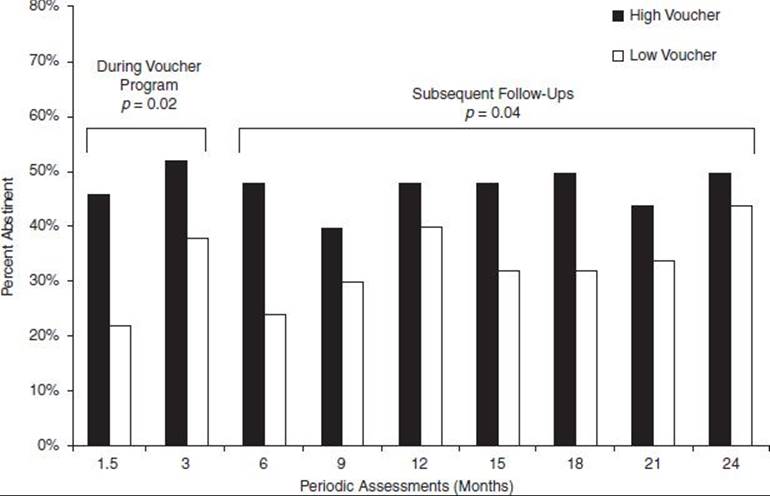
FIGURE 58-4 Longest duration of sustained cocaine abstinence. Longest duration of sustained cocaine abstinence achieved during the 12-week voucher condition. Each data point indicates data from an individual subject, and the lines represent group means. Subjects in the reinforcement and control conditions are displayed in the left and right columns, respectively. Open circles represent early study dropouts. (Reprinted from Silverman K, Higgins ST, Brooner RK, et al. Sustained cocaine abstinence in methadone maintenance patients through voucher-based reinforcement therapy. Arch Gen Psychiatry 1996;53:409–415, with permission.)
Subsequent studies supported the efficacy of vouchers in promoting abstinence from cocaine and heroin use along with participation in vocational training among pregnant and recently postpartum women (58). Forty women who continued abusing cocaine and heroin despite receiving methadone and intensive psychosocial treatment participated. Half were randomly assigned to a therapeutic workplace (TW) intervention, and the other half served as controls. Women in the TW condition earned vouchers for cocaine and heroin abstinence and for participating in vocational training. Across a 3-year period, women assigned to the TW sustained cocaine abstinence greater than controls (54% vs. 28% negative) and opiate abstinence greater than controls (60% vs. 37% negative).
An area of investigation important to the development of CM is focused on combining it with antidepressant therapy with opioid- and cocaine-dependent patients. In a study of desipramine and voucher-based CM, for example, opioid-and cocaine-dependent patients were randomly assigned to one of four conditions: combined desipramine and voucher-based CM, placebo and voucher-based CM, desipramine and noncontingent voucher-based CM, or placebo and vouchers delivered noncontingently (i.e., independent of recent drug use) (59). Vouchers were delivered contingent on abstinence from both opioids and cocaine in the voucher-based reinforcement therapy conditions. Abstinence from cocaine alone and from opioids and cocaine increased more in the desipramine and voucher-based CM condition compared to the other three conditions. A subsequent parallel study examining bupropion reported similar findings (60). This is an interesting area that warrants further investigation.
Among other innovative approaches involving CM in the treatment of cocaine use disorders was one combining day treatment with access to work therapy and housing contingent on drug abstinence (61). A total of 176 homeless individuals who abused cocaine and other substances were randomly assigned to receive enhanced or usual care. Enhanced care involved 2 months of intensive 5-days-a-week clinic attendance. During the last 4 months of the 6-month treatment, intensity of day treatment was reduced, and subjects could participate in a work therapy program refurbishing condemned houses and also to reside in the refurbished housing for a modest rental fee. Participation in the work program and housing were contingent on drug abstinence. Usual care consisted of twice-weekly drug abuse counseling and referral to community agencies for housing and vocational services. The percent of urinalysis results positive for cocaine was significantly less in the enhanced compared to the control treatment across assessments conducted at 2, 6, and 12 months after treatment entry, though, by the last assessment, cocaine use in the enhanced condition had returned close to levels observed in the usual care condition. Enhanced care also produced significantly greater reductions than usual care in alcohol use and fewer days of homelessness at the 6- and 12-month assessments. A follow-up study by this same group of investigators systematically replicated those findings (62). Additional studies demonstrated the benefits of abstinence-contingent housing on outcomes (63) and the importance of the CM elements to improved outcomes in this multicomponent intervention (64).
With the goal of improving chances that voucher-based CM approach could be disseminated to community clinics, Petry et al. (65) developed a variation known as prize-based CM. Rather than reinforce each occurrence of the target response, in this procedure, patients earned the opportunity to draw from an urn that contained vouchers of varying value, including many that are of zero value but offer verbal praise, some that are of relatively low monetary value (e.g., $1), still fewer of moderate value ($20), and a very few worth high monetary value (i.e., $100). Rather than exchanging these vouchers for the opportunity to make retail purchases in the community, patients choose among items already available at the clinic that are referred to as prizes. Interestingly, the seminal report on this prize-based procedure represented a return to the use of CM in the treatment of alcohol abuse/dependence (65). Forty-two alcohol-dependent clients entering an intensive outpatient substance abuse clinic were randomly assigned to standard treatment plus CM or standard treatment only. In both groups, patients provided breath samples to a research assistant daily during the 4-week intensive day-program treatment and weekly during 4-week aftercare. In the CM group, negative BALs and completion of preselected activities earned patients opportunities to win prizes of varying value. Results from the 8-week trial indicated that retention and abstinence were significantly higher in the CM condition (84% retention, 69% abstinence) than the control condition (22% retention, 39% abstinence).
As important, this prize-based arrangement has been demonstrated to be efficacious for increasing cocaine and other drug abstinence in drug-free and methadone community clinics (66,67). Those studies are very important to efforts at eventually disseminating CM interventions into community clinics. Worth clarifying, though, is that there is no evidence that the prize-based arrangement results in better outcomes than a voucher-based program involving lower-than-usual voucher values. Indeed, in two direct comparisons of the prize- and voucher-based procedures with incentive costs at comparable levels, there was no significant difference between the two programs (68,69). There is no evidence that lowering costs with this prize-based arrangement gets around the inverse relationship already mentioned between treatment effect size and reinforcement magnitude in voucher-based CM interventions. Indeed, as would be expected, effect sizes obtained with the prize-based intervention appear to be smaller than those achieved with more expensive CM interventions in comparable populations (24).
New Directions
In an important extension of voucher-based CM, the intervention was extended to treatment of marijuana use disorders. In a seminal randomized controlled trial on this topic, 60 men and women were assigned to one of three, 14-week treatments: motivational enhancement (M), M plus behavioral coping skills therapy (MBT), or M and BT plus voucher-based reinforcement of abstinence (MBTV) (70). There were no differences between the treatment groups in retention, but 35% of those assigned to MBTV were abstinent at the end of treatment compared to 10% and 5% of those assigned to MBT and M, respectively. A subsequent trial comparing abstinence-contingent vouchers delivered with and without cognitive–behavioral therapy (CBT) further supported the efficacy of abstinence-contingent vouchers for increasing abstinence and showed that the addition of CBT did not enhance outcomes during treatment but may do so after the vouchers are discontinued (71).
A feasibility study demonstrated the sensitivity of marijuana use by 18 non–treatment-seeking outpatients with schizophrenia to monetary incentives for abstinence (72). During two baseline conditions, participants received money independent of their urinalysis results. During three incentive conditions, participants received money incentives varying from $25 to $100 contingent on urine toxicology results indicating marijuana abstinence. Abstinence increased in the contingent compared to the baseline conditions, thereby demonstrating the sensitivity of marijuana use to the reinforcement contingencies. With several individuals, marijuana use was not sensitive to the contingencies, even when the monetary amount was increased to the $100/test value. An important practical question not answered in this initial feasibility study was how much the incentives could have been lowered in value without losing efficacy among those who were sensitive to the incentives. That question merits investigation. A follow-up study in this same population demonstrated similar positive outcomes when abstinence-contingent vouchers rather than cash payments were used among marijuana abusers with serious mental illness (73).
Voucher-based reinforcement of abstinence has been successfully extended to the treatment of pregnant cigarette smokers. In a seminal study (74), 220 pregnant smokers were randomly assigned to a treatment group involving contingent vouchers for abstinence or a control group. Women in both groups received smoking-cessation self-help kits. Those in the treatment group were requested to include an SO in treatment. All participants were telephoned monthly and asked to self-report smoking status. Those in the treatment condition who reported abstinence were invited to the clinic to provide a saliva specimen. If the specimen confirmed abstinence, the participant earned a $50 voucher, and the SO received a voucher as well. A greater percentage of smokers in the treatment than control conditions (32% vs. 9%) were abstinent at 8 months’ gestation, and that difference was maintained at the 2-month postpartum assessment (21% vs. 6%).
Those results were systematically replicated and extended in two trials involving a more intense schedule of abstinence monitoring and voucher-based contingent reinforcement (75,76). In both studies, approximately 40% of women assigned to receive abstinence-contingent vouchers were abstinent at an end-of-pregnancy assessment compared to approximately 10% who received vouchers independent of smoking status (i.e., noncontingently). In the most recent study, estimated fetal growth also was significantly greater in the contingent compared to the noncontingent conditions (75).
CM for cigarette smoking abstinence has been extended to two difficult-to-treat populations, adolescent/college-aged smokers and smokers with serious mental illness. In adolescents, a 5-day ABA (baseline-treatment-baseline) design feasibility study indicated that cash reinforcement contingent upon breath carbon monoxide (CO) samples significantly increased smoking abstinence (77). A similar study enrolled college-aged smokers, with similar results (78). Recently, two studies have extended the duration of these interventions. In a study that combined CM with psychosocial treatment for adolescent smokers in a school setting, 28 participants who received a 4-week CM plus CBT intervention had more biochemically verified abstinence in weeks 1 and 4 compared to those in CBT only (79). Another study examined CM for smoking in 23 adolescent smokers and found that contingently reinforcing smoking reductions for several days prior to an abstinence-based CM trial enhanced CM effects (80).
Schizophrenia is associated with high rates of smoking and low smoking-cessation success. A feasibility study of CM for smoking reductions in this population used an ABA design in outpatients with schizophrenia who were not seeking treatment for smoking and demonstrated that cash reinforcement of CO reductions significantly reduced smoking (81). These results were systematically replicated, though the addition of nicotine replacement therapy did not enhance the efficacy of the monetary incentives (82). Results from several rigorous laboratory-based studies also support the sensitivity of smoking among schizophrenics to reinforcement contingencies and other environmental manipulations (82,83). Overall, innovations in the use of CM for cigarette smoking include targeting difficult-to-treat populations and incorporating pharmacotherapy or psychotherapy to enhance or prolong the effects of CM.
In another promising extension of CM, 113 patients with methamphetamine use disorders were randomly assigned to 12 weeks of either treatment as usual or treatment as usual plus the fishbowl CM intervention as part of the Clinical Trials Network studies previously described (84). Urine samples were tested for commonly used illicit drugs, and breath samples were tested for alcohol. The reinforcers for drug-negative samples were plastic chips, some of which could be exchanged for prizes. Patients receiving CM in addition to usual treatment submitted significantly more negative samples, and they were abstinent for a longer period of time (5 vs. 3 weeks).
As a final example, CM was tested in a randomized controlled trial with 176 outpatients with comorbid serious mental illness and psychomotor stimulant dependence (85). Patients were randomly assigned to receive 12 weeks of usual care plus CM or usual care alone. Those assigned to the CM condition were 2.4 times more likely to submit a stimulant-negative urine test during treatment; had significantly lower levels of alcohol use, injection drug use, and psychiatric symptoms; and were one-fifth as likely as those assigned to the control condition to be admitted for psychiatric hospitalization during treatment. They also reported significantly fewer days of stimulant drug use during the 3-month follow-up.
Conclusions
There is no longer any question that CM interventions are efficacious. No fewer than three separate meta-analyses specifically examining CM interventions offer overwhelming evidence supporting their efficacy, with effect sizes generally in the moderate range according to Cohen’s standard (24,86,87). In a fourth meta-analysis examining the efficacy of psychosocial treatments for SUDs, CM was examined along with relapse prevention therapy, general CBT, and combined CBT and CM (88). The largest effects across the different therapies were obtained with CM.
CM treatments clearly represent an important part of evidence-based treatments for SUDs and, as was amply demonstrated earlier, have developed in many exciting directions during the past three decades. The varied CM applications outlined in this chapter demonstrate the striking effectiveness and versatility of CM interventions, and the feasibility of disseminating them into community treatment clinics and other settings. Though the promise of CM interventions for treating SUDs across a broad range of substances, populations, and settings is clear, more research is needed on how to (i) increase the proportion of patients who have positive outcomes, (ii) sustain treatment effects over time, and (iii) continue to develop and refine practical applications that will be used widely in society. Readers interested in CM may want to see a supplemental issue of Preventive Medicine (Supplement 1, Volume 55) devoted to the use of financial incentives to promote health that includes reviews on their use in treating SUDs but also a wide range of other health-related behavior problems (2).
Community Reinforcement Approach
CRA was developed and most extensively researched in the treatment of alcohol-dependent adults. Subsequently, CRA was extended to the treatment of cocaine- and opioid-dependent adults, adolescents with SUDs, and families of treatment-resistant patients with SUDs. Each of those applications is addressed now.
Initial Study
The seminal CRA study was conducted with 16 severe alcoholics admitted to a rural state hospital for treatment of alcoholism (89). These men were divided into eight matched pairs. Pair members were randomly assigned to receive CRA plus standard hospital care or standard care alone. Standard hospital care consisted of 25 one-hour didactic sessions involving lectures on Alcoholics Anonymous, alcoholism, and related medical problems.
CRA was designed to rearrange and improve the quality of the reinforcers obtained by patients through their vocational, family, social, and recreational activities. The goal was for these reinforcers to be available and of high quality when the patient was sober and unavailable when drinking resumed. Plans for rearranging these reinforcers were individualized to conform to each patient’s unique situation.
During the 6-month follow-up period after hospital discharge, time spent drinking was 14% for participants in CRA versus 79% for those in standard treatment (Fig. 58-5). Those treated with CRA had superior outcomes on a number of other outcome measures as well.
Further Developing the Community Reinforcement Approach

FIGURE 58-5 Comparison of CRA and control groups on key dependent measures. Comparison of the CRA and control groups on key dependent measures during the 6 months of follow-up after hospital discharge: mean percentage of time spent drinking, unemployed, away from home, and institutionalized. (Reprinted from Hunt GM, Azrin NH. A community-reinforcement approach to alcoholism. Behav Res Ther 1973;11:91–104, with permission.)
After publication of the seminal study, CRA was subsequently expanded to include disulfiram therapy, with monitoring by an SO to ensure medication compliance. Additionally, counseling directed at crises resolution was added, as was a “buddy” system in which individuals in the alcoholic’s neighborhood volunteered to be available to give assistance with practical issues such as repairing cars and the like and a switch from individual to group counseling to reduce cost. This revised intervention was investigated in a study where 20 matched pairs of hospitalized alcoholic men were randomly assigned to receive this “improved” CRA or standard hospital care (90). Standard care included advice to take disulfiram but no steps to ensure medication compliance. During the 6 months after hospital discharge, outcomes achieved with CRA were superior to standard care in terms of percent time spent drinking (2% vs. 55%), time unemployed (20% vs. 56%), time away from family (7% vs. 67%), and time institutionalized (0% vs. 45%). The CRA group spent 90% or more of the time abstinent during a 2-year follow-up period; comparable data were not reported for the standard treatment group.
Another study completed as part of the original CRA series examined the effects of adding the social club previously described to a standard regimen of outpatient counseling (91). The club was designed to have the social atmosphere of a tavern but without alcohol. Individuals had to be abstinent to attend. Forty male and female alcoholics were randomly assigned to a group that was encouraged to attend the social club or to a control group that was not. At 3-month follow-up, drinking in the social club group decreased from a baseline average of 4.67 ounces of alcohol consumed daily to 0.85 ounces, whereas in the control group, values were 3.56 and 3.32 ounces, respectively. Greater improvements in the social club than control group also were observed in ratings of behavioral impairment and time spent in heavy-drinking situations.
Azrin et al. (92) also completed a study dissociating the effects of monitored disulfiram therapy from the other aspects of CRA. In a parallel-group design, 43 male and female alcoholic outpatients were randomly assigned to receive usual care plus disulfiram therapy without compliance support, usual care plus disulfiram therapy involving SOs to support compliance, or CRA in combination with disulfiram therapy and significant-other support. CRA in combination with disulfiram and compliance procedures produced the greatest reductions in drinking, disulfiram in combination with compliance procedures but without CRA produced intermediate results, and the usual care plus disulfiram therapy without compliance support produced the poorest outcome. Interestingly, married patients did equally well with the full CRA treatment or disulfiram plus compliance procedures alone. Only unmarried subjects appeared to need CRA treatment plus monitored disulfiram to achieve abstinence. This was the first full report on the efficacy of CRA with less-impaired outpatients. With these less impaired individuals, treatment group differences were noted on measures of drinking only, whereas in the prior studies with more severe hospitalized alcoholics, differences also were discerned on measures of time institutionalized and employed.
Extending the Community Reinforcement Approach to Treatment of Patients with Cocaine and Opioid Use Disorders
Studies on the use of CRA to treat cocaine use disorders represented, to our knowledge, the first reports on the use of CRA from investigators who were not part of the original investigative team of Azrin et al. As was mentioned, these studies examined a treatment involving CRA in combination with voucher-based CM (CRA + vouchers). The initial two trials involved comparisons of this combined treatment to standard outpatient drug abuse counseling (12,49). The first trial was 12 weeks in duration, and 28 cocaine-dependent outpatients were assigned as consecutive admissions to their respective treatment conditions. The second trial was 24 weeks in duration, and 38 cocaine-dependent patients were randomly assigned to the same two treatment conditions. Outcomes in both trials were significantly better among those treated with the CRA + voucher treatment than standard drug abuse counseling. In the randomized trial, for example, 58% of patients assigned to CRA + vouchers completed the recommended 24 weeks of treatment compared to 11% of those assigned to drug abuse counseling. Regarding cocaine use, 68% of those assigned to CRA + vouchers were objectively verified to have achieved 8 or more weeks of continuous cocaine abstinence as compared to only 11% of those treated with drug abuse counseling. A randomized controlled trial conducted in Spain using CRA plus a variation of the voucher intervention reported positive improvements in retention and cocaine abstinence as compared to standard care during 6 months of treatment, with effects on cocaine remaining discernible through 6 months of posttreatment follow-up, thereby demonstrating the generality of the CRA + voucher intervention to communities outside of the United States (93,94).
As was discussed, subsequent trials on this treatment generally focused on experimentally isolating the contributions of the voucher intervention to outcomes during treatment (50) and posttreatment follow-up (52,53). The exception was a randomized clinical trial designed to isolate the contributions of CRA to the combined effects of the CRA + voucher intervention (95). In the latter study, 100 cocaine-dependent outpatients were randomly assigned to receive the CRA + voucher treatment or the vouchers component only. Vouchers were in place for 12 weeks, CRA for 24 weeks, and patients were assessed at least every 3 months for 2 years after treatment entry. Patients treated with CRA + vouchers were retained better in treatment, used cocaine at a lower frequency during treatment but not follow-up, and reported a lower frequency of drinking to intoxication during treatment and follow-up as compared with patients treated with vouchers only. Patients treated with CRA + vouchers also reported a higher frequency of days of paid employment during treatment and 6 months of posttreatment follow-up, decreased depressive symptoms during treatment only, and fewer hospitalizations and legal problems during follow-up. The results provided a strong case that CRA contributed in numerous ways to the positive outcomes observed during treatment and posttreatment follow-up with the CRA + voucher treatment, while also providing a systematic replication of the seminal findings of Azrin et al.
We know of two trials that have been reported wherein CRA was investigated in the treatment of opioid-dependent patients receiving opioid pharmacotherapy (31,96). The first of those two trials examined whether the CRA + voucher treatment could improve what are usually poor outcomes with opioid detoxifications (31). Thirty-nine outpatients undergoing a 24-week buprenorphine detoxification were randomly assigned to CRA + vouchers or standard drug abuse counseling. Those assigned to CRA + vouchers were more likely to complete the detoxification protocol (53% vs. 20%) and achieved greater periods of biochemically confirmed abstinence from illicit opioid use.
In the second trial (96), 181 methadone maintenance patients were randomly assigned to CRA or drug abuse counseling. More patients treated with CRA than drug abuse counseling achieved 3 or more weeks of biochemically verified abstinence from illicit opiate use (89% vs. 78%). No other significant differences were reported. Considered together, these two trials are encouraging that CRA delivered alone or in combination with voucher-based CM can improve outcomes above that achieved with standard drug abuse counseling among opioid-dependent patients receiving opioid substitution detoxification and maintenance therapies.
Extending the Community Reinforcement Approach to Special Populations
CRA has been successfully extended to at least two special subpopulations, adolescents and the homeless. The first study with adolescents involved 82 individuals randomly assigned to CRA or supportive counseling (97). The intervention had three major components: stimulus control, urge control, and social control/contracting. The stimulus control component involved assisting youth in identifying safe and risky situations for substance use and therapist-assisted problem solving regarding how to increase the amount of time spent in the former and decrease time spent in the latter. Urge control involved teaching youth to recognize the early internal events that were precursors to drug use and how to interrupt them with alternative activities that are incompatible with drug use. Social control/contracting focused on involving parents in providing youth with opportunities to engage in safe activities contingent on youth compliance with activities that are incompatible with substance abuse. Abstinence from drug use in the CRA condition ranged between 37% and 65% across the 12-month study period as compared to 20% in the supportive counseling condition. Measures of attendance at school and employment, family relationships, depression, and time institutionalized were also better in the CRA as compared to the supportive counseling condition. Later follow-up results collected 9 months after completion of the initial study period indicated better outcomes in the CRA compared to the supportive counseling conditions (98).
Adolescent CRA therapy was compared to motivational enhancement therapy plus CBT (MET/CBT) and multidimensional family therapy (MDFT) in a multisite trial conducted with 300 adolescent cannabis users (99). Therapy was approximately 3 months in duration, and patients were followed up for 1 year. Across that time period, overall percent of patients in recovery was somewhat higher among patients treated with CRA than MET/CBT and MDFT (34%, 23%, and 19%, respectively). That difference was not statistically significant overall, though it was at several of the individual sites.
The use of CRA with homeless individuals was examined in two studies involving adult alcoholics (100) and street-living youth (101). In the study with adults, 106 alcohol-dependent homeless persons were randomly assigned to CRA or standard treatment at a large day shelter. Those treated with CRA showed greater improvement on measures of drinking across five assessments conducted over a 1-year period (Fig. 58-6). Both conditions showed marked improvement in employment and housing stability. In the study with youth, 180 individuals between 14 and 19 years who attended an urban community drop-in center were randomly assigned to receive adolescent CRA or usual care. Substance use decreased during a 6-month study period among a larger proportion of those treated with CRA than usual care (37% vs. 17%) as did depression scores (40% vs. 23%), and measures of social stability increased more among those treated with CRA than usual care (58% vs. 13%). Evidence supporting the efficacy of CRA with adolescents, referred to in the literature as A-CRA, has been sufficiently positive to warrant a large-scale dissemination effort throughout the United States (102).

FIGURE 58-6 Comparison of CRA and standard treatment groups on key dependent measures. Comparison of the CRA and standard treatment groups on standard ethanol content (A), drinking days per week (B), and peak blood alcohol concentration (C). (Reprinted from Smith JE, Meyers RJ, Delaney HD. The community reinforcement approach with homeless alcohol-dependent individuals. J Consult Clin Psychol1998;66:541–548, with permission.)
Extending the Community Reinforcement Approach to Assist Relatives of Treatment-Resistant Persons with Substance Use Disorders
As part of the original series of studies on CRA, Sisson and Azrin (103) adapted CRA for use with the SOs of treatment-resistant alcoholics. Twelve SOs were randomly assigned to receive either the CRA intervention (n = 7) or a standard program (n = 5) involving group instruction about alcohol and the disease model of alcoholism. The CRA intervention included education about alcohol problems, information and discussion of the positive consequences of not drinking, assistance in involving the alcoholic in healthy activities, increasing the involvement of the SO in social and recreational activities, and training in how to respond to drinking episodes (including dangerous situations) and how to recommend treatment entry to the alcoholic family member. In the control group, none of the alcoholics entered treatment during the 3-month follow-up, and their drinking remained unchanged. In the CRA group, six of seven alcoholics entered treatment, and average drinking decreased from 25 days per month at pretreatment to fewer than 5 days per month after treatment.
A series of subsequent controlled trials have consistently supported the efficacy of CRA in assisting concerned significant others (COSs) to get unmotivated individuals with alcohol use disorders (104) and individuals with illicit drug use disorders (105,106) to enter treatment. The treatment has come to be referred to as community reinforcement and family training (CRAFT). In the more recent of those three trials (106), for example, 90 COSs of treatment-refusing illicit drug users were randomly assigned to CRAFT, CRAFT with additional aftercare sessions, or Al-Anon and Nar-Anon facilitation therapy (Al-Nar-FT). Percentages of treatment-refusing loved ones who got engaged in treatment after the intervention were 58.6%, 76.7%, and 29.0%, respectively, in CRAFT alone, CRAFT plus aftercare, and Al-Nar-FT, respectively.
Conclusions
Considered together, the evidence reviewed earlier supporting the efficacy of CRA is quite robust. There has been at least one meta-analysis supporting the efficacy of CRA as a treatment for SUDs (107). The evidence is strong in support of CRA’s efficacy in treating alcohol dependence, even when the clinical situation is complicated by homelessness. The evidence is also quite strong regarding the efficacy of CRA combined with voucher-based CM for outpatient treatment of cocaine dependence. Experimental evidence demonstrates that CRA and voucher-based CM each contribute significantly to the positive outcomes achieved with that intervention. The evidence in support of CRA plus vouchers or CRA alone in the treatment of opioid use disorders is positive but still relatively limited. Studies further evaluating the efficacy of CRA with and without contingent vouchers in this population will be helpful in more fully elucidating how this treatment approach can be utilized to better optimize outcomes during opioid replacement therapy. The evidence supporting the efficacy of adolescent CRA even when complicated by homelessness is positive and encouraging. Indeed, CRA seems to have much unrealized potential for treatment of special populations with SUDs such as those with serious mental illness or perhaps complications related to other illness (e.g., HIV or other infectious disease). For those who might be interested, therapist manuals are available on the use of CRA to treat alcohol abuse/dependence (108), cocaine dependence (13), and adolescent marijuana abuse (109). Overall, CRA is clearly capable of making substantive contributions to the development of evidence-based treatments for a wide range of different types of SUDs, populations, problems, and settings.
CONCLUSIONS
This chapter has reviewed how within an operant framework drug use is considered a normal, learned behavior that can be fruitfully conceptualized to fall along a continuum ranging from light use with no problems to heavy use with many untoward effects. The same basic learning processes are assumed to operate across the drug use continuum. Treatment strategies based on this conceptual framework look to weaken the reinforcement obtained from drug use and related activities and to enhance the material and social reinforcement obtained from other sources, especially from participation in activities deemed to be incompatible with a drug-abusing lifestyle. CM and CRA procedures are based on this general strategy and are efficacious in treating alcohol, cocaine, opioid, and other types of SUDs. CM and CRA offer no “magic bullets” for the treatment of these disorders, and, as discussed, much more remains to be learned about each of them. Those limitations notwithstanding, CM and CRA offer a range of empirically based and effective strategies for treating some of the most challenging populations and daunting aspects of SUDs.
ACKNOWLEDGMENTS
Preparation of this chapter was supported by Research Grants DA09378, DA08076, and DA14028 and Training Grant DA07242 from the National Institute on Drug Abuse.
REFERENCES
1.Mazur JE. Learning and behavior, 5th ed. Upper Saddle River, NJ: Prentice-Hall, 2002.
2.Higgins ST, Silverman K, Sigmon SC, et al. Incentives and health: an introduction. Prev Med 2012;55(Suppl 1):S2–S6.
3.Meyers RJ, Roozen HG, Smith JE. The community reinforcement approach: an update of the evidence. Alcohol Res Health 2011;33: 380–388.
4.Schuster CR, Thompson T. Self-administration of and behavioral dependence on drugs. Annu Rev Pharmacol 1969;9:483–502.
5.Aigner TG, Balster RL. Choice behavior in rhesus monkeys: cocaine versus food. Science 1978;201:434–435.
6.Bigelow GE, Griffiths R, Liebson I. Experimental models for the modification of human drug self-administration: methodological developments in the study of ethanol self-administration by alcoholics. Fed Proc 1975;34:1785–1792.
7.Miller PM, Hersen M, Eisler RM. Relative effectiveness of instructions, agreements, and reinforcement in behavioral contracts with alcoholics. J Abnorm Psychol 1974;83:548–553.
8.Elliot R, Tighe T. Breaking the cigarette habit: effects of a technique involving threatened loss of memory. Psychol Rec 1968;18:503–513.
9.Winett RA. Parameters of deposit contracts in the modification of smoking. Psychol Rec 1973;23:49–60.
10.Higgins ST, Heil SH, Lussier JP. Clinical implications of reinforcement as a determinant of substance use disorders. Ann Rev Psychol 2004;55:431–461.
11.Higgins ST. Some potential contributions of reinforcement and consumer-demand theory to reducing cocaine use. Addict Behav 1996;21:803–816.
12.Higgins ST, Delaney DD, Budney AJ, et al. A behavioral approach to achieving initial cocaine abstinence. Am J Psychiatry 1991;148:1218–1224.
13.Budney AJ, Higgins ST. The community reinforcement plus vouchers approach: Manual 2. National Institute on Drug Abuse therapy manuals for drug addiction. NIH publication #98-4308. Rockville, MD: National Institute on Drug Abuse, 1998.
14.Festinger DS, Lamb RJ, Kirby KC, et al. The accelerated intake: a method for increasing initial attendance to outpatient cocaine treatment. J Appl Behav Anal 1996;29:387–389.
15.Miller WR, Tonigan JS. Assessing drinkers’ motivation to change: the Stages of Change Readiness and Treatment Eagerness Scale (SOCRATES). Psychol Addict Behav 1996;10:81–89.
16.Washton AM, Stone NS, Hendrickson EC. Cocaine abuse. In: Donovan DM, Marlatt GA, eds. Assessment of addictive behavior. New York, NY: Guilford Press, 1988:364–389.
17.Selzer ML. The Michigan Alcoholism Screening Test: the quest for a new diagnostic instrument. Am J Psychiatry 1971;127:1653–1658.
18.Beck AT, Steer RA, Ball R, et al. Comparison of Beck Depression Inventories–IA and–II in psychiatric outpatients. J Pers Assess 1996;67:588–597.
19.Derogatis LR. Misuse of the symptom checklist 90. Arch Gen Psychiatry 1983;40:1152–1153.
20.Sobell LC, Sobell MB. Timeline follow-back: a technique for assessing self-reported alcohol consumption. In: Litten RZ, Allen JP, eds. Measuring alcohol consumption: psychosocial and biochemical methods. Totowa, NJ: Humana Press, 1992:41–72.
21.McLellan AT, Cacciola J, Alterman AI, et al. The Addiction Severity Index at 25: origins, contributions, and transitions. Am J Addict 2006;15:113–124.
22.Carroll KM, Nich C, Ball SA, et al. Treatment of cocaine and alcohol dependence with psychotherapy and disulfiram. Addiction 1998;93:713–728.
23.Higgins ST, Silverman K. Contingency management. In: Galanter M, Kleber HD, eds. Textbook of substance abuse treatment, 4th ed. Washington, DC: The American Psychiatric Press, 2008:387–399.
24.Lussier JP, Heil SH, Mongeon JA, et al. A meta-analysis of voucher-based reinforcement therapy for substance use disorders. Addiction 2006;101:192–203.
25.Lewinsohn PM, Munoz RF, Youngren MA, et al. Control your depression. New York, NY: Simon & Schuster, 1986.
26.Munoz RF, Miranda J. Individual therapy manual for cognitive behavioral treatment for depression. Santa Monica, CA: RAND Corporation, 2000.
27.Azrin NH, Besalel VA. Job Club counselor’s manual. Baltimore, MD: University Park Press, 1980.
28.O’Farrel TJ, Fals-Stewart W. Alcohol abuse. In: Sprenkle DH, ed. Effectiveness research in marriage and family therapy. Alexandria, VA: American Association for Marriage and Family Therapy, 2002:123–161.
29.Herrmann ES, Heil SH, Sigmon SC, et al. Characterizing and improving HIV/AIDS knowledge among cocaine-dependent outpatients using modified materials. Drug Alcohol Depend2013;127:220–225.
30.Smith JE, Meyers RJ. The community reinforcement approach. In: Hester R, Miller W, eds, Handbook of alcoholism treatment approaches: effective alternatives, 2nd ed. New York, NY: Allyn & Bacon, 1995.
31.Bickel WK, Amass L, Higgins ST, et al. Effects of adding behavioral treatment to opioid detoxification with buprenorphine. J Consult Clin Psychol 1997;65:803–810.
32.Budney AJ, Higgins ST, Wong CJ. Marijuana use and treatment outcome in cocaine-dependent patients. Exp Clin Psychopharmacol 1996;4:396–403.
33.Miller PM. A behavioral intervention program for chronic public drunkenness offenders. Arch Gen Psychiatry 1975;32:915–918.
34.Bickel WK, Rizzuto P, Zielony RD, et al. Combined behavioral and pharmacological treatment of alcoholic methadone patients. J Subst Abuse 1989;1:161–171.
35.Liebson IA, Bigelow GE, Flamer R. Alcoholism among methadone patients: a specific treatment model. Am J Psychiatry 1973;130:483–485.
36.Liebson IA, Tommasello A, Bigelow GE. A behavioral treatment of alcoholic methadone patients. Ann Intern Med 1978;89:342–344.
37.McDonnell MG, Howell DN, McPherson S, et al. Voucher-based reinforcement of alcohol abstinence using ethyl-glucuronide alcohol biomarker. J Appl Behav Anal 2012;45:161–165.
38.Carrol KM, Ball SA, Nich C, et al. Targeting behavioral therapies to enhance naltrexone treatment of opioid dependence: efficacy of contingency management and significant other involvement. Arch Gen Psychiatry 2001;58:755–761.
39.Preston KL, Silverman K, Umbricht A, et al. Improvement in naltrexone treatment compliance with contingency management. Drug Alcohol Depend 1999;54:127–135.
40.Sorensen JL, Haug KL, Delucchi KL, et al. Voucher reinforcement improves medication adherence in HIV-positive methadone patients: a randomized trial. Drug Alcohol Depend;88:54–63.
41.Iguchi MY, Stitzer ML, Bigelow GE, et al. Contingency management in methadone maintenance: effects of reinforcing and aversive consequences on illicit polydrug use. Drug Alcohol Depend 1988;22:1–7.
42.Magura S, Casriel C, Goldsmith DS, et al. Contingency contracting with polydrug-abusing methadone patients. Addict Behav 1988;13:113–118.
43.Milby JB, Garrett C, English C, et al. Take-home methadone: contingency effects on drug-seeking and productivity of narcotic addicts. Addict Behav 1978;3:215–220.
44.Stitzer ML, Bigelow GE. Contingency management in a methadone maintenance program: availability of reinforcers. Int J Addict 1978;13:737–746.
45.Stitzer ML, Iguchi MY, Felch LJ. Contingent take-home incentive: effects on drug use of methadone maintenance patients. J Consult Clin Psychol 1992;60:927–934.
46.Higgins ST, Stitzer ML, Bigelow GE, et al. Contingent methadone delivery: effects on illicit-opiate use. Drug Alcohol Depend 1986;17:311–322.
47.Stitzer ML, Bickel WK, Bigelow GE, et al. Effect of methadone dose contingencies on urinalysis test results of polydrug-abusing methadone-maintenance patients. Drug Alcohol Depend1986;18:341–348.
48.Higgins ST, Alessi SM, Dantona RL. Voucher-based incentives: a substance abuse treatment innovation. Addict Behav 2002;27:887–910.
49.Higgins ST, Budney AJ, Bickel WK, et al. Achieving cocaine abstinence with a behavioral approach. Am J Psychiatry 1993;150:763–769.
50.Higgins ST, Budney AJ, Bickel WK, et al. Incentives improve treatment retention and cocaine abstinence in ambulatory cocaine-dependent patients. Arch Gen Psychiatry 1994;51:568–576.
51.Higgins ST, Budney AJ, Bickel WK, et al. Outpatient behavioral treatment for cocaine dependence: one-year outcome. Exp Clin Psychopharmacol 1995;3:205–212.
52.Higgins ST, Wong CJ, Badger GJ, et al. Contingent reinforcement increases cocaine abstinence during outpatient treatment and 1-year of follow-up. J Consult Clin Psychol 2000;68:64–72.
53.Higgins ST, Heil SH, Dontona RL, et al. Effects of varying the monetary value of voucher-based incentives on abstinence achieved during and following treatment among cocaine-dependent outpatients. Addiction 2007;102:271–281.
54.Silverman K, Higgins ST, Brooner RK, et al. Sustained cocaine abstinence in methadone maintenance patients through voucher-based reinforcement therapy. Arch Gen Psychiatry1996;53:409–415.
55.Silverman K, Preston KL, Stitzer ML, et al. Treatment of cocaine abuse in methadone maintenance patients. In: Higgins ST, Katz JL, eds. Cocaine abuse research: pharmacology, behavior, and clinical application. San Diego, CA: Academic Press, 1998:363–388.
56.Silverman K, Chutuape MA, Bigelow GE, et al. Voucher-based reinforcement of cocaine abstinence in treatment-resistant methadone patients: effects of reinforcer magnitude. Psychopharmacology (Berl)1999;146:128–138.
57.Kirby KC, Marlowe DB, Festinger DS, et al. Schedule of voucher delivery influences initiation of cocaine abstinence. J Consult Clin Psychol 1998;66:761–767.
58.Silverman K, Svikis D, Wong CJ, et al. A reinforcement-based therapeutic workplace for the treatment of drug abuse: three-year abstinence outcomes. Exp Clin Psychopharmacol2002;10:228–240.
59.Kosten T, Olivet A, Feingold A, et al. Desipramine and contingency management for cocaine and opiate dependence in buprenorphine maintained patients. Drug Alcohol Depend2003;70:315–325.
60.Poling J, Oliveto A, Petry N, et al. Six-month trial of bupropion with contingency management for cocaine dependence in a methadone-maintained population. Arch Gen Psychiatry2006;63:219–228.
61.Milby JB, Schumacher JE, Raczynski JM, et al. Sufficient conditions for effective treatment of substance abusing homeless persons. Drug Alcohol Depend 1996;43:39–47.
62.Milby JB, Schumacher JE, McNamara C, et al. Initiating abstinence in cocaine abusing dually diagnosed homeless persons. Drug Alcohol Depend 2000;60:55–67.
63.Milby JB, Schumacher, JE, Wallace D, et al. To house or not to house: the effects of providing housing to homeless substance abusers in treatment. Am J Public Health 2005;95:1259–1265.
64.Milby JE, Schumacher JE, Vuchinich RE, et al. Toward cost-effective initial care for substance-abusing homeless. J Subst Abuse Treat 2008;34:180–191.
65.Petry NM, Martin B, Cooney JL, et al. Give them prizes, and they will come: contingency management for treatment of alcohol dependence. J Consult Clin Psychol 2000;68:250–257.
66.Petry NM, Peirce JM, Stitzer ML, et al. Prize-based incentives improve outcomes of stimulant abusers in outpatients psychosocial treatment programs: a national drug abuse treatment Clinical Trials Network study. Arch Gen Psychiatry 2005;62:1148–1156.
67.Pierce JM, Petry NM, Stiter ML, et al. Effects of lower-cost incentives on stimulant abstinence in methadone maintenance treatment: a national drug abuse treatment Clinical Trials Network study. Arch Gen Psychiatry 2006;63:201–208.
68.Petry NM, Alessi SM, Marx J, et al. Vouchers versus prizes: contingency management treatment of substance abusers in community settings. J Consult Clin Psychol 2005;73:1005–1014.
69.Petry NM, Alessi SM, Hanson T, et al. Randomized trial of contingent prizes versus vouchers in cocaine-using methadone patients. J Consult Clin Psychol 2007;75:983–991.
70.Budney AJ, Higgins ST, Radonovich KJ, et al. Adding voucher-based incentives to coping skills and motivational enhancement improves outcomes during treatment for marijuana dependence. J Consult Clin Psychol 2000;68:1051–1061.
71.Budney AJ, Moore BA, Higgins S, et al. Clinical trial of abstinence-based vouchers and cognitive-behavioral therapy for cannabis dependence. J Consult Clin Psychol 2006;74:307–316.
72.Sigmon SC, Steingard S, Badger GJ, et al. Contingent reinforcement of marijuana abstinence among individuals with serious mental illness: a feasibility study. Exp Clin Psychopharmacol2000;8:509–517.
73.Sigmon SC, Higgins ST. Voucher-based contingent reinforcement of marijuana abstinence among individuals with serious mental illness. J Subst Abuse Treat 2006;30:291–295.
74.Donatelle RJ, Prows SL, Champeau D, et al. Randomised controlled trial using social support and financial incentives for high risk regnant smokers: significant other supporter (SOS) program. Tob Control2000;9(Suppl 3):III67–III69.
75.Heil SH, Higgins ST, Bernstein IM, et al. Effects of voucher-based incentives on abstinence from cigarette smoking and fetal growth among pregnant women. Addiction 2008;103:109–1018.
76.Higgins ST, Heil SH, Solomon LJ, et al. A pilot study on voucher-based incentives to promote abstinence from cigarette smoking during pregnancy and postpartum. Nicotine Tob Res2004;6:1015–1020.
77.Corby EA, Roll JM, Ledgerwood DM, et al. Contingency management interventions for treating adolescents: a feasibility study. Exp Clin Psychopharmacol 2000;8:371–376.
78.Correia CJ, Benson TA. The use of contingency management to reduce cigarette smoking among college students. Exp Clin Psychopharmacol 2006;14:171–179.
79.Krishnan-Sarin S, Duhig AM, McKee SA, et al. Contingency management for smoking cessation in adolescent smokers. Exp Clin Psychopharmacol 2006;14:306–310.
80.Tevyaw T, Gwaltney C, Tidey JW, et al. Contingency management for adolescent smokers: an exploratory study. J Child Adolesc Subst Abuse 2007;16:23–44.
81.Roll JM, Higgins ST, Steingard S, et al. Investigating the use of monetary reinforcement to reduce the cigarette smoking of schizophrenics: a feasibility study. Exp Clin Psychopharmacol1998;6:157–161.
82.Tidey JW, O’Neill SC, Higgins ST. Contingent monetary reinforcement of smoking reductions, with and without transdermal nicotine, in outpatients with schizophrenia. Exp Clin Psychopharmacol2002;10:241–247.
83.Tidey JW, Higgins ST, Bickel WK, et al. Effects of response requirement and the availability of an alternative reinforcer on cigarette smoking by schizophrenics. Psychopharmacology (Berl) 1999;145:52–60.
84.Roll JM, Petry NM, Stitzer ML, et al. Contingency management for the treatment of methamphetamine use disorders. Am J Psychiatry 2006;163:1993–1999.
85.McDonell MG, Srebnik D, Angelo F, et al. Randomized controlled trial of contingency management for stimulant use in community mental health patients with serious mental illness. Am J Psychiatry2013;170:94–101.
86.Griffith JD, Rowan-Szal GA, Roark RR, et al. Contingency management in outpatient methadone treatment: a meta-analysis. Drug Alcohol Depend 2000;58:55–66.
87.Pendergrast M, Podus D, Finney J, et al. Contingency management for treatment of substance use disorders: a meta-analysis. Addiction 2006;101:1546–1560.
88.Dutra L, Stathopoulou G, Basden SL, et al. A meta-analytic review of interventions for substance use disorders. Am J Psychiatry 2008;165:179–187.
89.Hunt GM, Azrin NH. A community-reinforcement approach to alcoholism. Behav Res Ther 1973;11:91–104.
90.Azrin NH. Improvements in the community-reinforcement approach to alcoholism. Behav Res Ther 1976;14:339–348.
91.Mallams JH, Godley MD, Hall GM, et al. A social-systems approach to resocializing alcoholics in the community. J Stud Alcohol 1982;43:1115–1123.
92.Azrin NH, Sisson RW, Meyers R, et al. Alcoholism treatment by disulfiram and community reinforcement therapy. J Behav Ther Exp Psychiatry 1982;13:105–112.
93.Secades-Villa R, Garcia-Rodriguez O, et al. Community reinforcement approach plus vouchers for cocaine dependence treatment. Adicciones 2007;19:51–57.
94.Secades-Villa R, Garcia-Rodriguez O, Garcia-Fernandez G, et al. Community reinforcement approach plus vouchers among cocaine-dependent outpatients: twelve-month outcomes. Psychol Addict Behav2011;25:174–179.
95.Higgins ST, Sigmon SC, Wong CJ, et al. Community reinforcement therapy for cocaine-dependent outpatients. Arch Gen Psychiatry 2003;60:1043–1052.
96.Abbott PJ, Moore BA, Weller SB, et al. AIDS risk behavior in opioid dependent patients treated with community reinforcement approach and relationships with psychiatric disorders. J Addict Dis1998;17:33–48.
97.Azrin NH, McMahon PT, Donohue B, et al. Behavior therapy for drug abuse: a controlled treatment outcome study. Behav Res Ther 1994;32:857–866.
98.Azrin NH, Acierno R, Kogan ES, et al. Follow-up results of supportive versus behavioral therapy for illicit drug use. Behav Res Ther 1996;34:41–46.
99.Dennis M, Godley SH, Diamond G, et al. The cannabis youth treatment (CYT) study: main findings from two randomized trials. J Subst Abuse Treat 2004;27:197–213.
100.Smith JE, Meyers RJ, Delaney HD. The community reinforcement approach with homeless alcohol-dependent individuals. J Consult Clin Psychol 1998;66:541–548.
101.Slesnick N, Prestopnik JL, Meyers RJ, et al. Treatment outcome for street-living, homeless youth. Addict Behav 2007;32:1237–1251.
102.Godley SH, Garner BR, Smith JE, et al. A large-scale dissemination and implementation model of evidence-based treatment and continuing care. Clin Psychol (New York) 2011;18:67–83.
103.Sisson RW, Azrin AH. Family-member involvement to initiate and promote treatment of problem drinkers. J Behav Ther Exp Psychiatry 1986;17:15–21.
104.Miller WR, Meyers RJ, Tonigan JS. Engaging the unmotivated in treatment for alcohol problems: a comparison of three strategies for intervention through family members. J Consult Clin Psychol1999;7:688–697.
105.Kirby KC, Marlowe DB, Festinger DS, et al. Community reinforcement training for family and significant others of drug abusers: a unilateral intervention to increase treatment entry of drug users. Drug Alcohol Depend 1999;56:85–96.
106.Meyers RJ, Miller WR, Smith JE, et al. A randomized trial of two methods for engaging treatment-refusing drug users through concerned significant others. J Consult Clin Psychol2002;70:1182–1185.
107.Roozen GH, Boulogne JJ, van Tulder MW, et al. A systematic review of the effectiveness of the community reinforcement approach in alcohol, cocaine and opioid addiction. Drug Alcohol Depend2004;74:1–13.
108.Meyers RJ, Smith JE. Clinical guide to alcohol treatment: the community reinforcement approach. New York, NY: Guilford Press, 1995.
109.Godley SH, Meyers RJ, Smith JE, et al. The adolescent community reinforcement approach (ACRA) for adolescent cannabis users. Rockville, MD: Center for Substance Abuse Treatment, 2001.