
Daniel P. Alford, MD, MPH, FACP, FASAM
CHAPTER OUTLINE
■ PERIOPERATIVE CARE OF THE PATIENT WITH AN ALCOHOL USE DISORDER
■ PERIOPERATIVE CARE OF THE PATIENT WITH AN OPIOID USE DISORDER
■ PERIOPERATIVE CARE OF THE PATIENT WITH BENZODIAZEPINE USE DISORDER
■ PERIOPERATIVE CARE OF THE PATIENT WITH NICOTINE USE DISORDER
■ PERIOPERATIVE CARE OF THE PATIENT WITH STIMULANT USE DISORDER
■ ORGAN TRANSPLANTATION IN PATIENTS WITH ADDICTIONS
■ CONCLUSIONS
Surgery may be required for complications of drug and alcohol use such as the management of traumatic injuries, infections of the skin, soft tissue, bones, and joints, infective endocarditis, and certain cancers. Because of the high prevalence of substance use, patients who use substances will be among those who are planning to undergo surgery that is unrelated to drug and alcohol use complications. Substance use and its associated chronic medical conditions can increase the risk of postoperative complications. In a retrospective study of patients presenting with traumatic mandibular fractures in which two-thirds reported of current or past alcohol or drug use disorder, postoperative complications including wound infections and poor healing were up to five times more likely in groups with substance use disorder compared to nonusers (1). Hospitalization for surgery may be the first time that an addicted patient does not have access to alcohol or other drugs, putting him or her at risk for withdrawal. Acute withdrawal syndromes may complicate surgery and the postoperative course by presenting as tachycardia, hypertension, anxiety, delirium, pain, and seizures. Therefore, providers of perioperative care must identify addiction disorders and be comfortable with the management of substance withdrawal syndromes. The care of patients with addiction disorders is also complicated by a potential mutual distrust that exists between patients and their medical team, with physician fear of being deceived and patient fear of being mistreated and stigmatized (2). Often, preoperative evaluations can be deceivingly simple in this patient population because they are often without known chronic illnesses. However, careful evaluation may detect clinical signs of chronic diseases secondary to alcohol or drug use that increase surgical risk, such as diseases affecting the heart, lungs, kidney, liver, nervous system, and pancreas. In addition, the physiologic stress associated with surgery may bring out subclinical comorbidities not obvious during routine preoperative evaluation. Treating physicians should not expect to cure the patient’s alcohol or drug problem during the hospitalization, but should focus on getting the patient through the perioperative period safely and then offering the patient referral to long-term addiction treatment. This chapter focuses on relevant perioperative issues in the alcohol- or drug-using patient.
PERIOPERATIVE CARE OF THE PATIENT WITH AN ALCOHOL USE DISORDER
Unhealthy alcohol use is common especially in patients seeking medical and surgical care (3). The prevalence of alcohol use disorders is as high as 40% in emergency room and various surgical inpatient settings and up to 50% in patients with trauma (4). Many chronic medical conditions that can complicate or necessitate surgery, including dilated cardiomyopathy, cirrhosis, pancreatitis, and oral and esophageal cancers, are attributable to alcohol. The incidence of symptomatic alcohol withdrawal in hospitalized patients is as high as 8% and is two to five times higher in hospitalized trauma and surgical patients (5–7). Chronic alcohol use can increase the risk of postoperative complications through immune suppression, reduced cardiac function, and dysregulated homeostasis including alterations in platelet production, aggregation, and changes in fibrinogen levels (5,8,9). Postoperative complications appear to show a dose–response relationship with alcohol consumption, that is, the more alcohol consumed, the higher risk for postoperative complications (10). Therefore, preoperative screening for unhealthy alcohol use and withdrawal risk is important.
Preoperative Evaluation
In addition to a complete history and physical examination, the preoperative evaluation should assess for the risk of acute alcohol withdrawal and the presence of diseases associated with heavy alcohol use. Physicians often fail to identify alcohol use disorders in medical patients (11). In one study, only 16% of people with alcoholism were identified in the perioperative setting (12). The amount of alcohol consumed is a risk factor for hospital admission (13) and postoperative complications (14). When screening for alcohol use disorders, it is important to remember that patients with unhealthy alcohol use are often asymptomatic and often minimize consumption. Quantity and frequency questions are essential, but are generally not sensitive or specific, with the exception of specific items that have been validated for this purpose. Laboratory tests such as blood alcohol levels and liver function tests are not sensitive or specific. Adults undergoing preoperative evaluation should be screened using validated questionnaires such as the CAGE, Alcohol Use Disorder Identification Test (AUDIT), the AUDIT-C, or a single-item screening question. The 3-item AUDIT-C can identify patients at risk for postoperative complications but also for increased postoperative health care utilization (i.e., hospital length of stay, more ICU days, and increased probability to return to the operating room) (15,16).
The CAGE (17) questionnaire is brief and memorizable; however, it is designed to detect alcohol use disorders and focuses on the consequences of drinking and may remain positive in patients who are in recovery. The CAGE mnemonic refers the following questions: Have you ever felt you should Cut down on your drinking? Have people Annoyed you by criticizing your drinking? Have you ever felt bad or Guilty about drinking? Have you ever taken a drink first thing in the morning (Eye-opener) to steady your nerves or get rid of a hangover? Two or more positive replies to the CAGE questionnaire have a sensitivity of 74% to 78% and specificity of 76% to 96% and are therefore highly suggestive of an alcohol use disorder (18,19).
Other historical findings suggestive of unhealthy alcohol use include a history of traumatic injuries, marital, social and legal problems, homelessness, and a history of withdrawal and blackout episodes (20). Screening preoperatively in the surgical setting differs from screening in other settings. In the surgical setting, screening for risk of withdrawal and medical comorbidities are the priorities. Consider including one or more of the following questions regarding alcohol withdrawal in the preoperative evaluation:
■ Have you ever gone through alcohol withdrawal, such as having the shakes?
■ Have you ever had problems or gotten sick when you stopped drinking?
■ Have you ever had a seizure or delirium tremens, been confused, after cutting down or stopping drinking?
The spectrum of withdrawal ranges from mild tremor, hallucinosis, to seizures and delirium tremens. In the postoperative period, withdrawal can mimic many postoperative complications including acute pain and sepsis. The incidence of alcohol withdrawal is two to five times higher in hospitalized trauma and surgical patients (5,6). Risk factors associated with severe and prolonged alcohol withdrawal include amount and duration of alcohol use, prior withdrawal episodes, recurrent detoxifications, older age, and comorbid diseases (21). It is also important to note that sedatives (e.g., benzodiazepines) and analgesics (e.g., opioids) given during surgery and the postoperative period may delay, partially treat, or obscure some symptoms of alcohol withdrawal. It is important to assess for other drug use as well, because many patients with unhealthy alcohol use other substances such as benzodiazepines and cocaine. Physical examination should evaluate for evidence of liver, pancreatic, nervous system, and cardiac disease. The spectrum of alcoholic liver disease ranges from fatty liver with normal or mild elevations in liver function tests to acute hepatitis and cirrhosis. Clinical evidence of cirrhosis including jaundice, palmar erythema, gynecomastia, testicular atrophy, spider telangiectases, as well as findings consistent with portal vein hypertension, namely splenomegaly, ascites, hemorrhoids, and caput medusa (dilation of the peri-umbilical veins on the abdominal wall), should be looked for. Pancreatitis can present as acute and chronic abdominal pain as well as exocrine (i.e., malabsorption) and endocrine dysfunction (i.e., glucose intolerance to diabetes mellitus). Pancreatic calcifications seen on abdominal imaging studies are another clue to chronic pancreatitis. Alcohol-associated dementia occurs in approximately 9% of people with alcoholism (22). Korsakoff syndrome, hepatic and Wernicke encephalopathy, myelopathies, and polyneuropathies are other nervous system disorders associated with long-term regular heavy alcohol use. These neurologic conditions can worsen during the perioperative period and may be confused with other postoperative neurologic complications. Therefore, preoperative baseline mental status and cognition should be assessed and documented. Preoperative evaluation for congestive heart failure should be considered because up to one-third of patients with long-standing heavy alcohol use have a decreased cardiac ejection fraction (23). Because of the association between heavy alcohol use/ alcohol use disorders and nicotine use disorder, smoking-related comorbidities such as coronary heart disease and chronic obstructive pulmonary disease (COPD) should also be evaluated for. Up to 20% of alcohol-dependent patients were found to suffer from COPD in one series (24). Preoperative laboratory studies should include electrolytes, liver function and synthetic tests, coagulation studies, and a complete blood count. Anemia is common in patients with alcohol use disorders as well as decreased platelet count from alcohol- associated bone marrow suppression and splenic sequestration. Preexisting anemia may need to be treated preoperatively because these patients are at increased risk of perioperative bleeding secondary to coagulopathies and thrombocytopenia (25). It is also important to identify patients who are in recovery preoperatively because they may have concerns and questions about perioperative exposure to sedative hypnotics and opioid analgesics.
Management of Alcohol Withdrawal
One of the most common complications of hospitalized patients with alcohol use disorder is withdrawal, with up to 15% at risk for developing seizures or delirium tremens (26). The spectrum of alcohol withdrawal ranges from minor symptoms of autonomic hyperactivity including diaphoresis, tachycardia, systolic hypertension to tremor, insomnia, hallucinations, nausea, vomiting, psychomotor agitation, anxiety, and grand mal seizures to life-threatening delirium tremens. In one study, 20% of the alcohol-dependent patients admitted to a surgical service developed delirium tremens after admission (27). Withdrawal symptoms may appear within hours of decreased intake; however, during the peri-operative period, the administration of anesthetics, sedatives, and analgesics may delay the onset of withdrawal for up to 14 days (28). Recognizing withdrawal risk and treating early withdrawal can often prevent the complications of severe withdrawal. Because alcohol withdrawal is especially dangerous during the postoperative period, asymptomatic but at-risk patients should receive prophylactic treatment to prevent withdrawal. Although many medications have been used to treat alcohol withdrawal, benzodiazepines are the drugs of choice for both the prevention and management of alcohol withdrawal (29,30). Preferably, benzodiazepines with a long half-life such as diazepam or chlordiazepoxide should be chosen. However, patients with severe liver disease should receive a short-acting agent such as lorazepam to avoid excessive and prolonged sedation. Treatment of withdrawal should be based on the severity of symptoms and signs. The Clinical Institute Withdrawal Assessment Scale for Alcohol, revised, is a validated tool that can be used to rate the severity for alcohol withdrawal (31). This 10-item scale can be completed rapidly and easily at the bedside. Use of the Clinical Institute Withdrawal Assessment Scale for Alcohol, revised, may be difficult to use in the postoperative period in patients unable to verbally communicate and may be less reliable in patients with acute medical or surgical illnesses. Goals for management of alcohol withdrawal include treatment of withdrawal symptoms, prevention of initial and recurrent seizures, and prevention and treatment of delirium tremens (26).
Alcohol Use and Surgical Risk
In addition to alcohol withdrawal, numerous observational studies have demonstrated that heavy alcohol use even in the absence of clinical liver disease and even in the absence of alcohol use disorder per se is an independent risk factor for postoperative complications. Higher rates of postoperative complications were seen after transurethral prostatectomy, colonic surgery, and hysterectomy (32–34). There is a dose–response effect, with increased alcohol consumption in grams being associated with both increased postoperative complications and prolonged hospital stay. The most dramatic differences were in groups who drank greater than 60 g of alcohol (>4 drinks) per day (35). The postoperative complications reported were an increased rate of infection, bleeding, and delayed wound healing. In a prospective study of patients having colorectal surgery, Tonnesen et al. (14) found an increase in postoperative arrhythmias. Patients with alcohol dependence also have longer intensive care unit stays, more postoperative septicemia, and pneumonia requiring mechanical ventilation as well as increased overall mortality (36). Five possible pathologic mechanisms have been identified to account for the increased rate of postoperative complications including immune incompetence, subclinical cardiac insufficiency, hemostatic imbalances, abnormal stress response, and wound healing dysfunction (5,8). Heavy alcohol use suppresses T-cell–dependent activity and decreases macrophage, monocyte, and neutrophil mobilization, and phagocytosis. This immune dysfunction is reversible after abstinence (35). The decrease cardiac function associated with heavy alcohol use is thought to be secondary to direct alteration in the electromechanical coupling and contractility of cardiac myocytes. This alcohol-associated cardiac dysfunction may be reversible, with 50% of patients showing improvement after 6 months of abstinence (37). The hemostatic dysfunction in people with an alcohol use disorder is due to a modification in coagulation and fibrinolysis pathways as well as a decrease in the number and function of platelets (35). Wound healing problems seems related to poor accumulation of collagen (35). Abstinence before surgery decreases postoperative morbidity. Tonnesen et al. pre-operatively randomized adults who drank at least 5 drinks per day who were scheduled for elective colorectal surgery to abstinence for 1 month before surgery versus a usual-care group (38). They observed fewer complications in the abstinent group compared with the usual-care group; however, there was no difference in length of stay or mortality. This is the first study to demonstrate that preoperative abstinence can lead to improved postoperative outcomes. It suggests that when possible, treatment of alcohol use disorder should occur preoperatively, with treatments proven to decrease alcohol use or achieve abstinence (e.g., pharmacotherapies like disulfiram and proven psychosocial approaches).
Alcoholic Liver Disease
The spectrum of liver disease associated with the spectrum of unhealthy alcohol use (i.e., risky use to alcohol use disorder) includes asymptomatic fatty liver, to acute hepatitis, and finally chronic cirrhosis. Each form of liver disease carries some degree of surgical risk and requires special preoperative considerations.
Alcoholic Fatty Liver
Alcoholic fatty liver (hepatic steatosis) occurs in 90% of heavy drinkers and is often asymptomatic and reversible. It can occur after “binge” (heavy-drinking episode) or “social” drinking (excessive but without other recognized consequences). Signs and symptoms when present include nausea, vomiting, and right upper quadrant pain and tenderness. Laboratory tests often demonstrate a mild elevation in liver transaminases but with preserved liver synthetic function with normal bilirubin, albumin, and coagulation studies. These signs and symptoms usually resolve within 2 weeks of abstinence (39). Patients with fatty liver seem to tolerate surgery well (40); however, there are no known studies evaluating perioperative risk in these patients. It is prudent to delay elective surgery until resolution of clinical signs and symptoms, and if possible, abstinence is achieved.
Alcoholic Hepatitis
Alcoholic hepatitis is a serious inflammatory disease of the liver, which occurs in up to 40% of heavy drinkers. The pathologic mechanisms include hepatocyte swelling, liver infiltration with polymorphonuclear cells, and hepatocyte necrosis. These patients often present extremely ill with nausea, vomiting, anorexia, abdominal pain, fever, and jaundice. Elevated transaminases and prolonged coagulation studies are common. Surgical risk is very high in this group, with 100% mortality rates reported in older series (41). Therefore, alcoholic hepatitis should be considered a contraindication to elective surgery. It is recommended that elective surgery be delayed until clinical and laboratory parameters normalize, sometimes taking up to 12 weeks.
Alcoholic Cirrhosis
Cirrhosis occurs in 15% to 20% of heavy drinkers and refers to the irreversible necrosis, nodular regeneration, and fibrosis of the liver. Cirrhosis is associated with abnormal hepatic circulation, resulting in portal vein hypertension. Clinically, patients may present with ascites, peripheral edema, poor nutritional status, muscle wasting, coagulopathies, gastrointestinal bleeding from esophageal varices, encephalopathy, and renal insufficiency as well as hypoxia secondary to hepatopulmonary syndrome and pulmonary hypertension. The need for surgery is common in patients with cirrhosis, with up to 10% requiring a surgical procedure during the last 2 years of life (42). Depending on the stage of cirrhotic disease, surgery can be extremely risky. The most common causes of perioperative mortality in cirrhotic patients are sepsis, hemorrhage, and hepatorenal syndrome (43). Although currently used anesthetic agents are not hepatotoxic, surgical stress in itself causes hemodynamic changes in the liver resulting in postoperative elevations in liver function tests in patients with no underlying liver disease (44). Patients with underlying liver dysfunction are at increased risk for hepatic decompensation during surgical stress because anesthetic agents decrease hepatic blood flow by as much as 50% and therefore decrease hepatic oxygen uptake (45). Intraoperative traction on abdominal viscera may also decrease hepatic blood flow.
Effect of Cirrhosis on Surgical Risk
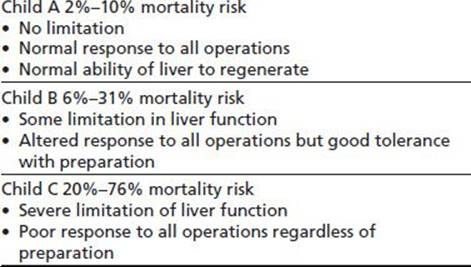
Surgery in patients with cirrhosis is high risk. A study of patients undergoing total knee arthroplasty found that both local and systemic complications were as high as 44% in patients with cirrhosis versus 6% in a control group (46). The preoperative factors associated with increased surgical morbidity and mortality include emergent surgery, upper abdominal surgery, poor hepatic synthetic function, anemia, ascites, malnutrition, and encephalopathy (47). These patients are at increased risk for uncontrolled bleeding, infections, and delirium. Coagulopathies and thrombocytopenia result in difficult perioperative hemostasis. Ascites increases the risk of intra-abdominal infections, abdominal wound dehiscence, and abdominal wall herniation. Nutritional deficiencies result in poor wound healing and an increased risk of skin breakdown, and encephalopathy decreases the patient’s ability to effectively participate in postoperative rehabilitation. The action of anesthetic agents may be prolonged and increases the risk of delirium. Cholecystectomy is a particularly risky surgery in patients with cirrhosis and portal hypertension because of intra-abdominal collateral circulation. This collateral circulation increases the vascularity of the gallbladder bed and places the patient at greater risk for severe perioperative hemorrhage. In a group of patients with cirrhosis undergoing cholecystectomy, those considered decompensated preoperatively by presence of ascites and prolonged coagulation studies had an 83% morality rate compared with 10% in compensated patients (48). In trying to risk stratify patient preoperatively, it is important to look for clinical signs of cirrhosis and portal hypertension. There are two scoring systems in use to predict whether patients with advance liver disease will survive surgery (49). Using a multivariable clinical assessment, the Child and Turcotte Classification made it possible to risk stratify patients with cirrhosis preoperatively. In 1964, the Child and Turcotte Classification stratified cirrhotic patients into three classes based on “hepatic reserve” and therefore surgical risk before portocaval shunt surgery (50). Class A was the most compensated, whereas class C was the most decompensated group. Variables included laboratory values of bilirubin and albumin as well as clinical ascites, encephalopathy, and nutritional status. Garrison found good correlation between Child and Turcotte Classification and abdominal surgical mortality with class A, B, and C mortality rates of 10%, 31%, and 76%, respectively (51). Some of the limitations of the Child and Turcotte Classification scheme included the subjective nature and interobserver variation in the assessment of nutritional status, encephalopathy, and ascites. In addition, there was variability in the assigning of patients to classes A, B, and C and no accounting for the nature and urgency of the surgical procedure. In an attempt to decrease the subjective nature of the classification scheme, Pugh et al. modified the Child and Turcotte Classification (Table 84-1) (52). The Pugh modification separates hepatic encephalopathy into five grades depending on various signs and symptoms (Table 84-2).
TABLE 84-1 PUGH CLASSIFICATION (MODIFIED CHILD AND TURCOTTE CLASSIFICATION)

Class A 5–6 points
Class B 7–9 points
Class C 10–15 points
Adapted from Pugh RN, Murray-Lyon IM, Dawson JL, et al. Transection of the oesophagus for bleeding oesophageal varices. Br J Surg 1973;60:646–649.
TABLE 84-2 ENCEPHALOPATHY GRADE

Adapted from Trey C, Burns DG, Saunders SJ. Treatment of hepatic coma by exchange blood transfusion. N Engl J Med 1966;274:473–481.
The subjective evaluation of nutritional status is changed to objective measured prolongation in prothrombin time and the assignment of class based on a total point score. Using pooled surgical data, the Pugh Classification scheme has proven to be a good preoperative risk stratifier (Table 84-3).
TABLE 84-3 CHILD CLASS, OPERATIVE RISK, AND OPERABILITY
Adapted from Stone HH. Preoperative and postoperative care. Surg Clin North Am 1977;57:409–419.
A second scoring system is the Model for End-Stage Liver Disease (MELD), which was designed to predict survival after transjugular intrahepatic portosystemic shunt treatment of bleeding esophageal varices (53). The MELD score is used to prioritize patients for liver transplantation and, more recently, as a predictor of survival after nontransplant surgery (54). The MELD score is calculated using the patient’s international normalized ratio (INR) and serum creatinine and bilirubin. Because the MELD formula is complex, scores can be calculated by using an online MELD score calculator at http://www.unos.org/resources/meldpeldcalculator.asp.
Preoperative Considerations in Patients with Cirrhosis
Preoperative abstinence should be the goal before all elective procedures. Since coagulopathies may develop as a result of vitamin K deficiency due to malnutrition or intestinal bile salt deficiency, attempts at correction should start with the administration of vitamin K. If there is no effect in 12 hours, it is most likely secondary to decreased hepatic production of coagulation factors, and perioperative use of fresh frozen plasma should be considered. Thrombocytopenia secondary to bone marrow suppression, hypersplenism, and splenic sequestration should be treated with prophylactic platelet transfusions when counts fall below 20,000/mm3 (42). In addition, units of packed red blood cells should be on hold in the blood bank. Ascites secondary to portal hypertension and hypoalbuminemia can impede abdominal wall healing, increase the risk of abdominal wall dehiscence and herniation, and restrict effective mechanical ventilation. Therefore, ascites should be optimally managed preoperatively with sodium restriction and appropriate diuretic therapy. In patients with peripheral edema, a more aggressive approach including large volume paracentesis (≥5 L) should be considered. Electrolytes should be monitored closely. Perioperative hemodynamic monitoring is often needed because these patients may have large fluid shifts, especially during abdominal surgeries. Preoperative broad-spectrum antibiotics (e.g., norfloxacin, ciprofloxacin) should be considered as prophylaxis against secondary and spontaneous bacterial peritonitis. Renal function should be monitored closely. Perioperative changes in volume status and hemodynamics may adversely affect renal function. These patients are at risk for renal insufficiency secondary to prerenal azotemia as well as developing hepatorenal syndrome. Any potential nephrotoxic agent (e.g., aminoglycoside antibiotics) should be used with extreme caution. Nonsteroidal antiinflammatory drugs and acetaminophen should be used carefully. Many perioperative conditions can exacerbate hepatic encephalopathy such as gastrointestinal bleeding, constipation, azotemia, hypoxia, and the use of sedatives (47). Aggressive preoperative treatment of hepatic encephalopathy using lactulose and dietary protein restriction is recommended. Patients with known gastroesophageal varices should be monitored closely for gastrointestinal bleeding and should be considered for beta-blocker prophylaxis preoperatively. The nutritional status of these patients is usually poor, and they are often deficient in thiamine, folate, vitamin C, and B vitamins. Nutritional status should be optimized with multivitamins, thiamine, folate, and nutritional supplementation preoperatively. From a pulmonary standpoint, decompensated cirrhotics may desaturate because of the development of pulmonary shunts in hepatopulmonary syndrome; therefore, continuous monitoring oxygen saturation should be part of the postoperative care. General class-specific guidelines are shown in Table 84-3. There is increasing evidence that laparoscopic procedures in cirrhotic patients may be safer than open procedures regardless of Child Classification (40). Patients with cirrhosis undergoing surgery may benefit from a multidisciplinary approach including a hepatologist (and nephrologist if the patient has renal insufficiency).
Management of Patients on Naltrexone (Opioid Antagonist) Maintenance
Patients with alcohol use disorder treated with naltrexone (oral daily and depot monthly) maintenance therapy are becoming more common. Because naltrexone is an opioid antagonist and will block the effects of coadministered opioid agonists, patients requiring opioids during the peri-operative period will need to discontinue naltrexone. The half-life of a single dose of oral naltrexone is 14 hours. The recommendation that oral naltrexone be discontinued at least 72 hours before surgery (55) is based on experimental studies showing that 50% of the oral naltrexone blockade effect was gone after 72 hours (56). Because a degree of opioid resistance will remain, patients should be observed closely for respiratory depression and sedation. After IM depot injection of naltrexone, peak plasma levels occur within 2 to 3 days with a decline in plasma concentrations beginning approximately 14 days after dosing. For patients on depot naltrexone, elective surgery should be postponed, if possible, for a month after the last naltrexone injection.
Patient requiring opioids for pain management after emergent surgery should have their naltrexone discontinued and opioids analgesics administered under close observation. Animal studies have shown that naltrexone blockade can be overcome resulting in analgesia and no significant respiratory depression or sedation with either hydrocodone or fentanyl at 10 to 20 times the usual doses (57). Anesthesia should be consulted to assist with perioperative pain management including the use of nonopioid alternatives and regional analgesia. Naltrexone can be restarted when the patient no longer requires opioid analgesics. In order to avoid precipitating opioid withdrawal, patients must be opioid free for a minimum of 7 to 10 days before restarting naltrexone. This opioid-free time period may be longer if patients are taking extended-release/long-acting opioids.
PERIOPERATIVE CARE OF THE PATIENT WITH AN OPIOID USE DISORDER
The goal during the perioperative period is to get the patient with an opioid use disorder safely through the surgical period. Patients with addictions will not be “cured” of them during their hospital stay and therefore should be encouraged to enroll in long-term addiction treatment at time of hospital discharge. Persons with an opioid use disorder are at high risk for medical complications that often require surgical intervention. Most of these complications are a consequence of both active and past high-risk behaviors (i.e., injection drug use [intravenous, intramuscular, subcutaneous “skin popping”]) and the direct toxic effects of the drug and additives being injected. Infections of the skin, soft tissue, bones, and joints are common and often require surgical drainage and débridement. Infectious endocarditis may require emergent or urgent heart valve replacement and will require antibiotic prophylaxis in the future before certain dental procedures (58). Functional bowel obstruction has also been described in chronic opioid users and may require surgical management. Acute hepatitis B and chronic hepatitis C infections are common in intravenous drug users and are the leading causes of liver transplantation (59). Chronic diseases associated with opioid abuse, such as pulmonary hypertension secondary to talc granulomatosis, renal insufficiency secondary to heroin-associated nephropathy, and congestive heart failure from valvular heart disease secondary to endocarditis, HIV syndrome, and chronic hepatitis B and C, can all increase surgical risk. Acute opioid withdrawal can also complicate the perioperative period.
Preoperative Evaluation
Patients with current or past injection drug use should be evaluated for past endocarditis and the need for antibiotic prophylaxis. These patients should also be evaluated for HIV/AIDS and active hepatitis B and C. Hospitalized patients with an opioid use disorder are at risk for acute opioid withdrawal. The onset and severity of withdrawal will depend on which opioid is being used and on the degree of physical dependence, which is related to the duration and amount used. Daily use for at least 3 weeks is generally required before significant physical dependence (and thus clinically significant withdrawal) occurs (60). Heroin withdrawal typically begins within 4 to 6 hours of the time of last use. Withdrawal from long-acting opioids such as sustained-release oxycodone (OxyContin) and morphine (MS Contin) and methadone may not occur for up to 24 to 36 hours. Active opioid use can be verified using urine toxicology tests, whereas injection drug use can be identified by examining the skin for “track marks.” Heroin and other semisynthetic opioids will be detected as morphine or codeine in the urine for up to 72 hours. Synthetic opioids (such as methadone and fentanyl) are not usually included in standard urine toxicology screens, so if synthetic opioid use is suspected, the laboratory should be asked to test for the specific synthetic opioid of concern. Depending on the opioid used, acute withdrawal usually peaks at 2 to 3 days and can last for up to 14 days. The Clinical Opiate Withdrawal Scale (61) and the Short Opiate Withdrawal Scale (62) are useful clinical opioid withdrawal assessment instruments. Patients who are addicted to opioids may also be addicted to other drugs, such as cocaine or crack, alcohol, or benzodiazepines; these should be the subject of inquiry and laboratory testing (63).
Management of Opioid Withdrawal
It is important for providers of perioperative care to be able to recognize and manage acute opioid withdrawal, which is likely in hospitalized surgical patients with opioid use disorder. One approach to treating opioid withdrawal in the hospital setting involves treating the physiologic manifestations of acute withdrawal (including the hyperadrenergic signs and symptoms, insomnia, nausea, vomiting, diarrhea, and muscles aches) with clonidine, benzodiazepines, dicyclomine, and nonsteroidal anti-inflammatory drugs. Depending on the patient’s blood pressure, clonidine 0.1 to 0.2 mg orally every 4 to 6 hours is given for the first 48 to 72 hours, with a gradual taper over the next 48 to 72 hours. A much more effective method employs a long-acting opioid agonist such as methadone or buprenorphine. Methadone is usually preferable due to the lower cost and lack of evidence that buprenorphine is superior. In general, trying to convert the dose of opioid the patient is addicted to with an equivalent dose of methadone is unhelpful due to the inexact nature of estimating the actual amount of illicit opioid being used. A starting dose of 20 to 30 mg of methadone orally lessens the signs and symptoms of withdrawal in most patients. The patient should be reassessed for continued withdrawal in 2 to 3 hours; if withdrawal persists, additional doses of 5 to 10 mg may be given, up to a total dose not to exceed 40 mg in 24 hours. After a stable dose has been achieved, it should be given daily to prevent the reemergence of withdrawal. The patient will likely continue to “crave” opioids, but his or her acute withdrawal signs and symptoms should abate. It is important to openly discuss this treatment plan with the patient and nursing staff to avoid unnecessary anxiety and conflict between the patient and health care team. If the patient is without food or drink during the perioperative period, he or she should receive 40% of the dose parenterally every 12 hours (e.g., 40 mg by mouth every day = 16 mg intramuscularly every 12 hours). After acute withdrawal is controlled, discussions regarding daily dose taper versus continued daily dose until the day of discharge (as well as postoperative addiction treatment aftercare and referral) should be discussed.
Management of Patients on Medications that Treat Addictions (Also Known as Medication-Assisted Treatment)
Patients may be maintained on opioid agonist therapy (OAT) with methadone or buprenorphine or on opioid antagonist therapy with naltrexone. Patients on OAT should be maintained on their usual maintenance dose equivalent during the perioperative period. The correct maintenance dose should be determined by calling the patient’s addiction treatment program (e.g., methadone program) or buprenorphine prescriber. Patients treated with naltrexone (oral daily and depot monthly) maintenance will need to discontinue naltrexone preoperatively in order to achieve benefit from postoperative opioid analgesics. The patient’s addiction treatment program or physician prescriber should be notified at time the patient is discharged from the hospital to assure continuity of addiction care. Some methadone-maintained patients with complicated postoperative courses who have impaired ability to ambulate postoperatively may be eligible for “medical” take-home doses of methadone from their addiction treatment provider. However, because each methadone clinic has its own policies and procedures on take-home doses, the discharging provider should discuss this possibility with the addiction treatment program’s clinical staff.
Management of Acute Pain in Patients on Opioid Agonist Therapy
Acute postoperative pain management in patients maintained on long-acting OAT can be challenging; however, guidelines have been published (Table 84-4) (64,65). The daily methadone or buprenorphine dose a patient receives is not adequate analgesia for acute pain. The lack of analgesia occurs because of the patient’s high tolerance to opioids and the pharmacodynamics of methadone and buprenorphine. All methadone- and buprenorphine-maintained patients have a high tolerance to other opioids (cross-tolerance). Cross-tolerance likely is the reason that methadone- and buprenorphine-maintained patients often require higher and more frequent doses of opioid analgesics to adequately treat acute pain. Both methadone and buprenorphine have long plasma half-lives (15 to 40 hours), with different durations of action for analgesia (4 to 8 hours) and for suppression of opioid withdrawal (24 to 36 hours) (66,67). Because the majority of patients on methadone or buprenorphine maintenance for opioid addiction are dosed every 24 hours, the potential for even partial pain relief is small. The appropriate treatment of acute pain in these patients includes uninterrupted OAT to address the patient’s baseline opioid requirement for their addiction treatment and aggressive pain management. As with all patients suffering acute pain, nonopioid analgesics should be aggressively implemented. However, moderate to severe acute pain will often require opioid analgesics. Continuing the usual dose of OAT avoids worsening pain symptoms because of the increased pain sensitivity associated with opioid withdrawal. To decrease anxiety, patients should be reassured that their opioid addiction treatment will continue and their pain will be aggressively treated. Because of cross-tolerance with OAT, adequate pain control will generally necessitate higher opioid doses at shorter intervals. Analgesic dosing should be continuous or scheduled rather than as needed. Allowing pain to reemerge before administering the next analgesic dose causes unnecessary suffering and anxiety and increases tension between patient and treatment team. Empiric data on the use of patient-controlled analgesia in patients with addiction disorders are limited. One study reported that, although methadone-maintained women had higher pain scores after cesarean-section surgery, there was no statistically significant difference in opioid analgesic usage compared with controls (68). Clinical experience supports consideration of patient-controlled analgesia use in patients on OAT; increased patient control over analgesia minimizes patient anxiety over pain management. The pharmacologic properties of opioids must be considered when selecting an opioid analgesic for the patient on OAT. Mixed agonist/antagonist opioid analgesics such as pentazocine (Talwin) and butorphanol (Stadol) must be avoided because they are likely to displace the methadone or buprenorphine from the mu receptor, thus precipitating acute opioid withdrawal in these patients.
TABLE 84-4 RECOMMENDATIONS FOR TREATING ACUTE PAIN IN PATIENTS ON OPIOID AGONIST THERAPY (OAT) a
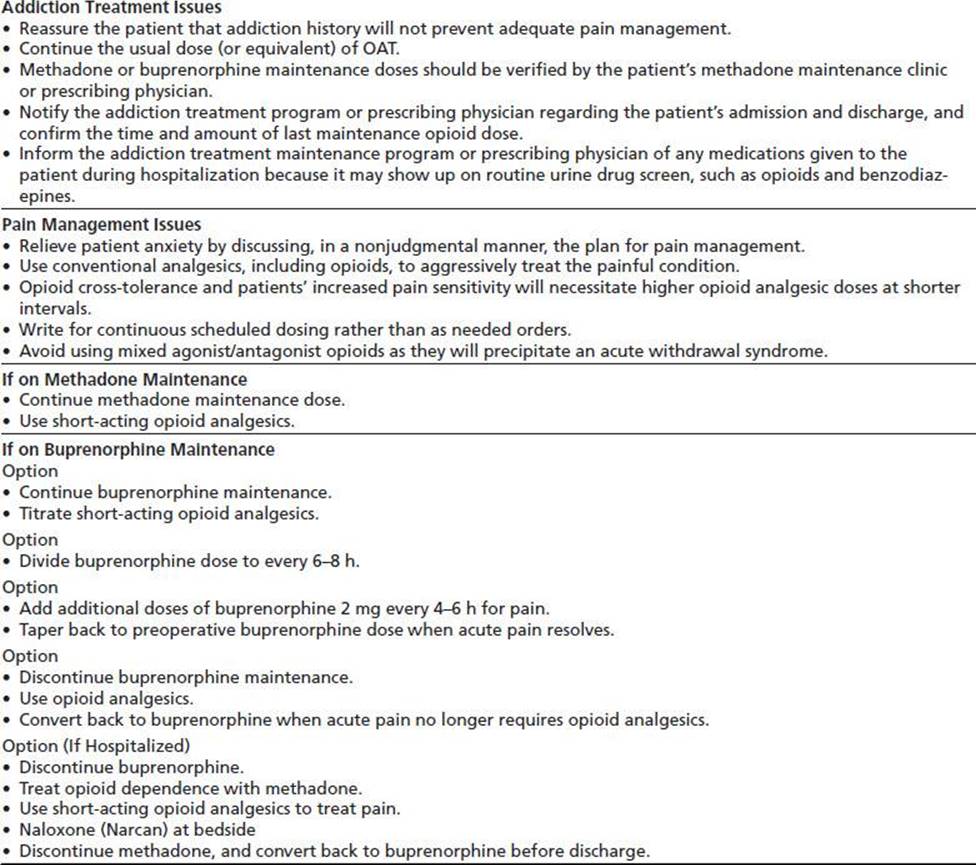
a These recommendations are applicable only when opioid analgesic treatment is determined to be necessary for the treatment of acute pain.
Data from Alford DP. Acute and chronic pain. In: Renner JA, Levounis P, eds. Handbook of Office-Based Buprenorphine Treatment of Opioid Dependence.
American Psychiatric Publishing, Inc (APPI) Arlington, VA 2010; and Alford DP, Compton P, Samet JH. Acute pain management for patients receiving maintenance methadone or buprenorphine therapy. Ann Intern Med 2006;144:127–134.
Management of Acute Pain in Patients on Opioid Antagonist Therapy
Patients with opioid use disorder treated with naltrexone (oral daily and depot monthly) maintenance therapy are becoming more common. See section above entitled “Management of Patients on Naltrexone (Opioid Antagonist) Maintenance” for guidance on acute pain management in patients maintained on naltrexone.
PERIOPERATIVE CARE OF THE PATIENT WITH BENZODIAZEPINE USE DISORDER
Benzodiazepines, which are commonly prescribed to treat anxiety, panic attacks, and insomnia, have a high abuse potential. Patients who misuse benzodiazepines often are addicted to multiple drugs (69). Some studies have found up to 15% of heroin users, and 41% of people with an alcohol use disorder also misuse benzodiazepines (70,71). Therefore, patients with addictive disorders should be asked about benzodiazepine use. Chronic benzodiazepine use results in physical dependence, with an acute withdrawal syndrome that can be life threatening. The withdrawal syndrome ranges from severe anxiety, insomnia, and autonomic hyperactivity (including tachycardia and hypertension) to seizures and delirium. Patients with physical dependence to prescribed benzodiazepines should be maintained on their usual dose during the perioperative period to prevent acute withdrawal and subsequent postoperative complications. Patients dependent on illicit benzodiazepines should be maintained on an equivalent dose of long-acting benzodiazepine (e.g., diazepam, chlordiazepoxide) during the perioperative period with psychiatric consultation for guidance on a safe benzodiazepine taper during the postoperative period.
PERIOPERATIVE CARE OF THE PATIENT WITH NICOTINE USE DISORDER
According to an evaluation of the American College of Surgeons National Surgical Quality Improvement Program database (72), current smokers had a 1.38 times higher likelihood of 30-day mortality compared to never smokers. Current smokers also had greater odds of postoperative cardiovascular events (i.e., cardiac arrest, myocardial infarction, stroke), infections (i.e., pneumonia, incision infections, sepsis, septic shock), and unplanned intubation. Asymptomatic smokers are at risk for pulmonary infections due to abnormalities in their respiratory epithelium leading to retained secretions and abnormal lung immune responses (73). A 20-pack-year history and smoking greater than 20 cigarettes a day seem to be the threshold of this increased risk. In observational studies of patients undergoing cardiothoracic surgery, the increased risk decreases only after 8 weeks of smoking cessation and was unrelated to pulmonary function test results (74). Healing is impaired because of decreased tissue oxygenation and inhibition of normal immune responses. Preoperative evaluation should include assessment of physical dependence on nicotine and risk of withdrawal. In addition, preoperative evaluation should include assessment for evidence of cardiovascular disease and COPD. Patients with COPD have a threefold increased risk of postoperative pulmonary complications, including pneumonia (75). Other possible risk factors for pulmonary complications include increased age, duration, and anatomic location of surgery and preoperative sputum production. It is important to assess for upper respiratory infections and to treat with preoperative antibiotics as indicated. Elective procedures should be delayed until any pulmonary infection is resolved. Providers of preoperative care should encourage smoking cessation. Pharmacotherapy, including nicotine replacement, bupropion, and varenicline, consistently increases abstinence rates and should be considered preoperatively. Aggressive perioperative treatment of airflow obstruction should be achieved with inhaled steroids and beta agonists. Preoperative patient education regarding postoperative incentive spirometry use decreases the incidence of postoperative pulmonary complications (75). Nicotine replacement therapy also should be offered postoperatively to patients at risk for nicotine withdrawal.
PERIOPERATIVE CARE OF THE PATIENT WITH STIMULANT USE DISORDER
Cocaine and methamphetamine may be ingested, snorted, smoked, or taken intravenously. Intravenous stimulant use may result in all the complications attributable to injection drug use such as endocarditis, pulmonary hypertension, hepatitis B and C, and HIV/AIDS. Stimulant use also increases libido and reduces sexual inhibition that also increases the risk of sexually transmitted disease acquisition. Acute stimulant intoxication can be a life-threatening condition because of excessive adrenergic stimulation resulting in acute psychosis, hypertensive crisis, cardiac arrhythmias, sudden cardiac death, seizures, intracranial hemorrhage, myocardial infarction, and cerebrovascular accident. Stimulant users may require surgical interventions due to the acute and chronic affects of these drugs. Cocaine and methamphetamine use can cause bowel ischemia and gangrene resulting from mesenteric vasoconstriction requiring emergent bowel resection. Methamphetamine users may require acute surgical care for traumatic injuries and chemical burns and skin abscesses from compulsive skin picking. They may require elective surgery for severe periodontal disease. The period of cocaine intoxication is generally brief (approximately 60 minutes) and should not increase the risk of most surgery. However, methamphetamine’s longer half-life of 12 hours could adversely affect emergent surgical procedures. Intoxicated patients should be placed in a calm and quiet environment and managed with sedatives such as benzodiazepines. Smoked stimulants can increase surgical risk by causing pulmonary edema. Long-term stimulant use can result in chronic medical conditions, which increase surgical risk such as cardiac dysfunction from prior myocardial infarction or dilated cardiomyopathy. Up to 7% of asymptomatic chronic cocaine users have left ventricular systolic dysfunction (76), although young methamphetamine users were found to have a 3.7-fold increased odds ratio for cardiomyopathy (77). In addition, long-term stimulant use causes left ventricular hypertrophy, a known risk factor for ventricular arrhythmias (78). Therefore, it is critically important to identify stimulant use during preoperative assessment and to evaluate carefully for clinical evidence of cardiac disease. Concurrent use of cocaine and alcohol is common, because alcohol prolongs the effects of cocaine through the metabolite cocaethylene. Cocaethylene increases the rate of cardiac complications (79). Therefore, all patients who use cocaine should be screened for concurrent heavy alcohol use. Depression and hypersomnolence are common in stimulant withdrawal and may mimic and be confused with other postoperative neurologic complications.
ORGAN TRANSPLANTATION IN PATIENTS WITH ADDICTIONS
Hepatitis B and C infection from injection drug use and alcoholic liver disease are the most common causes of end-stage liver disease requiring liver transplantation in the United States. In the past, patients with a history of addictive disorder have been kept off of transplantation lists because of fears of posttransplant noncompliance, with subsequent loss of graft, but also because of moralistic arguments that the patients had “self-inflicted” diseases. In fact, some studies have demonstrated posttransplant relapse rates as high as 49%, with lower overall survival rates in patients who failed to complete addiction treatment (80). Other studies found no difference in 1-year survival rate between patients with alcohol dependence who maintained sobriety and patients who had no history of an alcohol use disorder (81). In fact, at least among people with alcohol dependence selected for liver transplant, most (71%) abstain or nearly completely abstain, and only 7% return to heavy drinking. Furthermore, outcomes (mortality) after liver transplant may be even better among people with an alcohol use disorder than among those with other causes of liver failure because those who abstain have no ongoing cause for recurrence, whereas those with hepatitis C infection, for example, often have recurrence. Patients with alcohol dependence who undergo liver transplant are more likely to eventually die from cancer and recurrent infectious hepatitis than they are from recurrent heavy alcohol use complications (82). A study identified preoperative risk factors that were predictive of relapse after transplantation that included shorter length of abstinence before transplantation, greater than one episode of alcohol withdrawal before transplantation, younger age at time of transplantation, and an alcohol use disorder in first-degree relatives (83). A survey of US liver transplantation programs found that most accept applicants with an alcohol or drug use disorder, but only 56% will accept patients actively receiving methadone maintenance treatment (84). In fact, some programs had policies requiring discontinuation of methadone maintenance before transplantation, which directly contradicts clinical evidence supporting this form of treatment in patients with an opioid use disorder. It is clear that patients with a current or past substance use disorders need to be assessed for risk of relapse and social support systems before being accepted for transplantation. Because organ transplantation in patients with addiction is unusually complex, some medical centers have added addiction specialists to the transplant team (80).
CONCLUSIONS
Patients with addiction have high rates of hospitalization and surgery. The underlying history of addiction may not be apparent initially, but thorough history taking and the use of effective screening tools can elicit information about past or current drug and alcohol use disorders. Because of the high prevalence of the use of more than one drug, patients who acknowledge an addiction to one substance should be asked about all other substances of abuse. Careful evaluation also can detect clinical signs of chronic diseases of the heart, lungs, and liver related to drug and heavy alcohol use. The importance of identifying addiction preoperatively cannot be overstated. Perioperative morbidity associated with acute abstinence syndromes can be prevented with proper preoperative treatment. If possible, elective surgery should be postponed to allow time for complete detoxification. Sedative–hypnotics and opioid analgesics should be used as indicated perioperatively; however, these drugs have a significant abuse potential in patients with addiction, so they should be prescribed with caution. Management of patients with addiction going for surgery often requires consultation with addiction and pain specialists. All patients with current addiction should be encouraged to engage in addiction treatment postoperatively.
REFERENCES
1.Passeri LA, Ellis E III, Sinn DP. Relationship of substance abuse to complications with mandibular fractures. J Oral Maxillofac Surg 1993;51:22–25.
2.Merrill JO, Rhodes LA, Deyo RA, et al. Mutual mistrust in the medical care of drug users: the keys to the “narc” cabinet. J Gen Intern Med 2002;17(5):327–333.
3.Saitz R. Clinical practice. Unhealthy alcohol use. N Engl J Med 2005;352(6):596–607.
4.D’Onofrio G, Bernstein E, Bernstein J, et al. Patients with alcohol problems in the emergency department, part 1: Improving detection. SAEM Substance Abuse Task Force. Society for Academic Emergency Medicine. Acad Emerg Med 1998;5(12):1200–1209.
5.Spies C, Tonnesen H, Andreasson S, et al. Perioperative morbidity and mortality in chronic alcoholic patients. Alcohol Clin Exp Res 2001;25(5):164S–170S.
6.Foy A, Kay J. The incidence of alcohol-related problems and the risk of alcohol withdrawal in a general hospital population. Drug Alcohol Rev. 1995;14(1):49–54.
7.Gordon AJ, Olstein J, Conigliaro J. Identification and treatment of alcohol use disorders in the perioperative period. Postgrad Med 2006;119(2):46–55.
8.Tonnesen H. Influence of alcohol on several physiological functions and its reversibility: a surgical view. Acta Psychiatr Scand Suppl 1992; 369:67–71.
9.Zhang P, Bagby GJ, Happel KI, et al. Alcohol abuse, immunosuppression, and pulmonary infection. Curr Drug Abuse Rev 2008;1(1):56–67.
10.Tonnesen H, Nielsen PR, Lauritzen JB, et al. Smoking and alcohol intervention before surgery: Evidence for best practice. Br J Anaesth 2009;102(3):297–306.
11.Kitchens JM. Does this patient have an alcohol problem? JAMA 1994;272(22):1782–1787.
12.Spies C, Neumann T, Muller C, et al. Preoperative evaluation of alcohol dependent patients admitted to the intensive care unit following surgery. Alcohol Clin Exp Res 1995;19(Suppl 2):55A.
13.Andreasson S, Allebeck P, Romelsjo A. Hospital admissions for somatic care among young men: The role of alcohol. Br J Addict 1990;85(7):935–941.
14.Tonnesen H, Petersen KR, Hojgaard L, et al. Postoperative morbidity among symptom-free alcohol misusers. Lancet 1992;340(8815):334–337.
15.Bradley KA, Rubinsky AD, Sun H, et al. Alcohol screening and risk of postoperative complications in male VA patients undergoing major non-cardiac surgery. J Gen Intern Med2011;26(2):162–169.
16.Rubinsky AD, Sun H, Blough DK, et al. AUDIT-C alcohol screening results and postoperative inpatient health care use. J Am Coll Surg 2012;214(3):296–305.e1.
17.Ewing JA. Detecting alcoholism. the CAGE questionnaire. JAMA 1984;252(14):1905–1907.
18.Mayfield D, McLeod G, Hall P. The CAGE questionnaire: Validation of a new alcoholism screening instrument. Am J Psychiatry 1974;131(10):1121–1123.
19.Schorling JB, Buchsbaum D. Screening for alcohol and drug abuse. Med Clin North Am 1997;81(4):845–865.
20.Chiang PP. Perioperative management of the alcohol-dependent patient. Am Fam Physician 1995;52(8):2267–2273.
21.Saitz R. Recognition and management of occult alcohol withdrawal. Hosp Pract (Minneap) 1995;30(6):49–54, 56–58.
22.Eklund J. Alcohol abuse and postoperative complications. do we ask the right questions? Acta Anaesthesiol Scand 1996;40(6):647–648.
23.Regan TJ. Alcohol and the cardiovascular system. JAMA 1990; 264(3):377–381.
24.Frost EA, Siedel MR. Preanesthetic assessment of the drug abuse patient. Anesth Clin N Am 1990;71:453–476.
25.Lindenbaum J. Alcohol and the hematologic system. In: Leiber CS, ed. Medical and nutritional complications of alcoholism, New York: Plenum, 1992:241–281.
26.Saitz R, O’Malley SS. Pharmacotherapies for alcohol abuse. Withdrawal and treatment. Med Clin North Am 1997;81(4):881–907.
27.Glickman L, Herbsman H. Delirium tremens in surgical patients. Surgery 1968;64(5):882–890.
28.Spandorfer J. The patient with substance abuse going to surgery. In: Merli GJ, Weitz HH, eds. Medical management of the surgical patient, 2nd ed. Philadelphia, PA: WB Saunders Company, 1998:255–262.
29.Mayo-Smith MF. Pharmacological management of alcohol withdrawal. A meta-analysis and evidence-based practice guideline. American Society of Addiction Medicine Working Group on Pharmacological Management of Alcohol Withdrawal. JAMA 1997;278(2):144–151.
30.Mayo-Smith MF, Beecher LH, Fischer TL, et al. Management of alcohol withdrawal delirium. an evidence-based practice guideline. Arch Intern Med 2004;164(13):1405–1412.
31.Sullivan JT, Sykora K, Schneiderman J, et al. Assessment of alcohol withdrawal: the revised clinical institute withdrawal assessment for alcohol scale (CIWA-ar). Br J Addict1989;84(11):1353–1357.
32.Tonnesen H, Schutten BT, Jorgensen BB. Influence of alcohol on morbidity after colonic surgery. Dis Colon Rectum 1987;30(7): 549–551.
33.Tonnesen H, Schutten BT, Tollund L, et al. Influence of alcoholism on morbidity after transurethral prostatectomy. Scand J Urol Nephrol 1988;22(3):175–177.
34.Felding C, Jensen LM, Tonnesen H. Influence of alcohol intake on postoperative morbidity after hysterectomy. Am J Obstet Gynecol 1992;166(2):667–670.
35.Tonnesen H, Kehlet H. Preoperative alcoholism and postoperative morbidity. Br J Surg 1999;86(7):869–874.
36.Jensen NH, Dragsted L, Christensen JK, et al. Severity of illness and outcome of treatment in alcoholic patients in the intensive care unit. Intensive Care Med 1988;15(1):19–22.
37.La Vecchia LL, Bedogni F, Bozzola L, et al. Prediction of recovery after abstinence in alcoholic cardiomyopathy: role of hemodynamic and morphometric parameters. Clin Cardiol1996;19(1):45–50.
38.Tonnesen H, Rosenberg J, Nielsen HJ, et al. Effect of preoperative abstinence on poor postoperative outcome in alcohol misusers: randomised controlled trial. BMJ1999;318(7194):1311–1316.
39.Ordorica PI, Nace EP. Alcohol. In: Frances RJ, Miller SI, eds. Clinical textbook of addictive disorders, 2nd ed. New York: The Guilford Press, 1998:91–119.
40.Rizvon MK, Chou CL. Surgery in the patient with liver disease. Med Clin North Am 2003;87(1):211–227.
41.Greenwood SM, Leffler CT, Minkowitz S. The increased mortality rate of open liver biopsy in alcoholic hepatitis. Surg Gynecol Obstet 1972;134(4):600–604.
42.Patel T. Surgery in the patient with liver disease. Mayo Clin Proc 1999;74(6):593–599.
43.Wong R, Rappaport W, Witte C, et al. Risk of nonshunt abdominal operation in the patient with cirrhosis. J Am Coll Surg 1994;179(4): 412–416.
44.Friedman LS, Maddrey WC. Surgery in the patient with liver disease. Med Clin North Am 1987;71(3):453–476.
45.Cowan RE, Jackson BT, Grainger SL, et al. Effects of anesthetic agents and abdominal surgery on liver blood flow. Hepatology 1991;14(6):1161–1166.
46.Shih LY, Cheng CY, Chang CH, et al. Total knee arthroplasty in patients with liver cirrhosis. J Bone Joint Surg Am 2004;86-A(2):335–341.
47.Grimm IS, Almounajed G, Friedman LS. Management of the surgical patient with liver disease. In: Merli GJ, Weitz HH, eds. Medical management of the surgical patient, 2nd ed. Philadelphia, PA: WB Saunders Company, 1998:193–213.
48.Aranha GV, Sontag SJ, Greenlee HB. Cholecystectomy in cirrhotic patients: a formidable operation. Am J Surg 1982;143(1):55–60.
49.Suman A, Carey WD. Assessing the risk of surgery in patients with liver disease. Cleve Clin J Med 2006;73(4):398–404.
50.Child CG, Turcotte JG. Surgery and portal hypertension. Major Probl Clin Surg 1964;1:1–85.
51.Garrison RN, Cryer HM, Howard DA, Polk HC Jr. Clarification of risk factors for abdominal operations in patients with hepatic cirrhosis. Ann Surg 1984;199(6):648–655.
52.Pugh RN, Murray-Lyon IM, Dawson JL, et al. Transection of the oesophagus for bleeding oesophageal varices. Br J Surg 1973;60(8):646–649.
53.Malinchoc M, Kamath PS, Gordon FD, et al. A model to predict poor survival in patients undergoing transjugular intrahepatic portosystemic shunts. Hepatology 2000;31(4):864–871.
54.Suman A, Barnes DS, Zein NN, et al. Predicting outcome after cardiac surgery in patients with cirrhosis: a comparison of child-pugh and MELD scores. Clin Gastroenterol Hepatol2004;2(8):719–723.
55.Vickers AP, Jolly A. Naltrexone and problems in pain management. BMJ 2006;332(7534):132–133.
56.Verebey K. The clinical pharmacology of naltrexone: pharmacology and pharmacodynamics. NIDA Res Monogr 1981;28:147–158.
57.Dean RL, Todtenkopf MS, Deaver DR, et al. Overriding the blockade of antinociceptive actions of opioids in rats treated with extended-release naltrexone. Pharmacol Biochem Behav2008;89(4):515–522.
58.Wilson W, Taubert KA, Gewitz M, et al. Prevention of infective endocarditis: guidelines from the American Heart Association: a guideline from the American Heart Association Rheumatic Fever, Endocarditis, and Kawasaki Disease Committee, Council on Cardiovascular Disease in the Young, and the Council on Clinical Cardiology, Council on Cardiovascular Surgery and Anesthesia, and the Quality of Care and Outcomes Research Interdisciplinary Working Group. Circulation 2007;116:1736–1754.
59.Aranda-Michel J, Dickson RC, Bonatti H, et al. Patient selection for liver transplant: 1-year experience with 555 patients at a single center. Mayo Clin Proc 2008;83(2):165–168.
60.Kleber HD. Pharmacologic management of opioid withdrawal. Optimizing the treatment and management of substance abuse and addiction (1999 CME Series). San Antonio, TX: Dannemiller Memorial Education Foundation, 1999.
61.Wesson DR, Ling W. The clinical opiate withdrawal scale (COWS). J Psychoactive Drugs 2003;35(2):253–259.
62.Gossop M. The development of a short opiate withdrawal scale (SOWS). Addict Behav 1990;15(5):487–490.
63.Joseph H, Stancliff S, Langrod J. Methadone maintenance treatment (MMT): a review of historical and clinical issues. Mt Sinai J Med 2000;67(5–6):347–364.
64.Alford DP, Compton P, Samet JH. Acute pain management for patients receiving maintenance methadone or buprenorphine therapy. Ann Intern Med 2006;144(2):127–134.
65.Alford DP. Acute and chronic pain. In: Renner JA, Levounis P, eds. Handbook of office-based buprenorphine treatment of opioid dependence. Arlington, VA: American Psychiatric Publishing, Inc (APPI), 2010:Chapter 11
66.Reisine T, Pasternak G. Opioid analgesics and antagonists. In: Harmon JG, Goodman Gilman A, Limbird LE, eds. The pharmacological basis of therapeutics, 9th ed. New York: The McGraw-Hill Company, 1996.
67.Johnson RE, Fudala PJ, Payne R. Buprenorphine: considerations for pain management. J Pain Symptom Manage 2005;29(3): 297–326.
68.Paige D, Proble L, Watrous G, et al. PCA use in cocaine using patients: a pilot study. Am J Pain Manage 1994;4:101–105.
69.Gold MS, Miller NS, Stennie K, et al. Epidemiology of benzodiazepine use and dependence. Psychiatr Ann 1995;25:146–148.
70.Dumont RL. Abuse of benzodiazepines: the problems and the solutions. A Report of a Committee of the Institute for Behavior and Health, Inc. Am J Drug Alcohol Abuse 1988;14(Suppl 1):1–69.
71.Ciraulo DA, Sands BF, Shader RI. Critical review of liability for benzodiazepine abuse among alcoholics. Am J Psychiatry 1988;145(12):1501–1506.
72.Turan A, Mascha EJ, Roberman D, et al. Smoking and perioperative outcomes. Anesthesiology 2011;114(4):837–846.
73.Chalon J, Tayyab MA, Ramanathan S. Cytology of respiratory epithelium as a predictor of respiratory complications after operation. Chest 1975;67(1):32–35.
74.Warner MA, Offord KP, Warner ME, et al. Role of preoperative cessation of smoking and other factors in postoperative pulmonary complications: a blinded prospective study of coronary artery bypass patients. Mayo Clin Proc 1989;64(6):609–616.
75.Jackson CV. Preoperative pulmonary evaluation. Arch Intern Med 1988;148(10):2120–2127.
76.Bertolet BD, Freund G, Martin CA, et al. Unrecognized left ventricular dysfunction in an apparently healthy cocaine abuse population. Clin Cardiol 1990;13(5):323–328.
77.Yeo KK, Wijetunga M, Ito H, et al. The association of methamphetamine use and cardiomyopathy in young patients. Am J Med 2007;120(2):165–171.
78.Lange RA, Hillis LD. Cardiovascular complications of cocaine use. N Engl J Med 2001;345(5):351–358.
79.Afonso L, Mohammad T, Thatai D. Crack whips the heart: a review of the cardiovascular toxicity of cocaine. Am J Cardiol 2007;100(6):1040–1043.
80.Stowe J, Kotz M. Addiction medicine in organ transplantation. Prog Transplant 2001;11(1):50–57.
81.Starzl TE, Van Thiel D, Tzakis AG, et al. Orthotopic liver transplantation for alcoholic cirrhosis. JAMA 1988;260(17):2542–2544.
82.Dimartini A. Natural history of alcohol use disorders in liver transplant patients. Liver Transpl 2007;13(11 Suppl 2): S76–8.
83.Perney P, Bismuth M, Sigaud H, et al. Are preoperative patterns of alcohol consumption predictive of relapse after liver transplantation for alcoholic liver disease? Transpl Int2005;18(11):1292–1297.
84.Koch M, Banys P. Liver transplantation and opioid dependence. JAMA 2001;285(8):1056–1058.