
Wesley Prickett, MD, David J. Copenhaver, MD MPH, and Scott M. Fishman, MD
CHAPTER OUTLINE
■ INTRODUCTION
■ FEDERAL OPIOID REGULATIONS
■ FEDERAL REGULATIONS AND MARIJUANA
■ FEDERAL AGENCIES
■ PRESCRIPTION DRUG MONITORING PROGRAMS
■ EMERGING OPIOID RISK DATA AND RELEVANT ISSUES
■ CONCLUSIONS
INTRODUCTION
The Institute of Medicine, of the U.S. National Academy of Science, in a landmark report entitled “Relieving Pain in America,” detailed the epidemic of chronic pain in the United States. Their 2011 report estimated that chronic pain affects nearly 100 million American adults (1). Concomitantly, the use of opioids to treat chronic nonmalignant pain has become commonplace, and the United States now consumes 80% of the global opioid supply (2). There has been a “perfect storm” in the United States regarding the treatment of chronic pain. The recognition of undertreated pain and the excessive use of opioids reflect seemingly contradictory public health problems, and the Centers for Disease Control has reported that prescription drug overdose, predominantly involving opioids, is the leading cause of accidental death in adults aged 25 to 64 (3,4). This challenging reality has led clinicians, regulators, and lawmakers to reevaluate the indications and use of chronic opioid therapy (COT). Accordingly, health care providers must have sound knowledge of the federal and state regulations that govern the use and allocation of controlled substances. The following chapter will highlight some of these regulations and provide a brief overview of the current legal and medical controversies regarding opioids.
FEDERAL OPIOID REGULATIONS
Historically, federal regulations governing controlled substances have been based on two major concepts: transparency or truth in labeling and the appropriate distribution/use of controlled substances. Truth in labeling protects consumers from an educational standpoint, and the appropriate use of controlled substances limits access to these substances, thereby protecting the public at large from drugs of abuse. Federal regulation of controlled substances began in the United States over 100 years ago with the Pure Food and Drug Act of 1906. This statute was enacted to ensure that medications had proper labeling and were unadulterated before reaching the consumer (5). Established in 1914, the Harrison Narcotics Tax Act was developed to impede the abuse of addictive drugs and was followed by the Marijuana Tax Act of 1937 (5). Amphetamines, barbiturates, and hallucinogens were brought under regulation in 1965 under the Federal Food, Drug, and Cosmetic Act (5).
The U.S. Congress sought to consolidate the various federal regulatory statutes governing drugs of potential abuse, and in 1970, the Comprehensive Drug Abuse Prevention and Control Act was created. Title II of this policy is the Controlled Substances Act (CSA), which is the primary set of federal regulations that govern the medical use of controlled substances in the United States. Under the CSA, controlled substances are divided into five schedules that are predicated on the following characteristics: potential for abuse, pharmacologic effects, scientific properties, pattern of abuse, public health risk, psychological or physiologic dependence, liability, and whether or not the substance is an immediate precursor of a substance already classified under a CSA schedule (6). As reflected in Table 99-1, Schedule II–IV drugs all have accepted medical use and primarily differ based on varying degrees of physical/psychological dependence and abuse potential. Each drug schedule also carries differing criminal penalties for unlawful use outside of accepted standard medical practice. The implementation and enforcement of the CSA are currently assigned to the Drug Enforcement Administration (DEA) in the Department of Justice.
TABLE 99-1 THE FIVE CSA SCHEDULES AND COMPARISON OF THE CRITERIA FOR SCHEDULE DETERMINATION

Drug Enforcement Administration. Drug fact sheets. Available at: http://www.justice.gov/dea/druginfo/all_fact_sheets.pdf. Accessed March 2, 2013. Ref. (7).
Federal regulations allow opioids to be prescribed for legitimate medical purposes, including both acute and chronic pain (8). Methadone and buprenorphine are used to treat pain as well as for opioid detoxification/maintenance treatment. Although no special DEA registration is required to prescribe buprenorphine for pain, when used for detoxification/maintenance therapy, methadone and buprenorphine have additional regulations and requirements for prescribers that are not required for prescribing opioids for pain (9–11). Although reviewing the special requirements for using these drugs in detoxification/maintenance therapy is beyond the scope of this chapter and is covered elsewhere in this text, the lack of such requirements for prescribing these drugs for pain should in no way imply that they are safer in such settings or that they need any less vigilance (12). In fact, the statistics may indicate just the opposite. Studies suggest that methadone is the most frequent opioid associated with unintentional overdose death (13). Although methadone accounts for less than 5% of the opioids prescribed for pain, it is associated with one-third of the overdose deaths (14,15). Buprenorphine has been classically believed to have lower abuse potential than other opioids and a much lower potential for respiratory depression. These beliefs are increasingly being challenged by new reports of rising buprenorphine abuse and toxicity, particularly when combined with other CNS-active drugs or respiratory depressants (16).
Products containing tramadol are not currently listed within any of the schedules under the CSA. Presumably, this was due to lack of substantial concern about the abuse potential for these products at the time. Tramadol is an opioid with other potential mechanisms of analgesia, and recently, concerns about abuse potential have led several states to schedule tramadol and tramadol-containing products as a Schedule IV drug under their state law [including Arkansas, Illinois, Kentucky, Mississippi, New Mexico, New York, North Dakota, Ohio, Oklahoma, Tennessee, West Virginia, and Wyoming].
FEDERAL REGULATIONS AND MARIJUANA
Eighteen states and the District of Columbia have enacted laws that allow for the provisional use of marijuana to treat various medical ailments and, in 2012, two states voted to approve laws that allow for the recreational use of marijuana (17). Proponents of medical marijuana assert that it is an effective treatment for pain, appetite stimulation, glaucoma, nausea, spasticity, and movement disorders, among other ailments (18,19). Despite state laws, the federal government classifies marijuana as a Schedule I substance, signifying that it has no accepted medical use and a high potential for abuse. Under federal law, it is illegal to possess any amount of marijuana, and first-time possession carries a penalty of up to 1 year in prison and a maximum fine of $2000 (20). Thus, in some states, state and federal laws appear to be in conflict over the use of marijuana, and a debate is growing over whether or not state law can supersede federal law.
Opponents of medical marijuana cite the CSA and the Supremacy Clause, Constitutional Article VI, Clause 2, which states, “This Constitution, and the Laws of the United States which shall be made in pursuance thereof; and all treaties made, or which shall be made, under the authority of the United States, shall be the supreme law of the land; and the judges in every state shall be bound thereby, anything in the constitution or laws of any state to the contrary notwithstanding” (21–23).
Proponents of medical marijuana believe that marijuana does have legitimate medical uses with limited abuse potential and should therefore not be a Schedule I substance (24,25). The federal government does not appear to share this perspective, as some “state-legalized” medical marijuana dispensaries have been prosecuted (26).
Physicians are regulated by both state and federal regulations and are expected to comply with all regulations. In states where the use of marijuana may be legal, it is not exactly clear where state law stands on the concurrent use of marijuana and other controlled substances. Prescribing ongoing controlled substances to individuals known to be using/ abusing a Schedule I drug (i.e., a substance with no known or approved medicinal purpose) is typically inappropriate or illegal (27). The Supremacy Clause of Constitutional Article VI, as well as the doctrine known as preemption, suggests that when in conflict, the laws of the higher form of government will prevail (i.e., federal law trumps state law) (28). When regulations are in conflict, clinicians are often advised to adhere to the most conservative or restrictive regulations; however, the exact course of action for adherence to the law may not be so clear, and clinicians must refer to official counsel for legal advice on these issues (28). As more states enact legislation allowing for the use and possession of marijuana, medical or otherwise, it will be helpful if federal or state law clearly defines the prescribing limits for controlled substances as it relates to individuals who use marijuana in compliance with their state laws.
In December 2012, when President Obama was asked if he supports legalized marijuana, he replied, “It does not make sense, from a prioritization point of view, for us to focus on recreational drug users in a state that has already said that under state law, that’s legal” (29). Nonetheless, in the same news report, the U.S. Attorney for Colorado, John Walsh, indicated that regardless of the new state laws that had been passed related to the legalized use of marijuana, the U.S. Department of Justice had the responsibility to enforce the federal CSA. The U.S. Attorney John Walsh was quoted as follows, “Neither states nor the executive branch can nullify a statute passed by Congress.” He goes on to state: “Regardless of any changes in state law, including the change that will go into effect on Dec. 10 in Colorado, growing, selling or possessing any amount of marijuana remains illegal under federal law” (29).
FEDERAL AGENCIES
The Drug Enforcement Administration (DEA)
Health care providers who wish to prescribe controlled substances must be registered and obtain a provider number through the DEA. The DEA is part of the U.S. Department of Justice and does not directly regulate medical practice but does investigate practitioners who do not comply with the laws regarding distribution of controlled substances (30). These investigations can lead to revocation of the provider’s DEA registration and/or criminal prosecution.
According to the DEA, common behaviors that result in investigation include issuing prescriptions for controlled substances without a bona fide physician–patient relationship, issuing prescriptions in exchange for sex, charging fees commensurate with drug dealing rather than providing medical services, issuing prescriptions using fraudulent names, and self-abuse by practitioners (30). The DEA reported in 2006 that, in any given year, less than 0.01% of physicians in the United States lose their controlled substance registrations based on a DEA investigation, and most investigations of physicians that result in loss of DEA registration are initiated by state medical boards (30).
Federal DEA registrations are valid for 3 years, and the DEA Certificate of Registration must be kept at the registered location and be readily retrievable for inspection purposes (31). Currently, requirements to obtain a DEA number are associated with the provider meeting criteria for licensing, but there are no requirements for continuing medical education credits. In 2011, a bill was introduced in Congress that sought to require 16 hours of mandatory continuing medical education (CME) to obtain a DEA number, but the bill failed to pass (32). In light of the current state of excessive opioid prescribing and an epidemic of prescription drug abuse, it seems likely that similar bills may be introduced in the future.
In 2006, the DEA released an updated Practitioner’s Manual that summarizes the federal regulations regarding controlled substances and the CSA. The complete manual can be found at the following Internet link under “publications”: www.deadiversion.usdoj.gov (33). Also in 2006, the DEA released a statement entitled “Dispensing Controlled Substances for the Treatment of Pain” (34). Health care providers are encouraged to familiarize themselves with these two documents as they provide important information regarding the legal use of controlled substances.
In 2007, the DEA limited the amount of Schedule II controlled substances that can be prescribed to no more than a 90-day supply with a new prescription being required if continued use is deemed medically necessary beyond this period (35). Prescribers also must follow their state law that may have limits that are less than the federal 90-day period. Refills on Schedule II drugs are never allowed, but the DEA determined that practitioners may provide patients with multiple prescriptions, to be filled sequentially, for the same Schedule II controlled substance. This allows practitioners, in states where this practice is also legal, to issue multiple, incremental prescriptions to provide up to a 90-day supply of a Schedule II medication. When using such sequential prescriptions, the prescriber indicates that the prescription should not be filled until a later date that is clearly written on the prescription. However, it is required that each prescription also be dated with the date on which the prescription was written. Thus, such multiple prescriptions might each have the same date (indicating the date they were written) but different fill dates for when a pharmacist can fill the prescriptions. However, prescribers must be certain that such multiple prescribing practices are also allowed in their state. In 2010, the DEA determined that practitioners who are registered with the DEA can prescribe scheduled substances electronically through special procedures (36).
The Food and Drug Agency (FDA) and Risk Evaluation and Mitigation Strategies (REMS)
The Food and Drug Agency (FDA) has the authority to require pharmaceutical manufactures to develop Risk Evaluation and Mitigation Strategies (REMS) under the Food and Drug Administration Amendments Act (FDAAA) of 2007 (37). The REMS requirement is to ensure that the benefits of the substance outweigh its potential risk and to address drug class–specific education (37). Historically, the FDA has used various risk management strategies for other drugs before the REMS requirement was applied to opioids (38).
The FDA released a REMS for transmucosal immediate-release fentanyl in December of 2011. To address the growing problem of opioid overdose and misuse, the FDA requested that certain manufacturers of long-acting opioids (LAOs) develop REMS for their products. In 2011, the FDA, in collaboration with the White House Office of National Drug Control Policy, issued a directive requiring stakeholders to develop comprehensive REMS for LAOs within 120 days of receiving the directive (39). The LAO manufacturers were required to financially support the development and implementation of voluntary CME in regard to their products. The FDA released the final REMS requirements for extended-release/long-acting opioids (LAOs) in July of 2012. These include products such as extended-release morphine, extended-release oxycodone, and extended-release transdermal fentanyl. These REMS have drawn criticism due to the voluntary nature of its CME education. Some have suggested that voluntary CME education is unlikely to make a substantial difference in the epidemic of prescription drug abuse and that ineffective REMS education could be a prelude to a requirement of mandatory education for prescribers. As noted above, such a bill mandating CME education was introduced, but failed to pass, during the 2011 Congressional session (32). The FDA is continually evaluating substances, and the updated list of REMS can be found at the following Internet link: http://www.fda.gov/Drugs/DrugSafety/PostmarketDrugSafetyInformationforPatientsandProviders/ucm111350.htm. Accessed March 3, 2013. Further, the FDA has made several recent changes, including relabeling extended release opioids and re-scheduling hydrocodone compounds.
The FDA has issued several consumer warnings on the disposal of controlled substances. The transdermal fentanyl patch was recently highlighted by the FDA for its potential for serious risk to children or others who may find and use discarded patches. One can extrapolate similar concerns for any controlled substance product that leaves residual drug to be discarded following proper use. Such products would include the transdermal buprenorphine patches and possibly transmucosal fentanyl products as well as others. These warnings have highlighted the growing necessity for prescribers to educate their patients and the patient’s family or caregivers about the safe use, storage, and disposal of controlled substances. Responsible opioid prescribing necessitates that patient education about these topics be a prominent part of the provider–patient treatment agreement (40). Patient education resources can be found in many locations, and two such websites include the National Institute of Health (NIH)–NIDA Opioid Risk site (www.opi-oidrisk.org) and Opioids911-Safety (www.opioids911.org).
State Medical Boards and Regulations
State medical boards have the responsibility for licensing physicians. The regulations and requirements regarding licensing can vary significantly from state to state. State medical boards are also responsible for determining whether their licensees are practicing within or below the standards of medical practice in their state. Medical boards usually look to experts and particularly to professional groups to help determine the standard of care.
Multiple professional organizations have published guidelines regarding the use and prescribing of controlled substances. Many states have turned to these recommendations for guidance when drafting state legislation and medical policy. Originally adopted in 1998 and later revised in 2004, the Federation of State Medical Boards (FSMB), a national nonprofit organization representing 70 medical and osteopathic boards, released “Model Policy for the Use of Controlled Substances for the Treatment of Pain” (41). This policy was developed to assist medical and osteopathic medical boards when evaluating cases involving the prescribing of opioid analgesics. The FSMB announced in Nov 2013 an update to this policy (http://www.fsmb.org/pdf/pain_policy_july2013.pdf. Accessed November 22, 2013).
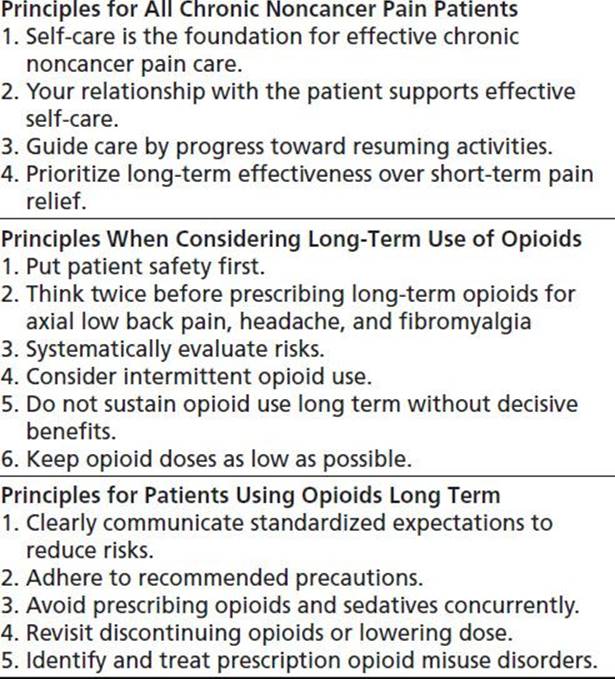
The evidence to guide decisions about the efficacy of opioid use in chronic noncancer pain (CNCP) remains weak to inadequate. The American Pain Society (APS) and the American Academy of Pain Medicine (AAPM) produced “Clinical Guidelines for the Use of Chronic Opioid Therapy (COT) in Chronic Noncancer Pain (CNCP)” in 2009 (42). In 2010, the Cochrane Collaborative released its “Long-term Opioid Management for CNCP,” which represented an interpretation of the best data available (43). The summary statement from the Cochrane review states, “The findings of this systematic review suggest that proper management of a type of strong painkiller (opioids) in well-selected patients with no history of substance addiction or abuse can lead to long-term pain relief for some patients with a very small (though not zero) risk of developing addiction, abuse, or other serious side effects. However, the evidence supporting these conclusions is weak, and longer-term studies are needed to identify the patients who are most likely to benefit from treatment.” In 2012, the American Society of Interventional Pain Physicians released its “Guidelines for Responsible Opioid Prescribing in Chronic Non-Cancer Pain.” Among the many provisions, this evidence-based guideline stressed many expectations associated with responsible opioid prescribing, which are listed in Table 99-2 (44). The most recent set of opioid prescriber recommendations was the result of the National Summit for Opioid Safety, which convened in the Fall of 2012. This summit drafted “Principles for more selective and cautious opioid prescribing,” which are summarized in Table 99-3 (45).
TABLE 99-2 MAJOR PROVISIONS OF THE 2012 AMERICAN SOCIETY OF INTERVENTIONAL PAIN PHYSICIANS GUIDELINES FOR RESPONSIBLE OPIOID PRESCRIBING IN CHRONIC NONCANCER PAIN

TABLE 99-3 NATIONAL SUMMIT FOR OPIOID SAFETY—PRINCIPLES FOR MORE SELECTIVE AND CAUTIOUS OPIOID PRESCRIBING
State medical policy can vary widely from state to state, and for this reason, prescribers need to be fully aware of the legal statutes in their state. Some specific state variations of interest include possible limits on the amount of opioids that can be dispensed, listing opioids as a treatment of last resort, requiring that opioids result in documented functional improvement, requirement for evaluation by a pain specialist, or provider CME requirements in opioid prescribing/pain management. Some states may require consultation with an addiction medicine specialist if COT is to be used in a patient in whom the provider suspects addiction or drug abuse [Ohio Administrative Code chapter 4731-21-02 section 4(c)].
If a prescriber knows that an opioid prescription has been forged, but the crime did not take place on the prescriber’s premises, there is some controversy over whether or not reporting such a crime to law enforcement might constitute a violation of the prescriber’s requirement to confidentiality of protected health information as set forth by the Health Insurance Portability and Accountability Act (HIPAA). Tennessee specifically requires a health care provider with knowledge that a person has secured or has attempted to secure a controlled substance through deceit to report the offense to law enforcement (Tenn. Code Ann., § 53-11-309) (46). It appears that such specific state law would offer an exemption to the HIPPA privacy requirement. A few other states appear to have provisions within their state laws that may authorize health care professionals to inform law enforcement when they reasonably believe that a patient may have obtained or sought to obtain a fraudulent prescription for controlled substances (Virginia -Va. Code Ann. § 32.1-127.1:03, Louisiana -La. Rev. Stat. Ann § 40:971, and Maine -Me. Rev. Stat. Ann. Tit.17-A, § 1108) (47–49). In 2012, New York State passed a statute that changed the state classification of all hydrocodone products to Schedule II and products containing tramadol to Schedule IV. This statute also requires all prescribers to access the Prescription Drug Monitoring Programs (PDMPs) prior to prescribing controlled substances (50). While state law may serve as an exemption to the HIPPA privacy requirement, clinicians should seek expert advice for clarification on whether or not this is the case relative to their practice, their state laws, and other considerations.
PRESCRIPTION DRUG MONITORING PROGRAMS
In an attempt to help prescribers or law enforcement professionals prevent abuse and misuse of controlled substances, many states have created Prescription Drug Monitoring Programs (PDMPs). PDMPs vary by state, but all are intended to track controlled substance prescriptions (51). PDMPs have been present in several states since the 1940s, but after the creation of the Harold Rogers Prescription Drug Monitoring Program by the Department of Justice in 2002 and the National All Schedules Prescription Electronic Reporting Act (NASPER), passed by Congress in 2005, there has been a substantial increase in the number of states using PDMPs (52,53). There has also been an increase in the number of states employing electronic PDMP systems intended to assist clinicians at the point of care. These point-of-care PDMP systems are designed to help clinicians detect when patients are receiving prescriptions for controlled substances from multiple physicians and/or multiple pharmacies. These secure electronic PDMPs are usually directly accessible by health care providers and/or law enforcement personnel. Updated PDMP information can be found at the following Internet link: http://www.pmpalliance.org (54).
Federal grant funding, under the Harold Rogers Prescription Drug Monitoring Program, has been available to support state PDMPs, but the responsibility for the upkeep and regulation of each PDMP is predominantly at the state level. The information recorded by each PDMP is variable. For instance, some states monitor all scheduled medications, whereas other states only track certain drug schedules. The state agency responsible for the maintenance of the PDMP also varies. The PDMP can be housed in various agencies, including the state medical board, pharmacy board, health department, department of human services, or law enforcement agency (51).
Unfortunately, communication between states with PDMPs is still relatively uncommon. This can be especially problematic for health care providers who service a population area composed of multiple states or when patients initiate care in a new state. Also, the effectiveness of the PDMP for diminishing controlled substance misuse/abuse is difficult to determine due to their high variability, but in many states, PDMPs have developed into a critical component of risk management evaluation in the prescribing of controlled substances (54). The White House has clearly stated that PDMPs are a pillar in the fight against the epidemic of prescription drug abuse. As such, the need for the exchange of information between state-based PDMPs will likely spur state systems that can communicate across state lines or perhaps even a unified federal PDMP system. Moreover, when available, use of the PDMP by a prescribing clinician seems to be an increasingly expected part of responsible opioid prescribing. As noted above, a 2012 New York State statute changed the classification of products containing hydrocodone to Schedule II and also required all prescribers to access the Prescription Drug Monitoring Programs prior to prescribing controlled substances (50).
EMERGING OPIOID RISK DATA AND RELEVANT ISSUES
Over the past several years, the data on the efficacy of opioids for chronic pain have remained weak or inadequate, but the data on the risks associated with COT have clearly changed, revealing heightened risks that must influence the risk/benefit analysis that is fundamental to prescribing decisions involving these drugs. It is now known that more than 6 million Americans abuse prescription drugs and opioid overdose is now a leading cause of accidental death in the United States (4). Data from the National Vital Statistics System (NVSS) show that, in 2007, there were 5,692 deaths in the United States involving methadone, and this number represented a substantial increase from 1999 when 826 deaths were reported (55). From 1999 to 2005, the number of hospital records related to poisoning deaths mentioning methadone increased to 468% (56).
These data have stimulated an important debate about the safety, efficacy, and the appropriate place of COT in the treatment of chronic nonmalignant pain. A full discussion of this debate is beyond the scope of this chapter. However, this debate has recently led to two prominent issues being brought to the FDA: relabeling of LAOs for chronic pain and the rescheduling of hydrocodone.
Relabeling Extended-Release Opioids
On February 7–8th, 2013, the FDA conducted a public hearing entitled “Impact of Approved Drug Labeling on COT.” This hearing was prompted by a citizen’s petition to the FDA requesting revision of the label information for extended-release opioids (57). This petition was submitted by a group called Physicians for Responsible Opioid Prescribing who have a stated mission to “reduce morbidity and mortality resulting from prescribing of opioids and to promote cautious, safe, and responsible opioid prescribing practices” (58). The petition asserted that the current label on extended-release opioids does not comply with appropriate law and that change is warranted based on mounting evidence of risk with COT and the lack of efficacy evidence. The petition advocated for the following changes to the label for extended-release opioids for noncancer pain management:
■ Strike the term “moderate” from the indication for non-cancer pain.
■ Add a maximum daily dose equivalent to 100 mg of morphine for noncancer pain.
■ Add a maximum duration of 90 days for continuous (daily) use for noncancer pain.
Over 700 comments were submitted to the docket associated with this hearing. During the hearing, strong views were presented on both sides of the issue. No decision on relabeling has been made by the FDA as of the time of this writing. The FDA has stated that the petition “raises significant issues requiring extensive review and analysis by Agency officials.” The FDA has indicated that they will respond to the petition and hearing as soon as they have reached a decision. Regardless of the FDA’s forthcoming decision, this petition has stimulated an important review and debate.
The Rescheduling of Hydrocodone
A DEA report from April 2012 commented that in the United States, 42 tons of hydrocodone was dispensed and over 139 million prescriptions for hydrocodone were prescribed in 2010 (59). Additionally, the DEA has further suggested that hydrocodone is one of the top two most abused controlled substances in the United States. Taken together with reports indicating that the United States is supplied with 99% of the world’s hydrocodone and that hydrocodone is the most prescribed drug in America, many have argued that the risk profile of hydrocodone-containing products seems to warrant the same Schedule II classification as other potent opioids (60).
In 1999, the FDA received a citizen’s petition requesting that combination hydrocodone–acetaminophen products be rescheduled to Schedule II medications. In response, the FDA requested that the Department of Health and Human Services provide a scientific evaluation of the current information regarding the rescheduling of hydrocodone-containing products. The Department of Health and Human Services issued a statement in March of 2008 entitled the “Basis for the Recommendation to Maintain Hydrocodone Combination Products in Schedule III.” In response to this document, the DEA then reevaluated the data and, in 2009, submitted a request to the Center for Drug Evaluation and Research to consider up-scheduling hydrocodone combination products to Schedule II (61).
The decision to reschedule hydrocodone combination products was evaluated by an FDA advisory committee in January 2013. The FDA advisors heard arguments for and against the rescheduling of hydrocodone. Proponents of rescheduling suggested that in the absence of a clear medical reason to explain the excessive prescribing of hydrocodone products in the United States, the most likely reason is the greater ease in prescribing for physicians, dentists, and other prescribers secondary to its less restrictive scheduling classification. Scheduling hydrocodone in Schedule III was cited as wrongly suggesting that hydrocodone has a lower risk of abuse relative to most other opioids. Of concern is that prescribers may be less cautious or vigilant with prescribing these hydrocodone compounds, underscoring why hydrocodone is the most prescribed drug in America. Arguments against the change were largely based on the significant potential unintended consequences for patients’ legitimate use of hydrocodone. The FDA advisory committee voted, 19–10, to recommend up-scheduling hydrocodone-containing substances from Schedule III to Schedule II. The FDA will now take this advice into consideration as it determines its official position on rescheduling hydrocodone combination products from Schedule III to Schedule II.
CONCLUSIONS
This chapter has highlighted some of the regulatory framework and political controversies that currently affect pain management. The debate about appropriate pain management and particularly about the appropriate use of controlled substances is important and ongoing. There is little doubt that there has been a substantial paradigm shift toward significant risk management in the use of opioids. This is largely due to the alarming recent data on risks associated with COT relative to the associated weak evidence in support of efficacy. Thus, in the case of changing data related to the risks associated with prescribing opioids, the risk–benefit analysis, which is the basis of all medical decisions, must shift accordingly.
The legal considerations involved in the prescription of controlled substances are complex but critical to safe use. Health care providers are strongly encouraged to work with experts in this area for legal advice to familiarize themselves with their local laws and to stay abreast of the changing political landscape with regard to the treatment of pain with controlled substances.
ACKNOWLEDGEMENT
The authors do not offer legal advice. Readers seeking legal or risk management advice in any of the areas discussed in this chapter should seek expert guidance from risk management and/or legal professionals.
REFERENCES
1.Institute of Medicine. Relieving pain in America: A blueprint for transforming prevention, care, education, and research. 2011. Available at: http://www.iom.edu/Reports/2011/Relieving-Pain-in-America-A-Blueprint-for-Transforming-Prevention-Care-Education-Research/Report-Brief.aspx. Accessed March 2, 2013.
2.Manchikanti L, Singh A. Therapeutic opioids: a ten-year perspective on the complexities and complications of the escalating use, abuse, and nonmedical use of opioids. Pain Physician2008;11: S63–S88
3.National Center for Health Statistics. Health, United States, 2006 with Chartbook on trends in the health of Americans. Hyattsville, MD: U.S. Department of Health and Human Services, 2006:68–71.
4.CDC: National Center for Injury Prevention and Control. Ten leading causes of death and injury. Available at: http://www.cdc.gov/injury/wisqars/leadingcauses.html. Accessed March 2, 2013.
5.Food and Drug Administration. Milestones. http://www.fda.gov/aboutfda/whatwedo/history/milestones/ucm128305.html. Accessed March 2, 2013.
6.HRRep No. 91–1444 (1970). United States House of Representatives. Comprehensive Drug Abuse Prevention and Control Act of 1970.
7.Drug Enforcement Administration. Drug fact sheets. Available at: http://www.justice.gov/dea/druginfo/all_fact_sheets.pdf. Accessed March 2, 2013.
8.Drug Enforcement Administration. Pharmacist’s manual: an informational outline of the Controlled Substance Act of 1970. Available at: http://www.deadiversion.usdoj.gov/pubs/manuals/pharm2/2pharm_manual.pdf. Accessed March 2, 2013.
9.21 U.S.C. § 823
10.Substance Abuse and Mental Health Service Administration (SAMHSA). Buprenorphine Information. Available at: http://buprenorphine.samhsa.gov/faq.html Accessed March 2, 2013.
11.42 CFR-PART 8.
12.National Drug Intelligence Center. Intelligence bulletin. Buprenorphine. Potential for abuse. September 2004. Product No. 2004–L0424–013:1–4. Available at: http://www.justice.gov/archive/ndic/pubs10/10123/index.htm. Accessed March 2, 2013.
13.Hall AJ, et al. Patterns of abuse among unintentional pharmaceutical overdose fatalities. JAMA 2008;300(22):2613–2620.
14.Centers for Disease Control and Prevention, National Center for Injury Prevention and Control. CDC’s issue brief: Unintentional drug poisoning in the United States. Available at: http://www.cdc.gov/homeandrecreationalsafety/rxbrief/index.html. Accessed March 2, 2013.
15.Centers for Disease Control and Prevention. Prescription drug overdoses: use and abuse of methadone as a painkiller. Vital Signs, July 2012. Available at: www.cdc.gov/vitalsigns/pdf/2012-07-vitalsigns.pdf. Accessed March 2, 2013.
16.Roberts J. Buprenorphine: toxicity and overdose. Emerg Med News 2009;31(1):7–10.
17.The National Organization for the Reform of Marijuana Laws. State Laws. Available at: http://norml.org/states. Accessed March 2, 2013.
18.Grotenhermen F, et al. The therapeutic potential of cannabis and cannabinoids. Dtsch Arztebl Int 2012;109(29–30):495–501.
19.Bostwick J. Blurred boundaries: the therapeutics and politics of medical marijuana. Mayo Clin Proc 2012;87(2):172–186.
20.The Drug Enforcement Administration. Penalties for marijuana possession. Available at: http://www.getsmartaboutdrugs.com/identify/what_are_the_penalties_for_possession_or_marijuana.html. Accessed March 2, 2013.
21.Citizens Against the Legalization of Marijuana. Available at: http://www.calmca.org/whos-with-us/ Accessed March 2, 2013.
22.U.S. Constitution Art. 6 Sec. 2.
23.Garvey T. Medical marijuana: the supremacy clause, federalism, and the interplay between state and federal laws. Washington, DC: Congressional Research Service, 2012.
24.Marijuana Policy Project. Available at: http://www.mpp.org. Accessed March 2, 2013.
25.Drug Policy Alliance. 10 Facts About Marijuana. Available at: http://www.drugpolicy.org/drug-facts/10-facts-about-marijuana. Accessed March 2, 2013.
26.CNBC News. Even in pot-friendly states, selling is risky business. April 19, 2012. Available at: http://www.cnbc.com/id/47086763. Accessed March 2, 2013.
27.Pain & Policy Studies Group. Achieving balance in state pain policy: a guide to evaluation, 3rd ed. Madison, WI: University of Wisconsin, Paul P. Carbone Comprehensive Cancer Center, 2006.
28.Martineau RJ. In state-federal conflicts, the supremacy clause wins. Chicago Herald Tribune. January 11, 2010.
29.Fox News. Obama says feds won’t go after marijuana use in Colorado, Washington. http://www.foxnews.com/politics/2012/12/14/obama-will-not-go-after-states-where-pot-is-legal. December 14, 2012. Accessed March 2, 2013.
30.Department Of Justice (DOJ); Drug Enforcement Administration (DEA). Dispensing Controlled Substances for the Treatment of Pain, Part V. Federal Register 2006;71(172):52716–52723.
31.The Drug Enforcement Administration. Certificate of Registration Information. Available at: http://www.deadiversion.usdoj.gov/pubs/manuals/pract/section2.htm. Accessed March 2, 2013.
32.Prescription Drug Abuse Prevention and Treatment Act of 2011, 112th Cong. 507th session.
33.The Drug Enforcement Administration. Practitioner’s Manual. Available at: http://www.deadiversion.usdoj.gov/pubs/manuals/pract/section1.htm. Accessed March 2, 2013.
34.The Drug Enforcement Administration. Dispensing controlled substances for the treatment of pain. Available at: http://www.deadiversion.usdoj.gov/fed_regs/notices/2006/fr09062.htm. Accessed March 2, 2013.
35.The Drug Enforcement Administration. Questions & Answers. http://www.deadiversion.usdoj.gov/faq/mult_rx_faq.htm. Accessed March 2, 2013.
36.The Drug Enforcement Administration. Electronic prescriptions for controlled substances (EPCS). Available at: http://www.deadiversion.usdoj.gov/ecomm/e_rx. Accessed March 2, 2013.
37.H.R. Report No. 3580 (110th): Food and Drug Administration Amendments Act of 2007
38.Leiderman D. Risk Management of Drug Products and the U.S. Food and Drug Administration: evolution and context. Drug Alcohol Depend 2009;105(Suppl 1):S9–S13.
39.Food and Drug Administration. Opioid REMS meeting invitation template. Available at: www.fda.gov/downloads/Drugs/DrugSafety/InformationbyDrugClass/UCM163652.pdf. Accessed March 2, 2013.
40.Fishman S. Responsible opioid prescribing. A clinician’s guide. 2nd ed. Washington, DC: Waterford Life Sciences, 2012.
41.The Federation of State Medical Boards. Model policy for the use of controlled substances for the treatment of pain. 2004. Available at: http://www.fsmb.org/pdf/2004_grpol_controlled_substances.pdf. Accessed March 2, 2013.
42.American Pain Society (APS) and the American Academy of Pain Medicine (AAPM). Clinical guidelines for the use of Chronic Opioid Therapy (COT) in Chronic Noncancer Pain (CNCP). J Pain2009;10(2):113–130.
43.Noble M, et al. Long-term opioid management for chronic noncancer pain. Cochrane Database Syst Rev 2010;(1): CD006605.
44.Manchikanti L, et al. American Society of Interventional Pain Physicians (ASIPP). Guidelines for responsible opioid prescribing in chronic non-cancer pain. Part 1 and 2. Pain Physician2012;15(3 Suppl):S1–S116.
45.Group Health’s National Summit on Opioid Safety. Principles for more selective and cautious opioid prescribing. 2012. Available at: http://www.ghinnovates.org/?p=3573. Accessed March 2, 2013.
46.Tenn. Code Ann., §53-11-309
47.Virginia -Va. Code Ann. §32.1-127.1:03
48.Louisiana -La. Rev. Stat. Ann §40:971
49.Maine -Me. Rev. Stat. Ann. Tit.17-A, §1108
50.New York- A.10623. Internet System for Tracking Over Prescribing (iSTOP). Chapter 447 of the L. 2012
51.Fishman S, et al. Regulating opioid prescribing through prescription monitoring programs: balancing drug diversion and treatment of pain. Pain Med2004;5(3):309–324.
52.Department of Justice. Harold Rogers prescription drug monitoring program. Number: 16.754. Available at: https://www.cfda.gov/?s=program&mode=form&tab=step1&id=37e793a00f3a6e810d1ac759e5b73bd4. Accessed March 2, 2013.
53.National All Schedules Prescription Electronic Reporting Act of 2005. HR Rep No. 1132,109th Congress (2007).
54.Alliance of States with Prescription Drug Monitoring Programs. Available at: http://www.pmpalliance.org. Accessed March 2, 2013.
55.United States Department of Health and Human Services. Methadone mortality: A 2010 Reassessment. Available at: http:// www.dpt.samhsa.gov/pdf/methadone_mortality_data_2010.pdf. Accessed March 2, 2013.
56.Fingerhut L. Increases in poisoning and methadone-related deaths: United States, 1999-2005. The Center for Disease Control, 2008. Available at: http://www.cdc.gov/nchs/data/hestat/poisoning/poisoning.pdf. Accessed March 2, 2013.
57.21 CFR 10.30(e)(2)
58.Physicians for Responsible Opioid Prescribing. Mission statement. Available at: http://www.supportprop.org/about/index.html. Accessed March 2, 2013.
59.Drug Enforcement Administration. Drugs of concern: hydrocodone. Available at: http://www.deadiversion.usdoj.gov/drugs_concern/hydrocodone.pdf. Accessed March 2, 2013.
60.The United Nations Office on Drugs and Crime (UNODC). International Narcotics Control Board. Report. 2008. Available at: http://www.unodc.org/documents/eastasiaandpacific//2009/02/INCB/INCB_Report_2008_English.pdf. Accessed March 2, 2013.
61.The Food and Drug Administration. FDA Briefing Document. Drug Safety and Risk Management Advisory Committee (DSaRM) meeting October 29-30, 2012. Available at: http://www.fda.gov/downloads/AdvisoryCommittees/CommitteesMeetingMaterials/Drugs/DrugSafetyandRiskManagementAdvisoryCommittee/UCM325708.pdf. Accessed March 2, 2013.