
Definition
• A histological variant of SCC with clear cytoplasm in almost all tumor cells
Clinical features
Epidemiology
• Rare; <0.3% of all lung cancers
Presentation
• Depends on location; can be central or peripheral; same as other SCCs
Prognosis and treatment
• Surgical resection and radiation therapy
• Unknown prognosis because of limited number of cases
Pathology
Histology
• Tumor is composed almost entirely of large polygonal squamous cells with clear cytoplasm
• Squamous differentiation may be present focally with keratinization or intercellular bridges
Immunopathology/special stains
• Same as other SCCs: positive for p63 and CK5/6; very useful to distinguish from other clear cell tumors
Main differential diagnoses
• Metastatic renal cell carcinoma (RCC), clear cell type: no squamous differentiation; positive for RCC, CAIX, CD10, and vimentin; negative for p63 and CK5/6
• SCC with clear cell change: clear cell change is common for primary lung cancers but usually is focal (10%-20% of tumor)
• Large-cell carcinoma or adenocarcinoma with extensive clear cell change: lack of squamous differentiation; negative for SCC markers (p63 and CK5/6)
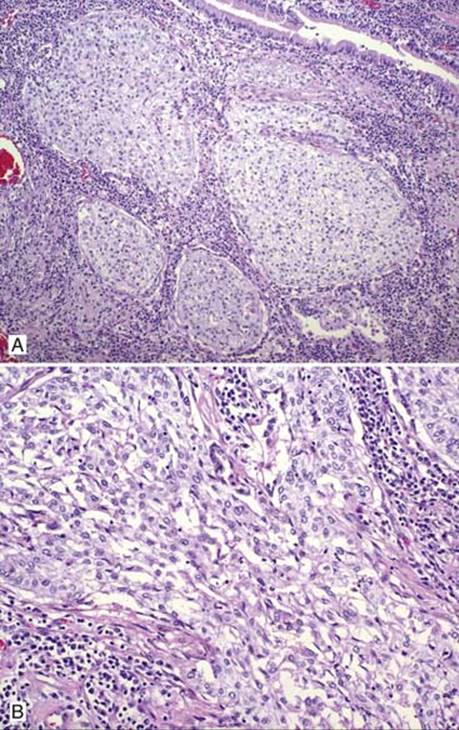
Fig 1 Clear cell variant of squamous cell carcinoma. Clear cell SCC showing nests (A) and sheets (B) of epithelial tumor cells with clear cytoplasm and no keratinization.
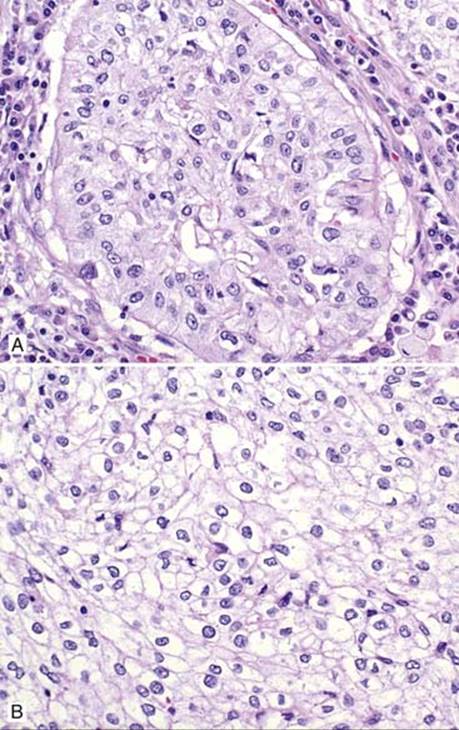
Fig 2 Clear cell variant of squamous cell carcinoma. High magnification showing distinct cell borders (A and B); nuclei are polygonal with irregular contours.
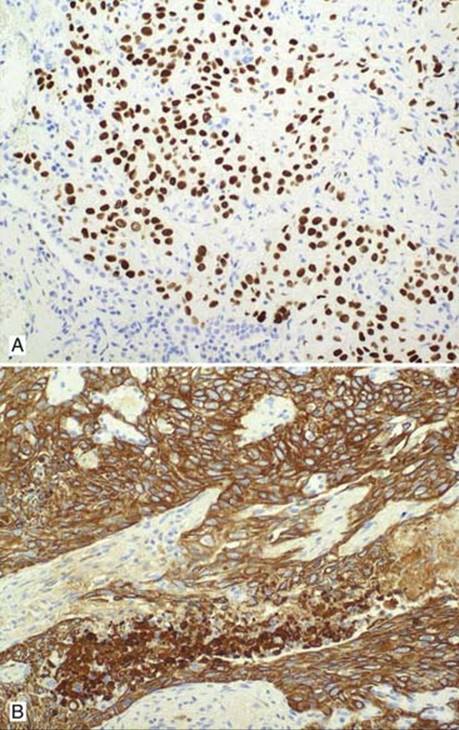
Fig 3 Clear cell variant of squamous cell carcinoma. Clear cell SCC is positive for p63 (A) and CK5/6 (B); note that necrotic tumor cells in B stain darkly with CK5/6.