
Definition
• A variant of peripheral SCC with tumor cells filling alveolar spaces without causing destruction of alveolar structures
Clinical features
Epidemiology
• About 5% of peripheral SCCs
Presentation
• Same as other peripheral SCCs
Prognosis and treatment
• Surgical resection
• Favorable prognosis
Pathology
Histology
• Carcinoma cells with squamous differentiation fill alveolar spaces without destroying the alveolar framework and lung architecture
Immunopathology/special stains
• Squamous differentiation is usually apparent; thus immunohistochemical (IHC) analysis is not needed
Main differential diagnoses
• Squamous metaplasia with cytological atypia in diffuse alveolar damage (DAD): when there is DAD with hyaline membranes, squamous metaplasia, and reactive pneumocytes, use caution before making a diagnosis of SCC
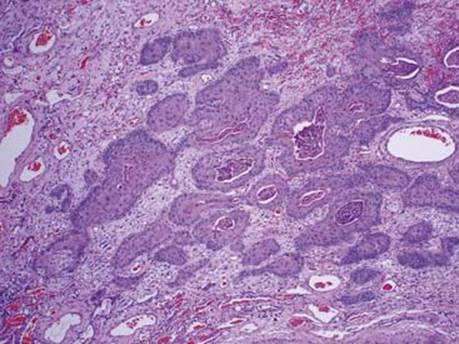
Fig 1 Alveolar space–filling type of peripheral squamous cell carcinoma. Low-power view of peripheral invasive SCC.
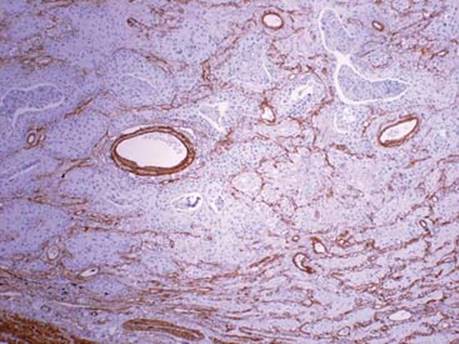
Fig 2 Alveolar space–filling type of peripheral squamous cell carcinoma. IHC for collagen IV in this case of peripheral invasive SCC demonstrates residual alveolar structures.
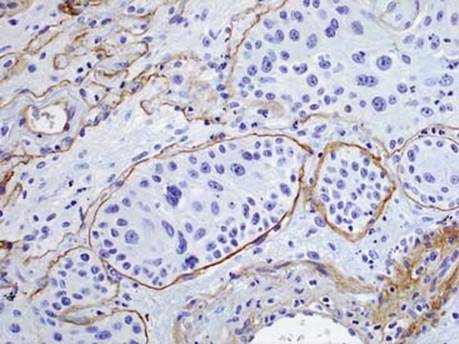
Fig 3 Alveolar space–filling type of peripheral squamous cell carcinoma. IHC for laminin highlights the intact alveolar walls surrounding tumor, which is filling the alveolar spaces.