
Definition
• Rare infantile lung disease characterized by interstitial widening due to the presence of glycogen-laden cells
Pathogenesis
• Precise etiology remains unknown; studies suggest a developmental abnormality rather than an inflammatory/reactive process
• Thought to be a result of selective dysmaturity of interstitial cells with no defects in type II pneumocytes or endothelial cell differentiation
• PIG has no known association with systemic glycogen storage disease
Clinical features
Epidemiology
• Affects infants younger than 6 months; mostly neonates
• Associated with congenital heart disease, pulmonary hypertension, chronic neonatal lung disease due to hypoplasia or prematurity
Presentation
• Rapid onset of respiratory distress and hypoxemia with bilateral interstitial infiltrates
Prognosis and treatment
• Self-limiting disease, usually with spontaneous resolution
• Glucocorticoid therapy accelerates cellular maturation
Pathology
Histology
• Histologic findings include interstitial widening by immature, bland, glycogen-rich mesenchymal cells without significant inflammation
• Lesions can be patchy or diffuse
• Often associated with superimposed lung injury or remodeling
• Mesenchymal cells are PAS and vimentin stain–positive and contain diastase labile cytoplasmic granules
Main differential diagnoses
• Immature lung
• Bronchopulmonary dysplasia
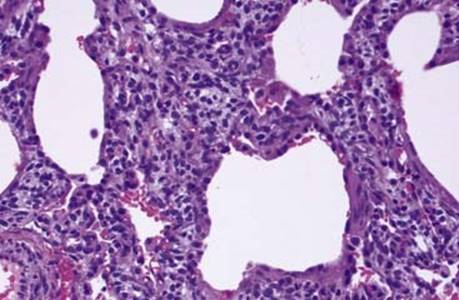
Fig 1 Pulmonary interstitial glycogenosis. There is interstitial widening with glycogen-laden cells.
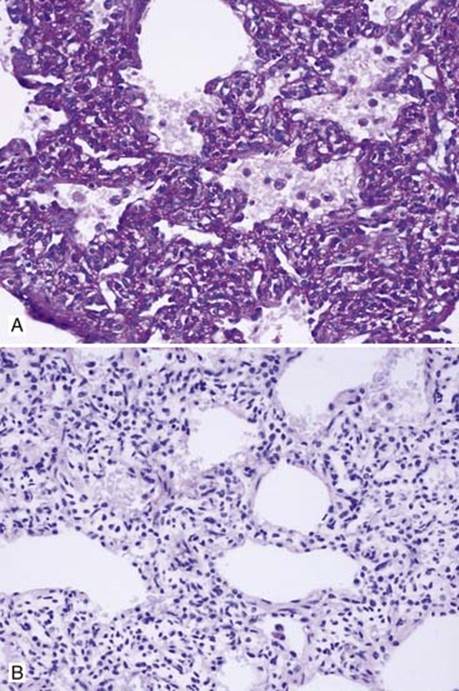
Fig 2 Pulmonary interstitial glycogenosis. The glycogen in interstitial cells is highlighted by PAS stain (A), which is sensitive to diastase digestion (B).
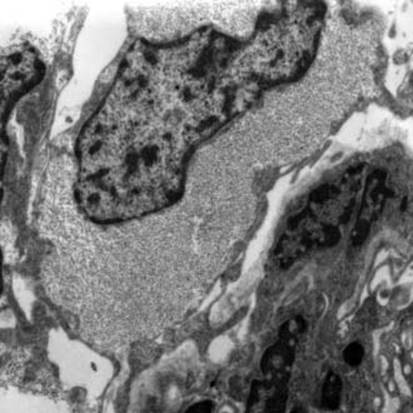
Fig 3 Pulmonary interstitial glycogenosis. Electron microscopy reveals abundant intracytoplasmic glycogen granules.
(Courtesy of Dr. John Hicks, Children’s Hospital, Houston, Tex.)