
Definition
• A clinically benign type of thymoma composed of both spindle cells (type A component) and round epithelioid cells (type B-like component)
Clinical features
Epidemiology
• The most or the second most common type of thymoma
• Mean age, 55 years; slightly younger than for those with type A thymoma
• Slight male predominance
Presentation
• Same symptoms as other thymomas
• Majority stage I or II; rarely stage III or IV
Prognosis and Treatment
• Surgical resection
• Clinically benign tumor with overall 5- and 10-year survival rates of 80% to 100%
Pathology
Gross
• Usually encapsulated
• Cut surface with white-tan nodules separated by white fibrous bands
Histology
• The proportion of type A and type B components is variable; the two components may be separate or closely intermixed
• Type A component is composed of bland spindle cells
• Type B component is composed of small epithelial cells with small round to oval nuclei, dispersed chromatin, and inconspicuous nucleoli, which is more similar to the tumor cells in type B1 thymoma; rarely, type B2-like areas may be present
Immunopathology/special stains
• Both components are positive for cytokeratins and negative for CD5 and neuroendocrine markers
Main differential diagnoses
• Metaplastic thymoma:
• Unconventional biphasic thymoma
• Lack of a lobulated growth pattern of conventional thymoma
• Epithelial cells are strongly positive for cytokeratin, but the spindle cells are negative or only show focal weak positivity for cytokeratin
• Biphasic synovial sarcoma: positive TLE-1 and focal keratin staining
• Carcinoid tumors: positive neuroendocrine markers

Fig 1 Type AB thymoma. Low-power view of type AB thymoma.
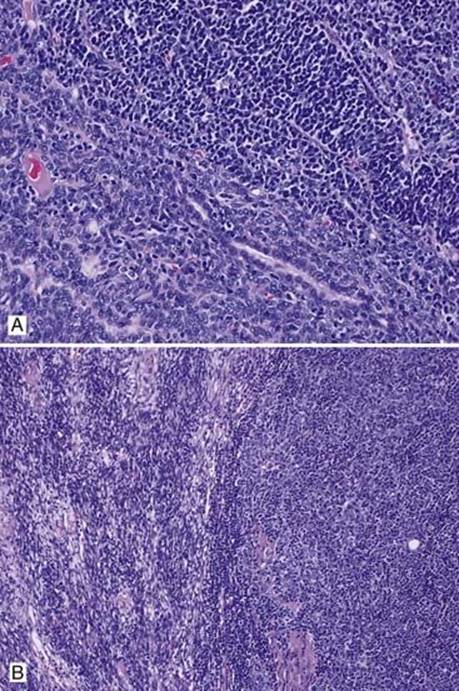
Fig 2 Type AB thymoma. High-power views of type AB thymoma; note the mixture of oval-to-spindle-cell (type A) component and lymphocyte-rich epithelioid cell (type B) component.