
Definition
• A congenital heart malformation due to the anterosuperior displacement of the infundibular septum resulting in a ventricular septal defect (VSD), subpulmonary stenosis, overriding aorta, and right ventricular hypertrophy
Clinical features
Epidemiology
• Occurs in 1/3600 live births
• Accounts for 10% of cases of congenital heart disease
• Risk factors include parent with tetralogy of Fallot, DiGeorge syndrome, Down syndrome, maternal alcoholism, or advanced maternal age
Presentation
• Cyanotic from birth
• Fatigue, shortness of breath, finger clubbing, poor weight gain, heart murmur
• Severity of symptoms depends on amount of subpulmonary stenosis
Prognosis and treatment
• Treatment consists of corrective open heart surgery
• Complete repair before 6 months of age has a mortality rate of 2%
• About 85% to 90% long-term survival rate
Pathology
Gross
• Enlarged “boot-shaped” heart caused by prominent right ventricular hypertrophy at the apex
• Large VSD
• Aorta overrides the VSD and both ventricles
• Stenosis inferior to pulmonary valve; complete pulmonary atresia may also occur
• In 50% of cases additional defects include atrial septal defect, right side aortic arch, endocardial cushion defect, patent ductus arteriosus
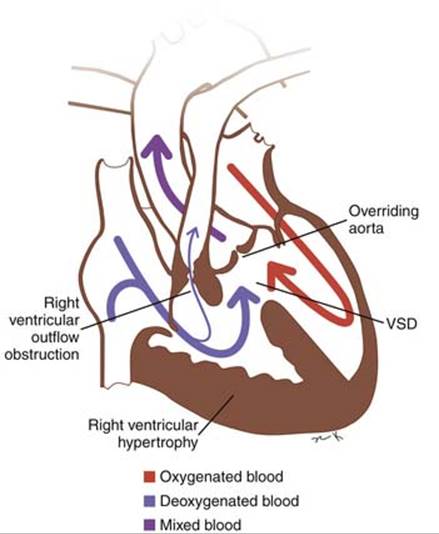
Fig 1 Tetralogy of Fallot. Diagrammatic representation of the salient features of tetralogy of Fallot.
(Courtesy of Drs. Kamran Mirza and Nicole Cipriani, Department of Pathology, University of Chicago, Ill.)