
Definition
• Nonnative valve that replaces the native, diseased valve
• May be mechanical (man-made materials) or bioprosthetic (most commonly, porcine)
Clinical features
Epidemiology
• Frequency of complications depends on valve type and location
• Mechanical valves have a low rate of structural failure but require lifelong anticoagulation
• Mechanical valves recommended for patients <65 years old who have no contraindications to anticoagulation
• Likelihood of failure with bioprosthetic valves is higher for mitral valves than aortic valves
Complications
• Structural deterioration, especially in bioprosthetic valves
• Obstruction due to thrombosis or pannus formation (fibrous tissue ingrowth)
• Thrombi formation is the most common complication of mechanical valves
• Endocarditis and other infections affect the sewing ring on mechanical valves and the cusps on prosthetic valves
• Systemic embolization
• Bleeding
Prognosis and treatment
• Overall patient survival after 10 years with either mechanical or bioprosthetic valves is equivalent (40%)
• May require surgical replacement of prosthetic valve
Pathology
Gross
• Mechanical valves
• Inspect for wear on disks and defects in the struts
• Thrombi formation and tissue overgrowth on the ring and struts is common
• Leaflets should open by gravity alone
• Prosthetic valves
• Degeneration of the cusps and calcification
• Inspect for tears and vegetation
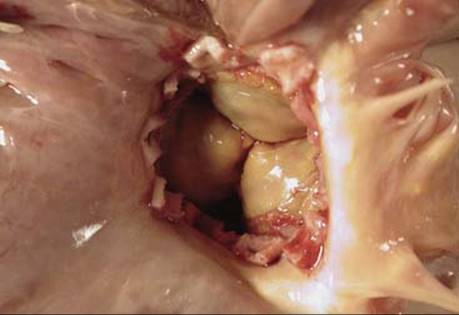
Fig 1 Prosthetic valves. Gross photograph of a heart with a bioprosthetic mitral valve at autopsy. The valve does not show signs of deterioration or endocarditis, and the patient died of complications from leukemia.

Fig 2 Prosthetic valves. Gross photograph of a mechanical valve in a patient with hypertrophic cardiomyopathy after mitral valve replacement.

Fig 3 Prosthetic valves. Gross photograph of a prosthetic mitral valve with recent adherent thrombus protruding into the lumen at the lower left.