
Definition
• Eosinophilic myocarditis is a rare form of myocarditis that is characterized pathologically by myocardial inflammation with predominant eosinophils, often in association with elevated levels of circulating blood eosinophils
Pathogenesis
• Different causes have been described but the origin is frequently unknown
• Well-established causes include hypersensitivity reactions to medications, parasitic infections, Loeffler endocarditis, and hypereosinophilic syndromes
• Other causes are asthmatic bronchitis, mycoplasma pneumonia, smallpox, meningococcal C and hepatitis B vaccines, malignancies, or idiopathy
Clinical features
Epidemiology
• Eosinophilic myocarditis is rarely recognized clinically and is often discovered at postmortem examinations
• Studies have reported eosinophilic myocarditis occurring in 0.5% of unselected autopsy series and in more than 20% of explanted hearts from heart transplant recipients
Presentation
• Nonspecific signs and symptoms including those typical of allergic reactions, arrhythmias, congestive heart failure, and sudden death
Prognosis and treatment
• Potentially fatal if left untreated
• Treatment should include withdrawal of possible etiologic drugs
• Immunosuppressive therapy may be indicated in severe cases
Pathology
Histology
• Mixed inflammatory cell infiltrate consisting of many eosinophils with histiocytes, lymphocytes, and plasma cells
• Myocardial infiltrates vary in their geographical distribution, being either perivascular or interstitial
• May involve the endocardium and epicardium
• Myocardial necrosis is not common, and interstitial fibrosis is typically absent or minimal
• Charcot-Leyden crystals can be present
• A more severe form is termed acute eosinophilic necrotizing myocarditis, which has intense and diffuse infiltrates with extensive myocyte necrosis and marked edema; usually follows a fulminant course
Immunopathology/special stains
• Not contributory
Main differential diagnoses
• Parasitic infestation by Trichinella species or by those causing trypanosomiasis, toxocariasis, and toxoplasmosis; all show marked peripheral eosinophilia
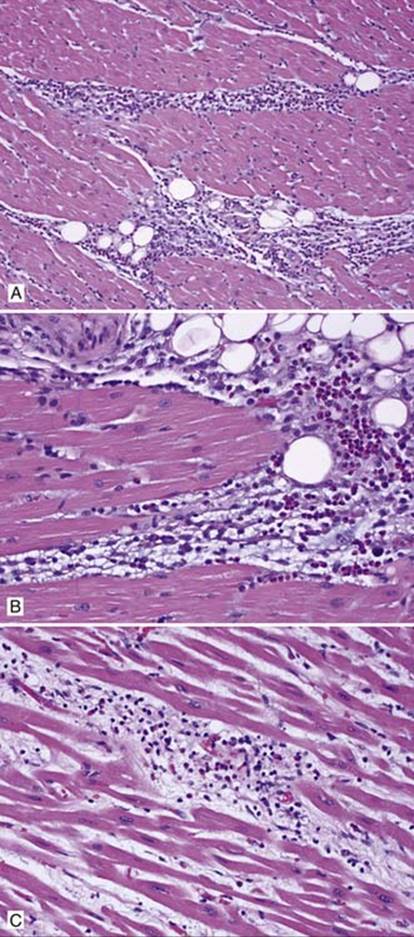
Fig 1 Eosinophilic myocarditis. Low (A) and high powers (B and C) show interstitial inflammatory infiltrates composed predominantly of eosinophils; in addition, some lymphocytes and histiocytes are also present.