
Definition
• Pulmonary hypertension secondary to obstruction of arteries due to organized thrombi
Clinical features
Epidemiology
• All ages
• Classically occurs after acute pulmonary embolism, although a history of pulmonary embolism is frequently absent
Presentation
• Multiple episodes of increasing exertional dyspnea
Prognosis and treatment
• Pulmonary endarterectomy
• Anticoagulation
• Prognosis is variable depending on the extent of disease and whether the underlying cause can be treated
Pathology
Histology
• Multiple recent and old thrombi with recanalization
• Eccentric and concentric intimal fibrosis and medial hyperplasia distal to both occluded and nonoccluded arteries
• Plexiform lesions are rarely present
Main differential diagnoses
• Idiopathic pulmonary arterial hypertension: usually has more prominent plexiform lesions and fewer recanalizing thrombi
• Pulmonary embolism with tumor or foreign material
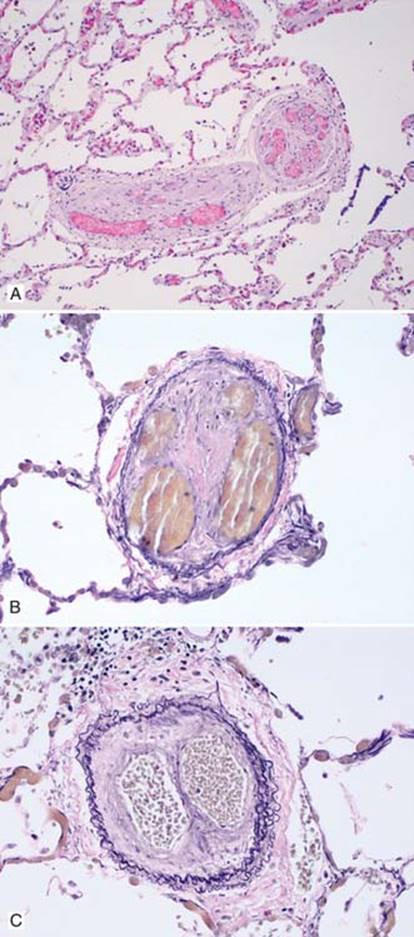
Fig 1 Chronic thromboembolic pulmonary hypertension. Recanalizing arterial thrombus (A, H&E; B and C, elastic stain).
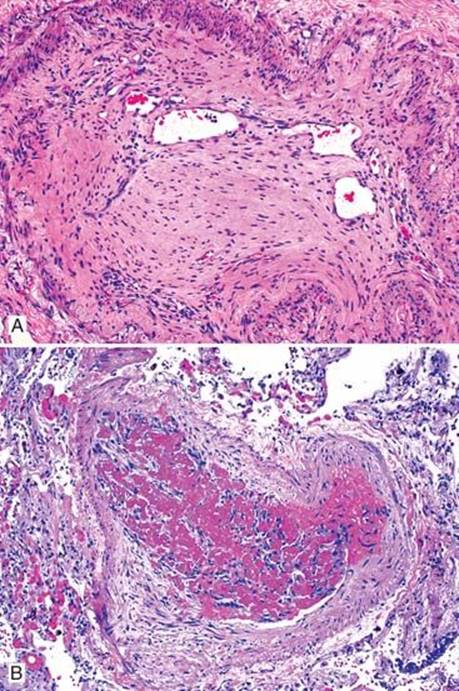
Fig 2 Chronic thromboembolic pulmonary hypertension. More recent thromboemboli are usually also present and show partial recanalization (A) or only early organization as seen here (B).
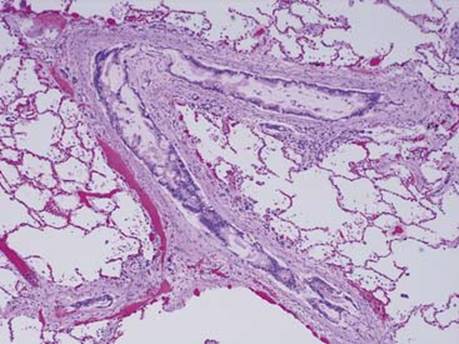
Fig 3 Chronic thromboembolic pulmonary hypertension. Adenocarcinoma within a pulmonary artery.
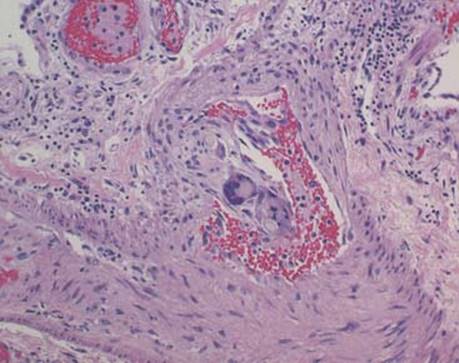
Fig 4 Chronic thromboembolic pulmonary hypertension. Foreign body giant reaction to foreign material in pulmonary artery.