
Christian A. Tomaszewski
VITAMINS
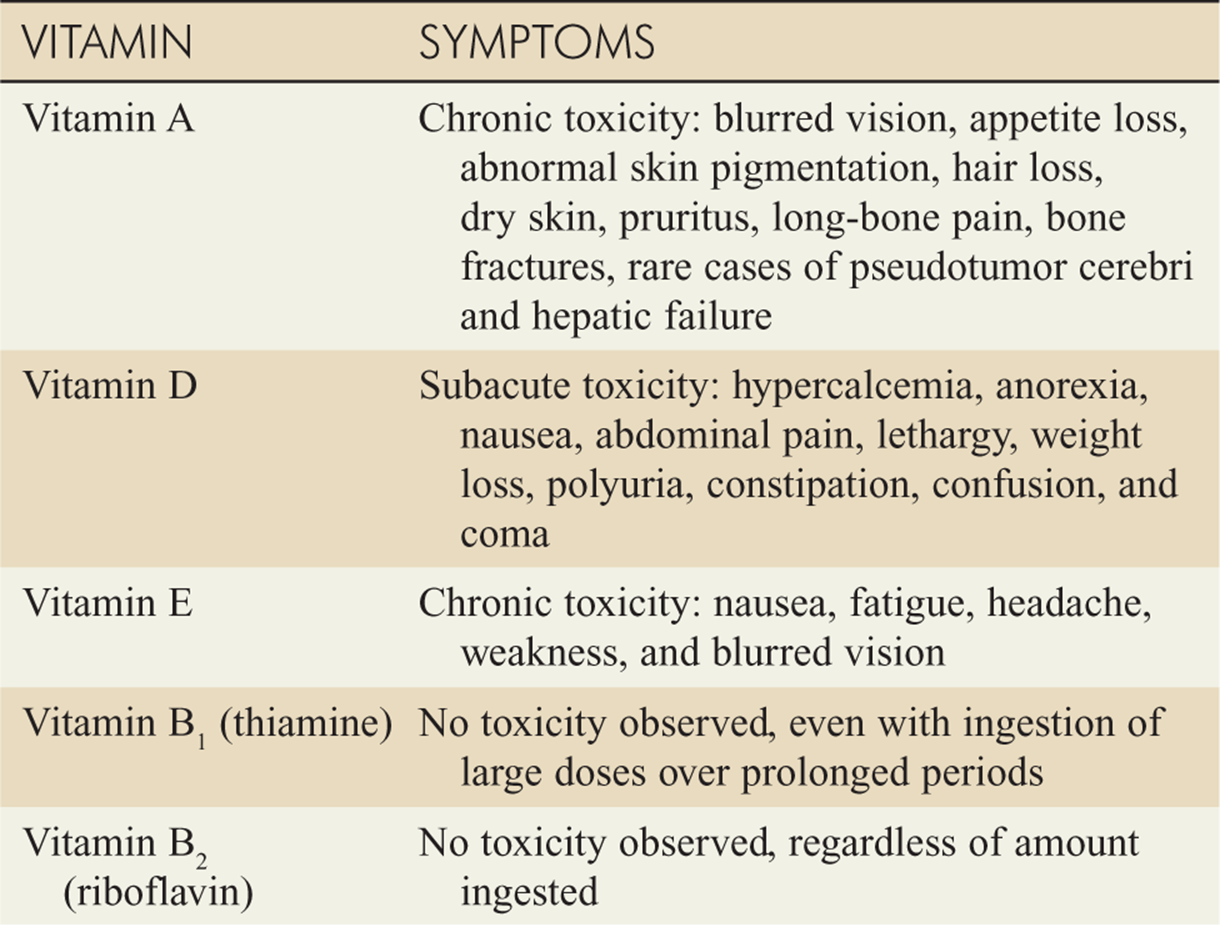
 The fat-soluble vitamins A, D, and E are the most toxic vitamins (Table 118-1).
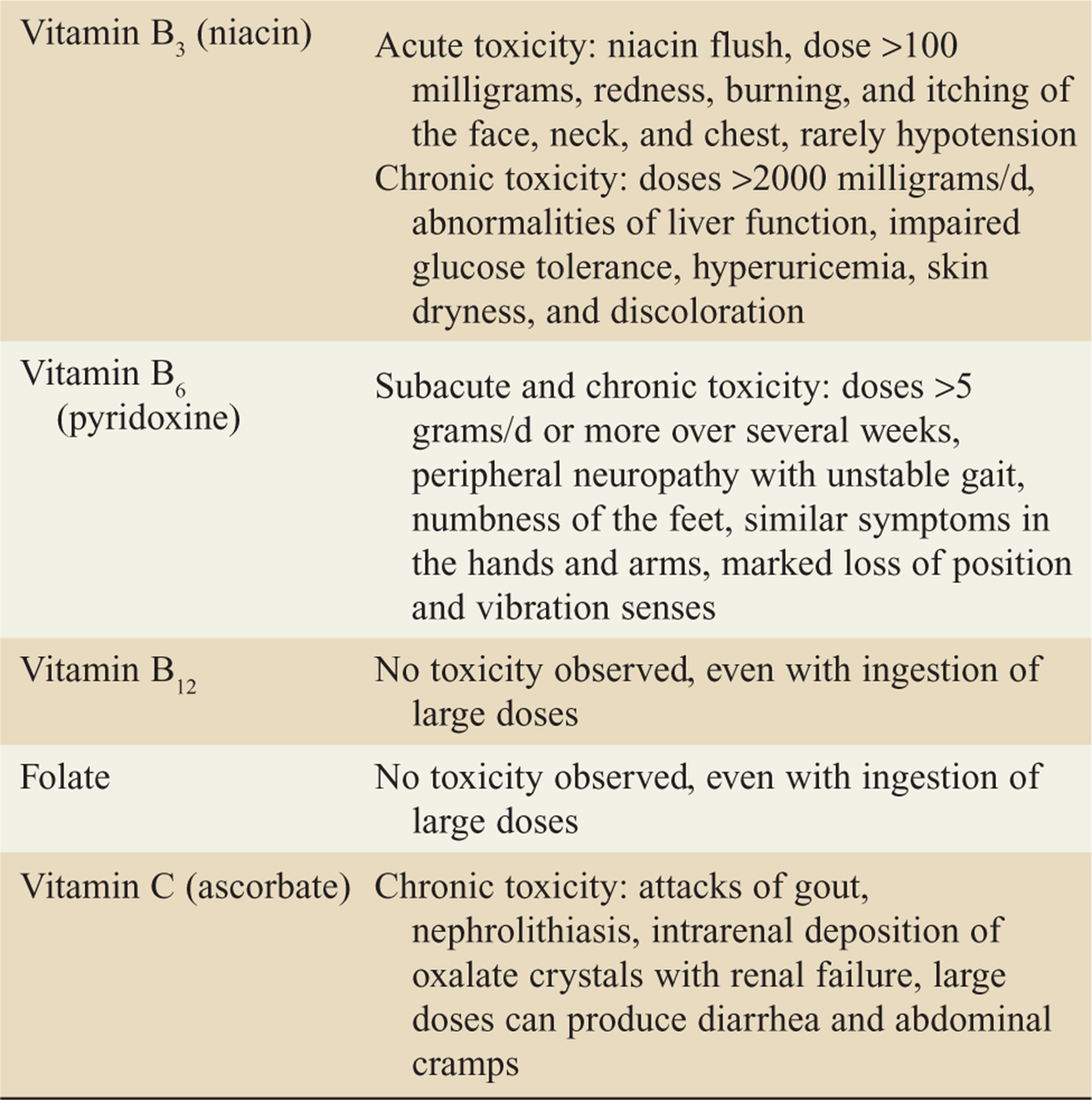
The water-soluble vitamins niacin (B3), pyridoxine (B6), and ascorbate (C) have toxic potential.
TABLE 118-1 Symptoms of Hypervitaminosis
FAT-SOLUBLE VITAMINS (A, D, E, K)
EPIDEMIOLOGY
Hypervitaminosis A usually occurs in children given excessive high-potency supplements; in adults, high doses of vitamin A must be ingested chronically to cause toxicity.
Wheat germ, corn, soybean, sunflower seed, and cod liver are foods naturally high in vitamin E content.
Vitamin D activity comes from calciferol (D3), which is converted in the body to 1,25-dihydroxycholecalciferol, the physiologically active form of vitamin D, and ergocalciferol (D2).
Vitamin K is absorbed from the diet and produced by enteric bacteria.
PATHOPHYSIOLOGY
Dietary vitamin A is converted to retinyl esters, absorbed, and stored in the liver. When liver storage capacity is exceeded, blood levels of retinyl ester circulate in the blood and can cause cell membrane injury.
The final metabolite of vitamin D, 1,25-dihydroxy-hydrocalciferol, causes increased serum calcium and phosphorus levels, which are responsible for the toxic effects of hypervitaminosis D.
Vitamin E is metabolized to a toxic compound in high doses that acts as a competitive inhibitor of vitamin K–dependent gamma-carboxylation, thereby increasing daily vitamin K requirement. High levels of vitamin E inhibit platelet aggregation through the production of thromboxane.
Unlike other fat-soluble vitamins, vitamin K is not stored by the body, but excreted in the bile and urine. Megadoses of menadione (vitamin K3) can cause cellular toxicity.
CLINICAL FEATURES
Symptoms of hypervitaminosis are listed in Table 118-1.
EMERGENCY DEPARTMENT CARE
Discontinuation of exogenous fat-soluble vitamins usually leads to resolution of symptoms without specific treatment.
Treat hypercalcemia from hypervitaminosis D by decreasing oral calcium intake and administering IV saline and the bisphosphonate, pamidronate disodium.
Consider monitoring coagulation and liver function in overdoses of vitamin K.
B VITAMINS
Vitamins B1 (thiamine) and B2 (riboflavin) are not stored in the body and therefore are nontoxic in overdose. Due to rate-limited GI absorption, excessive ingestion of vitamin B12 (cyanocobalamin) is nontoxic, though parenteral (IM) overdoses can lead to temporary skin changes.
Vitamin B3 (niacin) consists of water-soluble nicotinic acid and its active metabolite nicotinamide.
Vitamin B6 inactivates levodopa, which may be problematic in patients with Parkinson’s disease.
Discontinue exogenous intake of vitamins B3 and B6, which will improve symptoms without further specific treatment.
HERBALS
Up to one-third of US patients use complementary and alternative medicines, many of which contain herbal preparations. Less than a third of patients divulge their use of herbal medications to their physicians.
Herbal products may cause harm through toxic compounds (eg, digitoxin in foxglove) or contaminants (eg, lead).
Many herbal products can interact with prescription medications. For example, gingko increases the risk of bleeding with aspirin and warfarin; grapefruit juice inhibits metabolism of multiple drugs through intestinal CYP3A4; St. John’s wort decreases serum levels of cyclosporine and digoxin.
Table 118-2 lists potential toxic effects of a number of herbal compounds.
TABLE 118-2 Some Potentially Toxic Herbal Agents


For further reading in Tintinalli’s Emergency Medicine: A Comprehensive Study Guide, 7th ed., see Chapter 199, “Vitamins and Herbals,” by G. Richard Braen and Prashant Joshi.