
A skin abscess (boil) is a bacterial skin infection that starts in a hair follicle or oil gland and forms a pocket of puss. It may be caused by a cyst, infected wound etc. They most commonly appear on the armpits, buttocks, face, neck and shoulders. When there are a group of boils, it is known as a carbuncle.
Hard, red, painful lump which becomes softer, larger, and more painful. Pus forms on the top.
Signs of a severe infection include:
Fever.
Multiple abscesses.
Surrounding skin becomes infected (inflamed, red etc.).
Swollen lymph nodes.
For treatment of an abscess on the eye; Diagnoses and Treatments – Head – Eyes – Stye.
For treatment of an abscess in the mouth; Diagnoses and Treatments – Head – Mouth and Teeth – Dental Abscess.
Do not forcefully pop the abscess, e.g., with a needle.
Warm water soaks and compresses.
Within 10 days of soaks the boil should burst.
Clean very well with antiseptic.
Apply a topical antibiotic and cover.
Continue cleaning and compresses until wound heals.
If spontaneous drainage does not happen within the 10 days, an incision must be made.
Making an incision:
Ice the area to numb the skin.
Pierce the skin where the abscess is closest to the skin’s surface to drain the pus.
Immediate relief will be felt.
Apply a topical antibiotic and cover.
Acne (pimples, blackhead, whiteheads, zits) occur when the sebaceous glands produce sebum (oily matter) and block the pores in the skin. This cultivates bacteria which break out as acne, usually on the back, face and/or neck. The exact root cause is unknown, but diet (including food allergies), hormonal imbalance and stress are thought to play a role.
Most of the time, acne will go away on its own.
Alternative/Natural remedies are highly recommended before other medications.
There are many creams available.
Pharmaceuticals:
Antibiotics can be used for serious cases:
Antibiotic: doxycycline 200 mg on the first day, given in 2 divided doses, then 100 mg per day or 100 mg every 12 hours for severe cases.
Antibiotics, other: tetracycline.
Alternative/Natural Remedies for Acne:
Acidophilus (found in yogurt or as a capsule).
Clove oil (apply topically).
Calendula (found in marigold petals).
Garlic (cut a clove of garlic in half and rub it over the affected area; do it regularly).
Honey – raw (dab it onto affected areas; wait 15 minutes then rinse it off).
Eat healthy and keep well hydrated.
Keep pores clean.
Minimize stress.
A blister is typically a protective pocket of clear fluid (plasma) underneath the layers of the skin. If they are filled with blood they are called blood blisters, and if they become infected they will fill with puss.
They can be caused by cold, exposure to chemicals, friction, heat etc.
The most common, troublesome blisters are those found on the feet caused by friction and heat whilst hiking or engaging in similar activities.
Before a blister forms, the area will often get red and painful. This is known as a hot spot. Treat it before it becomes a blister.
A hot spot can simply be covered, e.g., Band-Aid.
Ideally, raise the area around it slightly and then cover it.
In controlled environments, the blister should be left intact. The skin will keep it protected from infection.
Pad it like a hotspot.
Draining a blister:
If there is a chance of the blister rupturing, it is often better to drain it manually so you can clean and dress it.
Clean the area around blister.
Sterilize a needle and pierce the side of the blister.
Let the fluid drain.
Apply antibiotic ointment.
Cover and monitor.
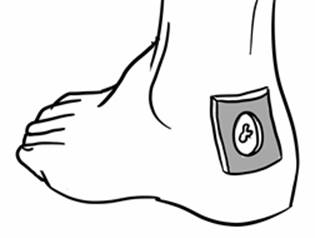
Prevention of Friction Blisters
Proper footwear.
Sock liners.
Cover blister-prone areas with a Fixamol, a Band-Aid etc.
Change wet/sweaty socks.
Foot powders to keep feet dry.
A bruise usually occurs from some kind of trauma which ruptures the blood vessels. They are somewhat painful to the touch and may change color from blackish-blue to brown to yellow.
RICES; Diagnoses and Treatments - Musculoskeletal System - Musculoskeletal Injuries in General – RICES.
In later stages, stretching may help.
Chickenpox (varicella), is a contagious virus causing a red, itchy rash. It is usually not harmful, (more harmful to people over 12 years) and once you have gotten it once, you are not likely to get it again.
In some cases, the virus can re-activate causing shingles; Diagnoses and Treatments – Integumentary System – Shingles.
Chickenpox is most contagious from a couple of days before the rash appears until all the blisters have crusted over. This crusting over usually takes about 10 days from the initial symptoms.
Vaccines are available.
Fever.
Headache.
Lethargy.
Loss of appetite.
Sore throat.
Itchy rash appears a day or two after initial appearance of the above symptoms.
Treat rash with compresses, oatmeal baths etc.
Treat fever.
Pharmaceuticals:
Diphenhydramine.
For serious cases, consider the chicken pox vaccine, especially if over 12 years old, pregnant or immune system is compromised.
Eczema is an irritation of the skin resulting in an itchy rash. It is not contagious.
It usually occurs when someone comes into contact with a known trigger; avoiding these triggers is the best defense.
The triggers are different depending on the person, but some common ones are allergies, animals, coarse materials, foods, soaps, respiratory infections, temperature etc.
Stress can make the symptoms worse.
Change in skin pigmentation.
Dry, thickened or scaly skin.
Itchy rash.
A crusty oozing can appear in infants.
Avoid irritants.
Avoid scratching.
Cold compresses to help with itching.
Moisturize, particularly while the skin is damp, e.g., after bathing.
Pharmaceuticals
Diphenhydramine (helps with itching).
Corticosteroids (for serious cases).
Cyclosporine (last resort).
Alternative/Natural Remedies:
Baths or compresses: oatmeal, Epson salts, sea salts or sulfur bath salts.
An ingrown toenail is when the nail grows in a way that it cuts into the skin at the end or side of the toe. It requires the downward pressure by a shoe, so does not occur in people that habitually do not wear shoes. If left untreated it can lead to infection and/or other complications.
Symptoms of an Ingrown Toenail
Redness.
Pain.
Swelling.
Warmth in the toe.
Treatment for an Ingrown Toenail
Do not repeatedly cut the nail.
Foot soaks in warm water, 4 times a day.
During the soak, gently massage the side of the nail fold to help reduce the inflammation.
After each soak:
Ø Roll up a small bit of clean gauze so it is like the wick of a candle.
Ø Lift up the troublesome corner of the nail.
Ø Stick the gauze between the nail and the skin. The idea is to keep it elevated until it grows out. Pain is normal.
Ø Try putting it further in after each soak.
Ø Change it every day.
Wash with soap and water twice a day.
Keep clean and dry during the rest of the day.
Wear sandals if possible, but definitely not heels.
Prevention of Ingrown Toenails
Don’t cut nails too short.
Don’t wear shoes that are too tight or too loose.
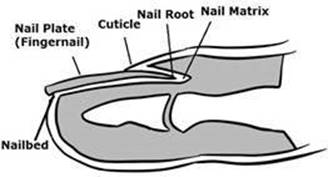
Nail plate: the hard covering of the end of your digit (the part what most people consider to be the nail).
Nail bed: the skin under the nail plate.
Nail matrix: part of the nail under the cuticle (the half-moon).
This is when the nail plate is ripped off by some sort of trauma.
A completely torn-off nail will take 4 to 5 months to grow back.
Numb the area.
Clean and dress with non-adherent dressing. Use antiseptic liberally.
Change dressing frequently.
If the nail is still attached to the nail bed by a small amount:
Remove it.
Consider using the nail as a protective covering on the nail bed.
Do not scrape off loose edges.
Crush injuries are caused by traumas such as striking with a hammer, slamming in a door etc.
Symptoms of a Crush Injury to the Nail
Bruising (brown or blue).
Blood (deep blue to black).
Pain.
Treatment for a Crush Injury to the Nail
A bruise will heal in time.
For significant blood:
Consider making a hole to relieve pressure:
Ø Using a hot paper clip or similar, make a hole in the nail plate.
Ø Dry, splint and bandage for at least 48 hours.
Shingles (herpes zoster), is a re-activation of the chicken pox virus, varicella; Diagnoses and Treatments – Integumentary System – Chicken Pox.
Vaccines are available.
The telltale sign of shingles is a stripe of itchy/painful blisters wrapping around one side of the torso; this rash may appear elsewhere.
Fatigue.
Fever.
Headache.
Sensitivity to light.
Shingles will self-resolve between 2 to 6 weeks, but it can re-occur.
Cool compresses.
Seek advanced medical care if pain and rash is near an eye or widespread.
Pharmaceuticals:
Antivirals: acyclovir, famciclovir, valacyclovir.
A splinter is a piece of a larger object lodged inside the body, e.g., wood, glass, animal spine, metal.
A splinter is minor to begin with, usually just causing discomfort or minor pain, but if left untreated it may lead to infection or perhaps even internal damage.
Abscess; Diagnoses and Treatments - Integumentary System – Abscesses.
Bumps under the skin.
Cyst.
Discoloration beneath the skin.
Pain.
Puncture wound.
Wound that won’t heal.
Clean the area.
Using tweezers (or similar), pull the splinter out along the same angle that it entered the skin; a magnifying glass may help.
If needed, place a thin slice of garlic over the splinter and hold on with a bandage. It should help the splinter work its way out after a few hours.
If that doesn’t work, carefully cut the skin that lies over it, just enough to expose the splinter.
Clean the area.
If you cannot easily slide a fishhook out, it may be because of the barb.
Press down on the skin where the barb is and then pull it out.
If pulling back does not work:
Ø Put it further in until the barb comes out.
Ø Cut off the barbed end, e.g., using wire cutter and remove the hook.
Clean and dress.
Tinea (ringworm) is a common fungal infection on the skin. Athlete’s foot, jock itch, ringworm, scalp ringworm etc. are all just forms of tinea in different places. It is usually not serious, but it can be irritating and, if not treated, it may last for years. It is contagious.
One symptom is a skin rash that forms a ring, hence the name ringworm. It has nothing to do with worms, which are intestinal parasites; Diagnoses and Treatments – Digestive System – Worms.
Bald patches if on a hairy area.
Raised, itchy patch that is darker on the outside.
Scratching causes blistering and oozing.
For treatment of tinea on the feet, see athlete’s foot; Diagnoses and Treatments – Integumentary System – Tinea – Athlete’s Foot.
Avoid tight-fitting clothing on irritated areas.
Keep skin as dry as possible.
Wash regularly.
Wash sheets daily.
Drying powders, e.g., talcum powder.
Pharmaceuticals:
Antifungals: miconazole, clotrimazole.
Alternative/Natural Remedies:
Clove oil. Apply topically a few times a day.
Garlic. Cut in half and rub on area a few times a day.
Athlete’s foot (tinea pedis) is tinea/ringworm on the feet. It usually occurs between the toes, but can also appear anywhere on the feet and hands. Keeping feet clean and dry, wearing footwear in public showers etc. are the best ways to prevent contraction.
Athlete’s foot can be caused by cuts on feet and hands, having wet feet for prolonged periods (including perspiration), sharing shoes or socks, spending long hours in closed shoes, wet surfaces etc.
Discolored nails.
Flaking of skin.
Fluid drainage from surfaces traumatized by repeated scratching.
Itching and burning.
Reddened skin.
Scratching causes oozing.
Keep feet clean and dry.
Drying powders, e.g., talcum powder.
Pharmaceuticals:
Avoid anti-itching creams as it keeps the area moist and may delay healing.
Antifungals: miconazole, clotrimazole.
Alternative/Natural Remedies:
Clove oil. Apply topically a few times a day.
Garlic. Crush a couple of cloves into warm water for a 30 minute foot bath.