
Types of Epilepsy
Episodic Neurological Disturbances of Nonepileptic Origin
 Types of Epilepsy
An epileptic seizure is produced by a temporally limited, synchronous electrical discharge of neurons in the brain. It presents as a variable combination of motor, somatosensory, special sensory, autonomic, and/or behavioral disturbances, which arises suddenly and may last for a few seconds or a few minutes. On rare occasions, seizure activity persists for more than 20 minutes and may go on for hours, or even longer, without interruption (status epilepticus). The epileptic event may affect a circumscribed area of the brain (partial or focal seizures), or both cerebral hemispheres at the same time (generalized seizures). An impairment of consciousness is found in generalized seizures and in so-called complex focal seizures. In their differential diagnosis, epileptic seizures must be carefully distinguished from other sudden events involving neurological deficits and disturbances of consciousness.
Epidemiology. It has been calculated that 0.5 % of all individuals suffer from epileptic seizures. The child of a parent with idiopathic epilepsy has a 4% likelihood of suffering from it.
Pathophysiology. Epileptic seizures are due to dysfunction of neurons in the brain, which expresses itself electrophysiologically as an abnormality of the fluctuations of electrical potential that are seen in an electroencephalogram (EEG, p. 54). (If the surface EEG is normal, such abnormalities can be revealed by recording with depth electrodes.) The underlying cause is an imbalance of excitatory and inhibitory potentials, with predominance of excitatory neurotransmitters such as glutamate and aspartate, or diminished activity of inhibitory neurotransmitters such as GABA. The synchronous discharge of neurons in a particular area of the brain is accompanied by a local increase in blood flow.
Etiology. Epileptic seizures can be produced by structural lesions in the brain (so-called epileptic foci: scar, tumor, congenital malformation), by metabolic disturbances (e.g., hypoglycemia), or by toxic influences (e.g., alcohol). These are all types of symptomatic epilepsy. In contrast, the idiopathic epilepsies involve a genetic predisposition to epileptic seizures, in the absence of a structural lesion. The cryptogenic epilepsies are presumed to be of symptomatic origin, although their cause cannot (yet) be demonstrated. Molecular genetic techniques have made it possible to trace certain forms of focal epilepsy back to abnormalities of specific gene loci.
Not uncommonly, more than one etiologic factor is at work: thus, diseases of the brain are more likely to produce epileptic seizures in persons with an inherited predisposition to seizures than in other, normal individuals.
General characteristics of epileptic disorders are the following:
 Epileptic seizures are events of sudden onset, which occur with variable frequency (generally in the range of a few seizures per year to several per day).
They often present with motor phenomena (in particular, repetitive, clonic twitching or changes of muscle tone) and sometimes with somatosensory, special sensory, and/or autonomic manifestations.
Depending on their type, they may involve an impairment or loss of consciousness, or consciousness may be preserved during the seizure.
The seizure may be preceded by premonitory symptoms of various kinds (auras, e.g., nausea, ascending warmth, or a feeling or unreality).
In some patients, seizures occur in response to specific provocative and precipitating factors (sleep deprivation, alcohol withdrawal, medications, strobe lighting, hyperventilation, fever).
Classification of the Epilepsies
Epilepsy can be classified according to a number of criteria, including:
Etiology, e.g.:
 “genuine/idiopathic,” genetic,
symptomatic,
cryptogenic.
Age of onset, e.g.:
epilepsy of childhood or adolescence,
epilepsy of adulthood,
late epilepsy (age 30 and up; always suspect a primary organic disease).
Setting in which seizures are most frequent, e.g.:
sleep epilepsy,
epilepsy on awakening.
EEG correlate and corresponding topographical localization, e.g.:
generalized epilepsy,
focal (partial) epilepsy.
finally, the clinical manifestations of each seizure.
Clinical classification of seizures. The nomenclature for the different clinical types of epileptic seizure proposed by the International League Against Epilepsy is reproduced in Table. 9.1, with the addition of a few further designations that are currently in general use.
Table 9.1 Classification of epileptic seizures as proposed by the International League Against Epilepsy
|
1. |
Partial (focal, localized) seizures |
|
1.1 |
Simple partial seizures (without alteration of consciousness) |
|
1.1.1 |
with motor signs |
|
1.1.2 |
with somatosensory or special sensory symptoms |
|
1.1.3 |
with autonomic symptoms or signs |
|
1.1.4 |
with mental symptoms and/or disturbances of higher |
|
1.2 |
Complex partial seizures (with disturbance of consciousness, sometimes beginning with simple manifestations only) |
|
1.2.1 |
simple partial onset, followed by disturbance of consciousness with simple partial features, followed by disturbance |
|
1.2.2 |
with disturbance of consciousness at onset with isolated disturbance of consciousness with automatisms |
|
1.3 |
Partial seizures with secondary generalization to a toncclonic (CTC) seizure (synonymous terms: CTC seizures with partial or focal onset; secondarily generalized partial seizures) |
|
1.3.1 |
simple partial seizures with secondary generalization |
|
1.3.2 |
complex partial seizures with secondary generalization |
|
1.3.3 |
simple partial seizures that develop into complex partial seizures and then become secondarily generalized |
|
2. |
Generalized seizures |
|
2.1 |
Absence seizures |
|
2.2 |
Atypical absences |
|
2.3 |
Myoclonic seizures |
|
2.4 |
Clonic seizures |
|
2.5 |
Tonic seizures |
|
2.6 |
Tonic-clonic seizures |
|
2.7 |
Atonic seizures |
|
3. |
Unclassifiable seizures |
Practical Clinical Management of a Suspected Epileptic Seizure
History and physical examination. A precise history is of the essence for the diagnosis of epilepsy and its differentiation from other, nonepileptic disorders (see below). A description of the seizures should also be obtained from someone other than the patient, if possible, because patients usually suffer amnesia for the seizures. The questions to be asked are summarized in Table. 9.2. When performing the physical examination, the examiner should pay special attention to: (1) any physical evidence that a seizure has occurred; and (2) any signs of a neurological or general medical disease that might have caused the seizure (Table. 9.3).
General diagnostic aspects. If the clinical findings suggest that an epileptic seizure has occurred, a series of laboratory studies and ancillary tests should be performed. These are indicated as part of the initial evaluation of every case of suspected epilepsy and mainly serve to detect, or exclude, any possible symptomatic cause of the seizure (Table. 9.4).
General therapeutic aspects. If the diagnosis of pilepsy can be made securely based on the clinical findings and further testing, an appropriate course of therapy must be decided upon. Any underlying cause of symptomatic epilepsy should be treated (causal treatment); moreover, the predisposition to seizures can be treated symptomatically with one or a combination of medications (antiepileptic drugs, AEDs). Not every epileptic seizure implies a need for treatment. In many patients of a first seizure, it may be best to wait and see whether the event will repeat itself, as long as this presents no special danger and the patient agrees. The decision whether to treat with medications must always be taken on an individual basis, with due consideration of the patient's personality, life situation, occupation, and so forth. The following situations, however, are generally held to indicate treatment:
two or more epileptic seizures within six months;
seizures in the setting of a known disease of the brain (encephalitis, cerebral hemorrhage, tumor, etc.);
epilepsy-typical potentials on EEG;
initial status epilepticus.
Some general guidelines for the treatment of epilepsy are summarized in Table. 9.5. Table. 9.6 provides an overview of the major antiepileptic drugs that are currently available and the indications for each.
Table 9.2 Questions for history-taking in the aftermath of a suspected epileptic seizure
|
1. About the current seizure: |
|
|
|
|
|
|
|
|
|
|
|
|
|
|
|
|
|
|
|
2. Past history: |
|
|
|
|
|
• Perinatal injury (left handedness, strabismus, psy chomotor retardation)? |
|
• Meningitis, encephalitis? |
|
• Head trauma? |
|
|
|
• Febrile seizure(s) in childhood? |
|
• Unconsciousness? |
|
• Bedwetting (possibly due to nocturnal grand mal seizures)? |
|
• Twilight states? (ask specifically about partial complex seizures and déjà vu) |
|
|
|
• When was the first one? |
|
• When was the most recent previous one? |
|
• Frequency? |
|
• Characteristics of each seizure? |
|
• EEG obtained? If so, with what result? |
|
• Antiepileptic medications taken, if any: |
Table 9.3 Important points for physical examination in the aftermath of a suspected epileptic seizure
|
1. Evidence that a seizure has occurred |
|
|
|
|
|
|
|
|
|
|
|
|
|
2. Clues implicating an underlying disease as the cause of theseizure |
|
|
|
|
|
|
Table 9.4 Ancillary tests that may be useful in the aftermath of a suspected epileptic seizure
|
1. Evidence that a seizure has occurred |
|
|
|
2. Clues implicating an underlying disease as the cause of the seizure |
|
|
|
|
|
|
|
|
Table 9.5 General principles of the treatment of epilepsy
|
|
|
|
|
|
|
|
|
|
|
|
|
|
|
|
|
|
|
• poor compliance is suspected |
|
• drug toxicity is suspected |
|
• drug interactions are suspected, particularly those involving enzyme induction |
|
• an already high dose is to be raised even further |
|
• medicolegal questions arise, particularly with respect to driving |
|
|

Generalized Seizures
Generalized seizures involve both cerebral hemispheres, either from the outset of seizure activity, or when an initially focal seizure becomes secondarily generalized (see below). They typically involve an obvious impairment of consciousness. Abnormalities of muscle tone are always present and there are often involuntary, repetitive motor phenomena involving both sides of the body (clonic or myoclonic activity; see also Table. 9.1).
The more common types of generalized seizure are described in this section.

Fig. 9.1 Tongue bite incurred during a grand mal seizure.
Tonic–Clonic Seizures (Grand Mal Epilepsy)
Pathogenesis and etiology. A grand mal seizure may be idiopathic; in such patients, it is usually primarily generalized (“centrencephalic”). It may also be due to a circumscribed brain lesion (secondary generalization). The cause can sometimes be inferred from the findings of the clinical history, imaging studies, and EEG, though it often remains obscure.
Clinical manifestations. Grand mal seizures are the most common and most impressive type of epileptic seizure and also the most familiar to nonprofessionals. Such seizures are sometimes heralded by an aura (see above) and a loud cry or shout. Next, the patient acutely loses consciousness and falls to the ground, and the muscles are tonically contracted: the limbs are extended, and the trunk and neck are hyperextended. About 10 seconds later, there follows a rhythmic, clonic, generalized twitching of all muscles of the body, accompanied by cyanosis of the face, frothing at the mouth, and possibly by a tongue bite and urinary or fecal incontinence. The twitching persists for a minute or a little longer and is followed by a period of initially deep unconsciousness. Within a few minutes, a gradual transition begins to a phase of confusion and somnolence (postictal twilight state) and then to the return of normal consciousness. The entire seizure typically lasts about 10 minutes. The patient may remember the aura but is otherwise entirely amnestic for the seizure event. Afterward, the patient is tired and may complain of myalgia. A tongue bite Fig. 9.1, urinary or fecal incontinence, and fall-related injuries may be evident. Shoulder dislocation and vertebral or other fractures are rare.
Diagnostic evaluation. Even in the interictal period, the electroencephalogram may reveal the typical picture of synchronous, generalized spikes and waves in all electrodes (Fig. 9.2).
Treatment. The medication of first choice for the treatment of grand mal epilepsy is valproate (Table. 9.6).
Absences (Petit Mal)
Absences are very brief seizures involving a momentary diminution of consciousness, rather than a complete loss of consciousness. They most commonly occur in children and adolescents.
Etiology. Like other types of childhood epilepsy, absences are idiopathic.
Clinical manifestations. Motor phenomena are not always seen; if present, they are only mild (blinking, automatisms, loss of muscle tone, brief clonus). In the simplest type of absence epilepsy, petit mal epilepsy of school-aged children, the seizures often seem to be no more than brief periods of “absent-mindedness”: the child stares fixedly with eyes turned upward, blinks, and may make movements of the tongue or mouth, or pick at his or her clothes. These types of movements are called petit mal automatisms. The entire event lasts no more than a few seconds. Absences usually occur multiple times per day. The examining physician may be able to provoke an absence by having the patient hyperventilate.
Diagnostic evaluation. The electroencephalogram reveals a pathognomonic pattern of bursts of synchronous, generalized spike-and-wave activity at a frequency of about 3 Hz. These can be provoked by hyperventilation (Fig. 9.3).

Fig. 9.2 Interictal EEG in a patient with grand mal seizures, showing a synchronous paroxysm of generalized, partly atypical spikes and waves.

Fig. 9.3 EEG in a patient with absence seizures, showing generalized spikes and waves at 3–4 Hz, induced by hyperventilation.

Treatment. The medications of first choice for the treatment of absences are valproate and ethosuximide.
Prognosis. About one in four affected children become free of seizures during puberty; in the remainder, seizures persist. One half of these patients with persistent absence seizures will go on to develop grand mal seizures as well.
Atypical Absences and Other Types of Epilepsy In Childhood
The other types of childhood epilepsy are summarized in Table. 9.7.
Partial (Focal) Seizures
Focal seizures are always due to a circumscribed lesion in the brain. The specific manifestations of the seizure correspond to the site of the lesion. Unlike generalized seizures, which always involve an impairment of consciousness, focal seizures may occur with the patient remaining fully conscious (simple partial seizures). They can, however, involve an impairment of consciousness, in which case they are called complex partial seizures.The excitation arising in the epileptic focus may spread to the entire brain and thereby provoke a secondarily generalized grand mal seizure. In such patients, the initial focal phase may be very brief and is not always clinically recognizable.
Figure 9.4 schematically represents the clinical manifestations that can be expected in focal seizures arising from various brain areas. The major types of focal seizure will be described in detail in the remainder of this section.
Simple Partial Seizures
Simple partial seizures can be purely motor, mixed sensory and motor, or purely sensory (either somatosensory or special sensory). They are, by definition, not accompanied by an impairment of consciousness, though they may undergo secondary generalization.
Individual types of simple partial seizure. A simple partial seizure may involve focal motor twitching on one side of the body, or sensory disturbances that suddenly arise in a circumscribed area of the body. Focal twitching confined to a very small area (e.g., a hand) and lasting for a very long time (hours or more) is called epilepsia partialis continua (of Kozhevnikov).
In a Jacksonian seizure, the motor (or sensory) phenomena rapidly spread to the entire ipsilateral half of the body (“Jacksonian march”). If the seizure focus lies in the precentral or the supplementary motor area, the seizure will be of adversive type: the patient's head and eyes turn tonically to the opposite side, while the contralateral arm is abducted and elevated. If the seizure focus lies in the visual or auditory cortex or the neighboring association areas, the seizure may consist of, or begin with, auditory or visual sensations, or even scenic images.
Diagnostic evaluation. The focal nature of the seizure, or its focal origin (in the case of secondarily generalized seizures), is demonstrated not only by the clinical manifestations, but also by the electroencephalogram, which displays localized epileptic activity over the seizure focus Fig. 9.5.
Treatment. The medications of first choice for the treatment of focal seizures are carbamazepine and oxcar bazepine.
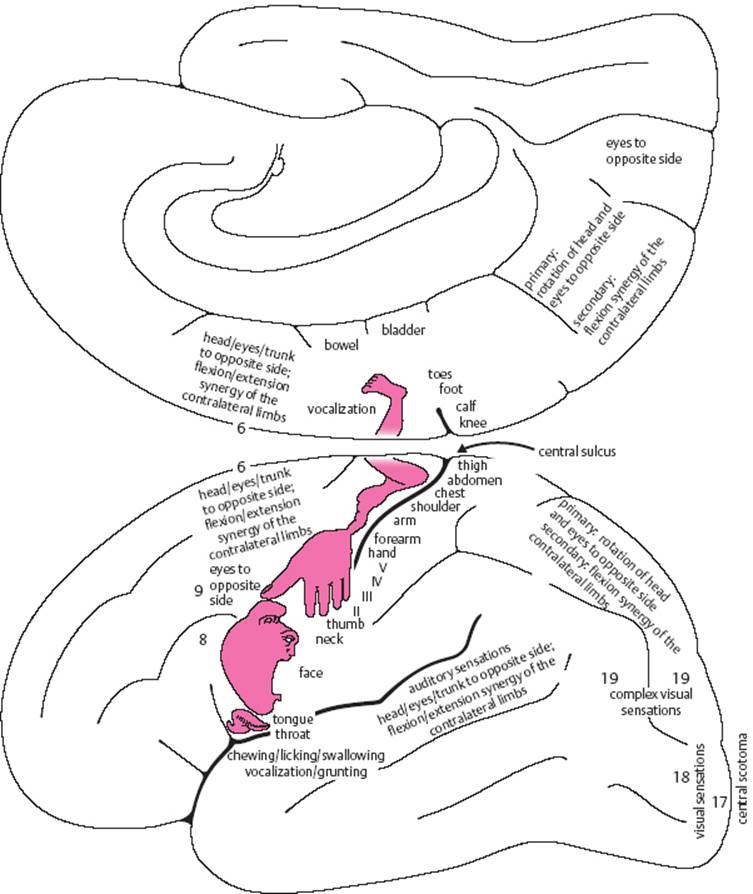
Fig. 9.4 Localization of focal epileptic seizures. The type of attack depends on the site of the focal lesion (adapted from Foerster).

Fig. 9.5 EEG during a focal epileptic seizure. Right central epileptogenic focus with spikes, sharp waves, and slow waves. Phase reversal at electrode C4.
Table 9.8 Clinical manifestations of partial complex seizures (temporal lobe epilepsy)
|
Category |
Manifestations |
Remarks |
|
Sensory disturbances |
Dizziness, dysmorphopsia (macropsia, micropsia, everything seems to be far away), gustatory sensations, unpleasant olfactory sensations |
Uncinate fits |
|
Autonomic phenomena |
Shortness of breath, palpitations, nausea, salivation, dry mouth, hunger, urge to urinate, abdominal sensations |
Often, ascending sensation from stomach to throat |
|
Behavioral and psychomotor manifestations |
Traumatic experience, feeling of unreality, feeling of unfamiliarity (jamais vu), forced thoughts, déjà vu, déjà vécu, unfounded anxiety or rage, hallucinations, twilight states |
|
|
Twilight states |
Automatic, semiorganized, but inappropriate behavior, e.g., picking at clothes, senseless moving around of objects, etc. (twilight attacks); long-lasting, semiorganized complex behaviors that may even involve travel over a long distance (twilight state, fugue épileptique) |
Amnesia for these states |
|
Temporal syncope |
Collapse, usually immediately following one of the above phenomena, typically with only brief unconsciousness |
No sudden falling |
|
Psychomotor status epilepticus |
Very long persistence of the above phenomena, or repeated occurrence with less than full recovery in between |
Rare |
Complex Partial Seizures
This type of seizure was previously known as psychomotor epilepsy or, alternatively, temporal lobe epilepsy. It is due to a lesion in the limbic system, usually in the temporal lobe, but sometimes in the frontal lobe.
Etiology. The most common cause of complex partial seizures is a perinatal lesion of hypoxic origin (mesial temporal sclerosis or hippocampal sclerosis). Other causes include congenital developmental anomalies (e.g., disorders of neuroblast migration), trauma, and brain tumors.
Clinical manifestations. Complex partial seizures have sensory, behavioral, psychomotor, and autonomic manifestations, which are described in further detail in Table. 9.8.
Which of these manifestations will be present in the individual patient depends on the precise location of the epileptic focus. The manifestations may vary to a mild extent from seizure to seizure, though an unvarying, stereotypical course is more common.
In addition to the manifestations mentioned above, many patients report experiencing déjà vu and related phenomena, i.e., the strong, but nonetheless inaccurate, feeling of having already seen or experienced what one is seeing or experiencing at the moment. Patients whose seizure focus lies in the uncinate gyrus also have olfactory hallucinations, or, as they are called, uncinate fits. These are often produced by a mass in the temporal lobe.
Illustrative case description: The patient's seizures begin suddenly, with a peculiar feeling of distance from his surroundings. Everything seems to be far away, unreal, and like a dream. At the same time, he notices a strange sensation in the pit of his stomach, ascending to his neck. He may also have palpitations or shortness of breath. On some occasions, his consciousness is more severely affected: he stares blankly ahead, makes chewing and swallowing movements, produces gagging noises, and fails to respond to questions. He picks at his clothes, makes purposeless hand movements, and sometimes falls over. Rarely, when he is in this “twilight state,” he carries out complex activities, perhaps even a “fugue épileptique.” The entire episode usually lasts one or a few minutes, but may last much longer.
Diagnostic evaluation. Complex partial seizure activity can generally be diagnosed from its typical clinical picture. The EEC reveals temporal slow waves or spikes. In the interictal period, however, it is usually normal.
Treatment. The medications of choice for complex partial seizures, as for simple partial seizures, are carbamazepine and oxcarbazepine. Alternatively, valproate can be used.
Status Epilepticus
Status epilepticus refers to a prolonged, uninterrupted epileptic seizure, or multiple seizures occurring in rapid succession without recovery in between.

Generalized (grand mal) status epilepticus, in which the patient does not regain consciousness between seizures, is a life-threatening emergency because of the danger of respiratory complications and ensuing cerebral ischemia.
In absence status the patient is not unconscious, but rather confused or mildly dazed, with inappropriate behavior. The EEG is diagnostic.
Complex partial status epilepticus can be mistaken for an acute psychotic episode.
Treatment. Grand mal status epilepticus should be treated with a bolus dose of a benzodiazepine, e.g., diazepam 10-20 mg i.v., followed by intravenous phenytoin (by slow push or drip) or valproate (IV push followed by drip). If seizure activity does not stop within 40 minutes, the patient must be intubated and ventilated and put in artificial coma with a barbiturate such as thiopental or propofol.
Petit mal status epilepticus and psychomotor status epilepticus respond to clonazepam 2–4 mg i. v.
Episodic Neurological Disturbances of Nonepileptic Origin
Because the clinical presentations of epileptic seizures are so highly varied, their differential diagnosis necessarily includes a wide variety of conditions. Any episodic loss of consciousness, impaired motor function, or fall might be due either to an epileptic seizure or to a nonepileptic event of another etiology, as will be discussed in this section.
Episodic neurological disturbances of nonepileptic origin can be classified into four major types, as follows:
transient loss of consciousness and falling;
falling without loss of consciousness;
loss of consciousness without falling; and
episodic movement disorders without loss of consciousness.
Episodic Disturbances with Transient Loss of Consciousness and Falling
Table 9.9 provides a quick overview of nonepileptic disturbances of this type (and, for completeness, also includes some that are of epileptic origin). Only the more important ones are described in greater detail in this section.


Syncope
Syncope is a very brief loss of consciousness during which the affected individual falls to the ground. It is due to a very brief loss of function of the brainstem reticular formation, which, in turn, is usually caused by temporary ischemia and tissue hypoxia. Syncope can be of vasomotor or cardiogenic origin.
Reflex circulatory syncope, the commonest kind of syncope, can be precipitated by intense emotion (e. g., the sight of blood, anticipatory anxiety), heat, prolonged standing, or physical pain. The affected person becomes dizzy, sees black spots before his or her eyes, turns pale, breaks out in a sweat, and then collapses to the ground. Wakefulness and full orientation are regained at once in most patients.
Etiologic subtypes of reflex circulatory syncope include idiopathic vasomotor collapse in adolescents, pressor syncope after prolonged coughing, micturition syncope, swallowing syncope, and extension syncope (mainly seen in younger patients who stand up too quickly from a squatting position). Orthostatic syncope is a feature of many neurological diseases (e. g., multisystem atrophy). Carotid sinus syncope is rarer than once thought. Vestibular syncopeoccurs, e.g., in acute paroxysmal positioning vertigo.
Cardiogenic syncope is especially common in older patients. Its causes include cardiac arrhythmias (third degree AV block, sick sinus syndrome, tachycardias) and other types of heart disease (e.g., valvular aortic stenosis, atrial myxoma, and chronic pulmonary hypertension with cor pulmonale).
“Convulsive syncope”: syncopal episodes are some times accompanied by brief, clonic muscle twitching. This may make a syncopal episode even harder to distinguish from an epileptic seizure.
Episodic Falling without Loss of Consciousness
Drop Attacks
In a so-called drop attack, the patient suddenly falls to the ground without braking the fall. Consciousness is apparently preserved during the event; in some patients, however, the patient may, in fact, lose consciousness without realizing it afterward, and too briefly for others to observe. Some drop attacks are due to atonic epilepsy, others to basilar ischemia. Cryptogenic drop attacks have been described in older women (“climacteric drop syncope”). Finally, drop attacks can be caused by basilar impression and other structural abnormalities of the craniocervical junction.
Table 9.10 Distinguishing features of the narcolepsy-cataplexy and sleep apnea syndromes
|
Aspect |
Narcolepsy-cataplexy |
Sleep apnea |
|
History |
30-50% positive family history, onset usually in 2nd or 3rd decade of life |
negative family history, onset usually in middle or old age |
|
Daytime sleep |
usually in sleep-promoting situations, patient feels rested afterward; there are also hypovigilant twilight states |
overwhelming need to sleep; patient does not feel rested afterward |
|
Nighttime sleep |
often restless, nightmares, sometimes sleep paralysis, patients sometimes do not feel rested in the morning, no headache |
loud snoring, respiratory pauses lasting more than 10 seconds (hallmark), diminished 02 saturation of the blood, sometimes angina pectoris during sleep, patients usually do not feel rested in the morning, headache |
|
Other features |
cataplectic states, e.g., loss of affective tone, hypnagogic hallucinations and automatic behavior, no dementia |
no cataplexy, sometimes hypnagogic hallucinations and automatic behavior, perhaps (reversible) dementia |
|
Clinical findings |
sometimes short, stocky habitus |
usually men, almost always obese, often hypertensive, occasional anomaly of nasopharynx |
|
Ancillary tests: |
||
|
|
often signs of somnolence, short sleep latency, early REM sleep, frequent alternation with nonREM sleep |
unremarkable |
|
|
HLA-DR2 constellation |
no specific HLA type |
Cataplexy
Cataplexy, a component of the narcolepsy–cataplexy syndrome, may present with the clinical picture of an unexplained, atonic fall. Directed history taking then reveals some or all of the five cardinal symptoms of cataplexy:
disturbance ofwakefulness, usually with brief and restorative naps during the day (in sleep-promoting situations);
falls, due to sudden loss of muscle tone, precipitated by fright or other emotions (affective loss of muscle tone), and perhaps brief local loss of tone in individual muscle groups;
disturbance of nighttime sleep, with nightmares;
sleep paralysis, i.e., brief inability to move on awakening;
partial hypovigilance states and hallucinatory experiences, mostly while falling asleep (hypnagogichallucinations).
The diagnosis of this disorder, which tends to occur in families, is made on clinical grounds and confirmed by the following objective findings:
HLA-DR2 constellation and characteristic EEG abnormalities (SOREM = sleep-onset REM = early REM sleep stages);
frequent somnolence;
the appearance of REM sleep during the first hour of nighttime sleep, and
frequent alternation of REM sleep with typical, deep sleep Fig. 9.6.
Important clinical aspects of the differential diagnosis of the narcolepsy–cataplexy syndrome—in particular, its distinction from sleep apnea syndrome—are listed in Table. 9.10.
Differential diagnosis: sleep apnea syndrome. This syndrome mainly affects middle-aged and elderly men who snore loudly. Typical manifestations, other than snoring are motor unrest during sleep and repeated respiratory pausesdue to airway displacement. When one of these pauses occurs, the patient becomes half awake, with a start, before beginning to breathe again. The repeated pauses interfere considerably with sleep. The patient awakens the next day feeling poorly rested, often complaining of headache; the next day, he or she is tired, falls asleep repeatedly, and may suffer from impaired intellectual performance or even (reversible) dementia. The diagnosis is established by polysomnography. Treatment with continuous positive-pressure respiration, through a mask, during nighttime sleep often results in dramatic improvement.
Episodic Loss of Consciousness without Falling
Certain metabolic disturbances (e.g., hypoglycemia) and electrolyte disturbances (particularly hyponatremia), as well as endocrine diseases (hypothyroidism, hypoparathyroidism), can cause episodic loss of consciousness. Unconsciousness can also be the most prominent manifestation of tetany, e.g., in hyperventilation; other signs include Chvostek sign, paresthesiae of the fingers and mouth, and tonic muscle contractions, with carpopedal spasm.
Episodic Movement Disorders without Loss of Consciousness
The following nonepileptic movement disorders must be distinguished from focal motor epilepsy:
Focal, repetitive twitching of various types: hemifacial spasm is a synchronous involuntary contraction, at irregular intervals, of muscles innervated by the facial nerve on one side of the face. Tics and blepharospasm are usually bilateral. Palatal nystagmus is due to a lesion of the olive or the central tegmental tract. Myoclonus and myorrhythmia are usually not confined to a particular muscle or muscle group, but tend to migrate from one to another.

Fig. 9.6 Sleep profile in the narcolepsy–cataplexy syndrome (below) compared to a normal sleep profile (above).
Episodic, generalized motor processes include paroxysmal choreoathetosis, which may be familial or due to multiple sclerosis, and tonic brainstem seizures, which are likewise a feature of MS (p. 158).