
Graham W. Warren, Benjamin A. Toll, Irene M. Tamí-Maury, and Ellen R. Gritz
INTRODUCTION
Tobacco is commonly described as the largest preventable cause of cancer. Over 50 years ago, tobacco was increasingly recognized as the primary cause of lung cancer, with definitive recognition for tobacco use as a causative factor in the seminal 1964 U.S. Surgeon General’s Report (SGR) on Smoking and Health.1 Recent editions of the SGR have described the widespread adverse health effects of tobacco on a spectrum of diseases, including as a causative agent for a spectrum of cancers.2,3 Tobacco use is an addiction usually initiated in youth prior to the age of 18 and is driven by the highly addictive drug, nicotine.4As related to the cancer patient, considerable work has been conducted to associate tobacco use with the risk of developing cancer and how tobacco cessation can substantially reduce cancer risks. However, there is a relative paucity of effort that has been put forth to identify the effects of smoking on outcomes for cancer patients or to establish methods to help cancer patients quit smoking. Fortunately, in recent years, the importance of tobacco use by the cancer patient has been increasingly recognized as an important health behavior, including a National Cancer Institute (NCI)–sponsored conference on tobacco use in 2010, a joint sponsored NCI–American Association of Cancer Research (AACR)–sponsored workshop at the Institute of Medicine in 2012, and recent recommendations by the AACR and the American Society of Clinical Oncology (ASCO) to address tobacco use in cancer patients.5,6 The recently released 2014 SGR now provides substantial evidence behind the effects of smoking by cancer patients with the following conclusions7:
1. In cancer patients and survivors, the evidence is sufficient to infer a causal relationship between cigarette smoking and adverse health outcomes. Quitting smoking improves the prognosis of cancer patients.
2. In cancer patients and survivors, the evidence is sufficient to infer a causal relationship between cigarette smoking and increased all-cause mortality and cancer-specific mortality.
3. In cancer patients and survivors, the evidence is sufficient to infer a causal relationship between cigarette smoking and increased risk for second primary cancers known to be caused by cigarette smoking, such as lung cancer.
4. In cancer patients and survivors, the evidence is suggestive but not sufficient to infer a causal relationship between cigarette smoking and the risk of recurrence, poorer response to treatment, and increased treatment-related toxicity.
The overall objective of this chapter is to discuss tobacco use by cancer patients, the clinical effects of smoking in cancer patients, methods to address tobacco use by cancer patients, and areas of needed research.
NEUROBIOLOGY OF TOBACCO DEPENDENCE
Nicotine is the primary addictive component of tobacco that increases extracellular concentrations of dopamine in the nucleus accumbens and stimulates the mesolimbic dopaminergic system,8,9 resulting in nicotine’s rewarding effect experienced by tobacco users.10–12 Dopaminergic neurotransmission may also be involved in the assignment of incentive salience, or stimulus for a pleasure based reward, to tobacco use–related environmental cues13,14 that may become conditioned reinforcers of tobacco use behaviors. For example, an individual who smokes while drinking their morning coffee may associate coffee, or even holding a coffee cup in their hand, with the reward from smoking. Thus, cigarette smoking is directly linked to external nontobacco-based behavioral stimuli. Activation of the nucleus accumbens has further been implicated in drug reinstatement or relapse.15,16 Individuals who have quit tobacco use for years have restarted a tobacco habit simply by sitting next to a smoker and being exposed to secondhand smoke. Substantial work has been conducted on the addictive nature of tobacco and nicotine, and readers are referred to several comprehensive reviews on this topic.9,12,17
TOBACCO USE PREVALENCE AND THE EVOLUTION OF TOBACCO PRODUCTS
Much of the discussion on tobacco use epidemiology and carcinogenesis is presented in Chapter 4. In brief, the prevalence of cigarette smoking among adults in the United States decreased to 19.0% as compared with 22.8% in 2001, but it did not meet the Healthy People 2010 objective to reduce smoking prevalence to 12%.18,19 There have been substantial changes in the landscape of tobacco use over time as a direct consequence of cigarette-centered policies and regulations aiming to reduce the harmful effects and number of deaths caused by smoking.20–22 Under this new landscape, novel and reemergent noncigarette tobacco products such as cigars, cigarillos, snuff, chewing tobacco, water pipes (hookahs), and other forms of tobacco consumption have been growing in demand as a consequence of aggressive and sophisticated marketing by the tobacco industry.23 Consumption patterns have also changed due to efforts by the tobacco industry to make cigarettes appear safer, such as low tar or filtered cigarettes, and the inclusion of flavoring (menthol, vanilla, fruits, etc.).24 Although these efforts may have changed consumption patterns, they have not reduced cancer risk. Large patient cohorts demonstrate that the introduction of low tar and filtered cigarettes actually increased risk by promoting deeper inhalation and higher rates of addiction with no reductions in cancer risk,24,25 resulting in subsequent changes in lung cancer from centrally located squamous cell cancers to peripherally located nonsquamous cell cancers.
The relatively recent introduction of electronic cigarettes (i.e., e-cigarettes, e-cigs, nicotine vaporizers, or electronic nicotine delivery systems [ENDS]) is noteworthy. These electronic or battery-powered devices activate a heating element that vaporizes a liquid solution contained in a cartridge, and then the user inhales this vapor. Levels of nicotine as well as other chemical additives and flavors in the cartridge are uncertain and vary according to the brand.26Although there are no research studies that have evaluated the potential harmful effects of the use of e-cigarettes for cancer patients,27 organizations such as the World Health Organization have already expressed concerns about the safety of these increasingly popular products.28,29 To date, e-cigarettes have not been approved by the U.S. Food and Drug Administration (FDA) as therapeutic devices to aid in quitting smoking.26 Readers are referred to a recent editorial on the use of e-cigarettes by cancer patients27; however, it will likely be several years before evidence-based health information is available.
TOBACCO USE BY THE CANCER PATIENT
The prevalence of current smoking among long-term adult cancer survivors appears to have declined in the past decade,30 but data suggest higher rates of smoking among cancer survivors than in the general population.30–32 These data are often biased by the fact that assessments in cancer patients may not include cancer patients who were current smokers at the time of death. As a result, estimates of smoking rates in cancer survivors may be misleading and may underestimate true tobacco use patterns for cancer patients. Furthermore, alternative tobacco products are often not assessed in cancer patients. Data from the Childhood Cancer Survivor Study and the 2009 Behavioral Risk Factor Surveillance System indicate that approximately 3% to 8% of cancer survivors use smokeless tobacco products.33,34 Patients may be attracted to these alternative products due to less social stigma and the nonevidence-based perception that these products are healthier alternatives compared to cigarette smoking.
Continued tobacco use by cancer patients often represents a combined failure by the patient to recognize the need to stop smoking even after a cancer diagnosis and the effort by health-care providers to address tobacco use with evidence-based assessments and tobacco cessation support. Approximately 30% of all cancer patients use tobacco at the time of cancer diagnosis with higher rates in traditionally tobacco-related disease sites, such as head and neck or lung cancers, and lower rates in traditionally nontobacco-related disease sites, such as breast or prostate cancers.35–44 However, findings from several studies indicate that cancer patients are receptive to smoking cessation interventions even as they continue to smoke.35,38,45–50
A cancer diagnosis can be used as a window of opportunity, or teachable moment, to intervene and provide assistance in the quitting process.51 A recent study in 12,000 cancer patients, including 2,700 patients who smoked, capitalized on the teachable moment and demonstrated that less than 3% of patients who were contacted by the cessation program rejected tobacco cessation assistance.45 However, only 1.2% of patients who received a mailed invitation participated in the program. This highlights the idea that patients may be interested in quitting, but methods such as mailed tobacco cessation information may not yield effective participation by cancer patients. Once enrolled, patients and clinicians must realize that although relapses in the general population usually occur within 1 week of cessation, relapses in cancer patients may be delayed due to cancer treatment–related variables such as surgical or other posttreatment healing.52 Consequently, it is important to continue offering tobacco assessments and cessation support for cancer survivorship efforts.
Defining Tobacco Use by the Cancer Patient
In dealing with tobacco use by cancer patients, it is important to note that virtually all of the evidence associating tobacco with cancer treatment outcomes deals with smoking. Few studies report associations between other forms of tobacco use (e.g., smokeless, cigars, cigarillos) and outcomes in cancer patients. Furthermore, the definition of smoking across published studies varies substantially.53 In studies of cancer patients, smoking has been defined as current (e.g., smoking after diagnosis, at diagnosis, in the weeks before diagnosis, within the 12 months prior to diagnosis, after diagnosis, within the past 10 years), former (e.g., recent, intermediate-, or long-term quit for 1 month, 3 month, 6 month, 12 month, 2 years, 5 years, 10 years), never, quitting after diagnosis, and according to exposure (e.g., multiple pack year cutoffs, Brinkman index, years of smoking, years of smoking within a predefined period of time such as 5 years prior to diagnosis). Though the nonstandard method of addressing tobacco use in cancer patients has been observed in several reports,54–57 there are no current standard recommendations for the definition of tobacco use by any national organization. There are four primary categories for smoking status:
1. Never smoking is typically defined as having smoked less than 100 cigarettes in a person’s lifetime and no current cigarette use. These patients are generally considered as a reference group in many studies. Categories 2 through 4 require that a person has smoked at least 100 cigarettes in their lifetime.
2. Former smoking is typically defined as no current cigarette use, usually within the past year.
3. Recent smoking (or recent quit) is generally defined as having stopped smoking within the recent past, typically for a period of 1 week to 1 year.
4. Current smoking is typically defined as smoking one or more cigarettes per day every day or some days.
Ever smoking is a combination of categories 2 through 4 (i.e., former, recent, and current smokers) that has been used to report negative associations between smoking and cancer outcomes in a number of studies.58–70 Defining smoking according to ever smoking status limits the ability to interpret the effects of current smoking on a clinical outcome, and nothing can be done to address a prior tobacco use history. However, defining exposure according to current smoking status allows for the analysis of potentially reversible effects as well as for the potential implementation of smoking cessation to prevent the adverse outcomes of smoking on cancer patients. The primary focus for the remainder of this chapter will be on current smoking and will include a discussion of methods to address tobacco use with the cancer patient through accurate assessments and structured tobacco cessation support.
THE CLINICAL EFFECTS OF SMOKING ON THE CANCER PATIENT
Cancer treatment is generally defined according to disease site, stage, treatment type (e.g., surgery, chemotherapy [CT], radiotherapy [RT], or biologic therapy), and primary treatment objective, such as cure or palliation. A comprehensive discussion of the effects of smoking on cancer patients is beyond the scope of a single chapter, but the 2014 SGR provides an excellent evidence base, concluding that “the evidence is sufficient to infer a causal relationship between cigarette smoking and adverse health outcomes.”7 Overall, approximately 75% to 80% of studies in the SGR demonstrated a negative association between smoking and outcome, with approximately 65% to 70% of studies demonstrating statistically significant negative associations. This chapter will provide an illustrative review of studies that demonstrate the adverse effects of tobacco across disease sites and treatment modalities (e.g., surgery, CT, RT), and effects will be discussed across the categories of mortality, recurrence and cancer-related mortality, toxicity, and risk of a second primary cancer. Evidence for the benefits of smoking cessation will also be presented within each section.
The Effect of Smoking on Overall Mortality
Substantial evidence demonstrates that current smoking by cancer patients increases the risk of overall mortality across virtually all cancer disease sites and for all treatment modalities. Currently smoking significantly increased the risk of overall mortality by between 17% to 38% as compared with never, former, and recent quit smokers in a large cohort of patients across 13 disease sites.71 Similar but larger observations were noted in elderly current smokers from a separate cohort (hazard ratio [HR], 1.72, 95% confidence interval [CI], 1.23 to 2.42).72 A large analysis of over 20,000 patients treated with surgery demonstrated that current smoking increased mortality by 62% in gastrointestinal cancer patients and by 50% in thoracic cancer patients with a nonsignificant trend in urologic cancer patients.73 Several larger studies with at least 500 patients demonstrated that current smoking increases mortality in head and neck cancer,74–77 breast cancer,78–81 gastrointestinal cancers,82,83 prostate cancer,84–87 renal cancer,88gynecologic cancers,89,90 and lung cancer.91–102 Smaller studies demonstrate similar effects for hematolymphoid cancers such as leukemia and lymphoma.103,104 Studies suggest that the effects of current smoking on mortality may be dose and time dependent, with higher risks in heavier smokers105,106 and lesser risks in patients whose time since quitting was longer.105
Whereas many reports rely on retrospective chart reviews, several prospective studies demonstrate that current smoking increases mortality.71 Browman et al.107 was one of the first prospective studies to demonstrate that current smoking increased mortality by 2.3-fold in patients who continued to smoke during RT as compared with nonsmokers. Results from Radiation Therapy Oncology Group (RTOG) 9003 and 0129 cooperative group trials demonstrated that current smoking increased mortality in advanced head and neck cancer patients treated with RT or concurrent chemoradiotherapy (CRT),108 with a similar effect noted in 165 cervical cancer patients treated with CRT.109 In the randomized retinoid chemoprevention trial of 1,190 early stage head and neck cancer patients, current smoking increased mortality by 2.5-fold.110
Numerous studies have demonstrated that current smoking increases overall mortality as compared with former and never smokers combined.72,75,76,101,102,107,108 The adverse effects of smoking compared with former and never smokers not only reflect the negative effects of smoking on mortality as a whole, but also demonstrate that the effects of smoking are reversible. Current smoking increased mortality risk as compared with patients who quit within the year71 or 1 to 3 months prior to diagnosis.111,112 Furthermore, in 284 limited-stage small-cell lung cancer patients, patients who quit smoking at or following a cancer diagnosis had a 45% reduction in mortality as compared with current smokers.113 These studies suggest that the effects of smoking on mortality are reversible.
Collectively, these studies provide significant data associating current smoking with increased overall mortality across most disease sites, tumor stages, treatment modalities, and in both traditionally tobacco-related as well as nontobacco-related cancers. The potential significance of smoking is perhaps best exemplified by Bittner et al.,114 who analyzed causes of death in prostate cancer patients and demonstrated that more than 90% died of causes other than prostate cancer, but that current smoking increased the risks of non–prostate cancer deaths between 3- and 5.5-fold. As a result, tobacco use and cessation may be of paramount importance to cancers with high cure rates, such as prostate cancer or breast cancer, simply because patients may be at the most risk of death from noncancer-related causes such as heart disease, pulmonary disease, or other diseases related to smoking and tobacco use.
The Effect of Smoking on Cancer Recurrence and Cancer-Related Mortality
The primary objective of cancer therapy is to cure cancer and prevent recurrence. However, smoking has been shown to increase cancer recurrence and cancer-related mortality. Across a broad spectrum of cancer patients, current smoking increased cancer mortality as compared with former and never smokers.71 Current smoking has been shown to increase cancer mortality in patients with head and neck cancer,108,115–118 breast cancer,78,119 gastrointestinal cancers,82,120,121 prostate cancer,41,84,122 gynecologic cancers,89,90,106,123–125 and lung cancer.126 Cancer recurrence, whether local or metastatic, is a key driver behind cancer-related mortality. Several studies demonstrate that current smoking increases the risk of recurrence and decreases response across multiple disease sites.76,84,107,127,128 The effects of smoking on increasing recurrence or cancer-related mortality have also been reported in several relatively rare cancers.120,129 In a remarkable report of patients with recurrent head and neck cancers treated with salvage surgery, continued smoking after salvage treatment continued to increase the risk of yet another recurrence by 42%.130 The striking nature of this last study highlights the continued risks even in recurrent cancer patients and the resilience with which some cancer patients will continue to smoke.
The effects of smoking are also noted in premalignant lesions. In patients with high-grade vulvar intraepithelial neoplasia, current smoking increased the risk of persistent disease after therapy by 30-fold.131 In a prospective trial of progesterone to treat cervical intraepithelial neoplasia (CIN), current smoking increased the risk of progression as compared with former and never smokers combined.132 A prospective trial of 516 low-grade cervical intraepithelial neoplasia patients demonstrated that current smoking decreased response by 36%, although a similar effect was also noted in former smokers.133
As noted with overall mortality, several studies demonstrated that the effects of current smoking are worse than the effects of former smoking76,86,89,109,127,134–136,137 and that the effects of smoking may be acutely reversible. Several studies also demonstrate that current smoking increases recurrence or cancer mortality, whereas former smoking has no significant effect.41,78,82,84,85,119,122–124,138 The acutely reversible effects of smoking were shown by Browman et al.139who demonstrated that continued smoking increased the risk of cancer-related mortality by 23% as compared with patients who quit within 12 weeks of starting RT. In 284 colorectal cancer patients, smoking at the first postoperative visit increased the risk of cancer mortality by 2.5-fold as compared with all other patients suggesting that smoking after treatment significantly predict for adverse outcome.121 In a notable study of over 1,400 prostate cancer patients treated with surgery, continued smoking 1 year after treatment increased the risk of recurrence 2.3-fold, but quitting smoking 1 year after treatment did not confer an increased risk of recurrence.128 Chen et al.138 demonstrate that patients who continue to smoke before and following a bladder cancer diagnosis have an increased risk of recurrence as compared with patients who quit in the year prior to diagnosis or within the first 3 months after diagnosis. The reversible effects of smoking on recurrence and mortality are consistent with observations on overall mortality and continue to emphasize the benefit of tobacco cessation for cancer patients who smoke at diagnosis.
The Effect of Smoking on Cancer Treatment Toxicity
Discussion of the effects of smoking on cancer treatment toxicity is highly dependent upon disease site, treatment modality (e.g., surgery, CT, RT), and timing of toxicity. Across disease sites and treatments, current smoking has been shown to increase complications from surgery,140–149 pulmonary complications,150,151 toxicity from RT,117,152–156 mucositis,157 hospitalization,158 and vasomotor symptoms.159 One of the largest recent studies in over 20,000 gastrointestinal, pulmonary, and urologic patients demonstrates that former or current smoking increased the risk of surgical site infection, pulmonary complications, or 30-day mortality in a site-specific manner.73 The effects of current smoking were most significant for pulmonary complications where former smoking had a lesser or nonsignificant effect. In 13,469 lung cancer patients treated with surgery, current smoking increased the risk of postoperative death with no increased risk in former smokers.160 Current smoking increased the risk of complications, morbidity, or reoperation following esophagectomy, pancreatectomy, or colorectal surgery.161–163 A study of 836 prostate cancer patients treated with RT demonstrated that current smoking increased abdominal cramps, rectal urgency, diarrhea, incomplete emptying, and sudden emptying between two- and nine-fold,164 with similar effects noted in 3,489 cervical cancer patients who smoked more than 1 pack per day (PPD).156
Several studies have demonstrated that the effects of smoking on cancer treatment toxicity are reversible. Stopping smoking within 3 weeks of surgery reduced wound healing complications in esophageal cancer patients treated with surgery and reconstruction.165 In 393 T1 laryngeal cancer patients treated with RT, quitting smoking after diagnosis reduced laryngeal complications as compared with continued smoking.152 In a large study of 7,990 lung cancer patients from the Society of Thoracic Surgeons Database, current smoking increased the risk of pulmonary complications by 80% and hospital mortality 3.5-fold.151 However, smoking cessation for 2 weeks eliminated the risks for pulmonary complications, and cessation for 1 month eliminated risks for hospital mortality. Vaporciyan et al.166 also showed that current smoking increased the risk of pulmonary complications 2.7-fold as compared with smoking cessation for at least 1 month prior to surgery. In a striking example of the potentially reversible effects of smoking in 205 head and neck cancer patients treated with RT,167 43% of smoking patients treated in the morning experienced Grade 3+ mucositis compared with 72% of smokers treated in the afternoon (p = 0.04). These data suggest that reducing smoking overnight may yield a clinical benefit in reduced toxicity. Whereas all toxicity may not be acutely reversed, these encouraging data show that patients can make clinically meaningful improvements in their health and or cancer treatment within a short time frame by quitting smoking.
The Effect of Smoking on Risk of Second Primary Cancer
Several studies have reported the effects of smoking on the risk of developing a second primary cancer. Park et al.168 reported on over 14,000 male cancer patients and demonstrated that current smoking increased the risk of developing a second tobacco-related primary cancer twofold, with no increased risk in former smokers. A higher risk was observed in in head and neck cancer patients who smoked more than 10 cigarettes per day, with no increased risk in lighter smokers.169 Kinoshita et al.170 showed an 82% increased risk of developing a second primary in gastric cancer patients who are current smokers with no increased risk in former smokers. In the phase III randomized trial of isotretinoin for the prevention of a second primary tumor in 1,190 head and neck cancer patients, current smoking increased the risk of a second primary by 2.2-fold with a nonsignificant trend of 1.6-fold in former smokers.110Notably, 39% of patients who reported quitting within the previous year were biochemically confirmed smokers.171 As a result, these data collectively suggest that some of the increased risk may be biased by continued smoking in patients who deny smoking by self-report.
The effects of smoking on the risk of a second primary cancer are also noted in nontobacco-related cancers and in long-term survivors. In 835 breast cancer patients, smoking increased the risk for the development of lung metastases after breast cancer by more than threefold.172 Ford et al.173 demonstrated that breast cancer patients who were former smokers had a threefold increased risk of developing lung cancer, but that current smokers had a 13-fold increased risk. In nearly 1,100 estrogen receptor (ER)-positive breast cancer patients, current smokers had a 1.8-fold increased risk of developing a second contralateral breast cancer, and current smokers at most recent follow-up had a 2.2-fold increased risk, but former smoking at the diagnosis or most recent follow-up had no increased risk.174 In 2,700 5-year survivors of testicular cancer, current smokers had a 1.8-fold increased risk of developing a second primary as compared with all other survivors.175
There are some studies suggesting that smoking, combined with cytotoxic therapy, may have an additive or synergistic effect on the risk of developing a second primary cancer. In 9,780 prostate cancer patients from the Cancer of the Prostate Strategic Urologic Research Endeavor (CaPSURE) study, RT increased the risk of bladder cancer by 1.6-fold, smoking increased the risk by 2.1-fold, and smoking combined with RT increased risk by 3.7-fold.176 In ER-positive breast cancer patients, treatment with RT had no significant effect on the risk of developing a contralateral breast cancer, but RT combined with current smoking increased the risk of contralateral cancer by ninefold.173 In a detailed analysis of Hodgkin lymphoma patients, nonheavy smokers (defined as never, former, and less than one PPD) had a second primary relative risk of between fourfold and sevenfold when treated with CT or RT as compared with patients who received no RT or CT.177 However, heavy smokers had a sixfold increased risk in the absence of RT and CT and a 17- to 49-fold increased risk when combined with RT and/or CT. These observations suggest that smoking combined with cytotoxic cancer therapy may complement the risk of developing a second primary cancer perhaps through the promotion of mutations induced by CT and/or RT in the presence of tobacco smoke. The potential mechanisms of this effect have not been tested or defined at this time, but the mechanism of tobacco-induced carcinogenesis in prior reports3 supports these observations.
Human Papilloma Virus, Epidermal Growth Factor Receptor, Anaplastic Lymphoma Kinase, Programmed Cell Death Protein 1, and Smoking
Data over the past decade has shown that head and neck cancers that are human papilloma virus (HPV) positive are known to have an improved prognosis as compared with HPV-negative tumors.178 Patients who have HPV-positive tumors typically have increased p16 expression and often respond better to conventional cancer therapy, including RT and CT. Many HPV-positive patients are never smokers or have a lighter smoking history. However, smoking was an independent adverse risk factor for both overall and cancer-related mortality with a 1% increase in risk per pack-year smoked.178 Current smoking increased cancer mortality approximately fivefold even in p16-positive patients treated with surgery.115 Smoking also increased the risk of developing second primary cancer in both HPV-positive and HPV-negative patients.179 As a consequence, the presence of HPV does not appear to negate the adverse effects of smoking.
A similar effect is noted in lung cancer patients with epidermal growth factor receptor (EGFR)-mutated or anaplastic lymphoma kinase (ALK)-mutated tumors. As with HPV-positive head and neck cancer patients, lung cancer patients who are light or never smokers have a higher rate of EGFR-positive tumors that may respond to biologic therapy using EGFR tyrosine–kinase inhibitors. At this time, most information regarding EGFR-based therapy for lung cancer reports on the effects of ever smoking demonstrating that ever smokers have a decreased response to EGFR therapy. Early, large, randomized trials demonstrate that Tarceva (erlotinib) and Iressa (gefitinib) provide survival and tumor control benefits specifically in never smokers.180,181 A very similar pattern is noted for ALK-positive patients with a much higher incidence in never smokers and high response rate to the ALK kinase inhibitor crizotinib.182 Paik et al.183 have described the importance of driver mutations in EGFR, ALK, and KRAS demonstrating that smokers have a higher preponderance for K-ras drivers, whereas nonsmokers tend to have EGFR or ALK driver mutations. In general, patients who are smokers may be best served with conventional cancer treatments rather than these biologic therapies, but randomized controlled trials confirming this suggestion are lacking at this time.
Although there are essentially no biologic therapies that have shown to have a better response in smokers, there are exciting data presented at the 2013 European CanCer Organization (ECCO) annual conference, suggesting that anti–programmed cell death protein 1 (PD-1)–based therapies may have a better response rate in smokers.184 These very preliminary data have yet to be replicated or expanded into randomized trials, but if expanded trials prove effective, they may represent one of the only cancer treatments that may specifically benefit smokers.
Summarizing the Clinical Effects of Smoking on the Cancer Patient
Smoking by cancer patients increases mortality, toxicity, recurrence, and the risk of a second primary cancer. There are four important conclusions, and a fifth implied conclusion, to the evidence previously presented:
1. One or more adverse effects of smoking affect all cancer disease sites.
2. One or more adverse effects of smoking affect all treatment modalities.
3. The effects of current smoking are distinct from an ever or former smoking history.
4. Several lines of evidence demonstrate that many of the effects of smoking are reversible.
Although substantial data demonstrate that smoking by cancer patients increases the risk for one or more outcomes, the largest limitations are the lack of standard tobacco use definitions, the lack of assessing tobacco use in cancer patients at follow-up, and the lack of structured tobacco cessation for cancer patients. Importantly, patients may further misrepresent tobacco use. Several studies suggest that approximately 30% of cancer patients who smoke deny tobacco use.171,185,186 Marin et al.187 exemplify the importance of an accurate assessment, demonstrating that patients who self-reported smoking had no significant risk associated with surgical complications; however, biochemical confirmation of smoking significantly increased the risk of surgical wound complications. This highlights the potential discrepancy between the effects of smoking based on subjective versus biochemically confirmed assessments. Due to this discrepancy, the fifth implied conclusion is that the adverse effects of smoking and the benefits of cessation may be more pronounced than currently reported in the literature.
ADDRESSING TOBACCO USE BY THE CANCER PATIENT
National Oncology Association Statements and Clinical Practice Guidelines
Professional societies are taking leadership roles in recognizing the need to assess patients’ tobacco use and to examine the effects of tobacco use in medical treatment, including the important role of tobacco cessation. The American Medical Association (AMA) passed a resolution supporting documentation of smoking behavior in clinical trials, from trial registration through treatment, follow-up, and to end of the study or death.188 The Oncology Nursing Society (ONS) has also advocated for assessment and cessation.189,190 Both the AACR5,191 and ASCO6,192 have issued policy statements specifically addressing tobacco use in cancer patients, detailing that clinicians have a responsibility to address tobacco use, that all patients should be screened, that all patients who use tobacco should receive evidence-based tobacco cessation support, and that tobacco use should be included in clinical practice and research. These provide strong counsel to address tobacco use in the general population as well as in cancer patients.
Smoking Cessation Guidelines
Overall, the approach to tobacco cessation for the cancer patient is very similar to the approach for the general population. However, there are a few specific details that are important to consider when approaching the cancer patient who smokes. It is important to recognize that virtually all newly diagnosed cancer patients are faced with a life-changing diagnosis that will require intensive treatment approaches. Treatments, toxicity, and outcomes differ according to disease site and treatment modality. Whereas some cancer patients may have a curable cancer, others may have incurable cancer. Smoking in cancer patients is also often associated with comorbid psychiatric diseases, such as depression, that may affect dependence.193 The urgency of cessation is also important to consider. If smoking decreases the efficacy of cancer treatment, then every effort should be made to stop tobacco use as soon as possible rather than choosing a quit date several weeks or months after a cancer diagnosis. Patients may also be burdened with a “stigma” associated with certain tobacco-related cancers,193–197 where they may be viewed by others, or themselves, as causing their cancer due to tobacco use. As a result, the rationale and motivation for quitting tobacco use likely differs among cancer patients, but there is a consistent theme that exists. (1) All patients should be asked about tobacco use with structured assessments; (2) all patients who use tobacco or are at risk for relapse should be offered evidence-based cessation support; and 3) tobacco assessment and cessation support should occur at the time of diagnosis, during treatment, and during follow-up for all cancer patients.
Empiric treatment of tobacco use by cancer patients is fundamentally supported by Public Health Service (PHS) Guidelines that are based on evidence from tobacco cessation efforts in noncancer patients. Originally issued in 1996 and renewed in 2008, The Clinical Practice Guideline: Treating Tobacco Use and Dependence is a PHS-sponsored, evidence-based guideline designed to assist health-care providers in delivering and supporting effective smoking cessation treatment.198,199 The basic recommendation states that clinicians should consistently identify, document, and treat every tobacco user seen in a health-care setting. Details of cessation support range from brief to intensive intervention, but emphasize that consistent repeated cessation support and even brief counseling are effective methods to assist patients with stopping tobacco use. It is important to note that physician-delivered interventions significantly increase long-term abstinence rates.199 Included are newer effective medication options and strong support for counseling and the use of quit lines as effective intervention strategies. As described in the PHS Guidelines, the principal steps in conducting effective smoking cessation interventions are referred to as The 5 A’s:
1. Ask about tobacco use for every patient.
2. Advise every tobacco user to quit.
3. Assess the willingness of patients to quit.
4. Assist patients with quitting through counseling and pharmacotherapy.
5. Arrange follow-up cessation support, preferably within the first week after the quit date.
There is a strong evidence base for these interventions as documented in the clinical practice guideline.199
Implementing Smoking Cessation Into Clinical Practice
An algorithm is provided to guide clinicians in implementing the five A’s into clinical cancer care (Fig. 31.1).5,45,194,199 Included in the algorithm are suggested questions that are useful to accurately assess tobacco use by cancer patients where patients can generally be divided into current, former, or never smokers. The first step (ASK) is to inquire about and document tobacco use behaviors for every patient at every visit including follow-up visits. Whereas a more comprehensive evaluation is necessary at the first consult, only updates to current tobacco use are needed at follow-up. Including smoking status assessments as a “vital sign” for all patients significantly increases the identification and treatment for patients.200 Tobacco-use status stickers on paper charts or an automated reminder system for electronic records can increase compliance with tobacco assessments.45 With the recent Meaningful Use standards that were implemented in 2011, hospitals using an electronic medical record (EMR) are essentially required to document tobacco use.201 A recent report utilized the EMR to implement mandatory tobacco assessments in cancer patients demonstrating that just a few questions at the initial evaluation and at follow-up could yield high referral. Less than 1% of referrals were delayed when assessments were repeated on a monthly basis rather than at every clinic visit.45 These findings reduce the clinical burden and patient fatigue associated with repeated assessments as frequently as every day such as in patients who are treated with daily RT or CT.
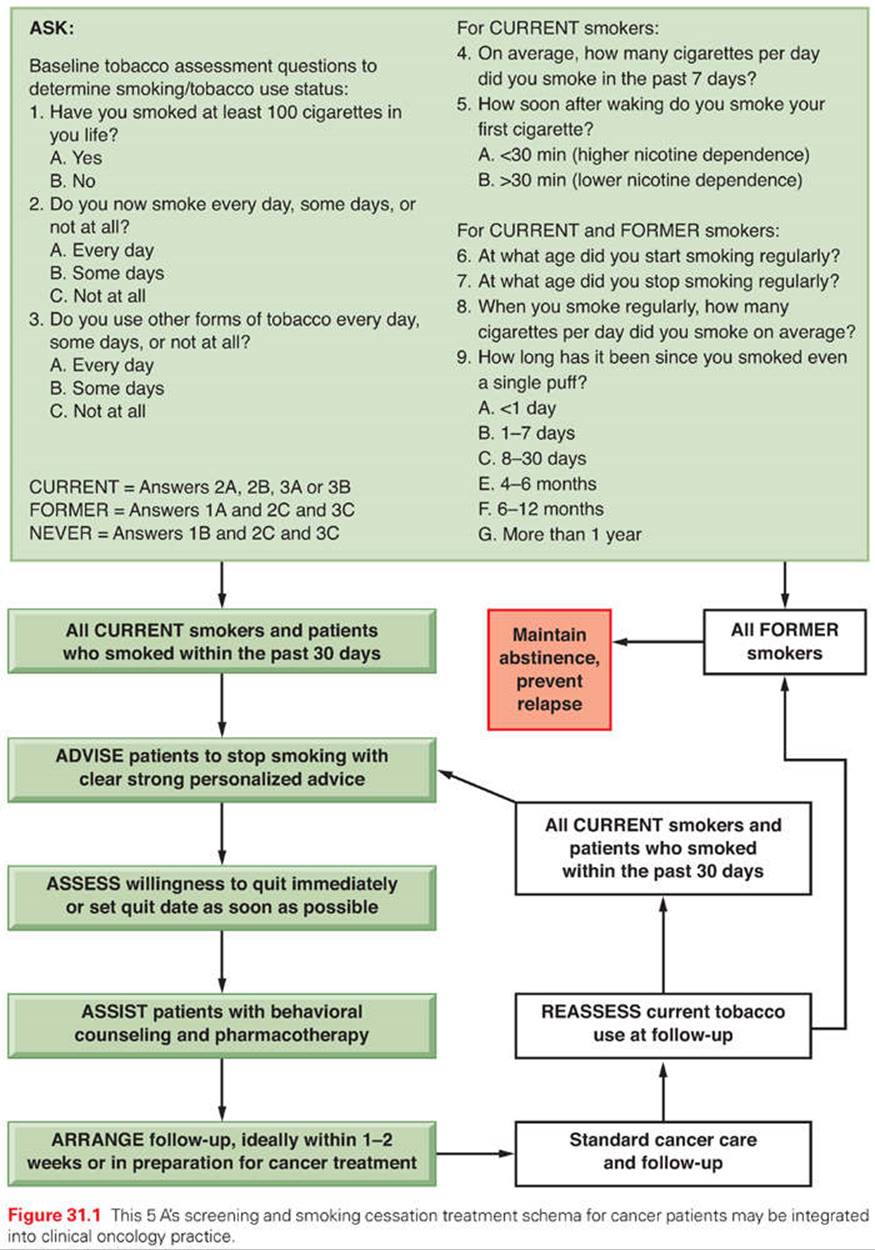
At the time of this chapter release, there were no national guidelines for implementation of specific questions to assess tobacco use in cancer patients. However, Figure 31.1 provides effective questions for assessing tobacco use in cancer patients based on advice from published reports.5,45,194,199 Current, former, and never smokers are identified in a structured manner. Patients who use tobacco within the past 30 days should have structured support to quit tobacco use, maintain abstinence, and prevent relapse. Although not explicitly stated by any specific guidelines, asking about tobacco use in family members of cancer patients may be important because family members often support cancer patients during and following treatment, but continued smoking by family members can make quitting much more difficult.202–204
Advising is the second step in promoting effective tobacco cessation that involves giving clear, strong, and personalized advice to stop tobacco use. This advice should include the importance of quitting smoking, such as explicit information on the risks of continued smoking and the benefits of cessation for cancer treatment outcomes and overall health regardless of cancer diagnosis. This includes a discussion of how it is not “too late” to quit and that quitting will in fact benefit their cancer treatment efficacy and cancer outcome.5 Patients can also consider the cost savings of stopping a smoking habit. Clinicians must be particularly sensitive to avoid contributing to any perceived blame for the patient’s illness.195–197,205 Clinicians must remember that most patients started smoking in adolescence and did not completely understand the risks associated with tobacco use. At the same time, the severe addiction associated with chronic tobacco use makes it difficult to stop.
The next step is assessing dependence and willingness to quit. Asking “How soon after waking do you smoke your first cigarette?” assesses nicotine dependence, with high dependence associated with a shorter interval between waking and the first cigarette.206 Nicotine dependence is predictive of smoking cessation outcomes and can be used as a good indicator of the intensity of cessation treatment needed, such as the need for pharmacotherapy.207,208Determining the patient’s motivation and interest in quitting are critical parameters that influence the types of intervention strategies to be employed. Different strategies for quitting are based on the transtheoretical model of change and motivational interviewing stance, which recognizes that unique intervention messages and strategies are needed to optimally promote smoking cessation based on a patient’s readiness to quit smoking.209,210 In the general population, recommendations encourage that clinicians set a target quit date within 30 days. However, for cancer patients, the reader is encouraged to consider an urgent need to stop smoking immediately. If patients are unable to quit immediately, then patients should be encouraged to immediately reduce tobacco use and to set a quit date as soon as possible based on the typical need to start cancer treatment in the immediate future.
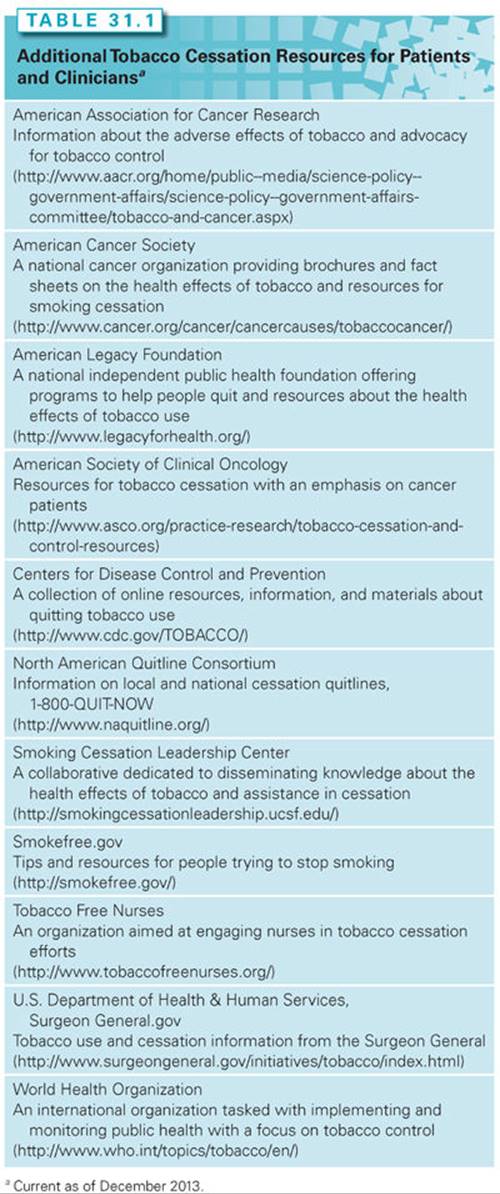
Assisting patients with smoking cessation involves clinicians helping the patient design and implement a specific quit plan or broadly enhancing the motivation to quit tobacco. Promoting an effective quit strategy for cancer patients should consist of (1) setting a quit date (immediately or as soon as possible), (2) removing all tobacco-related products from the environment (e.g., cigarettes, ashtrays, lighters), (3) requesting support from family and friends, (4) discussing challenges to quitting, and (5) discussing or prescribing pharmacotherapy where appropriate. Patients should also be provided information on cessation support services (Table 31.1). In the cancer setting, patients can also be informed that smoking cessation is a critical component of cancer care over which they have complete control, thereby conferring some personal control over their cancer care.
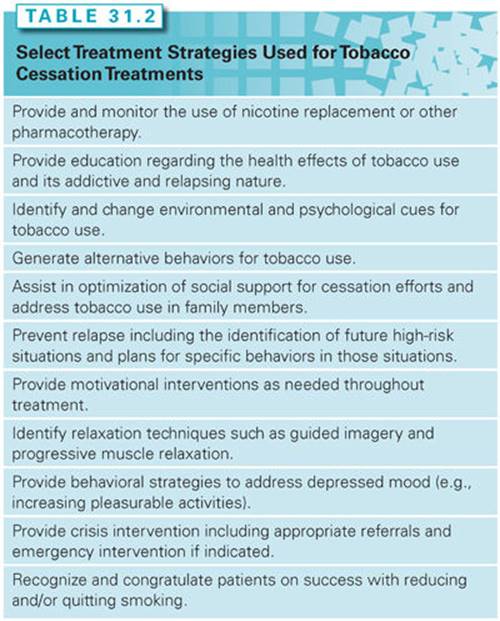
Patients who are unwilling to quit should continue to receive repeated assessments and counseling to help motivate patients to quit smoking. These patients should be encouraged to make immediate reductions in tobacco use and work toward abstinence as soon as possible. Clinician education, reassurance, and gentle encouragement can help them to consider changing their smoking behaviors. Specific strategies include discussing the personal relevance of smoking and benefits to cessation, providing support and acknowledging the difficulty of quitting, educating patients about the positive consequences of quitting smoking, and discussing available pharmacologic methods to assist with quitting.211 The emphasis should be placed on patient autonomy to quit. Motivational strategies for patients unwilling to quit can be employed (e.g., asking open-ended questions, providing affirmations, reflective listening, summarizing).198,210,212,213 Table 31.2 provides suggested methods to help clinicians promote tobacco cessation.
The final step in a clinician-delivered smoking cessation intervention involves arranging a follow-up contact with the patient. Ideally, cancer patients will follow an immediate quit strategy and follow-up should occur preferably within 1 to 2 weeks. However, a short-term follow-up may also benefit patients who are reluctant to quit smoking. The clinician must remember that a new cancer diagnosis is stressful and patients may rely on continued smoking to relieve stress, but after absorbing the psychological effects of a new cancer diagnosis, patients may be more receptive to smoking cessation. During follow-up, clinicians should congratulate patients on successful cessation efforts, discuss accomplishments and setbacks, and assess pharmacotherapy use and problems. Patients should not be criticized for returning to smoking; rather, it is critical to create a supportive environment for patients to communicate progress, failure, and personal needs. Framing relapses as a learning experience can be helpful, and patients should be encouraged to set another quit date. Referrals to a psychologist or professionally trained smoking cessation counselor should be considered for patients with numerous unsuccessful quit attempts, comorbid depression, anxiety, additional substance abuse disorders, or inadequate social support.
Clinicians who are not well versed in tobacco cessation should realize that smoking is an extremely difficult addiction to overcome and should recognize the clinical pattern associated with cessation. As patients stop smoking, many will experience symptoms of withdrawal, including dry or sore throat, constipation, cravings to smoke, irritability, anxiety, trouble concentrating, restlessness, increased appetite, depression, and insomnia. In the first few weeks, patients may also report an increase in mucous secretions from the airways, a cough, and other upper respiratory tract symptoms. Patients and clinicians should realize that tobacco cessation requires a concerted effort, may require repeated attempts, and symptoms will not resolve immediately. Clinicians should counsel patients on a repeated basis, recognize success, and provide repeated assistance if patients relapse.
Pharmacologic Treatment for Smoking Cessation
The principles of pharmacotherapy to help patients quit smoking are fundamentally based on reducing the craving associated with nicotine withdrawal. Nicotine replacement therapy (NRT), in the form of patches, lozenges, inhalers, sprays, and gum, varenicline (Chantix), and bupropion (Zyban) are the three principal first-line pharmacotherapies recommended for use either alone or in combination according to PHS Guidelines.199 Table 31.3 presents information on these first-line agents. Nicotine is the primary addictive substance in tobacco and NRT facilitates smoking cessation by reducing craving and withdrawal that smokers experience during abstinence. NRT also weans smokers off nicotine by providing a lower level and, in some cases, slower infusion of nicotine than smoking.214 Strong evidence from over 100 randomized clinical trials support the use of NRT to increase the odds of quitting approximately twofold as compared with placebo.215 Pooled analyses demonstrate that 17% of smokers receiving NRT were able to quit versus 10% with placebo after at least 6 months. Recent evidence further shows that combination therapy, or dual NRT (such as a nicotine patch and lozenge), is a very effective smoking cessation therapy that produces high quit rates.216,217 Data suggest that activation of the nicotinic acetylcholine receptor (nAChR) may promote tumor development,218 but evidence suggests that the negative aspects of smoking outweigh these concerns.219,220 Furthermore, there are no clinical trials reporting negative outcomes for NRT in cancer patients as related to mortality or recurrence. Studies also demonstrate that NRT is not associated with an increased risk of carcinogenesis in the general population.221,222 As a result, NRT should be used as a clinically proven method to help cancer patients stop smoking.
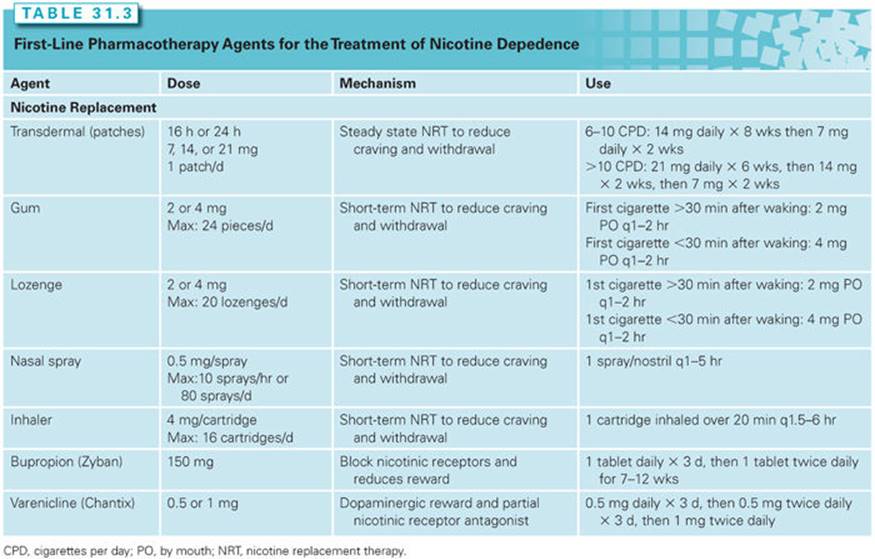
Antidepressants have been studied as non-nicotine–based pharmacotherapy in part due to depression and psychiatric disease being comorbid conditions in smokers.223 Bupropion (Zyban) is currently the only FDA-approved antidepressant for the treatment of tobacco dependence.199 Bupropion inhibits the reuptake of both dopamine and norepinephrine, thereby increasing dopamine and norepinephrine concentrations in the mesolimbic systems.12,224Bupropion also antagonizes the nAChR, thereby lowering the rewarding effects of nicotine.225 Should an abstinent smoker relapse, bupropion may function to reduce the pleasure of cigarette smoking experienced by the smoker226and help to prevent further relapse. A meta-analysis found that smokers who received bupropion were twice as likely as those who received placebo to have achieved long-term abstinence at either a 6- or 12-month follow-up.227
Varenicline (Chantix) is a α4β2 nAChR partial agonist that produces sustained dopamine release in the mesolimbic system that received FDA approval for treating tobacco dependence in 2006. Sustained dopamine release maintains a normal systemic level of the neurotransmitter, which helps to reduce craving and withdrawal during abstinence.228 Varenicline also antagonizes the rewarding effects of nicotine. Because varenicline attenuates the pleasure smokers experience from smoking, it may decrease motivation to smoke and protect them from relapse. One of the initially reported randomized clinical trials that compared varenicline (2 mg), bupropion (300 mg), and placebo showed that varenicline was superior to bupropion and placebo, with overall continuous abstinence rates between 10% to 23%.229 A meta-analysis demonstrated that the 1-mg daily dose approximately doubled, whereas the 2-mg daily dose approximately tripled the likelihood of long-term abstinence at 6 months as compared to placebo.199 As a result, the 1-mg daily dose can be considered as an alternative should the patient experience significant dose-related side effects. Several meta-analyses have shown that varenicline is superior to bupropion and placebo in the general population.230–233
In July 2009, the FDA issued a warning after reports that some patients attempting to quit smoking while using varenicline or bupropion experienced unusual changes in behavior, depressed mood, worsening of depression, or had thoughts of suicide. This has prompted recommendations that health-care providers elicit information about a patient’s psychiatric history prior to prescribing varenicline or bupropion to closely monitor changes in mood and behavior during the course of treatment. However, updated recent safety studies examining very large databases (one database of N = 119,546, one database of N = 35,800) regarding safety have shown no difference in neuropsychiatric side effects between varenicline or bupropion as compared to NRT and no increased risk of depression.234,235 Another prospective study showed no adverse events when treating participants with current or past major depression and also showed higher abstinence rates for the varenicline group as compared to placebo at weeks 9 to 52 (20.3% versus 10.4%, p <0.001).236 Varenicline should be considered a viable cessation pharmacotherapy for cancer patients.
The clinical practice guideline also identifies two non-nicotine–based medications—clonidine and nortriptyline—as second-line pharmacotherapies for tobacco dependence. A second-line agent is used when a smoker cannot use first-line medications due to either contraindications or lack of effectiveness. Both clonidine, an antihypertensive, and nortriptyline, a tricyclic antidepressant, have been shown to effectively assist smokers achieve abstinence.227,237Unfortunately, many patients who quit will eventually relapse, and rates of long-term abstinence remain low. Because smoking poses enormous health risks to individuals and their families, even a modest reduction in smoking may translate into a significant impact on public health. Clinicians should continue to encourage recalcitrant smokers to stop tobacco use and use pharmacotherapy where appropriate with repeated quit attempts.
Empirically Tested Cessation Interventions with Cancer Patients
The overwhelming majority of cessation research has been performed in the general population, but there are several studies that have been performed in cancer patients. Gritz et al.238 conducted the first physician- or dentist-delivered randomized cessation intervention comparison in 186 newly diagnosed head and neck cancer patients. Patients were treated with either minimal advice or an enhanced intervention with trained clinicians consisting of strong personalized advice to stop smoking, a contracted quit date, tailored written materials, and booster advice sessions. No significant differences were found between treatments, but a 70.2% continuous abstinence rate was found at 12-month follow-up regardless of treatment condition, suggesting that many cancer patients can benefit from brief physician-delivered advice. A later study by Schnoll et al.,239 comparing cognitive behavioral treatment with standardized health education advice, also failed to find significant differences in quit rates. All patients received NRT, and quit rates in both groups approached 50% at 1-month follow-up and 40% at 3-month follow-up.
Additional studies, ranging from 15 to 80 patients, examined nurse-delivered cessation interventions for a variety of cancer patients. The lowest cessation rates were found with a single session intervention: a 21% cessation rate in the intervention group versus 14% in the usual care group 6 weeks’ postintervention.240 Higher cessation rates were associated with a more intensive intervention consisting of three inpatient visits, supplementary materials, and five postdischarge follow-up contacts. Additional studies demonstrate higher cessation rates with more intensive intervention (40% to 75%) as compared with usual care (43% to 50%), suggesting more intensive interventions may yield higher cessation rates.241–243 In general, more intense interventions appear to be more efficacious, but even brief advice is important to achieve tobacco cessation.
In a randomized trial of 432 cancer patients coordinated by the Eastern Cooperative Oncology Group (ECOG) with a physician-delivered intervention (comprised of cessation advice, optional NRT, and written materials) or usual care (unstructured advice from physicians), there were no significant intervention effects and generally low abstinence rates (12% to 15% at 6 to 12 months).244 However, patients with head and neck or lung cancer were significantly more likely to have quit smoking compared to patients with tumors that were not smoking related. Analyses of outcomes from the Mayo Clinic Nicotine Dependence Center found that although lung cancer patients were more likely to achieve 6-month tobacco abstinence than controls (22% versus 14%), no significant differences were observed after adjusting for covariates.245 Garces et al.246 also found no significant differences in abstinence rates between head and neck cancer patients and controls (33% versus 26%). However, higher abstinence rates were found for both head and neck and lung cancer patients treated within 3 months of diagnosis compared to those treated for more than 3 months after the diagnosis, emphasizing the potential importance of the teachable moment at the time of the cancer diagnosis.
The potential importance of addressing smoking combined with considering comorbid disease has been noted in a few studies. In a randomized head and neck cancer patients of usual care versus 9 to 11 sessions of a nurse-administered intervention consisting of cognitive-behavioral therapy and medications, targeting comorbid smoking, drinking, and depression significantly increased quit rates at 6-month follow-up for the intervention group compared to the usual control group (47% versus 31%, p <0.05).247 In a randomized trial of 246 cancer patients treated with 9 weeks of NRT with or without bupropion, there was no significant difference with the addition of bupropion to NRT, but in patients with depressive symptoms, bupropion increased abstinence rates, lowered withdrawal, and improved quality of life.248Patients without depression symptoms did equally well when treated with bupropion versus transdermal nicotine and counseling alone.
Patient recruitment has been a problem noted by some studies, including 5.5 years to accrue 246 patients with telephone screening of over 7,500 potential patients.249 A pilot trial of varenicline in thoracic oncology patients required screening 1,130 patients to accrue 49 participants randomized to a 12-week course of either varenicline or placebo paired with a behavioral counseling platform of seven sessions.250A randomized trial of 185 smoking cancer patients comparing the efficacy of a hospital-based standard care smoking cessation model versus standard care augmented by a behavioral tapering regimen via a handheld device before inpatient hospitalization for cancer surgery demonstrated no difference in quit rates (both 32%,).251 However, over 29,000 patients were screened to conduct a randomized clinical trial with a smoking cancer patient population. These studies highlight the potential difficulty recruiting participants who smoke, including considerations for the importance of medical comorbidity in guiding smoking cessation treatment, patient mix (multiple tumor sites), treatment status (awaiting treatment to completed treatment), variation in stage of disease, and considering how psychiatric conditions such as depression reflect the difficulty of conducting research in the oncology setting and the importance of these variables in future studies.
Although accruing patients to intervention trials may seem discouraging, several studies demonstrate the benefit of counseling over self-help. Emmons et al.252 conducted a randomized controlled trial in 796 young adult survivors of pediatric cancer that included six calls, tailored and targeted written materials, and optional NRT as compared with self-help. Significantly higher quit rates were found in the counseling group compared to the self-help group at all reported follow-up time points, including 12 months (15% versus 9%; p <0.01). A randomized trial of a motivational interviewing-based smoking cessation intervention in a south Australian hospital was delivered over a 3-month period, consisted of multiple contacts with a trained counselor, and provided supplementary material tailored to cancer patients with NRT.253 The control group received brief advice to quit and generic supplementary material. Quit rates did not differ by treatment group (5% to 6% at 3-month follow-up), but the intervention group was significantly more likely to report attempts to quit smoking.
Current Tobacco Assessment and Cessation Support by Oncologists
Access to cessation support is critical to address tobacco use by cancer patients. A recent survey of 58 NCI-designated cancer centers indicated that about 80% reported a tobacco use program available to their patients and about 60% routinely offered educational materials, but less than 50% had a designated individual who provided services.254 A recent survey of over 1,500 members of the International Association for the Study of Lung Cancer (IASLC)255 and a parallel study of 1,197 ASCO members256 observed that approximately 90% of physicians believe that tobacco affects outcomes, tobacco cessation should be a standard part of cancer care, and approximately 80% regularly advise patients to stop using tobacco, but only approximately 40% discuss medications or assist with quitting. Dominant perceived barriers to cessation support were patient resistance to treatment, an inability to get patients to quit, a lack of cessation resources, and a lack of clinician education. These data showed that even motivated clinicians are not regularly providing tobacco cessation support. A recent survey of 155 actively accruing cooperative group clinical trials further demonstrated that only 29% of active trials collected any tobacco use information, 4.5% collected any tobacco use information at follow-up, and none addressed tobacco cessation.55 Few oncology meetings offer educational workshops or talks, and they are often poorly attended when they are offered.257 Collectively, these data demonstrate that oncologists are not regularly providing cessation support and that we are not capturing tobacco use information that may be critical to understanding the effects of tobacco on cancer treatment outcomes.
More in-person talks as well as written and Web-based training should be made available, as well as new approaches that move from the traditional 5 A’s model delivered by a single professional to referral systems that efficiently connect tobacco users to multiple resources for tobacco cessation.258–260 The ASCO Prevention Curriculum has a chapter devoted to educating oncology health-care professionals on the evaluation and treatment of tobacco use.213Innovative curricula, such as the Texas Tobacco Outreach Education Program (TOEP), are available and can facilitate program development in other states.261However, specialty programs in tobacco cessation treatment that are based in cancer centers and other medical centers are valuable resources that need to be further developed.
Addressing tobacco use in cancer patients may be approached in a systematic and efficient manner. A recent report highlighted the potential utility of automated tobacco assessment and smoking cessation using structured assessments in the EMR where all patients were automatically referred to a dedicated cessation program consisting of phone-based cessation support.45 In 2,700 patients referred for cessation support, half received only a mailing and only 1% contacted the cessation program. However, in the arm with at least five phone call attempts made by the cessation service, 81% of patients were successfully contacted and only 3% refused cessation support. Furthermore, assessments implemented every 4 weeks, rather than more frequent assessments every 2 weeks, resulted in delayed cessation referrals in less than 1% of smokers. This is the first report to try and identify clinically efficient mechanisms of addressing tobacco use that may be useful in clinical practice or research that may be an effective method of increasing patient participation in cessation support, but substantial work is needed to assess who may benefit from low versus high intensity support in such a program.
Examples of Model Tobacco Treatment Programs
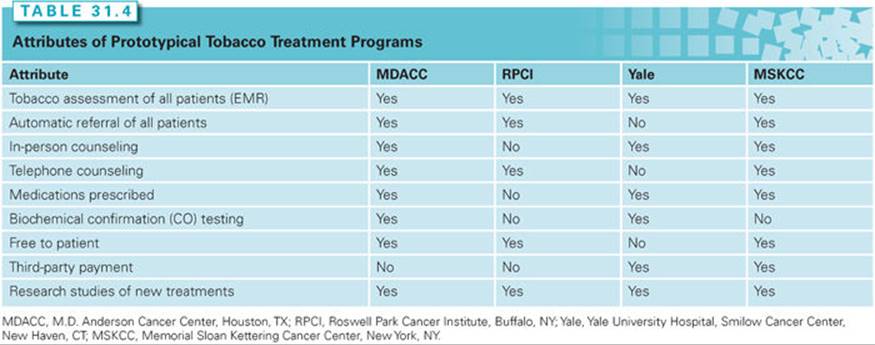
Several dedicated tobacco treatment programs at cancer centers have been developed. Table 31.4 contrasts the core elements of four active model programs at the end of 2013 (University of Texas M.D. Anderson Cancer Center, Roswell Park Cancer Institute, Yale Cancer Center, and Memorial Sloan Kettering Cancer Center), each of which employ different methods to help cancer patients quit smoking. All programs follow the evidence-based 5 A’s model described previously from PHS Guidelines.199 All programs were made available to patients at their respective medical centers and are now designed to evaluate and treat all patients who self-report current tobacco use. Importantly, not all cancer centers can treat smoking cessation in the same manner. Financing of a cessation program is critical and may include institutional funds, state funds, research funds, and third-party billing. Notably, given the broad spectrum of adverse health effects associated with smoking, cancer centers should carefully consider the potential health benefits and cost savings associated with tobacco cessation due to reductions in treatment complications and recurrence associated with smoking by cancer patients. There is no one “correct” way to create and sustain a tobacco treatment program at a cancer center, but at the very least and consistent with evidence, rigorous behavioral counseling should be provided and, if possible, medication management as well.
FUTURE CONSIDERATIONS
Research Considerations
The past several years have shown a surge in activities identifying the effects of tobacco in cancer patients and increasing awareness is being developed for cessation support at cancer centers as well as through several national organizations. There are three fundamental areas of research that need to be expanded:
1. Evaluating the effects of tobacco use and cessation on clinical cancer outcomes. The 2014 SGR concluded that smoking caused adverse outcomes in cancer patients,7 but several limitations remain. Tobacco-use definitions should be standardized and implemented at diagnosis, during treatment, and follow-up. Biochemical confirmation with cotinine or exhaled carbon monoxide may improve the accuracy of tobacco assessment in at-risk groups such as current smokers who are trying to quit or patients who reported quitting in the past year.171,185,186,262 Although smoking is the predominant form of tobacco consumption, all tobacco products should be considered. A further understanding of the effects of tobacco on the efficacy and toxicity of cancer treatment, tumor response, quality of life, survival, recurrence, compliance, second primary, and noncancer-related comorbidity is needed. All cancer disease sites and stages are important to consider.
2. Understanding the effects of tobacco and cessation on cancer biology. Although not a primary focus of this chapter, tobacco and tobacco-related products increase tumor growth, angiogenesis, migration, invasion and metastasis and decrease response to conventional cancer treatments such as CT and RT. These and other areas are important to consider, including the potential effects on immune-related therapy and vaccine development. In vivo models of exposure and cancer response are not well developed, yet are critical to this research area. Work is also needed to assess the effect of emerging tobacco-related products such as e-cigarettes.
3. Advance understanding of models to increase access to cessation support and increase efficacy of tobacco cessation methods for cancer patients. This diverse area includes assessing the timing of intervention, intensity, duration, follow-up, and the potential effects of harm-reduction strategies. Cessation pharmacology requires additional consideration in combination with unique approaches to motivational and behavioral counseling in cancer patients. Significant work is needed to disseminate evidence-based cessation support and to assess the cost-effectiveness of different cessation strategies, particularly with regard to improving the cost of cancer care as a whole. Preventing relapse and evaluating the safety of transition to alternative products such as e-cigarettes is equally important and increasingly complex with the addition of new tobacco-related products. Identifying and addressing barriers to effective cessation support is also needed. As related to the cancer patient, clinicians and cessation specialists should consider how their research relates to cancer care. Taking advantage of new integrated medical management systems presents a significant opportunity to improve cessation support access as well as to develop a more effective tracking of patient outcomes.
Policy Implications and Systematic Issues
Several national and international organizations have emphasized the importance of tobacco assessments and cessation for the general population and for cancer patients that include tools to evaluate tobacco use at diagnosis, during treatment, and follow-up appointments, as well as routine support for smoking cessation.5,6,188–191 In 2012, ASCO, with the contribution of the American Legacy Foundation, published a Tobacco Cessation Toolkit for the oncology setting.263 This evidence-based guideline intends to help oncology providers integrate tobacco cessation strategies into their patient care. Utilization of the EMR and standardized, automated systems for more efficacious and efficient access to tobacco cessation support has also been suggested,45 but requires participation by clinicians, institutions, insurers, and health departments. Not only should providers be aware of the need for tobacco cessation and available interventions, but health-care institutions must also build such treatment into their overall system of care. Thus, the identification of patients who smoke or use any alternative tobacco product, referral or direct treatment by providers, billing and reimbursement for treatment provided, and consistent efforts from professional oncology organizations are critically important.257 The tremendous public health burden from tobacco-related disability and death has not been countered by a proportional level of funding in tobacco control, cancer treatment research, or public advocacy. Researchers, clinicians, and advocates must come together to persuade policy makers to increase funding in tobacco-related research, treatment, and policy initiatives on behalf of healthy individuals and patients. A united front is critically needed in support of a common agenda that includes both increased tobacco-control efforts and additional funding for disease-related research and treatment. With clinical rationale, guidelines, and advocacy in place, the final steps in effective tobacco control and improving health outcomes are to implement these recommendations into practice.
REFERENCES
1. U.S. Department of Health, Education, and Welfare. Smoking and Health: Report of the Advisory Committee to the Surgeon General of the Public Health Service. PHS Publication No. 1103. Washington, D.C.: U.S. Department of Health, Education, and Welfare, Public Health Service, Center for Disease Control; 1964.
2. Office of the Surgeon General, Office on Smoking and Health. The Health Consequences of Smoking. A Report of the Surgeon General. Atlanta: Centers for Disease Control and Prevention; 2004.
3. Centers for Disease Control and Prevention, National Center for Chronic Disease Prevention and Health Promotion, Office on Smoking and Health. How Tobacco Smoke Causes Disease: The Biology and Behavioral Basis for Smoking-Attributable Disease: A Report of the Surgeon General. Atlanta: Centers for Disease Control and Prevention; 2010.
4. U.S. Department of Health and Human Services. The Health Consequences of Smoking: Nicotine Addiction. A Report of the Surgeon General. DHHS Publication No. (CDC) 88-8406. Atlanta: U.S. Department of Health and Human Services, Public Health Service, Centers for Disease Control, National Center for Chronic Disease Prevention and Health Promotion, Office on Smoking and Health; 1988.
5. Toll BA, Brandon TH, Gritz ER, et al. Assessing tobacco use by cancer patients and facilitating cessation: an American Association for Cancer Research policy statement. Clin Cancer Res 2013;19:1941–1948.
6. Hanna N, Mulshine J, Wollins DS, et al. Tobacco cessation and control a decade later: American society of clinical oncology policy statement update. J Clin Oncol 2013;31:3147–3157.
7. U.S. Department of Health and Human Services. The Health Consequences of Smoking—50 Years of Progress: A Report of the Surgeon General. Atlanta: U.S. Department of Health and Human Services, Centers for Disease Control and Prevention, National Center for Chronic Disease Prevention and Health Promotion, Office on Smoking and Health; 2014.
8. Brunzell DH. Preclinical evidence that activation of mesolimbic alpha 6 subunit containing nicotinic acetylcholine receptors supports nicotine addiction phenotype. Nicotine Tob Res 2012;14:1258–1269.
9. Benowitz NL. Nicotine addiction. N Engl J Med. 2010;362:2295–2303.
10. Nestler EJ. Is there a common molecular pathway for addiction? Nat Neurosci 2005;8:1445–1449.
11. Dani JA, De Biasi M. Cellular mechanisms of nicotine addiction. Pharmacol Biochem Behav 2001;70:439–446.
12. Balfour DJ. The neurobiology of tobacco dependence: a preclinical perspective on the role of the dopamine projections to the nucleus accumbens. Nicotine Tob Res 2004;6:899–912.
13. Berridge KC, Robinson TE. What is the role of dopamine in reward: hedonic impact, reward learning,x or incentive salience? Brain Res Brain Res Rev 1998;28:309–369.
14. Schultz W. Multiple dopamine functions at different time courses. Annu Rev Neurosci 2007;30:259–288.
15. Kalivas PW, McFarland K. Brain circuitry and the reinstatement of cocaine-seeking behavior. Psychopharmacology 2003;168:44–56.
16. Dani JA, Balfour DJK. Historical and current perspective on tobacco use and nicotine addiction. Trends Neurosci 2011;34:383–439.
17. Di Chiara G. Role of dopamine in the behavioural actions of nicotine related to addiction. Eur J Pharmacol 2000;393:295–314.
18. Centers for Disease Control and Prevention. Current cigarette smoking among adults—United States, 2011. MMWR Morb Mortal Wkly Rep 2012;61:889–894.
19. Centers for Disease Control and Prevention. Cigarette smoking among adults—United States, 2001. MMWR Morb Mortal Wkly Rep 2003;52:953–956.
20. Smokefree Laws and Policies. American Lung Association Web site. http://www.lungusa2.org/slati/smokefree_laws.php. Accessed November 25, 2013.
21. Tobacco Policy Project/State Legislated Actions on Tobacco Issues (SLATI). American Lung Association Web site. http://www.lungusa2.org/slati. Accessed November 25, 2013.
22. Tobacco Taxes. American Lung Association Web site. http://www.lungusa2.org/slati/tobacco_taxes.php. Accessed November 25, 2013.
23. Tobacco Situation and Outlook Report, U.S. Department of Agriculture, U.S. Census 1880-2005.
24. Warren GW, Cummings KM. Tobacco and lung cancer: risks, trends, and outcomes in patients with cancer. In: American Society of Clinical Oncology 2013 Educational Book. 201; 359–364. ASCO University Web site. http://meetinglibrary.asco.org//content/200-132. Accessed November 25, 2013.
25. Thun MJ, Carter BD, Feskanich D, et al. 50-year trends in smoking-related mortality in the United States. N Engl J Med. 2013;368:351–364.
26. U.S. Food and Drug Administration. Summary of Results: Laboratory Analysis of Electronic Cigarettes Conducted by FDA. U.S. Food and Drug Administration Web site. http://www.fda.gov/NewsEvents/PublicHealthFocus/ucm173146.htm. Accessed November 25, 2013.
27. Cummings KM, Dresler CM, Field JK, et al. E-cigarettes and cancer patients. J Thorac Oncol 2014;9:438–441.
28. Kuschner WG, Reddy S, Mehrotra N, et al. Electronic cigarettes and thirdhand tobacco smoke: two emerging health care challenges for the primary care provider. Int J Gen Med 2011;4:115–120.
29. WHO Study Group on Tobacco Product Regulation. WHO Study Group on Tobacco Product Regulation. Report on the scientific basis of tobacco product regulation: third report of a WHO study group. World Health Organ Tech Rep Ser 2009;(955):1–41.
30. National Cancer Institute. Cancer Trends Progress Report – 2011/2012 Update. Nation Cancer Institute Web site. http://progressreport.cancer.gov. Published August 2012. Accessed November 25, 2013.
31. Bellizzi KM, Rowland JH, Jeffery DD, et al. Health behaviors of cancer survivors: examining opportunities for cancer control intervention. J Clin Oncol 2005;23:8884–8893.
32. Coups EJ, Ostroff JS. A population-based estimate of the prevalence of behavioral risk factors among adult cancer survivors and noncancer controls. Prev Med 2005;40:702–711.
33. Klosky JL, Hum AM, Zhang N, et al. Smokeless and dual tobacco use among males surviving childhood cancer: a report from the Childhood Cancer Survivor Study. Cancer Epidemiol Biomarkers Prev 2013;22:1025–1029.
34. Underwood JM, Townsend JS, Tai E, et al. Persistent cigarette smoking and other tobacco use after a tobacco-related cancer diagnosis. J Cancer Surviv 2012;6:333–344.
35. Walker MS, Vidrine DJ, Gritz ER, et al. Smoking relapse during the first year after treatment for early-stage non-small-cell lung cancer. Cancer Epidemiol Biomarkers Prev 2006;15:2370–2377.
36. Gritz ER. Smoking and smoking cessation in cancer patients. Br J Addict 1991;86:549–554.
37. Lippman SM, Lee JJ, Karp DD, et al. Randomized phase III intergroup trial of isotretinoin to prevent second primary tumors in stage I non-small-cell lung cancer. J Natl Cancer Inst 2001;93:605–618.
38. Ostroff JS, Jacobsen PB, Moadel AB, et al. Prevalence and predictors of continued tobacco use after treatment of patients with head and neck cancer. Cancer 1995;75:569–576.
39. Hickey K, Do KA, Green A. Smoking and prostate cancer. Epidemiol Rev 2001;23:115–125.
40. Plaskon LA, Penson DF, Vaughan TL, et al. Cigarette smoking and risk of prostate cancer in middle-aged men. Cancer Epidemiol Biomarkers Prev 2003;12:604–609.
41. Watters JL, Park Y, Hollenbeck A, et al. Cigarette smoking and prostate cancer in a prospective US cohort study. Cancer Epidemiol Biomarkers Prev 2009;18:2427–2435.
42. Alberg AJ, Singh S, May JW, et al. Epidemiology, prevention, and early detection of breast cancer. Curr Opin Oncol 2000;12:515–520.
43. Johnson KC, Miller AB, Collishaw NE, et al. Active smoking and secondhand smoke increase breast cancer risk: the report of the Canadian Expert Panel on Tobacco Smoke and Breast Cancer Risk (2009). Tob Control 2011;20:e2.
44. Breast Cancer Family Registry; Kathleen Cuningham Consortium for Research into Familial Breast Cancer (Australasia); Ontario Cancer Genetics Network (Canada). Smoking and risk of breast cancer in carriers of mutations in BRCA1 or BRCA2 aged less than 50 years. Breast Cancer Res Treat2008;109:67–75.
45. Warren GW, Marshall JR, Cummings KM, et al. Automated tobacco assessment and cessation support for cancer patients. Cancer 2014;120:562–569.
46. Centers for Disease Control and Prevention. Cigarette smoking among adults—United States, 2004. MMWR Morb Mortal Wkly Rep 2005;54:1121–1124.
47. Centers for Disease Control and Prevention. Tobacco use among adults—United States, 2005. MMWR Morb Mortal Wkly Rep 2006;55:1145–1148.
48. Gritz ER, Nisenbaum R, Elashoff RE, et al. Smoking behavior following diagnosis in patients with stage I non-small cell lung cancer. Cancer Causes Control 1991;2:105–112.
49. Chen AM, Vazquez E, Courquin J, et al. Tobacco use among long-term survivors of head and neck cancer treated with radiation therapy. Psychooncology 2014;23:190–194.
50. Ostroff J, Garland J, Moadel A, et al. Cigarette smoking patterns in patients after treatment of bladder cancer. J Cancer Educ 2000;15:86–90.
51. McBride CM, Emmons KM, Lipkus IM. Understanding the potential of teachable moments: the case of smoking cessation. Health Educ Res 2003;18:156–170.
52. Gritz ER, Schacherer C, Koehly L, et al. Smoking withdrawal and relapse in head and neck cancer patients. Head Neck 1999;21:420–427.
53. Warren GW, Marshall JR, Cummings KM. Smoking, cancer treatment, and design of clinical trials. Proc AACR 2013:54:594.
54. Parsons A, Daley A, Begh R, et al. Influence of smoking cessation after diagnosis of early stage lung cancer on prognosis: systematic review of observational studies with meta-analysis. BMJ 2010;340:b5569.
55. Peters EN, Torres E, Toll BA, et al. Tobacco assessment in actively accruing National Cancer Institute Cooperative Group Program Clinical Trials. J Clin Oncol 2012;30:2869–2875.
56. Land SR. Methodologic barriers to addressing critical questions about tobacco and cancer prognosis. J Clin Oncol 2012;30:2030–2032.
57. Gritz ER, Dresler C, Sarna L. Smoking, the missing drug interaction in clinical trials: ignoring the obvious. Cancer Epidemiol Biomarkers Prev 2005;14:2287–2293.
58. Yu GP, Ostroff JS, Zhang ZF, et al. Smoking history and cancer patient survival: a hospital cancer registry study. Cancer Detect Prev 1997;21:497–509.
59. Dahlstrom KR, Calzada G, Hanby JD, et al. An evolution in demographics, treatment, and outcomes of oropharyngeal cancer at a major cancer center: a staging system in need of repair. Cancer 2012;119:81–89.
60. Molina MA, Cheung MC, Perez EA, et al. African American and poor patients have a dramatically worse prognosis for head and neck cancer: an examination of 20,915 patients. Cancer 2008;113:2797–2806.
61. Dragun AE, Huang B, Tucker TC, et al. Disparities in the application of adjuvant radiotherapy after breast-conserving surgery for early stage breast cancer: impact on overall survival. Cancer 2011;117:2590–2598.
62. Bostrom PJ, Alkhateeb S, Trottier G, et al. Sex differences in bladder cancer outcomes among smokers with advanced bladder cancer. BJU Int 2011;109:70–76.
63. Kroeger N, Klatte T, Birkhäuser FD, et al. Smoking negatively impacts renal cell carcinoma overall and cancer-specific survival. Cancer 2011;118:1795–1802.
64. Marks DI, Ballen K, Logan BR, et al. The effect of smoking on allogeneic transplant outcomes. Biol Blood Marrow Transplant 2009;15:1277–1287.
65. Gridelli C, Ciardiello F, Gallo C, et al. First-line erlotinib followed by second-line cisplatin-gemcitabine chemotherapy in advanced non-small-cell lung cancer: the TORCH randomized trial. J Clin Oncol 2012;30:3002–3011.
66. Maeda R, Yoshida J, Ishii G, et al. Influence of cigarette smoking on survival and tumor invasiveness in clinical stage IA lung adenocarcinoma. Ann Thorac Surg 2012;93:1626–1632.
67. Maeda R, Yoshida J, Ishii G, et al. The prognostic impact of cigarette smoking on patients with non-small cell lung cancer. J Thorac Oncol 2011;6:735–742.
68. Janjigian YY, McDonnell K, Kris MG, et al. Pack-years of cigarette smoking as a prognostic factor in patients with stage IIIB/IV nonsmall cell lung cancer. Cancer 2010;116:670–675.
69. Toyooka S, Takano T, Kosaka T, et al. Epidermal growth factor receptor mutation, but not sex and smoking, is independently associated with favorable prognosis of gefitinib-treated patients with lung adenocarcinoma. Cancer Sci 2008;99:303–308.
70. Kawai H, Tada A, Kawahara M, et al. Smoking history before surgery and prognosis in patients with stage IA non-small-cell lung cancer—a multicenter study. Lung Cancer 2005;49:63–70.
71. Warren GW, Kasza K, Reid M, et al. Smoking at diagnosis and survival in cancer patients. Int J Cancer 2013;132:401–410.
72. Kvale E, Ekundayo OJ, Zhang Y, et al. History of cancer and mortality in community-dwelling older adults. Cancer Epidemiol 2011;35:30–36.
73. Gajdos C, Hawn MT, Campagna EJ, et al. Adverse effects of smoking on postoperative outcomes in cancer patients. Ann Surg Oncol 2012;19:1430–1438.
74. Duffy SA, Ronis DL, McLean S, et al. Pretreatment health behaviors predict survival among patients with head and neck squamous cell carcinoma. J Clin Oncol 2009;27:1969–1975.
75. Farshadpour F, Kranenborg H, Calkoen EV, et al. Survival analysis of head and neck squamous cell carcinoma: influence of smoking and drinking. Head Neck 2011;33:817–823.
76. Meyer F, Bairati I, Fortin A, et al. Interaction between antioxidant vitamin supplementation and cigarette smoking during radiation therapy in relation to long-term effects on recurrence and mortality: a randomized trial among head and neck cancer patients. Int J Cancer2008;122:1679–1683.
77. Shen GP, Xu FH, He F, et al. Pretreatment lifestyle behaviors as survival predictors for patients with nasopharyngeal carcinoma. PLoS One 2012;7:e36515.
78. Dal Maso L, Zucchetto A, Talamini R, et al. Effect of obesity and other lifestyle factors on mortality in women with breast cancer. Int J Cancer 2008;123:2188–2194.
79. Hellmann SS, Thygesen LC, Tolstrup JS, et al. Modifiable risk factors and survival in women diagnosed with primary breast cancer: results from a prospective cohort study. Eur J Cancer Prev 2010;19:366–673.
80. Holmes MD, Murin S, Chen WY, et al. Smoking and survival after breast cancer diagnosis. Int J Cancer 2007;120:2672–2677.
81. Sagiv SK, Gaudet MM, Eng SM, et al. Active and passive cigarette smoke and breast cancer survival. Ann Epidemiol 2007;17:385–393.
82. Phipps AI, Baron J, Newcomb PA. Prediagnostic smoking history, alcohol consumption, and colorectal cancer survival: the Seattle Colon Cancer Family Registry. Cancer 2011;117:4948–4957.
83. Huang XE, Tajima K, Hamajima N, et al. Effects of dietary, drinking, and smoking habits on the prognosis of gastric cancer. Nutr Cancer 2000;38:30–36.
84. Kenfield SA, Stampfer MJ, Chan JM, et al. Smoking and prostate cancer survival and recurrence. JAMA 2011;305:2548–2555.
85. Merrick GS, Butler WM, Wallner KE, et al. Androgen-deprivation therapy does not impact cause-specific or overall survival after permanent prostate brachytherapy. Int J Radiat Oncol Biol Phys 2006;65:669–677.
86. Pickles T, Liu M, Berthelet E, et al. The effect of smoking on outcome following external radiation for localized prostate cancer. J Urol 2004;171:1543–1546.
87. Taira AV, Merrick GS, Butler WM, et al. Long-term outcome for clinically localized prostate cancer treated with permanent interstitial brachytherapy. Int J Radiat Oncol Biol Phys 2011;79:1336–1342.
88. Sweeney C, Farrow DC. Differential survival related to smoking among patients with renal cell carcinoma. Epidemiology 2000;11:344–346.
89. Coker AL, DeSimone CP, Eggleston KS, et al. Smoking and survival among Kentucky women diagnosed with invasive cervical cancer: 1995–2005. Gynecol Oncol 2009;112:365–369.
90. Modesitt SC, Huang B, Shelton BJ, et al. Endometrial cancer in Kentucky: the impact of age, smoking status, and rural residence. Gynecol Oncol 2006;103:300–306.
91. Poullis M, McShane J, Shaw M, et al. Smoking status at diagnosis and histology type as determinants of long-term outcomes of lung cancer patients. Eur J Cardiothorac Surg 2012;43:919–924.
92. Kawaguchi T, Tamiya A, Tamura A, et al. Chemotherapy is beneficial for elderly patients with advanced non-small-cell lung cancer: analysis of patients aged 70–74, 75–79, and 80 or older in Japan. Clin Lung Cancer 2012;13:442–447.
93. Pirker R, Pereira JR, Szczesna A, et al. Prognostic factors in patients with advanced non-small cell lung cancer: data from the phase III FLEX study. Lung Cancer 2012;77:376–382.
94. Ferketich AK, Niland JC, Mamet R, et al. Smoking status and survival in the national comprehensive cancer network non-small cell lung cancer cohort. Cancer 2013;119:847–853.
95. Chansky K, Sculier JP, Crowley JJ, et al. The International Association for the Study of Lung Cancer Staging Project: prognostic factors and pathologic TNM stage in surgically managed non-small cell lung cancer. J Thorac Oncol 2009;4:792–801.
96. Myrdal G, Lamberg K, Lambe M, et al. Regional differences in treatment and outcome in non-small cell lung cancer: a population-based study (Sweden). Lung Cancer 2009;63:16–22.
97. Saito-Nakaya K, Nakaya N, Akechi T, et al. Marital status and non-small cell lung cancer survival: the Lung Cancer Database Project in Japan. Psychooncology. 2008;17:869–876.
98. Zhou W, Heist RS, Liu G, et al. Smoking cessation before diagnosis and survival in early stage non-small cell lung cancer patients. Lung Cancer 2006;53:375–380.
99. Tsao AS, Liu D, Lee JJ, et al. Smoking affects treatment outcome in patients with advanced nonsmall cell lung cancer. Cancer 2006;106:2428–2436.
100. Ebbert JO, Williams BA, Sun Z, et al. Duration of smoking abstinence as a predictor for non-small-cell lung cancer survival in women. Lung Cancer 2005;47:165–172.
101. Tammemagi CM, Neslund-Dudas C, Simoff M, et al. Smoking and lung cancer survival: the role of comorbidity and treatment. Chest 2004;125:27–37.
102. Nordquist LT, Simon GR, Cantor A, et al. Improved survival in never-smokers vs current smokers with primary adenocarcinoma of the lung. Chest 2004;126:347–351.
103. Ehlers SL, Gastineau DA, Patten CA, et al. The impact of smoking on outcomes among patients undergoing hematopoietic SCT for the treatment of acute leukemia. Bone Marrow Transplant 2011;46:285–290.
104. Geyer SM, Morton LM, Habermann TM, et al. Smoking, alcohol use, obesity, and overall survival from non-Hodgkin lymphoma: a population-based study. Cancer 2010;116:2993–3000.
105. Deleyiannis FW, Thomas DB, Vaughan TL, et al. Alcoholism: independent predictor of survival in patients with head and neck cancer. J Natl Cancer Inst 1996;88:542–549.
106. Ngô C, Alran S, Plancher C, et al. Outcome in early cervical cancer following pre-operative low dose rate brachytherapy: a ten-year follow up of 257 patients treated at a single institution. Gynecol Oncol 2011;123:248–252.
107. Browman GP, Wong G, Hodson I, et al. Influence of cigarette smoking on the efficacy of radiation therapy in head and neck cancer. N Engl J Med 1993;328:159–163.
108. Gillison ML, Zhang Q, Jordan R, et al. Tobacco smoking and increased risk of death and progression for patients with p16-positive and p16-negative oropharyngeal cancer. J Clin Oncol 2012;30:2102–2111.
109. Waggoner SE, Darcy KM, Fuhrman B, et al. Association between cigarette smoking and prognosis in locally advanced cervical carcinoma treated with chemoradiation: a Gynecologic Oncology Group study. Gynecol Oncol 2006;103:853–858.
110. Khuri FR, Lee JJ, Lippman SM, et al. Randomized phase III trial of low-dose isotretinoin for prevention of second primary tumors in stage I and II head and neck cancer patients. J Natl Cancer Inst 2006;98:441–450.
111. Karvonen-Gutierrez CA, Ronis DL, Fowler KE, et al. Quality of life scores predict survival among patients with head and neck cancer. J Clin Oncol 2008;26:2754–2760.
112. Sardari Nia P, Weyler J, Colpaert C, et al. Prognostic value of smoking status in operated non-small cell lung cancer. Lung Cancer 2005;47:351–359.
113. Chen J, Jiang R, Garces YI, et al. Prognostic factors for limited-stage small cell lung cancer: a study of 284 patients. Lung Cancer 2010;67:221–226.
114. Bittner N, Merrick GS, Galbreath RW, et al. Primary causes of death after permanent prostate brachytherapy. Int J Radiat Oncol Biol Phys 2008;72:433–440.
115. Haughey BH, Sinha P. Prognostic factors and survival unique to surgically treated p16+ oropharyngeal cancer. Laryngoscope 2012;122:S13–S33.
116. Kawakita D, Hosono S, Ito H, et al. Impact of smoking status on clinical outcome in oral cavity cancer patients. Oral Oncol 2012;48:186–191.
117. Chen AM, Chen LM, Vaughan A, et al. Tobacco smoking during radiation therapy for head-and-neck cancer is associated with unfavorable outcome. Int J Radiat Oncol Biol Phys 2011;79:414–419.
118. Junor E, Kerr G, Oniscu A, et al. Benefit of chemotherapy as part of treatment for HPV DNA-positive but p16-negative squamous cell carcinoma of the oropharynx. Br J Cancer 2012;106:358–365.
119. Manjer J, Andersson I, Berglund G, et al. Survival of women with breast cancer in relation to smoking. Eur J Surg 2000;166:852–858.
120. Kountourakis P, Correa AM, Hofstetter WL, et al. Combined modality therapy of cT2N0M0 esophageal cancer: the University of Texas M. D. Anderson Cancer Center experience. Cancer 2011;117:925–930.
121. Munro AJ, Bentley AH, Ackland C, et al. Smoking compromises cause-specific survival in patients with operable colorectal cancer. Clin Oncol (R Coll Radiol) 2006;18:436–440.
122. Gong Z, Agalliu I, Lin DW, et al. Cigarette smoking and prostate cancer-specific mortality following diagnosis in middle-aged men. Cancer Causes Control 2008;19:25–31.
123. Kjaerbye-Thygesen A, Frederiksen K, Hogdall EV, et al. Smoking and overweight: negative prognostic factors in stage III epithelial ovarian cancer. Cancer Epidemiol Biomarkers Prev 2006;15:798–803.
124. Nagle CM, Bain CJ, Webb PM. Cigarette smoking and survival after ovarian cancer diagnosis. Cancer Epidemiol Biomarkers Prev 2006;15:2557–2560.
125. Wright JD, Li J, Gerhard DS, et al. Human papillomavirus type and tobacco use as predictors of survival in early stage cervical carcinoma. Gynecol Oncol 2005;98:84–91.
126. Sardari Nia P, Van Marck E, Weyler J, et al. Prognostic value of a biologic classification of non-small-cell lung cancer into the growth patterns along with other clinical, pathological and immunohistochemical factors. Eur J Cardiothorac Surg 2010;38:628–636.
127. Hoff CM, Grau C, Overgaard J. Effect of smoking on oxygen delivery and outcome in patients treated with radiotherapy for head and neck squamous cell carcinoma—a prospective study. Radiother Oncol 2012;103:38–44.
128. Joshu CE, Mondul AM, Meinhold CL, et al. Cigarette smoking and prostate cancer recurrence after prostatectomy. J Natl Cancer Inst 2011;103:835–838.
129. Mai SK, Welzel G, Haegele V, et al. The influence of smoking and other risk factors on the outcome after radiochemotherapy for anal cancer. Radiat Oncol 2007;2:30.
130. Kim AJ, Suh JD, Sercarz JA, et al. Salvage surgery with free flap reconstruction: factors affecting outcome after treatment of recurrent head and neck squamous carcinoma. Laryngoscope 2007;117:1019–1023.
131. Khan AM, Freeman-Wang T, Pisal N, et al. Smoking and multicentric vulval intraepithelial neoplasia. J Obstet Gynaecol 2009;29:123–125.
132. Hefler L, Grimm C, Tempfer C, et al. Treatment with vaginal progesterone in women with low-grade cervical dysplasia: a phase II trial. Anticancer Res 2010;30:1257–1261.
133. Matsumoto K, Oki A, Furuta R, et al. Tobacco smoking and regression of low-grade cervical abnormalities. Cancer Sci 2010;101:2065–2073.
134. Fleshner N, Garland J, Moadel A, et al. Influence of smoking status on the disease-related outcomes of patients with tobacco-associated superficial transitional cell carcinoma of the bladder. Cancer 1999;86:2337–2345.
135. Ioffe YJ, Elmore RG, Karlan BY, et al. Effect of cigarette smoking on epithelial ovarian cancer survival. J Reprod Med 2010;55:346–350.
136. Schlumbrecht MP, Sun CC, Wong KN, et al. Clinicodemographic factors influencing outcomes in patients with low-grade serous ovarian carcinoma. Cancer 2011;117:3741–3749.
137. Fortin A, Wang CS, Vigneault E. Influence of smoking and alcohol drinking behaviors on treatment outcomes of patients with squamous cell carcinomas of the head and neck. Int J Radiat Oncol Biol Phys 2009;74:1062–1069.
138. Chen CH, Shun CT, Huang KH, et al. Stopping smoking might reduce tumour recurrence in nonmuscle-invasive bladder cancer. BJU Int 2007;100:281–286.
139. Browman GP, Mohide EA, Willan A, et al. Association between smoking during radiotherapy and prognosis in head and neck cancer: a follow-up study. Head Neck 2002;24:1031–1037.
140. Clark JR, McCluskey SA, Hall F, et al. Predictors of morbidity following free flap reconstruction for cancer of the head and neck. Head Neck 2007;29:1090–1101.
141. Little SC, Hughley BB, Park SS. Complications with forehead flaps in nasal reconstruction. Laryngoscope. 2009;119:1093–1099.
142. Patel RS, McCluskey SA, Goldstein DP, et al. Clinicopathologic and therapeutic risk factors for perioperative complications and prolonged hospital stay in free flap reconstruction of the head and neck. Head Neck 2010;32:1345–1353.
143. Baumann DP, Lin HY, Chevray PM. Perforator number predicts fat necrosis in a prospective analysis of breast reconstruction with free TRAM, DIEP, and SIEA flaps. Plast Reconstr Surg 2010;125:1335–1341.
144. Goodwin SJ, McCarthy CM, Pusic AL, et al. Complications in smokers after postmastectomy tissue expander/implant breast reconstruction. Ann Plast Surg 2005;55:16–19.
145. Bertelsen CA, Andreasen AH, Jorgensen T, et al. Anastomotic leakage after anterior resection for rectal cancer: risk factors. Colorectal Dis 2010;12:37–43.
146. Cooke DT, Lin GC, Lau CL, et al. Analysis of cervical esophagogastric anastomotic leaks after transhiatal esophagectomy: risk factors, presentation, and detection. Ann Thorac Surg 2009;88:177–184.
147. Richards CH, Platt JJ, Anderson JH, et al. The impact of perioperative risk, tumor pathology and surgical complications on disease recurrence following potentially curative resection of colorectal cancer. Ann Surg 2011;254:83–89.
148. Nickelsen TN, Jorgensen T, Kronborg O. Lifestyle and 30-day complications to surgery for colorectal cancer. Acta Oncol 2005;44:218–223.
149. Begum FD, Hogdall E, Christensen IJ, et al. Serum tetranectin as a preoperative indicator for postoperative complications in Danish ovarian cancer patients. Gynecol Oncol 2010;117:446–450.
150. Joo YH, Sun DI, Cho JH, et al. Factors that predict postoperative pulmonary complications after supracricoid partial laryngectomy. Arch Otolaryngol Head Neck Surg 2009;135:1154–1157.
151. Mason DP, Subramanian S, Nowicki ER, et al. Impact of smoking cessation before resection of lung cancer: a Society of Thoracic Surgeons General Thoracic Surgery Database study. Ann Thorac Surg 2009;88:362–370.
152. van der Voet JC, Keus RB, Hart AA, et al. The impact of treatment time and smoking on local control and complications in T1 glottic cancer. Int J Radiat Oncol Biol Phys 1998;42:247–255.
153. Wedlake LJ, Thomas K, Lalji A, et al. Predicting late effects of pelvic radiotherapy: is there a better approach? Int J Radiat Oncol Biol Phys 2010;78:1163–1170.
154. Hocevar-Boltezar I, Zargi M, Strojan P. Risk factors for voice quality after radiotherapy for early glottic cancer. Radiother Oncol 2009;93:524–529.
155. Lilla C, Ambrosone CB, Kropp S, et al. Predictive factors for late normal tissue complications following radiotherapy for breast cancer. Breast Cancer Res Treat 2007;106:143–150.
156. Eifel PJ, Jhingran A, Bodurka DC, et al. Correlation of smoking history and other patient characteristics with major complications of pelvic radiation therapy for cervical cancer. J Clin Oncol 2002;20:3651–3657.
157. Wuketich S, Hienz SA, Marosi C. Prevalence of clinically relevant oral mucositis in outpatients receiving myelosuppressive chemotherapy for solid tumors. Support Care Cancer 2012;20:175–183.
158. Zevallos JP, Mallen MJ, Lam CY, et al. Complications of radiotherapy in laryngopharyngeal cancer: effects of a prospective smoking cessation program. Cancer 2009;115:4636–4644.
159. Gold EB, Flatt SW, Pierce JP, et al. Dietary factors and vasomotor symptoms in breast cancer survivors: the WHEL Study. Menopause 2006;13:423–433.
160. Cheung MC, Hamilton K, Sherman R, et al. Impact of teaching facility status and high-volume centers on outcomes for lung cancer resection: an examination of 13,469 surgical patients. Ann Surg Oncol 2009;16:3–13.
161. Zingg U, Smithers BM, Gotley DC, et al. Factors associated with postoperative pulmonary morbidity after esophagectomy for cancer. Ann Surg Oncol 2011;18:1460–1468.
162. Kelly KJ, Greenblatt DY, Wan Y, et al. Risk stratification for distal pancreatectomy utilizing ACS-NSQIP: preoperative factors predict morbidity and mortality. J Gastrointest Surg 2011;15:250–259.
163. Merkow RP, Bilimoria KY, Cohen ME, et al. Variability in reoperation rates at 182 hospitals: a potential target for quality improvement. J Am Coll Surg. 2009;209:557–564.
164. Alsadius D, Hedelin M, Johansson KA, et al. Tobacco smoking and long-lasting symptoms from the bowel and the anal-sphincter region after radiotherapy for prostate cancer. Radiother Oncol 2011;101:495–501.
165. Kuri M, Nakagawa M, Tanaka H, et al. Determination of the duration of preoperative smoking cessation to improve wound healing after head and neck surgery. Anesthesiology 2005;102:892–896.
166. Vaporciyan AA, Merriman KW, Ece F, et al. Incidence of major pulmonary morbidity after pneumonectomy: association with timing of smoking cessation. Ann Thorac Surg 2002;73:420–425.
167. Bjarnason GA, Mackenzie RG, Nabid A, et al. Comparison of toxicity associated with early morning versus late afternoon radiotherapy in patients with head-and-neck cancer: a prospective randomized trial of the National Cancer Institute of Canada Clinical Trials Group (HN3). Int J Radiat Oncol Biol Phys2009;73:166–172.
168. Park SM, Lim MK, Jung KW, et al. Prediagnosis smoking, obesity, insulin resistance, and second primary cancer risk in male cancer survivors: National Health Insurance Corporation Study. J Clin Oncol 2007;25:4835–4843.
169. Leon X, del Prado Venegas M, Orus C, et al. Influence of the persistence of tobacco and alcohol use in the appearance of second neoplasm in patients with a head and neck cancer. A case-control study. Cancer Causes Control 2009;20:645–652.
170. Kinoshita Y, Tsukuma H, Ajiki W, et al. The risk for second primaries in gastric cancer patients: adjuvant therapy and habitual smoking and drinking. J Epidemiol 2000;10:300–304.
171. Khuri FR, Kim ES, Lee JJ, et al. The impact of smoking status, disease stage, and index tumor site on second primary tumor incidence and tumor recurrence in the head and neck retinoid chemoprevention trial. Cancer Epidemiol Biomarkers Prev 2001;10:823–829.
172. Scanlon EF, Suh O, Murthy SM, et al. Influence of smoking on the development of lung metastases from breast cancer. Cancer 1995;75:2693–2699.
173. Ford MB, Sigurdson AJ, Petrulis ES, et al. Effects of smoking and radiotherapy on lung carcinoma in breast carcinoma survivors. Cancer 2003;98:1457–1464.
174. Li CI, Daling JR, Porter PL, et al. Relationship between potentially modifiable lifestyle factors and risk of second primary contralateral breast cancer among women diagnosed with estrogen receptor-positive invasive breast cancer. J Clin Oncol 2009;27:5312–5318.
175. van den Belt-Dusebout AW, de Wit R, Gietema JA, et al. Treatment-specific risks of second malignancies and cardiovascular disease in 5-year survivors of testicular cancer. J Clin Oncol 2007;25:4370–4378.
176. Boorjian S, Cowan JE, Konety BR, et al. Cancer of the Prostate Strategic Urologic Research Endeavor Investigators. Bladder cancer incidence and risk factors in men with prostate cancer: results from Cancer of the Prostate Strategic Urologic Research Endeavor. J Urol2007;177:883–887.
177. Travis LB, Gospodarowicz M, Curtis RE, et al. Lung cancer following chemotherapy and radiotherapy for Hodgkin’s disease. J Natl Cancer Inst 2002;94:182–192.
178. Ang KK, Harris J, Wheeler R, et al. Human papillomavirus and survival of patients with oropharyngeal cancer. N Engl J Med 2010;363:24–35.
179. Peck BW, Dahlstrom KR, Gan SJ, et al. Low risk of second primary malignancies among never smokers with human papillomavirus-associated index oropharyngeal cancers. Head Neck 2012;35:794–799.
180. Herbst RS, Prager D, Hermann R, et al. TRIBUTE: a phase III trial of erlotinib hydrochloride (OSI-774) combined with carboplatin and paclitaxel chemotherapy in advanced non-small-cell lung cancer. J Clin Oncol 2005;23:5892–5899.
181. Thatcher N, Chang A, Parikh P, et al. Gefitinib plus best supportive care in previously treated patients with refractory advanced non-small-cell lung cancer: results from a randomised, placebo-controlled, multicentre study (Iressa Survival Evaluation in Lung Cancer). Lancet2005;366:1527–1537.
182. Kwak EL, Bang YJ, Camidge DR, et al. Anaplastic lymphoma kinase inhibition in non-small-cell lung cancer. N Engl J Med 2010;363:1693–1703.
183. Paik PK, Johnson ML, D’Angelo SP, et al. Driver mutations determine survival in smokers and never-smokers with stage IIIB/IV lung adenocarcinomas. Cancer 2012;118:5840–5847.
184. Soria JC, Cruz C, Bahleda R, et al. Clinical activity, safety and biomarkers of PD-L1 blockade in non-small cell lung cancer (NSCLC): additional analyses from a clinical study of the engineered antibody MPDL3280A (anti-PDL1). Presented at: 2013 European Cancer Congress 2013; 2013; Amsterdam.
185. Morales N, Romano M, Cummings KM, et al. Accuracy of self-reported tobacco use in newly diagnosed cancer patients. Cancer Causes Control 2013;24:1223–1230.
186. Warren GW, Arnold SM, Valentino JP, et al. Accuracy of self-reported tobacco assessments in a head and neck cancer treatment population. Radiother Oncol 2012;103:45–48.
187. Marin VP, Pytynia KB, Langstein HN, et al. Serum cotinine concentration and wound complications in head and neck reconstruction. Plast Reconstr Surg 2008;121:451–457.
188. American Medical Association. Tobacco use or exposure as a variable in clinical research (Resolution 424, A-06).www.ama-assn.org.ama1/pub/upload/mm/475/bot479i406.pdf.
189. Sarna L, Bialous SA. Nursing and tobacco cessation: setting a research agenda. Reports from a national conference. In: Nursing Research. Philadelphia: Lippincott Williams & Wilkins; 2006: 4S.
190. Sarna L, Bialous SA, Chan S, et al. International symposia: global perspectives on nursing involvement in tobacco control. Presented in: Oncology Nursing Society, 28th Annual Congress Syllabus, May 1–4, 2003, Denver, Colorado. Denver: Oncology Nursing Society; 2003: 112.
191. Viswanath K, Herbst RS, Land SR, et al. Tobacco and cancer: an American Association for Cancer research policy statement. Cancer Res 2010;70(17):3419–3430.
192. American Society of Clinical Oncology. American Society of Clinical Oncology policy statement update: tobacco control—Reducing cancer incidence and saving lives. 2003. J Clin Oncol 2003;21:2777–2786.
193. Gritz ER, Fingeret MC, Vidrine DJ, et al. Successes and failures of the teachable moment: smoking cessation in cancer patients. Cancer 2006;106:17–27.
194. Gritz ER, Dresler C, Sarna L. Smoking, the missing drug interaction in clinical trials: ignoring the obvious. Cancer Epidemiol Biomarkers Prev 2005;14:2287–2293.
195. Chappel A, Ziebland S, McPherson A, Stigma, shame, and blame experienced by patients with lung cancer: qualitative study. BMJ 2004;328:1470.
196. LoConte NK, Else-Quest NM, Eickhoff J, et al. Assessment of guilt and shame in patients with non-small-cell lung cancer compared with patients with breast and prostate cancer. Clin Lung Cancer 2008;9:171–178.
197. Wassenaar TR, Eickhoff JC, Jarzemsky DR, et al. Differences in primary care clinicians’ approach to non-small cell lung cancer patients compared with breast cancer. J Thorac Oncol 2007;2:722–728.
198. Fiore MC, Bailey WC, Cohen SJ, et al. Quick Reference Guide for Clinicians. Treating Tobacco Use and Dependence. Rockville, MD: U.S. Department of Health and Human Services, Public Health Services; 2000. http://health.state.tn.us/Downloads/TQL_Quick%20Reference.pdf. Accessed November 25, 2013.
199. Fiore MC, Jaén CR, Baker TB, et al. Treating Tobacco Use and Dependence: 2008 Update. Rockville, MD: U.S. Department of Health and Human Services; 2008. http://www.ncbi.nlm.nih.gov/books/NBK63952/. Accessed November 25, 2013.
200. Fiore MC, Jorenby DE, Schensky AE, et al. Smoking status as the new vital sign: effect on assessment and intervention in patients who smoke. Mayo Clin Proc 1995;70:209–213.
201. Blumenthal D, Tavenner M. The “meaningful use” regulation for electronic health records. N Engl J Med 2010;363:501–504.
202. Couple approaches to smoking cessation. In: Schmaling KB, Sher TG, eds. The Psychology of Couples and Illness: Theory, Research, & Practice. Washington, D.C.: American Psychological Association; 2000: 311–336.
203. Homish GG, Leonard KE. Spousal influence on smoking behaviors in a US community sample of newly married couples. Soc Sci Med 2005;61:2557–2567.
204. Hemsing N, Greaves L, O’Leary R, et al. Partner support for smoking cessation during pregnancy: a systematic review. Nicotine Tob Res 2012;14:767–776.
205. Tod AM, Joanne R. Overcoming delay in the diagnosis of lung cancer: a qualitative study. Nurs Stan 2010;24:35–43.
206. Fagerstrom KO, Schneider NG. Measuring nicotine dependence: a review of the Fagerstrom Tolerance Questionnaire. J Behav Med 1989;12:159–182.
207. Baker TB, Piper ME, Bolt DM, et al. Time to first cigarette in the morning smoking as an index of ability to quit smoking: implications for nicotine dependence. Nicotine Tob Res 2007;9:S555–S570.
208. Ferguson JA, Patten CA, Schroeder DR, et al. Predictors of 6-month tobacco abstinence among 1224 cigarette smokers treated for nicotine dependence. Addict Behav 2003;28:1203–1218.
209. Prochaska JO, DiClemente CC. Stages and processes of self-change of smoking: toward an integrative model of change. J Consult Clin Psychol 1983;51:390–395.
210. Prokhorov AV, Hudmon KS, Gritz ER. Promoting smoking cessation among cancer patients: a behavioral model. Oncology (Williston Park) 1997;11:1807–1813.
211. Toll BA, Rojewski AM, Duncan L, et al. “Quitting smoking will benefit your health”: the evolution of clinician messaging to encourage tobacco cessation. Clin Cancer Res 2014;20:301–309.
212. Miller WR, Rose GS. Toward a theory of motivational interviewing. Am Psychol 2009;64:527–537.
213. Gritz ER, Fingeret MC, Vidrine DJ. Tobacco control in the oncology setting. In: Brawley OW, Khuri FR, Rock CL, eds. ASCO Cancer Prevention Curriculum. Alexandria, VA: American Society of Clinical Oncology; 2007.
214. Henningfield JE, Keenan RM. Nicotine delivery kinetics and abuse liability. J Consult Clin Psychol 1993;61:743–750.
215. Silagy C, Lancaster T, Stead L, et al. Nicotine replacement therapy for smoking cessation. Cochrane Database Syst Rev 2004;(3):CD000146.
216. Piper M, Smith S, Schlam T, et al. A randomized placebo-controlled clinical trial of 5 smoking cessation pharmacotherapies. Arch Gen Psychiatry 2009;66:1253–1262.
217. Smith S, McCarthy D, Japuntich S, et al. Comparative effectiveness of 5 smoking cessation pharmacotherapies in primary care clinics. Arch Intern Med 2009;169:2148–2155.
218. Warren GW, Singh AK. Nicotine and lung cancer. J Carcinog 2013;12:1–8.
219. Myles PS, Iacono GA, Hunt JO, et al. Risk of respiratory complications and wound infection in patients undergoing ambulatory surgery: smokers versus nonsmokers. Anesthesiology 2002;97:842–847.
220. Sørensen L, Hørby J, Friis E, et al. Smoking as a risk factor for wound healing and infection in breast cancer surgery. Eur J Surg Oncol 2002;28:815–820.
221. Jorgensen ED, Zhao H, Traganos F, et al. DNA damage response induced by exposure of human lung adenocarcinoma cells to smoke from tobacco- and nicotine-free cigarettes. Cell Cycle 2010;9:2170–2176.
222. Murray RP, Connett JE, Zapawa LM. Does nicotine replacement therapy cause cancer? Evidence from the Lung Health Study. Nicotine Tob Res 2009;11:1076–1082.
223. Hughes JR, Stead LF, Lancaster T. Nortriptyline for smoking cessation: a review. Nicotine Tob Res 2005;7:491–499.
224. Ascher JA, Cole JO, Colin JN, et al. Bupropion: a review of its mechanism of antidepressant activity. J Clin Psychiatry 1995;56:395–401.
225. Fryer JD, Lukas RJ. Noncompetitive functional inhibition at diverse, human nicotinic acetylcholine receptor subtypes by bupropion, phencyclidine, and ibogaine. J Pharmacol Exp Ther 1999;288:88–92.
226. Cryan JF, Bruijnzeel AW, Skjei KL, et al. Bupropion enhances brain reward function and reverses the affective and somatic aspects of nicotine withdrawal in the rat. Psychopharmacology 2003;168:347–358.
227. Hughes JR, Stead LF, Lancaster T. Antidepressants for smoking cessation. Cochrane Database Syst Rev 2003;(2):CD000031.
228. Coe JW, Brooks PR, Vetelino MG, et al. Varenicline: an alpha4beta2 nicotinic receptor partial agonist for smoking cessation. J Med Chem 2005;48:3474–3477.
229. Jorenby DE, Hays JT, Rigotti NA, et al. Efficacy of varenicline, an alpha4beta2 nicotinic acetylcholine receptor partial agonist, vs placebo or sustained-release bupropion for smoking cessation: a randomized controlled trial. JAMA 2006;296:56–63.
230. Cahill K, Stead LF, Lancaster T. Nicotine receptor partial agonists for smoking cessation. Cochrane Database Syst Rev 2012;4:CD006103.
231. Hoogendoorn M, Welsing P, Rutten-van Mölken MP. Cost-effectiveness of varenicline compared with bupropion, NRT, and nortriptyline for smoking cessation in the Netherlands. Curr Med Res Opin 2008;24:51–61.
232. Linden K, Jormanainen V, Linna M, et al. Cost effectiveness of varenicline versus bupropion and unaided cessation for smoking cessation in a cohort of Finnish adult smokers. Curr Med Res Opin 2010;26:549–560.
233. Zimovetz EA, Wilson K, Samuel M, et al. A review of cost-effectiveness of varenicline and comparison of cost-effectiveness of treatments for major smoking-related morbidities. J Eval Clin Pract 2011;17:288–297.
234. Gibbons RD, Mann JJ. Varenicline, smoking cessation, and neuropsychiatric adverse events. Am J of Psychiatry 2013;170:1460–1467.
235. Thomas KH, Martin RM, Davies NM, et al. Smoking cessation treatment and risk of depression, suicide, and self harm in the Clinical Practice Research Datalink: prospective cohort study. BMJ 2013;347:f5704.
236. Anthenelli RM, Morris C, Ramey TS, et al. Effects of varenicline on smoking cessation in adults with stably treated current or past major depression: a randomized trial. Ann Intern Med 2013;159:390–400.
237. Gourlay SG, Stead LF, Benowitz NL. Clonidine for smoking cessation. Cochrane Database Syst Rev 2004;(3):CD000058.
238. Gritz ER, Carr CR, Rapkin D, et al. Predictors of long-term smoking cessation in head and neck cancer patients. Cancer Epidemiol Biomarkers Prev 1993;2:261–270.
239. Schnoll RA, Rothman RL, Wielt DB, et al. A randomized pilot study of cognitive-behavioral therapy versus basic health education for smoking cessation among cancer patients. Ann Behav Med 2005;30:1–11.
240. Griebel B, Wewers ME, Baker CA. The effectiveness of a nurse-managed minimal smoking-cessation intervention among hospitalized patients with cancer. Oncol Nurs Forum 1998;25:897–902.
241. Wewers ME, Bowen JM, Stanislaw AE, et al. A nurse-delivered smoking cessation intervention among hospitalized postoperative patients—influence of a smoking-related diagnosis: a pilot study. Heart Lung 1994;23:151–156.
242. Wewers ME, Jenkins L, Mignery T. A nurse-managed smoking cessation intervention during diagnostic testing for lung cancer. Oncol Nurs Forum 1997;24:1419–1422.
243. Stanislaw AE, Wewers ME. A smoking cessation intervention with hospitalized surgical cancer patients: a pilot study. Cancer Nurs 1994;17:81–86.
244. Schnoll RA, Zhang B, Rue M, et al. Brief physician-initiated quit-smoking strategies for clinical oncology settings: a trial coordinated by the Eastern Cooperative Oncology Group. J Clin Oncol 2003;21:355–365.
245. Sanderson Cox L, Patten CA, Ebbert JO, et al. Tobacco use outcomes among patients with lung cancer treated for nicotine dependence. J Clin Oncol 2002;20:3461–3469.
246. Garces YI, Schroeder DR, Nirelli LM, et al. Tobacco use outcomes among patients with head and neck carcinoma treated for nicotine dependence: a matched-pair analysis. Cancer 2004;101:116–124.
247. Duffy SA, Ronis DL, Valenstein M, et al. A tailored smoking, alcohol, and depression intervention for head and neck cancer patients. Cancer Epidemiol Biomarkers Prev 2006;15:2203–2208.
248. Schnoll RA, Martinez E, Tatum KL, et al. A bupropion smoking cessation clinical trial for cancer patients. Cancer Causes Control 2010;21:811–820.
249. Martinez E, Tatum KL, Weber DM, et al. Issues related to implementing a smoking cessation clinical trial for cancer patients. Cancer Causes Control 2009;20:97–104.
250. Park ER, Japuntich S, Temel J, et al. A smoking cessation intervention for thoracic surgery and oncology clinics: a pilot trial. J Thorac Oncol 2011;6:1059–1065.
251. Ostroff JS, Burkhalter JE, Cinciripini PM, et al. Randomized trial of a presurgical scheduled reduced smoking intervention for patients newly diagnosed with cancer. Health Psychol 2013 [Epub ahead of print].
252. Emmons KM, Puleo E, Park E, et al. Peer-delivered smoking counseling for childhood cancer survivors increases rate of cessation: the partnership for health study. J Clin Oncol 2005;23:6516–6523.
253. Wakefield M, Olver I, Whitford H, et al. Motivational interviewing as a smoking cessation intervention for patients with cancer: randomized controlled trial. Nurs Res 2004;53:396–406.
254. Goldstein AO, Ripley-Moffitt CE, Pathman DE, et al. Tobacco use treatment at the U.S. National Cancer Institute’s designated Cancer Centers. Nicotine Tob Res 2013;15:52–58.
255. Warren GW, Marshall JR, Cummings KM, et al. Practice patterns and perceptions of thoracic oncology providers on tobacco use and cessation in cancer patients. J Thorac Oncol 2013;8:543–548.
256. Warren GW, Marshall JR, Cummings KM, et al. Addressing tobacco use in cancer patients: a survey of American Society of Clinical Oncology (ASCO) members. J Oncol Pract 2013;9:258–262.
257. Gritz ER, Sarna L, Dresler C, et al. Building a united front: aligning the agendas for tobacco control, lung cancer research, and policy. Cancer Epidemiol Biomarkers Prev 2007;16:859–863.
258. Vidrine JI, Shete S, Cao Y, et al. Ask-Advise-Connect: a new approach to smoking treatment delivery in health care settings. JAMA Intern Med 2013;173:458–464.
259. Bernstein SL, Jearld S, Prasad D, et al. Rapid implementation of a smokers’ quitline fax referral service in an urban area. J Health Care Poor Underserved 2009;20:55–63.
260. Sarna L, Bialous SA, Ong MK, et al. Increasing nursing referral to telephone quitlines for smoking cessation using a web-based program. Nurs Res 2012;61:433–440.
261. Stancic N, Mullen PD, Prokhorov AV, et al. Continuing medical education: what delivery format do physicians prefer? J Contin Educ Health Prof 2003;23:162–167.
262. Society for Research on Nicotine and Tobacco Committee on Biochemical Verification. Biochemical verification of tobacco use and cessation. Nicotine Tob Res 2002;4:149–159.
263. American Society of Clinical Oncology. Tobacco Cessation Guide: for Oncology Providers. ASCO Web site. http://www.asco.org/sites/default/files/tobacco_cessation_guide.pdf. Accessed November 25, 2013.