
Tanja Badovinac Crnjevic, Paul E. Goss
ANTIESTROGENS
Antiestrogen hormonal therapy is the cornerstone of endocrine treatment of hormone-receptor positive breast cancer.
Current antiestrogen treatment options for hormone-receptor positive breast cancer include selective estrogen-receptor modulators (SERMs), selective estrogen-receptor downregulators (SERDs), and aromatase inhibitors (AIs).
 SELECTIVE ESTROGEN-RECEPTOR MODULATORS
The SERMs are chemically diverse compounds that lack the steroid structure of estrogen but possess a tertiary structure that allows them to bind to estrogen receptors. Depending on the specific end-organ, they exert selective agonist and/or antagonist effects (1).
There are three currently approved SERMS: raloxifene, toremifene, and tamoxifen (Figure 11-1). The most widely used SERM for treatment of ER positive breast cancer is tamoxifen.

FIGURE 11-1 Chemical structure of selective estrogen receptor modulators: tamoxifen, raloxifene, and toremifene.
Tamoxifen
Mechanism of action. Tamoxifen is a competitive inhibitor of estradiol binding to the ER. In addition to its estrogen antagonist effects on the breast and breast cancer, tamoxifen exerts estrogenic effects on non-breast tissues which influence its overall therapeutic index. Tamoxifen exerts agonist or antagonist effects in part related to ambient estrogen levels. For example on bone metabolism it exerts a partial agonist action in postmenopausal women whereas in premenopausal women its effect on bone is antagonistic (1).
Clinically in women with ER positive disease, 5 years of post-operative adjuvant tamoxifen reduces the annual odds of recurrence of breast cancer by 39% and the annual odds of death by 31%, with comparable effects regardless of age as well as menopausal and nodal status (2).
Absorption, fate, and excretion. Tamoxifen is readily absorbed following oral administration, with peak concentrations measurable after 3–7 h and steady-state levels being reached at 4–6 weeks. It is a prodrug with little affinity for the estrogen receptor and requires metabolization into its active form endoxifen (4-hydroxy N-desmethyltamoxifen) by the sequential action of CYP2D6 and CYP3A4. A second metabolite, N-desmethyltamoxifen, also has strong antiestrogenic activity. Some selective serotonin reuptake inhibitors (SSRIs) like fluoxetine, paroxetine, and sertraline are potent inhibitors of CYP2D6, and may impair tamoxifen’s activation.
It is hypothesized that certain CYP2D6 genotypes and phenotypes are associated with lower endoxifen concentrations and worse breast cancer outcome. However, two published retrospective studies with the largest sample size thus far found no statistically significant association between the presence of poor or intermediate metabolizer phenotype and breast cancer outcome (3, 4). Given the limited and conflicting data, CYP2D6 testing is not recommended as a tool to define the optimal endocrine strategy.
The half-lives of N-desmethyltamoxifen and endoxifen are 14 days or longer. After enterohepatic circulation, glucuronides and other metabolites are excreted in the stool; excretion in the urine is minimal (1).
Therapeutic uses. Tamoxifen citrate (Nolvadex®) is marketed for oral administration. The usual dose prescribed is 20 mg daily.
Tamoxifen is used for (5):
• treatment of ER positive metastatic breast cancer until disease progression.
• adjuvant endocrine treatment of ER positive premenopausal breast cancer alone or in combination with ovarian ablation for 5 years.
• adjuvant endocrine treatment of ER positive postmenopausal breast cancer for 2–3 or 5 years prior to administration of an AI.
• prevention of breast cancer in women at increased risk.
Clinical toxicity. Tamoxifen is generally well tolerated. Side effects are rarely sufficiently severe to require discontinuation of therapy as overall quality of life (QoL) appears not to be impaired (1).
The most common side effects (occurring in greater than 30%) are:
• vasomotor symptoms (hot flashes)
• vaginal discharge
• fluid retention
• loss of libido
Less common side effects (occurring in about 10%–30%) are:
• nausea
• menstrual irregularities
• vaginal bleeding
• mood changes
• increased risk of cataracts, retinal deposits, and decreased visual acuity
Rare but serious side effects include:
• two- to threefold increased risk of endometrial cancer, particularly in postmenopausal women over 60 years taking tamoxifen for ≥2 years; monitoring of abnormal vaginal bleeding with prompt gynecological evaluation is recommended.
• doubling of the rate of deep vein thrombosis and pulmonary embolism; it is recommended to discontinue tamoxifen before elective surgery.
SELECTIVE ESTROGEN-RECEPTOR DOWNREGULATORS
SERDs (also termed “pure antiestrogens”) bind ER with high affinity, without activating any of the normal transcriptional hormonal responses, and are consequently devoid of any estrogen agonist activity. The lead compound of this class currently approved for the treatment of advanced breast cancer is fulvestrant (Figure 11-2).

FIGURE 11-2 Chemical structure of fulvestrant.
Fulvestrant
Mechanism of action. Fulvestrant is a steroidal antiestrogen that binds to the ER with an affinity over 100 times that of tamoxifen, inhibits its dimerization, and increases its degradation. In contrast to tamoxifen, which increases the level of ER expression, fulvestrant is associated with a reduction in the number of detectable ER molecules in cells (6).
Absorption, fate, and excretion. Fulvestrant is administered intramuscularly (i.m.) once monthly. Maximum plasma concentrations are reached at about 7 days after i.m. administration and are maintained over a period of 1 month. The plasma half-life is approximately 40 days. Steady state is achieved in 1 month with a loading dose (500 mg on day 0, 250 mg on day 14, 250 mg on day 28 and q4 weeks thereafter) compared to 4–6 months with the approved dose (250 mg q4 weeks).
There is extensive and rapid distribution of the drug, predominantly to the extravascular compartment.
Various pathways similar to those responsible for endogenous steroid metabolism extensively metabolize fulvestrant. The putative metabolites possess no estrogenic activity and only the 17-keto compound demonstrates a level of antiestrogenic activity about one-fifth than that of fulvestrant. Less than 1% is excreted in the urine (6).
Therapeutic uses. Fulvestrant (Faslodex®) is available as a long-acting 50 mg/ml solution. It is typically administered as a 250-mg i.m. injection at monthly intervals, but recent data suggest that a high-dose regimen (500 mg) has greater efficacy compared to the approved 250-mg dose. After many years of clinical trials and development, fulvestrant has been approved at a higher dose of 500 mg by the FDA but is still used at the 250 mg dose in some countries (7).
Fulvestrant is used for (5):
• treatment of postmenopausal women with hormone-receptor positive metastatic breast cancer.
Clinical toxicity. Fulvestrant is generally well tolerated, and QoL outcome measures are maintained over time (8).
Clinical side effects of fulvestrant include:
• nausea
• asthenia
• pain
• vasodilatation (hot flushes)
• headache
• injection site reactions
AROMATASE INHIBITORS
In premenopausal women estrogens are synthesized primarily in the ovaries. Following menopause, estrogen is produced by aromatization of circulating androgens in extra-ovarian peripheral tissues, including liver, muscles, skin fat, and connective tissue, and circulates at low levels. Peripheral aromatization depends on androgenic precursors of adrenal origin to generate estradiol and estrone. Aromatase is the enzyme complex responsible for converting androgens (androstenedione and testosterone) to estrogens (estrone [E1] and estradiol [E2]). In postmenopausal patients, where only baseline levels of aromatase activity are present, aromatase inhibitors (AIs) effectively lower estrogen levels by 90% to nearly undetectable levels.
AIs are not appropriate monotherapy for premenopausal patients, as residual ovarian function can lead to reflex stimulation of FSH, enhanced ovulation, and increased production of estrogen thereby overcoming the effects of the AI.
AIs are classified as type 1 (steroidal aromatase inactivator) or type 2 (nonsteroidal AI) inhibitors according to their structure and mechanism of action (Figure 11-3). Type 1 inhibitors are steroidal analogues of androstenedione and bind to the same site on the aromatase molecule, but unlike androstenedione bind irreversibly because of their conversion to reactive intermediates by aromatase. Thus they are commonly known as aromatase inactivators or suicide inhibitors. Type 2 inhibitors are nonsteroidal and bind reversibly to the heme group of the enzyme by way of a basic nitrogen atom (9).
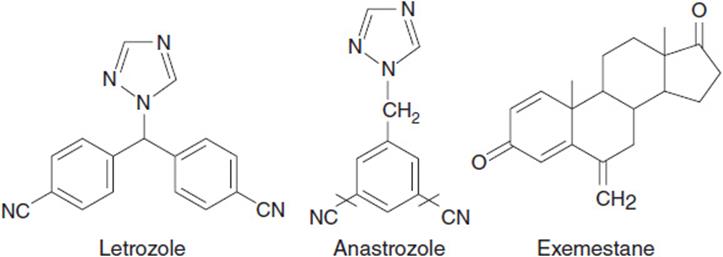
FIGURE 11-3 Chemical structures of aromatase inhibitors.
The recently developed AIs, now in common clinical use, include the type 1 steroidal agent, exemestane, and the type 2 nonsteroidal imidazoles anastrozole and letrozole.
Therapeutic use. Several large randomised trials and meta-analyses have shown that AIs are superior to tamoxifen in the treatment of postmenopausal women with ER positive tumors in the metastatic, adjuvant, and neoadjuvant settings. Currently AIs are used for treatment of ER positive meta-static breast cancer and also as adjuvant therapy for early ER positive breast cancer. In the adjuvant setting they can be used as initial adjuvant therapy, as sequential therapy following 2–3 years of tamoxifen (i.e., switching), or as extended therapy following 4.5–6 years of tamoxifen. They have also been tested in the neoadjuvant setting and in chemoprevention of breast cancer in postmenopausal women at high risk for breast cancer (9).
Clinical toxicity. Tamoxifen and AIs have distinct toxicity profiles. Compared to tamoxifen, AIs cause significantly fewer hot flushes, less vaginal discharge or bleeding, and no evidence for uterine carcinoma. While thromboembolism has been associated with AI use in metastatic advanced breast cancer, it is possible that these events have been related to cancer burden rather than therapy and an excess of thrombotic events has not been confirmed in the adjuvant setting with any of the AIs. However, AIs are associated with an increased incidence of musculoskeletal adverse events such as arthralgia, myalgia, and carpal tunnel syndrome. AIs are associated with hypercholesterolemia, and with a higher incidence of cardiovascular events but only in comparison to tamoxifen, which lowers these events. The cardiovascular event rate for subjects taking an AI is not different than the rate for subjects taking a placebo (10).
Due to profound estrogen depletion and accelerated bone resorption, AIs are associated with increased risk of bone loss, osteoporosis, and bone fracture. Currently, most guidelines for postmenopausal patients taking AIs recommend regular monitoring of BMD, supplemental vitamin D and calcium, and initiation of bisphosphonates only after BMD declines to a high risk threshold (e.g., T score 2.5) or if a clinical fracture occurs (11).
Anastrozole
Mechanism of action. Anastrozole, like letrozole, binds competitively and specifically to the heme of the cytochrome p450 subunit of the aromatase enzyme. Anastrozole 1 mg administered once daily for 28 days reduces androgen aromatization by 96.7%. In addition, anastrozole reduces in situ aromatization in large, ER+ breast tumors. Anastrozole has no clinically significant effect on rates of adrenal glucocorticoid synthesis in postmenopausal women, or on plasma concentrations of luteinising hormone or follicle-stimulating hormone and thyroid hormone.
Absorption, fate, and excretion. Anastrozole is absorbed rapidly after oral administration with maximal plasma concentrations occurring after 2 h. A high-fat meal increases absorption. Repeated dosing increases plasma concentrations of anastrozole and steady state is attained after 7 days. It has a plasma half-life of 39–62 h. Anastrozole is slowly metabolized by hepatic N-dealkylation, hydroxylation, and glucuronidation. The main metabolite is an inactive triazole. Less than 10% of the drug is excreted as the unmetabolized parent compound (12).
Therapeutic uses. Anastrozole (Arimidex®) 1 mg is administered once daily orally. Anastrozole is used for (5):
• treatment of postmenopausal women with advanced, hormone-receptor positive breast cancer until disease progression.
• adjuvant treatment of postmenopausal breast cancer: as initial adjuvant therapy for 5 years or as sequential therapy, following 2–3 years of tamoxifen.
Letrozole
Mechanism of action. In postmenopausal women, letrozole inhibits aromatization throughout the body and reduces in situ aromatization within breast cancers. The drug has no significant effect on the synthesis of adrenal corticoids, aldosterone, or thyroid hormone, and does not alter levels of a range of other hormones.
Absorption, fate, and excretion. Letrozole is rapidly absorbed after oral administration, and the maximum plasma levels are reached about 1 h after ingestion. Steady-state plasma concentrations of letrozole are reached after 2–6 weeks on treatment. Following metabolism by CYP2A6, and CYP3A4, letrozole is eliminated as an inactive carbinol metabolite in the urine. The elimination half-life is about 40–42 h (13).
Therapeutic uses. Letrozole (Femara®) 2.5 mg is administered orally once daily. Letrozole is used for (5):
• treatment of postmenopausal women with advanced, hormone-receptor positive breast cancer until disease progression.
• adjuvant treatment of postmenopausal breast cancer for 5 years or for 2–3 years following 2–3 years of tamoxifen.
• adjuvant treatment of postmenopausal breast cancer for 5 years following 4.5–6 years of tamoxifen.
Exemestane
Mechanism of action. Exemestane is a potent, orally administered analog of the natural substrate androstenedione. In contrast to the reversible competitive inhibitors, anastrozole, and letrozole, exemestane irreversibly inactivates the enzyme complex (a suicide substrate). Doses of 25 mg per day inhibit aromatase activity by 98% and lower estrone and estradiol levels in plasma by about 90%.
Absorption, fate, and excretion. Exemestane is rapidly absorbed from the gastrointestinal tract reaching maximum plasma levels after 2 h. Its absorption is increased by 40% after a high fat meal. Exemestane has a terminal half-life of approximately 24 h. It is extensively converted in the liver to metabolites inactive against aromatase. A key metabolite, 17-hydroxyexemestane, has weak androgenic activity, which might contribute to antitumor activity and androgenic end-organ effects. Excretion is distributed almost equally between the urine and feces. Since significant quantities of active metabolites are excreted in the urine, doses of exemestane should be adjusted in patients with renal dysfunction (14).
Therapeutic uses. Exemestane 25 mg is administered orally once daily. Exemestane is used for (5):
• treatment of postmenopausal women with advanced, hormone-receptor positive breast cancer until disease progression.
• treatment of postmenopausal women with advanced, hormone-receptor positive breast cancer after failure of a nonsteroidal inhibitor.
• adjuvant treatment of postmenopausal breast cancer: as sequential therapy, following 2–3 years of tamoxifen or as initial adjuvant therapy for 5 years.
• prevention of breast cancer for high-risk postmenopausal women (15), although the drug is not yet approved for this indication.
GnRH agonist
Mechanism of action. Ovarian ablation (OA) is an effective therapy for premenopausal women with ER+ breast cancer. In premenopausal women, where ovaries are the predominant source of estrogen, OA can be accomplished by oophorecotmy or ovarian irradiation. More recently, chemical suppression of ovarian estrogene production with the gonadotropin-releasing hormone (GnRH) analogues is being used. The majority of breast cancer patients are treated with goserelin or leuprolid (16).
For more details on GnRH agonist mechanisms of action, please refer to the Chapter 12 on antiandrogen therapy.
Absorption, fate, and excretion. Following subcutaneous administration of goserelin, the absorption is rapid and the peak blood concentration occurs between 0.5 and 1.0 h after dosing. Goserelin is released from the depot at a much slower rate initially for the first 8 days, and then there is more rapid and continuous release for the remainder of the 28-day dosing period.
Clearance is very rapid and occurs via a combination of hepatic metabolism and urinary excretion. More than 90% of goserelin is excreted in urine. No dose adjustment is necessary for patients with renal of hepatic impairment (16).
Clinical toxicity. The most common side effects of GnRH are hot flashes, vaginal dryness, increased sweating, decreased sexual interest, headaches, and mood changes. The use of GnRH agnostic may cause a reduction in BMD and osteoporosis.
Due to tumor flare, transient worsening of symptoms of breast cancer may develop during the first few weeks of treatment (16).
Therapeutic uses (5). GnRH analogues are usually administered subcutaneously into the anterior abdominal wall below the navel line. Goserelin 3.6 mg is administered every 28 days. Leuprolide is available at various doses and schedules (leuprolide 3.75 mg monthly, leuprolide 11.5 mg every 3 month).
GnRH analogues are used for treatment of premenopausal women with ER+ breast cancer. Their role in protection of the ovaries of women with cancer who are undergoing chemotherapy is being investigated.
In the metastatic setting, GnRH analogues can be used as monotherapy or in combination with antiestrogens (tamoxifen or aromatase inhibitors). The combination of LHRH agonist with tamoxifen appears to be more effective than GnRH alone (17).
In the adjuvant setting, GnRH analogues have been tested alone or in combination with antiestrogens or with chemotherapy. The currently published clinical trials have shown clinical benefit of GnRH. However, comparisons against current clinical standards of care (anthracycline-and/or taxane-based chemotherapy, aromatase inhibitors) are needed before GnRH analogues can be routinely used in the adjuvant treatment of premenopausal women with ER+ early breast cancer (18).
Endocrine resistance. Although antagonizing estrogen is among the most effective breast cancer treatment, a significant proportion of patients experience disease progression due to either de novo (no response to treatment) or acquired (initial response followed by progression during treatment) resistance to endocrine therapy. Endocrine resistance may occur through multiple mechanisms due to “escape” pathways.
Current concepts and approaches to overcoming endocrine resistance are described below (19).
1. Loss or inactivation of ER or ER pathway
Downregulation or complete loss of ER occurs in approximately 20% of patients treated with endocrine therapy, and such tumors are no longer driven by estrogens.
Changes in the proteins that form the transcription initiation complexes with the ER can influence effectiveness of endocrine therapy. For example, overexpression of ER coactivator AIB1 (also called SRC3), downregulation of corepressor NCoR, or increased activity of transcriptional factors (AP-1, SP-1, and NF-kB) are associated with endocrine resistance.
2. Alteration of cell cycle and apoptosis regulators
Preclinical data show that alteration of cell cycle and apoptosis regulators may impact sensitivity to endocrine treatment. In some cases upregulation of positive regulators of the cell cycle and/or downregulation of negative regulators lead to hormonal therapy resistance (19).
3. Dysregulation of membrane tyrosine kinase receptors
The ER signaling pathway is also regulated by membrane tyrosine kinase receptors. Dysregulation of tyrosine kinase receptors (RKTs) and their downstream signaling pathways can confer resistance to hormonal therapy. For example, overexpression and/or amplification of RKTs such as epidermal growth factor (EGFR), HER2, and insulin-like growth factor (IGF1-R) result in phosphorylation of ER and its coregulators leading to activation of ER in the absence of estrogen. In other cases, deregulation of intracellular signaling elements, such as activating alterations in the PI3 kinase pathway, including mutation of phosphatidylinositol 3-kinase itself, loss of heterozygosity or methylation of the tumor suppressor PTEN gene, and activation of AKT, promotes oncogenic transformation.
In recent years many targeted drugs that inhibit specific pathways have been developed in order to overcome endocrine resistance.
Some clinical trials investigating the combination of endocrine therapy with agents targeting EGFR (gefitinib, erlotinib), HER2 (trastuzumab), or both EGFR and HER2 (lapatinib) receptors have yielded inconclusive results. More promising results come from clinical studies that have focused on novel agents, targeting downstream signaling pathways, such as mTOR. Two randomized trials (BOLERO-2 and TAMRAD) evaluating everolimus with or without endocrine therapy in a selected subgroup of HR-positive metastatic breast cancer patients have demonstrated significant improvement in progression-free survival for the combination. Everolimus was recently approved for treatment of hormone-receptor positive metastatic breast cancer in combination with exemestane in patients progressing on either letrozole or anastrozole (20).
Animal models have illustrated that resistance to endocrine therapy can be induced by chronic endocrine therapy, and preliminary data in humans have suggested that AI withdrawal or intermittent AI therapy may produce clinical advantage (21).
REFERENCES
1. Lawrence BR, Lynn C, Hartmann LC. Selective estrogen receptor modulators–mechanism of action and application to clinical practice. N Engl J Med. 2003; 348: 618–629.
2. EBCTCG. Effects of chemotherapy and hormonal therapy for early breast cancer on recurrence and 15-year survival: an overview of the randomised trials. Lancet. 2005; 365: 1687–1717.
3. Regan MM, Leyland-Jones B, Bouzyk M, et al. CYP2D6 genotype and tamoxifen response in postmenopausal women with estrogen-responsive early breast cancer: the Breast International Group 1–98 Trial. J Natl Cancer Inst. 2012; 104: 441–451.
4. Rae JM, Drury S, Hayes DF, et al. CYP2D6 and UGT2B7 genotype and risk of recurrence in tamoxifen-treated breast cancer patients. J Natl Cancer Inst. 2012; 104: 452–460.
5. http://www.nccn.org/professionals/physician_gls/pdf/breast.pdf
6. McCormack P, Sapunar F. Pharmacokinetic profile of the fulvestrant (Faslodex) loading-dose regimen in postmenopausal women with hormone receptor-positive advanced breast cancer. Breast Cancer Res Treat. 2007; 106 (Suppl 1): S116.
7. Di Leo A, Jerusalem G, Petruzelka L, et al. Results of the CONFIRM phase III study comparing fulvestrant 250 mg with fulvestrant 500 mg in postmenopausal women with estrogen receptor-positive advanced breast cancer. J Clin Oncol. 2010; 28: 4594–4600.
8. Vergote I, Robertson JF. Fulvestrant is an effective and well-tolerated endocrine therapy for postmenopausal women with advanced breast cancer: results from clinical trials. Br J Cancer. 2004; 90 (Suppl 1): S11–S14.
9. Strasser-Weippl K, Goss PE. Advances in adjuvant hormonal therapy for postmenopausal women. J Clin Oncol. 2005; 23: 1751–1759.
10. Amir E, Seruga B, Niraula S, et al. Toxicity of adjuvant endocrine therapy in postmenopasual breast cancer patients: a systematic review and meta-analysis. J Natl Cancer Inst. 2001; 103: 1–11.
11. Reid DM, Doughty J, Eastell R et al. Guidance for management of breast cancer treatment-induced bone loss: a consensus position statement from a UK Expert Group. Cancer Treat Rev. 2008; 34: 3–18.
12. Koberle D, Thurlimann B. Anastrozole: pharmacological and clinical profile in postmenopausal women with breast cancer. Expert Rev Anticancer Ther. 2001; 1: 169–176.
13. Lonning PE, Geisler J, Bhatnager A. Development of aromatase inhibitors and their pharmacologic profile. Am J Clin Oncol. 2003; 26: S3–S8.
14. Lonning PE. Pharmacology and clinical experience with exemestane. Expert Opin Invest Drugs. 2000; 9: 1897–1905.
15. Goss PE, Ingle JN, Alés-Martines JE, et al. Exemestane for breast cancer prevention in postmenopausal women. N Engl J Med. 2011; 364: 2381–2391.
16. Kiesel LA, Rody A, Greb RR, Szilagyi A. Clinical use of GnRH analogues. Clin Endocrinol (Oxf). 2002; 56: 677–687.
17. Prowell TM, Davidson NE. What is the role of ovarian ablation in the management of primary and metastatic breast cancer today? The Oncologist. 2004; 9: 507–517.
18. Goel S, Sharma R, Hamilton A, Beith J. LHRH agonists for adjuvant therapy of early breast cancer in premenopausal women. Cochrane Database Syst Rev. 2009; 7: CD004562.
19. Giuliano M, Schiff R, Osborne CK, Trivedi MV. Biological mechanisms and clinical implications of endocrine resistance in breast cancer. Breast. 2011; 20: 42–49.
20. Baselga J, Campone M, Piccart M, et al. Everolimus in postmenopausal hormone-receptor-positive advanced breast cancer. N Engl J Med. 2012; 366: 520–529.
21. Howell A, Dodwell DJ, Anderson H, et al. Response after withdrawal of tamoxifen and progestogens in advanced breast cancer. Ann Oncol. 1992; 3: 611–617.