
Megan Carns
Marla J. Friedman
HIGH-YIELD FACTS
• Gastroesophageal reflux (GER) occurs in two-thirds of normal infants in the first year of life.
• Severe gastroesophageal reflux disease (GERD) may include aspiration pneumonia and acute life-threatening events (ALTEs).
• Complications are most common in children with neurologic impairment and swallowing dysfunction.
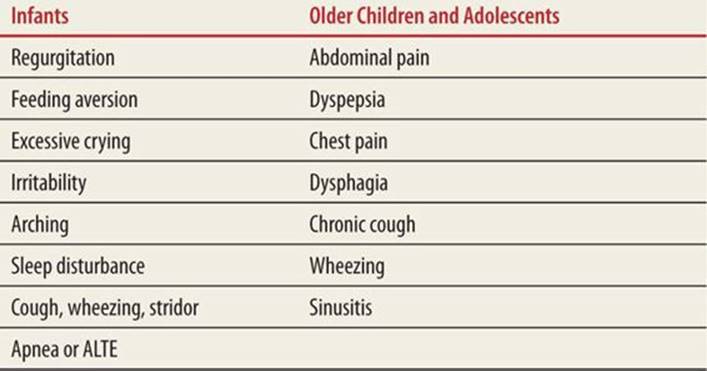
Gastroesophageal reflux (GER) is the most common esophageal disorder in children of all ages and a frequent reason for visits to the pediatric emergency department.1 It is a normal physiological event that occurs when gastric contents pass into the esophagus through transient relaxations in the lower esophageal sphincter (LES).2 While the pathophysiology of GER in infants, children, and adults is similar, the symptoms and clinical presentation can be quite different. (Table 72-1)
|
TABLE 72-1 |
Common Symptoms of Gastroesophageal Reflux |
GASTROESOPHAGEAL REFLUX IN INFANTS
GER is common in neonates, occurring in up to 60% of healthy infants by 6 months of age. There are multiple factors that predispose infants to GER including immaturity of the LES, short intra-abdominal esophagus, and primarily liquid diet. Reflux generally disappears by 1 year of age as the LES matures and solid foods become a large part of the diet.3–5 Only 5% of infants still display symptoms of regurgitation after this timeframe.3
CLINICAL PRESENTATION OF GER IN INFANTS
The great majority of infants with physiologic reflux are “happy spitters.” These infants typically regurgitate small volumes of breast milk or formula after feeding but are relatively unaffected by it. They gain weight appropriately and typically “outgrow” their symptoms by 12 months of age.3,6
A small number of infants will develop complications of reflux, referred to as gastroesophageal reflux disease (GERD). Symptoms of GERD include regurgitation and vomiting, sleep disturbances, irritability, feeding difficulties and/or refusal, and failure to thrive.3,7,8 Most affected infants will display one or more of these symptoms.
Infants with severe GER may develop Sandifer syndrome (spasmodic torsional dystonia), which is characterized by opisthotonus and irritability. The stereotypic stretching and arching movements may be mistaken for seizure activity.3 Excessive crying and arching are caused by painful reflux episodes, and typically occur during or shortly after feeding when gastric acid enters the esophagus. Many infants with this condition will exhibit failure to thrive.
GER may also induce respiratory symptoms in infants including chronic cough, bronchospasm, stridor, and wheezing. In severe cases, aspiration pneumonia may occur. Reflux in infants may also manifest as an acute life-threatening event (ALTE) with respiratory distress and cyanosis.3 This occurs when reflux causes laryngospasm and bronchospasm.
DIFFERENTIAL DIAGNOSIS OF GER IN INFANTS
The main challenge in evaluating infants with symptoms of reflux is distinguishing reflux from true vomiting. Reflux typically occurs during or shortly after feeding and does not involve forceful muscle contraction. Vomiting occurs when stomach contents are forcefully expelled into the esophagus and out of the mouth by contractions of the abdominal and chest wall muscles. While this distinction can be difficult in infants, vomiting should prompt consideration of other diagnoses. Other symptoms that may require further investigation and/or referral to a specialist include bilious emesis, GI bleed, weight loss, diarrhea, abdominal distention, dysphagia, splenomegaly or hepatomegaly, and coexisting seizure disorder.2 Alternative diagnoses may include milk protein allergy, food allergy, eosinophilic esophagitis, stricture, esophageal web, hiatal hernia, pyloric stenosis (Fig. 72-1), intestinal obstruction (malrotation/volvulus), foreign-body ingestion, infection, inborn errors of metabolism, and increased intracranial pressure (Table 72-2).
|
TABLE 72-2 |
Differential Diagnosis of Vomiting in Infants |
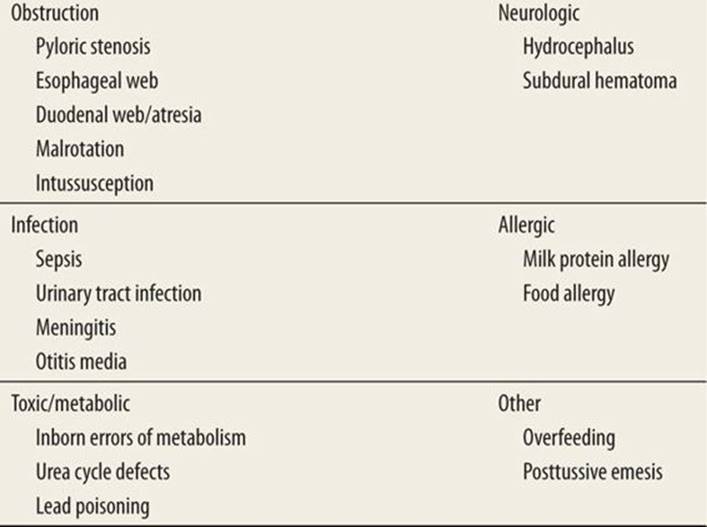
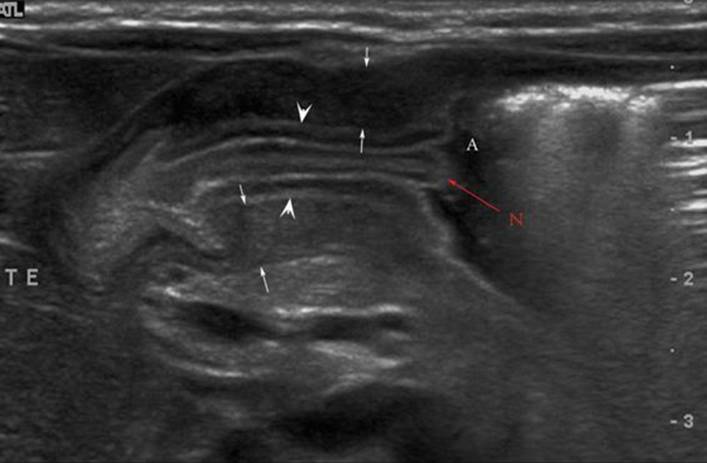
FIGURE 72-1. Abdominal ultrasound image in a 2-month old infant with vomiting shows thickened pyloric muscle consistent with pyloric stenosis. (Reproduced with permission from Knoop K: The Atlas of Emergency Medicine, 3rd ed. McGraw-Hill Professional; 2009.)
EVALUATION OF GER IN INFANTS
The majority of cases of infantile GER can be diagnosed by history and physical examination alone. Extensive workup in the emergency department is not generally indicated unless an anatomic or metabolic abnormality is suspected. The upper gastrointestinal series (UGI) is nonspecific for GER but can identify anatomic abnormalities including vascular rings, esophageal and intestinal webs, strictures, hiatal hernia, pyloric stenosis, and malrotation. Esophageal pH probe monitoring, which measures the duration and frequency of acid reflux events, is considered the gold standard for GER diagnosis, and can be performed in the outpatient setting.2,3
TREATMENT OF GER IN INFANTS
 CONSERVATIVE THERAPY
Conservative therapy is the treatment of choice for mild infantile reflux. Simple alterations in the feeding routine such as smaller, more frequent feeds, repeated burping, and upright positioning during and after feeds may reduce the frequency of reflux.9 Thickening feeds with cereal may also reduce the number of reflux events and increase the infant’s relative sleep time.9,10
ACID SUPPRESSION
If symptoms persist despite these measures, a trial of acid suppression with an H2 receptor antagonist may be warranted. H2 receptor antagonists, which reduce acid in the stomach by blocking the histamine receptor on acid-secreting parietal cells, are recommended as first-line pharmacologic therapy for infants because of their excellent safety profile.1,2,9 H2 blockers such as ranitidine (5–10 mg/kg/day) and famotidine (1–2 mg/kg/day) have successfully been used to treat reflux in infants and young children. Proton pump inhibitors (PPIs) are highly effective antireflux medications that decrease gastric acid secretion by inhibiting the H+K+-ATPase pump.2 While PPIs are commonly prescribed to treat GER in infants, there are limited published clinical trials in this age group. Lansoprazole is approved for use in children >1 year of age at a dose of 15 mg/day. Omeprazole may be used in children >2 years of age at a dose of 10 mg/day. PPIs are not currently labeled by the FDA for use in infants less than 1 year of age.2,9 If they are prescribed “off-label” for refractory cases, the dose should be started at 1 mg/kg/day and titrated upward to 2 mg/kg/day.
PROKINETIC AGENTS
Prokinetic agents such as metoclopramide have been used to treat infantile GER, but their use has decreased in recent years. There is insufficient evidence to support their use in simple GER, and they should not be used as first-line therapy. These agents are associated with side effects, such as dystonic reactions, and should only be used under the supervision of a specialist.2
GER IN CHILDREN AND ADOLESCENTS
CLINICAL PRESENTATION
The prevalence of GERD has been estimated to be 10% to 20% in Western adult populations. The prevalence of GER in the pediatric population has not been well studied; however, there is evidence that the prevalence of GER in the pediatric population may be rising.2
In older children, GER may present with epigastric abdominal pain, dyspepsia, chest pain, dysphagia, weight loss, and vomiting.2 Older children may also have extraesophageal symptoms including chronic cough, dental erosions, laryngitis, and stridor.2,11,12 In children with asthma, GER may precipitate bronchospasm and wheezing.
DIFFERENTIAL DIAGNOSIS OF GER IN CHILDREN AND ADOLESCENTS
Diagnoses to consider in the older child with chronic vomiting include increased intracranial pressure, rumination, bulimia, and intestinal obstruction. The differential diagnoses for children with epigastric pain and dysphagia should also include peptic ulcer disease, achalasia, hiatal hernia, esophageal stricture, infectious esophagitis, and eosinophilic esophagitis.2
EVALUATION OF GER IN CHILDREN AND ADOLESCENTS
As with infants, the majority of cases of GER in older children can be diagnosed by history and physical examination alone. In typical GER, an empiric 4-week trial of acid suppression may be the most simple and definitive test.2GER symptoms usually respond to treatment with PPIs within 1 to 2 weeks.11 Treatment may be extended for 2 to 3 months if symptoms are improving. If symptoms recur, consultation with a pediatric gastroenterologist is warranted. When anatomic abnormalities are suspected, UGI, barium swallow, or ultrasound may be helpful. Additional testing, including esophageal pH monitoring, multiple intraluminal impedance monitoring and upper endoscopy can be performed on an outpatient basis if warranted.2 Endoscopy is considered the gold standard to document mucosal injury and esophagitis as it can help identify the sequelae of longstanding reflux such as esophageal strictures and Barrett esophagitis.
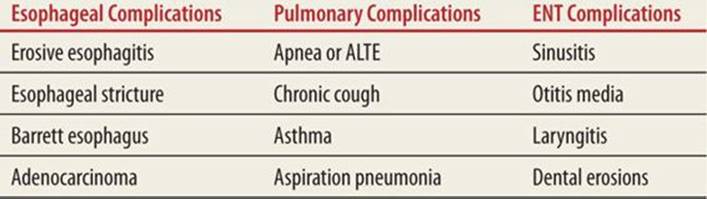
Children with reflux may develop both esophageal and extraesophageal complications of GERD (Table 72-3). Complications are most common in children with neurologic or neuromuscular impairment and swallowing dysfunction. Additional risk factors include prematurity, esophageal atresia, genetic conditions, congenital diaphragmatic hernia, chronic lung disease, cystic fibrosis, scleroderma, obesity, and strong family history of GERD.2,12
|
TABLE 72-3 |
Complications of Gastroesophageal Reflux |
TREATMENT OF GER IN CHILDREN AND ADOLESCENTS
The goals of treatment in pediatric GER are elimination of symptoms, mucosal healing, prevention of complications, and maintenance of remission.1,11 Treatment options include conservative therapy with lifestyle modifications, pharmacologic therapy with acid suppression, and surgical management.
CONSERVATIVE THERAPY
Dietary and lifestyle modifications may help reduce the symptoms of GER in older children and adolescents. Weight loss along with simple dietary changes, such as avoidance of caffeine, chocolate, carbonated beverages, fatty and spicy foods, and citrus fruits may reduce the frequency of symptoms. Limiting alcohol and smoking has also been shown to diminish reflux symptoms.2
PHARMACOLOGIC THERAPY
In children with mild or infrequent symptoms of GER, antacids and H2 receptor antagonists may be sufficient for treating symptoms. H2 receptor antagonists are considered first-line therapy for young children with GER due to their excellent safety profile, but PPIs are quickly becoming the mainstay of pharmacologic management of GER in older children and adolescents.2,11 H2 blockers such as ranitidine (150 mg twice a day) and famotidine (20 mg twice a day) have been successfully used in older children and adolescents. PPI dosing in children is weight based: for children weighing >30 kg, the lansoprazole dose is 30 mg/day (15 mg/day if <30 kg). The omeprazole dose is 20 mg/day for children weighing >20 kg (10 mg/day if <20 kg). Numerous randomized control trials have shown that PPIs are superior to H2 receptor antagonists in healing esophagitis and maintaining remission in adults.2,13,14 Much less data exists on the safety and efficacy of PPIs in children; however, case studies have demonstrated symptomatic and endoscopic improvement with PPIs use in this age group. Studies do suggest that PPI use in children is safe and efficacious.2
SURGICAL THERAPY
Antireflux surgery may be required in children with severe GERD who fail medical management and who develop serious complications of reflux. The most common antireflux surgical procedure is the fundoplication in which the fundus of the stomach is either partially or completely wrapped around the esophagus just above the gastroesophageal junction. This wrap acts to increase the pressure of the LES, accentuate the angle of His, tighten the crura, and elongate the intra-abdominal portion of the esophagus. It does not improve underlying dysmotility or clearance time. As there are high failure rates and morbidities associated with this procedure, thorough investigation into the cause of the patient’s symptoms should be undertaken before operation.2 Other treatment modalities should be attempted and the cause of the patient’s reflux symptoms should be thoroughly investigated prior to surgery.
ACKNOWLEDGMENT
The authors would like to thank the previous authors of this chapter, Jamie N. Deis and Thomas J. Abramo, for their contribution to this work.
REFERENCES
1. Chawla S, Seth D, Mahajan P, Kamat D. Gastroesophageal reflux disorder: A review for primary care providers. Clin Pediatr. 2006;45:7–13.
2. Carroll MW, Jacobson K. Gastroesophageal Reflux Disease in Children and Adolescents: When and How to Treat. Pediatr Drugs. 2012;14(2):79–89.
3. Blanco FC, Davenport KP, Kane TD. Pediatric gastroesophageal reflux disease. Surg Clin N Am. 2012;92:541–558.
4. Vandenplas Y, Hassall E. Mechanisms of gastroesophageal reflux and gastroesophageal reflux disease. J Pediatr Gastroenterol Nutr. 2002;35(2):119–136.
5. Omari TI, Miki K, Fraser R, et al. Esophageal body and lower esophageal sphincter function in healthy premature infants. Gastroenterology. 1995;109(6):1757–1764.
6. Nelson SP, Chen EH, Syniar GM, Christoffel KK. Prevalence of symptoms of gastroesophageal reflux during infancy: a pediatric practice-based survey: Pediatric Practice Research Group. Arch Pediatr Adolesc Med.1997;151:569–572.
7. Feranchak AP, Orenstein SR, Cohn JF. Behaviors associated with onset of gastroesophageal reflux episodes in infants. Prospective study using splitscreen video and pH probe. Clin Pediatr.1994;33(11):654–662.
8. Hart JJ. Pediatric gastroesophageal reflux. Am Fam Physician. 1996;54(8):2463–2472.
9. Smith TJ, Ziegler J, Gladson BH. Pediatric gastroesophageal reflux disease. Top Clin Nutr. 2009;24(2):114–121.
10. Orenstein SR, Magill HL, Brooks P. Thickening of infant feedings for therapy of gastroesophageal reflux. J Pediatr. 1987;110(2):181–186.
11. Richter JE. The many manifestations of gastroesophageal reflux disease: presentation, evaluation, and treatment. Gastroenterol Clin North Am. 2007;36:577–599.
12. Michail S. Gastroesophageal reflux. Pediatr Rev. 2007;28:101–110.
13. Van Pinxteren B, Numans ME, Bonis PA, Lau J. Short term treatment with proton pump inhibitors, H2RAs and prokinetics for gastro-oesophageal reflux disease-like symptoms and endoscopy negative reflux disease. Cochrane Database Syst Rev. 2004;3:CD002095.
14. Donnellan C, Sharma N, Preston C, Moayyedi P. Medical treatments for the maintenance therapy of reflux oesophagitis and endoscopic negative reflux disease. Cochrane Database Syst Rev.2004;3:CD003245.