
Approach to the Problem
Preauricular pits, sinuses, and tags are not unusual in the pediatric population and are often an incidental physical exam finding. Ear tags are flesh-colored appendages, and ear pits are small indentations, both most commonly located anterior and adjacent to the external ear. An ear pit may be the outermost sign of a sinus tract, which can be of variable length and may ultimately lead to the formation of a subcutaneous cyst. The prevalence of preauricular anomalies varies depending upon geographic location, ranging from 0.3% to 5% of the population, with the highest incidence in some areas of Asia and Africa. They may be sporadic or inherited, and bilateral findings are more commonly of the inherited type. When other craniofacial or physical anomalies are present, it is crucial to evaluate for genetic syndromes in which ear malformations are common, such as Treacher–Collins, Goldenhar, or Branchio-Oto-Renal (BOR) syndromes (see “Other Diagnoses to Consider” for complete list).
An isolated, asymptomatic preauricular pit, sinus, or tag requires no intervention. In contrast, a preauricular sinus that develops erythema, pain, swelling, or discharge due to acute infection should be treated with appropriate antibiotics, and recurrent or persistent infection requires surgical excision. While preauricular anomalies are generally benign conditions, a potential association with hearing loss and renal abnormalities exists. A number of studies show that children with preauricular anomalies may be at increased risk of hearing loss, particularly those with preauricular pits and tags as part of a syndrome. The evidence is inconclusive regarding the increased risk of renal anomalies in children with isolated preauricular sinuses, pits, and tags in the absence of a syndrome. Current guidelines suggest screening with renal ultrasound for children with preauricular anomalies only if they are associated with other malformations or dysmorphic features, a family history of deafness or auricular or renal malformations, or a maternal history of gestational diabetes.
Key Points in the History
• Preauricular pits and sinuses are generally asymptomatic but if infected, may present with swelling, pain, erythema, and discharge. A history of recurrent infection may warrant surgical intervention.
• Preauricular anomalies are often inherited, so family history is important to obtain. When inherited, the pattern is of incomplete autosomal dominance with reduced penetrance and variable expression. Bilateral preauricular pits and sinuses are more likely to be inherited than unilateral ones.
• While most ear pits and tags are incidental findings, they may be associated with genetic syndromes, so it is important to inquire about a history of other physical anomalies.
• Family and personal history of hearing loss must be obtained as preauricular pits and sinuses may be associated with a higher incidence of hearing impairment.
Key Points in the Physical Examination
• Ear pits are small indentations located adjacent to the external ear, most often anterior to the helix, but may occur along the posterior margin of the helix, tragus, or ear lobe.
• A preauricular indentation may be the outermost sign of a sinus tract, which may branch or follow a tortuous route, and may ultimately lead to the formation of a cyst.
• Ear tags are flesh-colored appendages that may consist of skin, subcutaneous fat, and/or cartilage and are often located anterior to the tragus.
• Preauricular pits or sinuses may be unilateral, but 25% to 50% are bilateral. When unilateral, they are more commonly found on the right side.
• Since ear pits and tags may be associated with congenital anomalies, a close examination for other physical malformations is warranted.
• BOR syndrome consists of preauricular pits, structural defects of the outer, middle, and inner ear associated with hearing loss, branchial cleft cysts or sinuses, and renal anomalies.
• Oculo-auriculo-vertebral spectrum, which includes Hemifacial Microsomia and Goldenhar syndrome, consists of preauricular tags, hypoplasia of one side of the face, cervical vertebral malformations, and other findings.
• Erythema, tenderness, edema, or discharge at the site of a preauricular pit or sinus may indicate infection.
• A branchial cleft cyst/sinus/fistula, which may present as an opening anywhere from the external auditory canal to the angle of the mandible, must be differentiated from a preauricular pit or sinus.
|
PHOTOGRAPHS OF SELECTED DIAGNOSES |
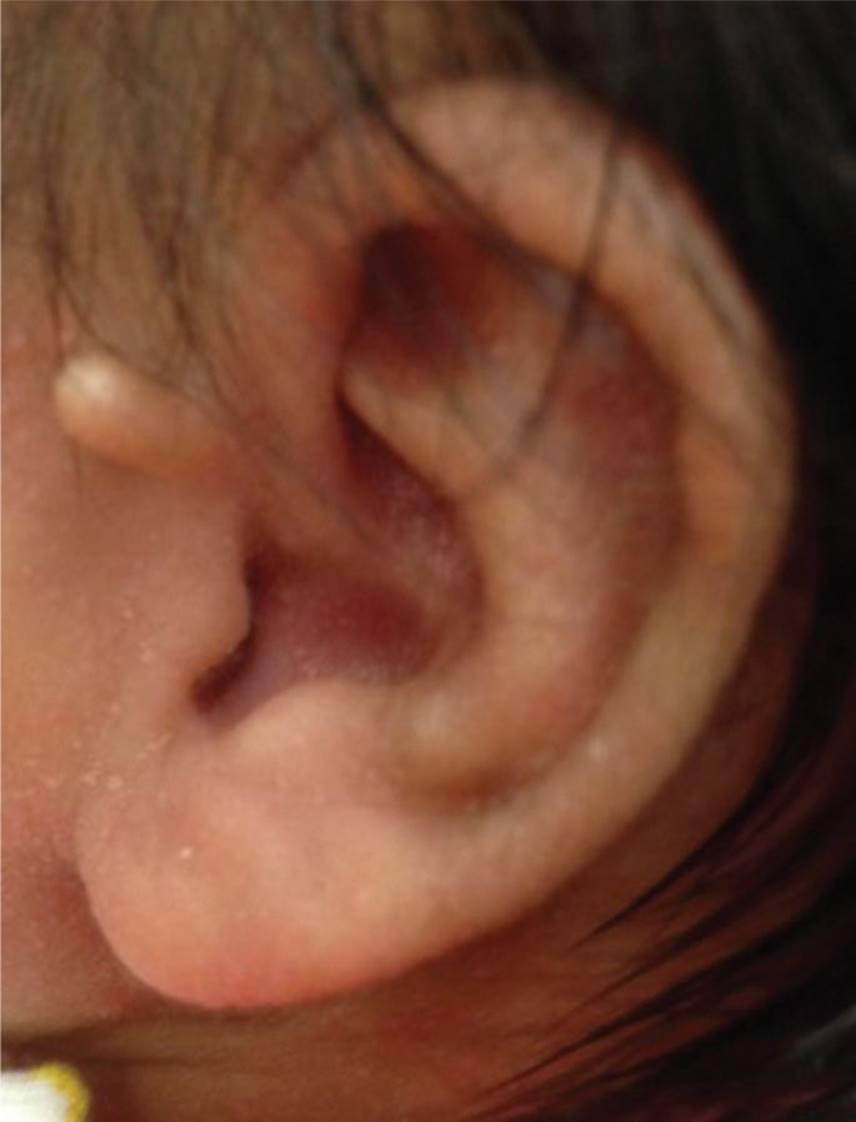
Figure 19-1 Preauricular tag in an infant. (Courtesy of Risa Yavorsky, MD.)

Figure 19-2 Multiple preauricular tags in a child with oculoauriculovertebral spectrum disorder. (Courtesy of David Tunkel, MD.)

Figure 19-3 Preauricular pit. Note how the hairline can obscure visualization. (Courtesy of David Tunkel, MD.)

Figure 19-4 Auricular sinus on the inferior crus of the pinna. (Courtesy of David Tunkel, MD.)
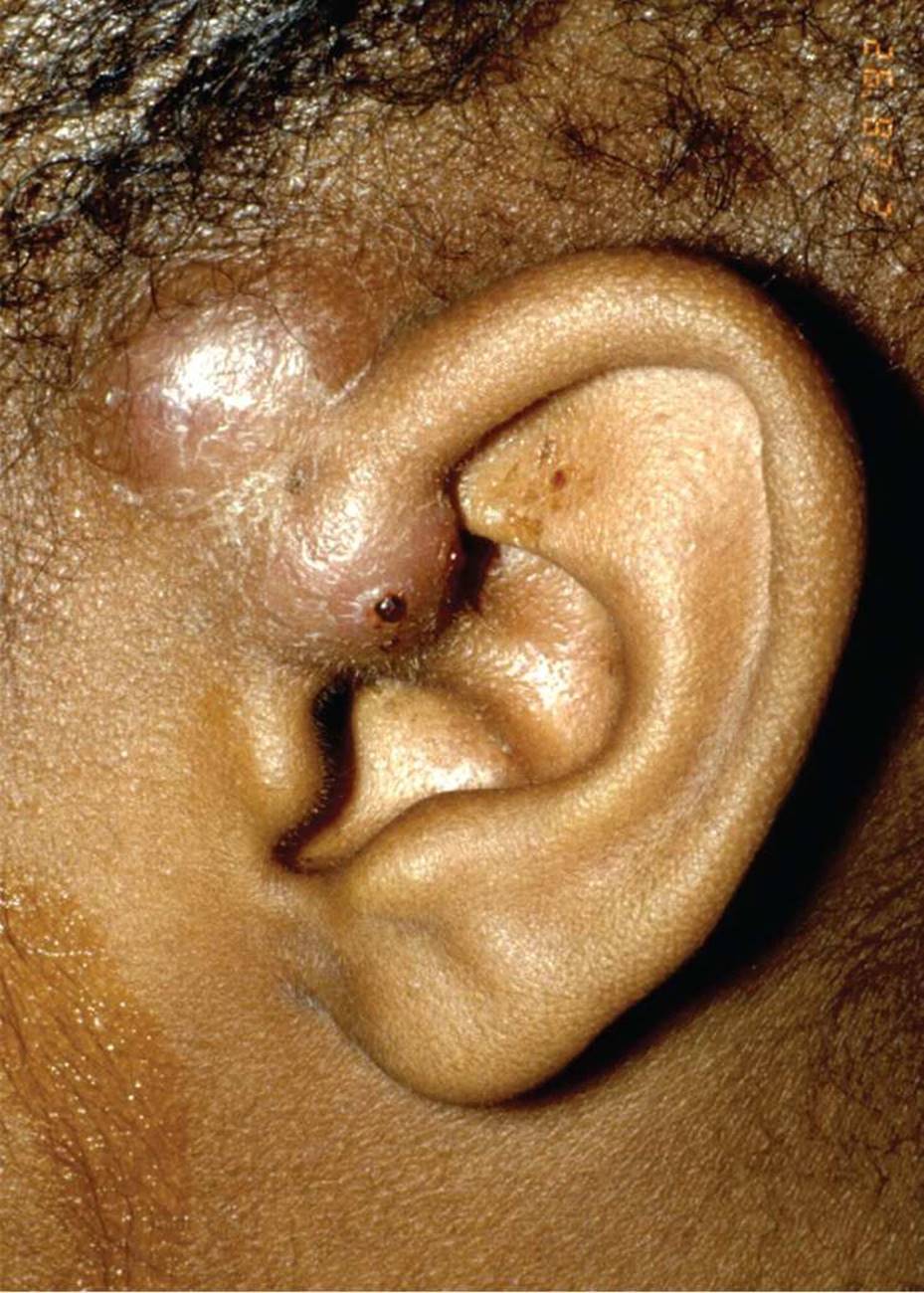
Figure 19-5 Infected preauricular sinus. The swelling nearly obscures identification of the offending sinus tract opening. (Courtesy of David Tunkel, MD.)

Figure 19-6 Infected auricular pit on the inferior crus. Note erythema and edema. (Courtesy of David Tunkel, MD.)

Figure 19-7 Preauricular abscess. (Courtesy of Steven D. Handler, MD, MBE.)
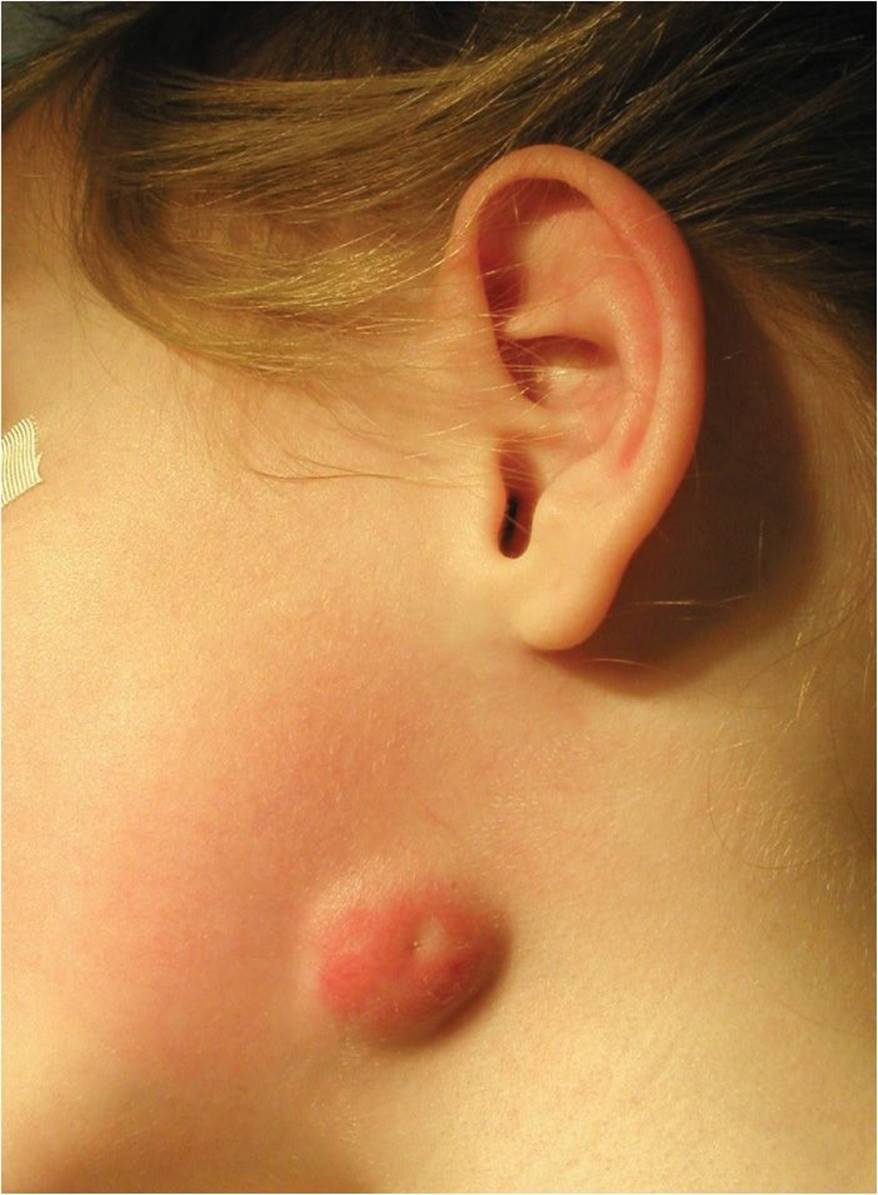
Figure 19-8 First branchial cleft sinus. This lesion must be considered in the differential diagnosis of a preauricular pit or sinus. (Courtesy of David Tunkel, MD.)
DIFFERENTIAL DIAGNOSIS

Other Diagnoses to Consider
• Body piercing
• Ear trauma
• Genetic syndromes with associated ear anomalies:
• Beckwith–Wiedemann syndrome
• BOR syndrome and other less common variants
• CHARGE association
• Diabetic embryopathy
• Ectodermal dysplasia
• Oculo-auriculo-vertebral spectrum (including Goldenhar syndrome and Hemifacial Microsomia)
• Treacher–Collins syndrome
• Trisomy 22 (mosaicism or complete)
• Waardenburg syndrome
• Wolf–Hirschhorn syndrome
When to Consider Further Evaluation or Treatment
• An isolated, asymptomatic preauricular sinus, pit, or tag requires no intervention.
• Preauricular tags may be removed for cosmetic reasons. If small and associated with a thin stalk, they are often tied off shortly after birth for this purpose. Removal of larger ear tags should be performed by an otolaryngologist or plastic surgeon for optimal cosmetic results and to avoid complications.
• Acute infection of a preauricular pit or sinus should be treated with antibiotics covering for staphylococcus, and less frequently proteus, streptococcus, or peptococcus.
• Recurrent or persistent infection requires surgical excision of the sinus, its tract, and the cartilage at the root of the helix. Incomplete excision can lead to recurrence of the preauricular sinus. For optimal outcomes, excision should be performed by an otolaryngologist.
• Screening with renal ultrasound is recommended if the preauricular anomaly is associated with another malformation or dysmorphic feature, a maternal history of gestational diabetes, or a family history of deafness and auricular or renal malformations.
• When other craniofacial or physical anomalies are present, it is crucial to evaluate for more complex genetic syndromes associated with ear malformations.
• In the case of a first branchial cleft cyst/sinus/fistula, due to the proximity to the facial nerve and the parotid gland, imaging and referral to otolaryngology or plastic surgery are required for further management.
SUGGESTED READINGS
Firat Y, Sireci S, Yakinci C, et al. Isolated preauricular pits and tags: Is it necessary to investigate renal abnormalities and hearing impairment? Eur Arch Otorhinolaryngol. 2008;265:1057–1060.
Gan EC, Anicete R, Tan H, et al. Preauricular sinuses in the pediatric population: Techniques and recurrence rates. Int J Pediatr Otorhinolaryngol. 2013;77:372–378.
Huang XY, Tay GS, Wansaicheong GK, et al. Preauricular sinus. Arch Otolaryngol Head Neck Surg. 2007;133:65–68.
McArdle AJ, Shroff R. Is ultrasonography required to rule out congenital anomalies of the kidneys and urinary tract in babies with isolated preauricular tags or sinuses? Arch Dis Child. 2013;98:84–87.
Roth DA, Hildesheimer M, Bardenstein S, et al. Preauricular skin tags and ear pits are associated with permanent hearing impairment in newborns. Pediatrics. 2008;122:e884–e890.
Scheinfeld NS, Silverberg NB, Weinberg JM, et al. The preauricular sinus: A review of its clinical presentation, treatment and associations. Pediatr Dermatol. 2004;21(3):191–196.
Tan T, Constantinides H, Mitchell TE. The preauricular sinus: A review of its aetiology, clinical presentation and management. Int J Pediatr Otorhinolaryngol. 2005;69:1469–1474.