
Approach to the Problem
Clinicians who care for pediatric and adolescent patients know that the complaint of perianal swelling is common, and it encompasses a broad spectrum of pathologic processes. Most perianal conditions are benign and are managed by topical treatments. Sometimes, however, perianal swelling can be associated with systemic illness, such as inflammatory bowel disease. Perianal conditions may present with masses, rectal pain, bleeding, and/or itching, all of which can make the exact diagnosis challenging. Reviewing the patient’s history and bowel habits, making note of associated symptoms, and performing a physical examination of the relevant anatomy can often lead to the proper diagnosis and treatment.
Key Points in the History
• Perianal abscesses are one of the most common pediatric disorders of the perineum.
• Abscesses are often classified according to their location in relation to the levator ani and external anal sphincter. The perianal site is the most common.
• Perianal abscesses often arise from the crypts located at the dentate line.
• An early sign of an abscess is an indurated and tender area at the perineum. Oftentimes an infant’s constant crying or irritability that is worse with diaper changes is the presenting symptom. Erythema can be present, but is not universal. A digital rectal examination can identify the abscess in most patients.
• A pilonidal abscess is an inflammation in the sacrococcygeal region, is often midline, and is sometimes associated with a draining sinus tract. The abscess may begin at the site of an ingrown hair follicle, located 1 to 2 inches above the anus.
• Rupture of an abscess can lead to the formation of a fistula with persistent drainage. With an abscess or fistula, clinicians should consider associated disease, particularly in older children and adolescents.
• Fifteen percent of patients with Crohn disease will present with perianal abscesses or fistulas. In addition, other systemic conditions such as diabetes, chronic granulomatous disease, neutropenia, leukemia, HIV, as well as immunosuppressive therapy may initially present with a perianal abscess.
• Most cases of rectal prolapse, hemorrhoids, perianal fissures, and skin tags are caused by functional constipation. These conditions are often associated with a history of painful defecation associated with large, hard stools. Rectal prolapse, more common in boys, may also be associated with the diagnoses of chronic diarrhea, intestinal parasites, cystic fibrosis, and malnutrition.
• Patients with a history of blood-streaked stool, blood-streaked toilet paper, or frank blood in the toilet, may have a perianal fissure and/or internal hemorrhoids.
• Hemorrhoids are varices of the perirectal venous plexus. Small asymptomatic hemorrhoids are more common in children. Symptomatic hemorrhoids are not very common in the pediatric age group; however, when present, they can cause bleeding, prolapse, discomfort/pain, fecal soiling, and pruritus.
• External hemorrhoids involve the skin of the anus, and the innervation is associated with the skin. Acute pain and bleeding sometimes occurs when external hemorrhoids are infected.
• Internal hemorrhoids are located under the rectal mucosa and can be associated with hematochezia. When present, internal hemorrhoids may be associated with portal hypertension.
• A thrombosed external hemorrhoid may cause a throbbing, burning pain at the end of defecation, and is often associated with a new bulge or swelling in the anal region.
• Skin tags are often asymptomatic and may be a remnant of a healed fissure (sentinel skin tag), or a previous thrombosed external hemorrhoid. They can also be associated with chronic itching, or problems with hygiene.
• Chronic fissures with large skin tags should raise concern for a possible diagnosis of Crohn disease.
• Human papillomavirus (HPV) causes anogenital warts that are called condyloma acuminata. Most infections are subclinical and the most common manifestations are benign skin lesions. However, the presence of genital warts should raise concern for sexual abuse in children, and HIV infection in adolescent males who have sex with men.
• Anogenital warts can be passed transplacentally, vertically through the birth canal, or via autoinoculation from an HPV lesion on the hands.
Key Points in the Physical Examination
• A perianal abscess is a localized, indurated, tender area visualized at any site around the anal verge. If not visualized, digital examination may reveal an indurated and tender mass.
• Other perianal abscess locations, such as the ischioanal area, may reveal a large, visible fluctuant and tender mass on the buttocks, or a completely normal examination.
• Pilonidal abscess often occurs at the site of an ingrown hair follicle and presents as a boil at the sacral midline 1 to 2 cm above the anus. Often there are accompanying draining sinus tracts or fistulas.
• Patients suspected of having an anal fissure should be placed in a lateral decubitus position for the physical examination. Anal fissures are a superficial split in the skin around the anus, with sharply demarcated edges. More commonly, anal fissures are in the midposterior position, with some occurring in the midanterior position. Fissures located in other positions should raise concerns for inflammatory bowel disease, occult abscesses and infections (e.g., herpes simplex virus or syphilis). Chronic fissures are indurated and are often associated with a sentinel skin tag.
• Rectal prolapse is an abnormal protrusion of one or more mucosal layers of the rectum through the anal opening. Complete rectal prolapse (procidentia) is the most common presentation, and has the appearance of concentric rings of rectal mucosa herniating through the anus.
• External hemorrhoids can be flesh colored, erythematous or bluish (if thrombosed) masses, and are located at the anal opening. Thrombosed hemorrhoids are often firm and painful.
|
PHOTOGRAPHS OF SELECTED DIAGNOSES |
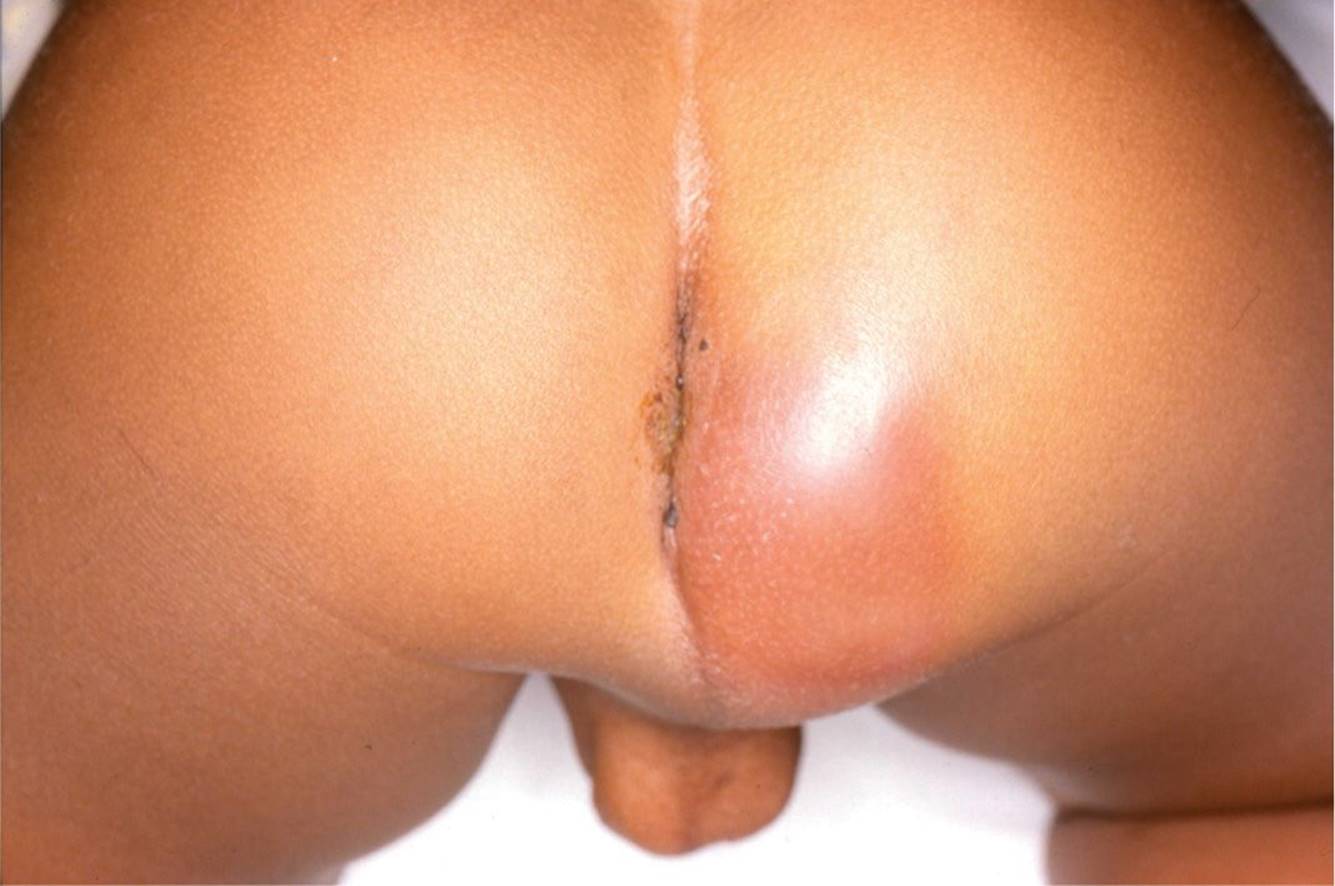
Figure 59-1 Perianal abscess. A 12-month-old male infant presenting with a perirectal mass. (Courtesy of Mark A. Ward, MD.)

Figure 59-2 Rectal prolapse seen in a male infant. (Courtesy of Mary L. Brandt, MD.)

Figure 59-3 Rectal prolapse. Concentric rings of rectal mucosa (all the layers of the rectum) are seen herniating through the anus, indicating a complete prolapse. (Courtesy of Fernando L. Heinen, MD.)
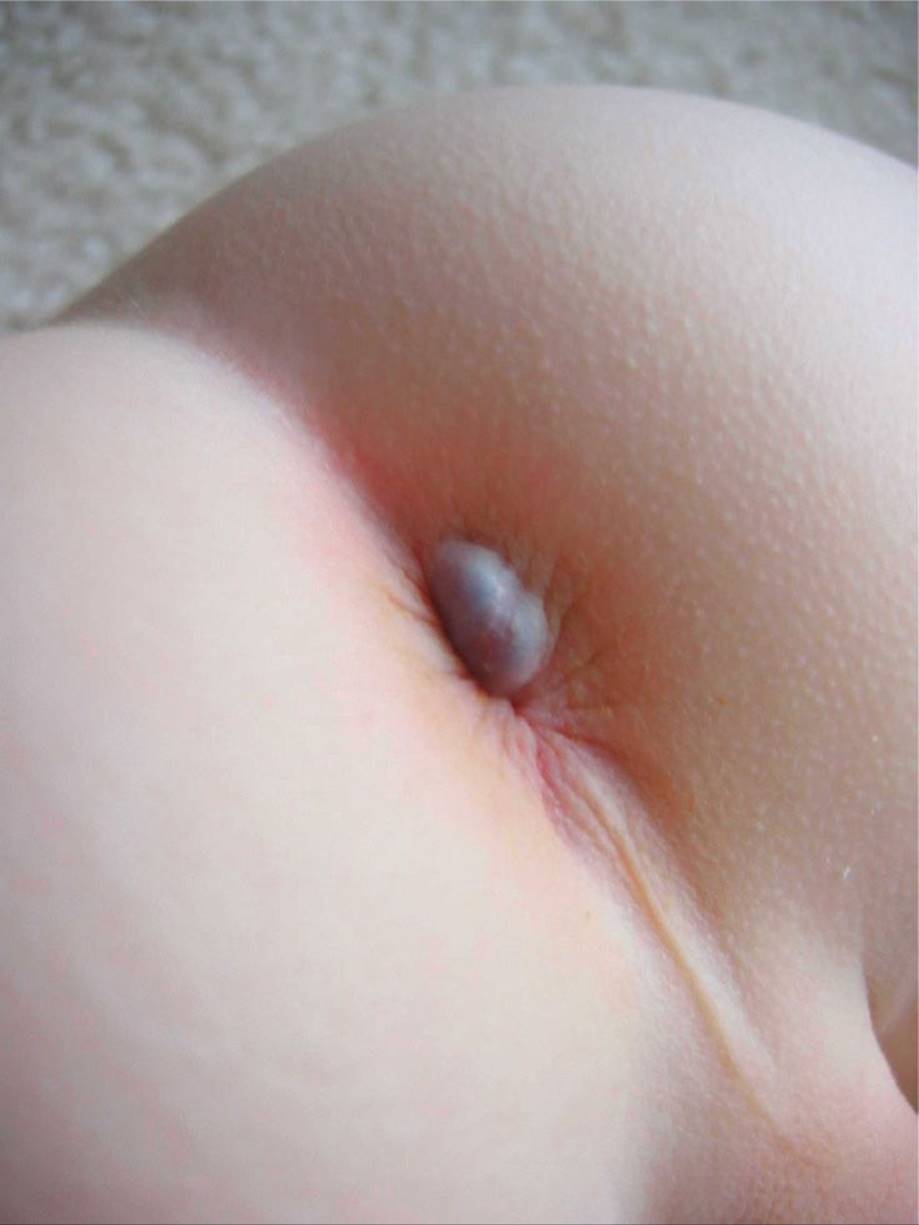
Figure 59-4 External hemorrhoid in a 2-year-old boy with recurrent straining because of chronic constipation. (Courtesy of Michael J. Wilsey, Jr, MD, FAAP.)
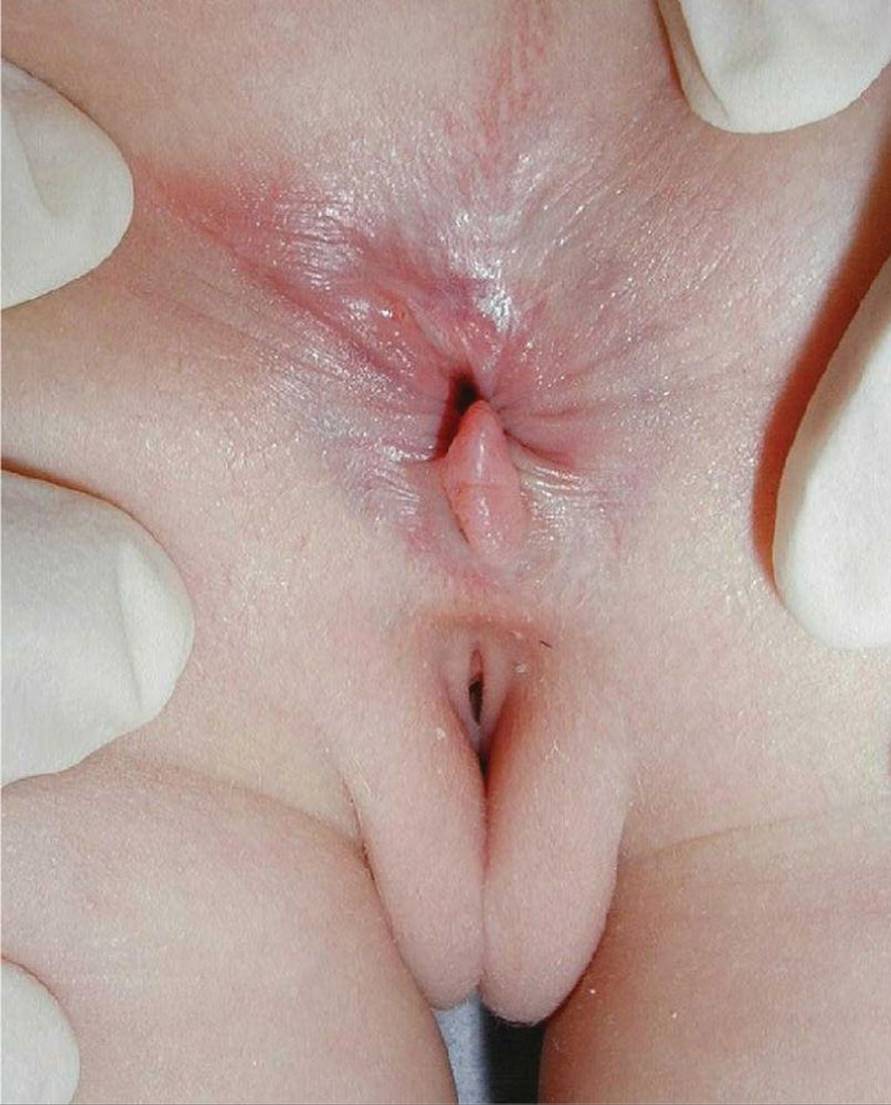
Figure 59-5 Perianal skin tag. A “sentinel” perianal skin tag seen in a female infant. (Courtesy of Mary L. Brandt, MD.)

Figure 59-6 Perianal Crohn disease in a child with multiple large, edematous skin tags and a perianal fissure at the 7 o’clock position. (Courtesy of Martin Fried, MD.)

Figure 59-7 Perianal condylomata seen following sexual abuse. (Courtesy of Fernando L. Heinen, MD.)
DIFFERENTIAL DIAGNOSIS


Other Diagnoses to Consider
• Inflammatory bowel disease
• Protruding colonic polyp
• Protruding ileocecal intussusception
• Chronic solitary ulcer
• Hypertrophied anodermal papillae
• Parasitic infection
When to Consider Further Evaluation or Treatment
• Patients with skin tags, anal fissures, perianal abscesses, and fistulas associated with abdominal pain, bloody diarrhea, and weight loss or failure to thrive, with or without delayed puberty should have an evaluation for inflammatory bowel disease, particularly Crohn disease.
• Perianal abscesses are incised and drained in most patients except in patients with known or suspected Crohn disease. Abscesses do not generally need to be cultured unless they persist or recur within days of drainage.
• Thrombosed external hemorrhoids can be excised with the overlying skin under general anesthesia.
• The diagnosis for rectal prolapse is primarily historic, but the clinician should consider stool screening for intestinal parasites or a sweat test for cystic fibrosis.
• Avoid the excision of skin tags associated with a diagnosis of Crohn disease.
• Children who present with anogenital warts should be evaluated for sexual abuse. In addition, an HIV test should be considered in adolescents who are sexually active. Consider vaccination with HPV vaccine that includes types 6 and 11 for boys and girls over the age of 9 years.
SUGGESTED READINGS
Pfefferkorn MD, Fitzgerald JF. Disrders of the anorectum: fissures, fistulas, prolapse, hemorrhoids, tags. In: Wyllie R, Hyams JS, Kay M, eds. Pediatric Gastrointestinal and Liver Disease. Philadelphia, PA: Elsevier Saunders; 2011:521–527.
Schubert MC, Sridhar S, Schade RR, et al. What every gastroenterologist needs to know about common anorectal disorders. World J Gastroenterol. 2009;15(26):3201–3209.
Sinclair KA, Woods CR, Sinal SH. Venereal warts in children. Pediatr Rev. 2011;32(3):115–121.
Stites T, Lund DP. Common anorectal problems. Semin Pediatr Surg. 2007;16(1):71–78.
Telega G. Perianal anomalies. In: Liacouras CA, Piccoli DA, eds. Pediatric Gastroenterology: The Requisities in Pediatrics. Philadelphia, PA: Mosby Elsevier. 2008:187–191.