
Approach to the Problem
Diaper dermatitis is the leading cause of skin irritation and redness in the perianal and buttock regions for infants and younger children. It accounts for more than 1 million clinic visits each year. The term diaper dermatitis is used to describe a large variety of different sources of erythema, and it can often be difficult to distinguish the source of irritation and, therefore, the most effective treatment. Irritant dermatitis is the most common cause of erythema in the perianal region. The cause is multifactorial and includes friction, moisture, and exposure to urine and feces. Exposure to wetness and urine increases the pH of the skin, making it more susceptible to irritants and friction.
Key Points in the History
• Wearing highly absorbent disposable diapers is associated with a decreased incidence of diaper dermatitis.
• Children with diaper dermatitis are more likely to be colonized with yeast than other children. Candida albicans may be isolated in up to 80% of infants with perianal irritation that lasts more than 3 days.
• Infection with Staphylococcus aureus and Group A beta-hemolytic streptococcus (GABHS) can cause erythema, pruritus, and pain.
• It is important to determine whether the patient has had increased exposure to moisture and irritants from sources such as diarrhea, chemicals, or infrequent diaper changes.
Key Points in the Physical Examination
• Diaper dermatitis can take on a variety of clinical manifestations. Irritant dermatitis begins as erythema on the buttocks and perianal areas, sparing the skin folds.
• An erythematous rash of the groin that affects the skin folds and has perianal papules and pustules is characteristic of a yeast infection.
• Allergic contact dermatitis may begin as mild erythema, later progressing to erythema, and scaling with shiny plaques affecting the buttocks, lower abdomen, and thighs while sparing the skin folds.
• GABHS presents as sharply demarcated areas of painful erythema that involves the vulva and penis.
• Staphylococcus aureus infection presents as folliculitis or bullous impetigo with vesicles and denuded areas. Lesions often itch.
• Infestation with Sarcoptes scabiei presents with pruritic, erythematous papules in the diaper area, along the wrists, between the fingers and toes, ankles, palms, and soles. Infants may also have lesions along the scalp and face.
|
PHOTOGRAPHS OF SELECTED DIAGNOSES |

Figure 60-1 Primary irritant diaper dermatitis. Confluent areas of shiny erythema over labia majora and buttocks. (Courtesy of Jan Edwin Drutz, MD.)

Figure 60-2 Candidal diaper dermatitis. Infant with erythematous rash with satellite lesions in the groin. (Courtesy of Jan Edwin Drutz, MD.)

Figure 60-3 Perianal Group A beta-hemolytic streptococcus. Intense erythema is noted in the immediate perianal area of this toddler. (Courtesy of Jan Edwin Drutz, MD.)

Figure 60-4 Perianal Group A beta-hemolytic streptococcal infection. Perianal streptococcal disease in an African American child. (Courtesy of George A. Datto, III, MD.)

Figure 60-5 Buttock folliculitis. A child with erythematous papules over the posterior buttocks consistent with folliculitis. (Courtesy of Jan Edwin Drutz, MD.)

Figure 60-6 Perianal erythema and desquamation in a patient with Kawasaki disease. (Courtesy of Esther K. Chung, MD, MPH.)
DIFFERENTIAL DIAGNOSIS
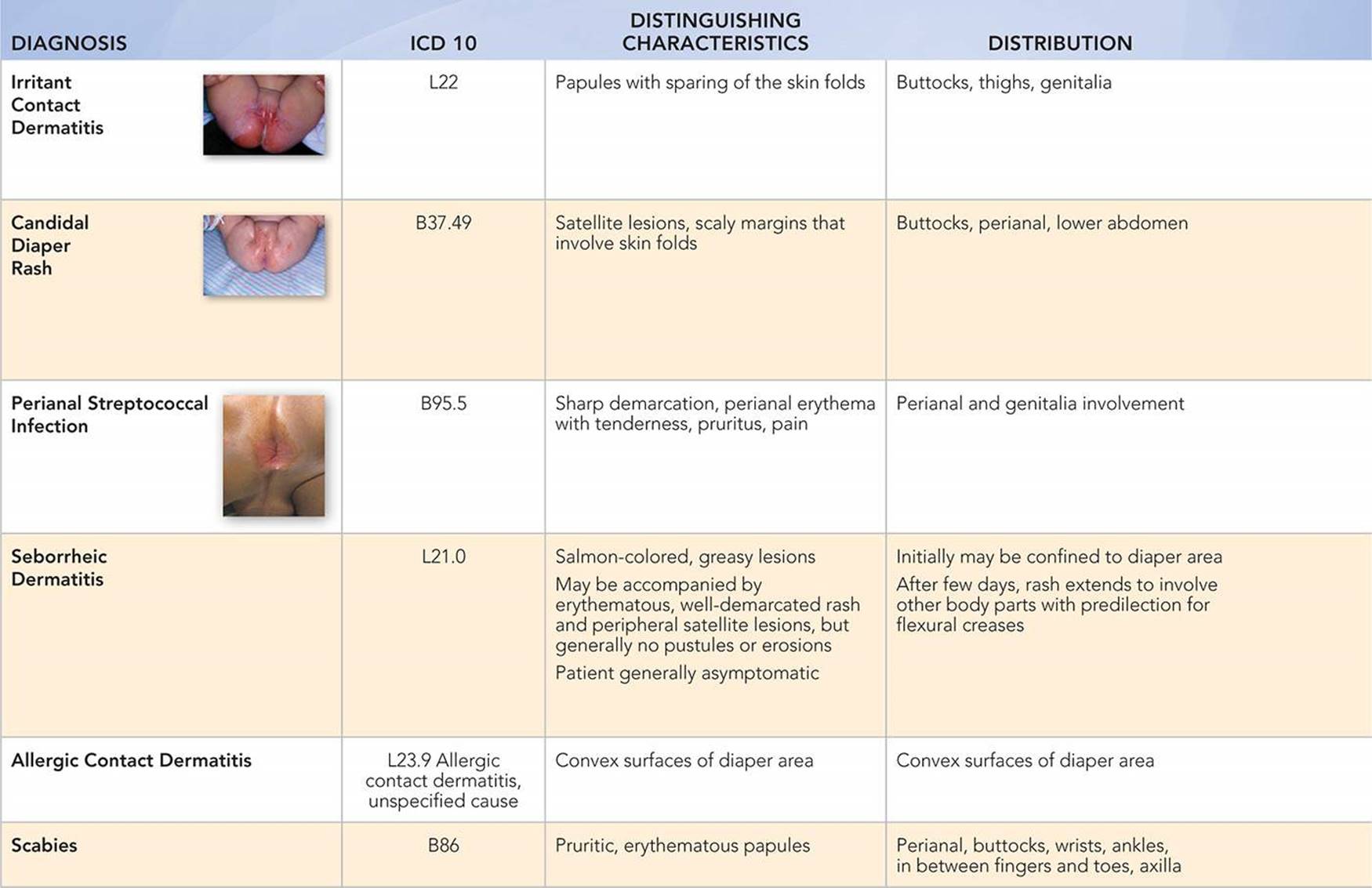
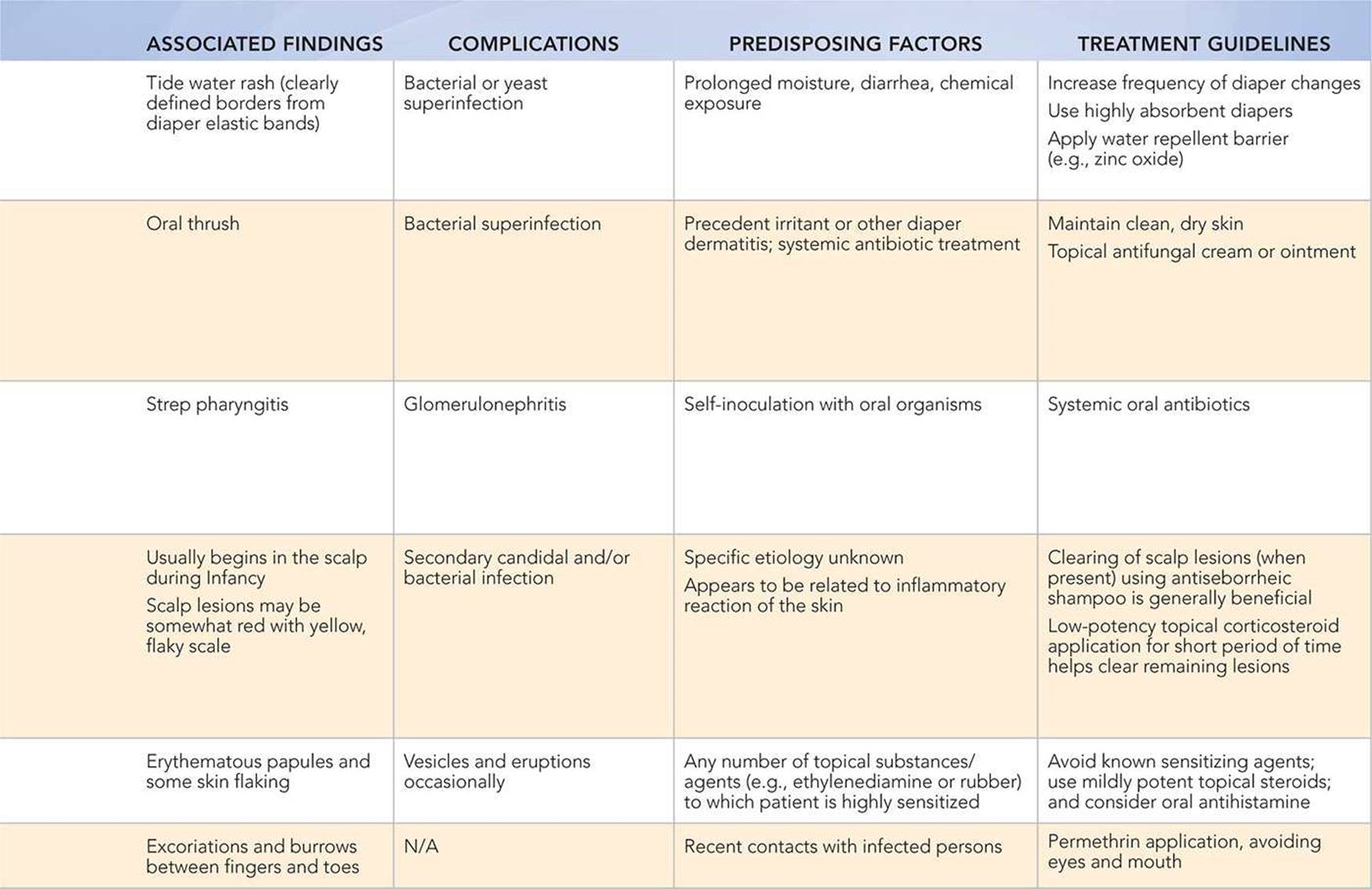
Other Diagnoses to Consider
• Acrodermatitis enteropathica
• Psoriasis
• Folliculitis
• Miliaria rubra
• Granuloma gluteale infantum
• Histiocytosis X
• Syphilis
• Laxative abuse
• Herpes simplex virus infection
• Lichen sclerosis
• Child abuse
• Molluscum contagiosum
When to Consider Further Evaluation or Treatment
• Diaper dermatitis is the leading cause of redness in the perianal and buttock regions of infants and young children.
• When erythema and rash do not resolve despite appropriate treatment with hygiene, topical steroid, antibiotic, or antifungal treatment, then consider other etiologies.
SUGGESTED READINGS
Nield L, Kamat D. Prevention, diagnosis, and management of diaper dermatitis. Clin Pediatr. 2007;46(6):480–486.
Ravanfar P, Wallace JS, Pace NC. Diaper dermatitis: a review and update. Curr Opin Pediatr. 2012;24(4):472–479.
Scheinfeld N. Diaper dermatitis: a review and brief and brief survey of eruptions in the diaper area. Am J Clin Dermatol. 2005;6(5):273–281.