
Approach to the Problem
A patient’s general appearance is considered one of the most important elements of the physical examination. It represents a subjective impression of the patient’s state of being. First and foremost, this impression informs about the patient’s overall degree of wellness, distinguishing whether or not the patient is ill-appearing. In addition, one can assess specific aspects of the patient’s presentation ranging from the obvious to the more subtle. Specifically, one can examine such patient characteristics as alertness level, nutritional status, facial expression, consolability, developmental ability, respiratory effort, personal interaction, behavior, hygiene, coloring, movement, and gait.
Key Points in the History
• It is essential to ascertain whether the observed general appearance is consistent with that noted by the caregivers.
• Obtaining a patient’s baseline status is crucial.
• A changing story, or one inconsistent with physical findings or developmental ability, raises the suspicion of child abuse.
• In the case of a critically ill or injured patient, elicit a SAMPLE history—as described by Pediatric Advanced Life Support—Signs and symptoms, Allergies, Medications, Past medical history, Last meal, and Events leading to presentation.
• When pain is present, assess the patient’s subjective degree of pain, or preferably utilize a facial or numerical pain scale.
• When evaluating a febrile child, response to and timing of antipyretics, consolability, and willingness to feed help to determine the severity of illness. Reevaluation following defervescence is also helpful.
• When evaluating children of non-English-speaking families, all efforts should be made to communicate in their preferred language to avoid missing crucial elements in the history and physical examination.
Key Points in the Physical Examination
• A social smile is rarely present in a child with meningitis or other invasive serious bacterial infections. However, it may be present in occult bacteremia.
• Absent tears, dry mucous membranes, ill general appearance, and delayed capillary refill are reliable external clues of dehydration.
• Tachypnea, nasal flaring, grunting, and accessory muscle use are signs of respiratory distress. Depressed sensorium, apnea, bradycardia, and cyanosis are signs of respiratory failure.
• Shock can be clinically diagnosed with evidence of poor organ perfusion, for example, altered sensorium, mottled skin, peripheral cyanosis, tachypnea, and decreased peripheral pulses. Septic or “warm” shock may lead to flushing and bounding pulses.
• Elements of a toxic general appearance include grunting, weak or persistent cry, sunken eyes, grey or mottled skin, depressed sensorium, and altered social response.
• Seizure activity may be evidenced by abnormal movements, posturing, extremity jerking, lip smacking, altered mental status, and staring eyes. Seizure activity in neonates may manifest as bicycling movements, chewing, blinking, and/or rigidity.
• A patient with peritoneal irritation lies flat and still. Patients with colicky abdominal conditions appear restless and uncomfortable. Paroxysms of irritability and drawing up of legs may indicate conditions such as intussusception.
• Children with epiglottitis appear toxic and may sit in a “tripod” position. Muffled voice, drooling, and stridor also indicate upper airway obstruction.
• Visual assessment of pain can be done via scales looking at a patient’s cry, facial expression, torso position, and extremity movements.
|
PHOTOGRAPHS OF SELECTED DIAGNOSES |

Figure 8-1 Meningitis. (Used with permission from Fleisher GR, Ludwig S, Baskin MN. Atlas of Pediatric Emergency Medicine. Philadelphia, PA: Lippincott Williams & Wilkins; 2004:183.)
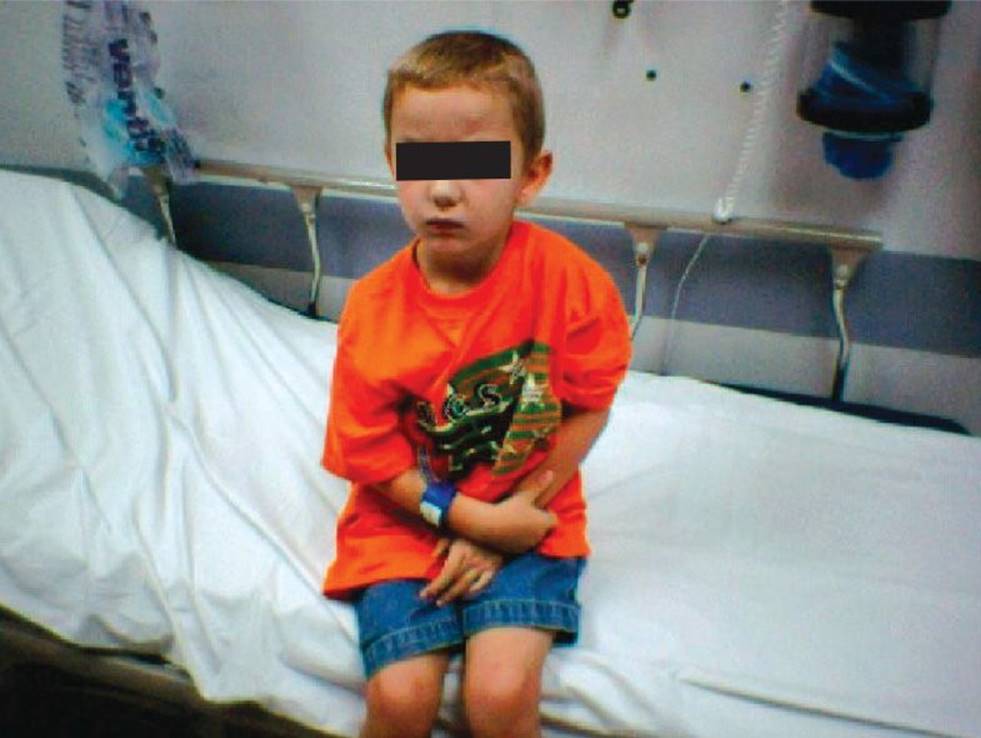
Figure 8-2 Well-appearing child with left supracondylar fracture. This well-appearing, but apprehensive, child’s positioning informs of his supracondylar fracture of the left humerus. (Courtesy of Evan J. Weiner, MD, FAAP.)
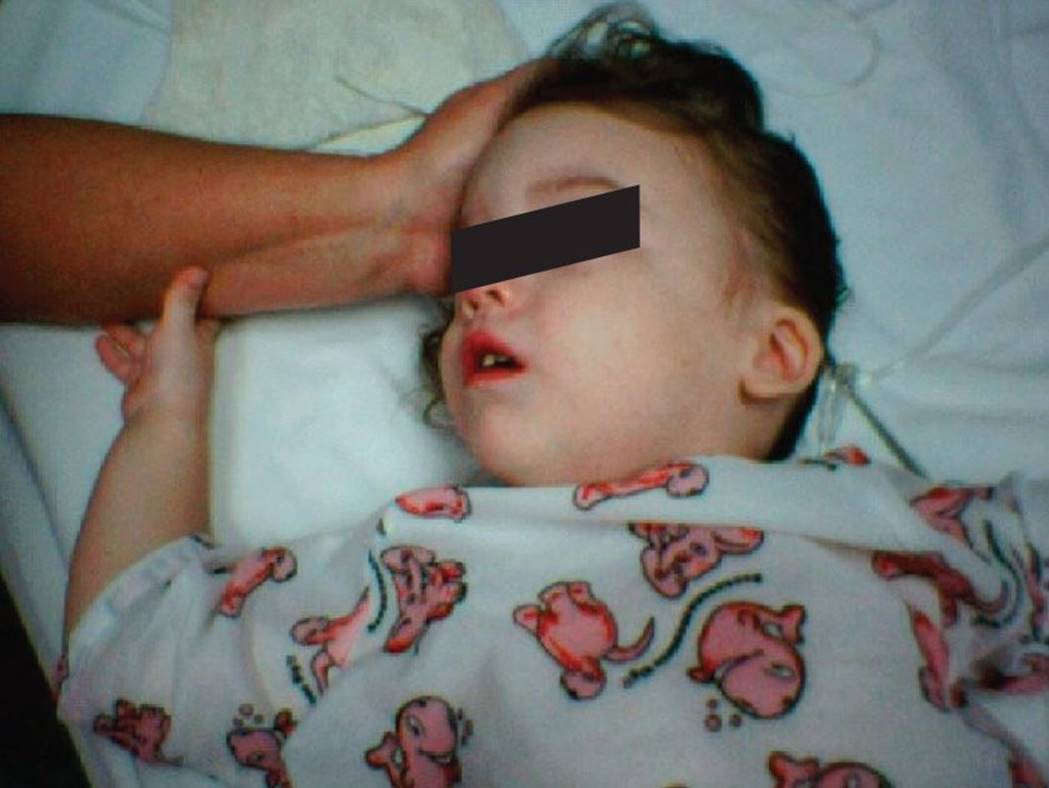
Figure 8-3 Ill-appearing child. This child appears weak and clingy but alert and active. Her ill appearance is the result of a mucocutaneous form of mycoplasma infection. (Courtesy of Evan J. Weiner, MD, FAAP.)
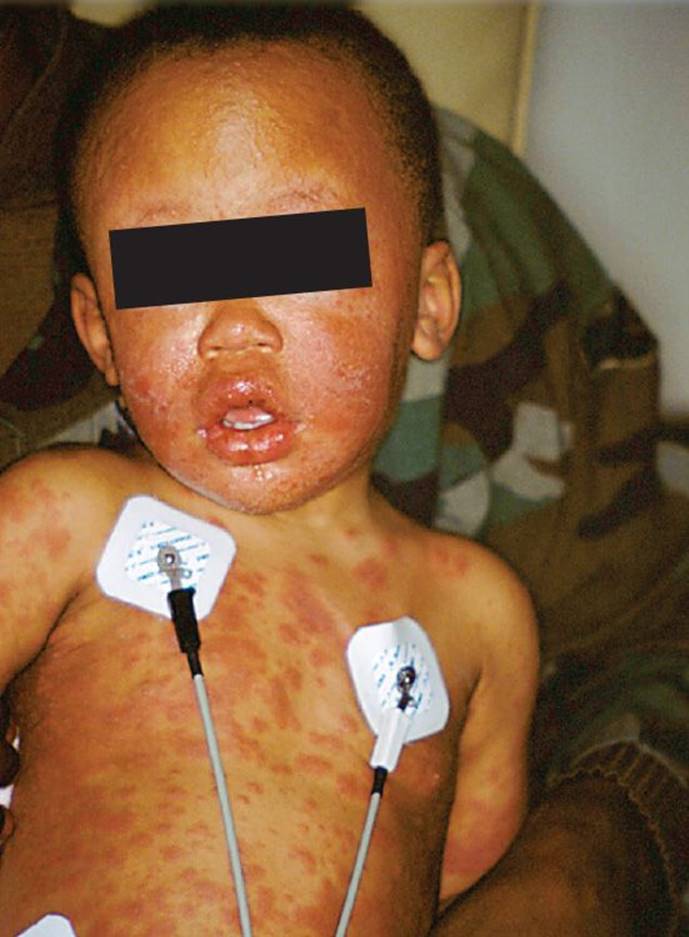
Figure 8-4 Ill-appearing child with Stevens–Johnson syndrome. (Courtesy of Joseph Lopreiato, MD.)

Figure 8-5 Ill-appearing child with urticaria. (Used with permission from Fleisher GR, Ludwig S, Baskin MN. Atlas of Pediatric Emergency Medicine. Philadelphia, PA: Lippincott Williams & Wilkins; 2004:88.)
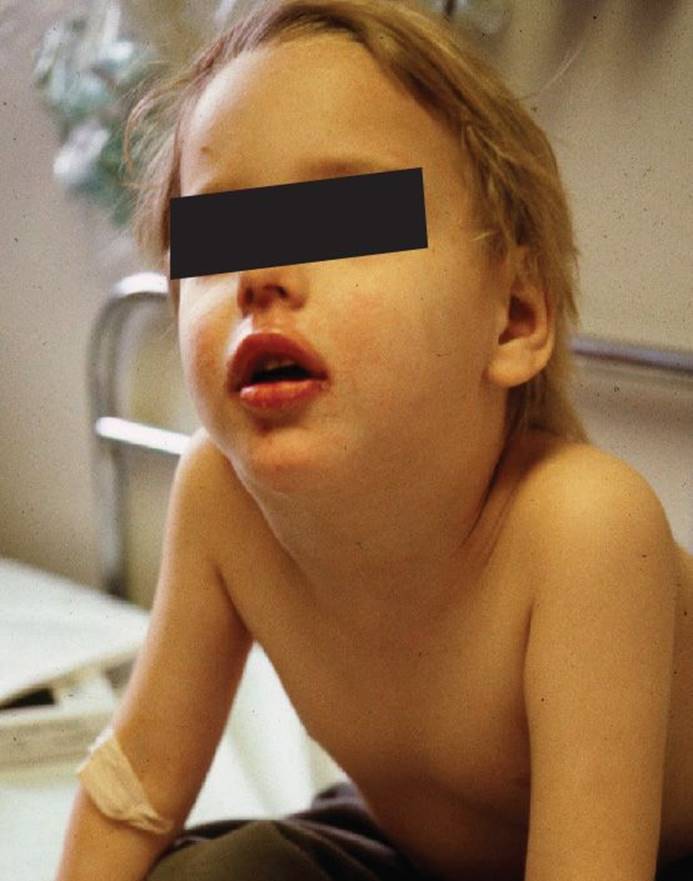
Figure 8-6 Epiglottitis and tripod positioning. This child’s “tripod” positioning is indicative of epiglottitis. Note the child’s toxic appearance. (Courtesy of M. Douglas Baker, MD.)
DIFFERENTIAL DIAGNOSIS


Other Diagnoses to Consider
• Inborn error of metabolism
• Electrolyte derangement
• Hypoglycemia
• Adrenal crisis
• Hepatic encephalopathy
• Uremia
• Autoimmune disease
• Human immunodeficiency virus infection
• Supraventricular tachycardia
• Failure to thrive
• Child abuse and neglect
When to Consider Further Evaluation or Treatment
• Tachypnea and tachycardia may be subtle clues of a more serious underlying condition and future deterioration. They should prompt urgent evaluation.
• In patients with altered mental status, in addition to pursuing the etiology, one must ensure stability of the airway, even though a primary respiratory process may not be present.
• A shock state may be present, even when a normal blood pressure is maintained due to compensatory mechanisms. Ill general appearance should lead one to consider and treat shock.
SUGGESTED READINGS
Athreya B, Silverman B. Subjective observations. In: Pediatric physical diagnosis. Norwalk, CT: Appleton-Century Crofts; 1985:58–70.
Bang A, Chaturvedi P. Yale Observation Scale for prediction of bacteremia in febrile children. Indian J Pediatr. 2009;76:599–604.
Bass JW, Wittler RR, Weisse ME. Social smile and occult bacteremia. Pediatr Infect Dis J. 1996;15(6):541.
Gorelick M, Shaw K, Murphy K. Validity and reliability of clinical signs in the diagnosis of dehydration in children. Pediatrics. 1997;99(5):E6.
Hsiao AL, Chen L, Baker MD. Incidence and predictors of serious bacterial infections among 57- to 180-day-old infants. Pediatrics. 2006;117(5):1695–1701.
Levine DA, Platt SL, Dayan PS, et al. Risk of serious bacterial infection in young febrile infants with respiratory syncytial virus infections. Pediatrics. 2004;113(6):1728–1734.
McCarthy P, Sharpe M, Spiesel S, et al. Observation scales to identify serious illness in febrile children. Pediatrics. 1982;70(5):802–809.