
Class: Histamine H2 Antagonist
Dosage Forms. Tablet: 10 mg, 20 mg, 40 mg; Powder for Suspension: 40 mg/5 mL
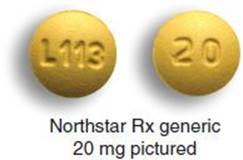
Common FDA Label Indication, Dosing, and Titration.
1. Duodenal ulcer, acute: Children over 1 y, 0.5 mg/kg/d po hs, max of 40 mg/d; Adults, 20 mg po bid or 40 mg po daily hs
2. Duodenal ulcer, maintenance: Adults, 20 mg po daily hs
3. Gastroesophageal reflux disease: Children over 1 y, 1 mg/kg/d po hs, max of 80 mg/d, duration based on response; Adults, 20-40 mg po bid × up to 12 wk
4. Gastric ulcer, acute: Children over 1 y, 0.5 mg/kg/d po hs, max of 40 mg/d; Adults, 40 mg po daily hs
5. Indigestion: 10-20 mg po bid
Off-Label Uses. None
MOA. Famotidine is a competitive inhibitor of histamine H2 receptors. The primary clinically important pharmacologic activity of famotidine is inhibition of gastric secretion. Both the acid concentration and the volume of gastric secretion are suppressed by famotidine, while changes in pepsin secretion are proportional to volume output.
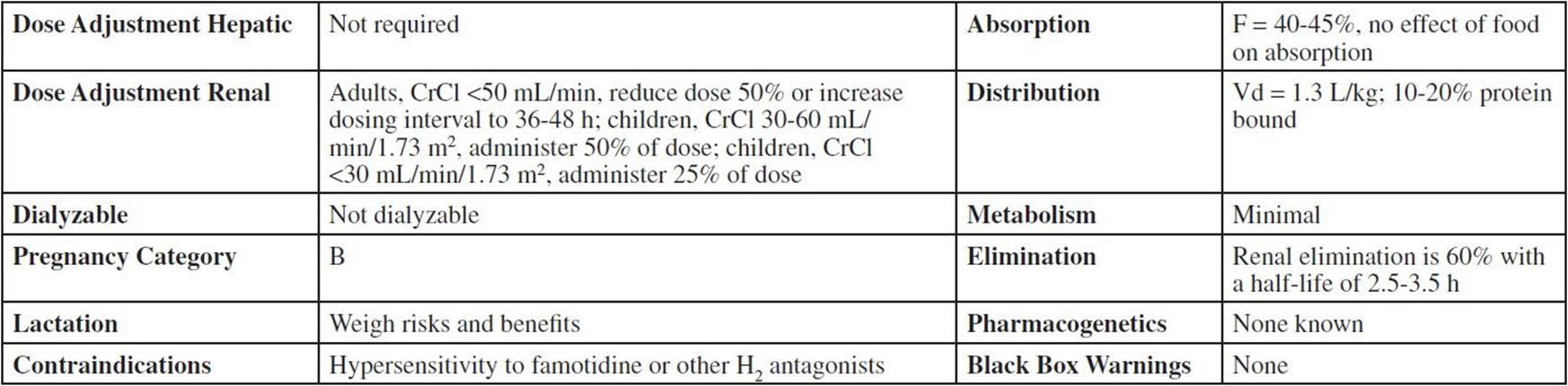
Drug Characteristics: Famotidine
Medication Safety Issues: Famotidine

Drug Interactions: Famotidine

Adverse Reactions: Famotidine

Efficacy Monitoring Parameters. Resolution of gastrointestinal discomfort, resolution of ulcers shown on endoscopy.
Toxicity Monitoring Parameters. Severe blistering skin rash.
Key Patient Counseling Points. Take at bedtime. May take with food or antacids, if needed.
Clinical Pearls. Other PPI and H2 antagonists available OTC; warn patients not to take multiple products concurrently to avoid additive risk of adverse effects. Injectable dosage form also available; when the intravenous route is used, treatment should be converted to oral route as soon as possible to avoid cost and risks associated with intravenous therapy.