
Class: Calcium Channel Blocker
Dosage Forms. Extended-Release Tablet: 2.5 mg, 5 mg, 10 mg
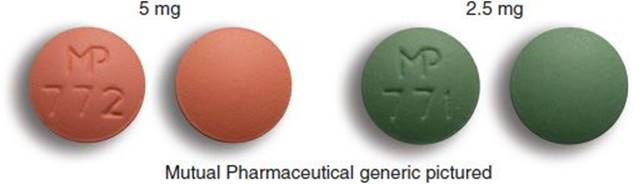
Common FDA Label Indication and Dosing.
1. Hypertension: Children, 0.1-0.6 mg/kg/d po; Adults, 2.5-10 mg po daily
Off-Label Uses.
1. Angina: 2.5-5 mg po bid
2. Congestive heart failure: 5 mg po bid
3. Raynaud’s phenomenon: 10-20 mg po daily
MOA. Felodipine is a dihydropyridine calcium-channel blocking drug with potent arterial and coronary vasodilating properties. A reflex increase in sympathetic tone (in response to vasodilation) counteracts the direct depressant effects on SA and AV nodal conduction. This renders felodipine ineffective in the treatment of supraventricular tachycardias.
Drug Characteristics: Felodipine

Medication Safety Issues: Felodipine

Drug Interactions: Felodipine
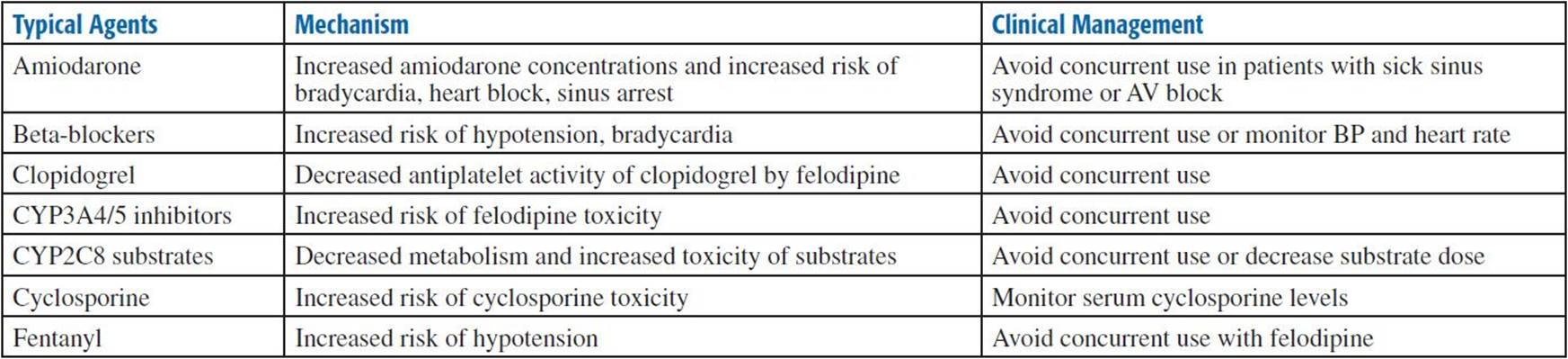
Adverse Reactions: Felodipine

Efficacy Monitoring Parameters. Decreased BP, reduction of chest pain, decreased number of weekly angina attacks, reduction in use of prophylactic nitroglycerin to relieve chest pain, improvement in signs/symptoms of heart failure.
Toxicity Monitoring Parameters. Signs/symptoms of peripheral edema, increased heart rate, signs/symptoms of liver damage.
Key Patient Counseling Points. Report signs/symptoms of hypotension or exacerbation of angina with initial dosing and dose changes; report signs/symptoms of peripheral edema, fatigue, hypotension, or hepatic dysfunction. Do not drink alcohol while taking drug. Do not discontinue drug abruptly as this may cause rebound hypertension. This medicine may cause dizziness. Avoid driving, using machinery, or doing anything else that could be dangerous if not alert. Dizziness may be worse if too much water is lost from the body due to excessive sweating, diarrhea, or vomiting.
Clinical Pearls. Dose can be reduced by one-half if taken consistently with grapefruit juice and monitoring for efficacy (BP, angina frequency) occurs.