
Goran Augustin1, 2
(1)
Department of Surgery Division of Gastrointestinal Surgery, University Hospital Center Zagreb, Zagreb, Croatia
(2)
School of Medicine University of Zagreb, Zagreb, Croatia
Abstract
Despite an increase in the number of effective broad-spectrum antibiotics, pelvic inflammatory disease (PID) and the complications arising from the disease continue to reach epidemic proportions into the 1990s. Acute salpingitis and PID account for more than 350,000 hospital admissions and 150,000 surgical procedures per year [1]. In addition, some report that nearly one-third of patients hospitalized for PID develop some degree of pelvic abscess [2]. Other sequels such as ectopic pregnancy, salpingitis isthmica nodosa, tubal infertility, chronic pelvic pain syndromes, and pelvic adhesions are other consequences of PID. Tubo-ovarian abscess (TOA) is the most serious manifestation of salpingitis because the intra-abdominal rupture of a TOA is potentially life-threatening, with mortality rates as high as 8.6 % [3]. Pelvic inflammatory disease and subsequent TOA may result whenever bacteria gain access to the upper female genital tract. Under normal circumstances, the Fallopian tubes and related pelvic structures are sterile. However, access of bacteria into the upper genital tract either via sexually transmitted diseases or through instrumentation of the uterus may inoculate the uterus with bacteria from the vagina, causing infection. It has been suggested that passive transport and vectors such as spermatozoa and Trichomonas assist in establishing the ascending infection from the polymicrobial vagina and cervix [4]. Once present in the upper genital tract in sufficient numbers and virulence, these bacteria initiate an inflammatory reaction (endometritis-salpingitis-peritonitis) that results in the signs and symptoms of PID. The rate of a TOA developing from typical PID is in the range of 1–4 % [5].
19.1 Considerations in General Female Population
19.1.1 Tubo-ovarian Abscess
Despite an increase in the number of effective broad-spectrum antibiotics, pelvic inflammatory disease (PID) and the complications arising from the disease continue to reach epidemic proportions into the 1990s. Acute salpingitis and PID account for more than 350,000 hospital admissions and 150,000 surgical procedures per year [1]. In addition, some report that nearly one-third of patients hospitalized for PID develop some degree of pelvic abscess [2]. Other sequels such as ectopic pregnancy, salpingitis isthmica nodosa, tubal infertility, chronic pelvic pain syndromes, and pelvic adhesions are other consequences of PID. Tubo-ovarian abscess (TOA) is the most serious manifestation of salpingitis because the intra-abdominal rupture of a TOA is potentially life-threatening, with mortality rates as high as 8.6 % [3]. Pelvic inflammatory disease and subsequent TOA may result whenever bacteria gain access to the upper female genital tract. Under normal circumstances, the Fallopian tubes and related pelvic structures are sterile. However, access of bacteria into the upper genital tract either via sexually transmitted diseases or through instrumentation of the uterus may inoculate the uterus with bacteria from the vagina, causing infection. It has been suggested that passive transport and vectors such as spermatozoa and Trichomonas assist in establishing the ascending infection from the polymicrobial vagina and cervix [4]. Once present in the upper genital tract in sufficient numbers and virulence, these bacteria initiate an inflammatory reaction (endometritis-salpingitis-peritonitis) that results in the signs and symptoms of PID. The rate of a TOA developing from typical PID is in the range of 1–4 % [5].
TOA is usually a polymicrobial infection, whereas general pelvic infections may often be monomicrobial. Tubo-ovarian abscesses are usually a mixture of anaerobic, facultative anaerobic, and aerobic organisms, with the purest isolated generally being anaerobes. The most frequent isolates from TOAs include a variety of Enterobacteriaceae, such as Escherichia coli (37 %), Bacteroides fragilis (22 %), other Bacteroides species (26 %), Peptostreptococcus(18 %), and Peptococcus (11 %) [3, 6].
The sexually transmitted organisms such as Neisseria gonorrhoeae and Chlamydia are usually not present in the abscess but may be recovered from the cervix in one-third of cases. The emergence and recognition of Prevotella bivia (formerly Bacteroides bivius) and Prevotella disiens as major pathogens in upper female genital tract infection, combined with data suggesting that increased concentration of anaerobic organisms in the vagina is a risk factor for PID, point toward an anaerobic-predominant mixed infection as a cause of PID and TOA. These anaerobic bacteria such as Bacteroides species and Peptostreptococcus species are commonly found in high concentrations in the vagina of women with bacterial vaginosis [4].
Standardized diagnostic criteria for TOA do not exist. The clinical diagnosis of TOA has the same diagnostic difficulties of PID. Women presenting with PID and a pelvic mass may have a TOA, or it could be a hydrosalpinx, tubo-ovarian complex, or other complex adnexal mass. Patients with TOAs typically present with a history of pelvic or abdominal pain and fever. A history of PID may be present in only 50 % of patients. The majority of patients also have a leukocytosis [2]. A significant proportion of women with TOA is afebrile (20–30 %) and has normal WBC counts [2]. Other laboratory studies that may help in the diagnosis are an elevated erythrocyte sedimentation rate (ESR) and elevated C-reactive protein (CRP), which was found to be more sensitive than elevated WBC or ESR. Pelvic examination usually reveals extreme pelvic tenderness (cervical motion tenderness), and a mass may be present. If rupture has occurred, typical signs and symptoms of peritonitis are present and may lead to shock and death if not treated immediately. Ultrasonography is very helpful in the diagnosis of TOAs and in following TOAs that are managed conservatively. Ultrasonography has proven to be very reliable in the diagnosis of TOA [6]. The expected typical appearance of a TOA on ultrasonography is a complex or cystic adnexal mass with multiple internal echoes and septations. The “gold standard” for diagnosis has always been laparoscopy; however, as ultrasound technology continues to improve, laparoscopy may be reserved for patients in whom the diagnosis is questionable.
Indications for surgical intervention in the treatment of TOA include:
· Questionable diagnosis, when another surgical emergency may exist
· Rupture of abscess
· Failure of medical therapy with or without a drainage procedure
The first two are indications for immediate surgical intervention. Intraperitoneal rupture of a TOA represents a true surgical emergency. Delayed interventions may increase the risk of septic shock and even death. There is general agreement that acute rupture of a TOA requires immediate surgery, but the extent of the surgery required to achieve a cure is controversial [6, 7]. Traditionally, aggressive surgical extirpation, usually consisting of total abdominal hysterectomy with bilateral salpingo-oophorectomy (TAH-BSO) and drainage of all pockets of infection, was the treatment of choice in TOAs. This radical approach was used largely because of the inadequacies of antibiotics of that time. This procedure dropped the mortality rate from 100 to 12 % [8] and is probably the procedure of choice in a patient who has completed childbearing or in those who are postmenopausal. However, most women who present with a TOA are in the peak of their reproductive years, and fertility is a major issue. Conservative therapy of an unruptured TOA consists of appropriate intravenous antibiotic therapy, close monitoring of the patient, and possible drainage of the abscess via posterior colpotomy [9, 10], CT- or ultrasound-guided percutaneous drainage, or drainage via laparoscopy. The posterior colpotomy approach has largely been abandoned because of a high rate of complications, including peritoneal sepsis and death. Success rates of CT-guided percutaneous drainage have been in the range of 77–94 %, and this technique may play more of a major role in the future [11]. Early drainage of abscess and irrigation via laparoscopy in addition to antibiotics achieved a success rate of 95 % by Reich and McGlynn’s series of 21 patients [12]. These latter approaches have shown initially promising results but still need to be studied prospectively in a controlled randomized fashion. It does appear that drainage of a TOA in combination with antibiotic therapy is much more successful than conservative management. It has been shown that 50 % of patients treated with antibiotics alone eventually require surgical treatment for the disease [2, 13]. Others report a success rate of 70 % when TOAs are treated with antibiotics alone [4].
Approximately 19 % of patients treated with conservative surgical therapy require reoperation at a later date [2, 13, 14]. In cases of grossly apparent bilateral disease, a somewhat conservative approach of bilateral partial adnexectomy without hysterectomy may be performed. Patients without adnexa are still able to conceive via in vitro fertilization and donor eggs. One must always use clinical judgment, however, and in patients with severe pelvic disease, TAH-BSO may be necessary despite the patient’s reproductive status. In patients who have completed childbearing, TAH-BSO is standard therapy. It should also be noted that when a TOA is present in a postmenopausal woman, associated underlying malignancies are found in 25–50 % of cases, and conservative surgical therapy has no role [15]. Antibiotic therapy should include a broad-spectrum cephalosporin such as cefoxitin or cefotetan. Anaerobic coverage with clindamycin or metronidazole should also be added, as these have been shown to have the best ability to penetrate an abscess [6].
19.1.2 Ovarian Abscess
Ovarian abscess is a primary infection of the parenchyma of the ovary, an entity distinctly different from tubo-ovarian abscess. Tubo-ovarian abscess, by contrast, involves the ovary by secondary spread from the infected Fallopian tube [16]. Ascending infection is the most important mode of infection in nonpregnant women. Cases of ovarian abscess have also been reported due to non-gynecologic conditions such as ruptured appendicitis or diverticulitis or secondary to infection at distant sites as in tonsillitis, typhoid, parotitis, and tuberculosis. Association of ovarian abscess with intrauterine device (IUD) has been noted, and some of them may be secondary to Actinomyces spp. It may also occur due to secondary infection in a dermoid cyst, serous cystadenoma, or simple ovarian cyst. Ovarian abscess is also a known complication of transvaginal oocyte retrieval or transcervical embryo transfer, occurring in approximately 0.2–2.2 % [17]. Aitken is attributed to give the earliest description of primary ovarian abscess in 1869 [18, 19] and then Coe in 1891 [20]. Black presented the first major series of 42 cases in 1936. Wetchler and Dunn have reported 120 cases in literature till 1985 [16].
19.2 Incidence
19.2.1 Tubo-ovarian Abscess
Pelvic inflammatory disease in the form of pelvic and peritoneal abscess complicating pregnancy is rare. Blanchard et al. found that acute salpingo-oophoritis during pregnancy occurs more commonly in first trimester [21]. Sherer et al. have reported a recurrent pelvic abscess in pregnancy and in their review noted that the pelvic infection and pelvic abscess are less common in the second and third trimesters than in cases diagnosed in the first trimester [22]. By 1977, only 12 cases of tubo-ovarian abscess occurring late in pregnancy had been described in the literature [23]. Auguste Brindeau (Fig. 19.1) in 1917 is thought to have described the first such case [23]. In addition to 12 personal cases of salpingo-oophoritis during pregnancy, he has collected 81 more cases, of these 44 were operated on. There are several newer cases in late pregnancy [24, 25]. On the other hand, pelvic infection readily occurs in the puerperium if there is infection of the birth canal during or following parturition.

Fig. 19.1
Auguste-Marie-Joseph-Victor Brindeau was a French gynecologist who worked in Paris [26]
Up to 2003, there were only 26 reported cases of tubo-ovarian or pelvic abscess during pregnancy published [27]. The incidence of PID after oocyte retrieval is 0.12 % [28]. Pelvic infection after transvaginal oocyte retrieval for IVF-ET is <1 % [17, 29–31]. In less than half of these cases, a pelvic abscess develops.
19.2.2 Ovarian Abscess
There are only several case reports of true ovarian abscess during pregnancy [16, 18, 32, 33], and although the true incidence is unknown, it seems that it is extremely rare in pregnancy.
19.2.3 Intramyometrial Abscess
This entity is not described as part of PID, but it is mentioned here due to the same possible etiological factor. It is the rarest entity. Only one report with two cases was found [34].
19.3 Etiopathogenesis
19.3.1 Tubo-ovarian Abscess
During pregnancy, pelvic infection occurs quite independent of the gravid state or the infection may exist before the pregnancy. The etiologies may include non-gynecologic conditions such as ruptured diverticulitis or appendicitis; tubo-ovarian abscess of unknown origin has also been reported [35]. Friedman and Bobrow have proposed four mechanisms for infection of the ovaries or tubo-ovarian abscess during pregnancy [36]:
· Hematogenous spread as in pelvic tuberculosis
· Lymphatic spread especially from vagina and cervix
· Infection of a previously existing ovarian cyst
· Flare-up of old infection
Similar mechanisms are described by Merzer [37]:
· Infection at the time of fertilization
· Infection soon after fertilization before the uterine cavity has become closed by conception (12 weeks)
· Vascular or lymphatic spread (from a septic focus in the vagina or cervix)
· Flare-up of preexisting infection
· Instrumentation sufficient to overcome natural barriers
· Ascending infection associated with threatened abortion and intrauterine bleeding
Pelvic inflammatory disease, previous laparotomy, structural genital anomalies, and IVF-ET are known risk factors for pelvic abscess during pregnancy [27].
Why some tubo-ovarian abscesses are unilateral may be explained by a “flare-up” of an already preexisting but latent salpingitis [24]. This possibility would seem to necessitate either a low-grade infection of the tube in the first instance leaving sufficient patency to permit the passage of a fertilized ovum. After nidation, the infection may then become acute probably because of the congestion produced by the gestation or unilateral salpingitis, the other tube being patent and functioning [38].
19.3.1.1 In Vitro Fertilization-Embryo Transfer
Pelvic abscess formation is a rare complication of oocyte retrieval, which usually results in failure of the procedure. It is reported to occur in 0.2–0.5 % of transvaginal oocyte retrievals [17, 39]. Inoculation of vaginal bacteria and anaerobe opportunists is suggested to be the cause of PID following oocyte retrieval [30]. Microorganisms of the vagina are suggested to be the etiological pathogens in pelvic abscesses when transvaginal oocyte retrieval is used [30]. El-Shawarby et al. in 2004 described three different pathways for such infections. Direct inoculation of vaginal microorganisms may occur by puncture through the non-sterile vagina. The risk of pelvic infections after oocyte retrievals seems also related to the history of pelvic inflammatory disease. Reinfection may occur through puncture of chronically infected ovaries [40]. Although least likely, infection may occur through direct puncture of the bowel with an inflammatory or infectious spillage [41]. However, no pelvic infection has been reported with laparoscopic or abdominal oocyte retrievals in the 1990s [30].
The most well-established and well-accepted technique to decrease the risk of pelvic infection is using the fewest possible vaginal punctures [39, 42]. Serour et al. emphasized the importance of the fact that most patients in their study had a maximum of only two vaginal punctures [42]. Vaginal preparation has been made by different methods including the use of saline or povidone-iodine. In reports by Meldrum [43] and Evers et al. [44], no cases of PID in small group of patients were diagnosed. The former study used intravenous cefazolin and vaginal irrigation with povidone-iodine and the latter using only 10 % povidone-iodine. Larger series report rare cases of serious infections using sterile saline (0.5 %) [45] and Earle’s balanced salt solution (0.4 %) [39].
19.3.1.2 In Vitro Fertilization-Embryo Transfer and Endometriosis
IVF-ET is now a recognized treatment for refractory endometriosis-associated infertility. On the other hand, endometriosis is proposed to be a risk factor for pelvic inflammation and abscess development following transvaginal oocyte retrievals [46, 47]. The presence of old blood in endometrioma is suggested to provide a culture medium for bacteria to grow slowly after transvaginal inoculation which may explain the role of endometriosis in predisposing the patients with PID [46]. Among its risk factors, incidental aspiration of an ovarian endometrioma during the process of oocyte retrieval is believed to be a common cause for developing the pelvic infection [46, 48, 49]. In one study 80 % (8/10) of PID following oocyte retrieval had underlying endometriosis [28].
There have been some case reports on the coexistence of endometriosis [46, 48] or its history [47] in patients with PID following assisted reproductive technology treatment. Younis et al. [46] presented three cases of severe pelvic abscess following oocyte retrievals for IVF-ET in whom stage IV endometriosis or ovarian endometrioma was previously diagnosed as the sole reason for infertility. In contrast, Ashkenazi et al. [17] failed to show a higher incidence of endometriosis among their patients: two cases of endometriosis in 28 PID patients among 4,771 ovum pickups. It has been suggested that both the pseudocapsule of endometrioma and its inside old blood may prevent antibiotic prophylaxis from overcoming the transvaginal bacterial inoculation [46]. In other cases of endometriosis, small pools of old blood may act as culture media for the inoculated bacteria. Deposit of TOA is an uncommon complication in pregnant women, leading to serious complications such as surgery, ICU admission, and preterm delivery; only one subject developed a TOA during pregnancy following IVF-ET in this report.
The presence of endometrioma is a risk factor for the development of a TOA or an ovarian abscess [50]. Whether operative treatment of recurrent ovarian endometriosis improves the prognosis of IVF is still open to debate [51]. Previous reports have indicated that aspiration of endometriotic cysts before ovulation induction for in vitro fertilization resulted in a better clinical outcome [52]. However, studies have also indicated that pretreatment for endometrioma before IVF could potentially reduce the number of retrieved oocytes [53]. In order to prevent infection in patients with endometrioma for oocyte retrieval, previous reports have suggested the aspiration of endometrioma before oocyte retrieval [53]. However, Tsai et al. found these endometriotic cysts re-expanded quickly after aspiration and it was difficult to harvest some oocytes without puncturing through these chocolate cysts. In addition, the chocolate content of the follicular fluid is sometimes found incidentally after the aspiration [54]. Since endometrioma was considered a risk factor for the development of a TOA or an ovarian abscess [50], infection-preventing measures should be applied not only prior to but also immediately before oocyte retrievals.
19.3.1.3 Pelvic Inflammatory Disease
The risk of infection has been shown to be higher in cases of PID [27, 30, 40].
19.3.1.4 Postpartum
The postpartum period appears to be the least likely time to develop a TOA because ascending infection, which is the major pathophysiology in developing PID in most women, rarely occurs during this phase.
19.3.1.5 Tubal Sterilization
Particularly in women who have had tubal sterilization, the incidence of TOA is minimal because the procedure blocks communication between the genital tract and the pelvic cavity [55]. Theoretically, this blockage should prevent an ascending transmission of any organisms, if present, from the genital tract proximal to the site of tubal sterilization into the peritoneal cavity. This view is supported by clinical evidence that a complete or even partial occlusion of tubes appears to lessen the severity of infection when it occurs [55]. Three possible explanations of TOA after previous occluded tubes (TOAPOT) have been proposed [55]. The most likely cause is the persistent tract or reconnection between the two tubal segments. Secondly, factors related to the operative procedure are possible. Lastly, systemic factors such as a hematogenous or lymphatic bacterial spread with a compromised immunological status of the patient are possible. Time intervals from tubal occlusion to TOAPOT had been reported to range from as early as 36 h to up to 12 years [55].
19.3.2 Ovarian Abscess
The etiology of ovarian abscess in pregnancy is uncertain and in all probability is different from that in nonpregnant state. Ascending infection is the most important mode of infection in nonpregnant women. Barriers to ascending infection in pregnancy include cervical mucus plug, intact fetal membranes, and the decidua covering the openings of the Fallopian tubes. Friedman and Bobrow [36] have proposed four mechanisms for infection of ovaries during pregnancy (see section Tubo-ovarian Abscess). Data that confirm these facts are that ovarian abscess readily occurs in the puerperium if there is infection of the birth canal during or following parturition. Also it is likely that the ovary becomes infected quite independently of the gravid state or that the infection exists before the pregnancy.
19.3.3 Intramyometrial Abscess
The etiology in one published report of two cases is failed instrumental delivery in the second stage of labor [34].
19.4 Microbiology
Up to 2003, in only several cases, bacterial etiology of pelvic infections is available after transvaginal punctures such as E. coli [56] and a subclinical infection with C. trachomatis [57] and rare isolate in general population Atopobium vaginae [58], S. aureus, and mixed anaerobic bacteria [47]. Anaerobic opportunists of the vagina are found to be etiological agents in pelvic abscesses after transvaginal oocyte retrieval. Escherichia coli, Bacteroides fragilis, Enterococcus, and Peptococcus are commonly found microorganisms [30, 31]. There are also case reports with other microorganisms such as Fusobacterium necrophorum during puerperium [59]. In a case by Navada and Bhat, at laparotomy there was no clear-cut evidence of spread of infection from adjacent organs, but the preexisting salpingitis or previously ruptured tubo-ovarian abscess could not be ruled out. Thus, the proposed mechanism in the case by Navada and Bhat could be flared up of old infection [60]. Intraoperative finding of adhesion between the loops of intestine, the uterus, and the tubo-ovarian tissue indicates the chronic nature of the disease. Hence, she might have contracted the pelvic infection before pregnancy following the first Cesarean section.
Patients who suffer from ovarian abscesses almost always have a history of salpingitis, endometriosis, pelvic adhesion, hydrosalpinx, or pelvic surgery [30, 46].
19.4.1 Ovarian Abscess
An ovarian abscess is defined as a primary infection of the ovary without the involvement of the Fallopian tube, whereas a tubo-ovarian abscess involves both the Fallopian tube and the ovary. Since 1869, only 125 cases of primary ovarian abscesses have been reported in the related English literature. Wetchler and Dunn reviewed 120 cases up to 1985, [16] and Stubblefield in 1991 added five cases [61]. The possible factors for the cause of ovarian abscess are disruption of the ovarian capsule, giving bacteria access to the ovarian stroma, and hematogenous and lymphatic spread [16]. Nevertheless, the most common mechanism is considered to be alteration of the ovarian capsule at the time of ovulation or by penetration during surgery or surgical procedures. The interval between capsule disruption and clinical presentation may vary, depending on the bacterial inoculum dose, type of bacterium, its virulence and whether the infection occurred secondary to a direct contamination at surgery, or spread through devitalized tissue [62]. The aforementioned complication has been reported to occur after vaginal hysterectomy, ovarian cystectomy, Cesarean section, during pregnancy, and with the use of an intrauterine device [16, 63].
Furthermore, transvaginal or percutaneous needle aspiration of an endometrioma has been considered in the causation of this rare phenomenon [48, 64]. Ultrasonically guided vaginal oocyte collection is a relatively atraumatic method with rare complications. This technique has now become the method of choice in most IVF-ET programs, because it results in excellent oocyte yields, with increased speed and excellent follicle, as well as major pelvic vessel visualization, thereby decreasing the probability of vessel puncture [65]. Nevertheless, despite the advantages, there are some inherent risks, such as injury to blood vessels and hemoperitoneum, trauma to pelvic organs, infection or exacerbation of pelvic inflammatory disease, rupture of endometriotic cystic masses, urinary tract infections, and hyperstimulation [31, 66–68]. Reports on the formation of an ovarian abscess after ovum retrieval for IVF are scant [48]. Moreover, the case reported by Padilla in 1993 occurred during ovum retrieval while an endometriotic cyst was punctured [48], thus making the case by Dicker et al. of ovarian abscess to occur after follicle aspiration without any subtle pelvic pathology [31].
19.5 Clinical Presentation
19.5.1 Tubo-ovarian Abscess
Pregnancy is said to protect against pelvic infections. Clinicians are therefore unlikely to suspect a pelvic abscess as a cause of an acute abdomen in pregnancy. The first signs of the disease are sometimes mild and not specific [46]. Recurrent symptoms of abdominal pain in the postoperative period and interpregnancy period suggest the chronic nature of the disease. However, the courses of antibiotics and the low virulence of the organisms resulted in chronic pelvic infection. The infection might have flared up recently and presented in the third trimester of pregnancy with some acute symptoms like abdominal pain with giddiness and vomiting to suggest peritonitis. Patients with PID during pregnancy may present with wide range of clinical symptoms, and the findings may be altered significantly by the size of the gravid uterus [22]. With no classical clinical features of acute peritoneal or pelvic infection, it was not suspected preoperatively and was detected only during Cesarean section [69]. Jafari et al. in the English literature review of 19 cases found that in only one case, the diagnosis was made preoperatively [23].
Diagnosis of PID after IVT-ET with underlying endometriosis was based on the signs of peritonitis on physical examination, cervical and adnexal tenderness, rise of body temperature to >37.8 °C for 48 h, cervical discharge, leukocyte count above 12,000, and elevated ESR. The PID was usually diagnosed 4–7 days after the procedure [28]. Of special interest is the delayed presentation of the infection in pregnancy [46, 70]. A pelvic infection becomes clinically evident within hours up to a few days after oocyte retrieval. The time from oocyte retrieval to the manifestation of a frank pelvic abscess is much longer. In the majority of cases, diagnosis will be made within 3 weeks after oocyte retrieval, but an interval of 56 days has been reported [30, 46] and a case described where the diagnosis was made in the second half of pregnancy [47].
19.5.2 Ovarian Abscess
Women with ovarian abscess during pregnancy may present with a wide range of clinical symptoms. A woman with a ruptured ovarian abscess presents with features of diffuse peritonitis. An unruptured abscess is more difficult to diagnose because of variable clinical presentation. The most common presenting symptom is an indolent onset of abdominal pain. Diffuse lower abdominal pain may worsen to severe pain associated with anorexia, nausea, and vomiting in case of rupture. Low-grade fever may be the only presentation in 50 % of cases.
19.6 Diagnosis and Differential Diagnosis
19.6.1 Differential Diagnosis
· Ectopic pregnancy
· Pelvic neoplasm
· Endometrioma
· Ovarian torsion
· Hemorrhagic cyst
· Ovarian hematoma
· Appendiceal abscess
· Diverticular abscess
· Tubo-ovarian abscess
19.6.2 General Female Population
To make the diagnosis of TOA, the patient must have abdominal pain, cervical motion tenderness, and adnexal tenderness, as well as one of the following:
· Fever >38 °C (101 °F)
· Abnormal cervical discharge
· Elevated ESR or CRP or positive cervical cultures for N. gonorrhea or C. trachomatis
Ultrasonography should be the first diagnostic imaging examination to be performed in cases of suspected PID in which there are nondiagnostic clinical findings. This modality is readily available and noninvasive and can be performed at the patient’s bedside [71–75]. Transvaginal sonography (TVS) allows detailed visualization of the uterus and adnexa, including the ovaries. The Fallopian tubes are usually imaged only when they are abnormal and distended on physical examination, primarily from postinflammatory obstruction. Transabdominal sonography (TAS) is complementary to the endovaginal examination because it provides a more global view of the pelvic contents (Fig. 19.2) whether TAS (bladder filling required) or TVS (bladder filling not required) is performed first and whether the complementary examination is needed for a final diagnosis is a matter of individual clinical imaging practice [74, 77–79]. The free fluid in the abdomen indicated that rupture of the tubo-ovarian abscess had likely occurred. Lee and Swaminathan described sensitivity of ultrasound for the diagnosis of TOA of 56–93 %, with a specificity of 86–98 % [79]. The wide range is likely due to differences in methods, including variability in the technology used (transabdominal vs. transvaginal), the person performing and interpreting the ultrasound (radiologist vs. gynecologist), the study population (patients with suspected PID and patients with a palpable adnexal mass and suspected PID vs. only patients eventually requiring laparoscopy or surgery in the workup of their PID), the study design (retrospective vs. prospective), and interpretation of positive results (inclusion of any adnexal mass vs. limiting it to those specifically diagnosed as abscess) [79].
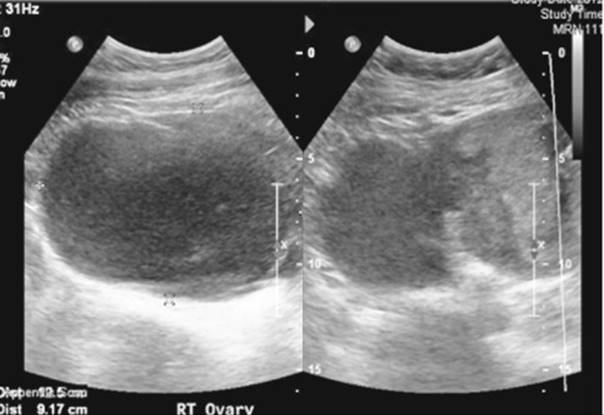
Fig. 19.2
Transabdominal sonography. A 12.5-cm-sized right ovarian cyst in pregnant women [76]
Magnetic resonance imaging (MRI) serves as an excellent imaging modality in cases in which the ultrasonographic findings are equivocal (Fig. 19.3). In a study by Tukeva et al., MRI findings with sonograms were compared, and MRI was more accurate than ultrasonography in the diagnosis of PID [80]. However, the study was limited to a selected group of patients [80–82].
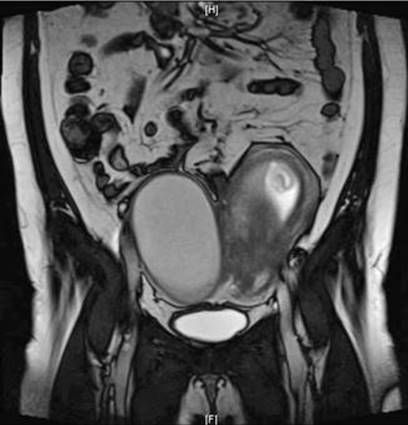
Fig. 19.3
Magnetic resonance imaging findings. Right ovarian cyst and intrauterine pregnancy (T2-weighted image) [76]
19.6.3 Pregnant Patients
There are no studies on the subject, but as for other intra-abdominal infections, ultrasonography might not be as useful in late gestation as in early gestation or the nonpregnant state for detection of adnexal pathologies because of an enlarged uterus.
19.7 Prevention of Infection
19.7.1 Preprocedural Elimination of Endometriosis
Endometriosis may be a predisposing factor for oocyte retrieval-induced PID. In regard to the few investigations available, it is rather soon to conclude a management protocol. However, some precautions may be useful for cases with endometriosis that undergo oocyte retrieval. Full evaluation and removal of endometrioma should be considered for the patients undergoing IVF [27]. However, non-vaginal methods of oocyte recovery like transabdominal approach in cases with endometriosis and pelvic adhesion seem preferable.
19.7.2 Procedural (Vaginal) Antisepsis
Traditionally, the vagina is not prepared with antiseptic solutions (e.g., aqueous povidone-iodine) before oocyte retrieval since these agents are considered to be embryotoxic. Therefore, employing only normal saline irrigation of the vagina is usually the norm prior to oocyte retrieval. However, most believed that using only normal saline rinsing and irrigating the vagina canal can only wash away the vaginal discharge without destroying potentially harmful bacteria preexisting in the vaginal flora. By applying an additional antiseptic solution followed by normal saline solution, as demonstrated in our series with aqueous povidone-iodine, one can eliminate most if not the entire vaginal flora. This process would not jeopardize the development of the oocyte because all the antiseptic solution has been completely flushed away before oocyte retrieval. The comparable clinical outcome of fertilization rate and implantation rate between two groups in our series has also proved this effect.
19.7.3 Prophylactic Antibiotics/Antifungal Agents
Older studies tend to question their use given the low incidence of pelvic infections [39, 45, 83]. Other investigators, however, do advocate using prophylactic antibiotics as a general rule [31, 42, 43]. Although there is no consensus on the type and protocol for antibiotic use, doxycycline and metronidazole are the common ones. First-generation cephalosporins, which are routinely used as prophylactic antibiotics preoperatively, are another class of antimicrobials that have been used before TVOR [41]. Serour et al. even used fluconazole, an antifungal agent, as part of their protocol prior to oocyte retrieval [42]. Although antifungal prophylaxis may seem excessive, an interesting report by Ibara et al. discussed two cases of systemic Candida glabrata infections diagnosed at 34 and 22 weeks gestation following IVF [84]. The yeast was isolated from both the mothers and their babies. Another approach can also be to reserve prophylactic antibiotics to high-risk patients such as those with history of pelvic inflammatory disease or endometriosis.
Patients who suffer from ovarian abscesses almost always have a history of salpingitis, endometriosis, pelvic adhesion, hydrosalpinx, or pelvic surgery [30, 31]. Prophylactic antibiotics during oocyte retrieval are recommended in these groups of patients with increased risk, but cannot prevent pelvic infection in all patients [30, 46].
19.8 Treatment
19.8.1 Medical Therapy
19.8.1.1 Tubo-ovarian Abscess
Bennett et al. found in their series a minor pelvic infection in 0.3 % of cases defined by pyrexia and pelvic tenderness with no evidence of abscess formation on ultrasound [30]. Therefore, in the early course of infection, all these patients were treated with antibiotic therapy. More severe infections leading to an abscess also occurred in 0.3 % of cases [30]. This incidence is in accordance with the retrospective analyses [17]. However, the preventive treatment with antibiotics does not seem to be helpful and is discussed to be a possible harm for the outcome of IVF cycles.
19.8.1.2 Ovarian Abscess
Ovarian abscess after ovum retrieval may be a severe complication that requires accurate diagnosis and prompt intervention. Initial treatment is with intravenous antibiotics effective against gram-positive, gram-negative, and anaerobic bacteria.
19.8.2 Surgical Therapy
19.8.2.1 Tubo-ovarian and Ovarian Abscess
In both TOA and ovarian abscess, surgical therapy is indicated when:
· There is no response to antibiotics within 72 h.
· If the abscess or adjacent organ ruptures.
· If surrounding organs are affected by the inflamed mass.
· There is unsuccessful drainage of the abscess.
· Uncertainty about the diagnosis.
In general population, there are two surgical options available: laparoscopy and laparotomy, both with removal of the ovary as the treatment of choice. Sometimes it is possible to drain the abscess by laparoscopy, but severe pelvic adhesions secondary to abscess formation can prevent completion of the laparoscopic procedure and then conversion to laparotomy is indicated.
As most of the patients are young, we should attempt conservative surgery if the pathology is limited to one adnexa [35]. Surgical drainage of ovarian abscess and conservative surgical approach under antibiotics are recommended during pregnancy albeit there is no consensus on patient management [85]. Drainage could be performed through culdotomy or using laparoscopy (Fig. 19.4) [76, 86] or laparotomy with peritoneal lavage. The drainage can be done percutaneously under ultrasound control. Be cognizant of peristaltic bowel on ultrasound to avoid bowel puncture and subsequent inflammation/infection. In severe cases where one-sided adnexal disease is present, unilateral salpingo-oophorectomy could be done [60] or even hysterectomy with bilateral salpingo-oophorectomy is performed [66]. Kuo et al. [87] found that, among multiparous patients, hysterectomies were more commonly performed. Park et al. collected all cases of tubo-ovarian abscesses after IVF-ET pregnancies up to 2012 (Table 19.1).

Fig. 19.4
Laparoscopic image of the right ovarian cyst. There was a 10-cm-sized right ovarian cyst including pus, which made severe adhesion with the surrounding pelvic organs and peritoneum. It also had endometriotic lesion [76]
Table 19.1
Clinical features of nine cases of tubo-ovarian abscess in pregnancy after IVF-ET [76]
|
Case |
Vaginal preparation methoda |
Interval from IVF to symptom (wk) |
History of endometriosis |
Time of OPb (wk) |
WBCc |
Symptoms and signsc |
Procedure |
Pregnancy outcome |
||
|
Pain |
BT (°C) |
Mass (cm) |
||||||||
|
Padilla [48] |
Bethadine (irrigated) |
3 |
+ |
GA 5 |
12,400 |
+ |
38.5 |
CDS, 5 |
Laparoscopic drainage |
Ongoing singleton IUP, GA 7 week |
|
Zweemer et al. [6] |
NA |
42d |
NA |
GA 38d |
18,700 |
+ |
38.6 |
Right, 16 |
Laparotomic removal |
Healthy singleton baby 3,240 g under Cesarean section at GA 38 week |
|
Younis etal. [5] |
IV antibiotics |
3 |
+ |
Operation was not done |
21,000 |
+ |
38.9 |
Bilateral, 6 |
Antibiotics treatment |
Healthy singleton baby 2,850 g at full term |
|
den Boon etal. [7] |
NA |
23 |
+ |
GA 25 |
17,700 |
+ |
38.0 |
NA |
1st drainage 2nd diagnostic laparotomy |
Delivery at GA 26 week 1st baby: 876 g, Apgar 3/7 live |
|
2nd baby: 915 g, Apgar 1/3 expire at 9 week |
||||||||||
|
Matsunaga et al. [8] |
NA |
14 |
+ |
GA 22e |
Raised |
+ |
38.1 |
Left, 8 |
Laparotomy-LSO |
Vaginal delivery at GA 22 week, Apgar 1/3 expired |
|
Jahan and Powell [10] |
NA |
3 |
+ |
GA6 |
Raised |
+ |
39.0 |
Left, 7.8 |
Laparoscopic drainage (2 times) |
Elective Cesarean section at GA 37 week (fetal cardiac anomaly) |
|
Sharpe et al. [4] |
Saline PO antibiotics |
11f |
+ |
GA 31 |
30,600 |
– |
– |
Right, 10 |
Cesarean section and drainage |
Healthy twins, GA 31 week |
|
Al-Kuran etal. [11] |
Saline |
7 |
– |
GA9 GA21g |
15,000 |
+ |
+ |
Left, 5 |
Laparotomy- Appendectomy drainage (2 times) |
Spontaneous abortion at GA 21 week |
|
Current case |
Saline PO antibiotics |
12 |
+ |
GA 14 |
10,330 |
+ |
– |
Right, 12.5 |
Laparoscopic drainage |
Ongoing singleton IUP GA 25 week |
IVF in vitro fertilization, ET embryo-transfer, OP operation, WBC white blood cell count (/mm3), BT body temperature, GA gestational age, CDS cul-de-sac, IUP intrauterine pregnancy, NA not available, IVintravenous, LSO left salpingo-oophorectomy, PO per oral
aIt contains vaginal irrigation method in oocyte retrieval and use of peri-retrieval antibiotics
bIt is time of first operation for tuboovarian abscess
cAll data are in time of diagnosis
dSymptom was developed 45 days after Cesarean section at 38 weeks
eOperation was done 15 days after delivery at 22 weeks
fShe had only painless vaginal discharge at the first time
gThe second operation was done 24 h after delivery at 21 weeks
19.9 Prognosis
19.9.1 Tubo-ovarian Abscess
Several possible explanations for the role of infection in reducing pregnancy success have been suggested especially during IVF-ET pregnancy with PID. Introducing endotoxin releasing bacteria into the peritoneal cavity during transvaginal oocyte retrieval may induce abortion by promoting the release of prostaglandins as well as catecholamines and cortisol which play some role in the termination of pregnancy. Moreover, local inflammatory reaction and fever may also affect the success rate of pregnancy [88]. Due to the adverse effect of endometriomas on IVF outcome, it is suggested that endometrioma should be removed in patients with endometriosis prior to IVF admission. Preconception evaluation and treatment should be considered for such condition [27].
The successful culmination of pregnancy is quite unusual when it is complicated by PID even in the first trimester and almost unheard when a tubo-ovarian abscess is present in late pregnancy. However, in a series published by Jafara et al., the fetal survival rate of those pregnancies complicated by a TOA late in the second trimester was surprisingly approximately 33 % [23].
19.9.2 Ovarian Abscess
A delay in diagnosis may be associated with risk of maternal death and can be detrimental to the fetus as well. Fetal loss rate of 50 % has been reported most often as spontaneous septic abortions.
References
1.
Walker CE, Landers DV. Pelvic abscesses: new trends in the management of tuboovarian abscesses. Obstet Gynecol Surv. 1991;46:615–24.PubMedCrossRef
2.
Landers DV, Sweet RL. Tubo-ovarian abscess: contemporary approach to management. Rev Infect Dis. 1983;5:876–84.PubMedCrossRef
3.
Krivak T, Propst A, Horowitz G. Tubo-ovarian abscess. Principles of contemporary management. Fem Patient. 1997;22:27–44.
4.
Soper DE. Pelvic inflammatory disease. Infect Dis Clin N Am. 1994;8:821–40.
5.
Roberts W, Dockery JL. Operative and conservative treatment of tubo-ovarian abscess due to pelvic inflammatory disease. South Med J. 1984;77:860–3.PubMedCrossRef
6.
Landers DV. Tubo-ovarian abscess complicating pelvic inflammatory disease. In: Landers DV, Sweet RL, editors. Pelvic inflammatory disease. New York: Springer; 1996. p. 94.
7.
Lackner JE, Tulsky AS. Abortion as a complication of operation in the pregnant woman. A plea for the prophylactic use of progesterone. Am J Surg. 1939;46:362–4.CrossRef
8.
Kaplan AL, Jacobs WM, Ehresman JB. Aggressive management of pelvic abscesses. Am J Obstet Gynecol. 1967;98:482–7.PubMed
9.
Rivlin ME. Clinical outcome following vaginal drainage of pelvic abscess. Obstet Gynecol. 1983;61:169–73.PubMed
10.
Rubenstein PR, Mishell DR, Ledger WI. Colpotomy drainage of pelvic abscess. Obstet Gynecol. 1976;48:142–5.PubMed
11.
Mann WI, Stovall TG. Gynecologic surgery. New York: Churchill Livingstone; 1996. p. 668.
12.
Reich H, McGlynn F. Laparoscopic treatment of tuboovarian and pelvic abscesses. J Reprod Med. 1987;32:747–52.PubMed
13.
Rivlin ME, Hunt JA. Ruptured tubo-ovarian abscess: is hysterectomy necessary? Obstet Gynecol. 1977;50:518–22.PubMed
14.
Ginsberg DS, Stern JL, Hamod KA, et al. Tubo-ovarian abscess, a retrospective review. Am J Obstet Gynecol. 1980;138:1055–8.
15.
Lavy G, Hilsenrath R. Management of tubo-ovarian abscess. Infert Reprod Clin N Am. 1992;3:821–2.
16.
Wetchler SJ, Dunn LT. Ovarian abscess. Report of a case and review of the literature. Obstet Gynecol Surv. 1985;40:476–85.PubMedCrossRef
17.
Ashkenazi J, Farhi J, Dicker D, et al. Acute pelvic inflammatory disease after oocyte retrieval: adverse effects on the results of implantation. Fertil Steril. 1994;61:526–8.PubMed
18.
Koehn RC. Ovarian abscess complicating pregnancy. US Armed Forces Med J. 1957;8:1664–9.
19.
Dudley AG, Lee F, Barclay D. Ovarian and tubo-ovarian abscess in pregnancy: report of the case and a review of the literature. Mil Med. 1970;135:403–6.PubMed
20.
Coe HC. Acute oophoritis complicating pregnancy. Am Gynecol J. 1891;670–2.
21.
Blanchard AC, Pastorek JG, Weeks T. Pelvic inflammatory disease during pregnancy. South Med J. 1987;80:1363–5.PubMedCrossRef
22.
Sherer DM, Schewartz BM, Abulafia O. Management of pelvic abscess during pregnancy: a case and review of literature. Obstet Gynecol Surv. 1999;54:655–62.PubMedCrossRef
23.
Jafari K, Vilovic-Kos J, Webster A, Stepto RC. Tubo-ovarian abscess in pregnancy. Acta Obstet Gynecol Scand. 1977;5:1–4.CrossRef
24.
Davey MM, Guidozzi F. Ruptured tubo-ovarian abscess late in pregnancy: a case report. S Afr Med J. 1987;71:120–1.PubMed
25.
Craggs B, De Waele E, De Vogelaere K, et al. Enterobius vermicularis infection with tuboovarian abscess and peritonitis occurring during pregnancy. Surg Infect (Larchmt). 2009;10:545–7.CrossRef
26.
http://www2.biusante.parisdescartes.fr/img/?refbiogr=3060&mod=s
27.
Matsunaga Y, Fukushima K, Nozaki M, et al. A case of pregnancy complicated by the development of a tubo-ovarian abscess following in vitro fertilization and embryo transfer. Am J Perinatol. 2003;20:277–82.PubMedCrossRef
28.
Moini A, Riazi K, Amid V. Endometriosis may contribute to oocyte retrieval-induced pelvic inflammatory disease: report of eight cases. Iran J Reprod Med. 2004;2:40–2.
29.
Bergh T, Lundkvist O. Clinical complications during in-vitro fertilization treatment. Hum Reprod. 1992;7:625–6.PubMed
30.
Bennett SJ, Waterstone JJ, Cheng WC, Parsons J. Complications of transvaginal ultrasound-directed follicle aspiration: a review of 2670 consecutive procedures. J Assist Reprod Genet. 1993;10:72–7.PubMedCrossRef
31.
Dicker D, Ashkenazi J, Feldberg D, et al. Severe abdominal complications after transvaginal ultrasonographically guided retrieval of oocytes for in vitro fertilization and embryo transfer. Fertil Steril. 1993;59:1313–5.PubMed
32.
Vimala N, Kothari N, Mittal S, et al. Primary ovarian abscess in pregnancy. JK Sci. 2004;6:40–2.
33.
Gedeon G. Pregnancy at term following surgery of ovarian abscess. Magy Noorv Lapja. 1952;15:86–8.PubMed
34.
Fung TY, Yim SF, Fung HY. Intramyometrial abscess complicating pregnancy. A report of two cases. J Reprod Med. 1998;43:1002–4.PubMed
35.
Laohaburanakit P, Treevijitsilp P, Tantawichian T, Bunyavejchevin S. Ruptured tuboovarian abscess in late pregnancy: a case report. J Reprod Med Obstet Gynecol. 1999;44:551–5.
36.
Friedman S, Bobrow ML. Pelvic inflammatory disease in pregnancy. A review of the literature and report of 5 cases. Obstet Gynecol. 1959;14:417–25.PubMed
37.
Acosta AA, Mabray CR, Kaufman RH. Intrauterine pregnancy and coexistent pelvic inflammatory disease. Obstet Gynecol. 1971;37:282–5.
38.
Scott JM, Hay D. Acute salpingitis in pregnancy. J Obstet Gynaecol Br Emp. 1954;61:788–91.PubMedCrossRef
39.
Govaerts I, Devreker F, Delbaere A, et al. Short-term medical complications of 1500 oocyte retrievals for in vitro fertilization and embryo transfer. Eur J Obstet Gynecol Reprod Biol. 1998;77:239–43.PubMedCrossRef
40.
El-Shawarby SA, Margara RA, Trew GH, Lavery SA. A review of complications following transvaginal oocyte retrieval for in-vitro fertilization. Hum Fertil. 2004;7:127–33.CrossRef
41.
Sharpe K, Karovitch AJ, Claman P, Suh KN. Fertil Steril. 2006;86:219.e11–3.CrossRef
42.
Serour G, Aboulghar M, Mansour R, et al. Complications of medically assisted conception in 3,500 cycles. Fertil Steril. 1998;70:638–42.PubMedCrossRef
43.
Meldrum DR. Antibiotics for vaginal oocyte aspiration. J In Vitro Fert Embryo Transf. 1989;6:1–2.PubMedCrossRef
44.
Evers JHL, Larsen JF, Gnany GG, Seick UV. Complications and problems in transvaginal sector scan guided follicle aspiration. Fertil Steril. 1998;49:278–82.
45.
Borlum KG, Maigaard S. Tranvaginal oocyte aspiration and pelvic infection. Lancet. 1998;2:53–4.
46.
Younis JS, Ezra Y, Laufer N, Ohel G. Late manifestation of pelvic abscess following oocyte retrieval, for in vitro fertilization, in patients with severe endometriosis and ovarian endometrioma. J Assist Reprod Genet. 1997;14:343–6.PubMedCentralPubMedCrossRef
47.
den Boon J, Kimmel CE, Nagel HT, van Roosmalen J. Pelvic abscess in the second half of pregnancy after oocyte retrieval for in-vitro fertilization: case report. Hum Reprod. 1999;14:2402–3.CrossRef
48.
Padilla SL. Ovarian abscess following puncture of an endometrioma during ultrasound-guided oocyte retrieval. Hum Reprod. 1993;8:1282–3.PubMed
49.
Yaron Y, Peyser MR, Samuel D, et al. Infected endometriotic cysts secondary to oocyte aspiration for in-vitro fertilization. Hum Reprod. 1994;9:1759–60.PubMed
50.
Kubota T, Ishi K, Takeuchi H. A study of tubo-ovarian and ovarian abscesses, with a focus on cases with endometrioma. J Obstet Gynaecol Res. 1997;23:421–6.PubMedCrossRef
51.
Tinkanen H, Kujansuu E. In vitro fertilization in patients with ovarian endometriomas. Acta Obstet Gynecol Scand. 2000;79:119–22.PubMedCrossRef
52.
Dicker D, Goldman JA, Feldberg D, et al. Transvaginal ultrasonic needle-guided aspiration of endometriotic cysts before ovulation induction for in vitro fertilization. J In Vitro Fert Embryo Transf. 1991;8:286–9.PubMedCrossRef
53.
Suganuma N, Wakahara Y, Ishida D, et al. Pretreatment for ovarian endometrial cyst before in vitro fertilization. Gynecol Obstet Invest. 2002;54 Suppl 1:36–40.PubMedCrossRef
54.
Tsai YC, Lin MY, Chen SH, et al. Vaginal disinfection with povidone iodine immediately before oocyte retrieval is effective in preventing pelvic abscess formation without compromising the outcome of IVF-ET. J Assist Reprod Genet. 2005;22:173–5.PubMedCentralPubMedCrossRef
55.
Levgur M, Duvivier R. Pelvic inflammatory disease after tubal sterilization: a review. Obstet Gynecol Surv. 2000;55:41–50.PubMedCrossRef
56.
Friedler S, Ben-Shachar I, Abramov Y, et al. Ruptured tubo-ovarian abscess complicating transcervical cryopreserved embryo transfer. Fertil Steril. 1996;65:1065–6.PubMed
57.
Curtis P, Amso N, Keith E, et al. Evaluation of the risk of pelvic infection following transvaginal oocyte recovery. Hum Reprod. 1991;6:1294–7.PubMed
58.
Geissdörfer W, Böhmer C, Pelz K, et al. Tuboovarian abscess caused by Atopobium vaginae following transvaginal oocyte recovery. J Clin Microbiol. 2003;41:2788–90.PubMedCentralPubMedCrossRef
59.
Chayachinda C, Leelaporn A, Ruangvutilert P, Thamkhantho M. Post-partum, post-sterilization tubo-ovarian abscess caused by Fusobacterium necrophorum: a case report. J Med Case Rep. 2012;6:330.PubMedCentralPubMedCrossRef
60.
Navada HM, Bhat BP. Pelvic inflammatory disease in the form of peritoneal abscess complicating late pregnancy. Case Rep Obstet Gynecol. 2011;2011:851598.PubMedCentralPubMed
61.
Stubblefield PG. Intraovarian abscess treated with laparoscopic aspiration and povidone–iodine lavage. J Reprod Med. 1991;36:407–9.PubMed
62.
Monif GRG. Rupture of tubo–ovarian abscess. In: Monif GRG, editor. Infectious diseases in obstetrics and gynecology. Philadelphia: Harper and Row; 1993. p. 100–6.
63.
Bracha J, Lotan M, Zakut H. Ovarian abscess following cesarean section. A case report and review of the literature. Clin Exp Obstet Gynecol. 1988;15:134–6.PubMed
64.
Martino CR, Haaga JR, Bryan PJ. Secondary infection of an endometrioma following fine-needle aspiration. Radiology. 1984;151:53–4.PubMed
65.
Wikland M, Hamberger L, Enk L. Technical and clinical aspects of ultrasound-guided oocyte recovery. Hum Reprod. 1989;4:79–92.PubMedCrossRef
66.
Howe RS, Wheeler C, Mastroianni Jr L, et al. Pelvic infection after transvaginal ultrasound-guided ovum retrieval. Fertil Steril. 1998;49:726–8.
67.
Scoccia B, Marcovici I, Brandt T. Uterine abscess after ultrasound-guided ovum retrieval in an in vitro fertilization–embryo transfer program: case report and review of the literature. J Assist Reprod Genet. 1992;9:285–9.PubMedCrossRef
68.
Coroleu B, Lopez-Mourelle F, Hereter L, et al. Ureteral lesion secondary to vaginal ultrasound follicular puncture for oocyte recovery in in-vitro fertilization. Hum Reprod. 1997;12:948–50.PubMedCrossRef
69.
Erdem M, Arslan M, Yazici G, et al. Incidental tubo-ovarian abscess at abdominal delivery: a case report. J Matern Fetal Neonatal Med. 2002;12:279–80.PubMedCrossRef
70.
Al-Kuran O, Beitawi S, Al-Mehaisen L. Pelvic abscess complicating an in vitro fertilization pregnancy and review of the literature. J Assist Reprod Genet. 2008;25:341–3.PubMedCentralPubMedCrossRef
71.
Viberga I, Odlind V, Lazdane G. Characteristics of women at low risk of STI presenting with pelvic inflammatory disease. Eur J Contracept Reprod Health Care. 2006;11:60–8.PubMedCrossRef
72.
Crossman SH. The challenge of pelvic inflammatory disease. Am Fam Physician. 2006;73:859–64.PubMed
73.
Golden N, Cohen H, Gennari G, Neuhoff S. The use of pelvic ultrasonography in the evaluation of adolescents with pelvic inflammatory disease. Am J Dis Child. 1987;141:1235–8.PubMed
74.
Özbay K, Deveci S. Relationships between transvaginal colour Doppler findings, infectious parameters and visual analogue scale scores in patients with mild acute pelvic inflammatory disease. Eur J Obstet Gynecol Reprod Biol. 2011;156:105–8.PubMedCrossRef
75.
Jung SI, Kim YJ, Park HS, et al. Acute pelvic inflammatory disease: diagnostic performance of CT. J Obstet Gynaecol Res. 2011;37:228–35.PubMedCrossRef
76.
Park S, Song T, Kim YJ, et al. Tuboovarian abscess in pregnancy after in vitro fertilization and embryo transfer. Korean J Obstet Gynecol. 2012;55:894–8.CrossRef
77.
Goharkhay N, Verma U, Maggiorotto F. Comparison of CT- or ultrasound-guided drainage with concomitant intravenous antibiotics vs. intravenous antibiotics alone in the management of tubo-ovarian abscesses. Ultrasound Obstet Gynecol. 2007;29:65–9.PubMedCrossRef
78.
Timor-Tritsch IE, Monteagudo A, Tsymbal T. Three-dimensional ultrasound inversion rendering technique facilitates the diagnosis of hydrosalpinx. J Clin Ultrasound. 2010;38:372–6.PubMed
79.
Lee DC, Swaminathan AK. Sensitivity of ultrasound for the diagnosis of tubo-ovarian abscess: a case report and literature review. J Emerg Med. 2011;40:170–5.PubMedCrossRef
80.
Tukeva TA, Aronen HJ, Karjalainen PT, et al. MR imaging in pelvic inflammatory disease: comparison with laparoscopy and US. Radiology. 1999;210:209–16.PubMedCrossRef
81.
Del Frate C, Girometti R, Pittino M, et al. Deep retroperitoneal pelvic endometriosis: MR imaging appearance with laparoscopic correlation. Radiographics. 2006;26:1705–18.PubMedCrossRef
82.
Kim MY, Rha SE, Oh SN, et al. MR Imaging findings of hydrosalpinx: a comprehensive review. Radiographics. 2009;29:495–507.PubMedCrossRef
83.
Roest J, Mous HV, Zeilmaker GH, Verhoeff A. The incidence of major clinical complications in a Dutch transport IVF program. Hum Reprod Update. 1996;2:345–53.PubMedCrossRef
84.
Ibara AS, Marcorelles P, Le Martelot MT, et al. Two cases of systemic Candida glabrata infection following in vitro fertilization and embryo transfer. Eur J Clin Microbiol Infect Dis. 2004;23:53–6.PubMedCrossRef
85.
Yalcin OT, Tanir HM, Eskalen M. Unruptured pelvic abscess in pregnancy: report. Gynecol Obstet Invest. 2002;53:133–4.PubMedCrossRef
86.
Jahan T, Powell MC. Laparoscopic management of an ovarian abscess complicating in-vitro fertilisation pregnancy. J Obstet Gynaecol. 2003;23:324.PubMed
87.
Kuo CF, Tsai SY, Liu TC, et al. Clinical characteristics and treatment outcomes of patients with tubo-ovarian abscess at a tertiary care hospital in Northern Taiwan. J Microbiol Immunol Infect. 2012;45:58–64.PubMedCrossRef
88.
Orvieto R, Ben-Rafael Z, Abir R, et al. Controlled ovarian hyperstimulation: a state of neutrophil activation. Am J Reprod Immunol. 1999;42:288–91.PubMedCrossRef