
Goran Augustin1, 2
(1)
Department of Surgery Division of Gastrointestinal Surgery, University Hospital Center Zagreb, Zagreb, Croatia
(2)
School of Medicine University of Zagreb, Zagreb, Croatia
Abstract
Surgical repair of different types of hernia is the most common general surgical procedure. More than 20 million patients worldwide undergo hernia repair each year [1]. As the world population grows, there is continuous increase in absolute number of hernias which should be repaired. Also as the world population grows, it is obvious that there are more and more pregnant women throughout the world. Therefore, there will be more pregnant women with hernias presenting in elective or emergent settings. Minimization of this increase would probably be due to more widespread use of laparoscopy which in turn lowers the incidence of postoperative hernias. During pregnancy, uterine distension raises intra-abdominal pressure making some abdominal wall hernias visible. These hernias are rare and are mostly reported as case reports. This chapter describes the most common abdominal wall hernias during pregnancy with indications for elective and emergency operations. Abdominal wall hernias in pregnancy include surgical and gynecologic aspects of the disease and should be evaluated and treated by an abdominal surgeon and gynecologist in collaboration.
5.1 Introduction
Surgical repair of different types of hernia is the most common general surgical procedure. More than 20 million patients worldwide undergo hernia repair each year [1]. As the world population grows, there is continuous increase in absolute number of hernias which should be repaired. Also as the world population grows, it is obvious that there are more and more pregnant women throughout the world. Therefore, there will be more pregnant women with hernias presenting in elective or emergent settings. Minimization of this increase would probably be due to more widespread use of laparoscopy which in turn lowers the incidence of postoperative hernias. During pregnancy, uterine distension raises intra-abdominal pressure making some abdominal wall hernias visible. These hernias are rare and are mostly reported as case reports. This chapter describes the most common abdominal wall hernias during pregnancy with indications for elective and emergency operations. Abdominal wall hernias in pregnancy include surgical and gynecologic aspects of the disease and should be evaluated and treated by an abdominal surgeon and gynecologist in collaboration.
5.2 Groin Hernia
Varices of the round ligament are often mistaken for an inguinal hernia Verovitz, 1941
5.2.1 Incidence
Estimated rates of the lifetime risk of inguinal hernia repair are 27 % for men and 3 % for women in general population [2]. Operations performed for both elective and emergent inguinal hernias in women have a bimodal age distribution: during the first 9 years of life; thereafter, incidence rises after 30 years of age. The incidence in women is 9–10 times less frequent than in men, and only 9 % of inguinal hernioplasties are performed on women; of these, 17 % are performed on an emergent basis [2]. In nonpregnant women indirect inguinal hernia is 2.5 times more frequent than direct hernia during elective operations (54.3 % vs. 23.1 %), while the difference during emergent operations is significantly smaller (23.5 % vs. 17.2 %). Femoral hernias in an elective setting comprise 15.9 %, while as an emergency these comprise 53.6 % [3]. Inguinal hernia in pregnancy has a reported incidence of 1/1,000–1/3,000 with 75 % occurring in multiparas [4–7].
5.2.2 Etiopathogenesis and Risk Factors
Some authorities from the previous century [8, 9] stated that preexisting hernia frequently disappears during the later months of pregnancy: “the reason being that the enlarging uterus pushes the intestines away from the inguinal ring and presently blocks access to them” [9]. Strangulated inguinal hernias are extremely rare in the later months, and, in fact, Gaudier in 1894 stated that a strangulated inguinal hernia and pregnancy are incompatible [10]. Praxagoras of the third to fourth century BC was credited with the first reported operation for obstruction in general population, by relieving strangulated inguinal hernia [11].
The risk factors are the same as for the general population plus the additional increase of intra-abdominal pressure due to an enlarging uterus
· Family history
· Collagen diseases
· Smoking
· Renal failure
· Chronic lung disease
· Diabetes mellitus
· Steroid use
· Malignancy
· Malnutrition
· Cirrhosis
· Ascites
· Obesity
5.2.3 Clinical Presentation
Diagnosis is made by the presence of a reducible or nonreducible groin lump, which demonstrates an expansile cough impulse and the exclusion of other causes of a lump. Palpation of hernia content can differentiate a solid structure (greater omentum or uterine fibroid) from the intestine (gas sounds on pressure). Assessment of the inguinal region is made by applying Valsalva maneuver which increases intra-abdominal pressure. The maneuver is performed when a person tries to exhale forcibly with a closed glottis so that no air exits through the mouth or nose as, for example, strenuous coughing, straining during a bowel movement, or lifting a heavy weight. If incarceration occurs, there is severe abdominal pain with nausea and sometimes vomiting. If bowel is incarcerated, then severe vomiting with absence of stool and flatus is present. Fever develops if perforation due to distension or strangulation occurs. In such cases redness of the overlying skin is commonly present due to the spread of infection through abdominal wall.
5.2.4 Diagnosis
5.2.4.1 Plain Abdominal X-Ray
It is used for the confirmation of bowel obstruction due to incarcerated inguinal hernia in general population. If bowel obstruction is not present, probably the part of the greater omentum is incarcerated. This imaging method is not mandatory because clinical suspicion of incarcerated inguinal hernia is an indication for the emergency operation during pregnancy.
5.2.4.2 Transabdominal Ultrasound
Ultrasound is noninvasive and performed in real time but is operator dependent and has limitations in obese patients. Sensitivity in detecting clinically occult hernias in a non-acute presentation is 33 %, with a specificity of 100 %, and patients with normal ultrasound findings should be considered for further investigation, but hernias with characteristic clinical features need no additional investigation [12].
5.2.5 Differential Diagnosis
There are many causes of a groin swelling/mass and some are listed in the Table 5.1. Some of them, specific to pregnancy, are discussed in detail.
Table 5.1
Possible causes of groin swelling/mass [5, 6, 13–15]
|
Enlarged lymph node(s) |
|
Subcutaneous lipoma |
|
Cyst in persistent process vaginalis |
|
Round ligament varicosities |
|
Round ligament stretch |
|
Inguinal endometriosis |
|
Inguinal metastases |
|
Lymphoma |
|
Hematoma |
|
Abscess |
|
Mesothelial cysts |
|
Lymphadenopathy |
|
Cyst of the canal of Nuck |
|
Vascular aneurysms/pseudoaneurysms |
|
Soft tissue malignancies |
|
Cystic lymphangiomas |
5.2.5.1 Round Ligament Varicosities
Pathophysiology
Anatomically, the round ligament extends from the lateral uterus to the major labia containing veins, arteries, lymphatics, and nerves. Round ligament varicosities (RLVs) are prominent veins within the round ligament and are more common in pregnancy especially in the second or early third trimester because pregnancy promotes increased venous flow and reduced venous tone [13]. There are several mechanisms that cause RLV development. Physiologically, there are progesterone receptors naturally occurring within the round ligament veins [16] and, as progesterone levels increase during pregnancy, they cause dilatation of these veins. Furthermore, with advancing pregnancy, blood volume and cardiac output increase resulting in increase of venous return [17]. This, as well as a gravid uterus causing relative impingement of pelvic veins, results in venous engorgement. RLVs have been rarely described and their true incidence is unknown [5, 16, 18], one study claiming 0.001 % [15]. The RLV was first reported in 1941 by Verovitz who stated that “varices of the round ligament are often mistaken for an inguinal hernia” [19]. The first report of RLV in Korea was in 2010 by Jung et al. [20].
Clinical Presentation
The distinction between groin hernia and RLV is difficult clinically because the symptoms and signs are similar. Both swellings disappear on lying down and reappear on standing, provoked by increased intra-abdominal pressure in cases of coughing or Valsalva maneuver, though a varicocele may return more gradually than a hernia and is a little less circumscribed. A varicocele is of course dull on percussion and more closely resembles a hernia containing omentum than one containing bowel. The absence of varicose veins elsewhere does not exclude the diagnosis of a varicocele of the round ligament. Both traverse the inguinal canal and can be reducible or irreducible. Reducibility of RLV is due to the fact that these veins do not contain valves and therefore can partially empty. RLVs also transmit cough impulses because transmitted abdominal pressure leads to vein distension [6, 13]; a clue that may suggest RLV is in coexistence of lower limb or labial varicosities. RLV most commonly presents with a groin bulge and mild discomfort (Fig. 5.1).

Fig. 5.1
Right inguinal swelling caused by round ligament varicosities [21]
5.2.5.2 Round Ligament Varicose Vein Thrombosis
If pain is the predominant symptom, thrombosis of RLV or variceal rupture should be excluded [22]. Thrombosis of the RLV is a complication which still further increases the resemblance between an inguinal hernia and RLV. This complication produces a firm, tender, irreducible swelling simulating a strangulated inguinal hernia. It is more common during postpartum period (Fig. 5.2).

Fig. 5.2
The excised part of the round ligament which is thickened with evident thrombosed varicose veins [22]
Diagnosis
Ultrasonography of the inguinal region can differentiate between multilocular mass which enlarges during Valsalva maneuver (Fig. 5.3) and single mass found in hernia. If the bowel is present in the sac, then peristalsis can be visualized and helps to differentiate it from RLV. It should be noted that hernia sac also enlarges during Valsalva maneuver and is not pathognomonic for either of these diseases. Color Doppler US examination can differentiate RLV from other causes of groin swelling in pregnancy. The characteristic ultrasound appearances of varicosities simulating pelvic masses in pregnant and nonpregnant women include a prominent venous plexus with accompanying dilated draining veins passing through the inguinal canal, veins draining into the inferior epigastric vein, and the typical “bag of worms” appearances of smaller varices [23] with absence of bowel or lymph nodes in the inguinal mass [15]. Duplex imaging can confirm venous flow and augmentation of this flow with Valsalva maneuver (Figs. 5.4 and 5.5). In inguinal hernias, herniated bowel may be recognized by its peristalsis, mucosal blood flow, or mesenteric fat by US and Doppler US examination [18].

Fig. 5.3
(a) Transverse gray-scale sonogram of painful right reducible inguinal mass at rest shows cystic mass (arrows). (b) Mass enlarged during Valsalva maneuver [11]

Fig. 5.4
(a) Color Doppler US examination confirmed venous flow in the mass. (b) Valsalva maneuver caused marked enlargement and flow augmentation in the veins, consistent with round ligament varices [11]

Fig. 5.5
Sagittal gray-scale (a) and color Doppler imaging (b) reveal the lesion extending from the right inguinal canal to the abdominal cavity (arrows) [15]
Lymph nodes have a characteristic appearance, usually hypoechoic with an echogenic central hilum that demonstrates flow on Doppler imaging. The sonographic appearance of endometriosis, hematoma, lipoma, or lymphadenopathy is not easily confused with that of RLV [18]. In doubtful cases CT or MRI can be used. There is no specific treatment and mostly symptoms resolve completely from 2 weeks [21] to 2 months postpartum [15]. A truss may, by giving support, add to the comfort of the patient. Reassurance, with a simple explanation of the temporary nature of the lump during pregnancy and the recommendation of the usual supportive measures for the relief of vulvar and leg varicose veins, is all that has been found necessary.
Thrombosis of Round Ligament Varicosities
The diagnosis of thrombosis of RLV has relied historically on surgical evaluation [24], but at imaging they should be suspected if veins are noncompressible, no flow signal can be obtained, and/or there is a visible clot within the lumen. There is no consensus on the management of thrombosed RLV, with patients being treated successfully both with conservative and with surgical management [22]. Surgical exploration is recommended first to rule out a strangulated hernia and secondly to reduce pain or discomfort caused by the inguinal mass.
5.2.5.3 Round Ligament Stretch (Pain)
As the uterus rises in the abdomen, it pulls on the round ligaments like an inflating balloon tugging at its guy ropes (Fig. 5.6). The ligaments usually stretch easily, but occasionally growth rate is too much for them and small hematomas occur. The patient will have sudden localized abdominal pain or hip area that is either on one side or both with little constitutional upset. Some women even report pain that extends into the groin area. Examination shows tenderness well localized over the round ligaments and sometimes radiating to their insertion along the inguinal canal and to the pubic tubercle. Treatment with analgesia, bed rest, and local warmth resolves the situation in a few days.

Fig. 5.6
Enlargement of the pregnant uterus causes distension of the round ligament producing abdominal pain [25]
5.2.5.4 Inguinal Endometriosis
Inguinal endometriosis is rare with the incidence of 0.3 % of endometriosis treated. The incidence of endometriosis in the extraperitoneal part of the round ligament is 0.3–0.6 % among women suffering from endometriosis in general [26–32]. Almost all lesions are on the right side and only three patients had left-sided disease and one patient had bilateral inguinal endometriosis [26, 28, 33–35]. Although predominance for the right side is unclear, one possibility for the right-sided predominance is that the sigmoid colon relatively protects the left groin [36]. Also, right inguinal area seems more often affected than the left one because of the clockwise movement of the peritoneal fluid because of the peristaltic movement of the intestinal wall [37, 38].
The size of the mass reported ranges 1–6 cm in diameter [27, 28, 39, 40]. Analysis of published cases showed that 25 % are associated with an inguinal hernia. Endometriosis in the inguinal region was first reported by Cullen in 1896 which he referred to as an adenomyoma of the round ligament [41], and since then less than 100 cases have been published.
Direct extension of endometrial tissue along the round ligament is a possible pathogenesis of inguinal endometriosis [42]. The prevalence of the round ligament of uterus endometriosis in females with deep infiltrating endometriosis is 13.8 % [44]. The canal of Nuck, which is a small evagination of the parietal peritoneum that accompanies the round ligament through the inguinal ring into the inguinal canal, provides the most likely pathway for endometrial tissue to implant in the superficial inguinal soft tissue (Fig. 5.7) [45, 46].

Fig. 5.7
Anatomic diagram of the canal of Nuck. The canal is a small evagination of the parietal peritoneum that accompanies the round ligament through the inguinal ring into the inguinal canal, providing the most likely pathway for endometrial tissue to implant in the superficial inguinal soft tissue [43]
The symptoms commonly fluctuate with menses. Catamenial pain was the pathognomonic symptom in the differential diagnosis of the inguinal mass. Symptomatic complaints ranged from 3 months to 10 years, with an average interval of 3 years [26, 28]. It is essential to point out that cyclicity is not always demonstrable and is not essential for diagnosis. Despite fluctuating symptomatology inguinal endometriosis should be included in a differential diagnosis because it is often diagnosed as inguinal hernia preoperatively. Until the 1960s correct preoperative diagnosis was made in 25–35 % [31]. Ultrasound of inguinal region was not described in this paper.
The sonographic findings of inguinal endometriosis have been presented for fewer than 15 cases [36, 43, 47–51]. The sonographic features of inguinal endometriosis are variable. The presence of solid masses [47–49], cystic masses [36, 51], and combined cystic and solid masses [50] has been described. Most of the cystic masses have internal septa (Fig. 5.8) [36, 44, 51]. These sonographic findings are different from findings for abdominal wall endometriosis that arises near Cesarean delivery scars. Most abdominal wall endometriosis shows a solid appearance with an irregular margin on sonography, and internal vascularity has been seen within these masses on color Doppler sonography [52, 53].

Fig. 5.8
Imaging findings for inguinal endometriosis in a 29-year-old woman. Longitudinal color Doppler (a) and transverse gray-scale (b) sonograms showing a cystic mass with an internal septum in the right inguinal area (arrow). There are flow signals within the septum [43]
Young et al. believe that this difference is due to the different environmental situation between the two types of lesions. Inguinal endometriosis usually develops in the canal of Nuck, which is a cavity filled with fluid. If bleeding occurs within the implanted endometrial tissues, the canal of Nuck may be obliterated, and the structure may be vulnerable to formation of a cystic mass. In contrast, cyst formation is difficult for abdominal wall endometriosis because this lesion usually occurs in Cesarean delivery scars, which is a limited space rather than the canal of Nuck [44].
Sonographically guided fine-needle aspiration is helpful for rapid and accurate diagnosis of inguinal endometriosis and enables a malignancy to be excluded [52]. On CT, inguinal endometriosis shows the presence of a soft tissue mass which is mainly solid in nature with the same density as muscle and follows the course of the round ligament (Fig. 5.9) [43, 55].
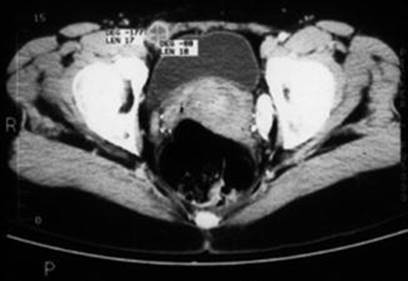
Fig. 5.9
CT scan of the right inguinal extraperitoneal endometriosis. Low-density area with an enhancing rim in the right inguinal region medial to the inferior epigastric vessel lying lateral to the inferior insertion of the rectus abdominis muscle. There was no evidence of bowel obstruction but there were inflammatory changes around the area suggestive of a strangulated direct inguinal area [54]
An additional diagnostic modality in unequivocal cases is MRI with a characteristic “shading sign” representing an endometriotic nodule [56]. MRI clearly showed the change of tumor size depending on the menstrual cycle, which aided in arriving at the correct diagnosis of endometriosis in this unusual location [55]. However, in half of the reported cases of inguinal endometriosis, MRI features were not specific and included intermediate or high signal intensity on T2-weighted images [47, 55].
When inguinal endometriosis presents as a solid mass on sonography, the differential diagnosis includes neoplasms such as sarcoma, lymphoma, metastasis, an abscess, and hematoma. When inguinal endometriosis presents as a cystic mass on sonography, it should be differentiated from a hydrocele of the canal of Nuck (usually presents as a unilocular cyst [45, 46] and an inguinal hernia). A definitive diagnosis is made during operation for inguinal hernia repair and the condition is treated by complete excision of the inguinal endometriosis, including the extraperitoneal portion of the round ligament (Figs. 5.10 and 5.11), otherwise recurrences are frequent [57].

Fig. 5.10
Right inguinal mass (endometriosis) during exploration [37]

Fig. 5.11
Gross specimen of right inguinal endometriosis [37]
Intraperitoneal endometriosis is demonstrated in most patients. Majeski recommends performing pelvic laparoscopy for all patients who have endometriosis in the extraperitoneal part of the round ligament or in a scar [58]. This view is shared by other authors because of the association with pelvic endometriosis and subfertility (Fig. 5.12) [27, 28].

Fig. 5.12
Macroscopic aspects of the round ligament of the uterus. LRL = a left round ligament that is shortened, widened, and deviated in the direction of the bladder due to endometriosis. RRL = a right round ligament that is thickened and pressured by uterine deviation to the left. BE = bladder endometriosis [59]
On the other hand, Seydel et al. did not see the need to perform laparoscopy in patients who do not present with signs of pelvic endometriosis [59].
5.2.5.5 Hydrocele of the Canal of Nuck
In the female, the round ligament is attached to the uterus near the origin of the Fallopian tube and a small evagination of parietal peritoneum accompanies the round ligament through the inguinal ring into the inguinal canal [60]. This small evagination of parietal peritoneum is the canal of Nuck in the female, homologous to the processus vaginalis in the male. The canal of Nuck normally undergoes complete obliteration during the first year of life. Failure of complete obliteration results in either an indirect inguinal hernia or a hydrocele of the canal of Nuck [60, 61]. If obliteration fails in the distal portion of the canal, a sac containing serous fluid remains, the so-called hydrocele of canal of Nuck [60, 61]. Hydrocele of the canal of Nuck is rare condition.
Clinically, the hydrocele of the canal of Nuck manifests as a painless swelling in the inguinal area and major labia. The cysts are usually small averaging about 3 cm in length and about 0.3–0.5 cm in diameter [62].
Ultrasound finding of a hydrocele of the canal of Nuck is typically sausage shaped, extending along the route of the round ligament [61], or comma shaped with a surface beak representing a continuation of the peritoneal cavity through the inguinal canal on ultrasound [46]. MRI shows a hydrocele of the canal of Nuck as a thin-walled tense cystic mass in inguinal area (Fig. 5.13).

Fig. 5.13
MRI findings of a hydrocele of the canal of Nuck. (a) Coronal T1-weighted and (b) axial T2-weighted images show the mass is true cystic and thin walled in the right inguinal area [46]
During operation cystic mass adjacent to round ligament is found (Fig. 5.14). It should be excised completely with excision of the adjacent round ligament because definitive diagnosis is sometimes established only during pathohistological analysis.

Fig. 5.14
Photograph at surgery shows a comma-shaped cyst with surface beak continuing the round ligament that extends peritoneal cavity through the inguinal canal. The round ligament with cystic tense mass was excised [46]
5.2.6 Therapy
In general population a higher proportion of emergency operations is carried out in women (16.9 %) than men (5.0 %), leading to bowel resection in 16.6 and 5.6 %, respectively. During reoperation femoral hernias were found in 41.6 % of the women who were diagnosed with a direct or indirect inguinal hernia at the primary operation. The corresponding proportion for men was 4.6 % [63]. These data should be kept in mind when operating on a pregnant patient. Sciannameo et al. reported a case of incarcerated inguinal hernia during pregnancy in which the content of the hernia sac was a distorted uterine fibroid [57]. The role of abdominal binder during the postoperative period is not known.
5.2.6.1 Perioperative Considerations
It has been documented that the rate of serious postoperative complications is lower under local anesthesia, including fewer postoperative analgesic requirements and fewer micturition problems [64].
5.2.6.2 Combined Surgical Procedures and Cesarean Section
The dilemma is whether to perform herniorrhaphy in a pregnant patient with an abdominal wall hernia and indication for Cesarean section. The combination of inguinal hernia repair with Cesarean section was first reported in 1987 by Altchek and Rudick [65]. Cesarean section in a woman with umbilical hernia, inguinal hernia, and incisional hernia after midline, lower midline, or paramedian incision can be made with a single incision and operation time less than 120 min [66]. In patients with bilateral inguinal hernia, the procedure is significantly prolonged [67]. This corresponds to wound infection rate in general population: in operations lasting 61–90 min (4.0 % infection rate), as opposed to 91–120 min (6.2 %) or greater in operations longer than 120 min (8.0 %) [4]. Cesarean section with repair of more distant hernias requires combined procedures with separate incisions and significant prolongation of operation. Longer duration of operation is associated with an increase in wound infection rates [4]. Prolonged hospitalization and increase in complication rate were not observed in the combined procedures with single incision. In one study no complications were recorded during the perinatal and follow-up periods, and no recurrences observed [67]. The practical benefits are obvious: a 2-in-1 operation, with a single incision, single anesthesia, and single hospital stay, confers valuable advantages for both the patient and hospital in terms of time, cost, convenience, and avoidance of the separation of mother from her newborn baby entailed by reoperation. The operation could be done in general or spinal/epidural anesthesia.
5.2.7 Prognosis
Postoperative course of incarcerated inguinal hernia depends on the content of the hernia sac and duration of the incarceration. There are several important postoperative complications that can occur after inguinal hernioplasty.
5.2.7.1 Recurrence
Recurrence in the general population is 1–20 % [68]. Recurrence rates are not known for inguinal hernioplasty during pregnancy. It is often secondary to deep infection, undue tension on the repair site, or tissue ischemia as in nonpregnant patients. The high postoperative morbidity rate in nonpregnant women compared with men is due both to their high proportion of femoral hernia and to an increased risk for emergency procedure in all types of groin hernias [3]. Because femoral hernias are more frequent in recurrent hernias than in primary hernias, it has been suggested that femoral hernias may be overlooked during repair of inguinal hernias. Possible reasons for the high rate of emergency operation in femoral hernias are no or vague symptoms prior to incarceration, and diagnostic difficulties, even at incarceration [3]. McEntee et al. concluded that strangulated hernias were misdiagnosed by the general practitioner in 33 % of patients and by the hospital registrar in 15 % [69].
5.2.7.2 Postherniorrhaphy Pain
Postoperative groin pain (inguinal neuralgia and inguinodynia) is common. It follows the distribution of the regional nerves, including the ilioinguinal, iliohypogastric, lateral femorocutaneous, and genital branch of the genitofemoral nerve. Nerve injury is usually due to the entrapment of a portion of the nerve in the mesh or suture line.
5.2.7.3 Infection
Infection of the hernia wound or mesh is an uncommon postoperative complication but represents another etiology of recurrence. In specialized hernia centers, the incidence of wound infection is <1 %. When an infection does occur, skin flora is the most likely etiology, and appropriate gram-positive antibiotics should be initiated. If mesh (nonabsorbable) is present, most postoperative groin hernia infections could be treated with aggressive use of antibiotics after the incision is opened and drained expeditiously [70]. Mesh removal is rarely indicated.
5.3 Umbilical Hernia
5.3.1 Incidence
Approximately 5–7 % of all primary hernias in the adolescent/adult general population are umbilical [71]. Infantile umbilical hernia is the result of an abnormally large or weak umbilical ring that fails to close in an otherwise normal abdominal wall. The herniation is typically at the umbilicus, but it may be above (supraumbilical) or below that level (infraumbilical). The defect is covered by skin. The umbilical ring is not covered by fat. Adult umbilical hernia may be the result of untreated infantile hernias that fail to close spontaneously. Only 10.9 % of adults with umbilical hernias recalled having hernias from childhood with a male to female ratio 1:1 [72]. Umbilical hernias (protrusions of >5 mm and diameters of >10 mm from the abdominal skin surface) are present in about 15 % of pregnant West African women [73].
First description found of umbilical hernia in pregnancy was in 1907 by Ernest F. Robinson (Fig. 5.15) [75] and the first incarcerated umbilical hernia in 7th month of pregnancy that was complicated with wound infection after hernioplasty and subsequent recurrence was found in the study by Coley and Hoguet published in 1918 [76].

Fig. 5.15
Ernest F. Robinson (1872–1945) upon settling in Kansas City became chief surgeon for two railroad companies and, in 1905, joined the University of Kansas School of Medical as a Professor of Surgery – an association that lasted until 1909 [74]
5.3.2 Etiopathogenesis
Mostly, adult hernias present de novo pathology because of either a weakness of the abdominal wall or an increase in abdominal pressure (as in pregnancy), cirrhosis, ascites, or obesity [71]. The neck of the umbilical hernia is usually narrow (1–2 cm) compared with the size of the hernia mass, and strangulation is common [71].
Hypothesis on the mechanism of the incarceration of fibroids without pedicle is as follows. Since the free movement of such fibroids is very limited, their risk of incarceration is much lower than those of their pedicled counterparts. The progression of pregnancy makes the fibroid displace cranially onto the anterior wall of the uterus. During this process, compression of uterus in the posterior to anterior direction in the abdominal cavity may cause the fibroid to be easily entrapped in the umbilical opening of the hernia sac. The increase in the intra-abdominal pressure due to pregnancy may be a contributing factor to the hernia formation or enlargement of underlying umbilical hernia. The neck of the umbilical hernia is usually quite narrow compared with the size of the hernia mass, and strangulation is therefore common [77].
Finding a gravid uterus in an anterior abdominal wall hernia is rare, and is usually found, in multiparous patients [67, 78, 79].
5.3.3 Clinical Presentation
There are two parts of the diagnostic process. First is the definition of umbilical hernia and second is the definition of the contents of the hernia sac, both important for the type of treatment. Diagnosis is definitive if there is a dilated umbilical ring with or without contents in a hernia sac (Fig. 5.16). If incarceration is present, symptoms depend on the incarcerated organ and duration of incarceration: incarcerated bowel causes vomiting, distension, and absence of stool passage; uterine fibroid or greater omentum causes only pain and local tenderness. If the bowel becomes necrotic, perforation ensues into the surrounding tissue of the abdominal wall with erythema and edema overlying the hernia.

Fig. 5.16
A 42-year-old multiparous woman with a huge umbilical hernia with skin necrosis over the umbilicus in 38-week pregnancy presented to the outpatient clinic stating that she was in labor. She had vaginally delivered her previous children at home with the assistance of a traditional birth attendant. She had never had abdominal operation [79]
Postoperative hernia after laparoscopic surgery with supra- or infraumbilical incisions can be differentiated with history taking and evidence of surgical scars.
5.3.4 Diagnosis
5.3.4.1 Plain Abdominal X-Ray
Plain abdominal X-ray can confirm or exclude bowel obstruction but if the diagnosis is clinically evident, it is not necessary, avoiding the risk of fetal exposure.
5.3.4.2 Transabdominal Ultrasound
Abdominal ultrasound is diagnostic in doubtful cases to exclude other possible etiologies of painful periumbilical lumps (see next section “Differential diagnosis”) or to confirm or exclude the presence of the bowel in hernia sac.
5.3.5 Differential Diagnosis
5.3.5.1 Omphalitis/Periumbilical Abscess
History taking is important because in omphalitis there is no previous hernia and in periumbilical abscess there is often the history of cleansing of umbilicus with small sticks which cause skin abrasions with inoculation of bacteria. Furthermore, systemic symptoms are rarely present in omphalitis and periumbilical abscess.
5.3.5.2 Umbilical Endometriosis
Incidence
Cutaneous EM (CEM) accounts for less than 5.5 % of all EM cases [80–82]. Less than 30 % of CEM cases appear in the absence of prior surgery and are then referred to as primary or spontaneous CEM [80–82]. Cutaneous EM of the umbilicus is also known as Villar nodule, with reference to the physician who first described it in 1886. Cutaneous endometriosis can develop spontaneously during pregnancy and is then most often located on the umbilicus [83, 84]; it may regress spontaneously after delivery [83]. Umbilical EM (UEM) accounts for up to 30–40 % of all CEM cases [80, 81, 85]. Up to 2008, 234 cases of umbilical endometrioses have been described in the literature and only two of umbilical endometriosis in pregnancy [83, 84].
Clinical Presentation
It manifests as a rubbery or firm nodule ranging in size from some mm to 6–9 cm (mean 2–2.5 cm). Its color varies from red and blue to brown-black, depending on the amount of hemorrhage and the penetration depth of ectopic endometrial tissue. Occasionally, the nodule is flesh colored [86, 87]. It is usually single and often multilobulated, although multiple discrete nodules may be present (Fig. 5.17) [89].

Fig. 5.17
A 37-year-old woman presented with a multilobulated, red-brownish nodule that had developed 10 years earlier over her umbilicus, 2 years after the delivery of a single healthy baby. This lesion had slowly grown in size and was reportedly tender and exhibited occasional bleeding during the menses [88]
Clinical symptoms include tenderness, pain, bleeding, swelling, and growth correlated with the menstrual cycle. However, not all symptoms are present in a given patient and some patients are totally asymptomatic [90]. It is essential to point out that cyclicity is not always demonstrable and is not essential for diagnosis. Other authors have described noncyclical pain as being more common, and hence the diagnosis of endometriosis must not be disregarded if the pain is not cyclical [91, 92]. Umbilical EM may be associated with umbilical hernia [93]. When UEM is associated with pelvic EM, general symptoms such as dysmenorrhea and dyspareunia may be present. EM has been described in connection with umbilical hernia [94].
Diagnosis
The diagnosis of CEM can be suspected clinically on the basis of the clinical appearance and a good history but relies mainly on histopathological examination. Other diagnostically helpful imaging methods include dermatoscopy, MRI, and ultrasonography. Dermatoscopical findings of EM include a homogenous reddish pigmentation with small, well-defined, globular structures of a deeper hue, termed “red atolls” [95]. The findings in MRI include a low signal on T1 weighting and a low or high signal on T2 weighting, depending on the presence or lack thereof, respectively, of hemosiderin [90, 96]. Ultrasonography and computed tomography are more accessible than, but not as sensitive as, MRI. Fine-needle aspiration cytology has been used, but its results may be inconclusive [37, 82, 97]. Serum CA-125 levels may be increased (up to 260 U/ml) [83, 97, 98], but this finding is not specific for EM.
Therapy
The treatment of CEM is mainly surgical, preferably performed at the end of the menstrual cycle when the lesion is small in order to achieve a minimal excision [99]. The technique of removal varies depending on the size and extent of the lesion, from simple excision with wide margins under local anesthesia to laparoscopic excision en bloc of the umbilicus [87]. A polypropylene mesh may be necessary to prevent the development of hernia, if the defect in the rectus sheath is large [82, 100]. Treatment with gonadotropin-releasing hormone agonists, danazol, and contraceptive pills can be given in order to reduce tumor size before excision or provide relief from the symptoms [81, 101]; these are insufficient as sole treatments [101] and may lead to incomplete excision [82]. Gynecologic examination and hormonal evaluation are recommended after excision of CEM in order to detect an associated pelvic EM. Abdominal and transvaginal ultrasonography or MRI scan should be performed in all asymptomatic patients, but whether laparoscopic examination should be systematically performed is still debated [37, 82, 87, 98, 101].
Prognosis
The prognosis of CEM is good. Recurrences are uncommon if excision is performed with clean and wide margins. However, malignant transformation has been reported in 0.3–1 % of scar EM and should be suspected in the case of rapidly growing or recurrent lesions [102, 103]. The most common histological subtype is endometrioid carcinoma (69 %) followed by clear-cell carcinoma (13.5 %), (adeno)sarcomas (11.6 %), and serous carcinoma [102, 103].
5.3.5.3 Umbilical Endosalpingiosis
Endosalpingiosis is a rare clinical entity that describes the ectopic growth of Fallopian tube epithelium [104]. Endosalpingiosis, endometriosis, and endocervicosis constitute the triad of nonneoplastic disorders of the Müllerian system. These pathologies are found in isolation but are more commonly found in association with one another [38, 105]. The term endosalpingiosis was employed for the first time by Sampson et al. in 1930. Under that term, the author designated any unusual growth and invasion of tubal epithelium in tubal stumps, in subjects who had undergone previous salpingectomy or tubal sterilization [104].
Pathogenesis
The different theories for the pathogenesis of endosalpingiosis are similar to those for endometriosis, since those two entities, together with endocervicosis, constitute the nonneoplastic disorders of the Müllerian system. The different models can be traced back to two basic ideas. One group of theories is based on the fact that endometrial cells (or their precursors) are transported by various routes (transtubal, hematogenous, lymphogenous, or direct apposition) and implanted in the affected organ. The other group of theories suggests that Müllerian ectopias are the result of metaplastic processes in the target organ (coelomic metaplasia theory, secondary Müllerian system) or from scattered embryonic rest [106–108].
Clinical Presentation
These lesions appear as nodules of the umbilicus and are usually brownish in color. The main symptoms (besides the esthetic) are pain and size fluctuation with menstruation. In the international literature, there are five cases of umbilical endosalpingiosis. The first four cases refer to patients with previous medical history of gynecologic procedures [109–111], while the last case is the first case of spontaneous appearance [112].
Diagnosis
The diagnosis of these pathologies is made histologically. In the case of endosalpingiosis, pathology confirms the presence of a tube-like epithelium containing three types of cells: ciliated, columnar cells; non-ciliated, columnar mucous secretor cells; and the so-called intercalary or peg cells [109, 113].
Therapy
The treatment of choice is surgical excision. Excision should be done under local anesthesia, in order to minimize morbidity and hospitalization if small. However, the patient has to be notified that in the case of a reappearance of abdominal pain (especially in the lower quadrant), a laparoscopy should be performed in order to exclude abdominal endometriosis.
5.3.6 Complications
Multiple complications have been reported in association with pregnancies in anterior abdominal wall defects. These include excessive stretching of the skin, causing ulceration due to friction between the hernia sac and other parts of the patient’s body and clothing with possible pressure skin necrosis and rupture. Other reported complications, many of which can threaten the mother or fetus, include incarceration, miscarriage, premature labor, intrauterine hemorrhage, intrauterine growth retardation, intrauterine death, rupture of the lower uterine segment, ruptured abdominal wall, and death [78].
5.3.7 Therapy
Therapeutic goals consist of two parts. First is the treatment of hernia itself and second the treatment of concomitant complications and the cause of the herniation. Incarceration and strangulation are considered relatively uncommon, but when they do occur, these complications are responsible for 10–20 % of the indications for umbilical hernia repair [114]. One of the first published cases of ruptured umbilical hernia during pregnancy by Bruce Kenneth Young (Fig. 5.18) was in 1965 [115].

Fig. 5.18
Bruce Kenneth Young from NYU Langone Medical Center published one of the first cases of ruptured umbilical hernia in pregnancy
Umbilical hernias in adults do not close spontaneously; slow enlargement over a period of years is common and strangulation is much more frequent than in pediatric umbilical hernias therefore elective operation is mandatory at presentation in general population.
In elective and emergent settings, as in the general population, the recurrence rate correlates with the body weight and width of the hernia orifice. The recommendation is that mesh should be used to repair hernia in patients whose BMI is higher than 30 and the hernia orifice is larger than 3 cm because mesh repair has significantly lower recurrence rate in the general population [116]. However, when the orifice is in the range of 2–3 cm, the decision to use mesh should be made on the basis of individual variations [117]. It has been reported recently that the laparoscopic repair is an alternative to the open mesh repair in the umbilical hernia [118]. The role of abdominal binder during the postoperative period in pregnancy and puerperium is not known.
Irreducible umbilical hernias without symptoms should be repaired in a semi-urgent basis before the enlarging uterus causes possible organ (most often small bowel) strangulation. Symptomatic irreducible umbilical hernia is absolute indication for urgent operation. Skin necrosis is the semi-urgent situation when frequent controls are necessary, and if progression of necrosis or rupture develops, then urgent operation is mandatory. The indication is the same if skin necrosis (Fig. 5.16) occurs in a previously repaired umbilical hernia with mesh.
5.3.7.1 Combined Procedures
Combined procedure could be done in elective or emergent settings. The combination of umbilical hernia repair with gynecologic surgery or Cesarean delivery is virtually undocumented except for a case report from 1987 [65]. The practical benefits were obvious: a 2-in-1 operation, with a single incision, single anesthesia, and single hospital stay, conferring valuable advantages for both patient and hospital in time, cost, and convenience, not to mention avoiding the separation of mother from newborn entailed by reoperation. The intraoperative difficulty of mesh fixation and to a lesser extent primary suture repair is the main problem, which always requires assistance to achieve good traction. Proponents of postpartum hernia repair may argue that the combined procedure increases the complication rate, because of blood loss and wound infection resulting from the longer operation time, and prolongs hospitalization. Hernia repair prolonged the average duration of Cesarean delivery, but the time remained within the normal range reported for hernia repair in the literature. In all patients undergoing paraumbilical hernia repair, operation times remained below 120 min with a wound infection rate of 4.2 % [66]. Other study confirmed these results with duration of combined procedure of 50 ± 7 min compared to 37.4 ± 12.6 min for Cesarean sections alone. No complication was recorded during the perinatal and follow-up periods, and no recurrences were observed. In the third study with three patients, there was even no prolongation of operation time. Unfortunately, the diameter of the umbilical hernia and the type of the procedure for umbilical hernia repair were not mentioned [67].
Surgical technique consists of standard Cesarean delivery and standard umbilical hernia repair with the technique depending on the diameter of the umbilical defect. Anesthesia could be general or epidural/spinal. Cesarean delivery was conducted as follows: the skin is disinfected with povidone-iodine, a Pfannenstiel skin incision is made in the lower crease, the fetus is delivered, and the uterine wound is closed, all the while maintaining good hemostasis. Patients receive antibiotic prophylaxis in the form of intravenous cefotaxime 1 g after placental extraction. In 36 patients who had a defect less than 3 cm, umbilical hernia repair was performed by means of a primary suture from the inside. In 12 patients with a defect more than 3 cm, repair was performed by inside mesh hernioplasty fixed to the peritoneum and sheath by nonabsorbable polypropylene suture. Good peritoneal toilette and closure of the Cesarean wound was done as usual [66].
5.3.7.2 Uterine Fibroids
Most of the uterine fibroids are symptom-free [119] and no treatment needed during pregnancy if intramural and subserosal fibroids of 3 cm or smaller are present. Only 10 % of previously diagnosed fibroids are causing complications during pregnancy or delivery. Although some complications are reported as a result of changes in the anatomical localization of the fibroids during pregnancy, the most common complication is pain due to degeneration [120]. The first report of incarcerated umbilical hernia with a fibroid during pregnancy was published by Ehigiegba and Selo-Ojeme in 1999 [121]. As a general rule if there are no signs of bleeding, hematoma, or necrosis or rupture, the fibroids are not resected and are gently pushed it into the abdominal cavity after which umbilical hernia repair is performed [77]. If aforementioned changes are present, myomectomy is performed [121].
5.3.7.3 Gravid Uterus
When the patient stood upright the fundus of the uterus was at a lower level than the symphysis pubis. Per vaginam the cervix could not be reached. The uterus was thus almost completely upside down and it was acting as a lever with the lower edge of the hernial orifice as the fulcrum Thomsom SW, 1962
The first descriptions of gravid uterus in umbilical hernia found were by Thomson (Fig. 5.19) [122] and Wydell [123].

Fig. 5.19
The blanket which passes round the abdomen shows the lower limit of hernia neck. The level of the fundus can be gauged from that of the hand [122]
Less than ten cases of gravid uterus in umbilical hernia have been published. It has been suggested that the laxity of the abdominal wall and the presence of an enlarged, hypertrophied uterus could weaken a repair. Despite these theoretical concerns, herniorrhaphy has been successfully performed as part of the Cesarean section with no increase in wound infection rates and no recurrences [6]. Therefore, recommendation is to always repair hernia after Cesarean section (Fig. 5.20). If there are indications for mesh placement as in nonpregnant population, it should be used. Another possible indication for Cesarean section is that even Thomson found almost upside-down position of the uterus in giant umbilical hernia preventing normal vaginal delivery: “When the patient stood upright the fundus of the uterus was at a lower level than the symphysis pubis. Per vaginam the cervix could not be reached. The uterus was thus almost completely upside down and it was acting as a lever with the lower edge of the hernial orifice as the fulcrum” [122]. There is a case of ruptured umbilical hernia in 28 weeks gestation with gangrenous ileum. The sac ruptured at the inferior surface which was the most dependant part and the site attached to the overlying inflamed, ulcerated, and damaged skin. The bowel was resected with terminoterminal anastomosis and there was no fetal distress and the pregnancy was continued. The umbilical hernia defect was 12 cm and Mayo technique was used because there was no mesh available. Six weeks later, she went into spontaneous labor and had assisted vaginal delivery of a live baby. She had remained well at 9 months follow-up [124]. The suture repair of a large defect may result in tissue tension which is associated with high recurrence. In addition, such repair may cause raised intra-abdominal pressure particularly when the abdomen contain a gravid uterus. This can lead to respiratory complications such as atelectasis and pneumonia that could be prevented by chest physiotherapy and early ambulation. General recommendations are that emergent indications are the same as in nonpregnant patient and decision to continue pregnancy depends on the week of presentation and fetal distress.

Fig. 5.20
Full-term pregnancy in umbilical hernia. Cesarean section was performed followed by suture repair of giant umbilical hernia (mesh was not available during operation). Patient’s repair was intact at follow-up >1 year after surgery; the baby was healthy and developing normally [79]
5.4 Postoperative (Incisional) Hernia
5.4.1 Incidence
The incidence of incisional or postoperative hernia in general population is up to 18.7 % at 10-year follow-up [125]. It must be differentiated from early wound dehiscence with evisceration and has a reported incidence of 1–3 % in laparotomies and always requires immediate reoperation [126]. The incidence of postoperative hernia is 3 % following Cesarean sections [127] and is associated with midline incisions, the need for additional operative procedures, longer than usual administration of antibiotics and more potent antibiotics, presence of postoperative abdominal distension, intra-abdominal sepsis, residual intra-abdominal abscess, wound infection, wound dehiscence, and postoperative fever [127].
The incidence of postoperative hernia in pregnancy is unknown. There are only case reports regarding the condition in the literature. There may be several reasons for the condition’s estimated low incidence. First, pregnant patients mostly represent young and healthy adolescents that have either been operated on successfully in the earlier neonatal or childhood period or were never operated on. Second, patients with incisional hernias who plan future pregnancy probably subdue to operation before pregnancy.
Approximately ten cases of gravid uterus in incisional hernia have been reported. The first case has been described in 1977 when a woman presented with pressure necrosis of a Cesarean section scar with protrusion of the gravid uterus through the wound [78]. Herniation of a gravid uterus through an incisional hernia of the anterior abdominal wall is a rare condition because, in most instances, by the time the uterus is large enough to reach the fascial defect on the abdominal wall, it is also too large to protrude through the hernia [128]. Also the patients with such large defects seek help because such large incisional hernias are mostly symptomatic before conception.
5.4.2 Clinical Examination
History (previous operations), symptoms and signs (abdominal pain, vomiting, absence/presence of flatus, and stool passage), and clinical examination (abdominal wall scars with palpable defect in the abdominal wall and distension) are mostly sufficient for the diagnosis.
5.4.3 Diagnosis
If in doubt, abdominal ultrasound examination could define hernia and structures in the hernia sac. A rare but serious obstetric situation can present when a gravid uterus herniates into an anterior abdominal wall through an incisional hernia [129, 130]. Complications include strangulation, abortion, premature labor, accidental hemorrhage, intrauterine death, and rupture of the lower uterine segment [130]. Excessive stretching of the skin could cause skin ulceration.
5.4.3.1 Gravid Uterus
Herniation of a gravid uterus through an incisional hernia of the anterior abdominal wall is a rare but serious condition due to the potentially severe maternal and fetal risks [131, 132]. Diagnosis of a gravid uterus in an incisional hernia is made by the history of hernia between pregnancies, presence of an unusual bulge of the abdomen with stretched skin [128, 133], and easily palpable uterus and fetal parts [129, 134]. Imaging studies like ultrasound and MRI can also assist in diagnosis [129, 135]. Potential complications include spontaneous abortion, preterm labor, accidental hemorrhage, intrauterine fetal death, and rupture of the lower uterine segment during labor [136]. In one case, complete evisceration of the gravid uterus due to protrusion through an incisional hernia and skin necrosis was reported to occur in a woman at 28 weeks gestation and required emergent Cesarean section and abdominal wall closure but, unfortunately, led to fetal demise [137]. Therefore, pregnant women and fetuses should be monitored closely because the uterus in an abdominal wall hernia could interfere with proper growth and may cause intrauterine growth retardation.
5.4.4 Therapy
Patients can be operated in elective or emergent settings. Emergent operation is indicated when herniation of gravid uterus leads to incarceration, strangulation, or burst abdomen. Cesarean section is recommended in cases with a previous Cesarean section. The management in emergent conditions depends on the gestational age at presentation. If strangulation of the uterus occurs at or near term, emergent laparotomy, Cesarean delivery, followed by immediate repair of the hernia is recommended. If the uterus is strangulated early in pregnancy, immediate repair should be undertaken and pregnancy taken to term. Despite advances in surgical technique and materials, adequate fascial closure is mandatory. The best method is mass closure using wide bites with the sutures sufficiently close together so as to comply with Jenkin’s rule which declares the need for four times the length of material as the length of the wound [138]. Smead-Jones mass closure is the closure of all the layers of the abdominal wall (except the skin) as one structure. Layered closure is described as the separate closure of the individual components of the abdominal wall and is associated with a significantly higher dehiscence rate compared to mass closure (3.81 % vs. 0.76 %) [139]. If a hernia is large, different surgical techniques using mesh should be used. If an incisional hernia is operated before planned pregnancy, mesh closure is strongly recommended. If operating on a pregnant patient with a large abdominal wall hernia, consultation with an abdominal surgeon for proper abdominal wall closure is mandatory because every subsequent postoperative hernia has a higher incidence of recurrence. Prosthetic mesh tends to contract and harden and may seriously interfere with abdominal expansion in pregnancies so these hernias are probably best repaired by the shoelace technique [140]. The role of abdominal binder during the postoperative period is not defined.
5.4.4.1 Gravid Uterus
When it is diagnosed early and causes no symptoms, it can usually be managed conservatively until Cesarean section is performed at term. Because of the rarity of the condition, no consensus exists regarding the timing of the surgical repair or the ideal technique to be used. Among the published cases, the authors have reported immediate and delayed repairs, with some favoring mesh repair and others opting for direct fascial closure [130, 134, 136, 137]. Some authors have reported on the antenatal repair of incisional hernia containing a strangulated uterus early in the pregnancy, followed by normal completion of gestation at term [132]. As this is obviously necessary in instances where strangulation occurs early during gestation, an antenatal approach cannot be used in all patients because of the obvious operative and anesthetic risks associated with the surgery, as well as the potential detrimental effect that progression of pregnancy may have on the hernia repair [136].
Since its initial description by Ramirez [141], the “component separation technique” has proven to be effective for the treatment of those giant abdominal hernias in which prosthetic material utilization is not indicated (Figs. 5.21, 5.22, 5.23 and 5.24) [143].

Fig. 5.21
Preoperative frontal view of a 35-year-old woman after four vaginal deliveries. The incisional hernia was secondary to a laparotomy via an infraumbilical incision and right oophorectomy performed for ovarian cystadenoma [142]

Fig. 5.22
Preoperative lateral view of the same patient [142]

Fig. 5.23
Postoperative (after component separation technique) frontal view (see text for details) [142]

Fig. 5.24
Postoperative (after component separation technique) lateral view (see text for details) [142]
It can be used in emergency and elective settings. First step in standard component separation technique is separation of the skin and subcutaneous tissue from the anterior rectus sheath and external oblique aponeurosis. The latter is incised 2 cm lateral to the linea semilunaris to allow for separation of the external oblique from the internal oblique in their avascular plane, thus, allowing the rectus abdominis complex to be brought medially and approximated with interrupted nonabsorbable suture. Redundant skin is excised and the incision approximated over two closed suction drains. The postoperative course in the only published case was unremarkable and the patient was discharged on postoperative day 5 with an abdominal binder recommended for the first 4 weeks postoperatively [142]. Drains were removed on postoperative day 7. Follow-up at 1, 6, and 12 months has confirmed the absence of recurrence (Figs. 5.23 and 5.24).
5.5 Parastomal Hernia
5.5.1 Definition, Classification, and Types (General Population)
5.5.1.1 Definition
A parastomal hernia is an incisional hernia related to an abdominal wall stoma [144].
5.5.1.2 Classification
Devlin classified parastomal hernias into four subtypes [145]:
· Interstitial, where the hernia sac lies within the layers of the abdominal wall
· Subcutaneous, where the sac of the hernia lies in the subcutaneous plane
· Intrastomal, where the sac penetrates into a spout ileostomy
· Peristomal (prolapse), where the sac is within a prolapsing stoma
No data are available to show differing complication rates, or increased incidence of symptoms, attributable to each of these different subtypes of hernia. The classification system is, however, useful in enabling a specific comparison between different types of repair based on the subtype of hernia. It also allows a specific description of any hernia detected by CT.
5.5.1.3 Ostomy Types
Three types of ostomies commonly seen in pregnant women include ileostomy, urostomy, and colostomy. The ileostomy (Fig. 5.25) is the most frequent. An ileostomy is the surgical creation of an opening into the ileum on the abdominal wall for fecal diversion. The principal indication for ileostomy in younger population which includes pregnant patients is alimentary diversion due to ulcerative colitis and Crohn’s disease. The colostomy is the least frequently performed for fecal diversion in young adults. A urostomy (ureterostomy), or urinary diversion, is an opening created in the abdominal wall that allows urine to pass directly out of the body. It is made in cases where long-term drainage of urine through the bladder and urethra is not possible (e.g., after extensive surgery or in the case of obstruction). In women of childbearing age, fecal or urinary diversion is related to inflammatory bowel disease, neoplasm, congenital anomalies, trauma, malignancy, and polyposis syndromes [147]. The stoma may be located on the abdomen over the right, transverse, or left side. Some degree of paracolostomy herniation is considered to be an almost inevitable complication of colostomy formation [148], but complications are few and normal pregnancy, birth, and postpartum period are expected [149].

Fig. 5.25
Normally functioning ileostomy in late pregnancy [146]
5.5.2 Incidence
A parastomal hernia is an incisional hernia related to an abdominal wall stoma. Parastomal hernia affects 1.8–28.3 % of end ileostomies and up to 6.2 % of loop ileostomies in general population. Following colostomy formation, the rates are 4.0–48.1 % and 0.3–31 %, respectively [150]. Direct tissue repair or stoma relocation has recurrence rates of up to 50 % although the use of mesh lowers this considerably to 0–25 % [151]. However, mesh placed in this onlay position around the stoma as a circumferential onlay can cause problems of erosion into the stoma or fistula formation in up to 5 % of patients [152]. Jones et al. in 2004 have reported the use of prophylactic mesh in the prevention of parastomal hernia by the placement of a lightweight sublay mesh at the time of stoma formation [153]. Possible explanation for extremely rare incidence of incarcerated parastomal hernias in pregnancy is due to:
· Elective closure before planned conception
· Pregnancy as relatively short period for the development of clinical parastomal hernia
· Extremely rare possibility of incarceration due to protective effect of enlarging uterus
Incidence in pregnancy is not known, but due to increasing incidence of inflammatory bowel disease, it could be stated that more and more pregnant patients with stomas would be present. Therefore, increased incidence of (incarcerated) parastomal hernia could be expected.
5.5.3 Clinical Presentation
Literature search did not find any case reports dealing with incarcerated parastomal hernias. Fortunately, principles of diagnosing and treating such conditions are the same as in nonpregnant patients. The diagnosis of parastomal hernia of the small or large bowel, especially incarcerated, is more difficult to make in the pregnant population because nausea and vomiting affects up to 80 % of pregnant women in developed countries [149]. Constipation is common in the third trimester and may also indicate a bowel obstruction of the pregnant ostomy patient. Self-care measures to prevent and treat constipation include increasing fluid intake and exercise, regular bowel habits, and use of stool softeners. Intestinal obstruction is more likely to occur in mid to late pregnancy when the fetal head descends and immediately postpartum when there is an acute change in the uterus size [149].
5.5.3.1 Physical Examination
Examination involves removal of the appliance and inspection of the surrounding skin. Examination should be performed with the patient in standing and supine position performing a Valsalva maneuver [154]. The hernia appears as a bulge around the stoma. Digital examination of the stoma enables fascial aperture and parastomal tissue assessment.
5.5.4 Diagnosis
If the history is suggestive of a hernia that cannot be demonstrated clinically or by plain abdominal X-ray or ultrasound, consideration should be given to abdominal CT scan which may detect subclinical hernias [155].
The diagnostic approach is the same as for other causes of obstruction. Prevention and management of fluid and electrolyte imbalances are a challenge for a pregnant woman with an obstructed ileostomy who has lost the absorptive functions of the colon. Fluid and electrolyte substitution is necessary even if the patient is not vomiting due to intraluminal fluid accumulation.
5.5.5 Therapy
5.5.5.1 Conservative Management and Elective Repair
The traditional approach is proposed for hernia repair during pregnancy only in cases of incarceration, strangulation, and/or perforation [156]. In the absence of emergency indications, conservative management is preferred in the form of rest, weight control, abdominal binders, and stool softeners [129]. Repair should be deferred until uterine involution postpartum to avoid the induction of collagen remodeling by relaxin during pregnancy [157], with the softened tissue predisposing to hernia recurrence. The need for anesthesia and surgery during pregnancy is 1.5–2.0 % [158]. According to a study of a large number of operated patients, the safety of non-obstetric surgery and anesthesia in pregnancy for the mother or fetus has been well established [159].
5.5.5.2 Emergent Operation
Recognition and treatment of the obstruction requires immediate relief of the obstruction, generally by nasogastric suction or surgical intervention. In cases of peristomal erythema and tenderness, emergent operation is also indicated. If an obstruction is present, then a perforation of a bowel in hernia should be suspected. Without obstruction other diagnoses should be presumed as an abscess or necrosis from different primary diseases. Emergent operation is also indicated, but different surgical procedures are performed depending on the underlying cause. Cephalosporins (FDA Class B) are introduced 30 min before incision and continued if indicated by intraoperative findings. In cases of incarcerated organ perforation (especially if contents are spilled into the free abdominal cavity) or obstruction of large bowel, metronidazole (FDA Class B) should be administered. There are several techniques for the elective repair of different types of hernia in both men and women: open suture, open mesh, or laparoscopic mesh. In nonpregnant women, higher reoperation rate after inguinal hernia repair is not related to a particular technique. Consequently, routine use of open mesh methods in females is not recommended [159]. The situation is similar in an emergent situation. If the incarcerated content is the bowel, vitality is most important. If gangrene is present, the bowel should be resected, and if Fallopian tubes and/or ovaries are necrotic, then resection (adnexectomy) should be performed. In these situations hernioplasty with mesh is absolutely contraindicated because of a significant increase in incidence of wound infections. Suture techniques are still widely used for the repair of umbilical hernias and have a recurrence rate of 20 % [71]. Thus, mesh repairs are performed more frequently with lower recurrence rates [118]. There are no final conclusions in terms of technique, material, or mesh position.
Surgical options for repair include peristomal hernia repair with or without mesh or stomal transposition with or without mesh repair. These operations could be done in open or laparoscopic fashion.
References
1.
Kingsnorth A, LeBlanc K. Hernias: inguinal and incisional. Lancet. 2003;362:1561–71.PubMed
2.
Primatesta P, Goldacre MJ. Inguinal hernia repair: incidence of elective and emergency surgery, readmission and mortality. Int J Epidemiol. 1996;25:835–9.PubMed
3.
Nilsson H, Stylianidis G, Haapamäki M, et al. Mortality after groin hernia surgery. Ann Surg. 2007;245:656–60.PubMedCentralPubMed
4.
Simchen E, Wax Y, Galai N, Israeli A. Differential effect of risk factors on early and late wound infections in patients undergoing herniorrhaphies. Ann Epidemiol. 1992;2:263–72.PubMed
5.
Ijpma FF, Boddeus KM, de Haan HH, van Geldere D. Bilateral round ligament varicosities mimicking inguinal hernia during pregnancy. Hernia. 2009;13:85–8.PubMed
6.
Chi C, Taylor A, Munjuluri N, Abdul-Kadir R. A diagnostic dilemma: round ligament varicosities in pregnancy. Acta Obstet Gynecol Scand. 2005;84:1126–7.PubMed
7.
Andriessen MJ, Hartemink KJ, de Jong D. Round ligament varicosities mimicking inguinal hernia during pregnancy. J Am Coll Surg. 2009;208:321.PubMed
8.
Baird D. Combined textbook of obstetrics and gynaecology. 5th ed. Edinburgh: Livingstone; 1950.
9.
Berkeley C, Bonney V, MacLeod DH. The abnormal in obstetrics. London: Arnold; 1938.
10.
Gaudier. Rev Chir (Paris). 1894;14:859.
11.
Kahriman G, Donmez H, Mavili E, Ozcan N. Bilateral round ligament varicosities mimicking an inguinal hernia in pregnancy: case report. J Clin Ultrasound. 2010;38:512–4.PubMed
12.
Alam A, Nice C, Uberoi R. The accuracy of ultrasound in the diagnosis of clinically occult groin hernias in adults. Eur Radiol. 2005;15:2457–61.PubMed
13.
Cheng D, Lam H, Lam C. Round ligament varices in pregnancy mimicking inguinal hernia: an ultrasound diagnosis. Ultrasound Obstet Gynecol. 1997;9:198–9.PubMed
14.
Uzun M, Akkan K, Coşkun B. Round ligament varicosities mimicking inguinal hernias in pregnancy: importance of color Doppler sonography. Diagn Interv Radiol. 2010;16:150–2.PubMed
15.
McKenna DA, Carter JT, Poder L, et al. Round ligament varices: sonographic appearance in pregnancy. Ultrasound Obstet Gynecol. 2008;31:355–7.PubMed
16.
Smith P, Heimer G, Norgren A, Ulmsten U. The round ligament: a target organ for steroid hormones. Gynecol Endocrinol. 1993;7:97–100.PubMed
17.
Morton MJ, Paul MS, Metcalfe J. Exercise during pregnancy. Med Clin North Am. 1985;69:97–108.PubMed
18.
Jamader DA, Jacobson JA, Morag Y, et al. Sonography of inguinal region hernias. Am J Roentgenol. 2006;187:185–90.
19.
Verovitz CH. Diseases of the veins and lymphatics of the lower extremity. Boston: Christopher Publishing House; 1941.
20.
Jung JA, Son GH, Lee MK, et al. A case of round ligament varicosities during pregnancy. Korean J Obstet Gynecol. 2010;53:180–3.
21.
Lee DK, Bae SW, Moon H, Kim YK. Round ligament varicosities mimicking inguinal hernia in pregnancy. J Korean Surg Soc. 2011;80:437–9.PubMedCentral
22.
Al-Qudah MS. Postpartum pain due to thrombosed varicose veins of the round ligament of the uterus. Postgrad Med J. 1993;69:820–1.PubMedCentralPubMed
23.
Frede TE. Ultrasonic visualization of varicosities in the female genital tract. J Ultrasound Med. 1984;3:365–9.PubMed
24.
Buxton N, Boulougouris P, Pai KP, et al. Immediate post partum thrombosis of the veins of the round ligament imitating an irreducible inguinal hernia. Acta Obstet Gynecol Scand. 1994;73:514–5.PubMed
25.
http://tummytime.onslow.org/tummytime/2010/11/round-ligament-pain
26.
Sun ZJ, Zhu L, Lang JH. A rare extrapelvic endometriosis: inguinal endometriosis. J Reprod Med. 2010;55:62–6.PubMed
27.
Goh JTW, Flynn V. Inguinal endometriosis. Aust N Z J Obstet Gynaecol. 1994;34:121.PubMed
28.
Candiani GB, Vercellini P, Fedele L, et al. Inguinal endometriosis: pathogenetic and clinical implications. Obstet Gynecol. 1991;78:191–4.PubMed
29.
Clausen I, Nielsen KI. Endometriosis in the groin. Int J Gynecol Obstet. 1987;25:469–71.
30.
Daro A, Capos N, Basega R. Endometriosis of the round ligament; review of the literature and report of an additional case. J Int Coll Surg. 1954;21:385–90.PubMed
31.
Jimenez M, Miles RM. Inguinal endometriosis. Ann Surg. 1960;151:903–11.PubMedCentralPubMed
32.
Strasser EJ, Davis RM. Extraperitoneal inguinal endometriosis. Am Surg. 1977;43:421–2.PubMed
33.
Beck WC. Endometrioma on the ligamentum rotundum uteri. Am J Surg. 1936;31:105.
34.
Sampson JA. Inguinal endometriosis. Am J Obstet Gynecol. 1925;10:462.
35.
Demetriades D, Levy NB, Posen JA. Endometriosis of the inguinal canal. S Afr J Surg. 1983;21:61–2.PubMed
36.
Freed KS, Granke DS, Tyre LL, et al. Endometriosis of the extraperitoneal portion of the round. ligament: US and CT findings. J Clin Ultrasound. 1996;24:540–2.PubMed
37.
Wong WS, Lim CE, Luo X. Inguinal endometriosis: an uncommon differential diagnosis as an inguinal tumour. ISRN Obstet Gynecol. 2011;2011:272159.PubMedCentralPubMed
38.
Apostolidis S, Michalopoulos A, Papavramidis TS, et al. Inguinal endometriosis: three cases and literature review. South Med J. 2009;102:206–7.PubMed
39.
Quagliarello J, Coppa G, Bigelow B. Isolated endometriosis in an inguinal hernia. Am J Obstet Gynecol. 1985;152:688–9.PubMed
40.
Brzezinski A, Durst AL. Endometriosis presenting as an inguinal hernia. Am J Obstet Gynecol. 1983;146:982–3.PubMed
41.
Cullen TS. Adenomyoma of the round ligament. Johns Hopkins Hosp Bull. 1896;7:112–4.
42.
Kirkpatrick A, Reed CM, Bui-Mansfield LT, et al. Radiologic-pathologic conference of Brooke Army Medical Center: endometriosis of the canal of Nuck. Am J Roentgenol. 2006;186:56–7.
43.
Yang DM, Kim HC, Ryu JK, et al. Sonographic findings of inguinal endometriosis. J Ultrasound Med. 2010;29:105–10.PubMed
44.
Crispi CP, de Souza CA, Oliveira MA, et al. Endometriosis of the round ligament of the uterus. J Minim Invasive Gynecol. 2012;19:46–51.PubMed
45.
Stickel WH, Manner M. Female hydrocele (cyst of the canal of Nuck): sonographic appearance of a rare and little-known disorder. J Ultrasound Med. 2004;23:429–32.PubMed
46.
Park SJ, Lee HK, Hong HS, et al. Hydrocele of the canal of Nuck in a girl: ultrasound and MR appearance. Br J Radiol. 2004;77:243–4.PubMed
47.
Cervini P, Mahoney J, Wu L. Endometriosis in the canal of Nuck: atypical manifestations in an unusual location. Am J Roentgenol. 2005;185:284–5.
48.
Kapan M, Kapan S, Durgun AV, Goksoy E. Inguinal endometriosis. Arch Gynecol Obstet. 2005;271:76–8.PubMed
49.
Mashfiqul MAS, Tan YM, Chintana CW. Endometriosis of the inguinal canal mimicking a hernia. Singap Med J. 2007;48:e157–9.
50.
Chalouhi GE, Harb CA, Atallah DM, Golfier FR. Extraperitoneal endometriosis as a differential diagnosis of an inguinal lump. Eur J Obstet Gynecol Reprod Biol. 2008;138:121–2.PubMed
51.
Yang DM, Kim HC, Jin W, et al. Inguinal endometriosis presenting as a multicystic mass on sonography. J Ultrasound Med. 2007;26:1449–51.PubMed
52.
Hensen JH, Van Breda Vriesman AC, Puylaert JB. Abdominal wall endometriosis: clinical presentation and imaging features with emphasis on sonography. Am J Roentgenol. 2006;186:616–20.
53.
Francica G, Giardiello C, Angelone G, et al. Abdominal wall endometriomas near cesarean delivery scars: sonographic and color Doppler findings in a series of 12 patients. J Ultrasound Med. 2003;22:1041–7.PubMed
54.
Ku JKK, Marfan M, O’ Shea M, et al. Differential diagnosis of an incarcerated inguinal hernia: extraperitoneal endometrioma of the round ligament. Grand Rounds. 2006;6:18–21.
55.
Hagiwara Y, Hatory M, Moriya T, et al. Inguinal endometriosis attaching to the round ligament. Australas Radiol. 2007;51:91–4.PubMed
56.
Low RS, Jones AO, Houang M, et al. Endometriosis of the inguinal region: Magnetic Resonance Imaging (MRI) findings. Australas Radiol. 2007;51(Suppl):B272–5.PubMed
57.
Fedele L, Bianchi S, Frontino G, et al. Radical excision of inguinal endometriosis. Obstet Gynecol. 2007;110:530–3.PubMed
58.
Majeski J. Scar endometriosis manifested as a recurrent inguinal hernia. South Med J. 2001;94:247–9.PubMed
59.
Seydel AS, Sickel JZ, Warner ED, Sax HC. Extrapelvic endometriosis: diagnosis and treatment. Am J Surg. 1996;171:239–41.PubMed
60.
Anderson CC, Broadie TA, Mackey JE, Kopecky KK. Hydrocele of the canal of Nuck: ultrasound appearance. Am Surg. 1995;61:959–61.PubMed
61.
Schwartz A, Peyser MR. Nuck’s hydrocele. Int Surg. 1975;60:91–2.PubMed
62.
Block RE. Hydrocele of the canal of Nuck; a report of five cases. Obstet Gynecol. 1975;4:464–6.
63.
Koch A, Edwards A, Haapaniemi S, et al. Prospective evaluation of 6895 groin hernia repairs in women. Br J Surg. 2005;92:1553–8.PubMed
64.
Nordin P, Hernell H, Unosson M, et al. Type of anaesthesia and patient acceptance in groin hernia repair: a multicentre randomised trial. Hernia. 2004;8:220–5.PubMed
65.
Altchek A, Rudick J. Preperitoneal herniorrhaphy: adjunct to cesarean section. Obstet Gynecol. 1987;70:470–1.PubMed
66.
Ghnnam WM, Helal AS, Fawzy M, et al. Paraumbilical hernia repair during cesarean delivery. Ann Saudi Med. 2009;29:115–8.PubMedCentralPubMed
67.
Ochsenbein-Kölble N, Demartines N, Ochsenbein-Imhof N, Zimmermann R. Cesarean section and simultaneous hernia repair. Arch Surg. 2004;139:893–5.PubMed
68.
Janu PG, Sellers KD, Mangiante EC. Recurrent inguinal hernia: preferred operative approach. Am Surg. 1998;64:569–74.PubMed
69.
Gilbert AI, Felton LL. Infection in inguinal hernia repair considering biomaterials and antibiotics. Surg Gynecol Obstet. 1993;177:126–30.PubMed
70.
McEntee G, Pender D, Mulvin D, et al. Current spectrum of intestinal obstruction. Br J Surg. 1987;74:976–80.PubMed
71.
Muschaweck U. Umbilical and epigastric hernia repair. Surg Clin North Am. 2003;83:1207–21.PubMed
72.
Jackson OJ, Moglen LH. Umbilical hernia. a retrospective study. Calif Med. 1970;113:8–11.PubMedCentralPubMed
73.
Meier DE, OlaOlorun DA, Omodele RA, et al. Incidence of umbilical hernia in African children: redefinition of “normal” and reevaluation of indications for repair. World J Surg. 2001;25:645–8.PubMed
74.
http://kuhistory.com/articles/present-at-the-creation/
75.
Robinson EF. Ventral hernia during pregnancy. J Am Med Assoc. 1907;48:226.
76.
Coley WB, Hoguet JP. Operative treatment of hernia: a consideration of 8589 cases of hernia treated by radical operation from 1891 to 1918, with special reference to methods of operating and end results. Ann Surg. 1918;68:255–68.PubMedCentralPubMed
77.
Uludag M, Yetkin G, Demirel M, et al. Incarceration of umbilical hernia during pregnancy due to a sessile fibroid. Hernia. 2006;10:357–9.PubMed
78.
Van Rooyen AJ, Cominos DC, van der Walt A. Pressure necrosis of a caesarean section scar with exteriorization of the gravid uterus. A case report. S Afr Med J. 1977;51:666–8.PubMed
79.
Punguyire D, Iserson KV, Apanga S. Full-term pregnancy in umbilical hernia. Pan Afr Med J. 2011;8:1–4.
80.
Fernández-Aceñero MJ, Córdova S. Cutaneous endometriosis: review of 15 cases diagnosed at a single institution. Arch Gynecol Obstet. 2011;283:1041–4.PubMed
81.
Douglas C, Rotimi O. Extragenital endometriosis – a clinicopathological review of Glasgow hospital experience with case illustrations. J Obstet Gynecol. 2004;24:804–8.
82.
Agarwal A, Fong YF. Cutaneous endometriosis. Singap Med J. 2008;49:704–9.
83.
Razzi S, Rubegni P, Sartini A, et al. Umbilical endometriosis in pregnancy: a case report. Gynecol Endocrinol. 2004;18:114–6.PubMed
84.
Wiegratz I, Kissler S, Engels K, et al. Umbilical endometriosis in pregnancy without a previous surgery. Fertil Steril. 2008;90:199e17–20.
85.
Dadhwal V, Gupta B, Dasgupta C, et al. Primary umbilical endometriosis: a rare entity. Arch Gynecol Obstet. 2011;283 Suppl 1:119–20.PubMed
86.
Skidmore RA, Woosley JT, Katz VL. Decidualized umbilical endometriosis. Int J Gynecol Obstet. 1996;52:269–73.
87.
Fedele L, Frontino G, Biachi S, et al. Umbilical endometriosis: a radical excision with laparoscopic assistance. Int J Surg. 2010;8:109–11.PubMed
88.
Kyamidis K, Lora V, Kanitakis J. Spontaneous cutaneous umbilical endometriosis: report of a new case with immunohistochemical study and literature review. Dermatol Online J. 2011;17:5.PubMed
89.
Weller CV. Endometriosis of the umbilicus. Am J Pathol. 1935;11:281–6.PubMedCentralPubMed
90.
Hartigan CM, Holloway BJ. MR imaging features of endometriosis at the umbilicus. Br J Radiol. 2005;78:755–7.PubMed
91.
Drake TS, Grunert GM. The unsuspected pelvic factor in the infertility investigations. Fertil Steril. 1980;34:27–31.PubMed
92.
Victory R, Diamond MP, Johns DA. Villar’s nodule: a case report and systematic literature review of endometriosis externa of the umbilicus. J Minim Invasive Gynecol. 2007;14:23–32.PubMed
93.
Ramsanahie A, Giri SK, Velusamy S, Nessim GT. Endometriosis in a scarless abdominal wall with underlying umbilical hernia. Ir J Med Sci. 2000;169:67.PubMed
94.
Mintz W. Das Nabeladenom. Arch F Klin Chir. 1909;89:385–8.
95.
Di Giorgi V, Massi D, Mannone F, et al. Cutaneous endometriosis: non-invasive analysis by epiluminescence microscopy. Clin Exp Dermatol. 2003;28:315–7.PubMed
96.
Yu C, Perez-Reyes M. MR appearance of umbilical endometriosis. J Comput Assist Tomogr. 1994;18:269–71.PubMed
97.
Zhao X, Lang J, Leng J, et al. Abdominal wall endometriomas. Int J Gynecol Obstet. 2005;90:218–22.
98.
Mechsner S, Bartley J, Infanger M, et al. Clinical management and immunohistochemical analysis of umbilical endometriosis. Arch Gynecol Obstet. 2009;280:235–42.PubMed
99.
Chatzikokkinou P, Thorfin J, Angelidis IK, et al. Spontaneous endometriosis in an umbilical skin lesion. Acta Dermatovenerol Alp Panonica Adriat. 2009;18:126–30.PubMed
100.
Sidiropoulou Z, Souza AC, Gameiro P, Madureira R. Spontaneous abdominal wall endometriosis, a case report and a literature review. J Clin Diagn Res. 2009;3:1931–4.
101.
Bagade PV, Guirguis MM. Menstruating from the umbilicus as a rare case of primary umbilical endometriosis: a case report. J Med Case Rep. 2009;3:9326.PubMedCentralPubMed
102.
Chene G, Darcha C, Dechelotte P, et al. Malignant degeneration of perineal endometriosis in episiotomy scar, case report and review of the literature. Int J Gynecol Cancer. 2007;175:709–14.
103.
Heaps JM, Nieberg RK, Berek JS. Malignant neoplasms arising in endometriosis. Obstet Gynecol. 1990;75:1023–8.PubMed
104.
Sampson JA. Postsalpingectomy endometriosis (endosalpingiosis). Am J Obstet Gynecol. 1930;20:443–80.
105.
Edmondson JD, Vogeley KJ, Howell JD, et al. Endosalpingiosis of bladder. J Urol. 2002;167:1401–2.PubMed
106.
Sinkre P, Hoang MP, Albores-Saavedra J. Mullerianosis of inguinal lymph nodes: report of a case. Int J Gynecol Pathol. 2002;21:60–4.PubMed
107.
Onybeke W, Brescia R, Eng K, Quagliarello J. Symptomatic endosalpingiosis in a postmenopausal woman. Am J Obstet Gynecol. 1987;156:924–6.PubMed
108.
Keltz MD, Kliman HJ, Arici AM, Olive DL. Endosalpingiosis found at laparoscopy for chronic pelvic pain. Fertil Steril. 1995;64:482–5.PubMed
109.
Redondo P, Idoate M, Corella C. Cutaneous umbilical endosalpingiosis with severe abdominal pain. J Eur Acad Dermatol Venereol. 2001;15:179–80.PubMed
110.
Doré N, Landry M, Cadotte M, Schürch W. Cutaneous endosalpingiosis. Arch Dermatol. 1980;116:909–12.PubMed
111.
Perera GK, Watson KM, Salisbury J, Du Vivier AW. Two cases of cutaneous umbilical endosalpingiosis. Br J Dermatol. 2004;151:924–5.PubMed
112.
Papavramidis TS, Sapalidis K, Michalopoulos N, et al. Umbilical endosalpingiosis: a case report. J Med Case Rep. 2010;4:287.PubMedCentralPubMed
113.
Butterworth S, Stewart M, Clark JV. Heterotopic ciliated epithelium - Müllerian origin? Lancet. 1970;1:1400–1.PubMed
114.
Sherman SC, Lee L. Strangulated umbilical hernia. J Emerg Med. 2004;26:209–11.PubMed
115.
Young BK. Ruptured umbilical hernia in pregnancy. Report of a case. Obstet Gynecol. 1965;26:596–8.PubMed
116.
Sanjay P, Reid TD, Davies EL, et al. A retrospective comparison of mesh and sutured repair for adult umbilical hernias. Hernia. 2005;9:248–51.PubMed
117.
Schumacher OP, Peiper C, Lorken M, Schumpelick V. Long-term results after Spitzy’s umbilical hernia repair. Chirurgia. 2003;74:50–4.
118.
Arroyo A, Garcia P, Perez F, et al. Randomized clinical trial comparing suture and mesh repair of umbilical hernia in adults. Br J Surg. 2001;88:1321–3.PubMed
119.
Celik C, Acar A, Cicek N, et al. Can myomectomy be performed during pregnancy? Gynecol Obstet Invest. 2002;53:79–83.PubMed
120.
Joo JG, Inovay J, Silhavy M, Papp Z. Successful enucleation of a necrotizing fibroid causing oligohydramnios and fetal postural deformity in the 25th week of gestation. A case report. J Reprod Med. 2001;46:923–5.PubMed
121.
Ehigiegba AE, Selo-Ojeme DO. Myomectomy in pregnancy: incarcerated pedunculated fibroid in an umbilical hernia sac. Int J Clin Pract. 1999;53:80.PubMed
122.
Thomson SW. Two unusual complications of umbilical hernia in pregnancy. Br Med J. 1962;2:1586.PubMedCentralPubMed
123.
Wydell SH. Umbilical hernia in pregnancy. Br Med J. 1963;1:1413–4.PubMedCentralPubMed
124.
Ahmed A, Stephen G, Ukwenya Y. Spontaneous rupture of umbilical hernia in pregnancy: a case report. Oman Med J. 2011;26:285–7.PubMedCentralPubMed
125.
Höer J, Lawong G, Klinge U, Schumpelick V. Factors influencing the development of incisional hernia. A retrospective study of 2,983 laparotomy patients over a period of 10 years. Chirurg. 2002;73:474–80.PubMed
126.
Carlson MA. Acute wound failure. Surg Clin North Am. 1997;77:607–36.PubMed
127.
Adesunkanmi AR, Faleyimu B. Incidence and aetiological factors of incisional hernia in post-caesarean operations in a Nigerian hospital. J Obstet Gynaecol. 2003;23:258–60.PubMed
128.
Banerjee N, Deka D, Sinha A, et al. Gravid uterus in an incisional hernia. J Obstet Gynaecol Res. 2001;27:77–9.PubMed
129.
Malhotra M, Sharma JB, Wadhwa L, et al. Successful pregnancy outcome after cesarean section in a case of gravid uterus growing in an incisional hernia of the anterior abdominal wall. Indian J Med Sci. 2003;57:501–3.PubMed
130.
Deka D, Banerjee N, Takkar D. Incarcerated pregnant uterus in an incisional hernia. Int J Gynecol Obstet. 2000;70:377–9.
131.
Dare FO, Makinde OO, Lawal OO. Gravid uterus in an anterior abdominal wall hernia of a Nigerian woman. Int J Gynaecol Obstet. 1999;32:377–9.
132.
Fullman PM. An incisional hernia containing an incarcerated twin pregnant uterus. Am J Obstet Gynecol. 1971;111:308–9.PubMed
133.
Adetoro OO, Komolafe F. Gravid uterus in an umbilical hernia - report of two cases. Cent Afr J Med. 1986;32:248–51.PubMed
134.
Rao RS, Shankaregowda HS. A case of herniated gravid uterus through a laparotomy scar. Indian J Med Sci. 2006;60:154–7.PubMed
135.
Wolfe WR, Egley CC, Saad EJ, Cusack T. Prefascial marsupialization of the pregnant uterus. Obstet Gynecol. 1988;71:1021–3.PubMed
136.
Saha PK, Rohilla M, Prasad GR, et al. Herniation of gravid uterus: report of 2 cases and review of literature. Med Gen Med. 2006;8:14.
137.
Sahu L, Bupathy A. Evisceration of pregnant uterus through the incisional hernia site. J Obstet Gynaecol Res. 2006;32:338–40.PubMed
138.
Jenkins TPN. The burst abdominal wound: a mechanical approach. Br J Surg. 1976;63:873–6.PubMed
139.
Bucknall TE, Cox PJ, Ellis H. Burst abdomen and incisional hernia: a prospective study of 1129 major laparotomies. Br Med J. 1982;284:931–3.
140.
Abrahamson J, Gorman J. Pregnancy and ventral hernia repair. Hernia. 2000;4:187–91.
141.
Ramirez OM, Ruas E, Dellon AL. “Components separation” method for closure of abdominal-wall defects: an anatomic and clinical study. Plast Reconstr Surg. 1990;86:519–26.PubMed
142.
Palazzo F, Ragazzi S, Ferrara D, Piazza D. Herniated gravid uterus through an incisional hernia treated with the component separation technique. Hernia. 2010;14:101–4.PubMed
143.
Hesselink EJ, van der Wilt GJ, Bleichrodt RP. Repair of giant midline abdominal wall hernias: “components separation technique” versus prosthetic repair: interim analysis of a randomized controlled trial. World J Surg. 2007;31:756–63.PubMedCentralPubMed
144.
Pearl RK. Parastomal hernias. World J Surg. 1989;13:569–72.PubMed
145.
Devlin HB. Peristomal hernia. In: Dudley H, editor. Operative surgery volume 1: alimentary tract and abdominal wall. 4th ed. London: Butterworths; 1983. p. 441–3.
146.
Hudson CN. Ileostomy in pregnancy. Proc R Soc Med. 1972;65:281–3.PubMedCentralPubMed
147.
Van Horn C, Barrett P. Pregnancy, delivery, and postpartum experiences of fifty-four women with ostomies. J Wound Ostomy Continence Nurs. 1997;24:151–62.PubMed
148.
Goligher J. Surgery of the anus, colon and rectum. 5th ed. London: Bailliere Tindall; 1984. p. 703–4.
149.
Cunningham GF, MacDonald PC, Gant NF, et al. William’s obstetrics. 20th ed. Norwalk: Appleton & Lange; 1997.
150.
Carne PWG, Robertson GM, Frizelle FA. Parastomal hernia. Br J Surg. 2003;90:784–93.PubMed
151.
Janes A, Cengiz Y, Israelsson LA. Preventing parastomal hernia with a prosthetic mesh. Arch Surg. 2004;139:1356–8.PubMed
152.
Steele SR, Lee P, Martin MJ, et al. Is parastomal hernia repair with polypropylene mesh safe? Am J Surg. 2003;185:436–40.PubMed
153.
Jones A, Cengiz Y, Israelsson LA. Preventing parastomal hernia with a prosthetic mesh. Arch Surg. 2004;139:1356–8.
154.
Abcarian H. Peristomal hernias. In: Wexner SD, Vernava AM, editors. Clinical decision making in colorectal surgery. New York: Igaku-Shoin; 1995. p. 449–52.
155.
Williams JG, Etherington R, Hayward MWJ, Hughes LE. Paraileostomy hernia: a clinical and radiological study. Br J Surg. 1990;77:1355–7.PubMed
156.
Barber HRK, Graber EA. Hernias in pregnancy. In: Barber H, Graber E, editors. Surgical disease in pregnancy. Philadelphia: WB Saunders Co; 1974. p. 165–7.
157.
Bani D. Relaxin: a pleiotropic hormone. Gen Pharmacol. 1997;28:13–22.PubMed
158.
Kuczkowski KM. Nonobstetric surgery during pregnancy: what are the risks of anesthesia? Obstet Gynecol Surv. 2004;59:52–6.PubMed
159.
Bay-Nielsen M, Kehlet H. Inguinal herniorrhaphy in women. Hernia. 2006;10:30–3.PubMed