
Goran Augustin1, 2
(1)
Department of Surgery Division of Gastrointestinal Surgery, University Hospital Center Zagreb, Zagreb, Croatia
(2)
School of Medicine University of Zagreb, Zagreb, Croatia
Abstract
Acute diaphragmatic fatigue has been experimentally shown to occur in normal healthy subjects and in patients with chronic obstructive pulmonary disease by asking them to modify their pattern of breathing or to breathe against high inspiratory resistances. During the expulsive period of labor, women are asked periodically to make strong expulsive efforts and to sustain them isometrically for many seconds; this is likely to produce “natural” diaphragmatic fatigue. To investigate whether this was the case, six women were studied in the delivery room from the moment of the rupture of the amnion until delivery of the infant occurred. The development of diaphragmatic fatigue was assessed both by measuring the static maximal inspiratory pressure and by analyzing the electromyographic power spectrum of the diaphragm. This study demonstrates that (1) the diaphragm is active in the expulsive efforts during labor and (2) the tension developed and the time each contraction is maintained may lead to the development of diaphragmatic fatigue. Therefore, this study provides evidence of acute diaphragmatic fatigue in a natural condition [1].
6.1 Etiology
6.1.1 Acute Diaphragmatic Fatigue
Acute diaphragmatic fatigue has been experimentally shown to occur in normal healthy subjects and in patients with chronic obstructive pulmonary disease by asking them to modify their pattern of breathing or to breathe against high inspiratory resistances. During the expulsive period of labor, women are asked periodically to make strong expulsive efforts and to sustain them isometrically for many seconds; this is likely to produce “natural” diaphragmatic fatigue. To investigate whether this was the case, six women were studied in the delivery room from the moment of the rupture of the amnion until delivery of the infant occurred. The development of diaphragmatic fatigue was assessed both by measuring the static maximal inspiratory pressure and by analyzing the electromyographic power spectrum of the diaphragm. This study demonstrates that (1) the diaphragm is active in the expulsive efforts during labor and (2) the tension developed and the time each contraction is maintained may lead to the development of diaphragmatic fatigue. Therefore, this study provides evidence of acute diaphragmatic fatigue in a natural condition [1].
6.1.2 Diaphragmatic Hernia
A diaphragmatic hernia (DH) is a defect in the diaphragm (the muscle that separates the chest cavity from the abdominal cavity). DH have been classified by Astley Cooper into three categories: (1) congenital, due to defects in the diaphragm arising from faulty embryologic development; (2) acquired, which develop at points of anatomic weakness, e.g. at the esophageal hiatus, aortic, or caval openings; and (3) traumatic, caused by rents in the diaphragm arising from direct or indirect trauma [2]. DH was described for the first time by Sennertus in 1541, while the first two deaths were described by Ambrose Paré in 1575, one deriving from a strangulated bowel [3, 4]. Only 30 reports of DH in pregnancy have been published on this subject in English between 1959 and 2009 [5] and less than 40 cases reported since 1928 [6–8].
6.1.2.1 Congenital
Congenital DH (CDH) occurs when the diaphragm does not form completely, leaving a hole. If the defect is in the posterolateral aspect, it is called hernia of Bochdalek, and if it is in the presternal region, it is called hernia of Morgagni [9]. The prevalence is 1/2,000–1/5,000 live births [10]. The incidence of asymptomatic Bochdalek’s hernia in the adult population was reported to be at least 0.17 %, with a female-to-male ratio of 17:5 [11]. Despite such a high incidence, the number of pregnancies complicated by unrecognized CDH is extremely small – less than 40 cases have been reported since 1928 [6–8]. The pathogenesis of CDH is not well understood. The latest data suggest that many cases of CDH are caused by gene mutations (many CDHs occur in association with another major anomaly or syndrome) and indicate that CDH is etiologically heterogeneous [10]. Other causes are toxic (pesticides, nitrofen) [12] which cause increased expression of vascular cell adhesion molecule [13], decreased expression of vascular endothelial growth factor [14], and downregulation of fibroblast growth factors 7 and 10 [15]. Hernia of Bochdalek is the most common CDH. Posterolateral defect occurs in the left hemidiaphragm in 80 % of cases because the right diaphragmatic space is stronger and further protected from a sudden increase in abdominal pressure by the liver [16]. Small hernias are usually asymptomatic and have an estimated incidence of 0.17 %, with a female-to-male ratio of 3:1 [17]. Women may be asymptomatic until pregnancy, when further herniation is caused by increased stress on the diaphragm by repeated vomiting in the first half of the pregnancy, a rapidly enlarging uterus in the second trimester, and Valsalva maneuvers during labor. The symptomatic phase includes flatulent dyspepsia, postprandial substernal discomfort relieved with vomiting, reflex cardiac irregularities (tachycardia and arrhythmia), and dysphagia. Recurrent vomiting in the second or third trimester associated with epigastric pain, hematemesis, or respiratory symptoms should raise the suspicion of complicated DH. With progression, potentially fatal complications could occur, such as obstruction, torsion, strangulation, or infarction of the herniated viscera [18]. Kurzel et al. reported that 65 % (11/17) of strangulated hernias during labor resulted in five maternal and three fetal deaths [9]. Other life-threatening complications include acute dyspnea with hypoxia caused by compression atelectasis and mediastinal shift [6, 19]. Compression on the vena cava may impair venous return producing hypotension [20]. Pleural effusion or pneumothorax may be mimicked, leading to inappropriate thoracocentesis or tube thoracostomy and inadvertent perforation of the herniated viscera [21] illustrating why chest drains should always be inserted using blunt dissection [22].
6.1.2.2 Traumatic
Penetrating Trauma
Traumatic (acquired) diaphragmatic injuries occur frequently after penetrating thoracoabdominal trauma. Kessler and Stein reported an incidence of 1.3 % in 1,000 consecutive lower chest stab wounds [23]. The interval between injury and the onset of symptoms may range from 2 weeks to 40 years [24].
Blunt Trauma
Diaphragmatic rupture after blunt trauma is less common, with an incidence of 5 % [25, 26]. About 88 % of blunt diaphragmatic injuries reported in the literature were the result of motor vehicle accidents [27]. It increases intra-abdominal pressure and tears diaphragmatic fibers [28]. The compression of the abdominal contents causes a bursting force to act on the under surface of the diaphragm, which results in a linear tear in the line of the fibers from the region of the left central tendon toward the esophageal ring, but rarely into intact abdominal viscera for its transmission. The thoracic cage is rarely extensively damaged and if any ribs are fractured, they are usually below the level of the 8th; this fact is also consistent with the force acting from the abdomen, rather than the chest. Commonly there is no pneumothorax, hemopneumothorax, or surgical emphysema, one of which is usually present in severe injuries of the upper chest. In the nonpregnant patient, 90 % of these hernias occur on the left side, because the liver offers protection to the right side and the left hemidiaphragm is weaker [24, 29]. Because the diaphragm is in constant motion, spontaneous healing after injury is unlikely. The diaphragmatic hernia becomes evident mostly in advanced pregnancy [30].
Strangulation of abdominal viscera in a preexisting congenital or traumatic diaphragmatic defect is more common than in spontaneous rupture of the diaphragm; 21 such cases have been reported during pregnancy (16 congenital, four acquired, one spontaneous) up to 2004 [31–33].
Iatrogenic
The third cause of traumatic DH is iatrogenic and usually develops from thoracoabdominal surgery, such as esophagogastric surgery for esophagus cancer or gastric cancer or extensive oncologic operations in upper abdomen [18]. Presumption is that an unnoticed tear occurred during the previous splenectomy or that the left leaflet was weakened by the hemorrhagic surgical procedure [31, 34]. Since this patient’s surgery, repeated increases in intra-abdominal pressure (caused by coughing, sitting positions, constipation, and straining) likely enlarged the unnoticed tear or contributed to further stretching of the weakened diaphragm fibers, eventually resulting in a rent. Pregnancy provides additive factors of increased intra-abdominal pressure: nausea and vomiting until the 16th week and the enlarged pregnant uterus in the second trimester. With advancing pregnancy, as the uterus enlarges, it forces an increasing amount of abdominal content into the chest. All these factors may convert an occult defect to one that is symptomatic and increase the risk of twisting and torsion of herniated viscera.
Spontaneous Rupture During Labor
Spontaneous rupture of the diaphragm during normal labor is extremely rare. It could result from a sudden sharp rise in the intra-abdominal pressure during the second stage of labor, exacerbated by application of external pressure to the uterine fundus or the upper abdomen. Pathophysiological mechanism is similar to spontaneous rupture during cough and sometimes these two conditions could not be differentiated as a cause of spontaneous rupture of the diaphragm. A cough has three different phases: the inspiratory phase, the compressive phase, and the expulsive phase [35]. A sudden sharp rise in the intra-abdominal pressure during labor is similar to first and second phase of cough process. The inspiratory phase of a cough starts with a deep inspiration resulting in increased lung volumes and increased elastic recoil pressure. During the compressive phase, the glottis is closed and the expiratory muscles start to contract. As a result, the intrathoracic pressure increases to generate high-velocity flows for the expulsive phase of the cough. With the expulsive phase, the glottis opens and the high-pressure gradient generates rapid airflow. Both inspiratory and expiratory muscles are actively involved in coughing, and extreme changes in intrapleural pressure occur due to active contraction of these muscles [36]. The fracture of ribs as a complication of excessive strain during cough can be explained by either of two different theories. The first mechanism of rib fracture in cough is similar to that of stress fractures [37, 38]. When force (muscle contraction) is applied to an object (a rib), the object is subjected to stress. The stress will cause deformation of the object. When the deformation exceeds the elastic limit of the object, it undergoes inelastic deformation. Repeated trauma, as in paroxysms of cough, can produce inelastic deformation in the most vulnerable part of the ribs, the middle third. This will result initially in minor cracks of the ribs and later, as the trauma continues, in fractures. Fractures can occur in any rib, but the ones most commonly involved are the fifth to tenth ribs [38]. The second mechanism of rib fracture may be due to opposing muscle forces acting on the ribs. The diaphragm is mainly an inspiratory muscle. The costal part of the diaphragm is attached to the lower six ribs and their cartilage. The muscles of expiration are the chest wall muscles, which include the internal intercostals, the triangularis sterni, the serratus posterior, the quadratus lumborum, and the abdominal muscles (including the external and internal oblique, the rectus abdominis, and the diaphragm) [39]. The diaphragm also acts as an expiratory muscle during activities requiring high intrathoracic pressure like coughing, vomiting, and sneezing [36]. This expiratory activity of the diaphragm is related directly to the intrapleural pressure and follows the expiratory activity of the transversus abdominis muscle. It is speculated that the diaphragmatic contraction will help to stabilize the thoracic cavity during the expulsive phase of cough. The study by Oechsli describes a fracture line starting from a point 4 cm from the costochondral junction of the fourth rib running obliquely caudal and laterally to the ninth rib in the midaxillary line [39]. This line falls on the muscular attachments of the external oblique and serratus anterior muscles. The opposing actions of these muscles on the same ribs can result in fractures. Simultaneous contraction of the shoulder girdle muscles, especially of the serratus anterior, also contributes to the rib fractures by pulling the ribs upward and laterally while the abdominal muscles pull the ribs medially and downward [39]. The development of a hernia during pregnancy is multifactorial, relating to the mass effect of the gravid uterus, smooth muscle relaxation, and softening of ligaments.
Obstructive shock during labor could have been offset by the increase in the venous blood return to the heart due to the spontaneous contractions of the uteroplacental circulation, to the catecholamines release in response to labor pain, to the autotransfusion from the contracted uterus, and to the release of the aortocaval compression occurring during labor or immediate postpartum period [20, 40, 41].
It requires emergency surgical correction. There are only several case reports of spontaneous rupture during labor. In one case, 11 h after delivery of a male infant, a 27-year-old woman experienced severe epigastric pain, vomiting, and dyspnea, followed by cardiopulmonary arrest. Although the ruptured diaphragm was diagnosed and repaired, she suffered severe anoxic encephalopathy and died 3 weeks after operation without regaining consciousness [42, 43]. Similar causes of short and excessive increase of intra-abdominal pressure such as coughing in patients at risk especially chronic obstructive pulmonary disease [44, 45] or vomiting [46] could also cause spontaneous rupture that could become evident during pregnancy and/or labor.
Hill et al. reported a patient with history of a repaired congenial diaphragmatic defect who became symptomatic after early postpartum discharge. She had undergone four previous uncomplicated vaginal deliveries [19].
6.1.2.3 Hiatal Hernia
Hiatal hernias (HH) are herniations of parts of the abdominal contents through the esophageal hiatus of the diaphragm. HH are six times more common in pregnant patients than the other two types [9, 18] and occur in up to 18 % of multipara and 5 % of primipara women [17]. There are three types. Type I (sliding), the most common type, is characterized by widening of the muscular hiatal aperture of the diaphragm, with laxity of the phrenoesophageal membrane, allowing some of the gastric cardia to herniate upward. A sliding HH is probably related to loss of elasticity of these ligaments caused by factors such as excessive contraction of the longitudinal esophageal muscles, increased abdominal pressure, genetic predisposition, and age-related degeneration. Paraesophageal hernia represents 5 % of all HH [17]. This condition is rare before the fourth decade of life; however, the patients involved are generally 20 years older than those with a sliding HH, suggesting that this is an acquired disease, evolving over the years [47]. These are true hernias surrounded by a peritoneal sac and when the defect is large, incarceration with obstruction gastric volvulus and strangulation may occur [6, 9, 48]. Type II (paraesophageal) results from a localized defect in the phrenoesophageal membrane. The gastroesophageal junction remains fixed to the preaortic fascia and the arcuate ligament, and the gastric fundus forms the leading part of the herniation. Type III hernias are a mix of types I and II. There is also a type IV that is also called complex HH.
In the period 1928–2012, 38 cases of this event have been published in the English literature [49–51]. The mean age of presentation was 28 years and 67 % of the patients were multiparous [49]. In the period 1903–1951, there were 19 cases of HH complicating pregnancy published [52].
6.2 Clinical Presentation
Mild symptoms of maternal diaphragmatic hernia can imitate hyperemesis gravidarum and therefore especially cases without more obvious symptoms are often misdiagnosed as hyperemesis gravidarum. In most of the cases maternal diaphragmatic hernias become clinically obvious in the third trimester, when intra-abdominal pressure is rising because of the enlarging uterus. In contrast to this, some form of nausea and vomiting normally occurs in up to 80 % of pregnant women the first trimester [53]. In elective presentation, the diagnosis of HH should be suspected if:
· Symptoms persist after 12 weeks of pregnancy
· The onset of symptoms after the first trimester
The emergent clinical presentation is made up of a combination of the mechanical effect on the cardiorespiratory function by the displaced viscera and the pathological changes in the viscera themselves consequent upon their displacement. The clinical entity is readily divided into three phases:
1.
2.
3.
1.
2.
3.
The presentation on the right side may be quite different from that on the left, in that bowel is rarely herniated into the chest unless the tear is large and consequently the risk of strangulation is minimal. The symptoms of cardiorespiratory dysfunction are more in evidence because of the gross displacement of the lung, the paradoxical movement of the viscera through the large opening, and the gross loss of function of the right half of the diaphragm.
The main complications described in these diaphragmatic hernias include visceral obstruction [9, 31], spontaneous [19, 32] or thoracocentesis-induced [21, 33] visceral perforation, visceral strangulation with or without subsequent gangrene and perforation [57], maternal respiratory distress [19, 58, 59], tension pneumothorax [21], and maternal death [60]. They are more frequent during the third trimester delivery and in the early postpartum period.
If intrathoracic perforation is present, it includes nonsolid organ such as stomach and small or large intestine. Clinical presentation depends on the underlying pathophysiology. If strangulation precedes perforation, acute and significant abdominal and thoracic pain is present with development of fever and shock. If strangulation with ischemia is not the cause of perforation as in patient with perforated intrathoracic peptic gastric ulcer due to excessive use of pain killers due to the persistence of a pelvic pain after the delivery, symptomatology could be less pronounced in the early stages [50]. This patient presented as subacute onset (3–5 days) of a clinical syndrome characterized by severe epigastric pain, moderate but worsening dyspnea, and fever.
Gibson in 1929 reported three cases of strangulated diaphragmatic hernia which he diagnosed clinically without aid of roentgenology. He stressed the following diagnostic symptoms in general population [61] which should be searched for also in pregnant population:
· Diminished expansion of the chest
· Impairment of resonance
· Adventitious sounds
· Cardiac displacement
· Circulatory collapse
· Cyanosis and dyspnea
· Asymmetry of hypochondria
Diminished breath sounds on the ipsilateral side are the most common physical finding. The absence of abdominal distension is present if stomach alone, unaccompanied by intestine, is being herniated through the rent in the diaphragm with the presence of bloody fluid in the left chest.
6.3 Diagnosis
6.3.1 Chest Radiography
The key to diagnosis in an elective or emergent setting is a chest radiograph which may show elevated diaphragm, retrocardiac air in bowel lumen, air-liquid levels if obstruction is present, nasogastric tube in the herniated stomach above the diaphragm, or only mediastinal shift to the contralateral side due to compression (Figs. 6.1 and 6.2) [62, 63].
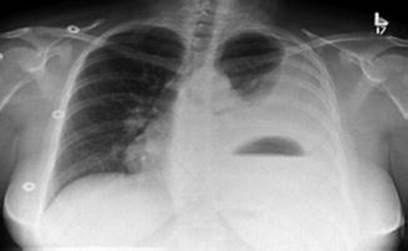
Fig. 6.1
Posteroanterior and lateral chest roentgenogram on the second admission, demonstrating a large left pleural effusion and gastric air-fluid level in the left hemithorax [57]
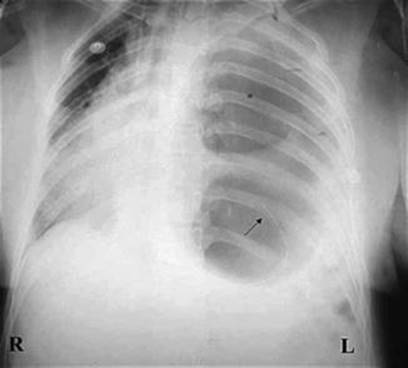
Fig. 6.2
Chest radiograph showing marked mediastinal shift to the right. In the left hemithorax are two large bullae. The arrow indicates the nasogastric tube in the herniated stomach above the diaphragm [62]
There is a general reluctance to use X-rays in the pregnant population, but the dose is small, and in a selected population with a clear indication, the consequences of not performing the X-ray may far outweigh this small risk. The results are either diagnostic or abnormal and suggestive of diaphragmatic rupture in 75–97 % of cases [63–65]. In the postpartum period X-rays with contrast media can be used for the definition of suspected diaphragmatic hernia (Fig. 6.3) [62].
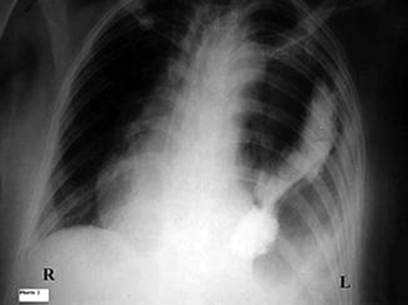
Fig. 6.3
Herniation of the stomach in the left hemithorax seen after Gastrografin ingestion [62]
6.3.2 Thoracic CT
Thoracic ultrasonography and CT scans are possible auxiliary diagnostic methods. If diaphragmatic hernia is suspected or proved, CT of the thorax and abdomen should be made. If perforation is suspected, water-soluble peroral contrast should be used to detect the perforation and its localization. If perforation is present, pleural effusion will be evident (Fig. 6.4). Also if partial obstruction/strangulation of the stomach is present, then typical form of hourglass (the Collar sign) is visible (Fig. 6.5).
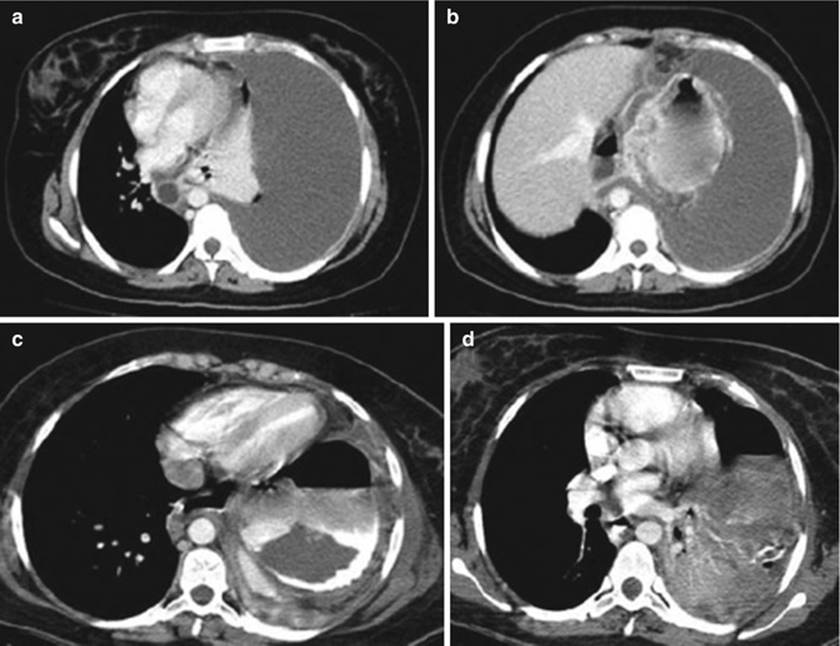
Fig. 6.4
First CT scan performed at admission in emergency department showed a massive left pleural effusion associated with severe contralateral mediastinal shift (a) and a complete intrathoracic gastric herniation (b). A second CT scan performed after chest tube placement and during water-soluble contrast examination demonstrated the leak at the level of the stomach (c) and documented only a partial re-expansion of the pulmonary parenchyma (d) [50]
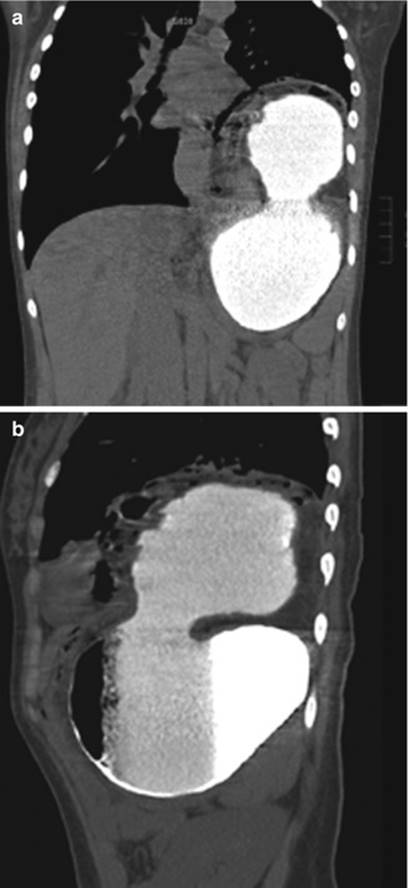
Fig. 6.5
Front view (a) and lateral view (b) of the CT scan showing the left diaphragmatic rupture and the typical aspect of the stomach, in form of hourglass (the Collar sign) [66]
6.3.3 Thoracic MRI
Recently, to eliminate the radiation exposure to both mother and fetus, MRI has been used for the diagnosis (Fig. 6.6) [6].
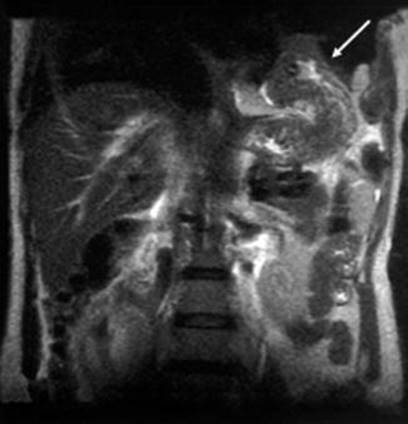
Fig. 6.6
Magnetic resonance image demonstrating Bochdalek’s hernia with associated abdominal organs in the left chest. The arrow indicates the herniated portion of colon [6]
6.4 Therapy
6.4.1 Conservative Treatment
Treatment of nausea and vomiting with drugs or by nasogastric suction in form of preparation for the emergent operation is therapeutic because it allows decreased intra-abdominal and intragastric pressure [67]. In emergent presentation there is no indication for conservative therapy.
6.4.2 Surgical Treatment
6.4.2.1 Indications for the Operation
Asymptomatic Patients
For asymptomatic patients Kurzel et al. recommended Cesarean delivery after fetal lung maturity with simultaneous hernia repair always before the onset of labor. The authors based their recommendation on 17 cases reported in the English literature with maternal and fetal morbidity being 55 and 27 %, respectively, when vaginal delivery was attempted before the DH was repaired [9]. The fact that the majority of women who present have had previous uneventful pregnancies with the hernia present opens the question as to whether exposing an asymptomatic mother and fetus to the morbidity of antenatal repair is justified. Therefore, others recommend vaginal delivery if certain precautions are taken; these include planned induction of labor (to avoid precipitous labor at a remote site), regional anesthesia to help prevent the urge to bear down, and the use of instrumentation to assist the second stage [6]. There are cases of symptomatic DH in previous pregnancies. Due to severe and prolonged vomiting and weight loss or even hematemesis, there are cases of fetal loss. In such cases elective repair should be undertaken to prevent similar presentations in further pregnancies [51].
Symptomatic Patients
Symptomatic DH should be managed without delay because of the associated high maternal and fetal mortality rates if left uncorrected [6, 9, 48]. Even if the pregnancy is normal, there is a possibility of puerperal symptomatology. One recommendation is that if the diagnosis is made in the first trimester, in the absence of complications, the patient should be carefully monitored and observed. Surgery is delayed until the second trimester when organogenesis is complete, before the increasing bulk of the gravid uterus risks further herniation. Other authors suggest repair shortly after diagnosis, regardless of gestation because the condition is associated with a poor or complicated outcome, particularly if early surgical intervention is not undertaken [9]. Genc et al. suggested that gastric decompression lowers intra-abdominal pressure and could improve the clinical condition of the pregnant patient with a diaphragmatic hernia who presents with symptoms and signs of obstruction. Such an improvement can allow surgery to be delayed until the patient is transferred to a tertiary care center or until antenatal corticosteroids are administered [6]. Even in non-emergent situations, treatment of nausea and vomiting with drugs or by nasogastric suction is therapeutic because it ameliorates symptoms [67]. Only one laparoscopic repair of symptomatic DH (Bochdalek type) has been made to date [68].
Emergent Presentation
A patient presenting with signs of visceral strangulation and infarction presents a surgical emergency and immediate operation is indicated, irrespective of fetal maturity. This condition is associated with a high maternal and fetal mortality. If surgery (left thoracoabdominal or midline incision) demonstrates strangulation and gangrene of the herniated viscera, segmental resection of the involved portion of large intestine with reestablishment of bowel continuity is indicated. The diaphragmatic defect should be closed with interrupted sutures. If the defect is large, mesh should be used. The pregnancy is allowed to continue until 39 weeks of gestation, at which time elective Cesarean delivery is performed.
6.4.2.2 Anesthetic Considerations
During anesthesia, the fetal heart rate, blood pressure, and central venous pressure and maternal oxygenation during the patient’s change of position must be watched. To avoid hypotension during induction, uterus displacement with a wedge is indicated [69]. If the hernia is approached through a thoracotomy incision [24], the affected side is placed uppermost. Mediastinal shift, which compromises venous return and collapse of the lower lung, may be worsened by positional compression from the herniated dilated viscera. A rapid-sequence induction is indicated because the patient is at risk of pulmonary aspiration.
Lung ventilation must be undertaken with low tidal volume or low airway pressure until the abdominal contents have been removed from the chest or until thoracotomy has been performed. Cardiovascular collapse might occur during positive-pressure ventilation. The re-expanded lung previously compressed by herniated viscera may shift mediastinal structures, and venous return may be impeded [70, 71]. Increased pleural pressure from mechanical ventilation is transmitted to the abdomen. It results in increased upward displacement of the viscera toward the diaphragm and may worsen cardiovascular collapse [71]. A surgeon must be ready to operate before ventilation is begun [70]. Inappropriate insertion of a chest drain may potentially lead to perforation of bowel [22], therefore
Chest drains should always be inserted using blunt dissection.
6.4.2.3 Obstetric Considerations
The indication for delivery and mode of delivery is trimester dependent. If the hernia manifests in the third trimester, once fetal maturity is documented, the baby should be delivered by Cesarean section with simultaneous repair of the hernia [9, 49, 62]. Standard vaginal delivery should be avoided in these cases because the increase in intra-abdominal pressure may further displace the viscera and result in strangulation of the herniated viscus or disruption of diaphragmatic hernia repair. On the contrary, Genc et al. state that uterine contractions, unlike the Valsalva maneuver, do not increase the intra-abdominal pressure and are unlikely to cause rupture at the repaired site. Thus, a patient with a repaired diaphragmatic hernia can labor and deliver vaginally [6]. Unfortunately it is impossible that labor can be completed without contractions of abdominal wall musculature and probably the Valsalva maneuver; therefore, it is safer to perform Cesarean section.
Corticosteroids for fetal maturity should be administered to the mother before surgery if the gestational age is between 24 and 34 weeks because of the risk of preterm delivery during or after surgery.
There is no data on the minimum time that should elapse from hernia repair to delivery.
6.4.2.4 Open Technique
History
In 1834, Laennec [72] suggested that the diagnosis of DH could easily be made by auscultation of the chest and that a laparotomy could be used to withdraw intestine from the thorax. The first recorded attempt of reduction of a DH in general population by laparotomy was made by Naumann [73] in 1888 but was unsuccessful. Two years later, O’Dwyer [74] reported an unsuccessful attempt of repairing a strangulated CDH. Others state that Riolfi performed the first successful repair in 1886. In 1905 Heidenhain [75] reported a successful operation performed in 1902 for CDH in a 9-year-old patient when he reduced the hernia and closed the diaphragmatic defect through a midline laparotomy incision. The first available report with operative treatment in pregnancy is that of Crump in 1911, who successfully operated upon a woman with DH complication 3 months pregnancy [76].
Transthoracic Approach
Under normal circumstances, the best surgical approach is through the chest, at the level of the eighth rib, but if strangulation has occurred, the incision should be planned as a thoracoabdominal one for more adequate exposure and for easier access to the bowel, particularly if the colon is involved. Even though this condition has been successfully managed through an abdominal incision in the past, authors are now almost unanimous in advocating an eighth rib transthoracic approach (Fig. 6.7). The repair of the diaphragm, once the adhesions are separated, is easily achieved and there is usually sufficient tissue to make a Mayo-type repair. If the tear destroys the musculature of the esophageal hiatus, this should be carefully reconstituted (Fig. 6.8). When the diaphragm is avulsed from the chest wall and there is insufficient tissue left peripherally repair should be affected by suturing the free edge to the chest wall with interrupted sutures to two adjacent intercostal muscles to obtain a wider adherence. In the opinion of the author, there is no justification for paralyzing the phrenic nerve, even by “temporary” crushing, but on rare occasions, it may be necessary to resect lengths of the lower ribs subperiosteally to allow closure of a peripheral tear. The thoracic cavity should always be drained by an underwater seal system.
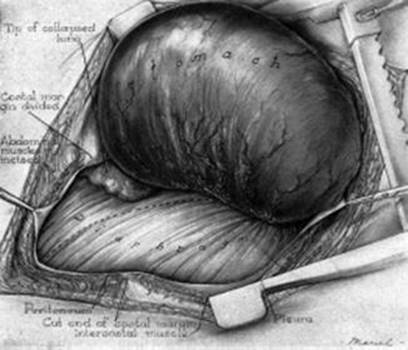
Fig. 6.7
Greatly dilated gangrenous stomach, filling a large portion of the left thorax. The incision was a thoracic one in the eighth interspace, subsequently prolonged across the costal margin into the abdomen [56]
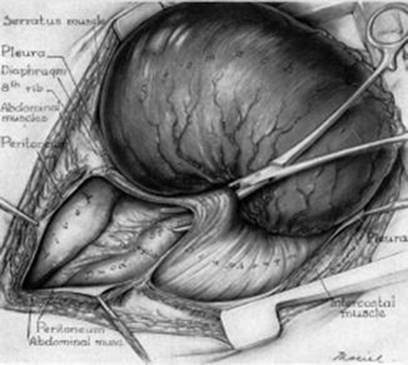
Fig. 6.8
Diagrammatic illustration indicating the extent of the gangrenous area of the stomach. Note the thrombosed vessels along both curvatures and the gangrene of the omentum [56]
In case of peptic intrathoracic perforation (Fig. 6.9a) due to NSAIDS, gastric ulcer could be found (Fig. 6.9b). A primary repair with a double-layer suture of the gastric mucosa should be performed; then, after having replaced the stomach in the abdominal cavity, a direct double-layer closure of the diaphragmatic hiatal defect is completed.
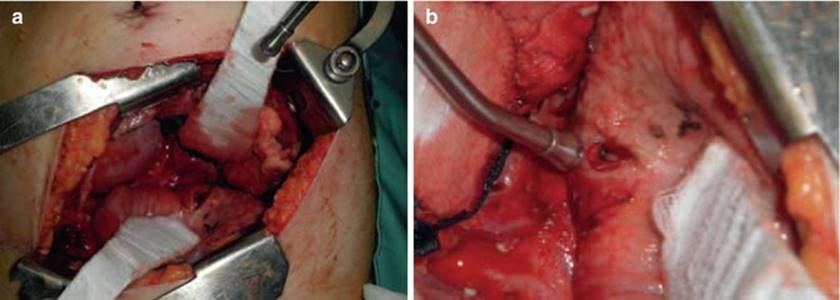
Fig. 6.9
Surgical findings during emergency thoracotomy: a complete intrathoracic gastric herniation through a large diaphragmatic hiatal defect without macroscopic signs of visceral strangulation, b a small well-defined gastric ulcer (1 cm in diameter) was found at the level of lesser curvature [50]
Transabdominal Approach
The transabdominal approach enables good access to herniated parenchymal organs such as liver and spleen [77, 78]. However, some authors prefer the transthoracic approach in longer-lasting hernias to treat pleuroperitoneal adhesions. On the other hand, transabdominal approach is better in pregnancy if Cesarean section is indicated which can be performed through the same laparotomy.
The patients who had undergone repair of hernia during their first or second trimester can be allowed to deliver vaginally. Uterine contractions do not increase intra-abdominal pressure and are unlikely to cause rupture at repair site [6].
Thoracoabdominal Approach
Extended approach is when abdominal incision is extended into thoracotomy. Abdominal incision is necessary if wide resections of gangrenous organs are present (Fig. 6.10)
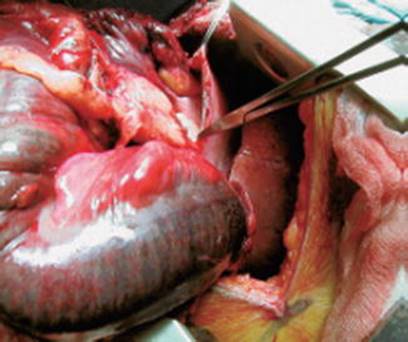
Fig. 6.10
Bochdalek’s hernia (defect) in the left hemidiaphragm with the gangrene of a large part of the herniated transverse colon [8]
6.4.2.5 Laparoscopic Repair
Recently even laparoscopic repair was performed in one pregnant patient. It was a 27-week pregnant woman having diaphragmatic rupture and intrathoracic ruptured spleen. The patient was managed by laparoscopic reduction of the intrathoracic viscus, with repair of the defect and splenectomy [79]. Another two cases were operated laparoscopically in puerperium (see next section Puerperium).
6.4.2.6 Method of Closure of Diaphragmatic Defect
The best method of closure of the diaphragmatic defect in general population is still unclear. Primary repair is done for most defects, unless they are very large (Fig. 6.11). When the edges can be easily opposed, primary closure is certainly the preferred method. If the defect is large and difficult to suture, a prosthetic patch is recommended (Fig. 6.12) [81].
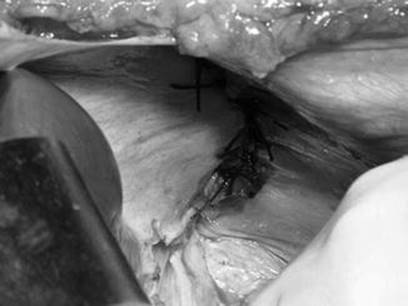
Fig. 6.11
Intraoperative photographs showing the completed hernia repair. The hernia hilum was repaired with interrupted sutures [80]
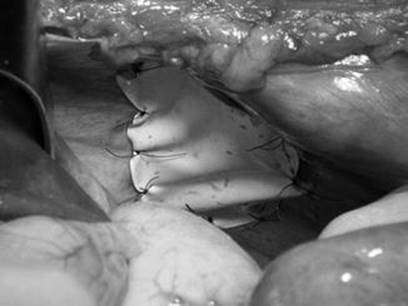
Fig. 6.12
Intraoperative photographs of the same patients after the hernia hilum repaired with interrupted sutures. Final appearance of the repair with the Gore-Tex sheet (Gore-Preclude dura substitute) [80]
Some authors described using Marlex mesh to close wide diaphragmatic holes and then covered the defect with a pedunculated flap, using the falciform ligament in one case and the peritoneum in another case [82]. Others described closing a large diaphragmatic gap with Gore-Tex mesh covered by the falciform ligament [83]. The polytetrafluoroethylene patch is characterized by two different surfaces: one that promotes fibrous ingrowth into the patch and another that is relatively resistant to adhesion formation and placed adjacent to the abdominal viscera [84].
Generally, a prosthetic patch should not be used if intestinal strangulation has occurred because of the high risk of postoperative infection. Jezupors and Mihelsons reported in 2006 that deep prosthesis infection occurred in 0.94 % of patients who underwent mesh repair of various abdominal wall hernias in general population [85]. In clean-contaminated and contaminated conditions, wound and mesh-related infections occurred in 7–21 % of patients but did not usually require mesh excision [86]. Some authors advocate placing a prosthetic patch for abdominal wall reconstruction in clean-contaminated conditions [85–89]. There is extremely small numbers of cases in pregnancy (less than 40) therefore specific indications for different procedures are not defined in pregnancy. Therefore, it is recommended to perform the procedure that is indicated in general population.
6.4.2.7 Puerperium
There are two cases of DH (one rupture, one left-sided posterolateral (Bochdalek) hernia) occurring in the puerperium. In one case the right colon was in the right chest causing pulmonary embarrassment [58], and in another stomach, transverse colon, and spleen were in the sac [90].
6.5 Prognosis
6.5.1 Maternal Outcome
Prognosis depends on the type of presentation, duration of symptoms and if strangulation with/without perforation is present. The mortality rate of chronic incarcerated diaphragmatic hernia can be as high as 20 %, whereas that of strangulated hernias may approach 85 % [10]. The main life-threatening complications are acute respiratory distress caused by compression atelectasis, mediastinal shift, and strangulation and gangrene of the herniated viscera [9, 19, 24, 31, 58, 60]. In these cases, the maternal mortality rate ranges 42–58.3 % [32, 60, 91, 92].
Complications due to acute herniation are more frequent during the third trimester, during delivery, and in the postpartum hours, and result in maternal deaths in 50 % of cases [9].
6.5.2 Fetal Outcome
Fetal mortality and morbidity result from premature labor and compromise maternal oxygen delivery [93]. Fetal deaths occur in 50 % of cases, and premature birth has been reported in approximately 24 % of cases [9]. In only 30 % of the cases reported, delivery was by Cesarean section [49].
6.5.3 Recurrent Hernia
The recurrence rate of diaphragmatic hernia following repair in general population depends upon the severity of the original defect (ranging from minor to diaphragmatic agenesis) and the nature of the repair. Moss et al. reported that about half their prosthetic patch repairs of CDHs showed evidence of re-herniation and required revision within 3 years [94]. This observation has two important issues. First, the prepregnancy repair is a risk factor for (recurrent) diaphragmatic hernia during pregnancy and also it is the risk factor for recurrent diaphragmatic hernia after the repair during pregnancy, labor, or puerperium.
References
1.
Nava S, Zanotti E, Ambrosino N, et al. Evidence of acute diaphragmatic fatigue in a “natural” condition. The diaphragm during labor. Am Rev Respir Dis. 1992;146(5 Pt 1):1226–30.PubMedCrossRef
2.
Cooper A. Phrenic hernia. In: Cooper A (ed). The anatomy and surgical treatment of abdominal hernia. London: Longman, 1827.
3.
Reid J. Case of diaphragmatic hernia produced by a penetrating wound. Edinb Med Surg J. 1840;53:104–12.
4.
Pare A. Les oeuvres. Paris: Buon; 1575.
5.
Chen Y, Hou Q, Zhang Z, et al. Diaphragmatic hernia during pregnancy: a case report with a review of the literature from the past 50 years. J Obstet Gynaecol Res. 2011;37:709–14.PubMedCrossRef
6.
Genc MR, Clancy TE, Ferzoco SJ, Norwitz E. Maternal congenital diaphragmatic hernia complicating pregnancy. Obstet Gynecol. 2003;102:1194–6.PubMedCrossRef
7.
Kaloo PD, Studd R, Child A. Postpartum diagnosis of a maternal diaphragmatic hernia. Aust N Z J Obstet Gynaecol. 2001;41:461–3.PubMedCrossRef
8.
Barbetakis N, Efstathiou A, Vassiliadis M, et al. Bochdaleck’s hernia complicating pregnancy: case report. World J Gastroenterol. 2006;12:2469–71.PubMed
9.
Kurzel RB, Naunheim KS, Schwartz RA. Repair of symptomatic diaphragmatic hernia during pregnancy. Obstet Gynecol. 1988;71:869–71.PubMed
10.
Madden MR, Paull DE, Finkelstein JL, et al. Occult diaphragmatic injury from stab wounds to the lower chest and abdomen. J Trauma. 1989;29:292–8.PubMedCrossRef
11.
Mullins ME, Stein J, Saini SS, Mueller PR. Prevalence of incidental Bochdalek’s hernia in a large adult population. Am J Roentgenol. 2001;177:363–6.CrossRef
12.
Allan DW, Greer JJ. Pathogenesis of nitrofen-induced congenital diaphragmatic hernia in fetal rats. J Appl Physiol. 1997;83:338–47.PubMed
13.
Unemoto K, Sakai M, Shima H, et al. Increased expression of ICAM-1 and VCAM-1 in the lung of nitrofen-induced congenital diaphragmatic hernia in rats. Pediatr Surg Int. 2003;19:365–70.PubMedCrossRef
14.
Chang R, Andreoli S, Ng YS, et al. VEGF expression is downregulated in nitrofen-induced congenital diaphragmatic hernia. J Pediatr Surg. 2004;39:825–8.PubMedCrossRef
15.
Teramoto H, Yoneda A, Puri P. Gene expression of fibroblast growth factors 10 and 7 is downregulated in the lung of nitrofen-induced diaphragmatic hernia in rats. J Pediatr Surg. 2003;38:1021–4.PubMedCrossRef
16.
Shields T. General thoracic surgery. 3rd ed. Philadelphia: Lea & Febiger; 1989.
17.
Rigler LG, Eneboe JB. Incidence of hiatus hernia in pregnant women and its significance. J Thorac Surg. 1935;4:262–6.
18.
Fleyfel M, Provost N, Ferreira JF, et al. Management of diaphragmatic hernia during pregnancy. Anesth Analg. 1998;86:501–3.PubMed
19.
Hill R, Heller MB. Diaphragmatic rupture complicating labor. Ann Emerg Med. 1996;27:522–4.PubMedCrossRef
20.
Ortega-Carnicer J, Ambros A, Alcazar R. Obstructive shock due to labor related diaphragmatic hernia. Crit Care Med. 1998;26:616–8.PubMedCrossRef
21.
Lacayo L, Taveras III JM, Sosa N, Ratzan KR. Tension fecal pneumothorax in a postpartum patient. Chest. 1993;103:950–1.PubMedCrossRef
22.
Zieren J, Enzweiler C, Muller JM. Tube thoracostomy complicates unrecognized diaphragmatic rupture. Thorac Cardiovasc Surg. 1999;47:199–202.PubMedCrossRef
23.
Kessler E, Stein A. Diaphragmatic hernia as a long-term complication of stab wounds to chest. Am J Surg. 1976;132:34–9.PubMedCrossRef
24.
Dudley AS, Teaford H, Gatewood T, et al. Delayed traumatic rupture of the diaphragm in pregnancy. Obstet Gynecol. 1979;53(3 Suppl):25S–727.PubMed
25.
Boulanger BR, Milzman DP, Rosati C, et al. A comparison of right and left blunt traumatic diaphragmatic rupture. J Trauma. 1993;35:255–60.PubMedCrossRef
26.
Guth AA, Pachter HL, Kim U. Pitfalls in the diagnosis of blunt diaphragmatic injury. Am J Surg. 1995;170:5–9.PubMedCrossRef
27.
Chughtai T, Ali S, Sharkey P, et al. Update on managing diaphragmatic rupture in blunt trauma: a review of 208 consecutive cases. Can J Surg. 2009;52:177–81.PubMedCentralPubMed
28.
Pavne TH, Yellin AE. Traumatic diaphragmatic hernia. Arch Surg. 1982;117:18–24.CrossRef
29.
Bekassy SM, Dave KS, Wooler GH, Ionescu MI. ‘Spontaneous’ and traumatic rupture of the diaphragm. Ann Surg. 1973;177:320–4.PubMedCentralPubMedCrossRef
30.
Rabinovici J, Czerniak A, Rabau MY, et al. Diaphragmatic rupture in late pregnancy due to blunt injury. Injury. 1986;17:416–7.PubMedCrossRef
31.
Fardy HJ. Vomiting in late pregnancy due to diaphragmatic hernia: case report. Br J Obstet Gynaecol. 1984;91:390–2.PubMedCrossRef
32.
Dave KS, Bekassy SM, Wooler GH, et al. “Spontaneous” rupture of the diaphragm during delivery. Br J Surg. 1973;60:666–8.PubMedCrossRef
33.
Reed MWR, de Silva PH, Mostafa SM, Collins FJ. Diaphragmatic hernia in pregnancy. Br J Surg. 1987;74:435.PubMedCrossRef
34.
Nelson RM, Wilson RF, Huang CL, et al. Cardiac tamponade due to iatrogenic pericardial diaphragmatic hernia. Crit Care Med. 1985;13:607.PubMedCrossRef
35.
Irwin RS, Rosen MJ, Braman SS. Cough a comprehensive review. Arch Intern Med. 1977;137:1186–91.PubMedCrossRef
36.
Kobayashi I, Kondo T, Ohta Y, et al. Expiratory activity of the inspiratory muscles during cough. Jpn J Physiol. 1992;42:905–16.PubMedCrossRef
37.
Roberge RJ, Morgenstern MJ, Osborn H. Cough fracture of the ribs. Am J Emerg Med. 1984;2:513–7.PubMedCrossRef
38.
Derbes VJ, Haran T. Rib fractures from muscular effort with particular reference to cough. Surgery. 1954;35:294–321.PubMed
39.
Oechsli WR. Rib fractures from cough: report of twelve cases. J Thorac Surg. 1936;5:530–4.
40.
Kjeldsen J. Hemodynamic investigations during labor and delivery. Acta Obstet Gynecol Scand. 1979;89(Suppl):144–53.
41.
Robson SC, Dunlop W, Hunter S. Haemodynamic changes during the early puerperium. Br Med J. 1987;294:1065.CrossRef
42.
Ross DB, Stiles GE. Spontaneous rupture of the diaphragm in labour: a case report. Can J Surg. 1989;32:212–3.PubMed
43.
Boufettal R, Lefriyekh MR, Boufettal H, et al. Spontaneous diaphragm rupture during delivery. Case report. J Gynecol Obstet Biol Reprod (Paris). 2008;37:93–6.CrossRef
44.
Kallay N, Crim L, Dunagan DP, et al. Massive left diaphragmatic separation and rupture due to coughing during an asthma exacerbation. South Med J. 2000;93:729–31.PubMedCrossRef
45.
George L, Rehman SU, Khan FA. Diaphragmatic rupture: a complication of violent cough. Chest. 2000;117:1200–1.PubMedCrossRef
46.
Lee HY, Yoo SM, Song IS, et al. Spontaneous diaphragmatic rupture after vomiting: rapid diagnosis on multiplanar reformatted multidetector CT. J Thorac Imaging. 2006;21:54–6.PubMedCrossRef
47.
Walther B, DeMeester TR, Lafontaine E, et al. Effect of paraesophageal hernia on sphincter function and its implication on surgical therapy. Am J Surg. 1984;147:111–6.PubMedCrossRef
48.
Curran D, Lorenz R, Czako P. Gastric outlet obstruction at 30 weeks’ gestation. Obstet Gynecol. 1999;93(5 Pt 2):851.PubMedCrossRef
49.
Eglinton TW, Coulter GN, Bagshaw PF, Cross LA. Diaphragmatic hernias complicating pregnancy. Aust N Z J Surg. 2006;76:553–7.CrossRef
50.
Lococo F, Cesario A, Meacci E, Granone P. Intrathoracic gastric perforation: a late complication of an unknown postpartum recurrent hiatal hernia. Interact Cardiovasc Thorac Surg. 2012;15:317–8.PubMedCentralPubMedCrossRef
51.
Louw JT, Louw JH. Extra-genital surgical emergencies of the abdomen in pregnancy. S Afr Med J. 1954;28:788–93.PubMed
52.
Penman WR. Hiatal hernia: a cause of persistent gastrointestinal disturbances in pregnancy. West J Surg Obstet Gynecol. 1951;59:622–5.PubMed
53.
Gadsby R, Barnic-Adshead AM, Jagger C. A prospective study of nausea and vomiting during pregnancy. Br J Gen Pract. 1993;43:245–8.PubMedCentralPubMed
54.
McCune RP, Roda CP, Eckert C. Rupture of the diaphragm caused by blunt trauma. J Trauma. 1976;16:531–7.PubMedCrossRef
55.
Sutherland HD. Indirect traumatic rupture of the diaphragm. Postgrad Med J. 1958;34:210–1.PubMedCentralPubMedCrossRef
56.
Carter BN, Giuseffi J. Strangulated diaphragmatic hernia. Ann Surg. 1948;128:210–25.PubMedCentralPubMedCrossRef
57.
Luu TD, Reddy VS, Miller DL, Force SD. Gastric rupture associated with diaphragmatic hernia during pregnancy. Ann Thorac Surg. 2006;82:1908–10.PubMedCrossRef
58.
Watkin DS, Hughes S, Thompson MH. Herniation of colon through the right diaphragm complicating the puerperium. J Laparoendosc Surg. 1993;3:583–6.PubMedCrossRef
59.
Morcillo-López I, Hidalgo-Mora JJ, Baamonde A, Díaz-García C. Gastric and diaphragmatic rupture in early pregnancy. Interact Cardiovasc Thorac Surg. 2010;11:713–4.PubMedCrossRef
60.
Osborne WW, Foster CD. Diaphragmatic hernia complicating pregnancy. Am J Obstet Gynecol. 1953;66:682–4.PubMed
61.
Gibson FS. Diagnosis of diaphragmatic hernia with acute obstruction. J Am Med Assoc. 1929;93:1719–24.CrossRef
62.
Hamoudi D, Bouderka MA, Benissa N, Harti A. Diaphragmatic rupture during labor. Int J Obstet Anesth. 2004;13:284–6.PubMedCrossRef
63.
Troop B, Myers RM, Agarwal NN, et al. Early recognition of diaphragmatic injuries from blunt trauma. Ann Emerg Med. 1985;14:97–101.PubMedCrossRef
64.
Lin YK, Huang BS, Shih CS, et al. Traumatic diaphragmatic hernia with delayed presentation. Zhonghua Yi Xue Za Zhi (Taipei). 1999;62:223–9.
65.
Willsher PC, Cade RJ. Traumatic diaphragmatic rupture. Aust N Z J Surg. 1991;61:207–10.PubMedCrossRef
66.
Rubin S, Sandu S, Durand E, Baehrel B. Diaphragmatic rupture during labour, two years after an intra-oesophageal rupture of a bronchogenic cyst treated by an omental wrapping. Interact Cardiovasc Thorac Surg. 2009;9:374–6.PubMedCrossRef
67.
Henzler M, Martin ML, Young J. Delayed diagnosis of traumatic diaphragmatic hernia during pregnancy. Ann Emerg Med. 1988;17:350–3.PubMedCrossRef
68.
Palanivelu C, Rangarajan M, Maheshkumaar GS, Parthasarathi R. Laparoscopic mesh repair of a Bochdalek diaphragmatic hernia with acute gastric volvulus in a pregnant patient. Singapore Med J. 2008;49:e26–8.PubMed
69.
Cohen S, Cherry C. Obstetrics surgery. In: Jaffe RA, Samuels SI, editors. Anesthesiologist’s manual of surgical procedure. New York: Raven Press; 1994. p. 525–45.
70.
Lobb TR, Butlin GR. Anaesthesia and traumatic diaphragmatic hernia. Can Anaesth Soc J. 1974;21:173–80.PubMedCrossRef
71.
Loehning RW, Takaori M, Safar P. Circulatory collapse from anesthesia for diaphragmatic hernia. Arch Surg. 1965;90:109–13.PubMedCrossRef
72.
Laennec RTH. Congenital diaphragmatic hernia. In: Nyhus H, editor. Hernia. Philadelphia: Lippincott; 1964. p. 602–19.
73.
Naumann G. Hernia diaphragmatica, laparotomie. Dod Hygeia. 1888;50:524.
74.
O’Dwyer J. Operation for relief of congenital diaphragmatic hernia. Ann Surg. 1890;11:124.CrossRef
75.
Heidenhain L. Geschichte eines Falles von chronischer Incarceration des Magens in einer angeborenen Zwerchfellhernie welcher durch Laparotomie geheilt wurde mit anschliessenden Bemerkungen tiber die M6glichkeit das Kardiacarcinom der Speiser6hre zu resesziren. Dtsch Z Chir. 1905;76:394–403.CrossRef
76.
Crump WG. Diaphragmatic hernia with rupture complicating a three months’ pregnancy. J Am Inst Homeopath. 1911;4:663.
77.
Hood RM. Traumatic diaphragmatic hernia. Ann Thorac Surg. 1971;324:311–24.CrossRef
78.
Myers BF, McCabe CJ. Traumatic diaphragmatic hernia: occult marker of serious injury. Ann Surg. 1993;218:783–90.CrossRef
79.
Rolton DJ, Lovegrove RE, Dehn TC. Laparoscopic splenectomy and diaphragmatic rupture repair in a 27-week pregnant trauma patient. Surg Laparosc Endosc Percutan Tech. 2009;19:e159–60.PubMedCrossRef
80.
Sano A, Kato H, Hamatani H, et al. Diaphragmatic hernia with ischemic bowel obstruction in pregnancy: report of a case. Surg Today. 2008;38:836–40.PubMedCrossRef
81.
Settembre A, Cuccurullo D, Pisaniello D, et al. Laparoscopic repair of congenital diaphragmatic hernia with prosthesis: case report. Hernia. 2003;7:52–4.PubMed
82.
Rau HG, Schardey HM, Lange V. Laparoscopic repair of a Morgagni hernia. Surg Endosc. 1994;8:1439–42.PubMed
83.
Georgacopulo P, Franchella A, Mandrioli G, et al. Morgagni-Larrey hernia correction by laparoscopic surgery. Eur J Pediatr Surg. 1997;7:241–2.PubMedCrossRef
84.
DeMaria EJ, Moss JM, Sugerman HJ. Laparoscopic intraperitoneal polytetrafl uoroethylene (PTFE) prosthetic patch repair of ventral hernia. Prospective comparison to open prefascial polypropylene mesh repair. Surg Endosc. 2000;14:326–9.PubMedCrossRef
85.
Jezupors A, Mihelsons M. The analysis of infection after polypropylene mesh repair of abdominal wall hernia. World J Surg. 2006;30:2270–8.PubMedCrossRef
86.
Stringer RA, Salameh JR. Mesh herniorrhaphy during elective colorectal surgery. Hernia. 2005;9:26–8.PubMedCrossRef
87.
Kelly ME, Behrman SW. The safety and effi cacy of prosthetic hernia repair in clean-contaminated and contaminated wounds. Am Surg. 2002;68:524–8.PubMed
88.
De Vries Reilingh TS, van Goor H, Charbon JA, et al. Repair of giant midline abdominal wall hernias: “components separation technique” versus prosthetic repair: interim analysis of a randomized controlled trial. World J Surg. 2007;31:756–63.PubMedCrossRef
89.
Geisler D, Reilly JC, Vaughan SG, et al. Safety and outcome of use of nonabsorbable mesh for repair of fascial defects in the presence of open bowel. Dis Colon Rectum. 2003;46:1118–23.PubMedCrossRef
90.
Senkyrik M, Lata J, Husová L, et al. Unusual Bochdalek hernia in puerperium. Hepatogastroenterology. 2003;50:1449–51.PubMed
91.
Kushlan SD. Diaphragmatic hernia in pregnancy: significance and danger. Conn State Med J. 1951;15:969–78.
92.
Dumont M. Hernie diaphragmatique et grossesse. J Gynecol Obstet Biol Reprod. 1990;19:395–9.
93.
Craddocck DR, Hall JI. Strangulated diaphragmatic hernia complicating pregnancy. Br J Surg. 1968;55:559–60.CrossRef
94.
Moss RL, Chen CM, Harrison MR. Prosthetic patch durability in congenital diaphragmatic hernia: a long-term follow-up study. J Pediatr Surg. 2001;36:152–4.PubMedCrossRef